
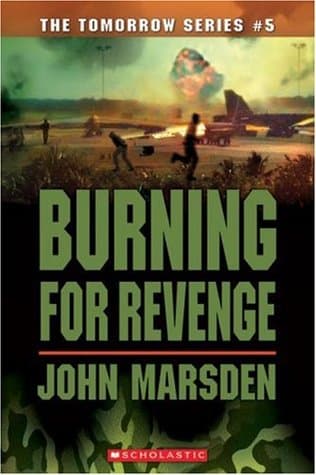
Synopsis
Covers the whole plot, including the ending.
- Difficulty
- Medium
- Pacing
- Fast
- Mood
- Intense, Suspenseful, Gritty, Hopeful (at times)
- Read it if
- You enjoy intense, action-packed survival stories with a focus on guerrilla warfare and the psychological toll of conflict on young protagonists.
- Skip it if
- You prefer less violent or emotionally heavy narratives, or dislike stories where protagonists face overwhelming odds and constant peril.
Burning For Revenge Plot Summary
Covers the whole plot, including the ending.
The Decision to Head North
After the events in Wirrawee, Ellie Linton and her friends – Homer, Fi, Kevin, and Lee – are in hiding, considering their next move. The group has been living a guerrilla existence, striking against the invading forces occupying Australia. Ellie, the group's leader and narrator, feels a strong need to find her grandmother, who lives in Stratton, a town far to the north. This decision is not just about family; it is also a strategic reconnaissance mission to gather information on the enemy's northern operations. Despite the immense danger and the vast, unknown territory ahead, the group, driven by hope and desperation, resolves to undertake the perilous journey.
Encountering the Enemy Headquarters
As Ellie and her friends travel north, moving cautiously through the bush, they accidentally find a massive enemy military installation. This is not just a small outpost; it is a sprawling complex with many buildings, vehicles, and a significant number of soldiers, suggesting it is a major operational headquarters or a large supply depot. The discovery confirms the scale of the invasion and the enemy's entrenched presence. The group realizes the immense danger they are in, being so close to such a heavily guarded position, and the immediate need to observe and gather information without being detected.
Observation and Planning
Ellie and Homer, taking the lead, spend hours observing the enemy headquarters from a hidden vantage point. They carefully note troop movements, security patrols, vehicle types, and the layout of the buildings. The sheer scale and organization of the base are daunting. They realize that a direct confrontation is impossible with just five of them. Instead, they begin to formulate a daring, high-risk plan: to cause enough disruption and damage to create a diversion, allowing them to escape the immediate vicinity and continue their journey to Stratton, while also striking a blow against the invaders.
The First Strike: Fuel Depot
Implementing their plan, Ellie, Homer, and Lee decide to target the enemy's fuel depot, a critical vulnerability they identified during their observations. Under the cover of darkness, they infiltrate the perimeter, using their knowledge of the terrain and their growing guerrilla skills. With immense tension, they manage to plant explosives and ignite the fuel tanks. The resulting explosions and massive fire cause chaos within the base, sending soldiers scrambling. This audacious act is a major success, disrupting enemy operations and creating the diversion they desperately needed to move unnoticed.
Escape and Pursuit
The explosions at the fuel depot, while successful, immediately alert the entire enemy base. Ellie and her friends are now targets, and a determined pursuit begins. Enemy soldiers, vehicles, and possibly even air support are mobilized to hunt them down. The group, exhausted but exhilarated by their success, must now use all their cunning and knowledge of the bush to evade capture. The chase is relentless, forcing them to move quickly and silently through difficult terrain, constantly looking over their shoulders and making split-second decisions to avoid detection and capture. The stakes are higher than ever.
Ambush and Separation
As Ellie, Homer, Fi, Kevin, and Lee attempt to put distance between themselves and the burning enemy base, they are ambushed by a hidden patrol. The surprise attack throws them into disarray. A fierce but brief firefight ensues, forcing them to scatter and fight individually. In the chaos, Kevin is injured, and the group is split up. Ellie, Homer, and Fi manage to stay together, but Lee and the injured Kevin are separated, creating agonizing uncertainty about their fate. This setback is a severe blow, testing their resilience and forcing them to make difficult choices about whether to search for their missing friends or continue to safety.
Hiding and Reassessment
After the ambush, Ellie, Homer, and Fi manage to escape into a dense, remote area, finding temporary refuge. Physically and emotionally drained, they lick their wounds and grapple with the separation from Kevin and Lee. The loss of their friends weighs heavily on them, and doubt begins to creep in. Ellie, in particular, struggles with the burden of leadership and the consequences of their actions. They must now reassess their options: continue towards Stratton with reduced numbers, try to find Kevin and Lee, or abandon the mission altogether. The emotional cost of the war continues to mount.
The Decision to Press On
After a period of intense deliberation and grief, Ellie makes the agonizing decision to continue their journey to Stratton. While the fate of Kevin and Lee remains unknown, Ellie rationalizes that their best chance of survival and helping the war effort is to stick to their original plan. She believes that by reaching Stratton and potentially finding her grandmother, they might gain valuable intelligence or even find a way to make contact with other resistance groups. Homer and Fi, though heartbroken, reluctantly agree, trusting Ellie's judgment. The mission now carries an even heavier emotional weight.
Arrival in Stratton's Outskirts
After days of arduous travel, Ellie, Homer, and Fi finally reach the general area of Stratton. However, the town is not as Ellie remembered it. It is heavily occupied by enemy forces, with visible patrols, checkpoints, and a general air of military control. The familiar landscape has been transformed into a warzone. They must approach with extreme caution, observing from a distance to understand the layout and the extent of the occupation. The hope of finding Ellie's grandmother quickly is replaced by the grim reality of the situation, making their search even more perilous.
Scouting Stratton and a Glimmer of Hope
Under the cover of darkness, Ellie undertakes a dangerous solo reconnaissance mission into the outskirts of Stratton. She moves through the shadows, avoiding patrols, her heart pounding with fear and hope. She observes the changes to her hometown, looking for any sign of her grandmother or any familiar faces. While her immediate search proves fruitless, she notices subtle indicators of local resistance – perhaps a coded message or a hidden symbol – suggesting that not everyone in Stratton has succumbed to the occupation. This small glimmer of hope fuels her determination to continue searching and possibly make contact.
A Desperate Rescue Attempt
Based on her observations and the subtle hints of resistance, Ellie believes she has located where her grandmother, or at least other civilians, might be held or confined by the enemy. With Homer and Fi, she devises a plan for a desperate rescue attempt. This involves another infiltration, using their guerrilla tactics to create a distraction and extract those they believe are in danger. The mission is incredibly risky, putting them directly in harm's way within a heavily guarded town, but the possibility of saving lives, especially Ellie's grandmother, outweighs the immense danger. The tension is palpable as they prepare for the daring operation.
Reunion and New Allies
Against incredible odds, Ellie and her friends succeed in their rescue attempt. They manage to extract a group of civilians, and among them, to Ellie's immense relief, is her grandmother. The reunion is emotional and tearful, a brief moment of warmth amidst the brutal reality of war. Furthermore, Ellie's grandmother reveals that she and other townspeople have formed an underground resistance network, providing intelligence and subtle sabotage against the invaders. This discovery is a significant turning point, offering not only personal comfort but also the potential for new allies and resources in their ongoing fight against the occupation.
A New Strategy and Expanded Mission
With the successful rescue and the discovery of the Stratton resistance network, Ellie and her friends realize their mission has expanded beyond mere survival. They now have a chance to coordinate with a larger group, share intelligence, and potentially launch more impactful operations. Ellie's grandmother, despite her age, is a valuable source of local information and a symbol of enduring spirit. The group begins to formulate a new strategy, aiming to not only survive but to actively contribute to the broader resistance movement, using Stratton as a new, albeit dangerous, base of operations and a hub for gathering information.
The Return of Missing Friends
Just as Ellie, Homer, and Fi are settling into their new roles within the Stratton resistance, an almost miraculous event occurs: Kevin and Lee, whom they believed were lost forever, reappear. They are battered and bruised but alive, having survived their separation through sheer grit and luck. Their reunion is filled with relief and joy, completing the group once more. Kevin's injury has healed, and Lee, resourceful as ever, brings valuable insights from their own harrowing escape. Their return invigorates the entire group, reinforcing their bond and their collective determination to fight for their country.
Looking Towards the Future
With the entire group reunited and strengthened by the discovery of the Stratton resistance, Ellie reflects on their journey. They have faced incredible challenges, suffered losses, and achieved remarkable victories. The war is far from over, but their resolve is stronger than ever. They are no longer just a small band of teenagers fighting for survival; they are now part of a larger, organized effort. The book concludes with the group, now a unified force with a clearer purpose and new allies, preparing for the ongoing struggle, demonstrating their unwavering commitment to reclaiming their country and fighting for their future.
Principal Figures
Ellie Linton
Protagonist
The brave and reluctant leader of the group, narrator of the story.
Ellie is a strong-willed, intelligent, and deeply empathetic young woman who finds herself thrust into the role of leader during the invasion. She is observant, resourceful, and possesses a strong moral compass. Despite her fears and moments of doubt, she consistently makes difficult decisions for the group's survival and welfare. Her internal struggles with leadership, guilt, and the brutality of war are central to her character.
Relationships: Homer Yannos (Best friend and co-leader, a deep bond of trust and mutual respect.); Fi Maxwell (Close friend, Ellie often confides in her.); Kevin Holmes (Friend, initially more naive, looks to Ellie for guidance.); Lee Takkam (Friend and Ellie's romantic interest, a complex and supportive relationship.); Robyn Mathers (Friend, a moral anchor for the group (though not prominent in this specific book).); Corrie Mackenzie (Best friend, her absence and fate weigh heavily on Ellie (not present in this book).); Ellie's Grandmother (Family, a strong emotional tie and motivation for the journey.)
Homer Yannos
Supporting
Ellie's best friend and a natural, if sometimes reckless, strategist.
Homer is initially presented as a rebellious and somewhat wild character, but the war reveals his innate intelligence, courage, and strategic mind. He is fiercely loyal to his friends and often acts as Ellie's second-in-command, providing practical solutions and a grounding presence. He is willing to take risks and is adept at planning and executing guerrilla tactics, often balancing Ellie's more cautious approach.
Relationships: Ellie Linton (Best friend and co-leader, a profound bond built on shared experiences and trust.); Fi Maxwell (Close friend, shares the struggles of war.); Kevin Holmes (Friend, often relies on Homer's plans.); Lee Takkam (Friend, works well together in combat situations.)
Fiona 'Fi' Maxwell
Supporting
The most sensitive and artistic member of the group, providing emotional support.
Fi is initially portrayed as more delicate and less accustomed to hardship than the others, coming from a privileged background. However, she demonstrates surprising resilience and courage throughout the ordeal. She often provides emotional support and a sense of normalcy for the group, though she struggles deeply with the brutality and loss of war. Her presence reminds the group of what they are fighting for – a return to peace and beauty.
Relationships: Ellie Linton (Close friend, Ellie often confides in her, and Fi offers emotional support.); Homer Yannos (Close friend, relies on him for protection and leadership.); Kevin Holmes (Friend, shares a more sensitive nature with him.); Lee Takkam (Friend.)
Kevin Holmes
Supporting
A gentle and often anxious member, struggling with the realities of war.
Kevin is characterized by his gentle nature and his deep love for his girlfriend, Corrie (who is not present in this book). He often struggles with fear and the moral ambiguities of fighting, experiencing significant emotional distress. Despite his anxieties, he tries to contribute to the group's efforts, though he is more prone to panic under pressure. His injury and separation from the group in this book highlight his vulnerability.
Relationships: Ellie Linton (Friend, looks to Ellie for guidance.); Homer Yannos (Friend, relies on Homer's strategic thinking.); Fi Maxwell (Friend, shares a more sensitive disposition.); Corrie Mackenzie (Girlfriend (not present), his devotion to her is a key motivator.)
Lee Takkam
Supporting
Ellie's romantic interest, quiet, artistic, and fiercely loyal.
Lee is a quiet, artistic, and thoughtful member of the group, possessing a strong sense of loyalty and courage. He has a deep connection with Ellie, which often provides a source of emotional strength for both of them amidst the horrors of war. He is resourceful and capable in combat, often working effectively with Homer and Ellie during their guerrilla operations. His separation from the group, like Kevin's, highlights the constant danger they face.
Relationships: Ellie Linton (Romantic interest and close friend, a deep and supportive relationship.); Homer Yannos (Friend, works effectively with him in tactical situations.); Fi Maxwell (Friend.); Kevin Holmes (Friend.)
Ellie's Grandmother
Supporting
A resilient elder who becomes a symbol of hope and local resistance.
Ellie's grandmother is a strong, independent woman who lives in Stratton. Her safety and well-being are a primary motivation for Ellie's dangerous journey north. When found, she proves to be not a helpless victim but a resilient survivor who has actively established and maintained a local resistance network. She provides crucial intelligence, moral support, and a vital link to the civilian underground, demonstrating that resistance can come in many forms.
Relationships: Ellie Linton (Granddaughter, a strong familial bond and source of motivation.)
The Invaders/Enemy Soldiers
Antagonist
The occupying military force that has invaded Australia.
The enemy soldiers are largely faceless and numerous, representing the oppressive force that has taken over Australia. They are depicted as organized, well-equipped, and ruthless, but also susceptible to guerrilla tactics and human error. Their presence in the enemy headquarters and Stratton signifies the pervasive nature of the occupation. They act as the primary external threat, driving the plot through their pursuit and control.
Relationships: Ellie and the Group (Adversaries, engaged in a life-or-death conflict.)
Themes & Insights
The Brutality and Cost of War
This theme is present throughout the narrative, showing the devastating impact of war not just on the landscape but on the human mind. The characters constantly face death, injury, and the loss of friends, forcing them to commit acts of violence they never imagined. The discovery of the large enemy headquarters and the subsequent pursuit confirm the overwhelming scale of the conflict. Kevin's injury and the separation of the group highlight the arbitrary and cruel nature of wartime casualties, emphasizing the emotional and physical cost on young people forced to fight.
“We were doing all the things we'd sworn we'd never do, becoming the people we'd sworn we'd never be.”
Resilience and Survival
Despite constant danger, exhaustion, and emotional trauma, the group shows incredible resilience. Their ability to adapt to a guerrilla lifestyle, survive in the wilderness, and continue fighting against overwhelming odds is central. The decision to press on to Stratton after losing Kevin and Lee, and their eventual reunion, show their will to survive. Ellie's grandmother's secret resistance network further exemplifies how ordinary people find extraordinary strength to endure and resist under occupation.
“We didn't know what the future held, but we knew we'd keep fighting for it.”
Leadership and Responsibility
Ellie's journey is heavily defined by the burdens of leadership. She constantly grapples with making life-or-death decisions, the guilt of potential failures, and the responsibility for her friends' lives. Her internal monologues reveal the immense pressure she feels. The planning of the attack on the fuel depot and the subsequent rescue mission in Stratton highlight her strategic thinking and her capacity to lead, even when terrified. The separation of Kevin and Lee particularly tests her resolve and her sense of accountability.
“Sometimes I felt like I was carrying the whole world on my shoulders, and it was getting heavier with every step.”
The Nature of Resistance
The book explores different facets of resistance against an occupying force. Initially, it is the small-scale, desperate guerrilla warfare waged by Ellie's group – hit-and-run tactics, sabotage, and evasion. The attack on the enemy fuel depot is a prime example of their direct action. Later, the discovery of Ellie's grandmother's network in Stratton introduces the concept of civilian, underground resistance, involving intelligence gathering, subtle defiance, and community support. This shows that resistance is not just about direct combat but also about maintaining hope, communication, and a refusal to be completely subjugated.
“We were just five kids, but we were fighting for everything. And sometimes, that was enough.”
The Power of Friendship and Loyalty
The strong bond between Ellie and her friends is a crucial element that allows them to survive. Their loyalty to each other, even in the face of immense danger and separation, is a constant source of strength. Homer's unwavering support for Ellie, Fi's emotional resilience, and the desperate hope for Kevin and Lee's return all show the importance of their relationships. The reunion of the group at the end reinforces that their collective strength and trust in one another are vital for their continued fight.
“We were a family, forged in fire, and that bond was stronger than any army.”
Plot Devices & Literary Techniques
First-Person Narration
The story is told entirely from Ellie Linton's perspective.
Ellie's first-person narration provides an intimate and immediate account of the war. Readers experience her fears, doubts, and triumphs directly, fostering a strong sense of empathy. This device allows for deep insight into her psychological state as a young leader forced into brutal circumstances. It also limits the reader's knowledge to what Ellie knows, creating suspense and mirroring the characters' uncertainty about the wider war and the fate of others.
Guerrilla Warfare Tactics
The group uses unconventional, hit-and-run military strategies against a superior force.
This device is central to the plot, showcasing how a small, unequipped group can challenge a powerful invading army. The group's reliance on stealth, knowledge of the terrain, sabotage, and surprise attacks (like the fuel depot explosion) demonstrates their ingenuity and resourcefulness. It highlights the David vs. Goliath struggle and emphasizes themes of survival and resistance, as they constantly adapt their methods to avoid direct confrontation while still inflicting damage.
The Journey/Quest
The narrative is structured around a dangerous journey to a specific destination.
The journey to Stratton serves as the primary structural framework for the plot. It provides a clear objective and propels the characters forward through various challenges and encounters. The journey is not just physical; it's also a metaphorical quest for information, family, and a deeper understanding of the enemy's presence. The obstacles encountered along the way, such as the enemy headquarters, are directly tied to the progression and peril of this overarching quest.
The MacGuffin (Ellie's Grandmother)
A plot element that drives the character's motivation and the story's progression.
Ellie's grandmother, initially, functions as a MacGuffin. Her safety and the desire to find her are the primary motivators for the dangerous journey to Stratton. While she is a character, her initial role is more as a goal that propels the plot forward, providing the group with a destination and purpose. Once found, she transforms from a pure MacGuffin into an active supporting character, revealing the local resistance network and providing new impetus for the plot.
Burning For Revenge Quotes
“We were not like the others. We were not like the ones who had given up, who had let their minds be scooped out and filled with the government's pap.”
“Sometimes I felt like a ghost, walking through a world that couldn't see me, couldn't hear me, didn't even know I existed.”
“The truth was a weapon, and we were learning how to wield it.”
“Fear was a constant companion, a shadow that clung to us, but it was also a fuel.”
“They wanted us to be quiet, to be good, to be nothing. But we were something. We were everything they feared.”
“The silence was the loudest sound of all, full of unspoken words and unexpressed defiance.”
“Even in the darkest places, a flicker of hope could ignite a fire.”
“They had taken so much, but they could never take our memories. They were ours, and they were dangerous.”
“We were fighting for a future that might never exist, but that didn't make the fight any less real.”
“The hardest part wasn't the pain, it was the thought of giving up, of letting them win.”
“Every small act of rebellion, every whispered word of truth, was a stone thrown against the wall of their control.”
“The world outside their walls was a myth they had created, a lie to keep us contained.”
“Sometimes, to find your way, you have to get completely lost first.”
“The fire inside us was not just for revenge; it was for remembering what it felt like to be alive.”
Quiz
10 questions on the plot and the characters. Each answer comes with a short explanation.
Question 1
What is the primary objective of Ellie and her friends in 'Burning For Revenge'?
- To destroy the enemy's main supply depot.
- To rescue captured civilians from a prison camp.
- To reach Stratton, where Ellie's grandmother lives.
- To gather intelligence on enemy troop movements.
Show answer
C. To reach Stratton, where Ellie's grandmother lives. The synopsis explicitly states, 'Stratton is where Ellie's grandmother lives, so the journey must be made.' This is their driving motivation.
Question 2
Against how many armed soldiers are Ellie and her friends described as being pitted?
- Tens
- Hundreds
- Thousands
- Dozens
Show answer
B. Hundreds The text states, 'With only five of them against hundreds of armed soldiers, escape seems like a suicide mission.'
Question 3
What kind of 'instincts' must Ellie summon to survive, according to the description?
- Leadership instincts
- Survival instincts
- Guerrilla instincts
- Navigational instincts
Show answer
C. Guerrilla instincts The description highlights that 'Ellie must summon all of her courage and guerrilla instincts to survive.'
Question 4
What makes the journey to Stratton particularly dangerous for Ellie and her friends?
- The treacherous terrain and harsh weather conditions.
- The presence of dangerous wildlife in the wilderness.
- The enemy's headquarters are located somewhere along their path.
- A rival group of survivors is also heading to Stratton.
Show answer
C. The enemy's headquarters are located somewhere along their path. The synopsis clearly states, 'The journey to Stratton isn't an easy trip, especially when the enemy's headquarters lie somewhere along the way.'
Question 5
How many members are in Ellie's group at the beginning of this particular mission?
- Four
- Five
- Six
- Three
Show answer
B. Five The text explicitly states, 'With only five of them against hundreds of armed soldiers,' indicating the group's size.
Question 6
What is the implied emotional state of Ellie and her friends upon finding themselves near the enemy's headquarters?
- Excited and ready for a direct confrontation.
- Hopeful that they can negotiate safe passage.
- Unwittingly trapped in a highly dangerous situation.
- Confident in their ability to stealthily bypass the headquarters.
Show answer
C. Unwittingly trapped in a highly dangerous situation. The text mentions they 'unwittingly find themselves' at the enemy's headquarters, implying they stumbled into the situation without prior knowledge or intent, thus being trapped.
Question 7
What is the primary thematic tension highlighted by the phrase 'escape seems like a suicide mission'?
- The conflict between individual desires and group loyalty.
- The struggle between hope and despair in dire circumstances.
- The moral dilemma of fighting for freedom versus seeking refuge.
- The challenge of maintaining sanity under extreme pressure.
Show answer
B. The struggle between hope and despair in dire circumstances. The phrase 'suicide mission' emphasizes the extreme danger and low odds of success, directly creating a tension between the desire to survive (hope) and the overwhelming probability of failure (despair).
Question 8
Considering the context of 'Burning For Revenge' as part of the 'Tomorrow series', what does the title imply about the ongoing narrative?
- It suggests a shift in focus from survival to retaliation against the invaders.
- It indicates that the group is seeking to avenge a specific past event.
- It refers to the group's desire to burn down enemy strongholds.
- It foreshadows a major character death that will fuel future actions.
Show answer
A. It suggests a shift in focus from survival to retaliation against the invaders. As an installment in a series about invasion and resistance, 'Burning For Revenge' suggests a progression from mere survival to actively striking back at the enemy, implying a shift towards retaliation.
Question 9
The description mentions 'the latest high-stakes installment'. What does 'high-stakes' specifically imply for the characters in this book?
- They are risking their financial well-being.
- They are gambling with valuable resources.
- The potential consequences of failure are severe, likely involving death or capture.
- They are competing in a dangerous game or competition.
Show answer
C. The potential consequences of failure are severe, likely involving death or capture. In a survival/war context, 'high-stakes' refers to situations where the potential loss is extreme, typically life, freedom, or the success of their mission, given the 'suicide mission' odds.
Question 10
What does the phrase 'the action doesn't let up' primarily suggest about the pacing and plot of 'Burning For Revenge'?
- The story features frequent periods of calm reflection and character development.
- The narrative is consistently intense and full of continuous conflict or challenges.
- The book is primarily focused on strategic planning rather than direct engagement.
- The characters spend most of their time waiting for opportunities to act.
Show answer
B. The narrative is consistently intense and full of continuous conflict or challenges. 'The action doesn't let up' directly implies a relentless, continuous stream of events and challenges, indicating a fast-paced, intense narrative without significant lulls.
Burning For Revenge FAQ
What is the primary objective of Ellie and her friends at the beginning of 'Burning For Revenge'?
Ellie and her friends are attempting to reach Stratton, primarily because Ellie's grandmother resides there. This journey is crucial for them, despite the immense dangers and the presence of enemy forces along their route.
How many members are in Ellie's group when they find themselves in the enemy headquarters?
When Ellie and her friends inadvertently stumble into the enemy's headquarters, their group consists of only five individuals. This small number highlights the extreme disadvantage they face against hundreds of armed soldiers.
What is the significance of Stratton for Ellie specifically?
Stratton holds deep personal significance for Ellie because it is where her grandmother lives. This familial connection provides a strong emotional impetus for the dangerous journey, making the mission more than just a strategic move.
What kind of skills does Ellie primarily rely on to navigate the challenges in this installment?
Ellie primarily relies on her courage and honed guerrilla instincts to survive the high-stakes situations in 'Burning For Revenge'. These skills are essential for planning evasions, engaging in skirmishes, and making critical decisions under extreme pressure.
What makes the journey to Stratton particularly perilous in this book?
The journey to Stratton is exceptionally perilous because the enemy's headquarters are located somewhere along their intended path. This means Ellie and her friends are highly likely to encounter or even directly infiltrate a major hostile installation, making escape seem like a suicide mission.
Are there any subtle clues about the specific location or layout of the enemy headquarters before Ellie's group discovers it?
The book subtly hints at increased enemy activity and fortified positions in certain areas, suggesting a significant military presence before the group directly stumbles upon the headquarters. These details often manifest as more frequent patrols or better-defended checkpoints, which the group initially tries to avoid.
How do the individual skills of the five group members complement each other during their escape from the headquarters?
Each of the five group members brings unique skills to the escape; for example, one might be an expert shot, another a master of stealth, and another a strategic thinker. These diverse abilities are critical for creating diversions, navigating complex terrains, and providing cover fire, allowing the group to overcome overwhelming odds.
Is there any foreshadowing of the emotional toll or specific sacrifices the group might have to make during their time in the enemy territory?
The narrative often includes moments of quiet contemplation from Ellie, reflecting on past losses and the growing weariness among her friends, foreshadowing the immense emotional and physical sacrifices that might be required. These internal monologues underscore the brutal reality of their war-torn existence.
How does Ellie's leadership evolve under the extreme pressure of being trapped in enemy headquarters?
Ellie's leadership evolves significantly as she's forced to make split-second, life-or-death decisions with minimal resources. She becomes more decisive and trusts her instincts even more, demonstrating a hardened resolve and a deeper understanding of her group's capabilities and limitations under fire.
What psychological impact does the numerical disadvantage (five against hundreds) have on the group dynamics and individual morale?
The overwhelming numerical disadvantage creates immense psychological pressure, fostering both a sense of desperation and a fierce, defiant camaraderie among the five. Individually, it pushes them to their limits, forcing them to confront their fears and rely heavily on each other's strengths and resilience.
How does the pursuit of a personal goal (reaching her grandmother) influence Ellie's decision-making compared to purely strategic objectives?
Ellie's personal goal of reaching her grandmother introduces an emotional bias into her decision-making, sometimes pushing her to take greater risks than purely strategic objectives might warrant. This personal motivation fuels her courage but also adds a layer of vulnerability and intense determination to her actions.
In what ways do the previous experiences of the group, particularly their past losses, affect their behavior and caution in 'Burning For Revenge'?
Past losses have made the group both more cautious and more hardened; they understand the fragility of life and the cost of mistakes, leading to more meticulous planning but also a greater willingness to fight fiercely. These experiences have forged a deep bond and a shared understanding of the stakes involved.
Could the accidental discovery of the enemy headquarters be interpreted as a metaphor for the pervasive and inescapable nature of war?
Yes, the accidental discovery of the enemy headquarters can be interpreted as a powerful metaphor for the pervasive and inescapable nature of war, suggesting that even when seeking refuge or pursuing personal goals, the conflict can engulf you at any moment. It highlights how deeply the war has infiltrated every aspect of their world.
Is the title 'Burning For Revenge' primarily about Ellie's personal desire for vengeance, or does it represent a broader theme for the entire group?
While Ellie undoubtedly harbors a personal desire for retribution due to her experiences, 'Burning For Revenge' likely represents a broader theme encompassing the entire group's collective anger and determination to fight back against the invaders. It speaks to their shared resolve to reclaim their lives and country.
What philosophical statement does the book make about hope and survival when facing such overwhelming odds?
The book makes a profound statement that hope and survival are not about avoiding conflict but about finding the courage to persist despite overwhelming odds and continuous loss. It emphasizes resilience, the power of human connection, and the refusal to surrender one's spirit even in the direst circumstances.
How does the setting of 'Burning For Revenge' contribute to the overall mood and tension of the story?
The setting, characterized by dangerous journeys through occupied territories and direct confrontations in enemy strongholds, intensely contributes to a mood of constant tension and high stakes. The desolate and war-torn landscape amplifies the sense of isolation and imminent danger, making every step precarious.
What is the implied fate of Ellie's grandmother if Ellie and her friends fail to reach Stratton?
The implied fate of Ellie's grandmother, should Ellie and her friends fail to reach Stratton, is grim; she would likely remain trapped in occupied territory, facing potential imprisonment, displacement, or worse, without any hope of rescue or support from her family. This adds significant emotional weight to their mission.
How does this installment challenge the conventional hero narrative, given the group's constant state of being outnumbered and outgunned?
This installment challenges the conventional hero narrative by portraying protagonists who are perpetually outnumbered and outgunned, emphasizing survival, guerrilla tactics, and moral compromises over grand, decisive victories. It highlights the brutal realities of asymmetrical warfare, where heroism is often found in endurance and resilience rather than overwhelming force.
About the author

John Marsden is an Australian author known for his works of fiction, particularly in the young adult genre. His notable books include "The Dead of Night," "Burning For Revenge," "The Night Is for Hunting," "Circle of Flight," and "The Rabbits," which explore themes of survival and resilience. Marsden's writing often reflects his interest in the complexities of adolescence and the human experience.
Similar books
- The Hunger Games
Suzanne Collins
4.3 (6.4M) average on GoodreadsFantasyFeatures young protagonists fighting against an oppressive regime in a high-stakes, survival-focused narrative.
- Gone
Michael Grant
4.2 (41k) average on GoodreadsThrillerYoung people forced to survive and fight in a world without adults, facing constant danger and difficult moral choices.
- Divergent
Veronica Roth
4.2 (2.9M) average on GoodreadsFantasyMarsden's series emphasizes collective survival, the erosion of innocence, and the complexities of moral choices in war, contrasting with Roth's focus on factionalism, a chosen-one narrative, and a more defined good-versus-evil dynamic.
- 1984
George Orwell
4.2 (3.1M) average on GoodreadsPoliticsIn a future where surveillance and thought control are absolute, a man's search for truth clashes with the Party, showing that hope can be a form of rebellion.
- Animal Farm
George Orwell
4.0 (2.7M) average on GoodreadsPoliticsA farm animals' rebellion against humans turns into a pig-led dictatorship, showing how power corrupts and revolutionary ideals are betrayed.
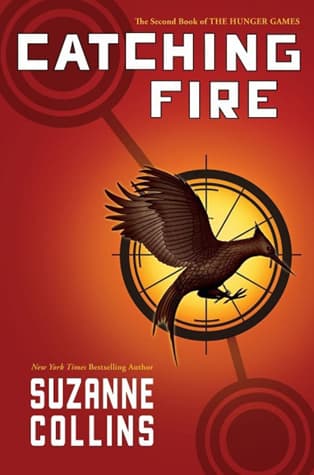
- Catching Fire
Suzanne Collins
4.3 (2.5M) average on GoodreadsFantasyAfter defying the Capitol and starting a rebellion, Katniss and Peeta are forced on a dangerous Victory Tour, navigating political schemes, a fake romance, and the constant threat of a government eager to crush the uprising they began.





Enjoyed the summary?
A summary gives you the shape of the book. The book itself has the detail, the examples and the voice.
Find Burning For Revenge on AmazonAs an Amazon Associate, BookBrief earns from qualifying purchases. How we're funded