

Synopsis
Covers the whole plot, including the ending.
- Difficulty
- Easy
- Pacing
- Slow
- Mood
- Atmospheric, Poignant, Humorous, Reflective, Quaint
- Read it if
- You enjoy character-driven literary fiction with a strong sense of place and a blend of humor and pathos, focusing on the lives of marginalized but resilient individuals.
- Skip it if
- You prefer plot-heavy narratives with a clear, linear progression and high stakes, or dislike episodic storytelling.
Cannery Row Plot Summary
Covers the whole plot, including the ending.
Welcome to Cannery Row
The novel opens by introducing Cannery Row, a street in Monterey, California, described as a 'poem, a stink, a grating noise, a quality of light, a tone, a habit, a nostalgia, a dream.' It is a place full of life, both human and animal, existing on society's fringes. We meet some key residents: Lee Chong, the Chinese grocer; Dora Flood, the madam of the Bear Flag Restaurant, a respectable brothel; and Doc, a marine biologist who runs Western Biological Laboratories. The story establishes the peculiar charm and resilient spirit of this community, where society's usual rules are bent, and a sense of shared existence prevails among the sardine canneries.
Mack and the Boys Acquire a Home
Mack, a resourceful tramp, and his friends—Hazel, Eddie, Hughie, and Jones—live a life of leisure and petty thievery. Tired of sleeping in culverts, they decide they need a more permanent home. Mack approaches Lee Chong, who owns an abandoned fish-meal storage shed. Through flattery, a sob story, and a vague promise of future payment, Mack convinces Lee Chong to let them live in the shed. Lee Chong, despite his business sense, often finds himself outmaneuvered by the Row's residents. Acquiring the Palace Flophouse and Grill starts many adventures for Mack and the boys.
Doc's World at Western Biological
Doc, owner of Western Biological Laboratories, is a central figure on Cannery Row, respected and loved by everyone. His lab is a blend of scientific equipment and marine specimens. Doc is knowledgeable, quiet, and appreciates beauty, whether in a poem or a tide pool creature. He often goes on collecting trips for specimens, returning with unique and sometimes dangerous finds. His door is always open; he offers solace, advice, and loans to residents, showing quiet stability amid the chaos.
The First Party for Doc
Mack and the boys decide to throw a surprise party for Doc, whom they admire. Their intentions are good, but their plan is flawed. They get whiskey from Lee Chong by promising to catch frogs for Doc, which they then sell to him for money. They also steal groceries and a dog for the party. The party quickly goes out of control with too much drinking. It ends with extensive damage to Doc's lab, the destruction of valuable specimens, and a general mess. Doc returns to find his lab in ruins, but he is not angry, understanding their good intentions.
The Aftermath and Redemption
After the disastrous first party, Mack and the boys feel bad. They genuinely like Doc and regret the damage. They decide to make amends by cleaning up the lab and trying to restore order. Their efforts are clumsy and sometimes counterproductive. They also try to replace lost specimens, leading to comical but unsuccessful attempts at marine biology. Despite their ineptitude, their sincerity shows, and Doc, seeing their good intentions, accepts their apologies and their flawed attempts at restitution, strengthening their unique bond.
The Flagpole Skates and the Frog Hunt
Mack and the boys start various schemes to survive and entertain themselves. One incident involves them getting many flagpole skates, which they try to sell to Doc. Doc, always patient, buys a few to humor them. Later, they go on a serious frog-catching trip to sell to scientific supply houses, hoping to earn enough money for a proper party for Doc. This expedition takes them into the wilderness, where their methods and camaraderie are highlighted, showing their ability to find joy and purpose in mundane tasks, all while keeping their amiable chaos.
Dora Flood and the Bear Flag Restaurant
Dora Flood, the madam of the Bear Flag Restaurant, runs a successful and, paradoxically, respectable establishment. Despite its nature, Dora follows strict rules of decorum and hygiene. She is a shrewd businesswoman, managing her girls and finances well. When the Great Depression hits, Dora is one of the few on Cannery Row who continues to do well, even quietly helping the less fortunate during the flu epidemic by providing food and medicine, showing hidden generosity. Her establishment is a stable, if unconventional, part of the Row's social fabric, providing a service and community support.
The Haunted House and the Seer
The novel introduces a haunted house story on Cannery Row, where a 'seer' or fortune-teller lives. This episode highlights the superstitious side of the community and its eccentric characters. The seer, a mysterious woman, offers cryptic predictions and advice, adding to the mystical feel of the Row. Her presence shows the mix of mundane and magical that fills the residents' lives, where rational explanations often exist with folklore and belief in the unseen. This interlude offers a glimpse into the diverse spiritual side of the community.
The Second Party for Doc
Determined to make up for the first failure, Mack and the boys plan another surprise party for Doc, this time with care and effort. They gather supplies, clean Doc's lab thoroughly, and invite Dora's girls and other residents. The party is a success, full of warmth, laughter, and genuine affection for Doc. Everyone brings what they can, creating a communal celebration. This party symbolizes the deep bond between Doc and the rest of Cannery Row, showing their collective love and respect for him, and their capacity for camaraderie and generosity.
The Spirit of Cannery Row
The narrative ends by reinforcing Cannery Row's unique spirit. Despite their eccentricities, poverty, and unconventional lives, the residents share a strong sense of community and mutual dependence. They celebrate life, endure hardships, and find joy in their simple existence. The novel emphasizes accepting life as it is, with its beauty and ugliness, its moments of exuberance and loneliness. Doc, as the quiet observer and beloved friend, anchors this diverse group, embodying the intellectual curiosity and compassionate understanding that fills the Row's unique ecosystem, leaving a lasting impression of a lively, resilient, and deeply human place.
Cannery Row Characters
Doc
Protagonist
The respected marine biologist and intellectual heart of Cannery Row.
Doc is the owner and operator of Western Biological Laboratories, a marine biologist with a deep appreciation for both science and art. He is intelligent, compassionate, and patient, serving as a quiet anchor for the eccentric inhabitants of Cannery Row. He is a man of few words but profound understanding, offering solace and support to everyone without judgment. Doc is beloved by all, from Mack and the boys to Dora Flood and her girls, for his generosity, wisdom, and genuine kindness.
Relationships: Mack and the boys (mentor/friend, respected figure); Lee Chong (acquaintance, occasional business partner); Dora Flood (respected acquaintance, recipient of mutual goodwill)
Mack
Protagonist/Supporting
The charismatic leader of the Palace Flophouse and Grill.
Mack is the unofficial leader of a group of lovable tramps known as 'Mack and the boys.' He is a master of manipulation, capable of charming anyone into giving him what he wants, but always with good intentions at heart. Despite his disreputable lifestyle, Mack possesses a surprising amount of wisdom, a deep understanding of human nature, and a profound loyalty to his friends, especially Doc. He embodies the carefree, resourceful, and sometimes misguided spirit of Cannery Row.
Relationships: Doc (deep admiration and friendship); The boys (Hazel, Eddie, Hughie, Jones) (leader and friend); Lee Chong (frequent debtor and charming manipulator)
Lee Chong
Supporting
The shrewd but often outmaneuvered Chinese grocer.
Lee Chong owns the general store on Cannery Row, a hub for the community. He is a pragmatic and shrewd businessman, always looking to make a profit. However, he often finds himself manipulated by the residents of the Row, particularly Mack and the boys, who owe him significant debts. Despite his occasional exasperation, Lee Chong is an integral part of the community, providing goods and, sometimes reluctantly, shelter. He represents the practical, enduring backbone of the Row, navigating its eccentricities with a mix of resignation and quiet resilience.
Relationships: Mack and the boys (creditor/debtor, exasperated landlord); Doc (business acquaintance)
Dora Flood
Supporting
The formidable and surprisingly generous madam of the Bear Flag Restaurant.
Dora Flood is the madam of the Bear Flag Restaurant, the most successful and respectable brothel on Cannery Row. She is a strict businesswoman, running her establishment with an iron fist and impeccable cleanliness. Despite her profession, Dora is a pillar of the community, known for her generosity during times of crisis, such as the flu epidemic, when she provided food and medicine to the needy. She is a woman of immense strength and practicality, embodying a surprising moral compass within the unconventional setting of the Row.
Relationships: Doc (respected acquaintance); Her girls (employer, protector)
Hazel
Supporting
One of Mack's boys, known for his gentle nature and unusual name.
Hazel is one of Mack's loyal companions, often described as having a gentle and somewhat simple nature. His name, given by his mother who wanted a girl, is a source of mild embarrassment but also a defining characteristic. Hazel is a good-hearted and earnest member of the group, participating in all their schemes and adventures with enthusiasm. He provides a sense of innocent wonder and often acts as a foil to Mack's more cunning plans, highlighting the diverse personalities within the Palace Flophouse.
Relationships: Mack (loyal follower, friend); The other boys (friend)
Frankie
Supporting
A mentally challenged boy who finds solace in Doc's lab.
Frankie is a mentally challenged boy who is often found helping out around Doc's lab, though his efforts sometimes lead to more trouble than help. Doc treats him with kindness and patience, providing him with a safe haven and a sense of purpose. Frankie's presence highlights Doc's compassion and the Row's acceptance of those on the margins. His attempts to be helpful, though clumsy, are always well-intentioned, and he is a poignant figure representing innocence and vulnerability within the community.
Relationships: Doc (caregiver/ward, protector)
Eddie
Supporting
One of Mack's boys, who serves as a substitute bartender.
Eddie is another member of Mack's entourage. His distinguishing characteristic is his past as a part-time bartender, which makes him the designated mixer of drinks for the Palace Flophouse. He is practical and contributes to the group's survival, often with a quiet competence. Eddie, like the others, values his freedom and the camaraderie of the group, content with their unconventional lifestyle. He represents the practical, often overlooked skills that contribute to the group's unique dynamic.
Relationships: Mack (follower, friend); The other boys (friend)
Mr. and Mrs. Malloy
Mentioned
Eccentric residents living in a pipe.
The Malloys are a peculiar old couple who live in a large, abandoned pipe, symbolizing the extreme poverty and resourcefulness of some of Cannery Row's inhabitants. Their story is a brief, almost folkloric interlude that adds to the rich tapestry of the Row's characters. They represent the resilience and odd charm of those who exist entirely outside conventional society, finding comfort and home in the most unlikely places.
Cannery Row Themes
Community and Interdependence
The novel shows Cannery Row as a lively, connected community where individuals, despite their diverse backgrounds and unconventional lives, rely on one another for survival, emotional support, and belonging. This is clear in how Mack and the boys depend on Lee Chong for credit and Doc for understanding, and how Dora Flood, though a madam, helps during crises. The two parties for Doc show this theme, illustrating the collective effort and affection shared among residents, despite occasional mistakes. Their shared existence, though often chaotic, is tied by a deep, unspoken understanding and mutual acceptance.
“Its inhabitants are, as the man once said, 'whores, pimps, gamblers, and sons of bitches,' by which he meant Everybody. Had the man looked through another peephole he might have said, 'saints and angels and martyrs and holymen.'”
Acceptance of Life's Paradoxes
Cannery Row embraces life's contradictions, showing a world where beauty and squalor, humor and sadness, generosity and manipulation coexist. The novel does not judge its characters; instead, it accepts them as they are, celebrating their flaws and virtues equally. Dora Flood, a madam, is also a humanitarian. Mack, a 'bum,' has wisdom and loyalty. Doc, a scientist, appreciates poetry and simple joys. This acceptance is central to the Row's way of life, allowing inhabitants to find meaning and contentment in their unconventional existence, without seeking conventional 'success' or 'morality.'
“It is a poem, a stink, a grating noise, a quality of light, a tone, a habit, a nostalgia, a dream.”
The Beauty in the Marginalized
Steinbeck elevates the lives of those on society's fringes—the tramps, the prostitutes, the eccentric scientists—showing their dignity, humanity, and unique contributions. The novel highlights the beauty and complexity in these often-overlooked individuals, suggesting that true value is not in social status or wealth, but in character, connection, and the capacity for joy and compassion. Doc finds beauty in marine life, and the story finds similar beauty in the 'tide pool' of human life on Cannery Row, showing that worth can be found in unexpected places and people.
“The things that make the Row are, for instance, the water front, the canneries, the Chinese grocery, the whore houses, and the laboratories.”
The Search for Meaning and Connection
Beneath seemingly aimless lives, many characters in Cannery Row are quietly searching for meaning and connection. Doc finds it in his scientific work and his interactions with others. Mack and the boys find it in their camaraderie and their efforts to show admiration for Doc. Even the brief stories of minor characters, like the man who collects the rare specimen for Doc, suggest a desire for recognition or purpose. This search is not always obvious or successful, but it underlies many of their actions, connecting them in a shared human experience of seeking significance.
“Doc was a man of his time, and he lived in his time, but he was also a man of all time, and he lived for all time.”
The Inevitability of Chaos and Order
The novel presents life on Cannery Row as a constant interplay between chaos and underlying order, much like the natural world Doc studies. The spontaneous, often destructive actions of Mack and the boys contrast with the routines of Dora and Lee Chong, and Doc's scientific precision. Yet, even within the chaos, there is a natural rhythm and a kind of 'ecological balance' that keeps the community together. The first party for Doc shows uncontrolled chaos, while the second party demonstrates a successful, though still lively, attempt at order and celebration, reflecting life's cyclical nature and the balance between spontaneity and intention.
“The word 'bum' has a bad sound. It is a good sound in Cannery Row. It is a word of distinction.”
Plot Devices & Literary Techniques
Omniscient Narrator
A detached yet empathetic voice guiding the reader through Cannery Row.
The novel employs an omniscient narrator who provides a panoramic view of Cannery Row, often interjecting with philosophical observations and historical context. This narrative voice is both detached, offering a 'scientific' perspective on the human ecosystem, and deeply empathetic, revealing the inner lives and motivations of the characters without judgment. This allows Steinbeck to present the diverse cast of characters and their interconnected stories with a consistent tone, while also subtly guiding the reader's understanding of the Row's unique charm and underlying meaning.
Episodic Structure
A series of interconnected vignettes rather than a linear plot.
Cannery Row is structured as a series of interconnected vignettes and character sketches rather than a single, overarching linear plot. Each chapter or section often focuses on a particular character, event, or philosophical reflection, loosely tied together by the setting and the recurring characters. This episodic structure mirrors the organic, unpredictable flow of life on the Row, allowing Steinbeck to explore various aspects of the community and its inhabitants without strict adherence to a traditional narrative arc. It emphasizes atmosphere and character over plot progression, creating a rich tapestry of life.
Symbolism of the Tide Pool
The tide pool as a microcosm for the ecosystem of Cannery Row.
The tide pool, a frequent subject of Doc's scientific study, serves as a powerful symbol for Cannery Row itself. Just as a tide pool contains a diverse array of creatures living in a delicate, interdependent balance, Cannery Row is home to a varied collection of human 'specimens' who, despite their differences, rely on each other for survival and thrive in their unique environment. The constant ebb and flow of the tides parallel the changing fortunes and events on the Row, highlighting the natural, sometimes chaotic, yet ultimately resilient nature of the community.
Understated Humor and Irony
Gentle humor and situational irony used to highlight human foibles.
Steinbeck employs understated humor and gentle irony throughout the novel, often stemming from the characters' well-intentioned but misguided actions. Mack and the boys' attempts to throw a party for Doc, for instance, are filled with comical mishaps and ironic outcomes. This humor is never mean-spirited; instead, it serves to endear the characters to the reader and to highlight the endearing absurdity of human nature. It also provides a lighthearted counterpoint to the underlying themes of poverty and marginalization, making the narrative both poignant and entertaining.
Cannery Row Quotes
“Cannery Row in Monterey in California is a poem, a stink, a grating noise, a quality of light, a tone, a habit, a nostalgia, a dream.”
“It is a time of great peace, of great rest. It is a time for the geese to fly south, for the leaves to turn gold, for the sun to sink low and red.”
“Lee Chong’s grocery, while not a model of orderliness, was a miracle of supply.”
“Doc was, of course, a great man. He was a very great man.”
“It has always seemed to me that in order to be a good chemist, one must be a poet.”
“The things we admire in men, kindness, generosity, openness, honesty, understanding, are the concomitants of failure in our system. And those traits we despise, sharpness, greed, acquisitiveness, meanness, egotism, are the concomitants of success.”
“And when you collect marine animals, there are certain things you don’t think about.”
“The word ‘whore’ does not mean what you think it means.”
“They were not heroes, they were not great, they were not even very good. They were just people.”
“How can I, a man, know what a woman wants? It is a mystery.”
“It is a place of dreams and hopes, and of poverty and desperation.”
“The boys had a way of not being there when they were wanted, and of being there when they were not.”
“A man must be a man, even if he is a bum.”
“The bums who inhabited the Palace Flophouse were not bums at all. They were philosophers.”
Quiz
10 questions on the plot and the characters. Each answer comes with a short explanation.
Question 1
What is the primary business of Lee Chong, the Chinese grocer, on Cannery Row?
- He owns a successful fishing boat operation.
- He runs a general store that sells groceries and other goods.
- He manages the local sardine cannery.
- He operates a popular bar and brothel.
Show answer
B. He runs a general store that sells groceries and other goods. Lee Chong owns and operates the local grocery store, which serves as a central hub for the characters' daily needs and interactions, often extending credit to those in need.
Question 2
What is the name of the marine biologist character, based on Steinbeck's real-life friend Ed Ricketts?
- Mack
- Doc
- Frankie
- Eddie
Show answer
B. Doc Doc is the marine biologist who runs the Western Biological Laboratory, a character famously based on Steinbeck's close friend and collaborator, Ed Ricketts.
Question 3
What is the name of the brothel on Cannery Row, run by Dora?
- The Bear Flag Restaurant
- The Golden Poppy Inn
- The Blue Pelican House
- The Sea Otter Saloon
Show answer
A. The Bear Flag Restaurant Dora Flood runs the Bear Flag Restaurant, which, despite its name, is a well-known brothel on Cannery Row, playing a vital social and economic role in the community.
Question 4
What do Mack and the boys initially try to do to show their appreciation for Doc, which ultimately leads to disaster?
- They try to get him a job at the cannery.
- They attempt to throw him a surprise party.
- They build him a new laboratory.
- They collect specimens for his research.
Show answer
B. They attempt to throw him a surprise party. Mack and the boys decide to throw Doc a surprise party to express their gratitude, but their inexperience and overenthusiasm lead to a chaotic and destructive event.
Question 5
What is the primary reason the sardine canneries on Cannery Row are eventually abandoned?
- A massive fire destroys all the factories.
- The sardine population disappears due to overfishing.
- New environmental regulations force their closure.
- The workers go on an indefinite strike.
Show answer
B. The sardine population disappears due to overfishing. The decline and eventual disappearance of the sardine population, primarily due to overfishing, is a key backdrop to the novel, leading to the eventual abandonment of the canneries and a shift in the community's economy.
Question 6
Which theme is prominently explored through the interactions between characters like Doc, Mack, and Dora?
- The corrupting influence of wealth.
- The importance of individual ambition and success.
- The resilience and interconnectedness of a marginalized community.
- The inevitable failure of utopian ideals.
Show answer
C. The resilience and interconnectedness of a marginalized community. The novel consistently highlights the deep bonds, mutual support, and resilience of the Cannery Row inhabitants, demonstrating how they depend on each other for survival and companionship despite their unconventional lives.
Question 7
What unique characteristic does Doc possess that makes him a central figure and confidant for many on Cannery Row?
- He is the wealthiest resident and provides financial aid.
- His non-judgmental empathy and quiet understanding.
- His ability to perform miracles and heal illnesses.
- He is the only educated person in the entire town.
Show answer
B. His non-judgmental empathy and quiet understanding. Doc is revered by the community not for his wealth or power, but for his profound empathy, his ability to listen without judgment, and his quiet understanding of human nature, making him a trusted figure for everyone.
Question 8
Which of the following best describes the philosophical perspective often attributed to Doc and, by extension, to Steinbeck in 'Cannery Row'?
- A rigid moralism that condemns the characters' lifestyles.
- A detached, scientific observation combined with deep, compassionate understanding.
- An idealistic belief in the perfectibility of human nature.
- A cynical view that sees all human actions as self-serving.
Show answer
B. A detached, scientific observation combined with deep, compassionate understanding. As stated in the provided text, Steinbeck, through Doc, exhibits 'scientific detachment, empathy toward the lonely and depressed,' suggesting a keen observational eye coupled with profound understanding and compassion, rather than judgment.
Question 9
What specific item do Mack and the boys acquire from Lee Chong's store, which becomes central to their residence and lifestyle?
- A fishing boat
- A used car
- A dilapidated former storage shed/warehouse
- A collection of scientific instruments
Show answer
C. A dilapidated former storage shed/warehouse Mack and the boys 'rent' a dilapidated storage shed from Lee Chong for a nominal fee, which they transform into their communal living space, the 'Palace Flophouse and Grill.'
Question 10
How does Steinbeck use the character of Frankie, the mentally challenged boy, to explore broader themes in the novel?
- To highlight the dangers of living on the streets.
- To showcase the community's capacity for kindness and protective instincts towards the vulnerable.
- To serve as a symbol of economic hardship and poverty.
- To demonstrate the limitations of Doc's compassion.
Show answer
B. To showcase the community's capacity for kindness and protective instincts towards the vulnerable. Frankie, despite his challenges, is embraced and protected by the Cannery Row community, particularly by Doc. His presence highlights the deep-seated humanity and protective nature of the characters towards those who are most vulnerable, underscoring the theme of community and acceptance.
Cannery Row FAQ
What is the central premise of 'Cannery Row'?
'Cannery Row' explores the lives of a group of lovable bums, outcasts, and eccentrics living in Monterey, California, during the Great Depression. The novel primarily focuses on their interconnectedness and their attempts, often misguided but well-intentioned, to show appreciation for their friend, Doc, the marine biologist.
Who is Doc, and what is his significance to the community?
Doc is a kind, intelligent, and solitary marine biologist who runs the Western Biological Laboratories. He serves as the intellectual and emotional anchor of Cannery Row, often providing solace, wisdom, and sometimes even medical attention to the other residents, who deeply respect and admire him.
Describe Mack and the boys. What are their living arrangements?
Mack and the boys are a group of resourceful, unemployed men who live in the Palace Flophouse, a dilapidated former warehouse they've taken over. They are characterized by their camaraderie, their knack for getting by through various schemes, and their deep, if sometimes clumsy, affection for Doc.
What role does Lee Chong's grocery store play in the novel?
Lee Chong's grocery store is the economic and social hub of Cannery Row, serving as a source of provisions, credit, and gossip. It's where many of the characters conduct their business and where Mack and the boys often attempt to acquire goods, sometimes through less-than-conventional means, highlighting the community's reliance on each other.
What is the significance of the two parties thrown for Doc?
The two parties represent the community's earnest but ultimately disastrous attempts to show their love and appreciation for Doc. The first party, intended as a surprise, spirals into chaos and destruction, while the second, carefully planned and executed, achieves its goal of bringing joy and a sense of belonging to Doc, highlighting the themes of intention versus outcome.
How does the character of Dora Flood, the madam of the Bear Flag Restaurant, subvert typical expectations?
Dora Flood, despite running a brothel, is portrayed as a pillar of the community, known for her generosity, strict business sense, and charitable contributions during hard times. She provides employment, helps the poor, and maintains order, challenging conventional moral judgments and showcasing the complex morality of Cannery Row.
What is the 'frog hunt' and what does it reveal about Mack and the boys?
The 'frog hunt' is an expedition undertaken by Mack and the boys to collect frogs for Doc's laboratory, intended as a favor. It reveals their willingness to work hard for Doc and their surprising competence when motivated, but also their underlying tendency towards mischief and indulgence, as they end up drinking most of the whiskey intended for the trip.
How does Steinbeck use the tide pool ecosystem as a metaphor for Cannery Row?
Steinbeck frequently describes the tide pool's intricate, interdependent ecosystem, where various creatures live in a delicate balance of predator and prey, survival and adaptation. This serves as a powerful metaphor for the human community of Cannery Row, highlighting their own struggle for survival, their interdependence, and the natural, often harsh, cycles of life.
What is the significance of the gopher in the Palace Flophouse?
The gopher living under the Palace Flophouse, which Mack and the boys try to catch, symbolizes their persistent, often futile, efforts to control their environment and their simple, almost childlike, engagement with nature. It represents a small, ongoing battle in their otherwise unstructured lives.
How does Doc grapple with loneliness and isolation despite being a beloved figure?
Doc, despite being deeply respected and admired, often feels a profound sense of loneliness and intellectual isolation, as his scientific mind and refined tastes set him apart from the boisterous residents. His late-night walks and quiet reflections reveal his internal struggles with the human condition and the search for meaning.
Analyze the psychological motivations behind Mack and the boys' actions, particularly their attempts to help Doc.
Mack and the boys are driven by a deep, almost primal, affection for Doc, viewing him as a benevolent leader and a source of stability. Their attempts to help him, though often clumsy and destructive, stem from a genuine desire to express gratitude and earn his approval, highlighting their need for purpose and belonging.
How does the novel explore the concept of 'belonging' among its marginalized characters?
The novel portrays a strong sense of belonging among the outcasts of Cannery Row, who create their own unconventional family and community. Despite their individual struggles and eccentricities, they find acceptance and solidarity with one another, forming a collective identity that contrasts with mainstream society.
Discuss the psychological impact of poverty and social marginalization on the characters.
Poverty and marginalization in Cannery Row lead to a unique set of coping mechanisms, including resourcefulness, a disregard for conventional rules, and a strong reliance on community. While it fosters resilience, it also contributes to feelings of hopelessness and a focus on immediate gratification, as seen in their often chaotic lifestyles.
Is 'Cannery Row' an optimistic or pessimistic novel regarding the human condition?
'Cannery Row' presents a nuanced view; it is optimistic in its celebration of human connection, resilience, and the beauty found in unconventional lives, yet it carries an underlying melancholic tone about the inevitability of loneliness, the fleeting nature of joy, and the harsh realities of survival, making it both poignant and hopeful.
How does Steinbeck use humor to temper the underlying sadness and harshness of life in Cannery Row?
Steinbeck employs a gentle, often ironic humor through the characters' antics, their witty dialogue, and the absurd situations they create. This humor serves to lighten the narrative, making the characters' struggles more palatable and highlighting their indomitable spirit, preventing the story from becoming overly bleak.
What is the novel's stance on conventional morality and societal norms?
'Cannery Row' largely disregards or subverts conventional morality, celebrating the lives of its 'undesirable' characters and finding virtue in their unconventional ways. It suggests that true goodness and community can exist outside of societal expectations, challenging readers to look beyond superficial judgments.
How does the cyclical nature of life, as depicted in the novel, contribute to its themes?
The novel emphasizes the cyclical nature of life through recurring events like parties, the changing seasons, and the constant ebb and flow of the tide pool. This reinforces the idea that life, despite its ups and downs, continues, and that joy and sorrow are inherent parts of existence, mirroring the continuous cycle of nature.
What is the enduring message or 'philosophy' that Steinbeck conveys through 'Cannery Row'?
Steinbeck conveys a philosophy of acceptance, finding beauty and dignity in all forms of life, especially among those on the margins. The novel suggests that true wealth lies in human connection and empathy, and that life, in all its messy reality, is to be embraced, celebrated, and understood rather than judged.
About the author
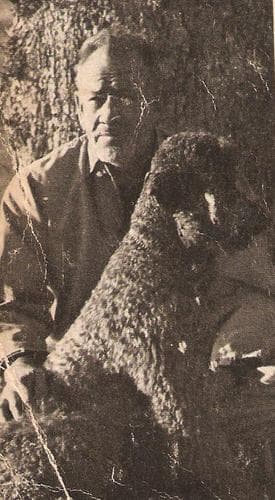
John Ernst Steinbeck was an American writer. He won the 1962 Nobel Prize in Literature "for his realistic and imaginative writings, combining as they do sympathetic humor and keen social perception". He has been called "a giant of American letters."
Similar books
- The Grapes of Wrath
John Steinbeck
4.0 (750k) average on GoodreadsHistorical FictionExplores themes of community, resilience, and the struggles of the working class with a similar compassionate lens.
- East of Eden
John Steinbeck
4.4 (429k) average on GoodreadsLiterary FictionFeatures rich character development and a deep exploration of human nature within a specific California setting.
- My Ántonia
Willa Cather
3.8 (120k) average on GoodreadsHistorical FictionOffers a vivid portrayal of a specific community and its inhabitants, with a focus on character and setting over plot.
- Native Son
Richard Wright
4.0 (89k) average on GoodreadsHistorical FictionNative Son (1940) presents a stark contrast in its depiction of poverty and social injustice. Wright's novel offers a raw, brutal, and unflinching look at the systemic oppression faced by African Americans in urban environments, lacking the romanticized or humorous elements sometimes found in Steinbeck's Cannery Row. Wright's realism is far more confrontational and less focused on community charm.
- Dubliners
James Joyce
3.9 (123k) average on GoodreadsLiterary FictionSimilar to Cannery Row, Joyce's Dubliners (1914) is an episodic collection of interconnected stories rather than a single continuous narrative. Both works excel at crafting vivid snapshots of specific locales and their inhabitants, using vignettes to reveal deeper truths about human nature and societal conditions, though Dubliners often carries a more melancholic and pessimistic tone.
- The Old Man and the Sea
Ernest Hemingway
3.8 (831k) average on GoodreadsLiterary FictionA Cuban fisherman's long struggle with a giant marlin becomes a story of endurance and dignity, now retold for young adults with illustrations, phonetic guides, and writing prompts in Traditional Chinese.





Enjoyed the summary?
A summary gives you the shape of the book. The book itself has the detail, the examples and the voice.
Find Cannery Row on AmazonAs an Amazon Associate, BookBrief earns from qualifying purchases. How we're funded