“Optima dies ... prima fugit.”
— Jim Burden's Latin teacher, Mr. Gaston, often repeats this phrase, which means 'The best days are the first to flee.'

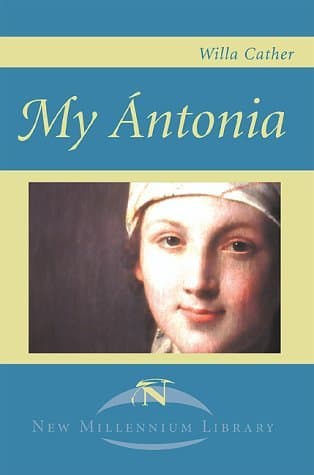
Sign in to track this book
Through Jim Burden's nostalgic eyes, witness the strong spirit and struggles of Bohemian immigrant Ántonia Shimerda as she navigates love, loss, and the Nebraska prairie.
Ask anything about My Ántonia and get instant answers grounded in the summary.
Ten-year-old Jim Burden, recently orphaned, travels by train to live with his grandparents on their farm in Black Hawk, Nebraska. On the same train is the Shimerda family—Mr. and Mrs. Shimerda, their children Ántonia, Yulka, Ambrosch, and Marek—Bohemian immigrants also arriving to start a new life on the prairie. Jim's grandparents, especially his grandmother, are kind and helpful to the struggling Shimerdas, who are unprepared for pioneer life. Ántonia, a few years older than Jim, quickly befriends him, and he begins teaching her English. Their first meetings show the cultural and language differences between the settlers and the new immigrants, as well as the immediate bond between Jim and Ántonia.
The first winter on the prairie is very difficult for the Shimerda family. Their dugout home is not good enough, their supplies are low, and they are often hungry. Mr. Shimerda, a cultured and sensitive man, becomes increasingly sad and homesick, unable to adapt to the brutal conditions and the loss of his old life in Bohemia. His quiet suffering deeply affects Jim, who often visits the Shimerdas. Despite Jim's and his grandparents' help and friendship, Mr. Shimerda's spirits continue to decline. The family's struggles show the huge challenges early immigrants faced.
The severe winter and deep loneliness are too much for Mr. Shimerda. One cold morning, he commits suicide by shooting himself. This tragic event deeply shocks both the Shimerda family and the community, especially Jim, who is deeply affected by the death of Ántonia's father. The community helps the Shimerdas, with Jim's grandfather arranging the burial on the family's land. Mr. Shimerda's death forces Ántonia and her older brother, Ambrosch, to take on more responsibilities, a turning point in Ántonia's life as she quickly grows up under the weight of new duties.
After her father's death, Ántonia, still a young girl, takes on many responsibilities. She works hard in the fields with her brother Ambrosch, doing tasks traditionally done by men. This period strengthens her resilient character but also makes her lose some youthful innocence. Jim watches her change, admiring her strength and dedication to her family. Despite the hardship, Ántonia stays spirited, often finding joy in her work. Her physical strength and endurance become a key trait, showing the demanding life of a pioneer woman.
As Jim grows older and prepares for high school, his grandparents decide to sell their farm and move to the nearby town of Black Hawk. This move separates Jim from daily prairie life and his closeness to Ántonia. While in town, Jim attends school and experiences a more structured social environment. This change shifts his perspective, moving him from the wild prairie to the more refined, though sometimes restrictive, life of a small town. The move also sets the stage for Ántonia and other country girls to come to Black Hawk for work.
After a few years, Ántonia, along with other 'hired girls' like Lena Lingard and Tiny Soderball, leaves the farm to work for families in Black Hawk. These girls, mostly Scandinavian and Bohemian immigrants, are lively and hardworking, bringing new energy to the town. Jim, now a teenager, is drawn to their vitality and independence, often spending time with them. The townspeople, especially the older families, view the hired girls with a mix of admiration and suspicion, often gossiping about their social lives. Ántonia works for the Harling family, becoming an essential part of their home.
Jim attends the University of Nebraska, focusing on his studies. During this time, he reconnects with Lena Lingard, who has moved to Lincoln and become a successful dressmaker. Lena, beautiful and independent, shows a different path for immigrant women—one of self-sufficiency and city success rather than traditional farm life. Jim is drawn to her charm and experience, and they spend much time together, often at the expense of his studies. Their relationship, however, remains platonic, mainly because Lena is not interested in marriage and Jim has an unspoken devotion to Ántonia.
After Jim leaves for college, Ántonia becomes engaged to a railroad conductor named Larry Donovan. She is deeply in love and looks forward to their marriage. However, Donovan is selfish and deceitful. He takes her savings, gets her pregnant, and then abandons her, leaving her heartbroken and shamed. Ántonia, pregnant and alone, must return to her family's farm. This betrayal is a devastating blow to her, but she faces the difficulty with her usual resilience, refusing to be broken by the experience. Her return to the country means a retreat from the town's social complexities.
After Larry Donovan abandons her, Ántonia gives birth to a daughter. Despite the scandal and hardship, she embraces motherhood and returns to her life on the farm, working hard with new purpose. She refuses to be defined by her past troubles, instead finding strength and fulfillment in raising her child and working the land. Jim hears of her resilience from his grandmother and others, admiring her ability to overcome difficulty with grace. This period shows Ántonia's deep connection to the earth and her strength as a woman and a mother.
Twenty years later, Jim Burden, now a successful corporate lawyer in New York, returns to Nebraska and visits Ántonia. He finds her married to Anton Cuzak, a kind and hardworking Bohemian farmer, and surrounded by ten children. Ántonia has aged, her hands are rough from work, but her spirit is as lively and generous as ever. She lives a life deeply connected to the land, raising her children and working with her husband. Jim is deeply moved by her happiness and the rich life she has created, seeing her as the pioneering spirit.
During his visit, Jim interacts with Ántonia's many children, who are bright, energetic, and respectful, reflecting their mother's strong character and values. He notices how each child carries a piece of Ántonia's spirit, whether in their looks, their hard work, or their joyful outlook. The Cuzak farm shows Ántonia's hard work and dedication, a thriving home full of life and purpose. Jim realizes that Ántonia's true legacy is not worldly success or city sophistication, but her deep connection to the land and her ability to nurture life, embodying the enduring spirit of the American frontier.
As Jim leaves Ántonia's farm, he reflects on their shared past and her influence on his life. He realizes that Ántonia represents his childhood and the pioneering spirit of the prairie. Despite their different paths, their bond remains, a basic part of his identity. He feels a sense of peace and fulfillment, understanding that his memories of Ántonia and the Nebraska landscape are his most cherished possessions. The novel ends with Jim's realization that their shared experiences have made their lives 'inseparable,' forever linked by the 'great, free spirit of the West.'
The Protagonist/Narrator
Jim grows from a lonely orphan into a successful man, but his emotional journey is defined by his enduring, often romanticized, connection to Ántonia and the prairie.
The Protagonist
Ántonia transforms from a naive immigrant girl to a hardworking farm woman, through betrayal and motherhood, ultimately finding fulfillment and strength in her family and the land.
The Supporting
Remains a consistent figure of moral authority and stability, providing a foundation for Jim's upbringing.
The Supporting
Remains a consistent figure of warmth and domestic strength, providing emotional support to Jim and the immigrant families.
The Supporting
His arc is a tragic decline from a cultured man to one overwhelmed by despair, ending in suicide, which profoundly impacts his family and Jim.
The Supporting
Lena transforms from a country girl into a self-sufficient urban professional, embodying independence and defying traditional expectations for women.
The Supporting
Remains largely static, focused on her family's material well-being, but her resilience is shown in her survival despite hardship.
The Supporting
Remains a consistent figure of hard work and self-interest, ultimately succeeding as a farmer, but without much personal growth.
The Supporting
Transforms from a hired girl into a wealthy and independent entrepreneur, representing an alternative path of success for immigrant women.
The novel explores the many sides of the American Dream through the experiences of various immigrant families. For the Shimerdas, the dream is at first a harsh reality, marked by poverty, cultural alienation, and Mr. Shimerda's tragic death. However, Ántonia, through sheer resilience and hard work, eventually achieves a fulfilling life based on family and land, redefining success beyond money. The different paths of Lena Lingard and Tiny Soderball, who find economic success in cities and gold rushes, further show the varied ways immigrants sought a better life in America. The theme highlights both the huge challenges and the deep rewards of building a new life on the frontier.
“I was thinking of Ántonia's father, and how he had longed for a home on the prairie and had found only death. I was thinking, too, of Ántonia, and how she had found a life here, a rich and fruitful one.”
The Nebraska prairie is more than just a setting; it is a powerful force that shapes the characters' lives. For Jim, the vast, wild landscape brings a sense of freedom and connection. For the immigrant families, it represents both a brutal challenge and a source of food and identity. The land demands hard labor and resilience, but in return, it offers a deep sense of belonging and the chance for a fruitful life. Ántonia's ultimate happiness is directly tied to her connection to the earth, raising her children on the farm, embodying the enduring spirit of the prairie. The novel suggests that true wealth and happiness come from living in harmony with nature.
“The land was the only thing that was real, the only thing that one could be sure of.”
The entire novel is Jim Burden's memory, a journey back into his childhood memories of Ántonia and the Nebraska prairie. This structure gives the story a strong sense of nostalgia, as Jim idealizes the past and the people in it, especially Ántonia. His memories are clear and often romanticized, suggesting that the past, though sometimes harsh, holds a deep beauty and meaning that shapes the present. Remembering allows Jim to reconnect with his roots and understand the lasting impact of his early experiences, showing how memory builds identity and preserves what is lost to time.
“For Ántonia and for me, this was the end of a chapter. What would be written on the next was yet to be seen, but the old days, the first days, were gone forever.”
Willa Cather celebrates the strength, resilience, and adaptability of women on the frontier, especially through Ántonia. Despite facing poverty, cultural displacement, abandonment, and social judgment, Ántonia consistently shows an unwavering spirit, a capacity for hard work, and deep maternal love. She embodies a practical, lasting strength that allows her to not only survive but thrive. The novel also shows other forms of female strength through characters like Lena Lingard and Tiny Soderball, who achieve independence and success in different areas, challenging traditional gender roles of the time.
“She had had a hard life, to be sure, but she had a rich nature, and she was still beautiful, and she had given herself to life, had been prodigal of her strength, had been a rich mine of life, like a tree that has borne so many crops that it is almost worn out, but still bears.”
The novel deeply explores the change from childhood innocence to adult understanding, especially through Jim Burden's eyes. His early years on the prairie are marked by wonder and freedom, shared with Ántonia. However, events like Mr. Shimerda's suicide and the harsh realities of pioneer life gradually introduce him to the complexities and sorrows of the adult world. Ántonia's own loss of innocence is more sudden and deep, forced into adult responsibilities after her father's death and later experiencing the pain of betrayal. The theme highlights how these early experiences, while taking away innocence, also build character and deepen one's understanding of life's challenges.
“The world was a tremendous place, and we were only little things in it. But we were alive, and we would grow.”
The story is told by Jim Burden looking back on his life and Ántonia.
The novel is framed as a memoir written by Jim Burden, recalling his childhood and young adulthood on the Nebraska prairie, primarily focusing on Ántonia Shimerda. This retrospective narration allows for a reflective, often nostalgic tone, as Jim interprets past events through the lens of his adult understanding. It also means the reader experiences Ántonia through Jim's idealized and deeply personal perspective, making her a somewhat mythical figure in his memory. This device emphasizes the subjective nature of memory and the enduring impact of formative relationships.
The Nebraska prairie as a character and shaping force.
The expansive and often harsh Nebraska prairie serves as more than just a backdrop; it is a fundamental character in the novel, shaping the lives and destinies of its inhabitants. It symbolizes both the promise of new beginnings (for immigrants) and the brutal indifference of nature. The setting dictates the characters' struggles, their work, and their connection to the land. Its wild beauty inspires Jim's poetic sensibility, while its unforgiving demands forge Ántonia's resilience. The pastoral setting underscores themes of human endurance, the American dream, and the profound influence of environment on character.
Immigrant women who work in town, representing vitality and independence.
The 'hired girls' — Ántonia, Lena Lingard, Tiny Soderball, and others — symbolize the new wave of immigrant vitality and independence that invigorated the small town of Black Hawk. They are often viewed with a mix of admiration and suspicion by the more established townspeople. These young women represent a distinct social class and a different kind of freedom, earning their own money and enjoying a social life that was often denied to their American counterparts. Their stories collectively illustrate the diverse paths available to immigrant women, from Ántonia's return to the land to Lena's urban success and Tiny's entrepreneurial spirit.
Lena's urban independence contrasts with Ántonia's rootedness to the land.
Lena Lingard functions as a foil to Ántonia Shimerda, highlighting different aspects of female experience and success. While Ántonia finds her fulfillment in family, hard work on the farm, and a deep connection to the land, Lena achieves independence and prosperity through urban skill (dressmaking) and a deliberate avoidance of marriage and domesticity. Lena represents a more modern, self-sufficient woman, focused on individual freedom, whereas Ántonia embodies a more traditional, yet equally powerful, strength rooted in community and procreation. Their contrasting lives illuminate the diverse paths available to women in the burgeoning American West.
“Optima dies ... prima fugit.”
— Jim Burden's Latin teacher, Mr. Gaston, often repeats this phrase, which means 'The best days are the first to flee.'
“The only thing very noticeable about Ántonia was that she was there.”
— Jim Burden reflects on Ántonia's quiet, almost unremarkable presence when he first meets her as a child.
“I had the sensation that I had taken a big bite out of the world.”
— Jim describes his feeling of exhilaration and belonging when he first arrives on the Nebraska prairie.
“As I looked about me I felt that the grass was the country, as the water is the sea.”
— Jim reflects on the vastness and dominance of the prairie grass, defining the landscape.
“Some memories are realities, and are better than anything that can ever happen to one again.”
— Jim reflects on the enduring power and beauty of his past experiences and memories.
“I was thinking about Ántonia and her children, and about how I had helped her in a way no one else could, by being her friend.”
— Jim considers his unique role and lasting connection with Ántonia over the years.
“The great fact was Ántonia.”
— Jim concludes his narrative by emphasizing Ántonia's central importance and enduring impact on his life.
“The older immigrants, like Ántonia’s parents, were for the most part quiet and unassuming people.”
— Jim describes the initial demeanor of the immigrant families settling on the prairie.
“There was nothing but land: not a country at all, but the material out of which countries are made.”
— Jim describes the raw, untamed nature of the Nebraska prairie before extensive settlement.
“She was a rich mine of life, like the tree that bears the winter apples, which are only delicious after the frost.”
— Jim reflects on Ántonia's resilience and depth of character, which deepened with hardship.
“I knew then that I should never have to ask myself, 'What makes life worth living?'”
— Jim feels a profound sense of purpose and contentment while observing the natural world and his place within it.
“She had had twenty years of harvesting, and child-bearing, and house-keeping, and living.”
— Jim describes the full, demanding life Ántonia has led by the time he reconnects with her as an adult.
“Whatever we had missed, we possessed together the precious, the incommunicable past.”
— Jim reflects on the shared history and unspoken understanding between him and Ántonia.
“The land was an enigma. It was a place of hardship and isolation, but also of beauty and opportunity.”
— Jim considers the complex nature of the prairie and its dual impact on the lives of its inhabitants.
Ready to see how well you understood this book? Take our interactive quiz with 10 questions.
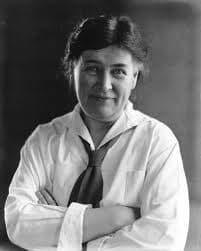
Willa Sibert Cather was an American writer known for her novels of life on the Great Plains, including O Pioneers!, The Song of the Lark, and My Ántonia. In 1923, she was awarded the Pulitzer Prize for One of Ours, a novel set during World War I.
Support the author — grab the full book.
As an Amazon Associate, BookBrief earns from qualifying purchases, at no extra cost to you. How we're funded.