

Synopsis
Covers the whole plot, including the ending.
- Difficulty
- Medium
- Pacing
- Moderate
- Mood
- Satirical, Cynical, Observational, Energetic, Darkly Humorous
- Read it if
- You enjoy sprawling, character-driven satires of society, particularly those set in a specific historical period (1980s New York) with a focus on class, race, and the justice system.
- Skip it if
- You dislike lengthy novels with a large cast of characters, extensive social commentary, or detailed descriptions of specific cultural milieus.
The Bonfire of the Vanities Plot Summary
Covers the whole plot, including the ending.
The Wrong Turn and the Accident
Sherman McCoy, a 'Master of the Universe' on Wall Street, drives his mistress, Maria Ruskin, home to her apartment in the East Eighties. Lost in the Bronx while trying to return to Manhattan, they take a wrong exit off the Major Deegan Expressway. In a dimly lit, rundown area, they encounter two young black men, Henry Lamb and Roland Auburn, who attempt to block their path. Maria, panicked, urges Sherman to drive away. During the chaotic escape, Sherman's Mercedes hits one of the men, Lamb, and they flee, believing they merely struck a tire or an object. This incident sets in motion a chain of events that will unravel Sherman's life.
The Media Circus Begins
Peter Fallow, a British journalist for the tabloid 'The City Light,' is a cynical, alcoholic hack desperate for a career-making story. When Henry Lamb, the young black man struck by Sherman's car, is hospitalized in a coma, the incident becomes a symbol of racial injustice in the city. Fallow, sensing the potential for sensationalism, begins to investigate, fueled by the city's racial and class divides. His editor, Emilio Lopez, encourages him, seeing the story as a way to boost circulation. Their reporting, often based on speculation, quickly turns Lamb into a martyr and the unknown driver into a villain, creating a public outcry for justice.
The Prosecutor's Ambition
Lawrence 'Larry' Kramer, an ambitious and somewhat insecure Assistant District Attorney in the Bronx, is assigned to the Henry Lamb case. Under pressure from his superior, District Attorney Abe Weiss, who is running for re-election, Kramer understands the political capital in prosecuting a high-profile case involving a white perpetrator and a black victim in a racially charged city. Kramer, though initially hesitant about the lack of concrete evidence, is swayed by the opportunity to advance his career. He aggressively pursues leads, knowing a conviction could elevate him significantly within New York's legal and political landscape.
Sherman's Mounting Anxiety
Following the accident, Sherman McCoy tries to suppress the memory, but the relentless media coverage of Henry Lamb's condition and the search for the hit-and-run driver begins to erode his composure. He experiences increasing paranoia, fearing discovery. His wife, Judy, senses his unease but remains unaware of the specific incident or his affair with Maria. Sherman's world of wealth and privilege feels increasingly fragile, and he struggles to maintain his outward facade of a successful 'Master of the Universe' while battling the weight of his secret and the growing public outrage.
Maria's Betrayal
Maria Ruskin, Sherman's mistress, initially stays silent about the accident. However, she is driven by social climbing and self-preservation. When the police begin to close in on her and the pressure becomes unbearable, Maria makes a calculated decision. Fearing for her own reputation and potential legal repercussions, she contacts the authorities and provides information that implicates Sherman McCoy as the driver of the car that struck Henry Lamb. Her betrayal is a critical turning point, directly leading to Sherman's arrest and the public unraveling of his life. This shows her ultimate loyalty is only to herself.
The Arrest and Public Humiliation
Sherman McCoy is dramatically arrested at his Park Avenue apartment by Bronx detectives, an event quickly leaked to the media. The image of the wealthy bond trader being led away in handcuffs becomes a potent symbol of justice for the public and a humiliating spectacle for Sherman. He is arraigned and released on bail, but the damage to his reputation is irreparable. The 'Master of the Universe' is now a pariah, his name synonymous with the perceived injustice against Henry Lamb. His arrest signifies not just a legal battle, but a public trial by media and a complete dismantling of his social standing.
The Reverend Bacon's Crusade
Reverend Reggie Bacon, a prominent and vocal black activist in the Bronx, quickly latches onto the Henry Lamb case. He sees it as a perfect opportunity to rally his community, gain media attention, and exert political pressure for his own causes. Bacon organizes protests, delivers fiery sermons, and holds press conferences, portraying Sherman McCoy as the embodiment of white privilege and racial injustice. His rhetoric inflames tensions, ensuring the trial becomes a deeply politicized event rather than a straightforward legal proceeding, further complicating Sherman's defense and making a fair trial nearly impossible.
The Trial Begins
Sherman McCoy's trial for the hit-and-run and subsequent charges begins in the Bronx. The courtroom is a volatile arena, packed with journalists, activists, and a public eager for a conviction. Larry Kramer, the prosecutor, presents a case heavily reliant on Maria Ruskin's testimony and circumstantial evidence, playing on racial sentiments. Sherman's defense team, led by Thomas Killian, struggles to counter the overwhelming public opinion and the politically charged atmosphere. The trial is less about legal facts and more about the symbolic battle between the haves and have-nots, and between racial communities in New York City.
The Crumbling Defense
Sherman McCoy, despite his lawyer Thomas Killian's efforts, often proves to be his own worst enemy. His arrogance and sense of entitlement clash with the working-class jury and the public's perception. The defense struggles to provide a convincing alternative, especially after Maria Ruskin's testimony. Furthermore, the media's relentless portrayal of Sherman as a heartless elitist makes it difficult for the jury to sympathize with him. The trial highlights the stark contrast between Sherman's privileged world and the harsh realities of the Bronx, making it nearly impossible for him to receive an impartial hearing.
The Verdict and Its Aftermath
The trial of Sherman McCoy reaches its climax. The prosecution presents its closing arguments, painting Sherman as a cold, remorseless perpetrator. The defense attempts to sow doubt, but the racial and class tensions in the courtroom are palpable. The jury, after much deliberation, delivers a verdict that reflects the complex social dynamics at play. Regardless of the legal outcome, Sherman's life as he knew it is irrevocably destroyed. His fall from grace is a commentary on the fragility of wealth and status in a city rife with social and racial divisions, and the power of media and public opinion.
The Bonfire of the Vanities Characters
Sherman McCoy
Protagonist
A wealthy Wall Street bond trader whose life unravels after a hit-and-run accident.
Sherman McCoy is a quintessential 'Master of the Universe' – a highly successful, arrogant, and self-assured bond trader living a lavish life on Park Avenue. He embodies the excess and entitlement of 1980s New York's financial elite. Despite his outward confidence, he is deeply insecure, driven by a need for status and validation. He maintains a mistress and views himself as above the common man, a perspective that blinds him to the consequences of his actions. His fatal flaw is his inability to recognize his own culpability and the harsh realities outside his privileged bubble.
Relationships: Judy McCoy (Wife, distant and critical); Maria Ruskin (Mistress, ultimately betrays him); Larry Kramer (Prosecutor, antagonist); Thomas Killian (Defense attorney)
Maria Ruskin
Supporting
Sherman's social-climbing mistress who betrays him to save herself.
Maria Ruskin is a beautiful, manipulative, and deeply materialistic woman from the South who uses her looks and charm to climb the social ladder in New York. She is Sherman's mistress, drawn to his wealth and status. Maria is fundamentally self-serving and lacks a strong moral compass. When faced with legal trouble after the hit-and-run, her instinct for self-preservation overrides any loyalty to Sherman, leading her to betray him to the authorities. She represents the superficiality and opportunistic nature present in certain echelons of New York society.
Relationships: Sherman McCoy (Lover, ultimately betrayed); Arthur Ruskin (Husband, wealthy but oblivious)
Larry Kramer
Supporting
An ambitious Assistant District Attorney in the Bronx who prosecutes Sherman McCoy.
Lawrence 'Larry' Kramer is an Assistant District Attorney in the Bronx, driven by a desire for career advancement and recognition. He is intelligent but somewhat insecure, constantly seeking validation from his superiors and the public. Kramer sees the Henry Lamb case as his golden opportunity to make a name for himself, particularly within the racially charged political landscape of New York. While he initially struggles with the ethical implications of a weak case, his ambition ultimately leads him to pursue a conviction against Sherman McCoy with fervor, sometimes bordering on cynical opportunism.
Relationships: Sherman McCoy (Prosecutor, legal adversary); Abe Weiss (Boss, District Attorney)
Peter Fallow
Supporting
A cynical, alcoholic British tabloid journalist who sensationalizes the Lamb case.
Peter Fallow is a down-on-his-luck British journalist working for a New York tabloid, 'The City Light.' He is an alcoholic, largely ineffective, and deeply cynical, often relying on exaggeration and fabrication to create stories. The Henry Lamb hit-and-run becomes his unexpected ticket to fame and professional redemption. Fallow embodies the sensationalist and often morally bankrupt nature of tabloid journalism, exploiting racial tensions and public outrage for circulation. He is a keen observer of the city's underbelly but is also deeply complicit in its moral decay.
Relationships: Emilio Lopez (Editor, encourages sensationalism); Henry Lamb (Subject of his reporting, exploited)
Reverend Reggie Bacon
Supporting
A charismatic and opportunistic black activist who uses the Lamb case for political gain.
Reverend Reggie Bacon is a powerful, self-appointed black community leader and activist in the Bronx. He is highly articulate and charismatic, capable of stirring up fervent support among his followers. However, his motivations are largely self-serving, as he uses racial injustice and high-profile cases like Henry Lamb's to expand his own influence, secure donations, and exert political pressure. Bacon represents the cynical exploitation of social issues for personal and political power, often inflaming racial tensions for his own benefit. He is a master manipulator of public opinion and media attention.
Relationships: Henry Lamb (Figurehead for his activism); Sherman McCoy (Public adversary, symbol of white privilege)
Judy McCoy
Supporting
Sherman's socially ambitious and critical wife.
Judy McCoy is Sherman's wife, a woman deeply concerned with maintaining her social standing and the facade of their perfect Park Avenue life. She is often critical of Sherman, particularly his financial management and social missteps. While she lives a life of immense privilege, she is also trapped by its expectations and superficiality. Judy is initially unaware of Sherman's affair and the accident, but as his life unravels, she becomes increasingly hostile and detached, ultimately seeking to distance herself from his downfall. She embodies the detached, materialistic upper-class wife.
Relationships: Sherman McCoy (Husband, strained and critical relationship)
Henry Lamb
Mentioned
The young black man struck by Sherman McCoy's car, becoming a symbol of racial injustice.
Henry Lamb is a young black man from the Bronx who is struck by Sherman McCoy's Mercedes during the hit-and-run. He spends much of the novel in a coma, becoming a silent but powerful symbol. Lamb himself has little agency in the story; instead, he is transformed into a potent figurehead by various factions – the media, activists, and politicians – each using his suffering to advance their own agendas. He represents the vulnerable, marginalized population of the Bronx and the racial tensions simmering beneath the surface of New York City.
Relationships: Roland Auburn (Friend, witness); Reverend Reggie Bacon (Advocate/exploiter)
Thomas Killian
Supporting
Sherman McCoy's defense attorney.
Thomas Killian is the seasoned defense attorney hired to represent Sherman McCoy. He is pragmatic, experienced, and understands the intricate workings of the New York legal system, particularly in the Bronx. Killian attempts to navigate the racially charged environment and the overwhelming public opinion against his client. Despite his legal acumen, he struggles against Sherman's arrogance, Maria's betrayal, and the politically motivated prosecution. Killian represents the often-futile effort to secure a fair trial in a system heavily influenced by public sentiment and political agendas.
Relationships: Sherman McCoy (Client)
The Bonfire of the Vanities Themes
The Bonfire of Vanities: Excess and Moral Decay
The novel vividly portrays the rampant materialism, greed, and moral bankruptcy of 1980s New York, particularly among the wealthy elite. Sherman McCoy's 'Master of the Universe' lifestyle, his affair with Maria, and his disdain for those outside his class exemplify this excess. The 'bonfire' refers to the self-destructive nature of these vanities, as Sherman's world is consumed by the very forces of ambition and self-interest that defined it. The moral decay extends to the media and political figures who exploit human suffering for their own gain, showing a city where integrity is scarce.
“He was a Master of the Universe! He knew the world, knew how it worked, knew the game, knew all the angles. And now this…”
Racial and Class Divide
A central theme is the stark and often violent division between the wealthy, predominantly white elite of Manhattan and the impoverished, predominantly black and Hispanic communities of the Bronx. The hit-and-run incident acts as a catalyst, exposing these deep-seated tensions. The novel highlights how justice is not blind but is influenced by race, class, and political power. The media's portrayal of Henry Lamb and Sherman McCoy, and the motivations of characters like Reverend Bacon and Larry Kramer, show how these divides are exploited and perpetuated, making a fair resolution almost impossible.
“The Bronx. It was a jungle, a real jungle, a concrete jungle, and he was lost in it.”
The Power and Corruption of Media
The novel critically examines the sensationalist and manipulative nature of tabloid journalism. Peter Fallow, driven by ambition and desperation, shows how the media distorts truth, inflames public opinion, and creates narratives that serve its own commercial interests rather than journalistic integrity. The constant pursuit of a 'good story' and the pressure to increase circulation blur the lines between fact and fiction, effectively turning the courtroom into a media circus and shaping public perception of Sherman McCoy long before any verdict. The media's role is not just reporting but actively constructing reality.
“He knew the game. Give them a headline, give them a villain, give them a martyr. The truth was secondary.”
The Fragility of Status and Reputation
Sherman McCoy's entire identity is built upon his status as a 'Master of the Universe' and his reputation. The novel shows how quickly this can be shattered by a single misstep and subsequent public scrutiny. His fall from grace is not just a legal battle but a public shaming, where his wealth and connections prove insufficient to protect him from public opinion. The story highlights how, in a society obsessed with appearances, reputation can be a more valuable, yet more vulnerable, asset than actual wealth.
“He had been a Master of the Universe. Now he was merely a defendant, a specimen under a microscope.”
Justice vs. Political Opportunism
The novel questions the true nature of justice within a system influenced by political ambition and public pressure. Larry Kramer, the prosecutor, and District Attorney Abe Weiss are more concerned with their careers and public image than with the nuanced pursuit of truth. Reverend Bacon uses the case to further his own political agenda, while the judge and jury are swayed by the emotionally charged atmosphere. The legal proceedings become a battleground for competing interests, where the actual facts of the case often take a backseat to the desire for a politically expedient outcome or a symbolic victory.
“Justice? It was a word bandied about, but what it really meant was who had the power to define it.”
Plot Devices & Literary Techniques
Multiple Perspectives
The story is told from the viewpoints of various characters, offering a panoramic view of New York society.
Wolfe employs multiple third-person limited perspectives, shifting between Sherman McCoy, Peter Fallow, Larry Kramer, and other key figures. This device allows the reader to experience the same events through different lenses, highlighting the subjective nature of truth and the diverse motivations at play. It effectively showcases the stark contrasts between Manhattan and the Bronx, the media's manipulation, and the political machinations, painting a comprehensive and often contradictory picture of the city's complex social fabric and the unfolding drama.
Symbolism of the Bronx
The Bronx functions as a symbolic 'other world' representing danger, poverty, and racial tension for Sherman.
For Sherman McCoy, the Bronx is not merely a geographic location but a symbol of everything he fears and despises: poverty, crime, racial unrest, and the breakdown of order. His accidental entry into the Bronx is the catalyst for his downfall, immediately placing him outside his privileged comfort zone. The borough represents the raw, unforgiving reality that the Manhattan elite largely ignore, serving as a stark physical and social divide that ultimately consumes Sherman's life. It symbolizes the forgotten underbelly of the glamorous city, a place where the rules of Manhattan do not apply.
The 'Master of the Universe' Moniker
A recurring epithet that defines Sherman McCoy's self-perception and the hubris of his class.
The phrase 'Master of the Universe' is repeatedly used to describe Sherman McCoy and, by extension, the powerful bond traders of Wall Street in the 1980s. This self-aggrandizing title encapsulates their immense wealth, perceived invincibility, and arrogant belief in their control over their own destinies and the global economy. As Sherman's life unravels, the irony of this title becomes painfully apparent, highlighting his ultimate powerlessness in the face of public opinion, the legal system, and social forces beyond his control. It serves as a constant reminder of his hubris and subsequent fall.
The Courtroom as a Spectacle
The legal proceedings are presented as a public spectacle, heavily influenced by media and political agendas.
The courtroom in 'The Bonfire of the Vanities' is less a place of impartial justice and more a theater for public performance and political maneuvering. The novel portrays the trial as a media circus, with journalists, activists, and politicians using the proceedings to further their own narratives and agendas. The pursuit of truth is often overshadowed by the desire for a sensational story, a political victory, or a symbolic act of retribution. This device highlights how the legal system can be co-opted and distorted by external pressures, turning justice into a form of entertainment or a tool for social engineering.
The Bonfire of the Vanities Quotes
“A man's got to know his limitations.”
“The city was a jungle, and it was a jungle of money.”
“You are a Master of the Universe!”
“He was a WASP, a White Anglo-Saxon Protestant, and he knew it, and he knew what that meant.”
“The entire city seemed to be a series of conspiracies, some grand, some petty, all of them operating simultaneously.”
“When you're a reporter, you're always looking for the angle, the hook, the story that will sell.”
“There was no such thing as a small lie. A lie was a lie, and it had a way of growing.”
“The Bronx was burning, but not with fire. It was burning with resentment, with rage, with a sense of injustice.”
“He felt like a man who had walked into a trap, and the trap was closing in around him.”
“The courthouse was a theater, and everyone in it was playing a part.”
“It was a world of surfaces, of appearances, where what you seemed to be was more important than what you were.”
“The rich were different, not just in their money, but in their assumption of invulnerability.”
“He had become a symbol, a scapegoat, a convenient target for all the rage and frustration boiling in the city.”
“New York was a city of endless possibilities and crushing realities.”
“The vanity of human wishes was never more apparent than in the pursuit of power and position.”
Quiz
10 questions on the plot and the characters. Each answer comes with a short explanation.
Question 1
What is Sherman McCoy's profession at the beginning of the novel?
- Real Estate Developer
- Bond Trader
- Investment Banker
- Corporate Lawyer
Show answer
B. Bond Trader Sherman McCoy is introduced as a 'Master of the Universe' bond trader, symbolizing the excess of Wall Street in the 1980s.
Question 2
Where does the hit-and-run incident involving Sherman and Maria occur?
- Manhattan's Upper East Side
- Brooklyn Heights
- The Bronx
- Queensboro Bridge
Show answer
C. The Bronx The pivotal hit-and-run accident takes place in the Bronx, setting off the chain of events that lead to Sherman's downfall.
Question 3
What is the name of Sherman McCoy's mistress?
- Judy McCoy
- Maria Ruskin
- Shelly Thomas
- Caroline Wexler
Show answer
B. Maria Ruskin Maria Ruskin is Sherman's Southern mistress, whose reckless driving leads to the hit-and-run accident.
Question 4
Which character is a cynical and opportunistic journalist who sees Sherman's case as a career-making story?
- Reverend Bacon
- Lawrence Kramer
- Peter Fallow
- Arthur Ruskin
Show answer
C. Peter Fallow Peter Fallow is the British tabloid journalist who relentlessly pursues Sherman's story, often fabricating or exaggerating details for dramatic effect.
Question 5
What is the central theme that 'The Bonfire of the Vanities' satirizes?
- The quiet dignity of the working class
- The pursuit of artistic excellence
- Eighties excess, social stratification, and the New York justice system
- The simplicity of rural life
Show answer
C. Eighties excess, social stratification, and the New York justice system The novel is a sharp satire of the materialistic excess of the 1980s, the stark divisions within New York society, and the often corrupt and theatrical nature of its legal and media systems.
Question 6
What is the derogatory term Sherman McCoy uses to refer to himself, reflecting his perceived status?
- King of Wall Street
- Master of the Universe
- Titan of Finance
- Prince of Park Avenue
Show answer
B. Master of the Universe Sherman McCoy's self-appointed title, 'Master of the Universe,' encapsulates his inflated sense of importance and privilege before his fall.
Question 7
Why does the District Attorney, Abe Weiss, pursue Sherman McCoy's case so aggressively?
- He genuinely believes in Sherman's guilt and seeks justice for the victim.
- He is pressured by the mayor to make an example of a wealthy white defendant to appease the city's minority communities and secure votes.
- He has a personal vendetta against Sherman McCoy.
- He is offered a substantial bribe to prosecute Sherman.
Show answer
B. He is pressured by the mayor to make an example of a wealthy white defendant to appease the city's minority communities and secure votes. Abe Weiss, the Bronx District Attorney, is driven by political ambition, using Sherman's case as a means to gain popularity and secure re-election by appearing tough on crime against a wealthy, privileged defendant.
Question 8
What is the primary role of Reverend Bacon in the narrative?
- To offer spiritual guidance to Sherman McCoy
- To act as a moral compass for the city's elite
- To exploit the racial tensions of the case for his own political and financial gain
- To mediate between the different factions involved in the trial
Show answer
C. To exploit the racial tensions of the case for his own political and financial gain Reverend Bacon is a highly opportunistic and charismatic figure who capitalizes on the racial aspects of the hit-and-run case, stirring up public outrage to further his own agenda and financial interests.
Question 9
How does Tom Wolfe typically use his distinctive prose style in 'The Bonfire of the Vanities' to convey the atmosphere of New York?
- Through minimalist descriptions and sparse dialogue
- With long, flowing sentences, detailed observations, and a rich vocabulary to create a vibrant, immersive experience
- By focusing solely on the internal monologues of his characters
- Utilizing poetic language and symbolic imagery
Show answer
B. With long, flowing sentences, detailed observations, and a rich vocabulary to create a vibrant, immersive experience Wolfe's 'electric' prose, characterized by its long, descriptive sentences, vivid details, and almost journalistic eye, perfectly captures the frenetic energy and diverse layers of 1980s New York.
Question 10
What does the title 'The Bonfire of the Vanities' primarily allude to?
- A literal bonfire event in New York City
- The burning of valuable art and luxury goods in Renaissance Florence, symbolizing the destruction of worldly possessions and moral decay
- The destruction of financial records on Wall Street
- A protest event against social inequality
Show answer
B. The burning of valuable art and luxury goods in Renaissance Florence, symbolizing the destruction of worldly possessions and moral decay The title refers to the historical 'Bonfire of the Vanities' in 15th-century Florence, where people burned luxury items, symbolizing the moral and material downfall of Sherman McCoy and the society he represents.
The Bonfire of the Vanities FAQ
What is the central premise of 'The Bonfire of the Vanities'?
The novel follows Sherman McCoy, a wealthy Wall Street bond trader, whose seemingly perfect life unravels after he and his mistress, Maria Ruskin, are involved in a hit-and-run accident in the Bronx. This incident triggers a chain reaction that exposes the hypocrisy and venality of various New York institutions, including the justice system, media, and high society.
Who is Sherman McCoy and what is his initial status in the novel?
Sherman McCoy is introduced as a 'Master of the Universe,' a successful WASP bond trader living a lavish life on Park Avenue with his wife, Judy, and daughter, Campbell. He embodies the excessive wealth and perceived invincibility of 1980s Wall Street, believing himself above the fray until his accident.
How does the hit-and-run incident in the Bronx specifically impact Sherman's life?
The hit-and-run, which results in the death of Henry Lamb, quickly spirals out of control, making Sherman a scapegoat for political ambition and racial tensions. It leads to his arrest, public humiliation, the erosion of his marriage, and the complete destruction of his professional and social standing.
Who are some of the key figures who contribute to Sherman McCoy's downfall?
Key figures include Assistant District Attorney Larry Kramer, who sees political advancement in prosecuting Sherman; Reverend Bacon, a charismatic but cynical black activist; and Peter Fallow, a British journalist eager to sensationalize the story. These characters, each with their own agendas, exploit the incident for personal gain.
What role does the media play in Sherman McCoy's public image and trial?
The media, personified by Peter Fallow of The City Light, plays a crucial role in shaping public opinion against Sherman. They sensationalize the incident, painting him as a heartless, privileged villain, and their relentless coverage fuels the public's outrage and political pressure on the justice system.
What is the significance of the novel's title, 'The Bonfire of the Vanities'?
The title is an allusion to the historical 'Bonfires of the Vanities' in 15th-century Florence, where followers of Girolamo Savonarola burned luxury items. In the novel, it symbolizes the destruction of the materialistic and superficial values of 1980s New York society, particularly Sherman McCoy's opulent but ultimately hollow life.
How does Tom Wolfe use different narrative perspectives to expose the various strata of New York society?
Wolfe employs a shifting narrative perspective, allowing readers into the minds of characters from different social classes, such as Sherman McCoy (Park Avenue elite), Larry Kramer (ambitious DA), Peter Fallow (cynical journalist), and Reverend Bacon (Bronx community leader). This technique highlights the clashing values and self-interests that drive the city's dynamics.
Are there any subtle connections between the minor characters that reinforce the novel's themes?
Yes, characters like Judge Kovitsky, who presides over Sherman's case, and Prosecutor Kramer are both products of the city's political machine, illustrating how individual ambition and systemic pressure converge. Even minor figures like the Bronx residents indirectly involved in the initial incident highlight the vast social chasm that defines the novel's conflict.
How does Sherman McCoy's initial arrogance contribute to his downfall?
Sherman's 'Master of the Universe' mentality fosters a sense of entitlement and invulnerability, making him dismissive of potential consequences. His initial attempt to cover up the accident, driven by a belief that he can manipulate situations, ultimately backfires and makes him an easier target for his adversaries.
Analyze the psychological motivations behind Larry Kramer's relentless pursuit of Sherman McCoy.
Larry Kramer is driven by a potent mix of professional ambition and resentment. As a public prosecutor, he sees Sherman's case as a golden opportunity to advance his career and curry favor with the Bronx's political machine. There's also an underlying class resentment, as he targets a symbol of the wealthy elite he both envies and despises.
What psychological impact does the constant media scrutiny have on Sherman?
The relentless media scrutiny psychologically isolates and dehumanizes Sherman. He experiences profound paranoia, shame, and a sense of betrayal, as his public image is completely distorted. This constant pressure erodes his self-worth and contributes to his mental breakdown, mirroring the destruction of his external life.
How does Maria Ruskin's character reflect the moral ambiguity of the novel's world?
Maria Ruskin embodies the moral ambiguity of the wealthy elite; she is Sherman's mistress, manipulative, and ultimately self-serving. Her initial complicity in the hit-and-run and subsequent efforts to distance herself from the scandal highlight the pervasive lack of genuine integrity among the characters, where self-preservation trumps loyalty or ethics.
Is 'The Bonfire of the Vanities' primarily a critique of individual greed or systemic corruption?
The novel is arguably both. While it exposes individual greed through characters like Sherman and Maria, it more profoundly critiques systemic corruption within the justice system, media, and political establishment. These institutions are shown to be self-serving and exploitative, using individuals as pawns for their own agendas, regardless of truth or justice.
What is the novel's ultimate commentary on justice in 1980s New York?
The novel portrays justice as a commodity, heavily influenced by public opinion, political maneuvering, and racial tensions rather than objective truth. Sherman McCoy's trial is a spectacle, demonstrating that the legal system can be easily manipulated to serve external interests, making genuine justice a rare and often unattainable outcome.
Does Tom Wolfe offer any hope for redemption or moral clarity in the novel?
Wolfe offers very little hope for traditional redemption. While Sherman McCoy undergoes a profound personal transformation, it's more a descent into despair and self-pity than a moral awakening. The novel's cynical tone and the lack of genuine consequences for many of the corrupt characters suggest a pessimistic view of society's capacity for moral clarity.
How does the novel satirize the concept of the 'American Dream' in the 1980s?
The novel satirizes the 'American Dream' by showing its perversion into a relentless pursuit of wealth and status, devoid of ethical considerations. Sherman's fall demonstrates that even achieving the pinnacle of this materialistic dream offers no real security or happiness, and that the foundation of such a dream is inherently unstable and morally bankrupt.
What is the significance of the character of Reverend Bacon in the novel?
Reverend Bacon represents the cynical exploitation of racial politics and community activism for personal power and financial gain. He uses the tragedy of Henry Lamb's death to rally the Bronx community, not out of genuine concern for justice, but to elevate his own status and secure funding, highlighting the opportunism prevalent at all levels of society.
How does the novel's ending reflect its overall message about the nature of society?
The novel's ambiguous ending, with Sherman's fate still uncertain and many of the corrupt figures escaping true accountability, reinforces its cynical message. It suggests that the 'bonfire of the vanities' consumes individuals like Sherman, but the underlying systemic flaws and the societal pursuit of superficiality remain largely intact, perpetuating the cycle.
About the author
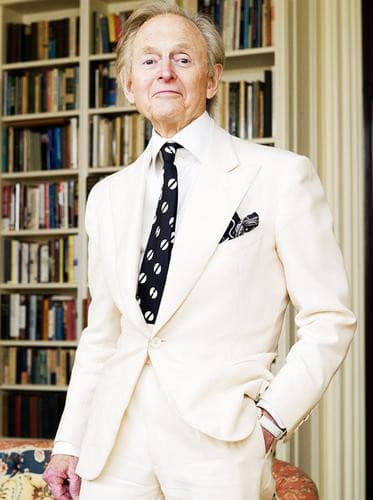
Thomas Kennerly Wolfe Jr. was an American author and journalist widely known for his association with New Journalism, a style of news writing and journalism developed in the 1960s and 1970s that incorporated literary techniques. Much of Wolfe's work was satirical and centred on the counterculture of the 1960s and issues related to class, social status, and the lifestyle of the economic and intellectual elites of New York City.
Similar books
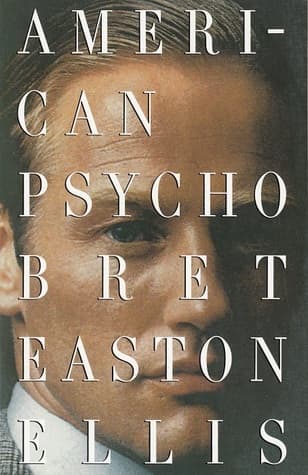
- American Psycho
Bret Easton Ellis
3.8 (242k) average on GoodreadsThrillerExplores Wall Street excess and consumerism of the 1980s, albeit with a much darker, more extreme tone.
- Fear and Loathing in Las Vegas
Hunter S. Thompson
4.1 (299k) average on GoodreadsLifestyleFeatures Gonzo journalism and a critical, often cynical, look at American culture, though in a different setting.
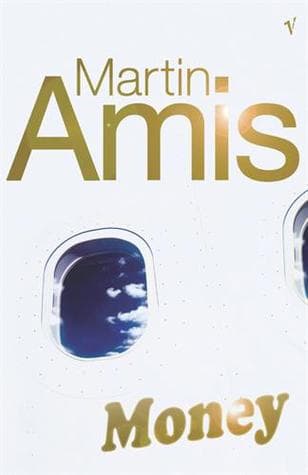
- Money
Martin Amis
3.7 (23k) average on GoodreadsThrillerMartin Amis's Money: A Suicide Note also explores themes of excess, greed, and moral corruption in the 1980s, particularly within the entertainment industry. While both novels feature anti-hero protagonists struggling with their own moral failings amidst a decadent world, Amis's narrative is more experimental and postmodern, with a first-person narrator who frequently breaks the fourth wall and directly addresses the reader. Wolfe's approach is more traditionally structured, albeit with his unique journalistic flair, offering a more panoramic sociological study compared to Amis's intensely personal and darkly comedic psychological portrait.
- The Old Man and the Sea
Ernest Hemingway
3.8 (831k) average on GoodreadsLiterary FictionA Cuban fisherman's long struggle with a giant marlin becomes a story of endurance and dignity, now retold for young adults with illustrations, phonetic guides, and writing prompts in Traditional Chinese.
- One Hundred Years of Solitude
Gabriel García Márquez
4.1 (753k) average on GoodreadsLiterary FictionThrough the multi-generational story of the Buendía family, a mythical town deals with the repeating patterns of time, love, and solitude, as the extraordinary mixes with the ordinary.
- The Goldfinch
Donna Tartt
3.9 (720k) average on GoodreadsLiterary FictionHaunted by a tragic explosion and clutching a stolen Dutch masterpiece, a young orphan navigates the opulent drawing rooms of New York and the gritty underbelly of the art world, desperately seeking connection and redemption amidst a life spiraling into crime and obsession.




Enjoyed the summary?
A summary gives you the shape of the book. The book itself has the detail, the examples and the voice.
Find The Bonfire of the Vanities on AmazonAs an Amazon Associate, BookBrief earns from qualifying purchases. How we're funded