
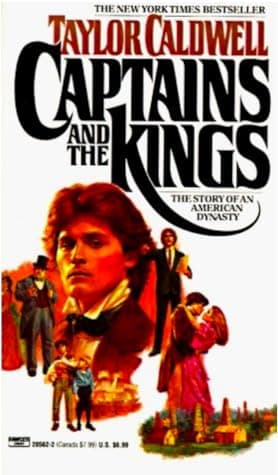
Synopsis
Covers the whole plot, including the ending.
- Difficulty
- Medium
- Pacing
- Moderate
- Mood
- Epic, Dramatic, Ambitious, Tragic, Reflective
- Read it if
- You enjoy sweeping, multi-generational sagas of ambition, power, and family curses set against a rich historical backdrop of American industrialism.
- Skip it if
- You prefer fast-paced thrillers or lighthearted romance, or are put off by detailed descriptions of political maneuvering and family drama spanning decades.
Captains and the Kings Plot Summary
Covers the whole plot, including the ending.
Arrival in America and Early Hardship
In the early 1850s, thirteen-year-old Joseph Armagh, along with his younger brother Harry and infant sister Mary, arrives in America from Ireland. Their mother died during the voyage, leaving Joseph as the sole provider and protector. Landing in a hostile and impoverished Irish ghetto in New York, Joseph immediately faces the harsh realities of immigrant life. He quickly learns the importance of money and power, driven by a fierce determination to lift his family out of poverty. He takes on various menial jobs, from selling newspapers to working on the docks, enduring prejudice and exploitation, all while saving every penny.
First Steps to Fortune
Joseph's intelligence and ambition quickly set him apart. He sees opportunities where others see only despair. He begins to accumulate wealth through shrewd investments and cutthroat business dealings, starting with small ventures. His reputation as a man who gets what he wants, no matter the cost, begins to grow. He forms strategic alliances and outmaneuvers rivals, slowly building a foundation for his future empire. This period establishes his unwavering focus on acquiring power and wealth, often at the expense of personal relationships and moral compromises, as he sees these as the only means to protect his family.
Marriage and Family Life
Joseph, now a formidable businessman, marries the beautiful and wealthy Caroline, primarily for her social standing and connections. He develops a complex affection for her. They have several children: the ambitious Rory, the gentle Daniel, and the spirited Elizabeth. Despite his growing family, Joseph remains largely detached, focused primarily on expanding his business empire and political influence. Caroline, though initially drawn to his strength, becomes increasingly isolated and unhappy, feeling neglected and realizing the true extent of Joseph's emotional unavailability and his relentless pursuit of power.
Political Ascendancy
As his fortune grows, Joseph extends his reach into politics. He understands that true power lies not just in wealth but in controlling the levers of government. He funds political campaigns, pulls strings, and installs his chosen candidates into positions of influence. He never seeks public office himself, preferring to operate from the shadows. His mansion becomes a hub for influential politicians and industrialists, all seeking his favor or fearing his wrath. He plans for his eldest son, Rory, to eventually become President of the United States, believing this will solidify the Armagh dynasty's ultimate power and legacy.
The Curse Manifests: Rory's Downfall
Joseph's plans for Rory's presidential ascent begin to unravel. Rory, pressured by his father's expectations, becomes entangled in a politically motivated scandal orchestrated by Joseph's hidden enemies. The scandal, though perhaps exaggerated, threatens to destroy the Armagh name. To protect the family's reputation and Joseph's larger political ambitions, Rory is coerced into committing suicide, made to appear as a heart attack. This devastating loss is the first major manifestation of the 'curse' that seems to plague the Armagh family, a direct consequence of Joseph's ambition and the enemies he has made.
Daniel's Retreat and Elizabeth's Rebellion
Following Rory's tragic death, the remaining Armagh children react in their own ways. Daniel, always sensitive and artistic, retreats further into his studies and his love for music and literature, openly rejecting the world of business and politics his father represents. He finds solace in beauty and intellectual pursuits, much to Joseph's disappointment, who sees him as weak. Elizabeth, spirited and independent, chafes under her father's control and expectations. She rebels against societal norms and the arranged marriage Joseph attempts to force upon her, seeking her own path and asserting her individuality.
Joseph's Later Years and Reflections
As Joseph ages, his empire continues to expand, but he finds himself increasingly isolated. His wife, Caroline, passes away, and his relationships with his surviving children remain strained. He is a multi-millionaire, one of the most powerful men in America, yet he is haunted by the losses and the moral compromises he made. He begins to reflect on the true meaning of his colossal fortune and its price. He questions whether the sacrifices, the betrayals, and the suffering were worth the power he amassed, recognizing the emptiness that often accompanies ultimate success achieved through such means.
The Next Generation: Joseph Jr. and the Prophecy
Rory's son, Joseph Armagh Jr., becomes the focus of Joseph's hopes for the future. Joseph Sr. sees in his grandson a chance to rectify past mistakes and ensure the continuation of the Armagh dynasty. However, a recurring prophecy or family legend about a curse on the second son of each generation, stemming from an ancient Irish wrong, begins to gain prominence. Joseph Jr. is a kind and thoughtful young man, but he struggles under the weight of his grandfather's expectations and the ominous shadow of the family curse, which seems to target those who deviate from the path of ruthless ambition.
The Curse Strikes Again: Daniel's Fate
Daniel, despite his attempts to escape the family's influence, cannot fully outrun the curse. His sensitive and artistic soul is ill-equipped for the harsh, manipulative world his father created. He is drawn into a tragic love affair and ultimately succumbs to a life of quiet despair, unable to reconcile his values with the Armagh legacy. His fate shows the destructive power of Joseph's ambition, demonstrating how even those who resist the lure of power can be victims of its collateral damage, proving that the curse impacts not just those who seek power but also those connected to them.
Elizabeth's Freedom and Joseph's Acceptance
Elizabeth, through sheer will and intelligence, manages to forge her own independent life, defying her father's attempts to control her. She pursues education and a career, demonstrating a strength that, though different from Joseph's, ultimately earns his grudging admiration. In his final years, Joseph comes to acknowledge Elizabeth's unique spirit and independence, perhaps seeing in her a reflection of his own unyielding will, albeit directed towards different ends. Her eventual success outside the immediate Armagh empire provides a glimmer of hope amidst the family's pervasive tragedy, suggesting an alternative to the destructive cycle.
Joseph's Final Days and Legacy
On his deathbed, Joseph Armagh, a multi-millionaire and one of the most powerful men in America, surveys his vast estate. He reflects on his journey from penniless immigrant to titan of industry. He acknowledges the immense personal cost of his ambition, the loss of loved ones, and the pervasive 'curse' that has shadowed his family, particularly targeting the second sons. He grapples with the understanding that while he achieved immense material success, he sacrificed much of his humanity and happiness. His final thoughts are a complex mix of pride in his achievements and a deep, melancholic regret for the love and connection he failed to cultivate.
The Enduring Curse and Future Generations
The novel concludes with the enduring presence of the Armagh curse, implicitly affecting the next generation, particularly Joseph Jr. and his descendants. While Joseph Armagh Sr. has died, his legacy, both material and spiritual, continues to shape the lives of his family. The curse, often manifesting as tragic deaths, mental anguish, or unfulfilled lives, is a constant reminder of the price of unchecked ambition and the sins of the patriarch. The narrative leaves the reader to ponder whether any future Armagh can escape the shadow of the family's founding ambition and the consequences it unleashed.
Principal Figures
Joseph Francis Xavier Armagh
Protagonist
The ruthless patriarch who builds a colossal fortune from nothing.
Joseph Armagh is the quintessential self-made man, arriving in America as a penniless Irish immigrant and clawing his way to immense wealth and political power. Driven by a primal need to protect his family from the poverty he experienced, he is cunning, ruthless, and utterly determined. He possesses a formidable intellect and an uncanny ability to identify and seize opportunities, often without regard for moral qualms or personal relationships. His ambition is his defining trait, consuming him and shaping every aspect of his life. Despite his success, he remains emotionally distant and ultimately isolated.
Relationships: Caroline (Wife, initially a strategic marriage, later a source of quiet unhappiness); Rory (Eldest son, groomed for political power, tragic victim of the curse); Daniel (Second son, artistic and sensitive, crushed by family expectations); Elizabeth (Daughter, independent and rebellious, eventually earns his respect); Harry (Younger brother, initially dependent, later estranged); Mary (Infant sister, whom he feels responsible for)
Caroline Armagh
Supporting
Joseph's aristocratic wife, who gradually withers under his ambition.
Caroline is Joseph's beautiful and well-bred wife, marrying him for his strength and potential, but quickly becoming disillusioned by his emotional detachment and consuming ambition. She represents the societal expectations and refinement that Joseph seeks to acquire, but she is ultimately unable to penetrate his hardened exterior. She longs for a loving, connected family life that Joseph is incapable of providing, leading to her quiet despair and eventual decline. She serves as a poignant contrast to Joseph's ruthless world, highlighting the personal cost of his relentless drive.
Relationships: Joseph Armagh (Husband, a source of both security and profound unhappiness); Her Children (Loves them deeply, tries to provide them with the affection Joseph cannot)
Rory Armagh
Supporting
The ambitious eldest son, groomed for political greatness.
Rory is Joseph's eldest son, intelligent, ambitious, and initially destined to fulfill his father's grandest political aspirations, specifically the presidency. He embodies many of his father's traits but lacks Joseph's raw cunning and ruthlessness. He is caught between his own desires and the immense pressure of his father's expectations, which ultimately leads to his downfall. His tragic end, a politically orchestrated suicide, is the first major manifestation of the Armagh curse, showcasing the destructive nature of Joseph's ambition and the enemies it creates.
Relationships: Joseph Armagh (Father, whose expectations he tries desperately to meet); Caroline (Mother, whom he respects and loves); Joseph Armagh Jr. (Son, whose future becomes a focus of Joseph Sr.'s legacy)
Daniel Armagh
Supporting
The sensitive, artistic second son, destined for tragedy.
Daniel is the second son of Joseph and Caroline, a gentle, artistic, and sensitive soul who stands in stark contrast to his ambitious father and brother. He is drawn to beauty, music, and literature, openly rejecting the world of business and politics. His inherent kindness and lack of ruthlessness make him ill-suited for the cutthroat Armagh world. He represents the 'cursed' second son in the family legend, experiencing a life of quiet despair and tragedy, unable to find happiness or fulfillment in a family that values power above all else. His fate underscores the destructive reach of the family's ambition.
Relationships: Joseph Armagh (Father, whose values he rejects and by whom he feels misunderstood); Caroline (Mother, to whom he is emotionally close); Elizabeth (Sister, with whom he shares a bond of understanding)
Elizabeth Armagh
Supporting
The independent and spirited daughter who defies her father's control.
Elizabeth is Joseph and Caroline's spirited and intelligent daughter. Unlike her brothers, she possesses an innate defiance and independence that allows her to resist her father's attempts to control her life. She rebels against societal expectations for women of her era and refuses to be married off for strategic advantage. She seeks her own education and career, forging a path separate from the Armagh empire. Her strength and resilience, though different from Joseph's, eventually earn his grudging respect, representing a potential for breaking free from the destructive family patterns.
Relationships: Joseph Armagh (Father, whose control she constantly resists); Caroline (Mother, whom she loves but also sees as a cautionary tale); Daniel (Brother, with whom she shares a bond of mutual understanding)
Joseph Armagh Jr.
Supporting
Rory's son, the heir to the Armagh legacy, burdened by the curse.
Joseph Armagh Jr. is Rory's son and Joseph Sr.'s grandson. He becomes the focus of Joseph Sr.'s later hopes for the Armagh dynasty, an opportunity to perhaps redeem the family's past. He is portrayed as a kind and thoughtful young man, but he carries the immense weight of his family's legacy and the looming shadow of the Armagh curse. His character represents the potential for a new generation to either succumb to or break free from the destructive patterns established by the patriarch, embodying the ongoing struggle against inherited fate.
Relationships: Joseph Armagh (Grandfather, who places immense expectations upon him); Rory (Father, whose tragic fate looms over him)
Harry Armagh
Supporting
Joseph's younger brother, initially dependent but later estranged.
Harry is Joseph's younger brother, who arrived in America with him. While Joseph is driven by ambition and a desire to protect Harry, Harry lacks his older brother's ruthless drive and foresight. He often struggles to keep pace with Joseph's rapid ascent and eventually becomes somewhat estranged from his brother's increasingly powerful and morally ambiguous world. He represents a more ordinary path, a stark contrast to Joseph's extraordinary, albeit costly, success. His fate highlights the widening chasm between Joseph and those who cannot match his relentless ambition.
Relationships: Joseph Armagh (Older brother, his protector in childhood, later a distant figure of power)
Themes & Insights
The Corrupting Nature of Power and Ambition
The novel charts Joseph Armagh's ascent from poverty to immense wealth and power, but simultaneously reveals the moral and personal costs. Joseph's ambition, initially driven by a desire to protect his family, gradually consumes him, leading him to make ruthless decisions, betray allies, and sacrifice personal happiness. His relentless pursuit of power isolates him from his family, particularly his wife Caroline and his sensitive son Daniel, and ultimately causes the 'curse' that plagues his lineage. The narrative suggests that absolute power not only corrupts but also destroys the very human connections it was initially sought to protect.
“He had built an empire, yes, but at what cost? He looked at his hands, strong and still capable, but they had also torn apart the fabric of his own life, piece by piece.”
The American Dream and Its Dark Side
Captains and the Kings presents a complex and often cynical view of the American Dream. Joseph Armagh is the immigrant who arrives penniless and, through sheer will and hard work, achieves unimaginable success. However, the novel exposes the darker side of this dream, showing that such success often requires ruthless exploitation, moral compromise, and the suppression of empathy. Joseph's journey highlights the idea that the 'land of opportunity' can also be a brutal, unforgiving place where success is often predicated on the destruction of others, leaving behind a legacy of isolation and tragedy for those who achieve it at any cost.
“America. The golden land. And he had found its gold, yes. But it was cold, hard gold, and it burned his hands.”
Family Legacy and Inherited Fate (The Curse)
A central theme is the concept of a family curse, an ancient Irish prophecy that plagues the Armagh line, particularly the 'second son' of each generation. This curse is a symbolic representation of the destructive consequences of Joseph's actions and the weight of his legacy. It manifests in the tragic fates of Rory and Daniel, suggesting that the sins of the patriarch are visited upon his descendants. The curse implies a sense of inherited fate, where future generations struggle to escape the patterns of ambition, betrayal, and sorrow set in motion by their forebear, questioning the possibility of free will against a predetermined destiny.
“The curse. It clung to them like a shroud, woven into the very fabric of their name, a payment for a debt long forgotten but never truly forgiven.”
The Price of Love and Connection
Throughout the novel, Joseph Armagh consistently prioritizes power and wealth over genuine human connection and love. His marriage to Caroline is largely strategic, and his relationships with his children are strained by his emotional unavailability and overwhelming expectations. The narrative explores how the relentless pursuit of material success can lead to profound emotional isolation. Characters like Caroline and Daniel suffer deeply from the lack of love and understanding, highlighting that true happiness and fulfillment are often found not in wealth or power, but in human relationships, a lesson Joseph only begins to grasp late in life.
“He had wanted to give them everything, but in his wanting, he had given them nothing of himself.”
Plot Devices & Literary Techniques
The Family Curse
A recurring prophecy of tragedy for the 'second son' of each Armagh generation.
The family curse is a central plot device, originating from an ancient Irish legend or wrongdoing. It serves as both a literal and metaphorical representation of the destructive consequences of Joseph Armagh's ruthless ambition. It foreshadows the tragic fates of characters like Rory (who, though the eldest, suffers a 'cursed' end) and particularly Daniel, the sensitive second son. The curse creates dramatic tension, implying a predetermined destiny for the Armagh family, and raises questions about free will versus inherited fate. It underscores the idea that the pursuit of power at any cost carries a heavy, generational burden.
Foreshadowing through Internal Monologue and Prophecy
Hints and predictions of future tragedy, often through Joseph's reflections or family legends.
The novel frequently employs foreshadowing, particularly through Joseph's internal monologues and the recurring mentions of the family curse. Joseph often reflects on the sacrifices he's made and the enemies he's acquired, implicitly warning of future repercussions. The 'curse' itself acts as a constant, looming prophecy, hinting at the tragic destinies awaiting his children. This device builds suspense and creates a sense of inevitability around the Armagh family's misfortunes, reinforcing the theme that actions have consequences that ripple through generations, even if not immediately apparent.
The Self-Made Man Archetype
Joseph Armagh's journey from rags to riches, representing a classic American narrative.
Joseph Armagh embodies the 'self-made man' archetype, a common figure in American literature. He starts with nothing, relying solely on his intelligence, determination, and ruthlessness to build an empire. This device allows the author to explore the darker facets of the American Dream, questioning the moral compromises required for such extraordinary success. Joseph's journey serves as a case study, demonstrating both the incredible potential for upward mobility in America and the profound personal and ethical costs associated with achieving it without restraint.
Symbolism of the Armagh Mansion
The physical representation of Joseph's accumulated wealth and emotional isolation.
The Armagh mansion serves as a powerful symbol throughout the novel. Initially, it represents Joseph's ultimate achievement, a tangible manifestation of his wealth, power, and social ascent from the squalor of the Irish ghetto. However, as the story progresses, it increasingly symbolizes his emotional isolation and the hollowness of his success. Despite its grandeur, the mansion often feels cold and empty, reflecting the strained relationships within the family and the lack of genuine warmth and connection, becoming a gilded cage rather than a loving home.
Captains and the Kings Quotes
“There are no good men. All men are evil. All of them. And the sooner you learn that, the sooner you'll be able to cope with them.”
“Power is not given, it is taken. And when it is taken, it must be held with a strong hand, or it will be taken from you.”
“Money is not happiness, but it can buy a good deal of comfort on the way to misery.”
“The only thing a man can truly call his own is his own will. Everything else can be taken from him.”
“Love is a weakness. It makes you vulnerable. It makes you do foolish things.”
“History is written by the victors, and it is always a lie.”
“A man who fears nothing is a fool. A man who fears everything is a slave.”
“The greatest prison is not made of stone and iron, but of the limitations we place upon ourselves.”
“Family is a chain, binding you to the past, holding you from the future.”
“There is no justice in this world, only power and those who wield it.”
“To forgive is to understand. And to understand is to accept that all men are flawed.”
“The future is not something that happens to you, it is something you make.”
“Every man has his price. It is merely a matter of finding what that price is.”
“The world does not care about your intentions. It only cares about your actions and their consequences.”
Quiz
10 questions on the plot and the characters. Each answer comes with a short explanation.
Question 1
What was Joseph Armagh's age when he first arrived in America on The Irish Queen?
- Ten years old
- Thirteen years old
- Fifteen years old
- Eight years old
Show answer
B. Thirteen years old The book description states Joseph Armagh was thirteen years old when he first saw America.
Question 2
What was the name of the ship Joseph Armagh traveled on to America?
- The American Dream
- The Emerald Star
- The Irish Queen
- The Liberty Bell
Show answer
C. The Irish Queen Joseph Armagh arrived in America on the steerage deck of The Irish Queen.
Question 3
What primary responsibility did Joseph Armagh have upon arriving in America as an orphan?
- To find immediate political connections
- To provide for himself, his younger brother, and infant sister
- To start a new shipping business
- To enroll in a prestigious American university
Show answer
B. To provide for himself, his younger brother, and infant sister The description highlights his role as an orphan cast on a hostile shore to make a home for himself and his younger brother and infant sister.
Question 4
Approximately how many years passed between Joseph Armagh's arrival in America and his deathbed scene?
- About fifty years
- About sixty years
- About seventy years
- About eighty years
Show answer
C. About seventy years The text states 'Some seventy years later, from his deathbed, Joseph Armagh last glimpsed his adopted land.'
Question 5
What is identified as a major 'price' Joseph Armagh paid for his success?
- A life of quiet contemplation and leisure
- The consuming, single-minded determination of clawing his way to the top
- Constant travel around the world for pleasure
- A complete lack of political influence
Show answer
B. The consuming, single-minded determination of clawing his way to the top The description explicitly states the price was paid 'in the consuming, single-minded determination of a man clawing his way to the top.'
Question 6
What kind of natural disaster is mentioned as a consequence of Joseph Armagh's ambition?
- Hurricanes
- Earthquakes
- There is no mention of a natural disaster, but a curse.
- Floods
Show answer
C. There is no mention of a natural disaster, but a curse. The novel mentions a 'curse laid on an Irish-American dynasty' and 'the curse which used the hand of fate to strike in the very face of success itself,' not a natural disaster.
Question 7
What is the primary setting for the drama of 'Captains and the Kings'?
- Modern-day Europe
- America's roistering past
- Ancient Rome
- A futuristic dystopian society
Show answer
B. America's roistering past Taylor Caldwell is said to have 'looked into America's roistering past as a setting for a drama.'
Question 8
What is the core conflict or 'curse' that affects the Armagh dynasty?
- A lack of wealth despite hard work
- A series of unfortunate business decisions leading to bankruptcy
- A curse laid on the Irish-American dynasty and the ruthless man who founded it
- An inability to gain political power despite their fortune
Show answer
C. A curse laid on the Irish-American dynasty and the ruthless man who founded it The description explicitly mentions 'the operation of a curse laid on an Irish-American dynasty and the ruthless driving man who founded it.'
Question 9
Beyond amassing a colossal fortune, what other significant outcome did Joseph Armagh achieve by the end of his life?
- He became a reclusive hermit, shunning all society.
- He established a global peace organization.
- He became one of the most powerful and feared men, with political power.
- He lost all his wealth and died penniless.
Show answer
C. He became one of the most powerful and feared men, with political power. The text states he was a 'multi-millionaire, one of the most powerful and feared men,' and the novel is about 'the political power that comes with it.'
Question 10
What is one of the 'bitter-sweet' aspects of Joseph Armagh's life mentioned in the description?
- His lifelong struggle with poverty.
- The constant betrayal by his business partners.
- The bliss of the love of a beautiful woman and the almost too-late enjoyment of extraordinary children.
- His inability to ever leave America.
Show answer
C. The bliss of the love of a beautiful woman and the almost too-late enjoyment of extraordinary children. The description lists 'the bitter-sweet bliss of the love of a beautiful woman; in the almost too-late enjoyment of extraordinary children' as part of the price paid.
Captains and the Kings FAQ
What is the central premise of 'Captains and the Kings'?
The novel chronicles the life of Joseph Armagh, an Irish immigrant who arrives in America in the 1850s with nothing. It details his ruthless ascent to immense wealth and political power, the personal sacrifices he makes, and the operation of a curse that plagues his dynasty.
Who is Joseph Armagh and what drives him?
Joseph Armagh is the protagonist, a penniless Irish orphan who, at thirteen, arrives in America with his younger brother and infant sister. He is driven by an insatiable ambition to amass a colossal fortune and secure power, believing this is the only way to protect his family and overcome the poverty he experienced.
What role does the 'curse' play in the story?
The curse is a significant thematic element, striking the Armagh family at the height of their success. It manifests as a series of tragedies and misfortunes that seem to undermine Joseph's achievements, suggesting a karmic price for his ruthless ambition and the suffering he inflicted on others.
How does the novel explore the concept of the 'American Dream'?
The book presents a dark reflection of the American Dream, showing Joseph Armagh achieving unimaginable wealth and power from humble beginnings. However, it emphasizes the profound personal cost, moral compromises, and the ultimate emptiness that can accompany such single-minded pursuit of material success.
What is the significance of the title 'Captains and the Kings'?
The title refers to the powerful figures, the 'captains' of industry and 'kings' of finance and politics, whom Joseph Armagh becomes one of. It also subtly hints at the transient nature of such power and the idea that even these mighty individuals are subject to a higher fate or a curse.
Are there specific historical events or figures that influenced the novel's setting?
While the novel is fiction, it is deeply rooted in America's post-Civil War industrial expansion and the Gilded Age, reflecting the rise of powerful industrialists and political machines. The period of the 1850s through the early 20th century provides the backdrop for Joseph's accumulation of wealth and influence.
How does Joseph's relationship with his siblings, Paul and Mary, evolve?
Joseph initially feels a strong sense of responsibility for Paul and Mary, seeing them as his primary motivation. However, as his ambition grows, his relationships with them become strained and often secondary to his pursuit of power, leading to tragic outcomes and emotional distance.
What is the nature of the 'bitter-sweet bliss' of the love of a beautiful woman mentioned in the synopsis?
This refers to Joseph's complex romantic entanglements, particularly with his wife, who brings both joy and sorrow into his life. Their relationship is often overshadowed by his ambition, leading to moments of profound happiness mixed with regret and neglect on his part.
How does the novel depict the social hierarchy and class struggles of the era?
The novel vividly portrays the stark contrast between the impoverished immigrants and the established elite. Joseph's journey highlights the brutal realities of climbing the social ladder, demonstrating the prejudice faced by the Irish and the cutthroat competition among the burgeoning capitalist class.
What psychological impact does Joseph's early poverty have on him?
Joseph's traumatic early experiences of poverty and orphanhood instill in him a deep-seated fear of destitution and a relentless drive for security and control. This psychological scar fuels his ruthless ambition, making him prioritize wealth and power above almost all else, even human connection.
How does Joseph's ambition affect his emotional capacity and relationships?
His single-minded ambition gradually erodes his capacity for genuine emotional connection and empathy. He often views relationships transactionally or as extensions of his power, leading to emotional isolation and a profound inability to truly connect with his children or his wife on a deeper level.
In what ways do Joseph's children reflect or rebel against his legacy?
Joseph's children are profoundly shaped by his overwhelming presence and wealth. Some attempt to emulate his success, while others, burdened by the family name and the curse, rebel against the expectations and the moral compromises inherent in their father's empire, often leading to their own tragedies.
How does the novel explore themes of guilt and redemption?
The novel delves into Joseph's burden of guilt, particularly in his later years, as he reflects on the price paid for his fortune. While he achieves material success, true redemption remains elusive, as the curse and the consequences of his actions continue to plague his family, suggesting that some debts cannot be fully repaid.
Is Joseph Armagh ultimately a sympathetic character, despite his ruthlessness?
This is debatable. While his initial motivations to protect his family are understandable, his methods become increasingly morally questionable. Readers may sympathize with his origins and struggles but find his later actions and emotional coldness difficult to forgive, leading to a complex and often conflicted view of his character.
Does the novel suggest that wealth inevitably corrupts?
The novel strongly implies that the pursuit of immense wealth, particularly through Joseph's ruthless means, is inherently corrupting. It shows how power can isolate individuals, distort their values, and lead to a cycle of unhappiness and tragedy, suggesting a cautionary tale about the moral hazards of unchecked ambition.
What is the ultimate 'meaning then and now' that Taylor Caldwell aims to convey?
Caldwell seems to convey that while the specific historical context changes, the consequences of savage ambition, the moral compromises made for power, and the enduring impact of a family's legacy remain relevant. The novel serves as a timeless warning about the true cost of unchecked material success and its potential to destroy the very things one seeks to protect.
How does the 'hand of fate' intertwine with Joseph's free will in the narrative?
The novel presents a tension between Joseph's determined will and the seemingly fated curse. While Joseph actively makes choices that lead to his success and downfall, the persistent tragedies that befall his family suggest an overarching 'fate' or karmic consequence that he cannot escape, implying that some forces are beyond individual control.
About the author
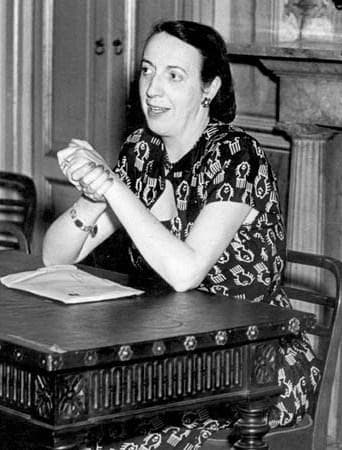
Taylor Caldwell was an American author known for her historical fiction. Among her notable works are "Captains and the Kings," which explores themes of power and ambition, and "Dear and Glorious Physician," a fictional account of St. Luke's life. Caldwell's writing often delves into the complexities of human nature and historical events.
Similar books
- The Thorn Birds
Colleen McCullough
4.2 (314k) average on GoodreadsHistorical FictionMulti-generational family saga with themes of love, loss, and ambition against a historical backdrop.
- East of Eden
John Steinbeck
4.4 (429k) average on GoodreadsLiterary FictionExplores themes of good vs. evil, family legacy, and the American dream across generations.
- The Godfather
Mario Puzo
4.4 (335k) average on GoodreadsThrillerFocuses on the rise and struggles of a powerful, ruthless family dynasty and the costs of their ambition.
- Giant
Edna Ferber
4.0 (3k) average on GoodreadsLiterary FictionFerber's novel provides a more concise and tightly focused narrative on the acquisition and maintenance of wealth, often with sharper social commentary and less reliance on supernatural or deterministic elements like a family curse found in Caldwell's work.
- To Kill a Mockingbird
Harper Lee
4.3 (4.5M) average on GoodreadsHistorical FictionIn the 1930s Jim Crow South, Harper Lee writes about racial injustice, moral growth, and the quiet courage of a lawyer father, Atticus Finch, as seen through his young daughter's eyes.
- The Great Gatsby
F. Scott Fitzgerald
3.9 (3.8M) average on GoodreadsHistorical FictionIn the opulent Roaring Twenties, a mysterious millionaire's lavish parties hide his desperate, tragic pursuit of a lost love, exposing the emptiness within the American Dream.




Enjoyed the summary?
A summary gives you the shape of the book. The book itself has the detail, the examples and the voice.
Find Captains and the Kings on AmazonAs an Amazon Associate, BookBrief earns from qualifying purchases. How we're funded