
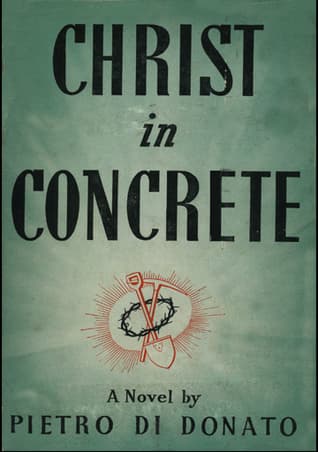
Synopsis
Covers the whole plot, including the ending.
- Difficulty
- Medium
- Pacing
- Moderate
- Mood
- Gritty, Tragic, Resilient, Reflective, Somber
- Read it if
- You are interested in the harsh realities of early 20th-century immigrant life, labor struggles, and a raw, visceral portrayal of grief and responsibility.
- Skip it if
- You prefer lighthearted narratives or are sensitive to graphic descriptions of industrial accidents and poverty.
Christ in Concrete Plot Summary
Covers the whole plot, including the ending.
Good Friday Catastrophe
On a Good Friday, Geremio, a skilled Italian immigrant bricklayer, works on the tenth floor of a new building in New York City. Despite his foreman's assurances, Geremio feels danger as concrete is poured too quickly. His fears come true when the building collapses, trapping him and his crew. Geremio is impaled by rods, literally crucified in concrete. His younger brother, Luigi, also on site, survives. The tragedy leaves Geremio's pregnant wife, Annunziata, and their eight children, including twelve-year-old Paul, in despair and poverty. It is a devastating change for the family.
Paul's Burden
After Geremio's death, the family faces immediate and severe poverty. Annunziata, grieving and pregnant, aims to feed her children. Paul, at twelve, feels immense responsibility. He decides to quit school, giving up his education dreams, to take his father's dangerous job as a bricklayer's helper. His mother feels both pride and sorrow, seeing his childhood end early but knowing his sacrifice is needed. Paul's entry into the harsh construction world forces him from boy to man, taking on his family's survival.
The First Job and the Union
Paul starts work as a hod carrier, a physically hard and dangerous job for a boy his age. He quickly learns the brutal realities of the construction site, the constant threat of injury, and the harshness of some foremen. He encounters the union, a powerful but often corrupt group that promises protection but also demands loyalty and fees. The harsh environment chips away at Paul's innocence, yet he shows strength and determination, driven by his father's memory and his family's needs. He sees solidarity among Italian workers, but also internal politics and betrayals within their community and the union.
Annunziata's Struggle
Annunziata's life after Geremio's death is a constant struggle. She gives birth to her ninth child, a girl, adding to her responsibilities. Her grief is deep and constant, often appearing in vivid dreams and spiritual questions. She tirelessly manages the household, making meager resources last, always worrying about her children's safety, especially Paul's at work. Her faith, while strong, is tested by Geremio's unjust death and endless hardships. She relies on community support, but carries the main burden of keeping her family together and fed.
The Tenement and Community Life
The family lives in a crowded tenement apartment, common for immigrant families in the Lower East Side. Their home is busy, filled with children, the smell of Italian cooking, and the hum of neighbors' lives. The Italian immigrant community provides a strong support network, sharing food, stories, and sorrows. Paul sees both the cultural traditions and the harsh realities of tenement life — poverty, illness, and the fight for dignity. The Church plays a role in their lives, offering comfort and continuity amid chaos, though its influence is sometimes questioned by their suffering.
Paul's Spiritual Crisis
As Paul grows on the job, he questions Church teachings and the justice of a God who would allow such suffering, especially his father's death. He struggles to align his Catholic faith with the harsh realities he sees daily — worker exploitation, the rich's indifference, and the constant threat of death. He has internal talks and debates, seeking answers to existential questions about life, death, and divine will. His spiritual journey includes doubt and anger, but also a desire for meaning and justice for his family and people.
The Strike and Worker Solidarity
Paul becomes more aware of the power differences between workers and bosses. He experiences the challenges and dangers of a construction strike, seeing firsthand the solidarity among his fellow Italian laborers who unite for better wages and safer conditions. However, he also sees internal divisions, the fear of losing work, and the manipulative tactics of both union leaders and employers. The strike shows the working class's collective strength but also their vulnerability and the constant threat to their livelihood. Paul's involvement deepens his understanding of social injustice and the fight for dignity.
Paul's Growing Awareness
Through his work and interactions, Paul's understanding of the world grows beyond his family. He sees the contrast between the wealthy building owners and the poor workers who build their structures. He sees systemic injustices, exploitation, and disregard for human life. This awareness fuels a quiet anger and a growing class consciousness. He starts to voice his thoughts, sometimes clashing with his elders' traditional views, but always driven by a strong sense of right and wrong, and a desire for a better life for his family and community.
Love and Loss
Amidst the toil and hardship, Paul experiences a tender, new love with a young woman named Gloria. This relationship offers him a brief break from his burdens, a glimpse of personal happiness and normalcy. However, the harsh realities of their lives, including his relentless work and constant poverty, make a sustained relationship difficult. The story hints at the challenges young immigrants face trying to build personal lives amid economic struggles. This experience further shapes Paul's understanding of life's complexities and the sacrifices often required of him.
The Weight of Responsibility
As years pass, Paul works tirelessly, providing for his mother and siblings. He grows into a strong, capable young man, but his responsibilities never truly lift. He embodies self-sacrifice, always putting his family's needs first. The story ends with Paul as the family patriarch, forever changed by the Good Friday tragedy and his journey into manhood. He is a symbol of strength, showing the enduring spirit of immigrants facing great hardship, carrying his father's legacy and his family's hopes.
Principal Figures
Paul
Protagonist
A twelve-year-old boy forced to become the family's provider after his father's death.
Paul is a bright, sensitive, and intelligent boy who, at a tender age, is thrust into the harsh world of construction after his father's tragic death. He is deeply devoted to his family, especially his mother, Annunziata, and feels the immense burden of responsibility. Though initially innocent, the brutal realities of his work and the injustices he witnesses forge him into a strong, resilient, and thoughtful young man. He struggles with his faith and questions societal structures, embodying the spirit of the working-class immigrant.
Relationships: Geremio (Son, deeply influenced by his father's sacrifice and legacy.); Annunziata (Devoted son, her primary support and provider.); Luigi (Nephew, works alongside him, sharing the struggles.); Gloria (First love interest, a brief respite from his burdens.)
Geremio
Catalyst/Symbolic Figure
Paul's father, a skilled bricklayer whose death sets the story in motion.
Geremio is a hardworking, devout Italian immigrant bricklayer, proud of his craft and deeply loving of his large family. He is a symbol of the immigrant worker, toiling under dangerous conditions to provide for his loved ones. His brutal death, impaled by rods in concrete, is a central, almost Christ-like, image that not only propels the narrative but also symbolizes the sacrifice and exploitation of the working class. His memory profoundly influences Paul's decisions and spiritual journey throughout the book.
Relationships: Annunziata (Husband, their deep love and partnership is shattered by his death.); Paul (Father, his death burdens Paul but also inspires his resilience.); Luigi (Brother, works alongside him, a bond of shared labor and heritage.)
Annunziata
Supporting/Matriarch
Geremio's wife and Paul's mother, left to raise nine children in extreme poverty.
Annunziata is the resilient and deeply religious matriarch of the family. After Geremio's death, she is plunged into profound grief and the overwhelming challenge of raising nine children alone, pregnant with the last. She embodies the suffering and strength of immigrant women, tirelessly managing the household, stretching meager resources, and fiercely protecting her children. Her faith is a constant, though often tested, source of solace, and she relies heavily on Paul, recognizing his sacrifice with a mixture of pride and sorrow.
Relationships: Geremio (Wife, her life is irrevocably altered by his tragic death.); Paul (Mother, relies on him as the family's provider and emotional anchor.)
Luigi
Supporting
Geremio's brother and Paul's uncle, a fellow bricklayer who survives the collapse.
Luigi is Geremio's younger brother and a fellow bricklayer who miraculously survives the Good Friday collapse. He shares the same dangerous trade and the same immigrant experience as Geremio and Paul. He serves as a connection to Geremio's memory for Paul and represents the broader community of Italian workers. Luigi is often present on the construction sites, offering Paul guidance and camaraderie, and embodying the shared struggle and solidarity among the laborers.
Relationships: Geremio (Brother, shared the dangers of their trade.); Paul (Uncle, works alongside him and offers support.)
The Foreman (Mr. Murdin)
Antagonist/Symbolic
The foreman on Geremio's job site, representing the indifferent authority.
The foreman, sometimes referred to as Mr. Murdin, represents the immediate authority figure on the construction site. He is depicted as being more concerned with speed and profit than with the safety of his workers. His dismissive attitude towards Geremio's concerns before the collapse highlights the negligence and exploitation inherent in the system. He symbolizes the managerial class that prioritizes production over human life, contributing to the dangerous conditions faced by the immigrant laborers.
Relationships: Geremio (Superior, dismissive of Geremio's concerns.); Paul (Superior, a figure of authority on the job site.)
Gloria
Supporting
Paul's first love interest, offering a brief glimpse of personal happiness.
Gloria is a young woman whom Paul develops a romantic interest in. She represents a brief period of personal joy and a potential escape from the grim realities of his daily life. Her presence allows Paul to explore a different aspect of his burgeoning manhood, beyond just his responsibilities to his family. However, the harsh economic realities and the demands of Paul's work often overshadow their relationship, highlighting the sacrifices immigrant youth had to make.
Relationships: Paul (Love interest, a source of fleeting happiness.)
The Children (Geremio's other offspring)
Supporting/Collective
Paul's numerous younger siblings, a constant reminder of his responsibilities.
Paul's many younger siblings, whose names are not always individually prominent, represent the collective responsibility Paul shoulders. Their needs—for food, clothing, and care—are the primary drivers of Paul's relentless work and sacrifice. They are depicted as a lively, sometimes boisterous, presence in the cramped tenement, embodying the innocent vulnerability that Paul strives to protect. Their collective existence underscores the immense burden placed upon the oldest son in immigrant families.
Relationships: Paul (Siblings, dependent on him for provision and protection.); Annunziata (Children, the focus of her tireless care and love.)
The Padroni/Union Bosses
Antagonist/Collective
Exploitative figures who control labor and often betray workers' interests.
The Padroni and certain Union Bosses represent the various forms of exploitation faced by Italian immigrant workers. The Padroni, often fellow Italians, act as intermediaries between workers and employers, sometimes taking advantage of their countrymen. The Union, while ostensibly for the workers' benefit, is also shown to have corrupt elements, with leaders who prioritize personal gain or political maneuvering over the genuine welfare of the laborers. These figures symbolize the systemic corruption and the betrayal of trust within and outside the immigrant community.
Relationships: Paul (Figures of authority and exploitation.); Geremio (Implicitly, the system that led to his death.)
Themes & Insights
Sacrifice and Resilience of the Immigrant Worker
The novel shows the great sacrifices Italian immigrant workers make for their families. Geremio's death, a literal crucifixion in concrete, shows this, followed by Paul's sacrifice of his childhood and education to provide for his family. The hard physical labor, constant danger, and low wages highlight the strength needed to survive and support a family in a new, often uncaring, country. This theme is clear in every scene Paul works, from his first day carrying hod, to his endurance during strikes, always driven by Annunziata's and his siblings' needs.
“For Geremio, and for Paul, life was a continuous, brutal battle, a fight for bread and dignity against the stone and steel of the city.”
Social Injustice and Exploitation
A main theme is the exploitation and injustice faced by the working class, especially immigrant laborers. The dangerous conditions leading to Geremio's death, the foreman's negligence, low wages, and workers' powerlessness against bosses and corrupt union elements all show this theme. Paul's journey is a constant confrontation with these injustices, creating in him a growing class consciousness. The contrast between the wealth of building owners and the poverty of those who build them is a repeated idea, showing deep societal inequalities.
“The rich built their palaces, but it was the blood and bone of men like Geremio that cemented them.”
Loss of Innocence and Accelerated Adulthood
Paul's story explores the loss of innocence and his forced quick path to adulthood. At just twelve, he is taken from childhood and put into the brutal adult world of manual labor. His education dreams are broken, replaced by the grim reality of providing for his family. This theme is clear in his early struggles with the job's physical demands, his growing understanding of society's corruption, and his spiritual questions. He carries a man's responsibilities while still a boy, forever changed by this early maturation.
“The boy in him was buried with his father, replaced by the man who must provide.”
Faith, Doubt, and Spirituality
The novel deeply explores the characters' Catholic faith, especially Annunziata's devotion and Paul's later struggle with doubt. Geremio's death on Good Friday, a literal 'crucifixion in concrete,' fills the story with strong religious symbolism. While Annunziata finds comfort in prayer and tradition, Paul struggles to reconcile his faith with the suffering and injustice he sees. He questions God's will and the Church's teachings, seeking a more real form of justice and meaning in a world that seems uncaring about their struggles. His spiritual journey includes questioning, anger, and a desperate search for truth.
“Where was God in the falling concrete? Where was Christ in the blood of men?”
Family and Community Bonds
Despite the great hardships, strong family and community bonds are a vital source of strength and survival. Annunziata's dedication to her children, Paul's commitment to his siblings, and the mutual support among Italian immigrant neighbors in the tenement show this theme. Sharing food, offering comfort, and uniting during strikes demonstrate the power of collective identity and mutual aid. These relationships provide emotional and practical support, helping the family endure constant hardship.
“In the tenement, every door was open, every sorrow shared, every joy amplified.”
Plot Devices & Literary Techniques
Symbolism of Christ/Crucifixion
Geremio's death on Good Friday, impaled in concrete, symbolizes the suffering of the working class.
The central plot device is the powerful symbolism surrounding Geremio's death. Occurring on Good Friday, his impalement by reinforcing rods, literally 'crucified in concrete,' draws a direct parallel to the crucifixion of Christ. This imagery elevates Geremio's personal tragedy to a universal statement about the suffering, sacrifice, and exploitation of the working class. It imbues the novel with a profound spiritual dimension, influencing Paul's theological questioning and highlighting the 'passion' of the immigrant laborers. This symbolism is not merely religious but socio-economic, equating the workers' plight with a sacred martyrdom.
First-Person Perspective (Paul's Interiority)
The story is told primarily through Paul's eyes, emphasizing his emotional and intellectual development.
While not strictly first-person, the narrative heavily privileges Paul's internal thoughts, perceptions, and emotional responses, making him the primary lens through which the reader experiences the story. This allows for an intimate portrayal of his loss of innocence, his struggles with faith, and his growing class consciousness. The reader witnesses the harsh realities of construction work and tenement life through his maturing perspective, feeling the weight of his responsibilities and the depth of his spiritual and intellectual conflicts. This interiority deepens the emotional impact and allows for complex character development.
Foreshadowing (Geremio's premonition)
Geremio's unease and warnings before the collapse hint at the impending disaster.
Before the building collapse, Geremio expresses unease and warns his foreman about the dangerous speed of the concrete pouring. This serves as a clear instance of foreshadowing, creating a sense of dread and inevitability for the reader. It highlights Geremio's experience and foresight, making his death even more tragic as it could have been prevented. This device also underscores the negligence of the employers and the disregard for worker safety, reinforcing the theme of social injustice even before the catastrophe occurs.
Social Realism
The narrative vividly depicts the harsh realities of immigrant life and labor in early 20th-century New York.
The novel employs social realism to portray the unvarnished truth of Italian immigrant life in the Lower East Side. It meticulously details the dangerous conditions of construction work, the poverty of tenement living, the struggles for survival, and the cultural nuances of the community. This device immerses the reader in the specific historical and social context, making the characters' struggles feel authentic and immediate. The graphic descriptions of labor, death, and daily life serve to highlight the systemic issues and human cost of industrialization and immigration.
Christ in Concrete Quotes
“Ah, the sun, the sun. God's sun. It makes a man want to sing and work and love.”
“The wall was a tomb. A wall of death.”
“God, why did you take my father? Why?”
“Work, work, work! That is all we do. We build and we die.”
“He was a good man, my Geremio. Strong hands, strong heart.”
“The concrete, it eats men. It takes them.”
“I am Christ in concrete. I am the sacrifice.”
“They buried him like a dog. No priest, no prayers, just dirt and concrete.”
“Money, always money. It makes men slaves.”
“The city… it grows on our bones.”
“He became a man that day, a man of sorrow.”
“We are nothing. Just hands for the rich to use.”
“But the sun, it shines for all, even for the dead.”
“The Lord giveth and the Lord taketh away. Blessed be the name of the Lord.”
“And the city, like a monstrous beast, continued to devour.”
Quiz
10 questions on the plot and the characters. Each answer comes with a short explanation.
Question 1
What tragic event marks the opening of 'Christ in Concrete' and sets the main conflict for Paul?
- A fire destroys the family's tenement apartment.
- Geremio is injured in a street brawl.
- A building collapses, killing Geremio and forcing Paul to work.
- The family is evicted from their home due to unpaid rent.
Show answer
C. A building collapses, killing Geremio and forcing Paul to work. The book opens with the dramatic collapse of a building under construction, which kills Geremio, Paul's father, and forces young Paul to take over his father's role and job.
Question 2
What is the name of Paul's father, who is 'crucified in concrete'?
- Giovanni
- Geremio
- Antonio
- Vincenzo
Show answer
B. Geremio The text explicitly states that Geremio is 'literally crucifies in concrete' after the building collapse.
Question 3
At what age does Paul, the oldest son, have to take over his father's job after the tragedy?
- Ten years old
- Fourteen years old
- Twelve years old
- Sixteen years old
Show answer
C. Twelve years old The book description states that Paul, 'at just twelve years of age, must take over his father's role - and job.'
Question 4
What is the primary trade of the Italian immigrant characters portrayed in 'Christ in Concrete'?
- Textile manufacturing
- Dock work and fishing
- Construction (bricklaying)
- Restaurant and food service
Show answer
C. Construction (bricklaying) The description highlights 'the hardworking Italian immigrants who joined the construction trade' and specifically mentions Geremio as a bricklayer.
Question 5
The setting of 'Christ in Concrete' is described as the Lower East Side of New York City. What historical period does the story take place in?
- During World War I
- Shortly before the Great Depression
- During the Roaring Twenties
- After World War II
Show answer
B. Shortly before the Great Depression The book description clearly states that the story 'takes place on the Lower East Side of New York City shortly before the Great Depression.'
Question 6
What is the significance of the day Geremio dies, Good Friday, in the context of the novel's title and central themes?
- It emphasizes the importance of family gatherings.
- It highlights the irony of a holy day coinciding with a tragic, sacrificial death, linking Geremio to Christ.
- It suggests that the building collapse was an act of divine judgment.
- It is merely a coincidence with no deeper meaning.
Show answer
B. It highlights the irony of a holy day coinciding with a tragic, sacrificial death, linking Geremio to Christ. The detail that Geremio dies on Good Friday and is 'literally crucifies in concrete' directly connects his death to the suffering and sacrifice of Christ, a central theme implied by the title 'Christ in Concrete'.
Question 7
How many children does Geremio leave behind, including Paul, after his death?
- Six children
- Seven children
- Eight children
- Nine children
Show answer
C. Eight children The description states that Geremio's death 'leaves his pregnant wife and eight children impoverished.'
Question 8
The book is described as 'largely autobiographical.' What does this suggest about the author, Pietro Di Donato, and the story?
- Di Donato was a historian who meticulously researched the period.
- The events and characters are entirely fictional, despite the realistic portrayal.
- Di Donato likely experienced similar hardships and worked in construction as a young Italian immigrant.
- The book is a biography of a famous construction magnate.
Show answer
C. Di Donato likely experienced similar hardships and worked in construction as a young Italian immigrant. If a book is 'largely autobiographical,' it means the author drew heavily from their own life experiences. Given the plot, Di Donato likely lived through similar circumstances as Paul.
Question 9
What is the primary challenge Paul faces immediately after his father's death, beyond just emotional grief?
- Finding a new school that will accept him.
- Dealing with the family's sudden impoverishment and taking on his father's work role.
- Relocating his family to a different city.
- Learning English quickly to communicate with employers.
Show answer
B. Dealing with the family's sudden impoverishment and taking on his father's work role. Geremio's death 'leaves his pregnant wife and eight children impoverished,' and Paul 'must take over his father's role - and job,' indicating the immediate challenge is financial and taking on adult responsibilities.
Question 10
The description notes that the book 'portrays people rarely seen in American literature.' What group of people is it specifically referring to?
- Wealthy industrialists of the Gilded Age.
- African American jazz musicians in Harlem.
- Hardworking Italian immigrants in the construction trade living in tenements.
- Farmers struggling during the Dust Bowl.
Show answer
C. Hardworking Italian immigrants in the construction trade living in tenements. The description explicitly states the book 'portrays people rarely seen in American literature - the hardworking Italian immigrants who joined the construction trade and lived in the tenements near the waterfront.'
Christ in Concrete FAQ
What is the central tragedy that sets the plot in motion?
The central tragedy is the Good Friday collapse of a building under construction, which results in the death of Geremio, Paul's father. Geremio is literally crucified in concrete, leaving his pregnant wife and eight children, including the twelve-year-old Paul, without a provider.
Who is Paul and what new responsibilities does he assume after his father's death?
Paul is Geremio's bright and studious oldest son, just twelve years old. After his father's death, Paul is forced to abandon his education and take over Geremio's dangerous construction job to support his mother and younger siblings, effectively becoming the man of the house.
What kind of community is depicted in 'Christ in Concrete'?
'Christ in Concrete' depicts the close-knit, yet often exploited, community of Italian immigrant construction workers living in the tenements of New York City's Lower East Side. They are characterized by their strong Catholic faith, their arduous labor, and their struggle against poverty and systemic indifference.
How does the book explore themes of faith and suffering?
The book deeply intertwines themes of faith and suffering, particularly through Geremio's 'crucifixion' on Good Friday, which directly parallels Christ's suffering. The characters, especially Paul and Annunziata, constantly grapple with their Catholic faith in the face of immense hardship, questioning divine justice while clinging to religious rituals for comfort and meaning.
What role does the 'Job' play in the lives of the characters, particularly Paul?
The 'Job' represents the grueling, dangerous, and often exploitative construction work that defines the men's lives and provides their sole means of survival. For Paul, it is not merely a job but a heavy burden and a premature initiation into manhood, forcing him to sacrifice his childhood and education for his family's sustenance.
What is the significance of the Good Friday setting for Geremio's death?
The Good Friday setting is highly symbolic, directly linking Geremio's death to the crucifixion of Jesus Christ. This parallel emphasizes the sacrificial nature of the laborers' lives, their suffering for their families, and imbues Geremio's end with a profound spiritual and tragic resonance, setting a tone of martyrdom for the working class.
Are there any subtle indications of the building's instability before the collapse?
While the narrative focuses on the immediate horror, there are subtle hints through the hurried pace of work and the foreman's disregard for safety that suggest underlying instability. The constant pressure to cut corners and speed up construction, despite the inherent dangers, implicitly foreshadows the inevitable disaster.
How does the author use sensory details to immerse the reader in the construction environment?
Di Donato masterfully uses vivid sensory details, describing the grit of cement, the clang of tools, the smell of mortar, and the deafening noise of the construction site. This immersive technique places the reader directly into the brutal and dangerous world of the laborers, making their physical toil palpable.
What is the implied fate of Annunziata, Paul's mother, as the story progresses?
Annunziata, already burdened by poverty and grief, becomes increasingly isolated and reliant on Paul. Her emotional and physical health deteriorates under the strain of widowhood, pregnancy, and raising eight children in squalor, implying a future of continued struggle and hardship, with little hope for relief.
How does Paul's sudden assumption of adult responsibilities affect his psychological development?
Paul's psychological development is severely stunted and accelerated simultaneously; he loses his childhood innocence and is thrust into a world of adult anxieties and labor. This premature burden fosters a deep sense of responsibility but also robs him of personal growth, leaving him with a conflicted identity between child and provider.
What is the psychological impact of the constant threat of death on the construction workers?
The constant threat of death creates a pervasive sense of fatalism and a unique camaraderie among the workers. Psychologically, they develop a hardened resilience, often masking their fear with bravado or finding solace in their shared suffering and strong religious beliefs, which helps them cope with their perilous existence.
How does grief manifest differently in Paul compared to his mother, Annunziata?
Paul's grief is often internalized and channeled into action and responsibility, manifested through his relentless work and attempts to protect his family. Annunziata's grief, in contrast, is more outwardly expressed through lamentations, religious fervor, and a profound, often debilitating, despair that borders on madness.
Does Paul ever show signs of resentment towards his forced role, or does he accept it entirely?
Paul primarily accepts his role with a stoic determination driven by love for his family, but he occasionally exhibits flashes of resentment and yearning for the life he lost. These moments are brief, quickly suppressed by his strong sense of duty, but they reveal the psychological toll of his sacrifice.
Is 'Christ in Concrete' a critique of capitalism, religion, or both?
'Christ in Concrete' is a powerful critique of unchecked capitalism and the exploitation of labor, showing how human lives are sacrificed for profit. While it depicts the solace and struggle within Catholicism, it also subtly questions the efficacy of faith in alleviating immediate suffering, making it a nuanced critique of both societal structures and spiritual comfort.
How does the author's autobiographical background influence the novel's tone and authenticity?
Pietro Di Donato's autobiographical background as the son of an Italian immigrant bricklayer who died on the job imbues the novel with raw authenticity and emotional intensity. This personal connection lends a visceral, unvarnished quality to the descriptions of labor, grief, and immigrant life, making the narrative profoundly resonant and empathetic.
What is the ultimate message or 'truth' the book conveys about the immigrant experience in America?
The book conveys a harsh truth about the immigrant experience: one of relentless toil, exploitation, and the sacrifice of personal dreams for family survival. It highlights the resilience, faith, and community bonds that sustained these groups, but also the systemic indifference and the tragic cost of achieving the 'American Dream' under such brutal conditions.
How does the novel challenge or reinforce traditional notions of masculinity?
The novel reinforces traditional notions of masculinity as providers and protectors, forcing Paul into this role prematurely. However, it also challenges the stoic ideal by showing the immense emotional and psychological toll this burden takes, revealing the vulnerability and suffering beneath the hardened exterior of the working-class man.
Could the ending be interpreted as hopeful or despairing for Paul and his family?
The ending is largely despairing, as Paul remains trapped in the cycle of labor and poverty, with little prospect for escape. While there's a subtle undertone of his enduring spirit and responsibility, the overwhelming impression is one of continued struggle and the crushing weight of his circumstances, offering minimal hope for a brighter future.
About the author

Pietro Di Donato was an American author known for his contributions to fiction, particularly in the mid-20th century. His notable work, "Christ in Concrete," explores the struggles of Italian-American laborers and is recognized for its vivid portrayal of immigrant life. Di Donato's writing often reflects themes of identity and resilience within the working class.
Similar books
- The Jungle
Upton Sinclair
3.8 (129k) average on GoodreadsPoliticsBoth depict the brutal working conditions and poverty faced by immigrants in early 20th-century America.
- A Tree Grows in Brooklyn
Betty Smith
4.3 (388k) average on GoodreadsHistorical FictionExplores the struggles of a poor immigrant family in early 20th-century New York, focusing on resilience and family bonds.
- Call It Sleep
Henry Roth
3.8 (8k) average on GoodreadsLiterary FictionOffers a detailed, often bleak, look into the lives of Jewish immigrants on the Lower East Side of New York.
- The Grapes of Wrath
John Steinbeck
4.0 (750k) average on GoodreadsHistorical FictionWhile both are seminal proletarian novels, Christ in Concrete is intensely focused on the urban Italian-American construction worker experience and features a more overtly spiritual and expressionistic prose style. Steinbeck's novel offers a broader social panorama of the Dust Bowl migration and the Okie struggle, with a more grounded, naturalistic realism and a focus on collective action and resilience in the face of economic hardship, rather than the spiritual anguish central to Di Donato.
- To Kill a Mockingbird
Harper Lee
4.3 (4.5M) average on GoodreadsHistorical FictionIn the 1930s Jim Crow South, Harper Lee writes about racial injustice, moral growth, and the quiet courage of a lawyer father, Atticus Finch, as seen through his young daughter's eyes.
- The Great Gatsby
F. Scott Fitzgerald
3.9 (3.8M) average on GoodreadsHistorical FictionIn the opulent Roaring Twenties, a mysterious millionaire's lavish parties hide his desperate, tragic pursuit of a lost love, exposing the emptiness within the American Dream.





Enjoyed the summary?
A summary gives you the shape of the book. The book itself has the detail, the examples and the voice.
Find Christ in Concrete on AmazonAs an Amazon Associate, BookBrief earns from qualifying purchases. How we're funded