
Synopsis
Covers the whole plot, including the ending.
- Difficulty
- Easy
- Pacing
- Fast
- Mood
- Whimsical, Humorous, Heartwarming, Romantic
- Read it if
- You enjoy clever, gender-swapped fairy tale retellings with a touch of humor and romance.
- Skip it if
- You prefer traditional fairy tales or stories without elements of mistaken identity and slapstick.
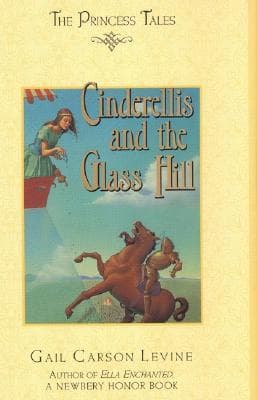
Cinderellis and the Glass Hill Plot Summary
Covers the whole plot, including the ending.
The Cinderellis Nickname
Ellis lives a life of chores with his two older, mean-spirited brothers, Ralph and Burt, who constantly abuse him. One day, while Ellis is covered in ash and soot from tending the fireplace, Ralph and Burt return from a day of leisure. Ralph, seeing Ellis's appearance, jokingly calls him 'Cinderellis,' a name Burt finds funny and quickly adopts. This nickname, meant to mock him, becomes Ellis's identifier in the village, showing his low status and the cruelty he faces daily from his family. Despite his hardships, Ellis remains gentle and helpful.
The Princess's Proclamation
News arrives in the village that Princess Marigold, known for her beauty and sharp wit, has made a royal announcement. She states that any suitor wishing to marry her must first successfully climb the treacherous, slippery Glass Hill, a seemingly impossible feat. Many young men, eager for the princess's hand and royal status, begin to gather, discussing plans for the challenge. Ellis, despite his humble circumstances, hears the news and feels a flicker of hope and determination, though he knows his chances are slim given his lack of resources and his brothers' constant interference.
The Enchanted Horse and Magic Powders
While doing chores in the woods, Ellis finds a magnificent, enchanted horse that speaks to him. The horse, sensing Ellis's kind heart, reveals it can help him. It then gives Ellis three small packets of magical powders: green for speed, red for strength, and blue for invisibility. The horse tells Ellis how to use these powders wisely, warning him that each packet can only be used once. This encounter fills Ellis with renewed hope and a sense of purpose, giving him the tools to attempt the impossible climb and pursue his dream.
First Attempt: The Green Powder
On the first day of the climbing competition, Ellis, disguised and riding his enchanted horse, approaches the Glass Hill. He sprinkles the green powder on his horse, which immediately gains incredible speed, allowing them to climb a good portion of the slippery hill. However, his brothers, Ralph and Burt, who are among the spectators, recognize something familiar. They deliberately interfere, throwing stones and shouting, causing Ellis's horse to falter and slide back down. Ellis, disappointed but not defeated, must retreat, having used one of his precious powders.
Second Attempt: The Red Powder
Determined to succeed, Ellis returns for the second day of the competition. This time, he uses the red powder, giving his horse great strength. The horse charges up the Glass Hill with impressive power, overcoming the slick surface. Ellis makes even greater progress than before, nearing the top. However, his brothers, ever watchful and malicious, again intervene. They create a more elaborate distraction, perhaps by making a loud noise or directly blocking his path, causing Ellis and his horse to lose their footing and slide down. Ellis is forced to retreat again, now with only one packet of magic powder remaining.
The Princess's Curiosity
Throughout the first two days of the competition, Princess Marigold watches the suitors from her castle window. While many are strong and boastful, she is particularly drawn to the mysterious rider on the magical horse, despite his repeated failures. She notices how his brothers seem to target him. Marigold begins to suspect there is more to this clumsy but persistent climber than meets the eye. Intrigued by his determination and the unusual circumstances, she secretly hopes he will succeed and starts to plan how to subtly help him, feeling a strange connection to the unknown suitor.
Third Attempt: The Blue Powder and Marigold's Help
On the final day, Ellis, with only the blue powder left, prepares for his last attempt. He sprinkles the powder, making himself and his horse invisible to all but Princess Marigold, who has been forewarned by her own magical insights. As Ellis's invisible horse begins its climb, Marigold, from her window, drops a golden apple. It bounces down the hill, creating a small, visible trail for Ellis to follow. The apple's path guides him, and with invisibility, Ellis finally reaches the top of the Glass Hill, a feat no one else could accomplish. He is still invisible when he reaches the summit.
The Reveal and the Misunderstanding
Upon reaching the summit, Ellis becomes visible again, standing triumphantly atop the Glass Hill. Princess Marigold, who has been watching intently, is initially overjoyed. However, her joy quickly turns to shock and alarm when she sees Ellis. Because of his life of chores, Ellis is still covered in cinders, soot, and dust, making him appear dirty and disheveled, almost monstrous in her eyes. The contrast between her ideal suitor and Ellis's grimy appearance is stark, leading her to cry out in dismay, mistakenly believing she has been tricked into marrying a hideous creature. Ellis is heartbroken by her reaction.
Ellis's Despair and Marigold's Regret
Devastated by Princess Marigold's horrified reaction and her declaration that he looks like a monster, Ellis, his dreams shattered, turns and flees down the Glass Hill, leaving behind the golden apple she had dropped for him. Marigold, seeing his swift departure and the genuine hurt in his eyes, immediately realizes her grave error. She understands that she judged him solely on his appearance and that he was, in fact, the courageous and determined climber she had secretly admired. Overwhelmed by regret, she vows to find him and apologize, determined to fix her mistake and understand the true identity of her suitor.
The Quest for Cinderellis
Princess Marigold, filled with remorse and new determination, decides she must find the mysterious climber. She uses the golden apple he left behind as her only clue, believing it might hold some magic or lead her to him. Defying royal custom, she embarks on a personal quest, traveling through the kingdom, showing the apple to everyone she meets and asking about a young man who might match the climber's description, even if he was covered in cinders. Her journey is driven by a strong desire to apologize and to understand the truth behind his appearance and his incredible feat.
The Truth Revealed
Marigold's search eventually leads her to Ellis's humble home, where she meets his cruel brothers, Ralph and Burt. They try to trick her, claiming to be the climbers themselves, but Marigold, sharp and observant, sees through their lies. She demands to see their younger brother, Ellis, whom they reluctantly present, still covered in soot. Marigold recognizes him instantly, despite his appearance, and finally understands the full extent of his mistreatment and the challenges he overcame. Ellis, surprised and touched by her persistence, reveals the story of his enchanted horse and the magic powders.
Apology and Acceptance
Princess Marigold, now fully understanding Ellis's character and the circumstances that led to his appearance, offers a heartfelt and sincere apology for her initial, prejudiced reaction. She expresses her admiration for his courage, determination, and kind spirit, which she now sees clearly. Ellis, touched by her genuine remorse and her willingness to seek him out, accepts her apology. The two realize they share deep respect and affection. Marigold proposes to Ellis, who joyfully accepts. Their engagement is announced, much to the dismay of Ralph and Burt, who are left to face the consequences of their past cruelty.
A Royal Wedding and a Just End
Ellis and Princess Marigold are married in a grand royal ceremony, celebrated by the entire kingdom. Ellis, no longer 'Cinderellis' but a respected prince, stands proudly by his princess. As for Ralph and Burt, their malicious actions and mistreatment of Ellis are brought to light. As punishment for their cruelty and deceit, they are banished from the kingdom, forced to fend for themselves without Ellis's kindness or their former comfortable lives. Ellis and Marigold rule justly and happily, proving that kindness, determination, and a discerning heart can conquer all obstacles, even a slippery Glass Hill and prejudiced first impressions.
Cinderellis and the Glass Hill Characters
Ellis (Cinderellis)
Protagonist
A kind, mistreated young man who endures abuse from his brothers but possesses a resilient spirit.
Ellis is the titular character, a gentle and good-hearted young man forced into a life of servitude by his cruel older brothers, Ralph and Burt. Despite being constantly covered in cinders and subjected to their taunts, he maintains a quiet dignity and a helpful nature. He is resourceful and determined, especially when faced with the challenge of climbing the Glass Hill. His kindness attracts magical aid, and he uses his wits to overcome obstacles, though his appearance often belies his true character.
Relationships: Ralph (Cruel, abusive older brother); Burt (Cruel, abusive older brother); Princess Marigold (Love interest and eventual wife); Enchanted Horse (Magical helper and loyal companion)
Princess Marigold
Love Interest / Supporting Protagonist
A clever and spirited princess who seeks a worthy suitor and eventually learns to see beyond appearances.
Princess Marigold is intelligent, perceptive, and initially a bit quick to judge based on appearance. She sets the challenge of the Glass Hill, seeking a suitor who is not only strong but also determined. While initially horrified by Ellis's soot-covered appearance, her sharp wit and underlying goodness lead her to realize her mistake. She is proactive in her pursuit of the truth, embarking on a quest to find the mysterious climber and rectify her error, demonstrating her strong will and discerning heart.
Relationships: Ellis (Love interest and eventual husband)
Ralph
Antagonist
Ellis's older, cruel, and lazy brother who frequently mocks and abuses him.
Ralph is one of Ellis's two older brothers, characterized by his laziness, cruelty, and constant taunting of Ellis. He is quick to ridicule and enjoys seeing Ellis suffer. Ralph is self-serving and lacks any sense of responsibility or empathy. He actively tries to sabotage Ellis's attempts to climb the Glass Hill, driven by jealousy and a desire to maintain his perceived superiority. He represents the petty meanness and injustice Ellis faces daily.
Relationships: Ellis (Victim of his abuse and mockery); Burt (Fellow abuser and accomplice)
Burt
Antagonist
Ellis's other older, equally cruel and lazy brother, often echoing Ralph's taunts.
Burt is Ralph's brother and Ellis's other tormentor. He is just as lazy, selfish, and abusive as Ralph, often joining in on the mockery and physical mistreatment of Ellis. He finds humor in Ellis's plight and actively participates in trying to prevent Ellis from succeeding in the Glass Hill challenge. Burt embodies the collective cruelty that Ellis endures, and his character serves to highlight the depth of Ellis's suffering and resilience.
Relationships: Ellis (Victim of his abuse and mockery); Ralph (Fellow abuser and accomplice)
Enchanted Horse
Supporting
A magical, sentient horse that aids Ellis in his quest.
The Enchanted Horse is a wise and benevolent magical creature that appears to Ellis in the woods. Sensing Ellis's pure heart and worthiness, it provides him with the magical powders and advises him on their use. The horse is loyal and powerful, serving as Ellis's primary means of attempting the Glass Hill climb. It represents the magical aid that often comes to those who are truly good and deserving in fairy tales, acting as a guide and facilitator for Ellis's destiny.
Relationships: Ellis (Magical helper and loyal companion)
Cinderellis and the Glass Hill Themes
Appearance vs. Reality
This theme is central to the story, showing how external appearances can be misleading and often hide a person's true character. Ellis, covered in cinders and dirt, is initially judged by Princess Marigold as a 'monster,' despite his courageous feat. His brothers, though outwardly more presentable, are revealed to be cruel and deceitful. The story emphasizes that true worth is in one's actions, kindness, and determination, not in physical presentation or social standing. Marigold's journey to find Ellis is her realization of this truth, as she learns to see past the soot to the noble heart beneath, shown when she regrets calling him a monster after seeing his genuine hurt.
“You look like a monster! You're covered with... with... with cinders!”
Perseverance and Determination
Ellis's unwavering spirit in the face of constant adversity is a key theme. Despite the abuse from his brothers, the seemingly impossible challenge of the Glass Hill, and repeated failures, Ellis never gives up. He makes three attempts, using his magical aid wisely, driven by hope and courage. His persistence ultimately leads to his success in climbing the hill and, eventually, winning the princess's heart. This theme is also seen in Princess Marigold's determination to find the mysterious climber after realizing her mistake, showing that perseverance is important for achieving both personal goals and correcting errors.
“Ellis, disappointed but not defeated, must retreat, having used one of his precious powders.”
The Power of Kindness
Ellis's kindness, despite his harsh upbringing, is a main part of his character and how the plot moves forward. His good heart draws the Enchanted Horse to him, providing him with the magical powders needed for his quest. Even when his brothers are cruel, Ellis often acts with quiet generosity, making him deserving of the magical aid and the eventual happy ending. This theme suggests that kindness is a powerful force that can attract unexpected allies and lead to positive outcomes, contrasting sharply with his brothers' malice. His kindness is what makes him worthy of the princess, even before his appearance changes.
“The horse, sensing Ellis's kind heart and hidden potential, reveals that it can help him.”
Justice and Consequences
The story ultimately delivers a clear message about justice. Ellis, who suffers unjustly for most of the story, eventually receives his rightful reward: love, status, and happiness. Conversely, his cruel and deceitful brothers, Ralph and Burt, face severe consequences for their actions. Their banishment from the kingdom is a direct punishment for their abuse, sabotage, and general malice. This theme reinforces the idea that good deeds are eventually rewarded and bad deeds are punished, providing a satisfying resolution where the deserving are elevated and the wicked face their comeuppance, restoring balance to the story.
“As punishment for their cruelty and deceit, they are banished from the kingdom, forced to fend for themselves.”
Plot Devices & Literary Techniques
The Glass Hill
An impossible, slippery hill that serves as the ultimate test for suitors.
The Glass Hill is a symbolic and literal obstacle that Princess Marigold sets for her suitors. Its impossible slipperiness represents the difficulty of finding a truly worthy partner and the challenges one must overcome to achieve a seemingly unattainable goal. It acts as a filter, weeding out the uncommitted and highlighting the determination of those who truly persevere. For Ellis, it's not just a physical challenge but also a symbol of his desire to rise above his circumstances and prove his worth despite his lowly status.
Magic Powders (Green, Red, Blue)
Three distinct magical substances that grant temporary abilities to Ellis and his horse.
The three magic powders—green for speed, red for strength, and blue for invisibility—are classic fairy tale magical aids. They function as plot enablers, providing Ellis with the necessary supernatural advantages to attempt the Glass Hill climb. The limited number of uses (one per packet) creates tension and forces Ellis to make strategic decisions. They also highlight Ellis's resourcefulness and the magical world's benevolence towards those who are pure of heart, contrasting with the mundane and cruel reality of his home life.
The Golden Apple
A golden apple dropped by Princess Marigold that serves as a guide and a clue.
The golden apple serves a dual purpose. Initially, it acts as a subtle act of assistance from Princess Marigold, guiding the invisible Ellis to the summit of the Glass Hill. After Ellis flees, it becomes a crucial clue, a physical link that Marigold uses to track him down. It symbolizes Marigold's growing interest and eventual regret, and her determination to find the truth. The apple's magical glow or unique nature might also hint at the special connection forming between Ellis and Marigold.
The Enchanted Horse
A talking, magical horse that provides Ellis with aid and counsel.
The Enchanted Horse is a classic fairy tale trope, a benevolent magical helper who recognizes the protagonist's inner worth. It serves as Ellis's confidante and enabler, providing him with the magic powders and the means to attempt the Glass Hill. The horse represents the idea that kindness and purity of heart attract positive forces, acting as a catalyst for Ellis's journey and a direct contrast to the cruelty of his human family.
Cinderellis and the Glass Hill Quotes
“The price of magic is always more magic.”
“If you don't ask, you don't get.”
“True courage isn't about not being afraid. It's about doing what needs to be done even when you are.”
“A good heart is worth more than a full purse.”
“Sometimes the greatest help comes from the most unexpected places.”
“It's one thing to wish for something, and quite another to work for it.”
“Love, like magic, can make the impossible seem possible.”
“You can't climb a glass hill without first believing you can reach the top.”
“Even the smallest kindness can grow into the largest good.”
“There's more than one way to skin a cat, or in this case, climb a glass hill.”
“A promise made is a debt unpaid.”
“Sometimes, you have to lose something to gain something even better.”
“It's not the slipper that matters, but the foot that fits it.”
“Happiness isn't found in what you get, but in what you give.”
Quiz
10 questions on the plot and the characters. Each answer comes with a short explanation.
Question 1
What is Cinderellis's actual name before his brothers nickname him?
- Ellis
- Elliot
- Elwood
- Elmer
Show answer
A. Ellis Cinderellis's brothers, Ralph and Burt, call him 'Cinderellis' because he is covered in cinders, but his given name is Ellis, as stated in the excerpt: 'You're covered with cinders, Ellis.'
Question 2
Who are Cinderellis's two unfriendly brothers?
- Ralph and Burt
- Harry and Lloyd
- Tom and Jerry
- Fred and George
Show answer
A. Ralph and Burt The excerpt explicitly names Cinderellis's brothers as Ralph and Burt, who are the ones who give him his nickname.
Question 3
What does Princess Marigold initially think Cinderellis is?
- A monster
- A prince in disguise
- A jester
- A stable boy
Show answer
A. A monster The synopsis states, 'The only problem is-- Marigold thinks Cinderellis is a monster!'
Question 4
What unique magical element does Cinderellis possess to help him win Princess Marigold's hand?
- Magical powders
- A talking animal companion
- A magic lamp
- A wishing well
Show answer
A. Magical powders Unlike the traditional Cinderella, Cinderellis 'does have magical powders, and he intends to use them to win the hand of his Princess Charming.'
Question 5
What common fairy tale element is explicitly stated to be missing for Cinderellis?
- A fairy godmother
- A glass slipper
- A grand ball
- A pumpkin carriage
Show answer
A. A fairy godmother The description highlights the difference from the original tale by stating Cinderellis 'has two unfriendly brothers and no fairy godmother to help him out.'
Question 6
What is the name of the Princess Cinderellis wishes to marry?
- Marigold
- Rosebud
- Lily
- Daisy
Show answer
A. Marigold Cinderellis 'intends to use [magical powders] to win the hand of his Princess Charming-- that is, Marigold.'
Question 7
What is the specific challenge or objective Cinderellis faces to win Princess Marigold's hand, implied by the title and genre?
- Climbing the Glass Hill
- Defeating a dragon
- Solving a riddle
- Finding a hidden treasure
Show answer
A. Climbing the Glass Hill The title of the book, 'Cinderellis and the Glass Hill,' strongly implies that climbing or conquering the Glass Hill is a central challenge he must overcome to achieve his goal of marrying the princess, a common motif in such tales.
Question 8
What qualities does Gail Carson Levine's retelling of the tale emphasize as being able to 'carry the day'?
- Determination, imagination, and kindness
- Wealth, power, and beauty
- Strength, courage, and cunning
- Magic, luck, and destiny
Show answer
A. Determination, imagination, and kindness The final sentence of the excerpt states that Levine 'proves that determination, imagination, and kindness can carry the day.'
Question 9
How does the 'Cinderella' aspect of Cinderellis manifest, based on the excerpt?
- He is covered in cinders and has unfriendly step-siblings (brothers in this case)
- He wears glass shoes and is forced to do chores by his stepmother
- He attends a royal ball disguised and must leave by midnight
- He communicates with animals and receives help from a magical pumpkin
Show answer
A. He is covered in cinders and has unfriendly step-siblings (brothers in this case) The excerpt states, 'You're covered with cinders, Ellis.' and 'He's Cinderellis, and he has two unfriendly brothers'. This directly links his nickname and his family situation to the Cinderella archetype.
Question 10
Gail Carson Levine's 'Ella Enchanted' is described as a retelling of what fairy tale?
- Cinderella
- Sleeping Beauty
- Beauty and the Beast
- Rapunzel
Show answer
A. Cinderella The excerpt mentions 'Gail Carson Levine is the author of Ella Enchanted, a spirited retelling of the 'real' Cinderella fairy tale'.
Cinderellis and the Glass Hill FAQ
What is the core premise of 'Cinderellis and the Glass Hill'?
'Cinderellis and the Glass Hill' reimagines the classic Cinderella story with a male protagonist, Cinderellis, who is tormented by his two older brothers, Ralph and Burt. Instead of a fairy godmother, Cinderellis relies on his own ingenuity and a collection of magical powders to win the affection of Princess Marigold, who initially mistakes him for a monster.
Who are Cinderellis's main antagonists, and how do they treat him?
Cinderellis's main antagonists are his older brothers, Ralph and Burt. They constantly mock him, give him the derogatory nickname 'Cinderellis' due to his ash-covered appearance, and force him to perform all the household chores while they pursue their own frivolous activities, mirroring the cruel stepsisters from the original tale.
What is the central challenge Cinderellis faces in winning Princess Marigold's hand?
Cinderellis's central challenge is overcoming Princess Marigold's initial fear and misunderstanding. Due to his use of various magical powders that transform his appearance and abilities, Marigold repeatedly believes him to be a terrifying monster rather than a suitor, making it difficult for him to establish a connection.
How does Cinderellis obtain the magical powders he uses throughout the story?
The book doesn't explicitly detail the origin of Cinderellis's magical powders, but it implies they are a collection he has gathered or inherited. He possesses a variety, including powders for strength, invisibility, and even turning things to stone, which he strategically employs to navigate the Glass Hill and impress the Princess.
What role does the 'Glass Hill' play in the story, and what must suitors do to win Marigold?
The Glass Hill is a central element of the challenge set by Princess Marigold's father. Suitors must climb the impossibly slippery Glass Hill to reach the Princess at the top, proving their worth and determination. Cinderellis's ability to scale it, often with magical assistance, is crucial to his pursuit.
How does Cinderellis's use of a 'strength powder' inadvertently contribute to Marigold's fear?
When Cinderellis first uses the strength powder to climb the Glass Hill, he becomes so large and powerful that Marigold perceives him as a monstrous giant rather than a suitor. His enhanced size and booming voice, though intended to impress, only serve to terrify her and reinforce her initial misconception.
Are there any subtle parallels between Cinderellis's brothers and the stepsisters in the traditional Cinderella story beyond their cruelty?
Beyond their general cruelty and forcing Cinderellis to do chores, Ralph and Burt also exhibit a similar superficiality and self-absorption to the traditional stepsisters. They are more concerned with their own comfort and amusement than with any genuine accomplishment or kindness, mirroring the vanity often depicted in the classic tale.
What is the significance of Cinderellis's initial 'monster' appearance in relation to common fairy tale tropes?
Cinderellis's initial 'monster' appearance subverts the typical 'handsome prince' trope and adds an ironic twist. It forces Marigold to look beyond superficial appearances and challenges the reader to consider that heroism and worth can come in unexpected, even frightening, guises, before the true nature is revealed.
How does Cinderellis's reliance on magical powders differ from Cinderella's reliance on a fairy godmother, and what does this imply about his character?
Cinderellis's active use and strategic application of various magical powders demonstrate his resourcefulness, intelligence, and determination, unlike Cinderella, who is a more passive recipient of her fairy godmother's help. This highlights Cinderellis's agency and problem-solving skills, making him a more self-reliant protagonist.
Analyze Princess Marigold's psychological journey from fear to acceptance of Cinderellis.
Princess Marigold undergoes a significant psychological journey. Initially, her fear is rooted in visual misinterpretations and preconceived notions of what a suitor should look like. Her eventual acceptance comes from observing Cinderellis's persistence, kindness (despite his monstrous guises), and ultimately, his true, gentle nature, forcing her to confront her own biases and look beyond appearances.
How does the author use humor, particularly through Cinderellis's misfortunes, to explore themes of resilience?
Gail Carson Levine uses humor, often through Cinderellis's awkward transformations and Marigold's terrified reactions, to lighten the tone while simultaneously highlighting his resilience. Despite repeated setbacks and being misunderstood, Cinderellis never gives up, demonstrating that even embarrassing failures can be overcome with persistence and a good attitude, making his determination more endearing.
What psychological impact might Cinderellis's brothers' constant taunting have on his self-perception, and how does he overcome it?
The brothers' constant taunting and the derogatory 'Cinderellis' nickname could significantly damage his self-esteem and foster feelings of inadequacy. However, Cinderellis overcomes this by channeling his energy into his magical experiments and his pursuit of Marigold, using his ingenuity and determination to prove his worth despite his brothers' negativity, rather than internalizing their insults.
Could Cinderellis's repeated transformations be interpreted as a metaphor for identity exploration or the masks people wear?
Yes, Cinderellis's repeated transformations can certainly be interpreted as a metaphor for identity exploration. He tries on different 'masks' or personas—giant, invisible man, etc.—in his attempt to connect with Marigold, reflecting how individuals might present different versions of themselves to others, or struggle to find their true identity, especially when trying to impress someone.
In what ways does 'Cinderellis' challenge traditional gender roles often found in fairy tales, and what message does this convey?
'Cinderellis' challenges traditional gender roles by making the male character the one in need of rescue (or at least, the one pursuing the 'princess') and the female character the one who is initially fearful and needs to be won over. This conveys a message that heroism, resourcefulness, and the desire for love are not exclusive to any gender, and that traditional narratives can be subverted for fresh perspectives.
How does the ending, without a grand magical reveal, reinforce the story's themes of inner worth?
The ending, where Cinderellis is accepted not through one final, dazzling magical transformation but through Marigold's gradual understanding and appreciation of his true character and persistence, reinforces the theme of inner worth. It suggests that genuine connection comes from recognizing kindness, determination, and ingenuity, rather than superficial appearances or overwhelming magic.
Is Princess Marigold's initial fear of Cinderellis justified, or is it a commentary on judging by appearances?
Marigold's initial fear is understandable given Cinderellis's monstrous and unsettling transformations, which are genuinely frightening. However, the story uses her reaction as a commentary on judging by appearances, as her fear prevents her from seeing the kind, determined person beneath the magical disguises. Her journey is about learning to look beyond the surface.
What is the broader significance of Cinderellis's magical powders being self-acquired and self-applied, rather than granted by an external force?
The self-acquired and self-applied nature of Cinderellis's magical powders emphasizes themes of self-reliance, ingenuity, and agency. Unlike Cinderella, who is a passive recipient of aid, Cinderellis actively seeks solutions and uses his own resources, highlighting that one's fate can be shaped by personal effort and cleverness rather than solely by external intervention.
How does the book's humor contribute to its appeal for a 'Children's, Young Adult' audience?
The book's humor, particularly through the absurd situations created by Cinderellis's transformations and Marigold's comically exaggerated fear, makes it highly engaging for both children and young adults. The lighthearted tone and silly scenarios keep the story entertaining while still delivering its underlying messages about perseverance and looking beyond appearances.
About the author

Gail Carson Levine is an American author known for her contributions to children's and young adult literature. She is best recognized for her novels such as "Ella Enchanted," a retelling of the Cinderella story, "The Two Princesses of Bamarre," which features themes of bravery and friendship, "Fairest," a unique take on beauty and identity, and "Cinderellis and the Glass Hill," a whimsical twist on classic fairy tales.
Similar books
- Ella Enchanted
Gail Carson Levine
4.0 (387k) average on GoodreadsFantasyAnother spirited and humorous fairy tale retelling by the same author, featuring a strong female protagonist.
- Princess Academy
Shannon Hale
4.0 (105k) average on GoodreadsFantasyPrincess Academy explores female agency and education within a fantastical setting but doesn't engage in the same direct gender role reversal as Cinderellis. Hale's work focuses on communal learning and political intrigue, offering a broader scope of challenges for its female protagonist.
- Harry Potter and the Sorcerer's Stone
J.K. Rowling
4.5 (7M) average on GoodreadsFantasyRescued from a miserable life under the stairs, an orphaned boy discovers he's a wizard destined for a magical school, where he uncovers a dangerous secret tied to the dark wizard who murdered his parents.
- The Hunger Games
Suzanne Collins
4.3 (6.4M) average on GoodreadsFantasyIn a future where children fight to the death on live television, Katniss Everdeen volunteers for the arena, turning a death sentence into a fight for survival and a spark of rebellion.
- 1984
George Orwell
4.2 (3.1M) average on GoodreadsPoliticsIn a future where surveillance and thought control are absolute, a man's search for truth clashes with the Party, showing that hope can be a form of rebellion.
- Divergent
Veronica Roth
4.2 (2.9M) average on GoodreadsFantasyIn a society divided by virtues, a sixteen-year-old's difference from the norm starts a rebellion that threatens her world.




Enjoyed the summary?
A summary gives you the shape of the book. The book itself has the detail, the examples and the voice.
Find Cinderellis and the Glass Hill on AmazonAs an Amazon Associate, BookBrief earns from qualifying purchases. How we're funded