

Synopsis
Covers the whole plot, including the ending.
- Difficulty
- Medium
- Pacing
- Fast
- Mood
- Gritty, Suspenseful, Desperate, Intense, Bleak
- Read it if
- You enjoy gritty, realistic war stories from a young adult perspective, featuring strong female protagonists and a focus on survival and moral dilemmas.
- Skip it if
- You prefer lighthearted stories, happy endings, or are sensitive to themes of war, torture, and significant character loss.
Circle of Flight Plot Summary
Covers the whole plot, including the ending.
The Return to Wirrawee and New Threats
Ellie Linton, Homer, Fi, and Lee return to Wirrawee after a mission. Their former homes are destroyed, and the land is scarred by more intense conflict. They are immediately back in the harsh reality of the occupation. They find that enemy forces are more organized and brutal. The group encounters new, heavily armed patrols and experiences close calls. They learn the enemy has set up permanent bases and is rounding up civilians. The initial sense of homecoming quickly becomes the grim realization that the war is not over. Their small group of resistance fighters faces a more powerful enemy, needing new strategies and a stronger commitment to survival.
The Ambush and Separation
The group plans an ambush on an enemy convoy to disrupt operations and gather supplies. But the enemy is more prepared and numerous than expected. The ambush quickly becomes a fierce firefight, and the friends are overwhelmed. In the chaos, Ellie is separated from Homer, Fi, and Lee. She is cornered and, despite fighting hard, is captured by enemy soldiers. This is a turning point. Ellie, the leader, is now in enemy hands. Her friends wonder about her fate and must continue their resistance without her, facing immediate danger and the pain of separation.
Ellie's Imprisonment and Interrogation
Ellie is taken to a prison camp. She endures harsh conditions and constant interrogation. Her captors, especially a cold female interrogator, try to get information about the resistance and her friends' locations. Ellie remains defiant. She endures physical abuse, sleep deprivation, and manipulation, but her spirit stays strong. During her imprisonment, she sees how other captives are treated and the enemy's cruelty. She constantly looks for escape opportunities or intelligence, fighting despair and fear for her friends.
A Glimpse of the Enemy's Humanity
During her harsh imprisonment, Ellie has a brief, unsettling moment that changes her view of the enemy. An enemy soldier, acting out of character, shows her a small kindness — a piece of bread or a moment of less brutal treatment. This small gesture cracks the image of the enemy as purely evil. It makes Ellie face the complex idea that even within the oppressive system, individuals can act in ways that defy expected cruelty. This brief encounter does not change her situation, but it adds moral ambiguity to her struggle and deepens her understanding of the conflict.
The Escape Attempt and Its Aftermath
Ellie takes a desperate chance to escape. Using her quick thinking, she tries to overpower her guards and run for freedom. The escape is chaotic and violent. She damages her captors but does not fully get away. She is recaptured, but not before she learns valuable information about the enemy's camp layout and routines. The failed escape leads to her being moved to a more secure and isolated part of the prison. Despite the setback, the experience strengthens her resolve, and she starts to plan an even more daring escape.
Reunion and Desperate Measures
Ellie is reunited with a familiar civilian from her past who was also captured. This reunion, though in dire circumstances, offers a glimmer of hope and a chance to work together. They begin to plan a coordinated escape, combining their limited resources and knowledge of the camp. Their plan relies on exploiting weaknesses in the enemy's security and using a specific window of opportunity. The stakes are very high; failure means death. This partnership, born of shared desperation, renews Ellie's resolve and gives her a much-needed ally, even if their chances seem small.
The Coordinated Breakout
Ellie and her ally put their lives on the line to execute their escape plan. The breakout is tense and dangerous, involving stealth, diversion, and brutal confrontations. They navigate the heavily guarded camp, avoiding patrols and using their knowledge of the terrain. The escape has casualties and close calls as they fight through enemy soldiers. Ellie's combat skills and quick thinking are tested as they fight for every inch of freedom. Their success hangs by a thread, with the constant threat of discovery and recapture, making every decision important.
Journey Through Hostile Territory
After successfully breaking out of the prison camp, Ellie and her ally face a new challenge: navigating enemy-occupied territory to find her friends and rejoin the resistance. Their journey is dangerous. They must avoid enemy patrols, scavenge for food and water, and endure the harsh Australian wilderness. They use their knowledge of the land and their instincts to stay hidden, often traveling at night. Ellie's leadership and survival skills are important as they face exhaustion, hunger, and the constant threat of discovery. This hard trek tests their physical and mental limits, reinforcing the brutal reality of their war-torn world and their determination to reunite with their comrades.
Reunion and Devastating News
After a hard journey, Ellie and her ally finally contact Homer, Fi, and Lee. The reunion is emotional, a moment of relief and joy amid the war. However, the happiness is short-lived. Her friends deliver bad news: other members of their resistance network have been captured or killed, and the enemy's control on the region has tightened. The group is more isolated than ever, and the cost of their resistance weighs heavily on them. Despite the heartbreak, Ellie's return gives new resolve to the weary group. They immediately begin to plan their next moves, understanding the fight has become more desperate.
The Final Stand and Uncertain Future
Facing huge odds and dwindling resources, Ellie and her friends make a final stand against the enemy forces. They execute a risky plan, using their knowledge of the Wirrawee terrain to inflict maximum damage and protect what little remains of their community. The battle is fierce and takes a heavy toll, pushing them to their limits. While they achieve a tactical victory, the broader war continues, and their future is uncertain. The book ends with the group, battered but not broken, thinking about their next steps. They understand that while this battle is over, the fight for their freedom and survival is far from won, leaving them with defiance and weary anticipation.
Circle of Flight Characters
Ellie Linton
Protagonist
Resilient leader and fierce fighter of the resistance group
Ellie is the central protagonist and narrator, a young woman who has been hardened by the war but retains her deep sense of loyalty and compassion. She is incredibly resourceful, brave, and quick-thinking, often taking on the most dangerous tasks. Her experiences in captivity in 'Circle of Flight' test her mental and physical endurance to their limits, forcing her to confront the brutal reality of the enemy and her own capacity for survival. Despite the overwhelming odds, Ellie's determination to protect her friends and fight for freedom never wavers, making her a symbol of enduring hope and resistance. Her internal monologue provides insight into the psychological toll of war.
Relationships: Homer Yannos (Best friend and co-leader, a deep bond of trust and mutual respect); Fi Maxwell (Close friend, providing emotional support and a sense of shared humanity); Lee (Boyfriend, a source of comfort and emotional connection amidst the war); Kevin Holmes (Former friend, relationship strained by past events and his capture); Corrie Mackenzie (Best friend, deceased, a constant source of grief and motivation for Ellie)
Homer Yannos
Supporting
Ellie's best friend and the group's secondary leader, known for his strategic thinking
Homer is Ellie's loyal best friend and a vital member of the group, known for his surprising strategic mind and courage. Initially seen as a wild and irresponsible teenager, the war has transformed him into a capable and decisive leader, often working in tandem with Ellie. In 'Circle of Flight', he struggles with Ellie's capture, taking on more responsibility for the remaining group and demonstrating his unwavering commitment to her rescue and the resistance. He is often the one to devise practical plans and maintain morale when Ellie is absent, showing his growth and reliability under immense pressure.
Relationships: Ellie Linton (Best friend and co-leader, a deep bond of trust and mutual respect); Fi Maxwell (Close friend, supportive and caring); Lee (Fellow resistance fighter, a working relationship based on shared goals)
Fi Maxwell
Supporting
The emotionally sensitive but resilient member of the group
Fi is the most outwardly sensitive member of the group, often struggling with the brutal realities of war, but she possesses a quiet strength and resilience. She provides much-needed emotional support and a connection to their pre-war lives. In 'Circle of Flight', Fi's concern for Ellie's safety is palpable, and she continues to offer comfort and a steady presence to Homer and Lee while Ellie is captive. Despite her fears, she never gives up on the cause or her friends, demonstrating her inner fortitude and her importance in maintaining the group's humanity amidst the violence. Her observations often provide a different, more empathetic perspective on events.
Relationships: Ellie Linton (Close friend, providing mutual emotional support); Homer Yannos (Close friend, supportive and caring); Lee (Fellow resistance fighter, relying on each other for support)
Lee
Supporting
Ellie's boyfriend and a skilled, quiet member of the resistance
Lee is Ellie's boyfriend, a quiet but deeply committed member of the group. He is skilled in various practical ways, including mechanics and stealth, making him an invaluable asset to the resistance. His relationship with Ellie is a source of comfort and motivation for both of them, providing a glimmer of normalcy and hope in their war-torn world. In 'Circle of Flight', Lee is deeply affected by Ellie's capture, his quiet demeanor masking a fierce determination to find her and continue the fight. He is reliable and courageous, always ready to act when needed, and his bond with Ellie remains a central emotional anchor for her.
Relationships: Ellie Linton (Boyfriend, a deep emotional and romantic bond); Homer Yannos (Fellow resistance fighter, a working relationship based on shared goals); Fi Maxwell (Fellow resistance fighter, relying on each other for support)
The Female Interrogator
Antagonist
Cold and calculating enemy officer responsible for Ellie's interrogation
The Female Interrogator is a chilling antagonist who represents the systematic cruelty and psychological warfare employed by the enemy. She is intelligent, manipulative, and relentless in her attempts to break Ellie during her captivity. Unlike the more brutish soldiers, her methods are often psychological, exploiting fear and isolation. She maintains a detached, professional demeanor, making her all the more terrifying. Her presence highlights the enemy's sophisticated and inhumane approach to extracting information and breaking the spirit of their captives. She serves as a direct embodiment of the oppressive force Ellie is fighting against.
Relationships: Ellie Linton (Captor and interrogator, a relationship of power and resistance)
The Captured Civilian
Supporting
An unexpected ally for Ellie during her imprisonment
This character is a civilian captured by the enemy, whose identity is revealed to be someone Ellie knew from before the war, though their specific background is less detailed than the core group. They become an unexpected ally to Ellie during her imprisonment. This individual, hardened by their own experiences in captivity, provides a crucial source of support, information, and collaboration for Ellie in planning and executing their escape. Their presence underscores the widespread impact of the occupation on ordinary people and highlights the human capacity for resilience and solidarity even in the direst circumstances. This alliance is vital for Ellie's survival and eventual freedom.
Relationships: Ellie Linton (Fellow captive and temporary ally in escape)
Colonel Harvey
Mentioned
A high-ranking enemy officer, representing the broader command structure
Colonel Harvey is an enemy officer, often mentioned or briefly seen, representing the higher echelons of the invading forces. He embodies the organized and strategic nature of the occupation, contrasting with the more individual actions of soldiers. His presence, even if indirect, signifies the larger military machine that Ellie and her friends are up against. He is a figure of authority and command, responsible for implementing the broader military objectives and maintaining control over the occupied territory. His character helps to establish the scale and formidable nature of the enemy's military operation.
The Enemy Soldiers
Antagonist
The faceless, ever-present threat of the occupying army
The enemy soldiers are the primary physical antagonists throughout the book. They represent the oppressive force of the invading army, carrying out the orders of their commanders and enforcing the occupation. While mostly depicted as a monolithic, brutal force, there are rare, fleeting moments (like the one who shows Ellie a brief kindness) that hint at their individual humanity, making the conflict more complex. They are responsible for the violence, destruction, and imprisonment that Ellie and her friends endure, constantly hunting them and posing an immediate threat to their lives and freedom. Their overwhelming numbers and superior weaponry highlight the desperate odds the protagonists face.
Relationships: Ellie Linton (Captors and combatants); Homer Yannos (Combatants); Fi Maxwell (Targets); Lee (Combatants)
Circle of Flight Themes
Survival and Resilience
The main theme is the human will to survive against huge odds. Ellie's capture and imprisonment test her resilience as she endures torture, isolation, and despair. Her refusal to break, her constant search for escape, and her eventual breakout show this theme. The group's continued existence in a war-torn world, scavenging for food, avoiding patrols, and fighting back, shows their drive to live and reclaim freedom, even with huge challenges and loss.
“I was alive. That was the main thing. And as long as I was alive, I had a chance.”
The Brutality and Psychological Toll of War
'Circle of Flight' explores the harsh realities of war, especially its psychological impact. Ellie's experiences in captivity expose her to the enemy's cruelty, making her witness and endure terrible acts. The constant threat of death, the loss of loved ones, and the moral compromises forced on the characters leave lasting scars. The book explores how war takes away innocence, forces violence, and pushes people to despair, showing the deep and often permanent damage to the human mind.
“War was a disease. It sucked the humanity right out of you, leaving only a shell.”
Hope and Despair
This theme explores the balance of maintaining hope in the face of despair. Ellie's capture brings her deep hopelessness. Yet, small acts of defiance, memories of her friends, and the idea of an escape plan reignite her hope. The group's reunion, though with tragic news, offers a renewed sense of purpose. The book shows how hope, even in small forms, can motivate survival and resistance. This contrasts sharply with moments of despair that threaten to consume the characters, especially when facing loss and the grim reality of their situation.
“Hope was a dangerous thing, but without it, we were nothing.”
The Nature of the Enemy
The book explores the complex and often dehumanizing nature of the enemy. While mostly shown as a brutal, faceless invading force, there are hints of individual humanity within their ranks, like the soldier who shows Ellie kindness. This complexity challenges Ellie's black-and-white view, making her face the idea that 'the enemy' might be made of individuals, some caught in a system they do not fully support. This theme adds depth to the conflict, going beyond simple good-versus-evil stories to explore human behavior under pressure and within a military structure.
“They weren't all monsters. Some of them were just men, doing what they were told.”
Leadership and Responsibility
Ellie's role as a leader is tested and strengthened in 'Circle of Flight'. Her capture forces her to lead even while imprisoned, showing resilience and resourcefulness in extreme adversity. Meanwhile, Homer steps up to lead the remaining group, showing his strategic thinking and ability to rally others. The theme explores the heavy burden of responsibility, the difficult decisions leaders make, and the importance of trust and cooperation within a group, especially in life-or-death situations and the psychological pressure of guiding others through war.
“Sometimes being a leader meant making choices that broke your heart.”
Plot Devices & Literary Techniques
First-Person Narration (Ellie's Perspective)
Provides intimate access to Ellie's thoughts, fears, and resilience
The entire story is told from Ellie Linton's first-person perspective. This device allows readers to experience her capture, imprisonment, and eventual escape with intense intimacy, feeling her pain, fear, defiance, and hope directly. It highlights her internal struggles, moral dilemmas, and the psychological toll of war. By confining the narrative to Ellie's point of view, the author builds suspense regarding the fate of her friends and the broader war, mirroring Ellie's own isolation and limited knowledge while captive, thus immersing the reader deeply in her personal journey of survival.
The Prison Camp as a Microcosm
A confined setting that reflects the larger themes of oppression and resistance
Ellie's imprisonment in the enemy camp serves as a microcosm of the larger war and occupation. Within its walls, themes of oppression, control, human resilience, and the struggle for freedom are intensified. The camp showcases the enemy's brutal methods, the despair of the captives, and the flicker of hope found in solidarity and resistance. It provides a concentrated environment for Ellie to confront her captors directly, observe the enemy's operations, and ultimately stage a desperate fight for her personal freedom, which parallels the broader fight for national liberation.
The Unexpected Ally
A narrative device to introduce new dynamics and aid the protagonist's survival
The introduction of a familiar civilian as an ally during Ellie's imprisonment is a key plot device. This character provides not only practical assistance in the escape plan but also emotional support and a shared sense of purpose. Their presence breaks Ellie's isolation, offering a new dynamic to the narrative and demonstrating the capacity for human connection and collaboration even in the most dire circumstances. This alliance is crucial for the success of Ellie's escape, highlighting that even the most capable individual cannot always survive alone.
The Interrogator
A character representing the psychological warfare and dehumanization of the enemy
The female interrogator is a specific plot device designed to personify the psychological aspect of the enemy's warfare. She is not just a guard but a calculated manipulator, embodying the enemy's attempt to break the spirit and extract information through non-physical means. Her cold, analytical approach contrasts with the brute force of other soldiers, making her a more insidious and psychologically threatening antagonist. Her presence emphasizes the mental battle Ellie must fight, not just the physical one, and highlights the enemy's sophisticated methods of control and demoralization.
Circle of Flight Quotes
“We were the ones who had to make the decisions, because the adults had failed us.”
“Sometimes the only way to survive is to become what you fear.”
“The circle of flight never ends; it just changes direction.”
“Trust is a weapon sharper than any knife.”
“In the silence of the bush, we found our voices.”
“They called us terrorists, but we were just kids trying to go home.”
“Every goodbye felt like another piece of us left behind.”
“The land remembers what people forget.”
“We fought not for flags, but for the faces around the campfire.”
“Courage isn't the absence of fear; it's the decision that something else matters more.”
“In the end, all wars are fought twice: once on the battlefield, and once in memory.”
“Home isn't a place on a map; it's the people who make you feel safe.”
“We learned that freedom is just another word for responsibility.”
“The stars don't care about borders; why should we?”
Quiz
10 questions on the plot and the characters. Each answer comes with a short explanation.
Question 1
What vehicle does Ellie drive to her front door in the opening scene?
- A truck
- A ute
- A car
- A motorcycle
Show answer
B. A ute The book opens with Ellie jamming on the brakes and stopping the 'ute' right at her front door, establishing the tense, immediate action of the scene.
Question 2
What does Ellie sometimes rely on when ammunition runs out?
- Her friends' help
- Strength and imagination
- Hiding and waiting
- Negotiation with enemies
Show answer
B. Strength and imagination The description states that when trapped and helpless, Ellie is 'sustained only by strength and imagination,' highlighting her resilience beyond physical weapons.
Question 3
How are Ellie's enemies described in terms of their behavior?
- Cunning and strategic
- Ruthless and brutal
- Fearful and hesitant
- Disorganized and weak
Show answer
B. Ruthless and brutal The book explicitly notes that Ellie has 'never faced enemies so ruthless, so brutal,' emphasizing the heightened danger she confronts.
Question 4
What is a key theme suggested by Ellie's reliance on strength and imagination when ammunition runs out?
- The importance of technology in survival
- The futility of resistance in war
- Inner resilience overcoming external threats
- The inevitability of defeat in conflict
Show answer
C. Inner resilience overcoming external threats Ellie's ability to sustain herself with 'strength and imagination' when resources are depleted underscores the theme of inner resilience as crucial for survival.
Question 5
Why does Ellie run into a house that could be full of guns?
- To rescue a friend trapped inside
- It is her home, and she is confronting a threat
- To retrieve important documents
- She is chasing an enemy who fled there
Show answer
B. It is her home, and she is confronting a threat The scene describes her stopping at 'your front door' and running into 'a house that could be full of guns,' implying she is defending her home against enemies.
Question 6
How does the book describe Ellie's situation in terms of companionship?
- She is always alone and isolated
- She has constant support from a large group
- Sometimes with friends, sometimes on her own
- She relies solely on her family for help
Show answer
C. Sometimes with friends, sometimes on her own The text states, 'Sometimes her friends are at her side and sometimes she is on her own,' highlighting the fluctuating nature of her support system.
Question 7
What does Ellie have faith in, according to the book description?
- Her friends' loyalty
- Her own abilities
- The government's protection
- Divine intervention
Show answer
B. Her own abilities The description notes that 'Ellie is a fighter. She has faith in her own abilities,' emphasizing her self-reliance and confidence.
Question 8
What is implied about the enemies' methods of approach in the book?
- They only attack at night
- They use stealth and avoid direct confrontation
- Some crawl over hills, others drive in and knock
- They rely solely on technological surveillance
Show answer
C. Some crawl over hills, others drive in and knock The text describes enemies coming 'crawling over the hills' and others who 'drive in and knock on the front door,' showing varied and unpredictable tactics.
Question 9
Based on the description, what does Ellie face that she has never encountered before?
- A natural disaster threatening her home
- Enemies more ruthless and brutal than ever
- A betrayal by her closest friend
- A complete loss of all her weapons
Show answer
B. Enemies more ruthless and brutal than ever The book states, 'Never has she faced enemies so ruthless, so brutal,' indicating a new level of threat that challenges her past experiences.
Question 10
What broader change is Ellie experiencing during the events of the book?
- A shift from peace to war in her community
- A time of profound personal and situational change
- A technological revolution affecting her life
- A journey to find a new home away from danger
Show answer
B. A time of profound personal and situational change The description begins by noting, 'It is a time of profound change for Ellie Linton,' setting the stage for transformative challenges in her life and environment.
Circle of Flight FAQ
What is 'Circle of Flight' about?
'Circle of Flight' follows Ellie Linton as she confronts ruthless enemies during a time of profound change, where threats come from both the hills and her front door. She must rely on her fighting spirit and imagination when traditional weapons like guns and bullets fail, facing battles that test her limits in brutal, life-altering ways.
Why should I read 'Circle of Flight'?
This book offers a gripping, raw portrayal of survival and resilience in a dystopian setting, with Ellie Linton's intense first-person narrative creating immediate emotional investment. It explores themes of courage, loss, and adaptation when faced with overwhelming odds, making it a compelling read for fans of character-driven young adult science fiction.
What is the background/setting of 'Circle of Flight'?
Set in a war-torn, dystopian Australia, the story unfolds in rural and domestic environments where Ellie's home becomes a battleground. The setting emphasizes isolation and vulnerability, with enemies infiltrating both natural landscapes like hills and personal spaces, creating a claustrophobic atmosphere of constant threat.
What are the most memorable quotes?
Key quotes include 'You jam on the brakes and stop the ute right at your front door,' capturing Ellie's urgency, and 'When the ammunition runs out, who will be left standing?' highlighting the theme of resourcefulness. Another is 'sustained only by strength and imagination,' underscoring her reliance on inner resilience over physical tools.
What writing style does the author use?
John Marsden employs a fast-paced, first-person narrative with vivid, immediate prose that puts readers directly in Ellie's shoes. The style is tense and visceral, using short, punchy sentences to convey action and emotion, making the survival stakes feel personal and urgent throughout the story.
What minor details add significant meaning?
Details like Ellie stopping the ute at her front door symbolize her desperate rush to protect her home, while references to 'crawling over the hills' hint at stealthy, natural threats. The mention of friends being sometimes absent underscores her isolation, adding depth to her solitary struggles against enemies.
What are some subtle foreshadowing moments?
Early scenes of Ellie running into houses 'full of guns' foreshadow later confrontations where violence escalates. The line 'not every battle can be won with a gun and bullets' hints at the eventual ammunition shortage, preparing readers for Ellie's shift to relying on imagination and inner strength.
What unexpected character connections exist?
Enemies who 'drive in and knock on the front door' suggest betrayals or invasions by familiar figures, blurring lines between friend and foe. Ellie's fluctuating support from friends implies alliances that may fracture under pressure, adding complexity to her relationships in the chaotic setting.
What are unspoken character motivations?
Ellie's repeated bravery stems from a deep-seated need to protect her home and identity, driven by loyalty rather than mere survival. Her enemies' ruthlessness may be motivated by desperation or ideological conflict, though their specific goals are often left ambiguous, heightening the sense of mystery and threat.
What psychological complexities do characters exhibit?
Ellie shows a mix of fierce independence and vulnerability, grappling with fear while maintaining faith in her abilities. Her enemies display brutal, calculated behavior, suggesting psychological warfare tactics that challenge her mentally as much as physically, forcing her to adapt beyond combat skills.
What are the major emotional turning points?
Key moments include Ellie realizing she is 'not Superwoman' when facing unprecedented brutality, and the ammunition running out, which forces an emotional shift from reliance on weapons to inner resources. Her feeling 'trapped and helpless' marks a low point, leading to a climax sustained by strength and imagination.
How do relationship dynamics evolve?
Ellie's relationships with friends become strained as threats intensify, with allies sometimes absent, forcing her to operate alone. Interactions with enemies shift from direct combat to psychological confrontations, reflecting a deepening conflict where trust and betrayal play crucial roles in her survival journey.
Which parts remain ambiguous or open-ended?
The specific identities and ultimate fates of some enemies are left unclear, as is the broader outcome of the conflict beyond Ellie's personal struggle. The ending's implication of 'the end of life as she knows it' leaves room for interpretation about what future awaits her, emphasizing uncertainty in the dystopian world.
What are controversial scenes or decisions?
Ellie's decision to repeatedly enter dangerous situations alone, despite risks, may be seen as reckless or heroic. Scenes of brutal enemy actions and the moral ambiguity of survival tactics, such as when ammunition runs out, spark debate about ethics in war and the limits of resilience under extreme pressure.
'Circle of Flight' ending explained: how it ends & what it means
The ending finds Ellie 'trapped and helpless,' facing a transformative crisis where she must rely on 'strength and imagination' to survive. This suggests a resolution that emphasizes psychological endurance over physical victory, implying her journey is about inner growth and adaptation in a shattered world, rather than a clear-cut triumph.
About the author

John Marsden is an Australian author known for his works of fiction, particularly in the young adult genre. His notable books include "The Dead of Night," "Burning For Revenge," "The Night Is for Hunting," "Circle of Flight," and "The Rabbits," which explore themes of survival and resilience. Marsden's writing often reflects his interest in the complexities of adolescence and the human experience.
Similar books
- The Hunger Games
Suzanne Collins
4.3 (6.4M) average on GoodreadsFantasyFeatures a strong young female protagonist fighting for survival against an oppressive regime in a dystopian setting.
- The Giver
Lois Lowry
4.1 (1.8M) average on GoodreadsFantasyThe Giver explores dystopian themes through a tightly controlled, almost allegorical narrative focused on societal control and the suppression of memory, rather than environmental collapse. While both feature young protagonists discovering harsh truths, Lowry's world is meticulously ordered and seemingly perfect, contrasting with Marsden's chaotic, environmentally ravaged landscape. Circle of Flight emphasizes individual adaptation and community building in adversity, whereas The Giver focuses on challenging systemic conformity.
- 1984
George Orwell
4.2 (3.1M) average on GoodreadsPoliticsIn a future where surveillance and thought control are absolute, a man's search for truth clashes with the Party, showing that hope can be a form of rebellion.
- Divergent
Veronica Roth
4.2 (2.9M) average on GoodreadsFantasyIn a society divided by virtues, a sixteen-year-old's difference from the norm starts a rebellion that threatens her world.
- Animal Farm
George Orwell
4.0 (2.7M) average on GoodreadsPoliticsA farm animals' rebellion against humans turns into a pig-led dictatorship, showing how power corrupts and revolutionary ideals are betrayed.
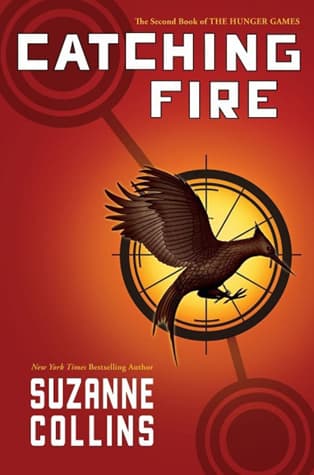
- Catching Fire
Suzanne Collins
4.3 (2.5M) average on GoodreadsFantasyAfter defying the Capitol and starting a rebellion, Katniss and Peeta are forced on a dangerous Victory Tour, navigating political schemes, a fake romance, and the constant threat of a government eager to crush the uprising they began.





Enjoyed the summary?
A summary gives you the shape of the book. The book itself has the detail, the examples and the voice.
Find Circle of Flight on AmazonAs an Amazon Associate, BookBrief earns from qualifying purchases. How we're funded