
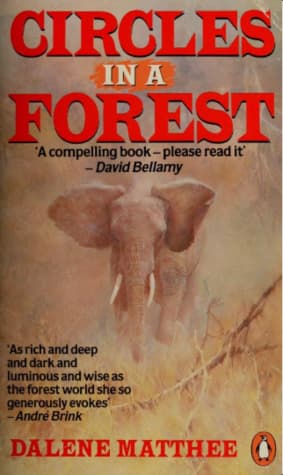
Synopsis
Covers the whole plot, including the ending.
- Difficulty
- Medium
- Pacing
- Moderate
- Mood
- Atmospheric, Evocative, Melancholy, Adventurous
- Read it if
- You love rich historical fiction set in unique natural landscapes, exploring themes of environmentalism, justice, and man's relationship with nature.
- Skip it if
- You prefer fast-paced thrillers or stories with minimal introspection and detailed natural descriptions.
Circles In A Forest Plot Summary
Covers the whole plot, including the ending.
Saul's Childhood and the Forest's Embrace
Saul Barnard is introduced as a young boy living with his family, the Barnards, who are 'bosmense' (forest people) – woodcutters making a living in the Knysna Forest. His life is closely tied to the forest's rhythms and creatures, especially the elephants. He learns the forest's ways early, developing a deep understanding and respect for its ecosystem. Unlike many other woodcutters, Saul feels a spiritual connection to the forest, often watching the elephants and their matriarch, Oupoot, from a distance. His childhood shows a strong sense of belonging and a growing awareness of human greed's destructive impact on his home.
The Arrival of the Timber Merchants
As Saul grows, timber merchants and their large-scale logging operations become more common. Men like Mr. M.C. du Toit, representing government and business, start to control the forest more. This puts pressure on the woodcutters, who are often exploited and paid little. The forest suffers from the constant cutting of its old trees. The elephants, important to Saul's connection to the land, find their habitat shrinking and their lives threatened. The 'bosmense's' traditional, sustainable practices are slowly replaced by industrial exploitation.
Saul's Rebellion and the Elephant Hunt
Saul's growing unhappiness with the exploitation of the forest and his people leads him to defy authorities more often. He becomes known for his independent spirit and his refusal to follow the harsh rules set by timber companies. A major event happens when Oupoot, a large, famous elephant, is targeted for hunting, accused of being dangerous. Saul sees Oupoot as a symbol of the forest's wild spirit and a creature he respects. He becomes involved in the hunt, not to kill, but to protect. His actions often put him against other hunters and authorities.
Kate MacDonald and the Outside World
Saul meets Kate MacDonald, a woman not from the forest community. She represents the 'outside world' of education and different social norms. Kate is first drawn to a romantic idea of the forest and its people, but she also brings the complexities and expectations of urban society. Their relationship has misunderstandings and cultural clashes. Kate sees Saul's potential beyond his life as a woodcutter and tries to encourage him to find opportunities outside the forest. This interaction makes Saul face the limits and prejudices 'bosmense' encounter and his own place in a changing world.
The Trial and Saul's Banishment
In a dramatic turn, Oupoot, the elephant, is killed. Saul is wrongly blamed for its death, despite his efforts to protect the animal. Authorities, wanting to assert control and remove a troublesome figure, use this accusation. Saul is put on trial, a process he sees as unfair given his deep connection to the forest and his innocence. He is found guilty and banished from the Knysna Forest, his only home. This banishment is a devastating blow, cutting his ties to his heritage and the land he loves.
Life in the 'Outside' World
Forced to leave the forest, Saul tries to build a new life in the nearby town of Knysna. He finds work in a sawmill, ironically processing the timber he once fought to protect. This new environment feels alien and hostile. He struggles with the structured, monotonous work and the artificiality of town life. The noise, crowds, and lack of nature weigh heavily on him. He feels like an outsider, always longing for the forest's freedom and familiarity. His experiences in town only deepen his appreciation for what he has lost and confirm his identity as a 'bosmens'.
Saul's Return and the Search for Truth
Unable to live away from his home, Saul makes the dangerous decision to secretly return to the Knysna Forest, defying his banishment. He becomes a fugitive, living off the land and avoiding authorities. His main goals are to clear his name regarding Oupoot's death and to reconnect with his family, especially his sister, Lena, and his aging mother. During his secret return, he starts to uncover the real story of Oupoot's killing, realizing others were involved who gained from the elephant's death. His presence in the forest is a constant reminder of unresolved injustices.
Confrontations and Revelations
As Saul moves through the forest as an outlaw, he starts to piece together the truth about Oupoot's death. He confronts various people, including other woodcutters and the hunters who actually killed the elephant for its ivory, not out of need. He also confronts the corruption and exploitation of the timber industry and its agents, who have taken land from the 'bosmense' and destroyed their way of life. These confrontations are often tense and dangerous, showing the deep divisions and moral decay that have entered the forest community. Saul's search for justice becomes a search for the forest's soul.
The Fate of the Elephants
Throughout his time back in the forest, Saul is aware of the sharp decline in the elephant population. He sees fewer and fewer of the creatures, their numbers cut down by hunting and habitat loss. The herds, of which Oupoot was a proud matriarch, are now fragmented and struggling. This dwindling presence of elephants deeply affects Saul, as they represent the forest's spirit and wildness. Their disappearance mirrors the destruction of his own way of life and the damage done to the natural world by human greed and shortsightedness.
Saul's Redemption and the Future
Saul eventually finds a measure of redemption, not through legal clearance, but through his commitment to the forest. He accepts his role as a guardian of the remaining wilderness and its stories. Though the forest he knew as a child is changed, he works to preserve what remains and ensure the memory of the elephants and the 'bosmense' way of life is not lost. He finds a new purpose in living with the forest, observing its cycles, and advocating for its protection. He becomes a living legend, a symbol of the forest's enduring spirit.
Circles In A Forest Characters
Saul Barnard
Protagonist
A young, independent 'bosmens' deeply connected to the Knysna Forest and its elephants.
Saul is a 'bosmens' (forest person) by birth and spirit, a member of the woodcutter community in the Knysna Forest. From a young age, he possesses an intuitive understanding and deep reverence for the forest and its creatures, particularly the elephants. He is fiercely independent, often clashing with authorities and the established timber industry. Driven by a strong sense of justice and a spiritual bond with nature, he resists the exploitation of his home and people. He is observant, resilient, and possesses a quiet strength that belies his outcast status.
Relationships: Oupoot (Deep spiritual connection and respect for the elephant matriarch.); Kate MacDonald (Complex romantic interest and cultural clash; she represents the 'outside world'.); Lena Barnard (His sister; a source of family connection and loyalty.); Mr. M.C. du Toit (Antagonistic relationship; du Toit represents the oppressive timber industry.)
Oupoot (Old Foot)
Supporting/Symbolic
The ancient, wise matriarch of the Knysna elephants, a symbol of the forest's wild spirit.
Oupoot is the powerful and legendary matriarch of the Knysna elephant herd. She is depicted as an ancient, wise, and formidable creature, deeply respected by Saul and feared by many of the human inhabitants. Her presence in the forest is a constant reminder of its wildness, its history, and its delicate balance. She is not a character in the human sense, but a vital symbolic entity whose fate is inextricably linked to the fate of the forest itself. Her eventual death, whether by human hand or natural causes, marks a significant turning point in the narrative and for Saul.
Relationships: Saul Barnard (Object of Saul's reverence and protection.); The Knysna Forest (Embodiment of the forest's spirit and wildness.)
Kate MacDonald
Supporting
A young woman from the 'outside' who offers Saul a glimpse of another life.
Kate MacDonald is an educated young woman from beyond the forest, representing the urbanized, 'civilized' world. She is initially drawn to the romanticism of the forest and its people, particularly Saul. She is intelligent, independent, and sometimes naive about the harsh realities of forest life. Kate cares for Saul and tries to encourage him to leave the forest, believing he can achieve more in the 'outside' world. Her presence highlights the cultural divide between the 'bosmense' and modern society and challenges Saul's perceptions of his own place.
Relationships: Saul Barnard (Complex romantic interest and cultural bridge/divide.); The Knysna Forest (Initially a romanticized fascination, later a place of some understanding.)
Lena Barnard
Supporting
Saul's sister, who embodies the resilience and struggles of the 'bosmense' women.
Lena is Saul's sister, a strong and resilient woman who shares her brother's connection to the forest but is more resigned to the harsh realities of their existence. She represents the enduring spirit of the 'bosmense' women who navigate poverty, hardship, and the encroaching modern world. Lena provides a familial anchor for Saul and often acts as a voice of practical reason, though she deeply loves and supports her brother. She understands the pain of their displacement and the value of their heritage.
Relationships: Saul Barnard (Sisterly bond of loyalty and mutual support.); Her family (Caretaker and emotional anchor for her family.)
Mr. M.C. du Toit
Antagonist
A representative of the timber industry and government, symbolizing exploitation and control.
Mr. M.C. du Toit is a key antagonist, representing the commercial interests and bureaucratic control that threaten the Knysna Forest and its inhabitants. He is a pragmatic, often ruthless man, focused on maximizing timber extraction and imposing order on the 'unruly' forest people. Du Toit views the forest as a resource to be exploited and the 'bosmense' as obstacles to progress. He embodies the forces of 'civilization' that seek to dominate nature and reshape it for economic gain, often with little regard for environmental or human cost.
Relationships: Saul Barnard (Primary antagonist to Saul; represents the oppressive system.); The Knysna Forest (Sees the forest as a commodity to be controlled and exploited.)
Old Man Barnard
Supporting
Saul's father, a traditional woodcutter struggling with the changing times.
Saul's father is a traditional 'bosmens' woodcutter, deeply rooted in the old ways of the forest. He embodies the struggles of his generation, caught between the declining traditional life and the encroaching industrial world. He loves the forest but also accepts the necessity of cutting wood for survival, often feeling powerless against the larger forces at play. He instills in Saul a love for the forest but also the practicality of survival, creating a complex relationship where Saul both respects and rebels against his father's perceived resignation.
Relationships: Saul Barnard (Father-son relationship, marked by both love and generational differences in approach to the forest.)
Joram
Supporting
A fellow 'bosmens' and often a companion or foil to Saul.
Joram is another woodcutter from the forest community, often serving as a companion or a contrasting figure to Saul. He shares many of the hardships and cultural traits of the 'bosmense' but may not possess Saul's same fierce independence or spiritual depth. Joram represents the common man of the forest, struggling to survive and adapting to the changes, sometimes with more resignation than Saul. His interactions with Saul highlight the different ways individuals cope with their shared fate.
Relationships: Saul Barnard (Friend and fellow woodcutter; sometimes a source of support, sometimes a more passive contrast.)
The Government Officials/Hunters
Antagonist/Mentioned
Represent the systemic forces of control, exploitation, and destruction.
This collective group includes various unnamed or briefly mentioned government officials, timber company representatives, and professional hunters who are instrumental in the exploitation of the forest and the persecution of Saul. They embody the impersonal, bureaucratic, and often corrupt forces that prioritize profit and control over ecological preservation or the well-being of the 'bosmense'. They are the agents of the 'outside world's' destructive influence, directly contributing to the demise of the elephants and the traditional way of life.
Relationships: Saul Barnard (Adversarial; they are the instruments of his banishment and the forest's destruction.); The Knysna Forest (Act as agents of its systematic exploitation and destruction.)
Circles In A Forest Themes
Man vs. Nature / Environmental Exploitation
This theme explores the destructive conflict between human greed and nature. The novel shows the exploitation of the Knysna Forest for timber and ivory, which devastates its ecosystem and nearly wipes out its elephants. Saul Barnard embodies resistance to this destruction, fighting to protect his home and its creatures from industrialization and profit. The cutting of old trees and the hunting of Oupoot symbolize the damage done to nature when it is treated only as a resource, as seen in the logging by figures like Mr. M.C. du Toit.
“The forest was not a property. It was life. It was a heart beating in a million trees and in the deep silence between them.”
Loss of Innocence and a Way of Life
The novel mourns the loss of a natural world and a traditional way of life. Saul's childhood in the untouched forest contrasts with his later experiences, where the forest is scarred, and the 'bosmense' are displaced. The disappearance of the elephant herds, especially Oupoot's death, symbolizes the erosion of the forest's wild spirit and the fading of a unique culture. The 'bosmense' are forced to abandon their old practices, trading freedom for sawmill wages, representing the tragic sacrifice of heritage for 'progress.'
“He knew it was not only Oupoot that had died. Something else had died with her. Something in the forest. Something in himself.”
Justice and Injustice
Justice and injustice run through the narrative, especially regarding Saul's wrong accusation and banishment. Saul is blamed for Oupoot's death, a crime committed by others driven by greed. The legal system, shown by the trial, is biased against the 'bosmense' and manipulated by powerful interests like timber merchants. Saul's quest to clear his name and expose the truth highlights the struggle for fairness when power often decides what is 'right.' His banishment from the forest is the ultimate injustice, separating him from his identity and spiritual home.
“They would never understand. They would never understand that a man could kill a tree and still love the forest.”
Identity and Belonging
The novel explores Saul's struggle with identity and his deep connection to the Knysna Forest. As a 'bosmens,' his identity is tied to the land, its trees, and its elephants. His banishment from the forest is not just a physical separation but an existential crisis, forcing him to confront who he is without his spiritual home. His attempts to adapt to the 'outside' world show his alienation and strengthen his identity as a man of the forest. Ultimately, his return, even as an outlaw, means he reclaims himself and his heritage.
“He was a forest man. He belonged in the forest, like the trees and the elephants.”
The Cycle of Life and Death
The natural cycle of life, death, and regeneration is a constant backdrop to the human story. The forest itself shows this theme, with trees growing for centuries and eventually falling for new life. Elephants also follow this cycle, but human interference brutally stops their natural rhythm. The novel contrasts the natural, respectful cycle of the 'bosmense' (who understood selective cutting) with the destructive, exploitative cycle of commercial logging. Saul's understanding of this natural balance makes the human-caused destruction even more tragic, as it breaks the sacred circle of life.
“The forest was forever changing, forever dying and forever being born again. But man interfered with the rhythm.”
Plot Devices & Literary Techniques
Symbolism of the Elephants
The elephants, particularly Oupoot, symbolize the wild, untamed spirit of the forest and its ultimate vulnerability.
The elephants in 'Circles In A Forest' serve as powerful symbols. Oupoot, the ancient matriarch, embodies the majesty, wisdom, and primal spirit of the Knysna Forest. Her existence is tied to the forest's health, and her eventual death signifies the irreversible loss of its wild essence and the tragic impact of human encroachment. The dwindling herds represent the wider environmental destruction and the fading of a natural world that cannot withstand human greed. For Saul, they are a spiritual connection to his heritage and a physical manifestation of what he fights to protect.
The Knysna Forest as a Character
The forest is not merely a setting but an active, living entity that shapes characters and plot.
The Knysna Forest is a dominant presence, almost a character in itself. It is described with vivid sensory detail, reflecting its beauty, dangers, and intricate ecosystem. It acts as a refuge, a provider, a spiritual home, and later, a place of conflict and loss. The forest's health directly mirrors the well-being of the 'bosmense' and the elephants. Its ancient trees bear witness to centuries, and its destruction directly impacts Saul's identity and fate, making its fate inseparable from the human story.
Flashbacks and Memories
Saul's memories of his childhood in the forest are used to highlight the contrast between past and present.
The novel frequently employs flashbacks and Saul's internal memories of his childhood in the untouched forest. These serve to establish the profound connection he has with the land and to emphasize the stark contrast between the pristine past and the degraded present. These memories deepen the sense of loss and highlight the irreversible changes wrought by human intervention. They also provide insight into Saul's motivations and his unwavering commitment to the forest, showing the reader what he is fighting to preserve or reclaim.
The 'Bosmense' as a Microcosm
The forest people represent a traditional, marginalized culture clashing with modern industrialism.
The community of 'bosmense' (forest people) acts as a microcosm for indigenous or traditional cultures worldwide facing displacement and destruction by modern industrialization. Their way of life, their skills, their connection to the land, and their simple economic system are all threatened and ultimately dismantled by the timber industry and government policies. Their struggles highlight themes of cultural erosion, economic exploitation, and the loss of traditional knowledge in the face of 'progress,' making their story a universal one of marginalized communities.
Circles In A Forest Quotes
“The forest is like a mother. She gives, and she takes. But mostly, she gives.”
“A man without land is a man without roots, and a tree without roots will fall.”
“The elephant carries the forest in his memory, and the forest remembers the elephant.”
“There are circles in a forest, and circles in a man's life. Some you can break, some you cannot.”
“To live in the forest is to read the signs, to hear the whispers, to feel the breath of the trees.”
“Fear is a shadow that grows longer the more you run from it.”
“The outside world wants to tame the forest, but the forest will always find a way to resist.”
“Sometimes the greatest strength is to know when to let go, when to surrender to the flow.”
“The silence of the forest is not empty, it is full of living things.”
“Every tree has a story, if only you know how to listen.”
“Blood spilled on the forest floor does not wash away easily. It stains the earth and the memory.”
“To be truly free, one must first be free in one's own mind, not just in one's body.”
“The future is like a path through dense bush; you cannot see the end, only the next step.”
“Love is not a tame thing. It is wild, like the forest, and demands respect.”
Quiz
10 questions on the plot and the characters. Each answer comes with a short explanation.
Question 1
What is the primary natural resource that attracts humans to the Knysna Forest in the story?
- Gold
- Rare wood (Stinkwood and Yellowwood)
- Diamonds
- Medicinal plants
Show answer
B. Rare wood (Stinkwood and Yellowwood) The book explicitly mentions the value of the 'rare wood of the trees' as a key reason for human encroachment into the forest.
Question 2
Who is the central protagonist of 'Circles In A Forest'?
- Saul Barnard
- Marthinus Barnard
- Kate McDonald
- Oupa Joram
Show answer
A. Saul Barnard Saul Barnard is the main character whose life and struggles form the core of the narrative.
Question 3
What animal plays a significant symbolic and literal role in Saul Barnard's life and the forest's ecosystem?
- Leopards
- Baboons
- Elephants
- Buffalo
Show answer
C. Elephants The elephants are central to the book's themes of nature, exploitation, and Saul's personal journey, even mentioned in the book's description regarding their ivory.
Question 4
What is Saul Barnard's primary occupation or skill set within the forest environment?
- A logger for a timber company
- An ivory hunter
- A woodcutter and hunter, deeply attuned to the forest
- A farmer on the forest's edge
Show answer
C. A woodcutter and hunter, deeply attuned to the forest Saul is portrayed as a skilled woodcutter and hunter, intimately connected with the rhythms and dangers of the forest, though often at odds with the encroaching 'civilization'.
Question 5
What is the main conflict Saul faces regarding his place in society and the forest?
- He wants to leave the forest to become a city merchant.
- He struggles between his deep connection to the forest and the pressures to conform to settler society's expectations and laws.
- He is in conflict with other woodcutters over territory.
- He wants to marry a woman from outside the forest, but his family disapproves.
Show answer
B. He struggles between his deep connection to the forest and the pressures to conform to settler society's expectations and laws. Saul's central struggle is his identity as a 'forest man' in the face of a changing world that seeks to tame and exploit the wilderness and its inhabitants, including himself.
Question 6
What is the name of Saul Barnard's wife?
- Maria
- Barta
- Elsa
- Lena
Show answer
B. Barta Barta is Saul's wife, who also experiences the hardships of life in and around the forest.
Question 7
Why does Saul Barnard leave the forest for a period to work elsewhere?
- To escape a murder charge.
- To find better opportunities and escape the oppressive conditions imposed on the woodcutters, hoping to return with wealth.
- He was banished by the community.
- To study law and fight for the rights of the forest people.
Show answer
B. To find better opportunities and escape the oppressive conditions imposed on the woodcutters, hoping to return with wealth. Saul leaves the forest seeking a better life and financial independence, driven by the desire to provide for his family and escape the exploitative system within the forest.
Question 8
What is the significance of the 'circles' in the title 'Circles In A Forest'?
- It refers to the circular patterns of the tree rings.
- It symbolizes the cyclical nature of life and death, the return to one's origins, and the inescapable patterns of existence within the forest.
- It refers to the shape of the elephant herds as they move.
- It describes the layout of the woodcutters' camps.
Show answer
B. It symbolizes the cyclical nature of life and death, the return to one's origins, and the inescapable patterns of existence within the forest. The 'circles' represent the recurring themes of belonging, displacement, the return to one's roots, and the inherent patterns of life that Saul and the forest inhabitants follow.
Question 9
Which specific historical event or period provides the backdrop for the novel's setting?
- The Great Trek
- The late 19th and early 20th century in the Knysna region, focusing on the exploitation of the indigenous forests.
- The Anglo-Boer War
- The diamond rush in Kimberley
Show answer
B. The late 19th and early 20th century in the Knysna region, focusing on the exploitation of the indigenous forests. The novel is set during a historical period when the Knysna forests were heavily exploited for their timber, leading to significant ecological and social changes.
Question 10
What is the ultimate fate of the elephants in the Knysna Forest as depicted in the novel's broader context?
- They are all successfully relocated to a nature reserve.
- Their numbers dwindle drastically due to hunting and habitat destruction, symbolizing the loss of the wild.
- They adapt to human presence and thrive alongside the settlers.
- They are domesticated and used for logging.
Show answer
B. Their numbers dwindle drastically due to hunting and habitat destruction, symbolizing the loss of the wild. The decline of the elephant population due to human activities is a major tragic element and a symbol of the broader destruction of the forest's natural state.
Circles In A Forest FAQ
What is the central conflict driving Saul Barnard's life in 'Circles In A Forest'?
Saul Barnard is torn between his deep, almost spiritual connection to the Knysna Forest and its elephants, and the relentless pressure from the encroaching white woodcutters and hunters who seek to exploit its resources. His struggle is to preserve a way of life and the forest itself, even as he is forced to participate in its destruction to survive.
Who is Kate McDonald and what role does she play in Saul's journey?
Kate McDonald is a young woman who arrives in the forest, initially representing the 'outside world' and its more refined sensibilities. She becomes a significant figure in Saul's life, offering him a glimpse of a different future and challenging his preconceived notions, eventually becoming a love interest and a catalyst for his actions.
Describe the relationship between Saul Barnard and the elephant known as Oupoot.
Saul shares a profound, almost mystical bond with Oupoot, a magnificent old bull elephant. This connection is central to the narrative, symbolizing Saul's spiritual link to the forest; he feels an innate understanding of the elephant's movements and intentions, often able to track him even when others fail.
What is the significance of the 'circles' mentioned in the title?
The 'circles' represent the cyclical nature of life and death in the forest, the inescapable patterns of exploitation and resistance, and the personal journeys characters undertake, often returning to their origins or repeating historical mistakes. It also alludes to the elephant trails and the feeling of being trapped within a certain destiny.
How does the author portray the tension between conservation and economic necessity?
Dalene Matthee vividly portrays this tension through the desperation of the woodcutters, who rely on felling trees for their livelihood, contrasted with Saul's innate understanding of the forest's delicate balance. The need for survival often overrides any consideration for the long-term health of the forest or its inhabitants, creating a tragic conflict.
What is the true identity of the mysterious hunter, Joram, and what is his connection to Saul?
Joram is revealed to be Saul's estranged father, a detail that adds a layer of tragic irony to Saul's life as a hunter and protector of the forest. This hidden connection underscores the cyclical nature of their lives and the inherited struggles they face within the same environment.
Are there any subtle indications early in the book that hint at Saul's unique bond with the elephants, beyond his tracking skills?
Yes, early on, Saul often describes feeling the presence of the elephants, hearing their 'messages' in the forest's silence, and possessing an almost intuitive knowledge of their movements that others lack. He doesn't just track them; he seems to commune with them on a deeper, unspoken level, hinting at a spiritual connection.
What is the significance of the 'forest law' mentioned by the older characters, and how does it differ from human law?
The 'forest law' represents an unwritten code of conduct based on respect for the forest's rhythms, its creatures, and a sustainable way of life, passed down through generations of woodcutters. It often clashes with the formal, often exploitative, laws imposed by the colonial administration, which prioritize profit over preservation.
How does Saul's internal conflict regarding hunting reflect a broader societal struggle?
Saul's personal anguish over hunting, especially elephants, mirrors the broader societal conflict between the destructive human impulse for gain and an innate, often suppressed, reverence for nature. His struggle personifies the dilemma of a community forced to destroy what it loves to survive, making him a reluctant participant in the very acts he despises.
Analyze the psychological impact of the forest on its inhabitants, particularly the woodcutters.
The forest exerts a profound psychological influence, fostering both a deep sense of belonging and isolation. For woodcutters like Saul, it creates a unique identity and resilience but also instills a fatalism and a sense of being trapped. The constant struggle for survival against its vastness can lead to both stoicism and a quiet despair.
How does Kate McDonald's perspective evolve throughout the novel, and what does this signify?
Kate initially views the forest and its inhabitants through an outsider's lens, seeing it as wild and untamed. Her perspective gradually shifts as she witnesses the beauty, the harshness, and the deep connections the people have to the land, signifying a broader understanding and respect for a way of life previously alien to her.
What role does guilt play in Saul Barnard's motivations and actions?
Guilt is a powerful motivator for Saul, particularly concerning his involvement in elephant hunting and the destruction of the forest. He carries the burden of knowing his actions contribute to the demise of the very things he cherishes, driving him to seek redemption and ultimately influencing his decision to protect Oupoot.
Is Saul Barnard's final decision to protect Oupoot a victory for the forest or a personal tragedy?
It can be interpreted as both. It's a personal victory for Saul, who finally aligns his actions with his deepest convictions, finding peace in protecting what he loves. However, it's also a bittersweet tragedy for the forest, as it signifies a retreat from the encroaching human world and highlights the diminished chances of survival for the remaining elephants.
How does the novel challenge the concept of 'progress' or 'civilization'?
The novel challenges 'progress' by showing its destructive impact on the natural world and traditional ways of life. The 'civilized' world brings exploitation, loss of biodiversity, and a fractured community, suggesting that what is often labeled as progress can be a regression in terms of harmony with nature and genuine human connection.
Could the ending be seen as a critique of human intervention, suggesting that the forest and its creatures are ultimately better off without us?
Yes, the ending strongly suggests this critique. Saul's choice to retreat into the deepest parts of the forest with Oupoot, away from human encroachment, implies that the only true preservation comes from complete separation. It paints a picture where human presence inevitably leads to exploitation and destruction, reinforcing the idea that some things are better left untouched.
What is the symbolic meaning of Oupoot's ultimate survival, despite the widespread hunting?
Oupoot's survival symbolizes the enduring spirit of the wild and the resilience of nature in the face of human destruction. It offers a glimmer of hope that not all is lost, representing the possibility of a continued, albeit diminished, existence for the forest's ancient inhabitants, and perhaps a spiritual triumph over greed.
Discuss the ambiguity of the 'villains' in the story. Are they purely evil, or are their actions a product of their circumstances?
The 'villains' are largely ambiguous. While characters like the ruthless hunters or exploitative timber merchants cause immense harm, the novel often portrays them as products of their harsh environment and economic desperation. Their actions, though destructive, often stem from a need for survival or a misguided belief in progress, complicating a purely evil categorization.
How does the novel's historical setting in the Knysna Forest inform its themes?
The historical setting, during a period of intense logging and elephant hunting in the Knysna Forest, grounds the novel's themes of environmental exploitation, the clash between traditional and modern ways of life, and the struggle for survival. It provides a concrete backdrop for the narrative's exploration of human impact on a pristine natural world.
About the author
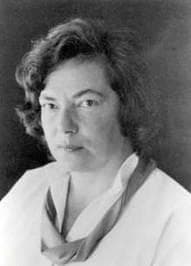
Dalene Matthee was a celebrated South African author, best known for her evocative novels that explored the Knysna forests and the lives of the woodcutters. Her debut novel, 'Circles in a Forest' (1984), garnered international acclaim and remains her most famous work. Matthee's writing is characterized by its lyrical prose, deep connection to nature, and exploration of complex human relationships and societal issues.
Similar books
- Where the Crawdads Sing
Delia Owens
4.5 (975k) average on GoodreadsHistorical FictionFeatures a protagonist deeply connected to a wild natural environment and a struggle against societal judgment.
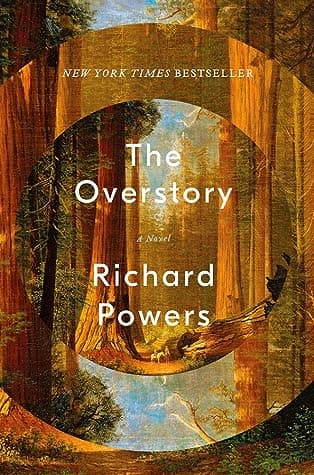
- The Overstory
Richard Powers
4.1 (73k) average on GoodreadsLiterary FictionFocuses on humanity's connection to and impact on forests, with a strong environmental message.
- The Power of One
Bryce Courtenay
4.3 (79k) average on GoodreadsHistorical FictionCourtenay's novel is a powerful coming-of-age story set against the backdrop of apartheid-era South Africa, focusing on individual resilience and political awakening. Matthee's book, while also a coming-of-age for Saul, is more profoundly an ecological narrative, examining the historical exploitation of natural resources and the spiritual bond between a community and its specific environment. The themes in 'Circles In A Forest' are more directly tied to environmental conservation and the clash of different worldviews regarding nature.
- To Kill a Mockingbird
Harper Lee
4.3 (4.5M) average on GoodreadsHistorical FictionIn the 1930s Jim Crow South, Harper Lee writes about racial injustice, moral growth, and the quiet courage of a lawyer father, Atticus Finch, as seen through his young daughter's eyes.
- The Great Gatsby
F. Scott Fitzgerald
3.9 (3.8M) average on GoodreadsHistorical FictionIn the opulent Roaring Twenties, a mysterious millionaire's lavish parties hide his desperate, tragic pursuit of a lost love, exposing the emptiness within the American Dream.
- Pride and Prejudice
Jane Austen
4.3 (3M) average on GoodreadsHistorical FictionIn a society focused on status and money, Elizabeth Bennet navigates love and pride, challenging Mr. Darcy and social expectations to find true affection.





Enjoyed the summary?
A summary gives you the shape of the book. The book itself has the detail, the examples and the voice.
Find Circles In A Forest on AmazonAs an Amazon Associate, BookBrief earns from qualifying purchases. How we're funded