

Synopsis
Covers the whole plot, including the ending.
- Difficulty
- Hard
- Pacing
- Slow
- Mood
- Melancholy, Somber, Poetic, Fatalistic, Reflective
- Read it if
- You appreciate sparse, poetic prose, meditations on fate and the fading American frontier, and stories of tragic love and profound loss.
- Skip it if
- You prefer fast-paced plots, clear-cut resolutions, or optimistic narratives.
Cities of the Plain Plot Summary
Covers the whole plot, including the ending.
A Life of Horses and Uncertainty
The novel opens in 1952. John Grady Cole and Billy Parham, now young men, work as cowboys on a large ranch near the U.S.-Mexico border, not far from El Paso and Juarez. Their days are filled with the rhythms of ranch life: breaking horses, mending fences, and trail drives. They live a stark, solitary existence, bound by shared experiences and a deep understanding of horses and the land. However, change is present; the old ways of the cowboy are fading, threatened by modernization. Billy, a pragmatist, senses this shift, while John Grady, more idealistic, still holds to the romanticized vision of their life, even as he feels a restless yearning for something more.
A Vision in Juárez
During a trip to Juárez with the other cowboys, John Grady visits a brothel. He sees Magdalena, a young Mexican prostitute with epilepsy, and is immediately captivated. Magdalena seems fragile and distant, marked by sadness. John Grady is drawn to her not out of lust, but empathy. He feels a desire to protect her and remove her from her life of exploitation. This initial encounter plants a seed of obsession in John Grady, setting him on a path that will consume him and lead to tragedy.
The Plan to Rescue Magdalena
John Grady begins to spend his spare time and money in Juárez, seeking out Magdalena. He learns about her difficult circumstances, including her epilepsy and her control by a dangerous pimp named Eduardo. John Grady, with naive but determined idealism, forms a plan to free Magdalena and take her away from Juárez. He believes he can offer her a better life and sees himself as her savior. Billy, seeing John Grady's growing obsession, expresses his concerns, warning him about the dangers of interfering in such a brutal world and the futility of trying to save someone who may not want to be saved, or who is beyond saving.
Magdalena's Reluctance and Eduardo's Control
John Grady tries to convince Magdalena to leave with him. She is reluctant, fearful of Eduardo and the consequences of defying him. Her epilepsy also makes her feel vulnerable and dependent. She understands the harsh realities of her world better than John Grady does. Eduardo, a man of power in the Juárez underworld, learns of John Grady's intentions. He subtly, and then more overtly, threatens John Grady, making it clear that Magdalena is his property and will not be released without a fight. The stakes for John Grady's mission escalate.
John Grady's Desperate Measures
John Grady is determined to secure Magdalena's freedom and decides he must buy her from Eduardo. He tries to sell his horses, but the market is poor, and he struggles to raise the exorbitant sum Eduardo demands. He considers stealing horses, a desperate act that goes against his moral code but shows his commitment. Billy continues to advise caution, pointing out the futility and danger of John Grady's path, but John Grady ignores his warnings. He is convinced that his love and will can overcome any obstacle. He is increasingly isolated in his obsession, pushing away those who care for him.
The Confrontation with Eduardo
Ignoring all warnings, John Grady goes to Eduardo's establishment in Juárez, intending to either buy Magdalena or take her by force. A tense confrontation ensues, escalating into a knife fight between John Grady and Eduardo. John Grady, skilled with a knife, initially holds his own, but Eduardo is a formidable opponent. John Grady is gravely wounded. He manages to fatally wound Eduardo, but not before sustaining injuries that prove to be mortal. The fight is a culmination of John Grady's idealism and the harsh realities of the world he dared to challenge.
Magdalena's Fate and John Grady's Death
In the chaos following the fight, Eduardo's men, seeking revenge, murder Magdalena. She is found dead, a victim of the violence John Grady had tried to save her from. John Grady, bleeding, is taken by Billy back across the border. Despite Billy's frantic efforts to get him medical help, John Grady dies on the journey, his idealistic quest ending in tragic failure. His death marks the end of his youthful romanticism and the bitter triumph of the harsh world he sought to defy.
Billy's Mourning and Wanderings
Devastated by the loss of his friend, Billy mourns John Grady and deals with the aftermath. He carries John Grady's body back to the ranch, a solemn and heartbreaking task. The ranch owner understands the tragedy but offers little comfort. Billy, now alone, is adrift. He wanders the borderlands, working odd jobs, but the joy and purpose he once shared with John Grady are gone. He carries the weight of their experiences, the memory of John Grady's idealism and its tragic end, and the sense of a world irrevocably altered.
Encounters on the Road
As Billy continues his solitary travels, he meets a series of enigmatic figures. These include an old man who has lost his entire family in a flood, a blind man, and others who share their stories and philosophies with him. These encounters often take place around campfires or in desolate landscapes, filled with long, philosophical discussions about good and evil, fate, memory, and existence. Through these interactions, Billy processes his grief for John Grady, grapples with life's harshness, and reflects on the impermanence of the world he knew. These figures offer different perspectives on the human condition.
The Dream and the Future
Billy experiences an unsettling dream involving horses and a changing landscape, which seems to symbolize the end of an era and the future. The dream is a vivid, almost prophetic, vision of transformation and loss. He wakes with a profound sense of the world having irrevocably moved on. The novel concludes with Billy continuing his solitary journey, riding into the sunrise. His path is uncertain, but he carries the burden of the past, the memories of John Grady, and the knowledge that the world of the cowboy, as he and John Grady knew it, is truly gone, replaced by a new, less romantic, and more complex reality.
Cities of the Plain Characters
John Grady Cole
Protagonist
A romantic idealist cowboy, driven by a deep sense of honor and a desire to save Magdalena.
John Grady is a young cowboy, deeply connected to the land and horses, and possessing a strong, if naive, moral code. He is an idealist, believing in the possibility of love and redemption even in the grimmest circumstances. His actions are often guided by a sense of chivalry, which ultimately proves to be his undoing. He is deeply empathetic, particularly towards Magdalena, and his desire to save her overrides all caution and common sense. He represents a dying breed, a man out of time, clinging to a romanticized vision of the West.
Relationships: Billy Parham (Best friend and traveling companion, almost like a brother); Magdalena (Object of his love and desire to save); Eduardo (Antagonist, Magdalena's pimp)
Billy Parham
Protagonist/Narrative Voice
John Grady's pragmatic and loyal companion, a seasoned cowboy who observes the world with a stoic wisdom.
Billy is John Grady's best friend and a more grounded, pragmatic counterpoint to John Grady's idealism. He is a skilled cowboy, resourceful and wary of the dangers of the world. Billy often serves as the voice of reason, warning John Grady about the perilous path he chooses, though his warnings go unheeded. He is deeply loyal and, after John Grady's death, carries the burden of their shared past and the profound grief of loss. He embodies the resilience and solitude of the cowboy, adapting to a changing world with quiet endurance.
Relationships: John Grady Cole (Best friend and traveling companion, almost like a brother); Various Strangers (Encounters on the road, sharing philosophical discussions)
Magdalena
Supporting
A young, epileptic Mexican prostitute whose tragic circumstances captivate John Grady.
Magdalena is a beautiful, fragile young woman working in a Juárez brothel. She suffers from epilepsy, which contributes to her vulnerability and her entrapment. She is quiet, carries a deep sadness, and is aware of the harsh realities of her life. While she is drawn to John Grady's kindness, she is also deeply fearful of Eduardo and the consequences of trying to escape. Her agency is limited by her circumstances, and she ultimately becomes a tragic victim of the violence surrounding her.
Relationships: John Grady Cole (Object of his love and desire to save); Eduardo (Her pimp and abuser)
Eduardo
Antagonist
A ruthless and powerful pimp in Juárez, who controls Magdalena.
Eduardo is a menacing and formidable figure, a pimp who holds considerable power and influence in the Juárez underworld. He views Magdalena as his property and will stop at nothing to maintain his control. He is a cold, calculating individual, capable of extreme violence, and represents the brutal realities of the world John Grady tries to challenge. His confrontation with John Grady is the climax of the novel, revealing his absolute ruthlessness.
Relationships: Magdalena (Controls her as a prostitute); John Grady Cole (His rival for Magdalena, whom he ultimately kills)
The Ranch Owner (or Don Hector)
Supporting
John Grady and Billy's employer, a wise and world-weary figure.
The ranch owner is a seasoned man of the borderlands, with a deep understanding of human nature and the harsh realities of life. He is a fair employer but also a pragmatic one, aware of the dangers that lurk on the frontier. He offers John Grady and Billy a place to work, but also embodies the fading era of the grand ranches. He recognizes John Grady's idealism but also the peril it brings. After John Grady's death, he provides a quiet, almost stoic, acknowledgement of the tragedy.
Relationships: John Grady Cole (Employer); Billy Parham (Employer)
The Old Man (at the end)
Mentioned/Supporting
A solitary figure Billy encounters, who shares philosophical reflections on life and loss.
This unnamed old man is one of several enigmatic figures Billy encounters after John Grady's death. He is a survivor, having lost his entire family in a flood, and carries a profound sense of grief and wisdom. He engages Billy in long, philosophical conversations about the nature of existence, fate, the past, and memory. He represents the resilience of the human spirit in the face of overwhelming loss and provides a sounding board for Billy's internal struggles.
Relationships: Billy Parham (Fellow traveler, engaged in deep conversation)
Jimmy Blevins
Mentioned
A young, troubled boy from 'All the Pretty Horses' whose tragic fate looms in the background.
Though not physically present in 'Cities of the Plain,' Jimmy Blevins, a character from 'All the Pretty Horses,' is a significant spectral presence. His violent and senseless death, at the hands of Captain in the previous novel, serves as a grim precursor to John Grady's fate. His story is a constant reminder of the arbitrary cruelty that exists in the borderlands and the dangers of youthful idealism in a harsh world. His memory informs Billy's warnings to John Grady.
Relationships: John Grady Cole (Acquaintance from a previous journey); Billy Parham (Acquaintance from a previous journey)
Don Arnulfo
Mentioned
A wise, older rancher from 'The Crossing' who offered Billy guidance.
Like Blevins, Don Arnulfo is a character from a previous volume of the Border Trilogy ('The Crossing'). He is a wise and experienced rancher who offered Billy shelter and philosophical counsel during his own journeys. His presence, though only through memory, provides a contrasting figure to the brutal realities of Juárez, representing a more honorable, if fading, way of life and a source of the old wisdom that Billy often draws upon in his reflections.
Relationships: Billy Parham (Mentor/Friend from a previous journey)
Cities of the Plain Themes
The End of an Era and the Loss of Innocence
The novel is steeped in the melancholic atmosphere of a vanishing way of life. The cowboy, represented by John Grady and Billy, is a figure out of step with the modernizing world of 1952, with references to Alamogordo (atomic testing) and encroaching industrialization. John Grady's idealism and his belief in a code of honor clash with the brutal realities of Juárez. His death signifies not just a personal tragedy but the end of a certain kind of innocence and the demise of the old West.
“He knew that in the world to come all things would be altered and that there would be no time for the old ways.”
Love, Obsession, and Redemption
John Grady's love for Magdalena goes beyond physical attraction, evolving into an obsession rooted in a desire for redemption. He sees in her a soul to be saved, and his mission to free her becomes a spiritual quest. However, this love is ultimately fatal, proving that good intentions are no match for the corrupt and violent world he enters. The theme explores the destructive power of a love that blinds one to reality and the impossibility of unilaterally 'saving' another person from their circumstances.
“He loved her for her fragility and for her hopelessness and he loved her for that quality of being lost and for the desire he had to find her.”
Fate vs. Free Will
Characters, particularly Billy and the old men he meets, debate how much human lives are predetermined or shaped by individual choices. John Grady's relentless pursuit of Magdalena, despite warnings, can be seen as an exercise of free will, yet it leads directly to his tragic end. The narrative suggests a powerful, almost cosmic, force at play, hinting that some destinies are inescapable, regardless of one's efforts. The cyclical nature of violence and loss further emphasizes this theme.
“A man's life is a long and sorrowful thing. The world is not a place for the innocent.”
Violence and Its Consequences
Violence is an ever-present force in McCarthy's world. From the dangers of breaking horses to the realities of the Juárez underworld, violence is depicted as both a primal instinct and a tool of power. John Grady's fatal knife fight with Eduardo is a stark portrayal of this. The novel shows the devastating consequences of violence, not just for those directly involved, but for the innocent (Magdalena) and for those left behind (Billy), perpetuating cycles of grief and despair.
“Blood is on the world. It is not in the world. It is the world.”
Memory and Storytelling
After John Grady's death, Billy becomes the keeper of their shared memories and stories. The encounters he has with various old men, who share their own life stories and philosophical musings, show the importance of narrative in making sense of a harsh world. These stories, often long and rambling, transmit wisdom, lament loss, and preserve the past. Remembering and telling tales becomes a form of survival and a way to grapple with the meaning of suffering and the passage of time.
“Every man's story is a story of suffering. And how he bears it is his story.”
Plot Devices & Literary Techniques
Philosophical Dialogues
Long, often abstract conversations that explore themes of fate, morality, and human existence.
McCarthy frequently employs extended philosophical dialogues, particularly in the latter half of the novel when Billy encounters various solitary figures. These conversations, often between Billy and an unnamed old man, are not directly plot-driven but serve to deepen the thematic exploration of the book. They allow the characters (and the reader) to grapple with complex ideas about the nature of good and evil, the meaning of life and death, the role of memory, and the inevitability of suffering. They provide a reflective counterpoint to the brutal events of the plot.
Symbolism of Horses
Horses represent freedom, a vanishing way of life, and a connection to a purer existence.
Horses are central to the lives of John Grady and Billy, symbolizing their identity as cowboys and their connection to a more elemental, untamed world. For John Grady, horses embody a purity and nobility that he seeks to find in Magdalena. Their mastery of horses represents a dying art and a fading era. The struggle to break and train horses mirrors the characters' own struggles with control and wildness, while the eventual decline of horse-centered ranching underscores the theme of the end of an era.
The Border as a Metaphor
The U.S.-Mexico border symbolizes a liminal space between worlds, cultures, and moral codes.
The geographical border between the U.S. and Mexico functions as more than just a physical line; it is a potent metaphor. It represents the frontier between civilization and wilderness, law and lawlessness, innocence and corruption. For John Grady, crossing into Juárez is a descent into a darker, more dangerous world where his moral code is challenged and ultimately shattered. It's a place where different rules apply, where the old ways of the cowboy are irrelevant, and where the forces of fate seem more potent.
Foreshadowing and Portents
Subtle hints and warnings throughout the narrative that predict the tragic outcome.
McCarthy masterfully uses foreshadowing to build a sense of impending doom. Billy's repeated warnings to John Grady about the dangers of Juárez and interfering with Eduardo are explicit examples. More subtle are the discussions about fate and the nature of evil, and the general melancholic tone that permeates the narrative, suggesting that John Grady's idealistic quest is doomed from the start. These portents heighten the tragic impact of the climax, making the reader aware of the inevitability of the characters' fates.
The Dream Sequence
A vivid, symbolic dream at the end that encapsulates the novel's themes of change and loss.
The powerful dream Billy experiences towards the end of the novel is a significant plot device. It is a highly symbolic sequence, filled with imagery of horses, landscapes, and a sense of transformation. The dream serves as a narrative and thematic summation, encapsulating the end of the cowboy era, the loss of John Grady, and Billy's own uncertain future. It moves beyond literal events to convey a deeper, almost mythical, understanding of the profound changes occurring in the world and within Billy himself.
Cities of the Plain Quotes
“He said that the world's truth constituted a vision as simple as it was terrible and that the world's truth was a thing to be wary of.”
“He thought that in the beauty of the world were hid a secret. He thought the world's heart beat at some terrible cost and that the world's pain and its beauty were in a relationship that was difficult to understand.”
“The closest bonds we will ever know are bonds of grief. The deepest community one of sorrow.”
“He said that the souls of horses mirror the souls of men more closely than men suppose and that horses also love war.”
“What is constant in history is greed and foolishness and a love of blood and this is a thing that even God—who knows all that can be known—seems powerless to change.”
“He said that those who have endured some misfortune will always be set apart but that it is just that misfortune which is their gift and which is their strength and that they must make their way back into the common enterprise of the world for no other reason than that is where they belong.”
“The truth about the world, he said, is that anything is possible. Had you not seen it all from birth and thereby bled it of its strangeness it would appear to you for what it is, a hat trick in a medicine show, a fevered dream, a trance bepopulate with chimeras having neither analogue nor precedent, an itinerant carnival, a migratory tentshow whose ultimate destination after many a pitch in many a mudded field is unspeakable and calamitous beyond reckoning.”
“He said that the wicked know that if the ill they do be of sufficient horror men will not speak against it.”
“Scars have the strange power to remind us that our past is real.”
“He said that the only thing that makes life possible is permanent, intolerable uncertainty: not knowing what comes next.”
“The light of the world was in men's eyes only for the world itself moved in eternal darkness.”
“He said that the dreams of the just are wiser than the histories of the wise.”
“He said that the blood of the wolf is the blood of the lamb and that the blood of the lamb is the blood of the wolf.”
“He said that the world is made of stories, not of atoms.”
Quiz
10 questions on the plot and the characters. Each answer comes with a short explanation.
Question 1
In what year is 'Cities of the Plain' primarily set?
- 1945
- 1952
- 1960
- 1939
Show answer
B. 1952 The novel explicitly states it is 1952 when John Grady Cole and Billy Parham are working as ranch hands in New Mexico, setting the historical context for the story.
Question 2
What is the primary occupation of John Grady Cole and Billy Parham at the beginning of the novel?
- Law enforcement officers
- Ranch hands
- Factory workers
- Soldiers
Show answer
B. Ranch hands The book establishes that both characters are working as ranch hands on a New Mexico ranch, participating in trail drives and horse auctions, which defines their way of life.
Question 3
Who is the Mexican prostitute that John Grady Cole falls in love with?
- María
- Magdalena
- Consuelo
- Elena
Show answer
B. Magdalena John Grady becomes infatuated with Magdalena, a young prostitute working in a brothel in Juárez, Mexico. His love for her sets the tragic events of the novel in motion.
Question 4
What major historical location is mentioned as being near the ranch where John Grady and Billy work?
- The Alamo
- The proving grounds of Alamogordo
- Gettysburg Battlefield
- The Hoover Dam
Show answer
B. The proving grounds of Alamogordo The novel references the Alamogordo proving grounds, the site of the first atomic bomb test, highlighting the encroachment of modern technology on the fading frontier life.
Question 5
Why does John Grady's love for Magdalena lead to violent consequences?
- Because she is married to a powerful politician
- Because she is owned by a dangerous pimp who refuses to let her go
- Because Billy Parham disapproves and tries to stop him
- Because she betrays him to the authorities
Show answer
B. Because she is owned by a dangerous pimp who refuses to let her go Magdalena is controlled by Eduardo, a ruthless pimp in Juárez. John Grady's attempts to rescue her and marry her provoke Eduardo's violent retaliation, driving the plot toward tragedy.
Question 6
Which of the following best describes a central theme of 'Cities of the Plain'?
- The triumph of modern civilization over nature
- The elegiac loss of the American frontier and cowboy way of life
- The benefits of technological progress in the 1950s
- The importance of family loyalty above all else
Show answer
B. The elegiac loss of the American frontier and cowboy way of life The novel is described as a 'darkly beautiful elegy for the American frontier,' focusing on how characters like John Grady and Billy cling to a vanishing lifestyle amid changing times.
Question 7
How does Billy Parham react to John Grady's relationship with Magdalena?
- He enthusiastically supports it and helps plan their escape
- He is wary and tries to dissuade John Grady, foreseeing danger
- He is indifferent and focuses on his own affairs
- He reports it to the ranch owner to get John Grady fired
Show answer
B. He is wary and tries to dissuade John Grady, foreseeing danger Billy, as the older and more experienced of the two, recognizes the peril in John Grady's obsession with Magdalena and attempts to warn him, but John Grady's determination leads him to ignore this advice.
Question 8
What symbolic significance do the 'cities of the plain' likely hold in the novel?
- They represent hope and new beginnings for the characters
- They symbolize corruption, temptation, and the end of innocence, akin to biblical Sodom and Gomorrah
- They are depicted as centers of economic opportunity and growth
- They serve as safe havens from the harsh ranch life
Show answer
B. They symbolize corruption, temptation, and the end of innocence, akin to biblical Sodom and Gomorrah The title references cities like El Paso and Juárez, which in the novel embody moral decay and danger, contrasting with the purity of the frontier life. This allusion to biblical cities destroyed for wickedness underscores themes of loss and tragedy.
Question 9
In the context of the Border Trilogy, how does 'Cities of the Plain' conclude the arcs of John Grady Cole and Billy Parham?
- Both characters achieve their dreams and settle down happily
- John Grady dies tragically, while Billy survives to reflect on their lost world
- They part ways amicably to pursue different careers
- They are reunited with long-lost family members
Show answer
B. John Grady dies tragically, while Billy survives to reflect on their lost world The novel ends with John Grady being killed in a knife fight with Eduardo, Magdalena's pimp, while Billy lives on, embodying the survivor who carries the memory of the frontier era into a changing world.
Question 10
What role does the setting of the U.S.-Mexico border play in the novel's conflict?
- It serves as a peaceful meeting point for cultural exchange
- It acts as a clear legal boundary that protects the characters from harm
- It creates a liminal space where laws are ambiguous and violence can erupt, mirroring the characters' moral struggles
- It is largely irrelevant to the plot, serving only as background scenery
Show answer
C. It creates a liminal space where laws are ambiguous and violence can erupt, mirroring the characters' moral struggles The border between New Mexico, Texas, and Mexico is central to the story, representing a zone where different worlds collide. John Grady's crossing into Juárez to pursue Magdalena leads him into a lawless environment where traditional codes of honor clash with brutal reality, fueling the novel's tension.
Cities of the Plain FAQ
What is 'Cities of the Plain' about?
Set in 1952 New Mexico near El Paso and Juárez, the novel follows John Grady Cole and Billy Parham as ranch hands whose traditional cowboy life is disrupted when John Grady falls in love with Magdalena, a young Mexican prostitute with epilepsy. His determination to rescue her from her pimp, Eduardo, leads to a violent confrontation that irrevocably changes both men's lives.
Why should I read 'Cities of the Plain'?
As the concluding volume of McCarthy's Border Trilogy, it masterfully ties together the journeys of John Grady and Billy while serving as a poignant elegy for the vanishing American frontier. The novel's lyrical prose, profound exploration of fate, love, and violence, and its haunting emotional depth make it essential reading for fans of literary and historical fiction.
What is the background/setting of 'Cities of the Plain'?
The story is set in 1952 in southern New Mexico, near the border cities of El Paso, Texas, and Juárez, Mexico, with references to the Alamogordo proving grounds where atomic tests occurred. This post-World War II era highlights the encroaching modernity that threatens the traditional cowboy way of life, symbolized by the ranch work and trail drives.
What are the most memorable quotes?
Notable quotes include: 'He thought that in the beauty of the world were hid a secret. He thought that the world's heart beat at some terrible cost and that the world's pain and its beauty moved in a relationship of diverging equity.' This reflects the novel's themes of beauty intertwined with suffering, central to John Grady's tragic love story.
What writing style does Cormac McCarthy use?
McCarthy employs a sparse, poetic prose style with minimal punctuation, vivid sensory descriptions of the landscape, and philosophical dialogues. His writing blends gritty realism with mythic undertones, creating an elegiac tone that mourns the loss of the Old West while exploring universal themes of destiny and human struggle.
What minor details add significant meaning?
The repeated references to Magdalena's epilepsy and her dreams of wolves symbolize her vulnerability and doomed fate. Similarly, the detailed descriptions of horse training and auctions underscore John Grady's deep connection to a vanishing world, making his pursuit of Magdalena a futile attempt to preserve something pure in a corrupt environment.
What are some subtle foreshadowing moments?
Early scenes of John Grady breaking wild horses foreshadow his stubborn, doomed quest to 'tame' Magdalena's situation. Billy's dreams and conversations about fate hint at the inevitable violence, while the atomic test references at Alamogordo subtly parallel the explosive, destructive climax of John Grady's actions.
What unexpected character connections exist?
The novel reveals deeper ties between John Grady and Billy through shared histories from the previous Border Trilogy books, such as their mutual losses and wanderings. Eduardo, the pimp, is connected to a broader network of border corruption that mirrors the societal decay encroaching on the characters' lives, emphasizing themes of interconnected fate.
What are unspoken character motivations?
John Grady is driven by an idealized, almost chivalric love for Magdalena, rooted in his desire to redeem the losses he suffered in earlier books. Billy's loyalty to John Grady stems from a sense of brotherhood and his own unresolved grief, while Magdalena's quiet acceptance of her fate masks a deep yearning for escape and purity.
What psychological complexities do characters exhibit?
John Grady exhibits a tragic combination of romanticism and stubbornness, blinding him to the realities of Magdalena's world. Billy shows a weary pragmatism and paternal protectiveness, grappling with guilt and mortality. Eduardo displays a cold, philosophical cruelty that contrasts with the cowboys' code of honor, highlighting the clash between old and new values.
What are the major emotional turning points?
Key turning points include John Grady's first meeting with Magdalena, which ignites his obsessive love; his decision to marry and rescue her, defying all warnings; the brutal murder of Magdalena by Eduardo; and the final knife fight where John Grady is mortally wounded, leading to Billy's decades-long grief and reflection in the epilogue.
How do relationship dynamics evolve?
John Grady and Billy's bond deepens from camaraderie to a fraternal loyalty tested by John Grady's reckless choices. John Grady's relationship with Magdalena shifts from romantic idealization to a desperate, tragic rescue mission. Billy's interactions with other ranch hands and border figures reveal a growing disillusionment with the changing world.
Which parts remain ambiguous or open-ended?
The epilogue, set decades later with an elderly Billy encountering a mysterious vagrant who may symbolize death or fate, is highly ambiguous. It leaves unresolved questions about the meaning of Billy's journey and whether John Grady's sacrifice had any redemptive value, inviting interpretation about memory, loss, and the passage of time.
What are controversial scenes or decisions?
John Grady's decision to pursue Magdalena despite clear dangers is controversial, seen by some as noble and by others as foolishly destructive. The graphic violence of Magdalena's murder and the knife fight between John Grady and Eduardo are intensely debated for their brutality and moral ambiguity, reflecting McCarthy's unflinching portrayal of human conflict.
'Cities of the Plain' ending explained: how it ends & what it means
The novel ends with John Grady dying from wounds sustained in a knife fight with Eduardo, after Magdalena is murdered. In the epilogue, an elderly Billy, haunted by memories, meets a vagrant who discusses dreams and fate. This conclusion symbolizes the end of the cowboy era, with Billy as a survivor left to ponder the costs of love and loyalty in a vanishing world.
What is the significance of the title 'Cities of the Plain'?
The title alludes to the biblical cities of Sodom and Gomorrah, suggesting themes of corruption, judgment, and destruction. It reflects the border cities of El Paso and Juárez as modern-day equivalents—places of moral decay where John Grady's idealized love clashes with harsh realities, leading to his tragic downfall.
How does this book connect to the rest of the Border Trilogy?
As the trilogy's conclusion, it reunites John Grady from 'All the Pretty Horses' and Billy from 'The Crossing,' weaving their shared themes of loss, wanderlust, and confrontation with violence. It resolves their arcs by testing their codes of honor in a changing world, with Billy surviving to embody the trilogy's elegiac reflection on the American West.
What role does the landscape play in the story?
The New Mexican desert and borderlands serve as a character itself—a vast, unforgiving backdrop that mirrors the characters' internal struggles. The contrast between the open ranchlands and the corrupt border cities emphasizes the tension between freedom and entrapment, purity and decay, central to the novel's themes.
About the author
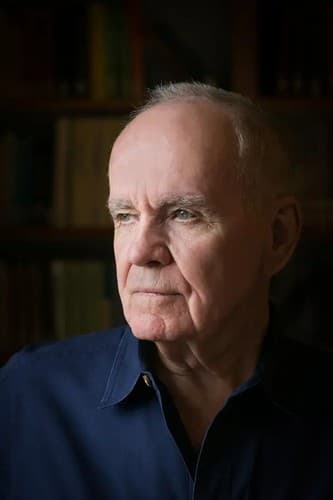
Cormac McCarthy was an American writer who authored twelve novels, two plays, five screenplays, and three short stories, spanning the Western and postapocalyptic genres. He was known for his graphic depictions of violence and his unique writing style, recognizable by a sparse use of punctuation and attribution. McCarthy is widely regarded as one of the greatest American novelists.
Similar books
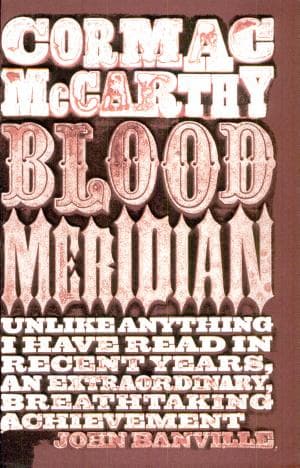
- Blood Meridian
Cormac McCarthy
4.2 (227k) average on GoodreadsFictionShares McCarthy's characteristic dark prose, philosophical depth, and violent themes set in the American West.
- Lonesome Dove
Larry McMurtry
4.5 (149k) average on GoodreadsHistorical FictionExplores the end of the frontier era with a focus on ranching life, though with a more expansive and less bleak tone.
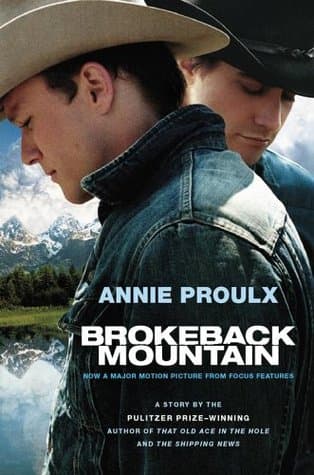
- Brokeback Mountain
Annie Proulx
4.0 (30k) average on GoodreadsRomanceBoth explore doomed love in a Western setting. However, Proulx's focus is specifically on societal constraints impacting same-sex relationships, while McCarthy's tragedy in Cities of the Plain is more broadly existential, tied to fate, violence, and the fading of a specific cultural era.
- The Old Man and the Sea
Ernest Hemingway
3.8 (831k) average on GoodreadsLiterary FictionA Cuban fisherman's long struggle with a giant marlin becomes a story of endurance and dignity, now retold for young adults with illustrations, phonetic guides, and writing prompts in Traditional Chinese.
- One Hundred Years of Solitude
Gabriel García Márquez
4.1 (753k) average on GoodreadsLiterary FictionThrough the multi-generational story of the Buendía family, a mythical town deals with the repeating patterns of time, love, and solitude, as the extraordinary mixes with the ordinary.
- The Goldfinch
Donna Tartt
3.9 (720k) average on GoodreadsLiterary FictionHaunted by a tragic explosion and clutching a stolen Dutch masterpiece, a young orphan navigates the opulent drawing rooms of New York and the gritty underbelly of the art world, desperately seeking connection and redemption amidst a life spiraling into crime and obsession.




Enjoyed the summary?
A summary gives you the shape of the book. The book itself has the detail, the examples and the voice.
Find Cities of the Plain on AmazonAs an Amazon Associate, BookBrief earns from qualifying purchases. How we're funded