
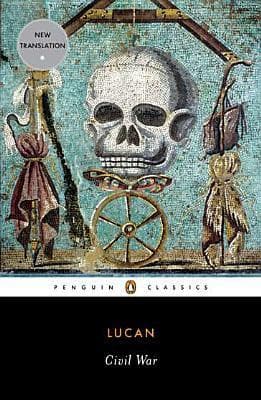
Core Idea
- Difficulty
- Hard
- Read it if
- You are interested in an epic, albeit bleak, poetic interpretation of the Roman Civil War, focusing on its moral and political implications from a decidedly anti-imperial perspective. Ideal for those who appreciate detailed rhetorical analysis and a strong authorial voice lamenting the fall of the Republic.
- Skip it if
- You are looking for a straightforward historical narrative, a celebratory account of Roman power, or a story with clear-cut heroes and villains. This is not a light read and its poetic style can be dense for those unfamiliar with epic poetry.
Key Takeaways from Civil War
The Republic's Self-Inflicted Wound
Lucan's epic is a lament for a Rome that chose self-destruction over shared governance.
Lucan shows the Roman Civil War not as a noble fight, but as a tragic, almost suicidal act by the Republic. He highlights the internal breakdown of civic virtue and traditional Roman values that caused the conflict. The war was more than a clash of armies; it was a deep moral failure, where individual power mattered more than the state's good. This internal rot, more than any outside threat, sealed the Republic's fate, leading to the imperial era and forever changing Roman civilization. Lucan's work is a powerful warning about how fragile even strong institutions can be when consumed by internal conflict.
“The Roman state, once a beacon of law and order, became its own executioner, tearing itself apart in a frenzy of ambition and violence.”
In the book: Lucan's narrative consistently highlights the unnaturalness of Romans fighting Romans, frequently employing imagery of matricide and sacrilege to describe the conflict, such as the desecration of the natural order when brothers fight brothers.
Try this: Modern societies can learn from Rome's descent into civil war by prioritizing dialogue, compromise, and the rule of law over partisan division and the unchecked pursuit of power, recognizing that internal cohesion is paramount for long-term stability.
Related ideas: republican-collapse, civic-virtue, internal-strife
Caesar: The Destructive Force of Ambition
Lucan paints Julius Caesar as a ruthless, almost demonic, figure driven by insatiable personal ambition.
Unlike many accounts that might praise Caesar, Lucan's portrayal is sharply critical. He shows Caesar not as a hero, but as the embodiment of destructive ambition, a man who willingly broke the established order for personal gain. His crossing of the Rubicon is shown as an unholy act, a deliberate violation of the Republic's laws and traditions. Lucan emphasizes Caesar's speed, his relentless drive, and his disregard for human life and legal rules, making him the main cause of the catastrophic war. This view offers a strong counter to the often-heroic image of Caesar, showing the deep cost of his singular pursuit of power.
“Caesar, a force of nature, driven by an insatiable lust for power, saw no obstacle too sacred to overcome, no law too strong to break.”
In the book: Lucan describes Caesar as 'lightning' and 'a force of nature' that sweeps away all in its path, emphasizing his destructive speed and lack of moral restraint when he crosses the Rubicon and invades Italy.
Try this: Leaders should reflect on the dangers of unchecked ambition, understanding that the pursuit of personal glory at the expense of established norms and the well-being of the populace can lead to societal breakdown.
Related ideas: julius-caesar, unchecked-ambition, tyranny
Pompey: The Fading Echo of Republicanism
Pompey the Great, though flawed, represents the last, desperate stand of the old Republic against imperial ambition.
Lucan shows Pompey as a more sympathetic, though tragic, figure than Caesar. He is the defender of the Republic, though flawed, representing Rome's fading glory and traditional values. Pompey's fight against Caesar is a fight for liberty and the established order, even if his own past actions contributed to the instability. His eventual defeat and assassination symbolize the final end of the Republican ideal. Lucan uses Pompey to highlight the lost cause, the noble but ultimately useless effort to save a system that was already crumbling, making his tragedy even more poignant.
“Pompey, once the darling of fortune, stood as the last, weary defender of a freedom already doomed, a Republic on its deathbed.”
In the book: Lucan frequently refers to Pompey as 'the Great' but often with a sense of past glory, emphasizing his former triumphs but his current inability to match Caesar's vigor. His flight and eventual murder in Egypt underscore his tragic end.
Try this: It's crucial to identify and support leaders who genuinely prioritize democratic institutions and collective well-being, even when faced with overwhelming forces of authoritarianism, understanding that the fight for principles is often an uphill battle.
Related ideas: pompey-the-great, republican-defense, tragic-hero
The Gods' Indifference and Rome's Fate
Lucan frequently questions divine providence, suggesting the gods were either absent or actively hostile to Rome's plight.
A striking part of Lucan's epic is the almost complete absence of divine help, a sharp contrast to earlier epics like Virgil's Aeneid. Instead of gods guiding heroes, Lucan shows a universe largely uncaring about human suffering, or perhaps even involved in Rome's destruction. This absence increases the horror of the civil war, emphasizing that Romans alone caused their own downfall. It brings a sense of dread and highlights the deep moral emptiness that allowed such terrible acts. The gods, if they exist, are either powerless or unwilling to stop the tragedy, leaving humanity to face the results of its own destructive choices.
“The heavens watched in silence, or perhaps with cruel amusement, as Rome tore out its own heart, a testament to a fate unguided by benevolent gods.”
In the book: Unlike Homer or Virgil, Lucan rarely invokes specific gods directly influencing battles or outcomes. Instead, he often makes cynical remarks about Fortune or Fate, suggesting a predetermined, grim destiny rather than divine guidance.
Try this: Societies should recognize that ultimate responsibility for their actions and fate rests with themselves, rather than relying on external forces or divine intervention, fostering a proactive approach to preventing conflict and promoting justice.
Related ideas: divine-indifference, fate-vs-free-will, moral-vacuum
The Horror of Fratricide
Lucan emphasizes the unnatural and devastating horror of Romans fighting fellow Romans.
A main part of Lucan's story is the deep tragedy of civil war as Romans killing Romans. He constantly highlights the horror of countrymen turning on each other, tearing apart families, friendships, and society itself. This is not just a political conflict; it is a moral wrong. Images of 'unholy' hands, of Roman blood staining Roman soil, fill the text, emphasizing the deep trauma inflicted on the people. This focus on internal destruction lifts the conflict beyond mere military strategy to a deep comment on the self-destructive nature of unchecked power struggles and the terrible cost of national disunity.
“No foreign foe ever inflicted such wounds upon Rome as Rome inflicted upon herself, brother against brother, father against son.”
In the book: Lucan explicitly describes the 'impious war' where 'kinsmen' clash, and uses metaphors of the state consuming its own children, such as the gruesome descriptions of the battlefields littered with Roman dead.
Try this: Understanding the profound psychological and societal damage of internal conflict should compel societies to prioritize peaceful resolution mechanisms and foster a strong sense of national unity and shared identity to prevent such self-inflicted wounds.
Related ideas: civil-war-trauma, fratricide, societal-breakdown
Rhetoric as a Weapon
Lucan's own rhetorical brilliance mirrors the powerful, often manipulative, speeches that fueled the conflict.
Lucan, a master of rhetoric, shows how language and persuasion were key to the civil war. The speeches of Caesar and Pompey, whether real or imagined, are presented as powerful tools for gathering support, making opponents look evil, and justifying violence. This shows the power of rhetoric not just to inform, but to incite and manipulate. Lucan's own dense, often exaggerated style reflects the intensity and moral urgency of the conflict, making the poem a performance that pulls the reader into the emotional and ideological storm of the era. He shows how words can be as destructive as any physical weapon, shaping ideas and driving people to extreme actions.
“Words, sharper than swords, carved the path to ruin, igniting hearts with false promises and fueling the flames of war.”
In the book: The extensive, often lengthy, speeches attributed to Caesar and Pompey throughout the epic, where they articulate their justifications and condemnations, serve as prime examples of rhetoric's role in the conflict.
Try this: Individuals should critically evaluate the rhetoric used by leaders and media, discerning between genuine arguments and manipulative language designed to provoke division or justify harmful actions, fostering media literacy and critical thinking.
Related ideas: political-rhetoric, propaganda, persuasion
The Path to Imperialism
The Civil War irrevocably paved the way for the imperial monarchy, ending the Republic's dream.
Lucan's epic, written under Nero, understands the civil war's outcome: the end of the Republic and the start of the imperial age. He shows the conflict as the necessary, though tragic, start to the monarchy. The breakdown of law and order, the concentration of power in military commanders like Caesar, and the people's exhaustion all created an environment ready for a single ruler. The war, then, is not just a historical event but a foundational moment in Roman history, marking a clear shift in government and identity. Lucan, through his lament, emphasizes that the Republic's end was not an accident but the unavoidable result of its internal problems and its leaders' ruthless ambition.
“From the ashes of the Republic rose the shadow of a single ruler, a testament to the war's ultimate, irreversible conclusion.”
In the book: The poem's very existence under an emperor, and Lucan's frequent allusions to the 'new age' or 'new masters' despite focusing on the Republican era, subtly reinforce the historical outcome.
Try this: Societies must be vigilant about the erosion of democratic institutions and the gradual concentration of power, recognizing that historical shifts towards authoritarianism often begin with internal strife and a weakening of established checks and balances.
Related ideas: roman-empire, authoritarianism, republic-fall
Moral Ambiguity and the Absence of True Heroes
Lucan refuses to present clear heroes, instead showcasing the moral compromises and flaws of all parties.
One of Lucan's most compelling qualities is his refusal to offer simple moral judgments or traditional epic heroes. Caesar is a destructive force, but Pompey, while defending the Republic, is an aging, somewhat ineffective figure whose past actions contributed to the instability. Even minor characters often face morally difficult choices. This moral uncertainty reflects the complexity and tragedy of civil conflict, where good and evil are not clearly separated, and everyone involved is part of the unfolding disaster. It forces the reader to face the grim reality that in such wars, true heroism is often absent, replaced by desperation, self-interest, and unavoidable compromise.
“In a war where Rome fought Rome, no hand remained unblemished, no heart entirely pure. All were stained by the crimson tide.”
In the book: Lucan consistently highlights the flaws of both Caesar (ruthless ambition) and Pompey (past political miscalculations, indecisiveness) and avoids portraying any character as a truly virtuous, unblemished champion.
Try this: When analyzing historical or contemporary conflicts, it's crucial to resist the urge to simplify narratives into clear heroes and villains, instead seeking to understand the complex motivations, flaws, and moral compromises of all involved parties.
Related ideas: moral-relativism, anti-hero, historical-complexity
The Weight of History's Judgment
Lucan's epic serves as a powerful historical judgment, condemning the actions that led to the Republic's fall.
Lucan writes with the full benefit of knowing the civil war's tragic outcome and its later impact on Roman history. His work is not just a retelling of events but a deep historical judgment, a lament filled with the understanding of what was lost. He implicitly and sometimes explicitly condemns the ambition, arrogance, and violence that destroyed the Republic. The poem acts as a warning, a cautionary tale for future generations about the dangers of internal conflict and the irreversible consequences of putting individual power before collective stability. This makes his 'Civil War' more than an epic; it's a powerful and lasting historical indictment.
“Let future ages read of this madness, and tremble, lest they too invite the Furies to feast upon their own land.”
In the book: Lucan's opening lines lament the 'impious war' and its consequences, immediately setting a tone of condemnation rather than glorification. His frequent appeals to 'posterity' and the historical record reinforce this judgmental stance.
Try this: Societies should engage deeply with their historical narratives, learning from past mistakes and actively working to prevent the recurrence of self-destructive patterns, fostering a sense of collective memory and responsibility.
Related ideas: historical-condemnation, cautionary-tale, collective-memory
Civil War Quotes
“The victor's cause was pleasing to the gods, but the vanquished's to Cato.”
“What madness, citizens, what monstrous lust for war has seized you?”
“Rome herself, with her own hands, prepares to pluck out her own eyes.”
“For the victor, life; for the vanquished, death. This is the law of war.”
“No peace can be bought with blood, nor liberty with gold.”
“Fortune is not so blind as not to know how to favor the brave.”
“The gods themselves are not so powerful as to undo the past.”
“Ambition, the last infirmity of noble minds.”
“The greatest crime is to wage war against one's own country.”
“Better to die free than to live a slave.”
“When two great powers contend, the lesser must fall.”
“The sword alone decides the fate of nations.”
“No man can truly be called happy until he is dead.”
“Fortune favors the bold, but justice favors the just.”
Quiz
10 questions on the main ideas. Each answer comes with a short explanation.
Question 1
Which two powerful figures are primarily depicted as enemies in Lucan's 'Civil War'?
- Augustus and Mark Antony
- Julius Caesar and Pompey the Great
- Nero and Seneca
- Cicero and Catiline
Show answer
B. Julius Caesar and Pompey the Great The book description explicitly states that Lucan's 'Civil War' portrays Julius Caesar and Pompey the Great as enemies in their struggle for power.
Question 2
What significant historical event does Lucan's 'Civil War' primarily chronicle?
- The Punic Wars
- The Roman Republic's transition to an imperial monarchy
- The Gallic Wars
- The Jewish-Roman Wars
Show answer
B. The Roman Republic's transition to an imperial monarchy The description highlights that the struggle between Caesar and Pompey 'began the transformation of Roman civilization' and 'paved the way for the imperial monarchy,' indicating the sundering of the Republic.
Question 3
Lucan lived during a period of 'great turbulence' in Rome. What were his approximate birth and death years?
- 100-44 BC
- 39-65 AD
- 27 BC - 14 AD
- 14-37 AD
Show answer
B. 39-65 AD The introduction states, 'Lucan lived from 39-65 AD at a time of great turbulence in Rome,' making this a direct factual recall.
Question 4
The conflict between Caesar and Pompey is characterized in the text as 'Right locked in combat with Might.' Which figure is generally associated with 'Right' in the context of upholding the Republic's traditional laws?
- Julius Caesar, representing military power
- Pompey the Great, often seen as defending the Senate and existing order
- Nero, as the reigning emperor
- Crassus, as a wealthy senator
Show answer
B. Pompey the Great, often seen as defending the Senate and existing order While 'Right' and 'Might' can be interpreted, in the context of the Roman Republic's sundering, Pompey was often seen as the champion of the Senate and the established legal order, opposing Caesar's aggressive military expansion and challenge to traditional authority.
Question 5
How did the 'anarchic violence' resulting from the civil war impact the Roman people, according to the description?
- It led to a resurgence of democratic values.
- It strengthened the existing legal framework.
- It left its mark on the Roman people forever and paved the way for imperial monarchy.
- It resulted in a swift and peaceful resolution to the conflict.
Show answer
C. It left its mark on the Roman people forever and paved the way for imperial monarchy. The text explicitly states that 'the anarchic violence that resulted left its mark on the Roman people forever, paving the way for the imperial monarchy.'
Question 6
The new translation aims to be 'Accessible and modern yet loyal to the rhetorical brilliance of the original.' What does 'rhetorical brilliance' primarily refer to in the context of classical epic poetry?
- The accuracy of historical dates and facts presented.
- The use of persuasive language, elaborate speeches, and stylistic grandeur.
- The simplicity and directness of the narrative style.
- The inclusion of comedic elements and lighthearted dialogue.
Show answer
B. The use of persuasive language, elaborate speeches, and stylistic grandeur. Rhetoric in classical literature refers to the art of effective or persuasive speaking or writing, often involving elaborate figures of speech, arguments, and stylistic flair. Lucan's epic is known for its dramatic speeches and powerful language.
Question 7
The conflict depicted 'severed bloodlines.' What does this phrase most strongly imply about the nature of the Roman Civil War?
- It led to a significant decrease in the Roman population.
- It primarily affected foreign mercenaries, not Roman citizens.
- It caused deep divisions and conflicts within Roman families and society itself.
- It literally meant the physical cutting of family trees.
Show answer
C. It caused deep divisions and conflicts within Roman families and society itself. 'Severed bloodlines' is a metaphorical phrase indicating that the civil war pitted Romans against Romans, often dividing families and creating intense internal strife within Roman society, a common theme in civil conflict.
Question 8
Lucan's 'Civil War' is described as an 'enduring epic.' What characteristic of an epic poem is most strongly suggested by the description of the conflict as 'a vicious struggle for power that severed bloodlines and began the transformation of Roman civilization'?
- Its focus on everyday domestic life.
- Its exploration of trivial, minor historical events.
- Its grand scope, dealing with events of national or cosmic significance.
- Its exclusive use of prose rather than verse.
Show answer
C. Its grand scope, dealing with events of national or cosmic significance. Epic poems typically deal with heroic deeds and events of great historical or mythological significance that impact an entire people or civilization. The description of the civil war's profound and lasting impact aligns with this characteristic.
Question 9
The Penguin Classics series aims to provide 'authoritative texts enhanced by introductions and notes by distinguished scholars and contemporary authors.' What practical benefit does this offer a modern reader approaching 'Civil War'?
- It guarantees that the translation will be shorter than the original.
- It provides crucial historical context, literary analysis, and explanations of complex references for better comprehension.
- It ensures the book is always available in a leather-bound edition.
- It removes any need for the reader to engage with the text critically.
Show answer
B. It provides crucial historical context, literary analysis, and explanations of complex references for better comprehension. Introductions and notes from scholars are designed to help readers understand the historical, cultural, and literary context of a work, explaining allusions, difficult passages, and offering critical perspectives, which is invaluable for an ancient epic.
Question 10
Given Lucan's lifespan (39-65 AD) and the subject matter of his epic, which Roman Emperor was on the throne during most of his writing period and likely influenced the contemporary reception or undertones of 'Civil War'?
- Augustus
- Tiberius
- Claudius
- Nero
Show answer
D. Nero Lucan lived from 39-65 AD. Nero's reign was from 54-68 AD. Therefore, Lucan was active and likely writing 'Civil War' during Nero's rule. Lucan was, in fact, famously forced to commit suicide by Nero.
Civil War FAQ
What is Lucan's 'Civil War' about?
Lucan's 'Civil War' is an epic poem that chronicles the brutal power struggle between Julius Caesar and Pompey the Great, which ultimately led to the downfall of the Roman Republic and the rise of imperial monarchy. It vividly portrays the societal breakdown and violence that marked this transformative period in Roman history.
Who was Lucan, and when did he write 'Civil War'?
Marcus Annaeus Lucanus was a Roman poet who lived from 39-65 AD, a time of significant political upheaval in Rome. He wrote 'Civil War' during this turbulent era, offering a contemporary's perspective on the conflict that reshaped the Roman world.
Does Lucan's 'Civil War' accurately portray historical events?
While 'Civil War' is a work of literature, Lucan draws heavily on historical events and figures of the Roman Republic's collapse. It offers a poet's interpretation and dramatic flair to the historical narrative, emphasizing the moral and political consequences of the conflict.
What is the significance of the conflict between Julius Caesar and Pompey the Great in the book?
The conflict between Caesar and Pompey is central to the book, representing a clash between 'Right' and 'Might' and the breakdown of traditional Roman law and order. Their struggle directly led to the sundering of the Republic and ushered in an era of imperial rule.
How is this new translation of 'Civil War' different from previous versions?
This new translation aims to be both accessible and modern while remaining loyal to the rhetorical brilliance of Lucan's original Latin. It seeks to provide the definitive 'Civil War' for contemporary readers, balancing scholarly accuracy with engaging prose.
What impact did the civil war have on Roman civilization, as depicted by Lucan?
Lucan illustrates how the anarchic violence and power struggles of the civil war left an indelible mark on the Roman people, severing bloodlines and destroying the Republic. It paved the way for the imperial monarchy, fundamentally altering the course of Roman civilization.
Is 'Civil War' suitable for readers new to classical literature?
Yes, this new translation is designed to be accessible to a wide audience, including those new to classical literature. Its modern language and clear presentation make the epic's complex themes and historical context easier to grasp.
What themes does Lucan explore in 'Civil War'?
Lucan explores themes such as the corruption of power, the breakdown of moral order, the tragedy of civil strife, and the transition from Republic to Empire. He also delves into the psychology of his main characters and the broader Roman populace during this tumultuous time.
About the author

Marcus Annaeus Lucanus, known as Lucan, was a Roman poet active during the first century AD. He is best known for his epic poem "Civil War," which explores the conflict between Julius Caesar and Pompey. Lucan's work is notable for its political themes and dramatic style, reflecting the tumultuous nature of his era.
Similar books
- The Aeneid
Virgil
3.8 (107k) average on GoodreadsFantasyAn epic poem about Rome's founding, offering a contrasting, more optimistic view of Rome's destiny.
- The Diary of a Young Girl
Anne Frank
4.2 (2.7M) average on GoodreadsBiographyDuring the Nazi occupation, a teenage girl's diary, written from a secret annex, shares observations on humanity, hope, and the wait for freedom.
- Night
Elie Wiesel
4.3 (970k) average on GoodreadsBiographyIn the darkness of Auschwitz and Buchenwald, a teenage Elie Wiesel faces the extermination of his family, the loss of his faith, and the lasting scars of humanity's deepest cruelty.
- Steve Jobs
Walter Isaacson
4.1 (957k) average on GoodreadsBusinessSteve Jobs was a visionary who fused creativity and technology to revolutionize six industries and shape our digital world.
- Unbroken: A World War II Story of Survival, Resilience and Redemption
Laura Hillenbrand
4.4 (767k) average on GoodreadsBiographyLouis Zamperini's incredible World War II odyssey transforms him from a rebellious youth and Olympic runner into a survivor of a plane crash, shark-infested waters, and brutal Japanese POW camps, only to find redemption through forgiveness.
- The Immortal Life of Henrietta Lacks
Rebecca Skloot
4.1 (587k) average on GoodreadsBiographyA poor Southern tobacco farmer's unwitting contribution of 'immortal' cells starts a journey through scientific breakthroughs, medical ethics, and her family's decades-long fight for recognition and understanding.





Enjoyed the summary?
A summary gives you the shape of the book. The book itself has the detail, the examples and the voice.
Find Civil War on AmazonAs an Amazon Associate, BookBrief earns from qualifying purchases. How we're funded