

Synopsis
Covers the whole plot, including the ending.
- Difficulty
- Hard
- Pacing
- Moderate
- Mood
- Epic, Tragic, Reflective, Grand
- Read it if
- You enjoy classical epic poetry, stories of founding myths, or narratives exploring duty versus desire amidst divine interference.
- Skip it if
- You prefer fast-paced modern prose, lighthearted fantasy, or object to portrayals of ancient warfare and societal values.
The Aeneid Plot Summary
Covers the whole plot, including the ending.
The Storm and Arrival in Carthage
After seven years of wandering since Troy fell, Aeneas and his fleet sail toward Italy. The goddess Juno, still angry at the Trojans and fearing Rome's rise, incites Aeolus, god of winds, to unleash a storm. The tempest scatters the Trojan ships, sinking some and driving the survivors to the coast of Libya. Aeneas, a good leader, gathers his men and, guided by his divine mother Venus, reaches Carthage, a growing city ruled by Queen Dido. Venus, to ensure Aeneas's safety and a warm welcome, sends Cupid disguised as Aeneas's son Ascanius to make Dido fall in love with the Trojan hero.
Dido's Feast and the Fall of Troy
At a feast hosted by Queen Dido, the queen, captivated by Aeneas, asks him to tell his experiences. Aeneas begins his story with the Trojan Horse, describing how the Greeks, pretending to retreat, left the wooden effigy as an offering to Athena. Despite Laocoön's warnings, the Trojans bring the horse inside their walls, leading to the city's destruction. He describes the night the city was sacked, King Priam's slaughter by Pyrrhus, and his own desperate attempts to fight before the ghost of Hector and then his mother Venus tell him to flee with his family. He escapes with his father Anchises, his son Ascanius, and his household gods, though his wife Creusa is lost.
Wanderings and Prophecies
Aeneas continues his tale, detailing the Trojans' long and dangerous journey across the Mediterranean. They face challenges and receive prophecies about their destiny to found a new city in Italy. These prophecies come from the oracle at Delos, the Harpies on the Strophades islands, and Helenus, son of Priam, now king of a Greek city. They visit Crete, where a plague forces them to move on, and Sicily, where Anchises dies. Throughout these travels, Aeneas struggles with his destiny and the loss of his homeland, always seeking signs and guidance to reach Italy.
The Tragedy of Dido
Dido, made to love by Cupid's arrow and Aeneas's stories, falls deeply in love with him. They live together in Carthage, and Dido believes they are married. However, Jupiter, seeing Aeneas's delay in fulfilling his destiny, sends Mercury to remind the hero of his mission to found Rome. Torn between his love for Dido and his duty, Aeneas reluctantly prepares to leave. Dido, heartbroken and feeling betrayed, confronts Aeneas with pleas and accusations. When he remains firm, she falls into despair, building a pyre and, after cursing Aeneas and his descendants, stabs herself with Aeneas's sword as his ships sail away.
Funeral Games and the Underworld
Aeneas and his fleet return to Sicily for a second time, where they hold funeral games to mark the one-year anniversary of Anchises's death. These games include ship races, footraces, boxing, archery, and a mock cavalry battle by Ascanius and other Trojan youths. During their stay, Juno, still hateful, incites the Trojan women to burn the ships, but Jupiter intervenes to save most of the fleet. Following Anchises's instructions from a dream, Aeneas seeks the Cumaean Sibyl, a prophetess, who guides him to the Underworld. There, he meets his father, Anchises, who reveals Rome's future glory and its long line of descendants, including Augustus Caesar, which strengthens Aeneas's resolve.
Arrival in Latium and Latinus's Hospitality
Aeneas finally lands in Latium, the promised land, near the Tiber River's mouth. King Latinus, the Latins' ruler, welcomes Aeneas, recognizing him as the fated foreign suitor for his daughter Lavinia, whose hand has been prophesied to go to a stranger. Latinus offers Lavinia to Aeneas, much to the dismay of Queen Amata, Lavinia's mother, who favors Turnus, the brave Rutulian prince. Juno, seeing her efforts to prevent Aeneas's destiny fail, sends the Fury Allecto to incite Amata and Turnus against the Trojans, planting seeds of war and resentment.
The Outbreak of War
Allecto successfully incites Queen Amata to frenzy and Turnus to violent rage. A small incident then escalates into full conflict: Ascanius, while hunting, accidentally shoots a prized stag belonging to Silvia, daughter of Latinus's chief herdsman. This act, fueled by Allecto's actions, provokes the local farmers into an armed riot against the Trojans. Despite Latinus's attempts to keep peace, the war party, led by Turnus, gains popular support, and the gates of war are opened. Both sides begin to gather forces, preparing for a struggle over the land and Lavinia's hand.
Aeneas's Alliances and the Shield of Aeneas
Facing a strong coalition of Italian tribes led by Turnus, Aeneas seeks allies. Guided by a dream and the river god Tiberinus, he sails up the Tiber to Pallanteum, where he forms an alliance with King Evander and his son Pallas, who leads a small Arcadian settlement that will one day become Rome. Evander advises Aeneas to seek aid from the Etruscans, who are rebelling against their tyrannical king, Mezentius, an ally of Turnus. Meanwhile, Venus asks Vulcan to forge new armor for Aeneas. Aeneas's shield is decorated with scenes from future Roman history, ending with the Battle of Actium and Augustus Caesar's triumph, further reinforcing Aeneas's destiny.
Pallas's Death and Aeneas's Fury
The war rages. In a major battle, Pallas, fighting bravely by Aeneas's side, fights Turnus. Despite Pallas's courage, Turnus, a more experienced warrior, defeats and kills him, taking Pallas's sword-belt as a trophy. This devastates Aeneas, who had promised Evander to protect his son. Enraged by Pallas's death and fueled by grief and vengeance, Aeneas unleashes his fury on the Latin forces, killing many and taking prisoners for ritual sacrifice in honor of Pallas. His brutal rampage marks a turning point in the war, showing his transformation into a ruthless warrior.
Camilla and the Final Battles
The war continues with fierce fighting and losses on both sides. Among the warriors is Camilla, a fierce Amazonian queen allied with Turnus, who shows great bravery and skill. She causes havoc among the Trojan ranks but is killed by Arruns, a Trojan ally, with the help of the goddess Diana. The Latins suffer more defeats, and their morale drops. King Latinus proposes a truce and a single combat between Aeneas and Turnus to decide the war, a proposal Turnus's sister, Juturna, a nymph incited by Juno to prolong the conflict, resists.
The Duel and Turnus's Death
After more skirmishes and a broken truce, Aeneas and Turnus finally meet in single combat. Aeneas, wounded but divinely healed, pursues Turnus around the city walls. Turnus's sword, mistaken for his own, shatters, and he is briefly disarmed. Jupiter, at Juno's reluctant request, sends a Dira (a Fury) to torment Turnus, draining his strength and courage. Aeneas wounds Turnus in the thigh. As Turnus lies defeated and pleads for his life, Aeneas hesitates, almost showing mercy. However, he spots Pallas's sword-belt, which Turnus is wearing as a trophy. Enraged by this reminder of Pallas's death, Aeneas plunges his sword into Turnus, killing him and ending the war. With Turnus dead, Aeneas's path to founding Rome is clear.
The Aeneid Characters
Aeneas
Protagonist
The Trojan hero destined to found Rome.
Aeneas is a pious and dutiful Trojan prince, son of the goddess Venus and the mortal Anchises. He is characterized by his unwavering devotion to his destiny, his family, and his gods (pietas). While capable of great heroism and fierce in battle, he is also burdened by grief and loss, often struggling with his emotions but ultimately prioritizing his divine mission. He is a complex figure, embodying the Roman ideals of duty and resilience.
Relationships: Anchises (Revered father, source of wisdom and prophecy); Ascanius (Iulus) (Beloved son, symbol of his future lineage); Creusa (Deceased wife, a lingering sorrow and motivation); Dido (Tragic lover, a profound emotional entanglement); Venus (Divine mother, protector and guide); Turnus (Mortal enemy, rival for Lavinia and the land)
Dido
Supporting/Antagonist
The tragic queen of Carthage.
Dido is the intelligent and powerful queen of Carthage, a city she founded after fleeing her murderous brother Pygmalion in Tyre. She is initially portrayed as a strong, capable ruler. Her love for Aeneas, divinely inspired by Cupid, becomes an overwhelming passion that consumes her. Her character embodies intense emotion, pride, and ultimately, despair. Her tragic fate highlights the conflict between personal desire and divine will, and her curse foreshadows the Punic Wars between Rome and Carthage.
Relationships: Aeneas (Tragic lover, ultimately betrayed); Anna (Loyal sister and confidante)
Turnus
Antagonist
The Rutulian prince, Aeneas's primary mortal adversary.
Turnus is a brave, charismatic, and formidable warrior, prince of the Rutulians, and the favored suitor of Lavinia. He represents the established order and the martial spirit of the native Italians. Incited by Juno and the Fury Allecto, he becomes Aeneas's chief opponent, fighting fiercely to protect his claim to Lavinia and his land. While courageous, he can also be arrogant and impulsive, driven by pride and a sense of injustice. His death is necessary for Aeneas to fulfill his destiny, making him a tragic figure in his own right.
Relationships: Aeneas (Mortal enemy, rival for Lavinia); Juno (Divine patroness, though ultimately unable to save him); Lavinia (Betrothed (unfulfilled)); Mezentius (Loyal ally)
Juno
Antagonist
Queen of the gods, Aeneas's divine adversary.
Juno is the powerful and vengeful queen of the gods, wife of Jupiter. She harbors a deep-seated hatred for the Trojans due to several ancient grievances: the judgment of Paris, the abduction of Ganymede, and her knowledge that Rome, founded by Aeneas, is destined to destroy her beloved city of Carthage. Throughout the epic, she relentlessly persecutes Aeneas, inciting storms, stirring up wars, and using every means to thwart his destiny, though she is ultimately powerless against fate itself. Her wrath drives much of the narrative's conflict.
Relationships: Aeneas (Implacable divine enemy); Jupiter (Husband, ultimately the enforcer of fate); Dido (Patroness of Carthage); Turnus (Mortal champion against Aeneas)
Venus
Supporting
Goddess of love and Aeneas's divine mother.
Venus is Aeneas's divine mother, a constant source of protection and aid for her son. Driven by maternal love and concern for the Trojan lineage, she frequently intervenes on Aeneas's behalf, often counteracting Juno's malice. She secures divine armor for him, guides him through dangers, and ensures his survival. Her interventions highlight the complex interplay between divine will and mortal action, and her role underscores the divine favor bestowed upon the founders of Rome.
Relationships: Aeneas (Beloved son, whom she constantly protects); Jupiter (Father of her son Cupid, and supreme god); Vulcan (Husband, who forges Aeneas's armor)
Anchises
Supporting/Mentioned
Aeneas's wise and prophetic father.
Anchises is Aeneas's aged father, whom Aeneas carries on his shoulders out of burning Troy, a powerful symbol of pietas. Though he dies in Sicily before the Trojans reach Italy, his spirit continues to guide Aeneas. He appears in dreams, offering counsel, and most significantly, he reveals the future glory of Rome and the line of its descendants to Aeneas in the Underworld. He represents the wisdom of the past and the prophetic link to the future, reinforcing Aeneas's destiny.
Relationships: Aeneas (Revered son, whom he guides); Venus (Divine lover, mother of Aeneas)
Ascanius (Iulus)
Supporting
Aeneas's young son, future ancestor of the Roman Julian clan.
Ascanius, also known as Iulus, is Aeneas's young son. He represents the future of the Trojan line and the promise of Rome. His survival is paramount to Aeneas's mission. He participates in the funeral games, showcasing his developing skills, and he accidentally sparks the war with the Latins by shooting the stag. His presence constantly reminds Aeneas of the ultimate purpose of his journey and the legacy he is building. The name Iulus links him directly to the Julian family, which includes Julius Caesar and Augustus.
Relationships: Aeneas (Beloved father, whom he admires); Creusa (Deceased mother)
Latinus
Supporting
The king of the Latins who offers peace to Aeneas.
King Latinus is the wise and just ruler of the Latins, a native Italian people. He is receptive to the Trojans' arrival, recognizing through prophecy that his daughter Lavinia is destined to marry a foreigner, Aeneas. He initially welcomes Aeneas and offers him Lavinia's hand, seeking to establish peace and fulfill the prophecies. However, his authority is undermined by the machinations of Juno and the passionate resistance of his wife, Amata, and Turnus, leading to the outbreak of war despite his best efforts.
Relationships: Amata (Wife, who opposes his decisions); Lavinia (Daughter, whose marriage is central to the conflict); Aeneas (Fated son-in-law)
Lavinia
Supporting
Daughter of King Latinus, whose hand in marriage is the cause of war.
Lavinia is the silent and beautiful daughter of King Latinus and Queen Amata. She is the object of desire for both Turnus and Aeneas, and her hand in marriage is the central catalyst for the war between the Trojans and the Latins. While she never speaks in the epic, her presence is crucial, symbolizing the prize for which the war is fought and the future lineage of Rome. She is a passive figure, her fate determined by prophecies and the actions of others.
Relationships: Latinus (Father, who seeks to marry her to Aeneas); Amata (Mother, who favors Turnus); Turnus (Rejected suitor); Aeneas (Fated husband)
Pallas
Supporting
Son of King Evander, a young Arcadian warrior.
Pallas is the young, brave son of King Evander, ruler of Pallanteum. He is entrusted to Aeneas's care as a battle companion and represents the hope of the Arcadian people. Pallas fights valiantly alongside Aeneas, demonstrating courage and skill beyond his years. His tragic death at the hands of Turnus, and Turnus's subsequent taking of his sword-belt as a trophy, becomes a pivotal moment, fueling Aeneas's rage and leading directly to Turnus's demise. He symbolizes youthful promise cut short.
Relationships: Evander (Loving father); Aeneas (Mentor and surrogate father figure)
The Aeneid Themes
Duty vs. Desire (Pietas)
A main theme is the conflict between Aeneas's personal desires and his duty (pietas) to found Rome. This is clearest in his tragic affair with Dido. Aeneas loves Dido, and his departure causes him great pain, yet he chooses his destiny over personal happiness, driven by the gods' will and the promise of a glorious future. This theme shows the Roman ideal of putting the state and divine will above individual desires, even at great personal cost.
“But the Fates forbid, and the gods' command / Drives me to other lands.”
The Price of Empire
The Aeneid explores the human cost and sacrifice needed to build a great empire. Rome's founding is not a glorious, bloodless effort but a process with suffering, loss, and violence. Aeneas loses his home, wife, father, and lover, and must fight a brutal war against the native Italians. The epic acknowledges the pain caused to those who stand in destiny's way, such as Dido and Turnus, making it a nuanced portrayal of imperial ambition rather than a simple celebration.
“So great a task it was to found the Roman race.”
Fate and Free Will
The interplay between predetermined fate and individual choice is a recurring idea. While the gods intervene and Aeneas's destiny to found Rome is set, characters still make choices that affect the journey and suffering involved. Juno tries to thwart fate, and Dido chooses suicide. Aeneas himself makes decisions, such as his initial hesitation with Dido, or his final decision to kill Turnus, which are not entirely preordained. This suggests that while the outcome is fixed, the journey and the moral choices within it remain important.
“The Fates will find a way.”
Prophecy and Divine Intervention
Prophecies and divine interventions are key to the story, shaping the plot and reinforcing Aeneas's destiny. From Hector's ghost to the oracle at Delos, the Harpies, Helenus, Anchises in the Underworld, and the Sibyl, Aeneas constantly receives divine guidance. Gods like Venus and Juno actively participate in mortal affairs, either helping or hindering Aeneas. This shows the belief in a universe governed by higher powers and a predetermined cosmic order, where human actions are often guided or influenced by divine will.
“Seek your ancient mother; there the Dardan house / Shall rise again.”
The Glory of Rome
Underlying the entire epic is the glorification of Rome and its future greatness. Virgil subtly includes references to Roman history, ending with the detailed depiction of future Roman heroes and events on Aeneas's shield. Aeneas's journey is presented as the founding myth for the Roman Empire, establishing its divine origins, its founders' virtues, and its destined supremacy. The epic is a patriotic story, legitimizing Augustus's reign and celebrating Roman identity.
“Remember, Roman, these are your arts: to rule / Earth's peoples with an empire's might.”
Plot Devices & Literary Techniques
Epic Simile
Extended, elaborate comparisons used to heighten description.
Virgil frequently employs epic similes, long, detailed comparisons that liken heroic actions or grand events to more mundane, relatable phenomena. These similes not only provide vivid imagery but also expand the narrative's scope, drawing connections between the heroic and the ordinary. For example, Aeneas's steadfastness in the face of Dido's pleas is compared to an oak tree weathering a storm, emphasizing his unyielding resolve while also evoking a sense of powerful, natural force. They enrich the poetic quality and emotional depth of the text.
Flashback (In Media Res)
Beginning the story in the middle of the action, then recounting past events.
The Aeneid begins 'in media res' (in the middle of things), with Aeneas and his fleet caught in a storm. The narrative then uses a lengthy flashback, Aeneas's recounting of the fall of Troy and his subsequent wanderings to Dido, to provide essential backstory. This technique immediately plunges the reader into the action, creating suspense, and allows Virgil to present the Trojan War from a unique, survivor's perspective, shaping the audience's understanding of Aeneas's motivations and sufferings before the main journey to Italy begins.
Divine Intervention
Gods and goddesses directly influencing mortal events and outcomes.
Divine intervention is a pervasive plot device. The gods are not distant observers but active participants in the narrative. Juno repeatedly tries to thwart Aeneas, while Venus consistently protects him. Jupiter ultimately ensures fate is upheld. These interventions explain key plot turns (e.g., the storm, Dido's love, the outbreak of war) and underscore the belief that human destiny is intertwined with the will of the gods. This device adds a layer of cosmic grandeur and predetermined inevitability to Aeneas's journey and the founding of Rome.
Prophecy and Omens
Foreshadowing future events through divine pronouncements or signs.
Throughout the epic, prophecies and omens guide Aeneas and his followers, revealing their destiny and the future glory of Rome. These include oracles, dreams, the Harpies' curse, Helenus's counsel, and Anchises's revelations in the Underworld. The shield of Aeneas, depicting future Roman history, is another powerful form of prophecy. This device not only builds suspense and reinforces the idea of a divinely ordained mission but also connects the mythical past directly to Virgil's contemporary Rome, validating its imperial power and Augustan rule.
The Aeneid Quotes
“I sing of arms and the man, he who first came from the shores of Troy to Italy, exiled by fate, to the Lavinian shores.”
“The descent into Avernus is easy; the gates of black Dis stand open night and day. But to retrace your steps and escape to the upper air, that is the toil, that is the task.”
“Do not yield to misfortunes, but advance more boldly against them as your fate allows you.”
“Love conquers all; let us too surrender to Love.”
“For the renown of their name, the gods made the Trojan city great.”
“From this day forth, I shall be known as Dido, and I will be queen of this land.”
“Are you so ready to cast aside your own land, your own people, your own destiny?”
“There are tears for things, and mortal matters touch the heart.”
“Remember, Roman, these are your arts: To rule the peoples with power, to impose the ways of peace, to spare the humbled and to conquer the proud.”
“The mind is its own place, and in itself can make a heaven of hell, a hell of heaven.”
“Fame, that swift evil, grows as she goes.”
“Happy is he who has been able to learn the causes of things.”
“Fortune favors the bold.”
“Such was the burden, such the toil, to found the Roman race.”
Quiz
10 questions on the plot and the characters. Each answer comes with a short explanation.
Question 1
Which goddess is the primary antagonist to Aeneas throughout his journey, constantly tormenting him?
- Minerva
- Venus
- Juno
- Diana
Show answer
C. Juno Juno, Queen of the Gods, holds a strong grudge against Aeneas and the Trojans, actively working to thwart his destiny to found Rome.
Question 2
From which city is Aeneas fleeing at the beginning of the epic?
- Carthage
- Rome
- Troy
- Crete
Show answer
C. Troy The epic begins with Aeneas fleeing the ashes of Troy, which has been destroyed by the Achaeans.
Question 3
What is Aeneas's ultimate destiny, as prophesied by the gods?
- To conquer Greece
- To establish a new Trojan kingdom in Asia Minor
- To become a god
- To found the city that will become Rome
Show answer
D. To found the city that will become Rome Aeneas's journey is driven by his destiny to found Rome, a fate decreed by the gods.
Question 4
Which queen of Carthage does Aeneas have a tragic love affair with?
- Andromache
- Dido
- Creusa
- Lavinia
Show answer
B. Dido Aeneas and Dido, the Queen of Carthage, fall deeply in love, but Aeneas must abandon her to fulfill his destiny, leading to her tragic suicide.
Question 5
What significant event occurs when Aeneas descends into the Underworld?
- He fights Cerberus.
- He sees the future glory of Rome and his descendants.
- He attempts to rescue Eurydice.
- He battles Hades himself.
Show answer
B. He sees the future glory of Rome and his descendants. In the Underworld, Aeneas meets his father Anchises, who shows him the long line of future Roman heroes and the glorious destiny of Rome.
Question 6
What is the primary conflict Aeneas faces upon reaching the promised land of Italy?
- A severe famine
- A plague
- Bloody battles with local Italian tribes
- A political coup
Show answer
C. Bloody battles with local Italian tribes Upon reaching Italy, Aeneas must engage in fierce battles with the native Latin peoples, particularly Turnus, to secure his claim to the land.
Question 7
Which of the following themes is most central to 'The Aeneid'?
- The triumph of individual desire over societal duty
- The importance of fate, duty, and founding a great nation
- The futility of war and conquest
- The pursuit of personal glory above all else
Show answer
B. The importance of fate, duty, and founding a great nation The Aeneid consistently emphasizes pietas (duty to gods, family, and country) and the unyielding force of fate in Aeneas's quest to establish Rome.
Question 8
Aeneas is described as 'Achilles' mighty foe in the Iliad.' What does this detail primarily highlight about Aeneas's character at the outset of 'The Aeneid'?
- His cunning and strategic mind.
- His pre-existing reputation as a formidable warrior.
- His connection to the Greek heroes.
- His eventual defeat at Troy.
Show answer
B. His pre-existing reputation as a formidable warrior. By mentioning his status as Achilles' foe, the description immediately establishes Aeneas as a hero of significant martial prowess, setting the stage for his epic journey.
Question 9
The translator, Robert Fagles, is noted for his work on 'The Iliad' and 'The Odyssey.' What specific quality does the description suggest Fagles brings to his translation of 'The Aeneid'?
- A simplified, modern English prose style.
- An emphasis on historical accuracy over poetic license.
- Retaining the gravitas, humanity, poetry, and myth of the original Latin.
- A focus on presenting only the philosophical aspects of the text.
Show answer
C. Retaining the gravitas, humanity, poetry, and myth of the original Latin. The description explicitly states that Fagles 'retains all of the gravitas and humanity of the original Latin as well as its powerful blend of poetry and myth,' aligning with his acclaimed translations of Homer.
Question 10
The description mentions 'An unsparing portrait of a man caught between love, duty, and fate.' Which specific event most powerfully illustrates Aeneas's struggle between love and duty?
- His escape from the burning city of Troy with his father and son.
- His decision to leave Dido in Carthage.
- His visit to the Underworld to see his father.
- His final battle against Turnus in Italy.
Show answer
B. His decision to leave Dido in Carthage. Aeneas's heartbreaking departure from Dido is the quintessential example of his struggle between his personal love for her and his divine duty to found Rome.
The Aeneid FAQ
What is the primary goal of Aeneas throughout the epic, and who is the main divine antagonist hindering him?
Aeneas's primary goal is to fulfill his destiny to found a new city in Italy, which will eventually become Rome. His journey is relentlessly opposed by Juno, Queen of the Gods, who harbors ancient grudges against the Trojans and fears the prophecy of their future greatness.
Where does Aeneas recount the fall of Troy and his subsequent wanderings?
Aeneas recounts the harrowing tale of Troy's destruction and his seven years of wandering to Queen Dido of Carthage. This occurs during a banquet in her city, where he details the Trojan Horse, the death of Laocoön, and his escape with his father Anchises and son Ascanius.
What is the significance of Aeneas's descent into the Underworld?
Aeneas's descent into the Underworld, guided by the Sibyl, is crucial for him to meet his deceased father, Anchises. Anchises reveals the future glory of Rome and parades before Aeneas the souls of future Roman heroes, solidifying Aeneas's understanding of his divine mission and the weight of his destiny.
Who is Dido, and what is her tragic fate?
Dido is the queen and founder of Carthage, a city in North Africa. She falls deeply in love with Aeneas, but when he is compelled by the gods to leave for Italy, she is heartbroken and ultimately takes her own life on a funeral pyre, cursing Aeneas and his descendants.
Who are Turnus and Lavinia, and what role do they play in the latter half of the Aeneid?
Turnus is the Rutulian prince, Lavinia's primary suitor, and Aeneas's chief antagonist in Italy. Lavinia is the daughter of King Latinus, whose hand in marriage is prophesied to go to a foreigner, sparking the war between the Trojans and the native Latins and Rutulians.
How does the 'golden bough' function as a hidden detail or symbolic object?
The golden bough is a magical artifact Aeneas must find and present to Proserpina to gain entry to the Underworld. It symbolizes divine favor and the unique destiny of Aeneas, marking him as one chosen by fate to undertake this sacred journey.
What subtle connections exist between Aeneas's shield and Roman history?
Aeneas's shield, crafted by Vulcan, depicts a panoramic vision of future Roman history, culminating in the Battle of Actium and Augustus's triumph. This detail subtly connects Aeneas's mythical past directly to Virgil's contemporary Rome and its foundational myths.
What is the significance of the two gates of Sleep in the Underworld, and through which does Aeneas exit?
The two gates of Sleep are the gate of horn, through which true visions pass, and the gate of ivory, through which false dreams pass. Aeneas exits through the gate of ivory, a detail that has puzzled scholars and might subtly suggest the illusory nature of his vision or the poetic license of the narrative.
How does Aeneas's encounter with Hector's ghost foreshadow his destiny?
Hector's ghost appears to Aeneas during the fall of Troy, urging him to flee and save the household gods, implicitly passing the torch of Trojan legacy to Aeneas. This moment directly establishes Aeneas's role as the preserver of his people and the founder of a new nation.
Analyze the psychological conflict Aeneas faces between 'pietas' and personal desire.
'Pietas' (duty to gods, family, and country) is Aeneas's defining trait, constantly clashing with his personal desires, particularly his love for Dido. He ultimately chooses 'pietas' over love, demonstrating a profound internal struggle and the heavy burden of his divine mission.
How does Dido's emotional state evolve throughout her relationship with Aeneas, leading to her tragic end?
Dido moves from initial hospitality and admiration to deep, consuming love for Aeneas, fueled by Venus and Juno. Her emotional state deteriorates into despair, rage, and a profound sense of betrayal when Aeneas leaves, culminating in her public suicide and curse.
Discuss the psychological impact of war and loss on Aeneas's character development.
Aeneas is profoundly shaped by the trauma of losing Troy and his loved ones, carrying the weight of his people's survival. This loss instills in him a sense of solemn duty and resilience, but also a deep melancholy and a capacity for brutal violence in the name of his mission.
How does Virgil portray the psychological toll of divine intervention on mortal characters?
Virgil often shows mortals as pawns of the gods, whose emotions and actions are manipulated for divine agendas. Characters like Dido and Turnus suffer immense psychological torment and tragic fates, highlighting the often-cruel indifference of the gods to human suffering.
Is Aeneas a hero in the traditional sense, given his moments of doubt and violence, particularly in the ending?
Aeneas embodies a different kind of hero, one defined by duty and resilience rather than pure valor. His moments of doubt humanize him, while his final act of killing Turnus, driven by rage and the memory of Pallas, complicates his heroism, reflecting the brutal necessities of empire-building.
How does Virgil use the character of Juno to explore themes of vengeance and divine will?
Juno embodies relentless vengeance and an unwavering divine will against Aeneas and the Trojans. Her actions highlight the destructive power of divine wrath and serve as a constant reminder of the formidable obstacles Aeneas must overcome, often shaping the very course of his journey.
To what extent is the Aeneid a propaganda piece for Augustus's Rome?
The Aeneid strongly serves as a foundational myth for Augustan Rome, legitimizing its origins and emphasizing Roman virtues like 'pietas' and order. The glorification of Rome's destiny, the portrayal of Augustus on Aeneas's shield, and the focus on peace through conquest all align with Augustan ideology.
What is the ultimate message about fate versus free will in the Aeneid?
The Aeneid presents a complex interplay where fate is ultimately predetermined by Jupiter, but characters still possess agency within those confines. While Aeneas's destiny is set, his choices and struggles shape the path to its fulfillment, suggesting that human effort is necessary even when fate is inevitable.
How does the Aeneid critique or complicate the concept of 'glorious' warfare?
While celebrating the founding of Rome through conquest, the Aeneid also portrays the immense suffering and human cost of war. Virgil dedicates significant passages to the grief of characters like Euryalus's mother and the tragic deaths of young warriors, complicating any simplistic notion of glorious warfare.
In what ways does Aeneas's journey mirror or contrast with Odysseus's from Homer's epics?
Aeneas's journey mirrors Odysseus's in its long sea wanderings and encounters with mythical dangers. However, Aeneas is driven by a collective destiny to found a nation ('pietas'), while Odysseus's primary goal is to return home to his family, highlighting a contrast between civic duty and personal longing.
About the author
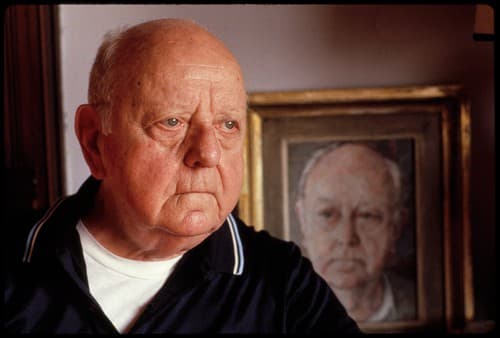
Publius Vergilius Maro, usually called Virgil or Vergil in English, was an ancient Roman poet of the Augustan period. He composed three of the most famous poems in Latin literature: the Eclogues, the Georgics, and the epic Aeneid. A number of minor poems, collected in the Appendix Vergiliana, were attributed to him in ancient times, but modern scholars consider his authorship of these poems to be dubious.
Similar books
- Paradise Lost
John Milton
4.1 (6k) average on GoodreadsMysteryAn epic poem that reinterprets a foundational myth, featuring grand scope, divine conflict, and a hero's struggle with destiny, much like Aeneas.
- Harry Potter and the Sorcerer's Stone
J.K. Rowling
4.5 (7M) average on GoodreadsFantasyRescued from a miserable life under the stairs, an orphaned boy discovers he's a wizard destined for a magical school, where he uncovers a dangerous secret tied to the dark wizard who murdered his parents.
- The Hunger Games
Suzanne Collins
4.3 (6.4M) average on GoodreadsFantasyIn a future where children fight to the death on live television, Katniss Everdeen volunteers for the arena, turning a death sentence into a fight for survival and a spark of rebellion.
- 1984
George Orwell
4.2 (3.1M) average on GoodreadsPoliticsIn a future where surveillance and thought control are absolute, a man's search for truth clashes with the Party, showing that hope can be a form of rebellion.
- Divergent
Veronica Roth
4.2 (2.9M) average on GoodreadsFantasyIn a society divided by virtues, a sixteen-year-old's difference from the norm starts a rebellion that threatens her world.
- The Hobbit, or There and Back Again
J.R.R. Tolkien
4.3 (2.9M) average on GoodreadsFantasyA comfort-loving hobbit named Bilbo Baggins is whisked away by a mischievous wizard and a band of dwarves on an unexpected journey to reclaim stolen treasure from a fearsome dragon, discovering courage and a magical ring along the way.






Enjoyed the summary?
A summary gives you the shape of the book. The book itself has the detail, the examples and the voice.
Find The Aeneid on AmazonAs an Amazon Associate, BookBrief earns from qualifying purchases. How we're funded