
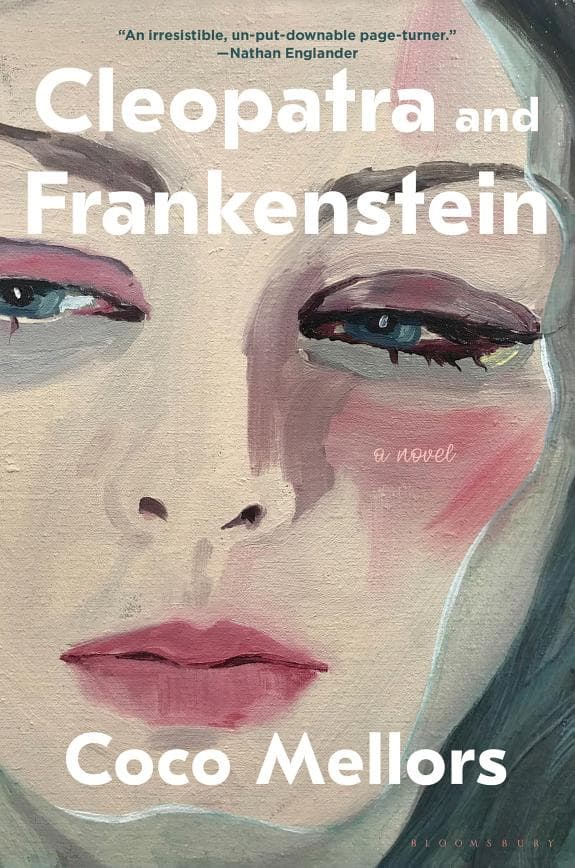
Core Idea
- Difficulty
- Medium
Key Takeaways from Cleopatra and Frankenstein
Impulsive Unions, Enduring Consequences
A spontaneous marriage, driven by convenience and desire, sets off a ripple effect of unforeseen challenges.
The novel's main idea, the quick marriage between 24-year-old Cleo and 44-year-old Frank, shows how personal choices can have wide, unexpected results. Cleo wants security and a Green Card; Frank is drawn to Cleo's youth and artistic side. What starts as a quick fix quickly becomes a tangle of marital conflict, mental health issues, and strained relationships. The book's strongest point is this: we have little control over our futures, especially when big life choices are made under pressure or for hidden reasons. The story makes it clear that even with good intentions, a relationship built on anything less than full understanding and shared goals will fall apart.
“Their impulsive marriage irreversibly changes both their lives, and the lives of those close to them, in ways they never could've predicted.”
In the book: Cleo's need for a Green Card and Frank's desire for a fresh start are the catalysts for their marriage, which then leads to their individual and shared struggles.
Try this: Before making significant life commitments, especially those with practical implications like immigration or financial dependence, critically assess underlying motivations and potential long-term impacts on all parties involved.
The Weight of Mental Health in Relationships
The novel unflinchingly portrays how mental illness impacts intimacy and personal identity within a marriage.
Cleo's struggles with mental illness, probably depression, are a key part of the story, giving an honest and understanding look at how such conditions appear within a relationship. The book avoids making mental illness seem good or bad, instead showing it as a complex problem Cleo and Frank must deal with. It affects Cleo's art, her emotional availability, and how she sees herself, putting a lot of stress on their marriage. This part of the book is moving, as it shows the often-hidden battles within relationships and the big effect on communication, support, and shared happiness. It also touches on the difficulty of getting help and the social shame that can come with mental health problems.
“Cleo and Frank themselves as they discover the trials of marriage and mental illness.”
In the book: Cleo's artistic block, her withdrawal, and her emotional volatility are consistent themes tied to her internal struggles.
Try this: Recognize that mental health is a critical component of relationship health. Open communication, professional support, and mutual empathy are essential when one partner is struggling. Avoid making assumptions; instead, seek understanding and resources.
Identity in Flux: Beyond the Central Couple
The supporting characters' journeys highlight the fluidity of identity and self-discovery in the wake of major life changes.
While Cleo and Frank are central, the novel explores its other characters well; their individual struggles show a range of human experiences. Cleo's best friend's journey of accepting gender queerness and Frank's sister's money problems and choices are not just side stories. They are full narratives of self-discovery and change. These stories show how outside events, like Cleo's marriage, can start personal crises and changes in those around them. The book's strength is its ability to look beyond the main romance, showing how everyone is dealing with their own changing identity, often made worse by the choices of those they know. It makes it clear that personal growth is rarely simple and often messy.
“Whether it's Cleo's best friend struggling to embrace his gender queerness in the wake of Cleo's marriage, or Frank's financially dependent sister arranging sugar daddy dates to support herself after being cut off...”
In the book: The specific examples of Cleo's best friend and Frank's sister are explicitly mentioned as characters undergoing significant personal evolution.
Try this: Recognize that major life events, even those not directly involving you, can impact your own sense of self and direction. Allow space for personal evolution and support those around you as they navigate their own identity journeys.
The Illusion of Age and Experience
The age gap between Cleo and Frank doesn't guarantee wisdom or stability, exposing vulnerabilities on both sides.
Frank, twenty years older than Cleo and a 'self-made success,' at first seems to offer stability, a sense of experience that Cleo, just out of art school, lacks. But the story quickly breaks down this idea. Frank's 'excesses' and his own emotional immaturity become clear, showing that age and money do not mean emotional wisdom or readiness for the difficulties of marriage and mental health. This challenges the common idea of the older, wiser partner, instead showing that vulnerability and flaws are universal, no matter one's age or achievements. It suggests that while life experience can offer perspective, it doesn't stop one from making bad decisions or struggling with personal demons.
“Twenty years older and a self-made success, Frank's life is full of all the excesses Cleo's lacks.”
In the book: Frank's reactions to Cleo's mental health issues and his own lifestyle choices demonstrate his personal shortcomings despite his age and success.
Try this: Avoid projecting idealized qualities onto partners based on external factors like age, wealth, or perceived experience. Focus on understanding their true character, emotional maturity, and compatibility.
Humor as a Coping Mechanism
The novel skillfully employs humor to navigate its often-heartbreaking themes, making difficult topics more accessible.
Even with its look at tough topics like mental illness, money problems, and marital conflict, the book is called 'hilarious' and 'entertaining.' This suggests a skilled use of humor, probably dark wit or observational comedy, to lighten the mood and make it relatable. Humor in such situations often helps characters cope and allows the reader to process hard emotional truths without being overwhelmed. It can create unexpected connections and allow for a more detailed understanding of characters who, despite their flaws and struggles, keep their humanity and ability to feel joy. This balance is important for a strong story that deals with serious subjects without becoming constantly gloomy.
“As hilarious as it is heartbreaking, entertaining as it is deeply moving...”
In the book: The description highlights the book's dual nature: 'hilarious as it is heartbreaking.'
Try this: In communication and interpersonal relationships, recognize the power of humor to diffuse tension, build rapport, and process difficult emotions, but also be mindful of its appropriate use.
The Interconnectedness of Lives
No individual's story exists in isolation; choices reverberate through an entire social network.
The novel's structure, looking at the lives of Cleo, Frank, and 'an unforgettable cast of their closest friends and family,' highlights how deeply human relationships are connected. Cleo and Frank's marriage is not just their story; it becomes a key event that changes the paths of their friends and siblings. This shows a main sociological idea: people are part of complex social systems, and their actions, especially big life decisions, always create ripple effects. Frank cutting off his financially dependent sister, or Cleo's marriage affecting her best friend's personal journey, are clear examples. This challenges the idea of individual freedom, instead stressing our shared responsibility and effect on those around us.
“Their impulsive marriage irreversibly changes both their lives, and the lives of those close to them...”
In the book: The explicit mention of the marriage affecting 'the lives of those close to them' and the specific examples of the best friend and sister.
Try this: Before making major life decisions, consider the potential impact on your immediate social circle and loved ones. Foster open communication and empathy to navigate these interconnected challenges.
The Complexity of Modern Love
Love is portrayed not as a fairytale, but as a messy, evolving process intertwined with practicality and personal struggles.
The novel, called 'perfect for readers of Modern Lovers and Conversations with Friends,' clearly fits into the current genre of exploring complex, often unusual relationships. It suggests that modern love is rarely simple; it is influenced by practical concerns (like a Green Card), personal issues (mental illness), and changing identities. Cleo and Frank's relationship is not a simple 'boy meets girl' story; it is a negotiation of expectations, needs, and individual growth within a marriage. This detailed portrayal challenges romantic ideas of love, showing it instead as a dynamic, sometimes painful, and often practical effort. It argues that true connection comes not from perfection, but from dealing with shared imperfections and outside pressures.
“An addictive, humorous, and poignant debut novel about the shock waves caused by one couple's impulsive marriage.”
In the book: The comparison to 'Modern Lovers' and 'Conversations with Friends' points to a specific genre of modern, complex relationship narratives.
Try this: Approach relationships with realistic expectations, acknowledging that love is a journey of continuous adaptation, compromise, and addressing both emotional and practical challenges.
Economic Dependence as a Relationship Strainer
Financial disparities and reliance create power imbalances and complicate personal autonomy.
The book touches on the often-ignored stress that financial dependence puts on relationships and individual freedom. Cleo's initial reliance on Frank for stability and a Green Card creates a power imbalance. More sharply, Frank's sister's situation, where she takes 'sugar daddy dates' after being cut off financially, clearly shows the desperate steps people may take when their financial security is threatened. This highlights a critical social issue and its personal effects: financial weakness can decide life choices, hurt self-esteem, and create hard moral dilemmas. The book implies that while love is central, financial realities are an unavoidable, often defining, factor in modern life and relationships.
“Frank's financially dependent sister arranging sugar daddy dates to support herself after being cut off...”
In the book: The specific example of Frank's sister and her financial struggles after being cut off.
Try this: Strive for financial literacy and independence to maintain personal agency. In relationships, openly discuss financial expectations and responsibilities to avoid imbalances that can lead to resentment or exploitation.
The Search for Belonging in a New City
Cleo's journey explores the challenges of finding roots and identity as an expatriate in a bustling metropolis.
Cleo's status as a British person in New York, 'still finding her place in the sleepless city,' adds another layer to her personal struggles. Her search for belonging, both geographically and personally, is tied to her decision to marry Frank. This idea connects with anyone who has felt the confusing yet exciting process of moving to a new place, especially one as overwhelming as New York. It speaks to the universal human need for connection and community, and how lacking these can lead to feelings of isolation and vulnerability. Her artistic work is also tied to this search for identity and purpose in a foreign land. The marriage, in part, is an attempt to settle herself, but it ultimately makes it harder for her to find a true sense of belonging.
“Twenty-four-year-old British painter Cleo has escaped from England to New York and is still finding her place in the sleepless city...”
In the book: Cleo's initial situation as a British painter in New York, facing an expiring student visa, directly sets up this theme.
Try this: When navigating new environments, actively seek out communities and support networks. Understand that a sense of belonging is often built gradually through genuine connections, not solely through single relationships or institutions.
Art as a Reflection and Escape
Cleo's painting serves as both an expression of her inner turmoil and a potential path to self-discovery.
Cleo's identity as a 'British painter' is key to her character, and her artistic journey is deeply connected with her emotional state. The promise of 'the freedom to paint' is a big draw in her marriage to Frank, suggesting that art is not just a hobby but a vital part of who she is and her well-being. When she struggles with mental illness, her artistic output likely suffers, symbolizing a loss of self. On the other hand, moments of creative flow or breakthroughs could mean periods of healing or self-understanding. This shows how art, for many, is both a mirror reflecting inner trouble and a way to heal. The book implies the importance of creative expression as a way to process life's complexities and keep a sense of purpose, even in chaos.
“He offers her the chance to be happy, the freedom to paint...”
In the book: Her identity as a 'painter' and the explicit mention of Frank offering her 'the freedom to paint' ties her artistic life directly to her personal narrative.
Try this: Engage in creative outlets as a means of self-expression and emotional processing. Recognize that creativity can be a barometer for mental well-being and a powerful tool for personal growth.
Quiz
10 questions on the main ideas. Each answer comes with a short explanation.
Question 1
What is the title of the book?
- Cleopatra and Frankenstein
- Frankenstein and Cleopatra
- The Painter and the Millionaire
- New York Love Story
Show answer
A. Cleopatra and Frankenstein The title of the book is explicitly stated as 'Cleopatra and Frankenstein'.
Question 2
Who is the author of the book?
- Coco Mellors
- Mary Shelley
- Sally Rooney
- Taylor Jenkins Reid
Show answer
A. Coco Mellors The author's name, Coco Mellors, is provided at the beginning of the book description.
Question 3
What is Cleo's nationality and profession?
- American painter
- British writer
- British painter
- Irish musician
Show answer
C. British painter Cleo is described as a 'Twenty-four-year-old British painter'.
Question 4
What is Frank's profession and approximate age difference with Cleo?
- Successful businessman, 10 years older
- Self-made success, 20 years older
- Artist, 15 years older
- Lawyer, 25 years older
Show answer
B. Self-made success, 20 years older Frank is described as 'Twenty years older and a self-made success'.
Question 5
What is one of the reasons Cleo is in New York and her visa situation?
- She is studying art and her visa is about to expire.
- She is working as a nanny and her visa is valid for another year.
- She is finding her place and her student visa is ending soon.
- She is on a tourist visa and planning to stay indefinitely.
Show answer
C. She is finding her place and her student visa is ending soon. Cleo is described as 'still finding her place in the sleepless city when, a few months before her student visa ends'.
Question 6
What does Frank offer Cleo?
- Financial stability and a place to live.
- The chance to be happy, freedom to paint, and a Green Card application.
- An art gallery representation and international travel.
- A business partnership and a share of his success.
Show answer
B. The chance to be happy, freedom to paint, and a Green Card application. The text states Frank 'offers her the chance to be happy, the freedom to paint, and the opportunity to apply for a Green Card.'
Question 7
What is one of the challenges mentioned that Cleo's best friend faces?
- Struggling to embrace his gender queerness.
- Dealing with a difficult art critic.
- Managing his family's expectations.
- Recovering from a serious illness.
Show answer
A. Struggling to embrace his gender queerness. The book mentions 'Cleo's best friend struggling to embrace his gender queerness in the wake of Cleo's marriage'.
Question 8
How does Frank's sister attempt to support herself?
- By working multiple part-time jobs.
- By selling her possessions.
- By arranging sugar daddy dates.
- By asking Frank for a loan.
Show answer
C. By arranging sugar daddy dates. It is stated that Frank's sister is 'arranging sugar daddy dates to support herself after being cut off'.
Question 9
What significant life events are explored in relation to Cleo and Frank themselves?
- Career advancements and travel adventures.
- The discovery of marriage trials and mental illness.
- Starting a family and renovating their home.
- Resolving past traumas and finding inner peace.
Show answer
B. The discovery of marriage trials and mental illness. The description mentions 'Cleo and Frank themselves as they discover the trials of marriage and mental illness'.
Question 10
The book is described as being as hilarious as it is heartbreaking, and entertaining as it is deeply moving. What does this suggest about the overall tone and themes of the novel?
- It is a lighthearted comedy with no serious undertones.
- It exclusively focuses on dramatic and tragic events.
- It balances humor and poignancy, exploring complex emotional experiences.
- It is a straightforward self-help book about relationships.
Show answer
C. It balances humor and poignancy, exploring complex emotional experiences. The description highlights a duality in the novel's tone, suggesting it effectively blends humor with emotional depth to explore relatable, albeit sometimes difficult, life experiences.
Cleopatra and Frankenstein FAQ
What is Cleopatra and Frankenstein about?
Cleopatra and Frankenstein is a novel about a young British painter, Cleo, who impulsively marries a wealthy American man named Frank in New York. Their marriage creates unexpected shockwaves, impacting their lives and the lives of their friends and family in profound ways.
Who are the main characters in Cleopatra and Frankenstein?
The main characters are Cleo, a 24-year-old British painter, and Frank, a successful 44-year-old American man. The story also features a vivid cast of their friends and family, whose lives are intertwined with Cleo and Frank's.
What themes are explored in Cleopatra and Frankenstein?
The novel explores themes of impulsive decisions, the complexities of marriage, mental illness, gender identity, finding one's place in the world, and the unexpected consequences of life choices.
What is the age difference between Cleo and Frank?
There is a 20-year age difference between Cleo, who is 24, and Frank, who is 44.
Is Cleopatra and Frankenstein a sad book?
While the book deals with serious themes like mental illness and the challenges of relationships, it is also described as humorous and heartwarming. It balances heartbreaking moments with deeply moving and relatable experiences.
What kind of reader would enjoy Cleopatra and Frankenstein?
Readers who enjoy contemporary fiction with complex characters, explorations of modern relationships, and a blend of humor and poignancy, similar to authors like Sally Rooney, would likely enjoy this book.
What is the significance of the title Cleopatra and Frankenstein?
The title likely alludes to the unconventional and perhaps monstrous nature of the relationship and the characters' personal journeys, drawing parallels to the famous historical figure and the iconic literary creation.
Does the book offer practical advice on relationships or marriage?
Cleopatra and Frankenstein is primarily a character-driven novel exploring the emotional and psychological landscape of relationships rather than offering direct practical advice. It shows the realities and challenges faced by its characters.
What is Cleo's motivation for marrying Frank?
Cleo marries Frank impulsively, seeking happiness, freedom to pursue her art, and a way to secure her immigration status in the United States before her student visa expires.
How does Frank's sister contribute to the story?
Frank's sister, who is financially dependent, is cut off by him after the marriage. Her storyline involves her resorting to arranging sugar daddy dates to support herself, highlighting the ripple effects of Cleo and Frank's impulsive union.
Similar books
- Normal People
Sally Rooney
3.9 (405k) average on GoodreadsLiterary Fiction"Cleopatra and Frankenstein" shares with Sally Rooney's "Normal People" a deep dive into the intricacies of a central, often fraught, romantic relationship, exploring themes of class, mental health, and the struggle for self-definition within a partnership. Both novels excel at depicting the internal monologues and emotional landscapes of their protagonists. However, Mellors' novel introduces a significant age gap and a more immediate, impulsive marriage, adding layers of external societal pressure and internal power dynamics that are less central to Rooney's examination of a long-term, on-again-off-again connection from adolescence into early adulthood. Mellors also leans more heavily into the immediate aftermath of a life-altering decision, whereas Rooney focuses on the slow burn of evolving attachment.
- Conversations with Friends
Sally Rooney
3.8 (127k) average on GoodreadsLiterary FictionSimilar to Rooney's "Conversations with Friends," Mellors' novel explores the complexities of unconventional relationships and the impact of infidelity on all parties involved. Both books feature young, intelligent female protagonists navigating emotional turbulence and artistic aspirations. However, "Cleopatra and Frankenstein" shifts its focus to a marital dynamic with a substantial age difference and a more pronounced exploration of depression and addiction within that structure. While Rooney's novel dissects the intellectual and emotional entanglements of a polyamorous quartet, Mellors primarily centers on the fallout and individual struggles within a two-person marriage, albeit with significant input from their respective social circles. Mellors' tone is arguably more raw and less detached than Rooney's, offering a more immediate emotional impact regarding the characters' pain.
- The Diary of a Young Girl
Anne Frank
4.2 (2.7M) average on GoodreadsBiographyDuring the Nazi occupation, a teenage girl's diary, written from a secret annex, shares observations on humanity, hope, and the wait for freedom.
- Twisted 1. Twisted love
Ana Huang
3.7 (1.7M) average on GoodreadsA quiet billionaire with a difficult past finds his guarded heart opening to the woman he must protect, but their growing passion uncovers dangerous secrets and a shared, traumatic history.
- Eat, Pray, Love
Elizabeth Gilbert
3.6 (1.5M) average on GoodreadsLifestyleA heartbroken writer leaves her conventional life for a year-long global search for pleasure in Italy, spiritual devotion in India, and unexpected love and balance in Bali.
- Night
Elie Wiesel
4.3 (970k) average on GoodreadsBiographyIn the darkness of Auschwitz and Buchenwald, a teenage Elie Wiesel faces the extermination of his family, the loss of his faith, and the lasting scars of humanity's deepest cruelty.




Enjoyed the summary?
A summary gives you the shape of the book. The book itself has the detail, the examples and the voice.
Find Cleopatra and Frankenstein on AmazonAs an Amazon Associate, BookBrief earns from qualifying purchases. How we're funded