

Synopsis
Covers the whole plot, including the ending.
- Difficulty
- Medium
- Pacing
- Variable
- Mood
- Mysterious, Reflective, Adventurous, Heartwarming
- Read it if
- You enjoy collaborative storytelling, mysteries spanning generations, and unique narrative structures.
- Skip it if
- You prefer a single, consistent authorial voice or straightforward chronological plots.
Click Plot Summary
Covers the whole plot, including the ending.
The Message from Beyond
The story begins with Hector, a teenager still sad about his adventurous grandfather, George 'Gee' Keane, receiving a video message on his computer. The message, seemingly from beyond the grave, tells Hector that his grandfather has left him something important, but that he must find clues from various people to locate it. This message starts Hector on a quest, introducing the main mystery of George's hidden legacy. Hector, at first doubtful, becomes interested in his grandfather's life, realizing there was much about George he never knew. The message hints at a grand adventure, like the life George himself led, and promises a significant discovery if Hector can follow the trail.
The Boy Who Could Not See
Roddy Doyle's chapter covers George Keane's early life in Ireland during World War II. It shows George as a young boy who loves light and images, even though he is legally blind in one eye. He experiences the difficulties of wartime, like rationing, but also the simple joys of childhood. A key event is the death of his older brother, Billy, during a bombing raid. This loss affects George deeply, strengthening his bond with his remaining family and subtly influencing his future as a photographer. The chapter establishes George's keen observation skills and his early interest in capturing moments, foreshadowing his later career.
The Thief and the Photograph
Nick Hornby's chapter introduces Spud, a cynical teenager in London who earns money through petty theft. Spud tries to pickpocket an elderly George Keane, but George catches him. Instead of reporting him, George talks to Spud, showing him a photograph from his past. This interaction changes Spud; George's calm manner and the mysterious photograph spark curiosity and perhaps a new sense of wonder in the boy. The photograph, though its content isn't fully revealed, means a lot to George, hinting at a deeper story and a life lived beyond Spud's limited experience.
The Japanese Internment Camp
Ruth Ozeki's chapter takes the reader to a Japanese internment camp during World War II, where a younger George Keane is held prisoner. The harsh realities of camp life are described, including constant hunger, fear, and dehumanization. Despite the terrible conditions, George finds comfort and purpose in observing and remembering details, mentally 'photographing' the faces and events around him. He forms a bond with another prisoner, a young Japanese woman, through shared glances and unspoken understanding. This experience shapes George, giving him resilience and a deep appreciation for life's fragility and the power of human connection, even in the darkest times.
The Girl with the Fairy Tale
Margo Lanagan's chapter introduces Lily, a young girl with epilepsy, who finds a connection to George Keane through his photographs and a fairy tale. Lily's seizures often come with vivid, sometimes scary, visions. She sees a repeating image in one of George's photographs that seems to connect with a story her grandmother tells her – a story about hidden treasure and a magical journey. Lily believes George's photographs hold clues to this fairy tale, and through her unique view, she begins to understand a deeper meaning in his work, suggesting that George's life and art were tied to a grander story.
The Korean War Photographer
Linda Sue Park's chapter places George Keane in the brutal Korean War, working as a war photographer. This period shows George's dedication to capturing truth and humanity amid conflict. He faces great danger and sees terrible scenes, yet he remains committed to his work, believing in the power of images to tell stories and bear witness. The chapter highlights George's ability to find beauty and dignity even in the most desolate places, and his quiet bravery in documenting the war's impact on soldiers and civilians. His photographs show the strength of the human spirit.
The Man Who Could Stick His Toe
David Almond's chapter introduces the quirky Mr. Poldark, a man who can stick his left toe behind his head and into his ear. George Keane meets Mr. Poldark during a time when he is searching for something undefined. Poldark, despite his oddity, is a surprisingly insightful character. He seems to understand George's quest and offers cryptic advice that resonates with George's journey of self-discovery. This encounter adds a touch of magical realism to George's story, suggesting that the world holds more mysteries than first apparent and that unusual people can hold unexpected keys to understanding.
The Family Secret
Gregory Maguire's chapter focuses on Evelyn, George Keane's daughter, as she deals with a family secret that has affected her life. The secret, hinted at throughout the book, concerns George's past and a decision he made that deeply impacted his family. Evelyn's view reveals the complexity of living with a renowned but often absent father. She thinks about the emotional distance and the lingering questions about her father's reasons. This chapter adds a layer of personal struggle and the burden of inherited secrets, showing how George's adventurous life had deep, sometimes painful, consequences for those closest to him.
The Collector of Memories
Tim Wynne-Jones's chapter shows George Keane in his later years, an elderly man still engaged with the world, though more reflectively. He collects memories, not just through his photographs, but through the stories he tells and his quiet observations. This chapter shows a George who has accepted his past, embracing both its successes and its regrets. He is portrayed as a wise and gentle soul, still having a spark of the adventurer he once was, but now finding deep meaning in everyday life and the connections he made throughout his extraordinary life. He is a keeper of human experience.
The Search for the Missing Piece
Deborah Ellis's chapter discusses George Keane's humanitarian work, especially with refugees in a war-torn region. This period shows George's deep empathy and his commitment to using his photography to speak for those without a voice. The chapter also reveals a personal quest: George is searching for a lost family member, possibly a child, who was separated from him during a conflict. This personal mission adds another layer of heartbreak and determination to George's character, showing that his adventures were not always selfish but often driven by a deep sense of responsibility and love, even for those he had lost.
The Final Clue
Eoin Colfer's last chapter brings Hector's quest to an end. Following the clues left by his grandfather and putting together the stories from the various characters, Hector finally finds the 'something important' George left him. It isn't a material treasure, but something far more meaningful: a collection of George's most personal and important photographs, along with a final message that summarizes his life's philosophy. This discovery helps Hector truly understand his grandfather's spirit, his struggles, and his lasting legacy, giving him closure and inspiring Hector to follow his own path with a new appreciation for connection and storytelling.
Click Characters
George 'Gee' Keane
Protagonist
A mysterious and adventurous photographer whose life story is pieced together chapter by chapter.
George Keane is the central enigma of the book, a man whose life spans wars, continents, and countless human experiences. He is a photographer, a soldier, an adventurer, and a deeply observant individual. From his childhood in wartime Ireland, marked by loss and a unique visual perception, to his time in an internment camp, his daring work as a war photographer in Korea, and his later humanitarian efforts, George's life is a tapestry of resilience, empathy, and a relentless pursuit of truth through his lens. He is driven by a desire to capture and understand the human condition, often at great personal cost. He leaves behind a legacy not just of images, but of profound human connection.
Relationships: Hector (Grandfather-grandson; mentor through posthumous quest); Billy (Older brother, whose death profoundly impacts George); Spud (Brief encounter, George offers a moment of insight); Lily (Unseen connection through George's photographs); Mr. Poldark (Eccentric acquaintance who offers cryptic wisdom); Evelyn (Daughter, burdened by family secrets and George's absence)
Hector
Supporting
George Keane's grandson, who embarks on a quest to uncover his grandfather's final message.
Hector is a typical teenager, initially somewhat detached and grieving his grandfather, George. He is thrust into the role of detective when he receives George's posthumous video message. His journey to piece together the clues about George's life is not just a mystery, but a process of discovery about his own heritage and identity. He starts as a skeptical observer but gradually becomes more invested, learning about the complex and extraordinary man his grandfather was. Hector represents the younger generation, tasked with understanding and carrying forward the legacy of the past.
Relationships: George Keane (Grandson, tasked with understanding his grandfather's legacy)
Spud
Supporting
A cynical young thief whose life is briefly touched by an encounter with George Keane.
Spud is a street-smart, somewhat jaded teenager living in London, resorting to petty crime to survive. He views the world with a cynical eye, believing in little beyond his immediate needs. His encounter with George Keane, whom he attempts to pickpocket, is a small but significant turning point. George's unexpected reaction and the photograph he shows Spud plant a seed of curiosity and perhaps even hope in the boy. Spud represents the potential for change and the unexpected ways in which human connection can break through hardened exteriors.
Relationships: George Keane (Brief, impactful encounter between thief and victim)
Lily
Supporting
An epileptic girl who finds a unique connection to George's photographs through a fairy tale.
Lily is a young girl who experiences the world through the lens of her epilepsy, which sometimes manifests in vivid visions and a unique sensitivity. She finds comfort and meaning in an old fairy tale and discovers a profound, almost mystical, connection to George Keane's photographs. Lily's character highlights the power of imagination and the idea that truth can be perceived in unconventional ways. She embodies innocence and a deep, intuitive understanding that transcends logical explanation, suggesting a spiritual dimension to George's work.
Relationships: George Keane (Unseen, intuitive connection through art and shared perception)
Mr. Poldark
Supporting
An eccentric man with an unusual physical ability who offers George cryptic wisdom.
Mr. Poldark is a quirky and mysterious figure, notable for his extraordinary physical flexibility – he can stick his left toe behind his head and into his ear. He appears at a point in George's life when George is searching for something intangible. Poldark, despite his oddity, is surprisingly insightful and offers George cryptic advice and observations that resonate deeply. He represents the unexpected sources of wisdom and the magical, unexplained elements that can appear in life, challenging conventional perceptions and guiding George on his journey.
Relationships: George Keane (Eccentric acquaintance, offering mysterious guidance)
Evelyn
Supporting
George Keane's daughter, who carries the burden of a long-held family secret.
Evelyn is George Keane's daughter, and her perspective offers insight into the personal cost of George's adventurous life. She grapples with a significant family secret connected to her father's past, and her narrative reveals the emotional complexities of her relationship with an often-absent, enigmatic parent. Evelyn represents the generation that inherits the consequences of past decisions, struggling to reconcile the public persona of her father with the private man and the impact he had on his immediate family. Her story adds a layer of intergenerational trauma and the search for understanding and forgiveness.
Relationships: George Keane (Daughter, burdened by his secrets and legacy)
Billy Keane
Mentioned
George Keane's older brother, who dies tragically during World War II.
Billy is George Keane's older brother, whose tragic death during a bombing raid in World War II profoundly impacts young George. Though only appearing briefly, Billy's loss is a formative event in George's life, shaping his perspective on the fragility of life and the importance of memory. He represents the innocence lost during wartime and the deep emotional scars that conflict leaves on families.
Relationships: George Keane (Younger brother, deeply affected by Billy's death)
Japanese Prisoner
Mentioned
A young Japanese woman George bonds with in an internment camp.
During his time in the Japanese internment camp, George forms an unspoken bond with a young Japanese woman. Their connection, forged in shared suffering and silent understanding, highlights the ability of human empathy to transcend cultural and wartime divides. She represents the shared humanity found even in the most dehumanizing circumstances and the quiet resilience of those enduring oppression.
Relationships: George Keane (Fellow prisoner, forming a silent bond)
Click Themes
The Power of Storytelling and Legacy
The novel is about storytelling, as George Keane's life is put together through different narratives. Each author writes a 'chapter' that acts as a different way of looking at George's life, showing how individual experiences and views create a larger, more complex truth. Hector's quest is about assembling this story, and in doing so, he learns about his own heritage and the lasting impact of a life well-lived. George's photographs are a form of storytelling, capturing moments and saving memories that form his legacy, influencing generations, as seen with Lily and Hector.
“'Every picture tells a story,' George used to say, 'but sometimes the story isn't in the picture at all. It's in the spaces between.”
The Nature of Truth and Perception
The book explores how truth is subjective and has many sides, shaped by individual perception and experience. George Keane's life is shown through different authors, each offering a unique view that adds to, and sometimes slightly contradicts, the overall picture. This is clear in Lily's unique understanding of George's photographs through her epilepsy, or Spud's cynical view compared to George's quiet wisdom. The story structure itself shows that a single 'truth' about a person or event is often a mix of many different viewpoints, asking the reader to combine these perspectives.
“He was a different man to every person he met, and yet, somehow, he was always himself.”
Loss, Resilience, and Human Connection
Loss is a common theme throughout George Keane's life, from his brother Billy's death during wartime to his time in an internment camp and his search for a lost family member. Despite these losses, George consistently shows resilience, finding ways to cope and connect with others. His photography often helps him process trauma and preserve the memory of what is lost. The various characters George meets, like the Japanese prisoner or Spud, highlight the unexpected and strong bonds that can form between people, even in the hardest situations, showing the human need for connection.
“Even in the bleakest places, George found a way to see the light, or at least to capture its shadow.”
The Impact of War on Individuals and Families
War is a significant background to George Keane's life, greatly shaping his experiences and character. His childhood is marked by World War II, leading to his brother's tragic death. He endures the horrors of a Japanese internment camp and later becomes a war photographer during the Korean War, seeing great suffering. These experiences leave lasting marks, influencing his humanitarian work and his personal struggles. The theme also includes the impact across generations, as seen in Evelyn's struggles with family secrets related to her father's wartime past, showing how conflict's effects go beyond the battlefield, affecting families for decades.
“The war, George learned, didn't just end when the fighting stopped. It lived inside you, changing the way you saw everything.”
Plot Devices & Literary Techniques
Epistolary/Framing Device
The story is framed by Hector's quest, initiated by a posthumous video message from his grandfather.
The entire narrative is framed by Hector's reception of a video message from his deceased grandfather, George Keane, which sets him on a journey to uncover George's legacy. This device provides a clear motivation for the reader to delve into George's past and creates a sense of mystery and purpose. Each subsequent chapter, written by a different author, serves as a piece of the puzzle that Hector (and the reader) must assemble. This structure allows for a cohesive narrative despite the multiple authorial voices, as all stories ultimately contribute to Hector's understanding of George.
Multiple Perspectives/Omniscient Point of View
Each chapter is written by a different author, offering unique perspectives on George Keane's life.
The most prominent plot device is the use of multiple authors, each contributing a chapter from a different point in George Keane's life or from the perspective of someone who encountered him. This creates a fragmented yet rich portrait of George, where his character is built up through various lenses – from his childhood to his old age, and through the eyes of family, strangers, and even an omniscient narrator. This device highlights the subjective nature of truth and how one person can be perceived differently by many, ultimately forming a more complex and nuanced understanding of the protagonist.
The MacGuffin (George's 'Something Important')
The unknown 'something important' George left behind serves as the primary driver for Hector's quest.
George Keane's posthumous video message to Hector promises 'something important,' which acts as the central MacGuffin of the story. This unspecified item or revelation drives Hector's entire quest, motivating him to seek out the various individuals connected to George and piece together the clues. The true nature of this 'something important' is withheld until the very end, building suspense and keeping both Hector and the reader engaged in the search. Its ultimate reveal, as a collection of photographs and a philosophy, redefines the meaning of 'treasure' from material wealth to intangible legacy.
Symbolism of Photography
Photography serves as a central metaphor for memory, truth, and the human condition.
George Keane's profession as a photographer is highly symbolic throughout the book. Photography represents memory, the act of capturing transient moments, and the attempt to convey truth. George uses his camera not just to document events (like war), but to connect with humanity, to preserve the dignity of individuals, and to tell stories. His photographs are the tangible remnants of his life's journey, and they become the ultimate 'treasure' he leaves behind. The 'click' of the camera becomes a metaphor for significant moments, decisions, and the indelible marks left by life's experiences.
Click Quotes
“The thing about being a genius is that it's not always about having the right answers. Sometimes it's about asking the right questions.”
“If you want to understand someone, don't just listen to what they say. Watch what they do.”
“Sometimes the biggest secrets are hidden in plain sight.”
“The past isn't just history; it's the foundation of everything that comes next.”
“Even the most ordinary person can have an extraordinary story.”
“A true friend is someone who knows all your flaws and still loves you.”
“Books are not just paper and ink; they are portals to other worlds.”
“The greatest adventures often begin with the smallest of clues.”
“You can't choose your family, but you can choose how you deal with them.”
“Laughter is a powerful weapon against despair.”
“Sometimes you have to break the rules to do the right thing.”
“The world is full of wonders, if you only take the time to look.”
“Every ending is just a new beginning in disguise.”
Quiz
10 questions on the plot and the characters. Each answer comes with a short explanation.
Question 1
What is the primary catalyst for the narrative, initiating the exploration of George Keane's life?
- His grandson finding an old diary.
- A video message from George Keane after his death.
- A newspaper article about a mysterious photographer.
- His will being read to his assembled family.
Show answer
B. A video message from George Keane after his death. The book opens with George Keane's family gathering to watch a video message he left behind after his death, which sets off the quest to understand his life.
Question 2
Which unusual physical trait is attributed to one of the characters in the book, as mentioned in the description?
- A woman who can hold her breath for an hour.
- A man who can stick his left toe behind his head and in his ear.
- A boy with an unusually long arm span.
- A girl who can see in the dark.
Show answer
B. A man who can stick his left toe behind his head and in his ear. The book description specifically mentions 'A man who can stick his left toe behind his head and in his ear' as one of the intriguing characters.
Question 3
What is the core mystery that the various authors collectively try to unravel about George Keane?
- The location of his hidden treasure.
- The identity of his true love.
- The secret behind his gloriously complicated life and family.
- His involvement in international espionage.
Show answer
C. The secret behind his gloriously complicated life and family. The collective effort of the authors is to paint a complete picture of George Keane, focusing on 'a startling portrait emerges of a man, his family, and his gloriously complicated tangle of a life,' which points to a central family secret.
Question 4
Which historical event is mentioned as having a significant impact on one of the characters, leading to loss?
- The Great Depression.
- World War II.
- The Cold War.
- The Vietnam War.
Show answer
B. World War II. The description states, 'A boy who loses everything in World War II, and his brother who loses even more,' highlighting the impact of this specific war.
Question 5
How many different authors contributed a chapter to the book 'Click'?
- Eight
- Nine
- Ten
- Eleven
Show answer
C. Ten The description lists ten authors: Roddy Doyle, Nick Hornby, Ruth Ozeki, Margo Lanagan, Linda Sue Park, David Almond, Gregory Maguire, Tim Wynne-Jones, Deborah Ellis, and Eoin Colfer.
Question 6
What role does the character described as 'an epileptic girl' play in seeking answers?
- She researches historical documents.
- She interviews family members.
- She seeks answers in a fairy tale.
- She analyzes George Keane's photographs.
Show answer
C. She seeks answers in a fairy tale. The description explicitly states, 'An epileptic girl seeking answers in a fairy tale,' indicating her unique approach to the mystery.
Question 7
What is the primary professional role associated with George Keane throughout his life, as indicated by the description?
- Writer
- Musician
- Photographer
- Explorer
Show answer
C. Photographer The description refers to him as 'George 'Gee' Keane, photographer, soldier, adventurer and enigma,' with photographer listed first and highlighted by the title 'Click'.
Question 8
The book is described as having a 'family with a secret so big that it changes everything.' What does this imply about the structure and themes of the narrative?
- The secret is a simple misunderstanding that is easily resolved.
- The narrative will build towards a significant revelation that recontextualizes all prior events.
- The secret is primarily about George Keane's financial struggles.
- The secret is only known to one family member and never fully revealed.
Show answer
B. The narrative will build towards a significant revelation that recontextualizes all prior events. A secret 'so big that it changes everything' suggests a pivotal plot twist or revelation that fundamentally alters the family's understanding of their history and George Keane's life, recontextualizing the entire story.
Question 9
Given the diverse list of authors, what challenge or unique aspect might readers expect from the narrative style of 'Click'?
- A consistently uniform writing style across all chapters.
- A narrative told entirely from George Keane's first-person perspective.
- Varied perspectives and distinct authorial voices contributing to a multifaceted character portrait.
- A strictly chronological recounting of George Keane's life.
Show answer
C. Varied perspectives and distinct authorial voices contributing to a multifaceted character portrait. With 'different pens' contributing 'a startling portrait,' the book's structure inherently implies varied perspectives and distinct authorial voices, creating a multifaceted view of George Keane.
Question 10
Beyond being a 'photographer, soldier, adventurer,' what additional characteristic is used to describe George 'Gee' Keane, implying a deeper, enigmatic quality?
- A mentor
- A politician
- An enigma
- A philanthropist
Show answer
C. An enigma The description explicitly calls him 'George 'Gee' Keane, photographer, soldier, adventurer and enigma,' with 'enigma' signifying his mysterious and complex nature.
Click FAQ
What is the central premise of 'Click' and how do the multiple authors contribute?
'Click' revolves around the life of George 'Gee' Keane, a mysterious photographer and adventurer, whose story is told through eleven chapters, each penned by a different acclaimed author. The unique structure allows for diverse perspectives and narrative styles, gradually revealing Gee's complex character and his impact on various individuals across different periods of his life.
Who is George 'Gee' Keane, and what makes him such an enigmatic figure?
George 'Gee' Keane is a charismatic yet elusive figure whose life spans decades and continents, from his experiences in World War II to his later adventures as a photographer. His enigmatic nature stems from his ability to connect deeply with people while simultaneously maintaining a profound sense of personal secrecy, leaving those around him to piece together the fragments of his true identity.
What role does the video message from Gee play in initiating the story?
The story is primarily framed by a video message left by Gee Keane after his death, which serves as a posthumous will and a final communication to his family and friends. This message acts as a catalyst, prompting his loved ones to reflect on his life, uncover his secrets, and come to terms with his legacy, effectively guiding the narrative through various viewpoints.
How do the diverse characters, such as the larcenous teenager and the epileptic girl, connect to Gee?
The diverse characters are all individuals whose lives were touched by Gee Keane in significant ways, often unknowingly at the time. The larcenous teenager might have encountered Gee through one of his humanitarian endeavors, while the epileptic girl could have found inspiration or a hidden clue in his photography or the stories he told, all contributing to the mosaic of his life.
What is the 'big secret' mentioned in the synopsis, and how does it change everything?
The 'big secret' likely refers to a profound truth about Gee Keane's past, his family origins, or a pivotal event in his life that he kept hidden for decades. When revealed, this secret recontextualizes all previous understandings of his actions and relationships, forcing his family and friends to re-evaluate who they thought Gee was and their own connections to him.
What is the significance of the man who can stick his left toe behind his head and in his ear?
This peculiar detail likely represents Gee Keane's adventurous, unconventional spirit and his ability to surprise. It could be a specific memory shared by a character, highlighting Gee's eccentricity or perhaps a metaphor for his flexibility and adaptability in navigating life's challenges, showcasing a lighter, more whimsical side of his personality.
Are there any recurring symbols or motifs across the different authors' chapters?
While each author brings their unique style, recurring motifs like photography, travel, and the concept of 'truth' vs. 'perception' likely weave through the chapters. Gee's camera, for instance, might symbolize his way of seeing the world and capturing moments, while also acting as a barrier or a means of observation rather than full participation, creating a subtle thematic thread.
How do the World War II experiences of Gee and his brother shape their lives and future interactions?
Gee's experiences in World War II, where he 'loses everything,' and his brother's even greater losses, are foundational to their characters. These traumatic events likely forged Gee's resilience and desire for adventure, while also contributing to his guarded nature and the secrets he keeps, profoundly impacting his relationships and choices in later life.
What is the role of memory and unreliable narration in constructing Gee Keane's portrait?
Given the multiple authors and perspectives, memory and unreliable narration are crucial in shaping Gee's portrait. Each character's recollection of Gee is filtered through their own experiences and biases, meaning the reader must piece together a composite image, acknowledging that no single account provides the complete, objective truth about him.
How does Gee Keane cope with trauma, particularly from his war experiences?
Gee Keane appears to cope with trauma through a combination of escapism, adventure, and perhaps a deliberate detachment from his past, as evidenced by his travels and mysterious nature. His photography might also serve as a coping mechanism, allowing him to observe and document life without fully engaging with his own emotional wounds, leading to a complex psychological profile.
What psychological impact does Gee's secretive nature have on his family and friends?
Gee's secretive nature likely created a mix of fascination, frustration, and perhaps a sense of emotional distance for his family and friends. While they admired his adventurous spirit, the lack of full transparency could have led to feelings of confusion, longing for deeper connection, and a lingering sense of the unknown, even after his death.
How does the book explore themes of identity and self-discovery through Gee's journey?
Through Gee's journey, the book explores how identity is constructed not just by personal choices but also by how others perceive us. Gee's constant reinvention and his interactions with various people allow the narrative to delve into the fluid nature of self, suggesting that identity is a lifelong process of discovery and adaptation, often influenced by external forces.
What is the psychological significance of the epileptic girl seeking answers in a fairy tale?
The epileptic girl's search for answers in a fairy tale suggests a psychological need for structure, meaning, or perhaps an escape from the harsh realities of her condition. It could represent a coping mechanism, a way to process complex emotions, or a symbolic quest for a truth that feels more profound or magical than everyday life provides, possibly linked to Gee's own storytelling.
Does 'Click' ultimately present Gee Keane as a hero, a flawed individual, or something more ambiguous?
'Click' intentionally presents Gee Keane as an ambiguous figure, making it difficult to definitively label him as a hero or simply flawed. The multiple perspectives highlight his admirable qualities alongside his enigmatic and perhaps evasive tendencies, inviting readers to form their own interpretation of his character, acknowledging the complexities of human nature.
How does the collaborative nature of the book impact its overall message about life and legacy?
The collaborative nature reinforces the idea that a person's life and legacy are multifaceted, interpreted differently by each individual they encounter. It suggests that no single narrative can fully encapsulate a life, and that true understanding comes from embracing the diverse perspectives and acknowledging the subjective nature of memory and experience.
What kind of 'mystery' is 'Click' ultimately solving, and is there a definitive resolution?
'Click' is less about solving a traditional whodunit and more about unraveling the mystery of a man's life and the secrets he kept. While some personal revelations might provide a sense of closure, the book's resolution is likely more interpretive, allowing readers to piece together their own understanding of Gee Keane rather than offering a single, definitive answer.
How does the book's structure with different authors influence the reader's emotional connection to Gee?
The varied authorship can create a fluctuating emotional connection. Some chapters might foster deep empathy, while others present Gee in a more detached or critical light, challenging the reader to constantly re-evaluate their feelings. This dynamic structure prevents a singular, simplistic emotional response, encouraging a richer, more nuanced engagement with his character.
What is the overarching theme about family secrets and their lasting impact?
The book strongly emphasizes how family secrets, especially significant ones, can echo through generations, shaping identities and relationships long after their initial concealment. It explores the burden of carrying these secrets, the pain they can cause, and the eventual liberation or disruption that comes with their revelation, highlighting their profound and lasting impact.
About the author
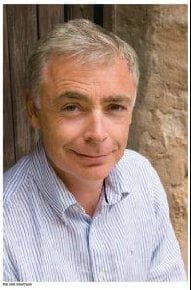
Eoin Colfer is an Irish author best known for his work in children's and young adult fiction. He gained prominence with the Artemis Fowl series, which includes titles such as The Lost Colony, The Arctic Incident, The Opal Deception, The Eternity Code, and The Supernaturalist. His stories often blend fantasy and adventure, appealing to a wide range of readers.
Similar books
- Cloud Atlas
David Mitchell
4.0 (216k) average on GoodreadsLiterary FictionFeatures multiple interconnected stories and narrative styles, revealing a larger picture.
- The House of the Spirits
Isabel Allende
4.2 (190k) average on GoodreadsFantasyExplores a multi-generational family saga with elements of mystery and historical context.
- The Mysterious Benedict Society
Trenton Lee Stewart
4.2 (123k) average on GoodreadsFantasy"Click" shares with 'The Mysterious Benedict Society' a group of clever children solving a mystery. However, Stewart's book maintains a singular authorial voice, allowing for deeper character development and a more tightly woven plot, which gives it an edge in narrative consistency compared to the multi-authored approach of "Click."
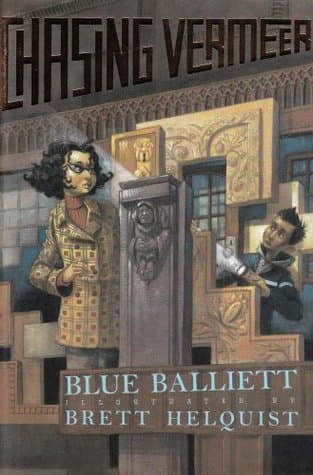
- Chasing Vermeer
Blue Balliett
3.7 (28k) average on GoodreadsChildren'sBoth "Click" and 'Chasing Vermeer' involve young protagonists uncovering clues to solve a complex mystery, often with an artistic or historical backdrop. Balliett's novel, however, excels in its intricate puzzle design and the seamless integration of visual elements within a single narrative, offering a more unified and immersive mystery-solving experience than the segmented approach of "Click."
- Harry Potter and the Sorcerer's Stone
J.K. Rowling
4.5 (7M) average on GoodreadsFantasyRescued from a miserable life under the stairs, an orphaned boy discovers he's a wizard destined for a magical school, where he uncovers a dangerous secret tied to the dark wizard who murdered his parents.
- The Hobbit, or There and Back Again
J.R.R. Tolkien
4.3 (2.9M) average on GoodreadsFantasyA comfort-loving hobbit named Bilbo Baggins is whisked away by a mischievous wizard and a band of dwarves on an unexpected journey to reclaim stolen treasure from a fearsome dragon, discovering courage and a magical ring along the way.





Enjoyed the summary?
A summary gives you the shape of the book. The book itself has the detail, the examples and the voice.
Find Click on AmazonAs an Amazon Associate, BookBrief earns from qualifying purchases. How we're funded