
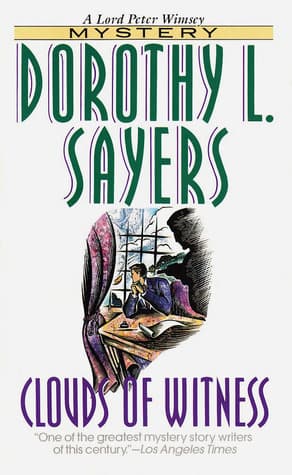
Synopsis
Covers the whole plot, including the ending.
- Difficulty
- Medium
- Pacing
- Moderate
- Mood
- Intriguing, Traditional, Witty, Suspenseful
- Read it if
- You enjoy classic British detective stories with an aristocratic flair, intricate plotting, and a touch of family drama.
- Skip it if
- You prefer fast-paced, modern thrillers or dislike detailed procedural mysteries with period dialogue.
Clouds of Witness Plot Summary
Covers the whole plot, including the ending.
The Riddlesdale Lodge Tragedy
Lord Peter Wimsey is invited to his brother Gerald's (the Duke of Denver) country estate, Riddlesdale Lodge, for a shooting party. Upon arrival, he finds Captain Denis Cathcart, engaged to Peter's sister, Lady Mary Wimsey, shot dead in the conservatory. Gerald, the Duke of Denver, is found holding a smoking pistol near the body, making him the immediate suspect. Gerald claims he found Cathcart already dead and picked up the gun in shock. Lady Mary is distressed and acts erratically. Lord Peter, despite his personal feelings, begins to observe details, knowing he must investigate to clear his brother's name.
A Brother's Arrest
Despite Gerald's claims of innocence, local police, led by Inspector Grimethorpe, gather enough circumstantial evidence to arrest the Duke of Denver for Cathcart's murder. The apparent motive is Cathcart's poor reputation and Gerald's disapproval of his engagement to Lady Mary. Lord Peter, convinced of his brother's innocence, decides to take over the investigation himself, to the police's annoyance. He brings his valet, Bunter, to help him, and they meticulously examine the crime scene and question staff and guests, including Lady Mary and Mrs. Grimethorpe.
The Vanishing Letter and Lady Mary's Flight
As Lord Peter investigates, he uncovers several puzzling details. A letter from Egypt, supposedly containing vital information about Cathcart, disappears from Cathcart's room. Lady Mary, acting distressed and suspicious, disappears from Riddlesdale Lodge, taking a train to London. Her flight further implicates her in the murder or suggests she knows more than she admits. Peter and Bunter follow her, realizing her sudden departure connects to the missing letter and secrets surrounding Cathcart's past. They suspect she is either hiding something or is in danger.
American Connections and a Secret Past
Peter's investigation reveals Captain Cathcart had a shady past, particularly in America. It emerges that Cathcart had previously married a wealthy American heiress named Harriet Vane (not the Harriet Vane from later novels). This marriage was kept secret, making Cathcart's motives for marrying Lady Mary suspect—possibly for her social standing and wealth. This discovery provides an alternative motive for Cathcart's murder, suggesting he was a bigamist and fortune hunter, creating enemies beyond the Wimsey family.
The French Connection and the American Heiress
Following Cathcart's past, Lord Peter travels to France, where he finds Cathcart's first wife, Harriet Vane. She confirms Cathcart's deceitful nature and details their troubled marriage and his financial schemes. She explains Cathcart had abandoned her and sought to marry Lady Mary for her family's prestige and potential wealth, as he was deeply in debt. This interview confirms Peter's understanding of Cathcart as a manipulative opportunist, providing more reason for someone to want him dead, and strengthens the case against his brother being the only one with a motive.
The Shot in the Dark
Back in England, Lord Peter continues his investigation, piecing together Cathcart's complex life. While examining the Riddlesdale Lodge grounds at night, an unseen assailant shoots at Peter. The bullet narrowly misses him, hitting a tree. This confirms the murderer is still at large, is desperate, and will eliminate anyone getting too close to the truth. It also puts Peter's own life in danger, adding urgency and personal risk to his pursuit of justice for his brother.
Unmasking the Imposter
Through diligent investigation and Bunter's photographic expertise, Peter makes a breakthrough. He realizes the man found dead at Riddlesdale Lodge was not the real Captain Denis Cathcart, but Antoine, a French con artist impersonating Cathcart. The real Captain Cathcart had died earlier in Egypt, and Antoine had assumed his identity to marry Lady Mary and gain access to the Wimsey fortune. This revelation completely reframes the case, as the victim's identity was misunderstood, and the murder motive shifts dramatically.
The Egyptian Letter and the Confession
The missing letter from Egypt, which Lady Mary had intercepted and hidden, contained photographic proof of the real Captain Cathcart's death and Antoine's impersonation. A friend of the real Cathcart sent it. Lady Mary, discovering the deception, confronted Antoine. In panic and rage, she shot him. Overwhelmed by guilt and fear, she confessed the truth to Peter. Her initial erratic behavior, flight, and the disappearance of the letter were all due to her desperate attempt to conceal her involvement and protect her family from scandal.
A Sister's Trial and a Brother's Sacrifice
With Lady Mary's confession, the Duke of Denver is released, but Lady Mary is now arrested and charged with murder. The scandal threatens to destroy the Wimsey family. Lord Peter, despite the emotional toll, dedicates himself to defending his sister. He works tirelessly with his legal team, including Sir Impey Biggs, to present the full story of Antoine's impersonation and Lady Mary's desperation. The trial is highly publicized, and Peter faces the immense challenge of proving his sister's actions were justifiable or at least mitigated by the deception and her emotional state.
Justice and Forgiveness
During the trial, Lord Peter meticulously presents evidence of Antoine's deceit and Lady Mary's emotional distress. The jury, swayed by the circumstances of the impersonation and Lady Mary's fragile state, acquits her. The Wimsey family is relieved, but the events leave a lasting impact. Lady Mary, deeply affected, eventually finds solace and recovery, largely due to Peter's unwavering support. The case, though personally devastating, solidifies Lord Peter's reputation as a brilliant, if unconventional, detective, willing to go to great lengths for his family.
Principal Figures
Lord Peter Wimsey
Protagonist
An aristocratic amateur detective with a sharp mind and a passion for justice.
Lord Peter Death Bredon Wimsey is a highly intelligent, witty, and somewhat eccentric English aristocrat. He possesses a keen analytical mind, an encyclopedic knowledge, and a remarkable ability to observe details. Despite his privileged background and dilettantish demeanor, he is deeply principled and driven by a strong sense of justice, especially when his family is involved. He often uses his wealth and connections to facilitate his investigations, but it is his intellect and dedication that truly solve the cases. He is loyal to his family, particularly his brother and sister.
Relationships: Duke of Denver (Gerald Wimsey) (Older brother, whom Peter fiercely defends.); Lady Mary Wimsey (Younger sister, whom Peter ultimately saves from a murder charge.); Bunter (Devoted valet and indispensable assistant.)
Duke of Denver (Gerald Wimsey)
Supporting
Lord Peter's older brother, initially accused of murder.
Gerald is the Duke of Denver, Lord Peter's older brother, and a conventional, somewhat unimaginative aristocrat. He is honorable but easily flustered and lacks his younger brother's intellectual agility. He is deeply devoted to his family and is protective of Lady Mary, but his disapproval of Captain Cathcart's character makes him a plausible, if innocent, suspect. His arrest and trial cause him immense distress and public humiliation, highlighting the fragility of even the most powerful positions when faced with a criminal investigation.
Relationships: Lord Peter Wimsey (Younger brother, his savior and defender.); Lady Mary Wimsey (Younger sister, whose actions indirectly led to his arrest.)
Lady Mary Wimsey
Supporting
Lord Peter's younger sister, engaged to the victim and later revealed as the killer.
Lady Mary is Lord Peter's younger sister, initially engaged to Captain Cathcart. She is portrayed as somewhat impetuous, emotionally volatile, and deeply distressed by the events. Her erratic behavior, including her flight from Riddlesdale Lodge and her attempts to conceal evidence, makes her a prime suspect. She is ultimately revealed to be the actual killer of the man she believed to be Cathcart, driven by a combination of shock, anger, and betrayal upon discovering his true identity as an imposter and bigamist. Her actions are born of desperation and a desire to protect her family's honor.
Relationships: Lord Peter Wimsey (Older brother, her steadfast defender and confidant.); Duke of Denver (Gerald Wimsey) (Older brother, whose good name she inadvertently jeopardized.); Captain Denis Cathcart/Antoine (Her fiancé, who was an imposter and whom she murdered.)
Bunter
Supporting
Lord Peter's loyal and highly competent valet, a master photographer.
Mervyn Bunter is Lord Peter Wimsey's impeccably efficient and utterly devoted valet. Far more than a mere servant, Bunter is an indispensable partner in Peter's investigations. He possesses a calm demeanor, meticulous attention to detail, and exceptional photographic skills, which prove crucial in documenting crime scenes and uncovering hidden clues. His quiet competence and unwavering loyalty provide a steady anchor for Peter, especially during the emotionally taxing investigation involving his family. Bunter often anticipates Peter's needs and thoughts, acting as a perfect foil and assistant.
Relationships: Lord Peter Wimsey (His employer and close confidant.)
Captain Denis Cathcart / Antoine
Victim/Antagonist
The murdered man, initially thought to be Captain Cathcart, but later revealed as an imposter.
The man found dead in the conservatory is initially identified as Captain Denis Cathcart, Lady Mary's fiancé. However, Lord Peter's investigation reveals him to be an imposter named Antoine, a French con artist. Antoine had assumed the identity of the real Captain Cathcart, who had died in Egypt, with the intention of marrying Lady Mary for her social connections and the Wimsey family's wealth. He is portrayed as a manipulative, bigamous fortune-hunter whose deceptive past ultimately leads to his demise. His true identity is a central mystery of the plot.
Relationships: Lady Mary Wimsey (His fiancée, whom he deceived and who ultimately killed him.)
Harriet Vane (Cathcart's first wife)
Supporting
The American heiress and 'Cathcart's' first, secret wife.
Harriet Vane is the American heiress whom the imposter 'Captain Cathcart' (Antoine) had secretly married previously. She is a key witness in Lord Peter's investigation, confirming Antoine's deceptive nature and bigamous intentions. Her testimony reveals the extent of his financial schemes and manipulative behavior, providing crucial background that helps to establish the victim's true character and the potential for others to have a motive for his death. She is a figure from Antoine's past who inadvertently helps to unravel the mystery of his true identity.
Relationships: Captain Denis Cathcart/Antoine (His first, secret wife.)
Sir Impey Biggs
Supporting
A brilliant and astute barrister who defends the Wimsey family.
Sir Impey Biggs is a renowned barrister, known for his sharp legal mind and formidable presence in court. He is brought in by the Wimsey family to defend the Duke of Denver and later Lady Mary. Biggs works closely with Lord Peter, utilizing Peter's investigative findings to construct a compelling defense. He is pragmatic and strategic, understanding the nuances of the law and human psychology, making him an invaluable ally in the family's fight for justice and acquittal. His legal expertise complements Peter's detective work.
Relationships: Lord Peter Wimsey (Collaborator and legal counsel.); Duke of Denver (Gerald Wimsey) (His client.); Lady Mary Wimsey (His client.)
Inspector Grimethorpe
Supporting
The local police inspector initially in charge of the murder investigation.
Inspector Grimethorpe is the local police officer assigned to the Cathcart murder case. He is competent within his conventional methods but somewhat limited by his inability to see beyond obvious conclusions. He quickly arrests the Duke of Denver based on circumstantial evidence, initially clashing with Lord Peter's unconventional investigative style. While not malicious, he represents the limitations of official police procedures compared to Peter's more intuitive and extensive approach. He is ultimately forced to defer to Peter's superior findings.
Relationships: Lord Peter Wimsey (Initially a professional rival, later an unwilling collaborator.)
Themes & Insights
Family Loyalty vs. Justice
This theme is central to the novel, as Lord Peter is torn between his deep loyalty to his brother and sister and his commitment to finding the truth. His investigation is driven by the desire to clear his brother's name, even when it leads to implicating his sister. The moral dilemma of protecting family at all costs versus serving justice is explored through Peter's internal conflict and his relentless pursuit of facts, no matter how painful. This is clear when he must expose Lady Mary's involvement to save Gerald, and then defend Mary against the law. The entire Wimsey family faces immense pressure, testing kinship bonds against public scrutiny and legal consequences.
“There are limits, even to the patience of a Wimsey, where a brother is concerned.”
Deception and Impersonation
The murder plot relies on deception and impersonation. The victim, initially believed to be Captain Cathcart, is revealed to be an imposter, Antoine, who assumed Cathcart's identity for financial gain and social climbing. This theme highlights how appearances can mislead and how a fabricated identity can manipulate others. The missing letter from Egypt and the true identity of the deceased are crucial elements that underscore the pervasive nature of deceit in the story, driving the murder and complicating the investigation. Unraveling this deception is key to solving the crime.
“The man was not Cathcart at all. He was an impostor, a French adventurer.”
The Burden of Aristocracy
The novel explores the pressures and vulnerabilities faced by the aristocracy. The Wimsey family, despite their wealth and social standing, is not immune to scandal, public humiliation, and the legal system. The Duke of Denver's arrest and Lady Mary's trial expose the family to intense scrutiny and potential ruin. Lord Peter, while using his aristocratic connections to aid his investigation, also feels the weight of his family's honor. The contrast between their privileged lifestyle and the real threat of criminal conviction shows that even the highest echelons of society can be brought low by personal failings and unforeseen circumstances. The family's public image is constantly at stake.
“The Duke of Denver in the dock! The thing was monstrous, unthinkable.”
The Nature of Guilt and Innocence
The narrative examines the shifting perceptions of guilt and innocence. Initially, the Duke of Denver seems guilty, only for Peter to prove his innocence. Later, Lady Mary, at first seen as a victim or a distressed witness, is revealed to be the actual perpetrator. However, her guilt is lessened by Cathcart's deception and her emotional distress. The novel questions what truly constitutes guilt when one is provoked by profound betrayal and fear, and how context can alter the moral judgment of an act. It explores the psychological impact of being accused and of committing a crime.
“It’s one thing to commit a murder, but quite another to prove it in cold blood.”
Plot Devices & Literary Techniques
The Red Herring
Elements that mislead the investigation and audience.
The most prominent red herring is the initial belief that the Duke of Denver is the murderer, based on his presence with the smoking gun and his known disapproval of Cathcart. Lady Mary's erratic behavior and flight also serve as a red herring, suggesting her guilt in a more direct way than the truth. These diversions effectively misdirect both the official police and the reader, building suspense and making the eventual reveal of Antoine's impersonation and Lady Mary's true involvement more shocking and impactful. They force Peter to look beyond the obvious.
The Missing Evidence (The Egyptian Letter)
A crucial piece of evidence that disappears, complicating the mystery.
The letter from Egypt, containing a photograph of the real Captain Cathcart and proof of his death, is a critical piece of missing evidence. Its disappearance and eventual recovery are central to unraveling the imposter plot. Lady Mary's interception and concealment of this letter initially obstruct the investigation but ultimately provide the key to understanding the victim's true identity and her motive. The search for this letter drives a significant portion of Peter's investigation and highlights the critical role of hidden information.
The Impersonation
The core deception that underpins the entire murder mystery.
The plot device of impersonation is fundamental to 'Clouds of Witness'. The victim's true identity as Antoine, an imposter posing as Captain Cathcart, is the central twist that redefines the entire crime. This deception changes the motive, the potential suspects, and the very nature of the murder. It allows for a layered mystery where the initial assumptions about the victim and the crime are entirely overturned, showcasing Sayers' skill in constructing complex and misleading narratives. It forces Peter to question everything he initially believes.
The Amateur Detective vs. Professional Police
The contrast between Lord Peter's methods and those of the official police force.
This device highlights the differences between Lord Peter Wimsey's unconventional, intuitive, and aristocratic approach to detection and the more rigid, procedure-bound methods of Inspector Grimethorpe and the official police. Peter's access to resources, his intellectual freedom, and his ability to see beyond the obvious allow him to uncover truths that elude the professionals. This contrast not only showcases Peter's brilliance but also critiques the limitations of formal law enforcement, especially when faced with a highly complex and aristocratic crime. It reinforces the trope of the genius amateur.
Clouds of Witness Quotes
“It is not wealth that matters, but the use to which it is put.”
“The public demands a certain amount of sensationalism, and if you don't provide it, they'll invent it.”
“There are only two kinds of women, the plain and the painted.”
“One can always tell a gentleman by his boots.”
“The greatest joy of all is to comprehend what is incomprehensible.”
“There's nothing so dangerous as a good woman thoroughly roused.”
“Facts are chiels that winna ding, and downa be disputed.”
“The only way to get rid of a temptation is to yield to it.”
“It's a great mistake to think you can explain everything.”
“Murder is a messy business, even when it's done by a gentleman.”
“One must always be prepared for the unexpected.”
“The law is a ass, a idiot.”
“There are some things in life that are more important than being right.”
“The truth is rarely pure and never simple.”
Quiz
10 questions on the plot and the characters. Each answer comes with a short explanation.
Question 1
Who is the victim found among the chrysanthemums at Riddlesdale Lodge?
- The Duke of Denver
- Denis Cathcart
- Lord Peter Wimsey
- Parker
Show answer
B. Denis Cathcart The victim is Denis Cathcart, who was engaged to Lady Mary Wimsey, making him Lord Peter's brother-in-law-to-be.
Question 2
Who is initially accused of Denis Cathcart's murder?
- Lady Mary Wimsey
- The Duke of Denver
- Lord Peter Wimsey
- Mr. Grimethorpe
Show answer
B. The Duke of Denver Lord Peter's brother, the Duke of Denver, is the one initially accused of the murder, as he was found with the body.
Question 3
What is the name of the Wimsey family retreat where the murder takes place?
- Harrogate Hall
- Fentonswood Manor
- Riddlesdale Lodge
- Tallboys
Show answer
C. Riddlesdale Lodge The murder occurs at Riddlesdale Lodge, described as a rustic old Wimsey family retreat.
Question 4
What significant item vanishes mysteriously from the scene, complicating the investigation?
- A diamond necklace
- A will
- A midnight letter from Egypt
- A valuable painting
Show answer
C. A midnight letter from Egypt A mysterious vanishing midnight letter from Egypt is mentioned as one of the twists of fate complicating the case.
Question 5
What is Lord Peter Wimsey's profession or primary role in the story?
- A police inspector
- A barrister
- An amateur detective
- A journalist
Show answer
C. An amateur detective Lord Peter Wimsey is known as an amateur detective, using his intelligence and resources to solve complex crimes.
Question 6
What is the relationship between Denis Cathcart and Lady Mary Wimsey?
- They are siblings
- They are engaged to be married
- They are distant cousins
- They are business partners
Show answer
B. They are engaged to be married Denis Cathcart is described as Lord Peter's brother-in-law-to-be, indicating he was engaged to Lady Mary Wimsey.
Question 7
What object is found near the victim that indicates the murder weapon?
- A hunting knife
- A garden spade
- A revolver
- A heavy candlestick
Show answer
C. A revolver The plot involves a bullet destined for a Wimsey, implying a firearm, and the Duke is found holding a revolver.
Question 8
What is the primary motivation for Lord Peter Wimsey to investigate this particular murder?
- He is hired by Scotland Yard
- He seeks personal fame and glory
- To clear his brother's name and save the family honor
- He has a pre-existing feud with the victim
Show answer
C. To clear his brother's name and save the family honor Lord Peter's brother is the accused murderer, giving him a strong personal motivation to investigate and clear his family's name.
Question 9
What is the significance of the victim wearing slippers and a dinner jacket?
- It suggests he was about to attend a formal dinner.
- It indicates he was comfortable and at home, making his presence outside unusual.
- It points to a struggle where his shoes were lost.
- It is a red herring to mislead investigators.
Show answer
B. It indicates he was comfortable and at home, making his presence outside unusual. The description implies an incongruity: formal wear (dinner jacket) but informal footwear (slippers), suggesting he was not dressed for an outdoor excursion, making his death among the chrysanthemums more mysterious.
Question 10
Beyond the murder itself, what wider societal theme does the story touch upon regarding the Wimsey family's predicament?
- The decline of the British aristocracy
- The conflict between tradition and modernity
- The pressure of public opinion and the scandal threatening a noble family's reputation
- The impact of post-war disillusionment on the upper classes
Show answer
C. The pressure of public opinion and the scandal threatening a noble family's reputation The accusation against the Duke of Denver and the involvement of the Wimsey family would undoubtedly bring significant public scandal and pressure, a common theme in such historical mysteries involving the nobility.
Clouds of Witness FAQ
What is the central mystery in 'Clouds of Witness'?
The central mystery revolves around the murder of Captain Cathcart, who is found shot dead among the chrysanthemums at Riddlesdale Lodge. Lord Peter Wimsey's elder brother, Gerald, the Duke of Denver, is arrested and accused of the murder, leading Peter to investigate to clear his brother's name.
Who are the key members of the Wimsey family involved in the plot?
Lord Peter Wimsey is the primary investigator. His elder brother, Gerald, the Duke of Denver, is the accused. Their sister, Lady Mary Wimsey, is engaged to the victim, Captain Cathcart, and her emotional state and actions become significant. Their mother, the Dowager Duchess, provides some background and support.
What is the setting for the initial murder and subsequent investigation?
The initial murder takes place at Riddlesdale Lodge, a Wimsey family hunting retreat in the English countryside. The investigation then broadens, moving between the lodge, London, and eventually taking Lord Peter to Paris and even to America in pursuit of clues and witnesses.
What role does Lady Mary Wimsey play in the unfolding events?
Lady Mary is the fiancée of the murdered Captain Cathcart, making her a central figure of tragedy and suspicion. Her strange behavior, including an attempt to flee with a suitcase and a prior clandestine meeting, makes her an initial suspect and adds complexity to Peter's investigation.
What is the significance of the 'midnight letter from Egypt'?
The 'midnight letter from Egypt' is a crucial piece of evidence, or rather its disappearance is. It was a letter Gerald received from Cathcart shortly before the murder, and its contents are believed to hold a vital clue. Its mysterious vanishing act complicates the case and suggests deliberate obstruction.
How does the character of Inspector Sugg contribute to the narrative?
Inspector Sugg is the official police investigator, representing the methodical, by-the-book approach. He initially focuses on Gerald as the prime suspect due to the circumstantial evidence. His interactions with Peter highlight the contrast between amateur and professional detection, often with Sugg grudgingly acknowledging Peter's insights.
What is the importance of the American connection to the case?
The American connection is vital, revealing Cathcart's true identity and past. Lord Peter travels to America to uncover Cathcart's history, discovering a previous marriage and a fraudulent past, which fundamentally changes the understanding of his character and motives for others.
What is the true identity and background of Captain Cathcart?
Captain Cathcart is revealed to be an imposter, a bigamist, and a blackmailer named Denis Cathcart. He had previously married an American woman, Agnes, and was attempting to secure a wealthy second marriage to Lady Mary while also blackmailing Gerald over a past indiscretion.
How does Lord Peter's relationship with his family influence his detective work?
Lord Peter's deep loyalty to his family, particularly his brother Gerald and sister Mary, is his primary motivation. This personal stake adds urgency and emotional depth to his investigation, sometimes making him more reckless but also more determined to uncover the truth, regardless of the consequences to the family name.
What psychological impact does the accusation have on Gerald, the Duke of Denver?
Gerald, the Duke of Denver, is deeply affected by the accusation. He becomes withdrawn, stoic, and almost resigned to his fate, refusing to fully explain his actions to protect others. This psychological burden highlights his sense of duty and his internal struggle between family honor and self-preservation.
How does Lady Mary's emotional state evolve throughout the investigation?
Lady Mary experiences a tumultuous emotional journey, from grief and shock to fear and desperation. Her initial attempts to flee and her later confession of her secret meetings with Cathcart reveal her vulnerability and the extent to which she was manipulated, ultimately leading to a more resolved, albeit scarred, state.
What does the 'bullet destined for one very special Wimsey' signify psychologically?
The bullet destined for Peter, fired by the true murderer, signifies the extreme danger he places himself in and the personal risk involved in uncovering the truth. Psychologically, it reinforces his courage and unwavering commitment to justice, even when his own life is on the line, solidifying his role as a heroic figure.
Is Gerald's initial silence about the letter and his actions justifiable?
Gerald's initial silence is debatable. He withheld information to protect Lady Mary and to avoid exposing a past indiscretion (likely blackmail by Cathcart), believing he was acting honorably. However, this silence severely hampered his defense and almost led to his conviction, raising questions about the efficacy of such 'honorable' reticence.
How does the novel comment on the social expectations and pressures on the aristocracy?
'Clouds of Witness' subtly critiques the social expectations placed on the aristocracy, particularly the pressure to maintain appearances and protect the family name at all costs. Gerald's silence, Mary's entanglement with Cathcart, and the general reluctance to air dirty laundry all reflect the suffocating nature of these societal demands.
What is the ultimate resolution of Captain Cathcart's murder?
Cathcart's murder is ultimately attributed to his American wife, Agnes, who tracked him down to Riddlesdale Lodge. Driven by despair and revenge over his bigamy and abandonment, she shot him. She then attempts to kill Peter before committing suicide, bringing a tragic end to the complex web of deceit.
What moral dilemmas does Lord Peter face during his investigation?
Lord Peter faces several moral dilemmas, primarily balancing his loyalty to his family with his pursuit of objective truth. He must decide how far to push his brother and sister for answers, knowing their admissions could further damage their reputations, and whether to expose unpleasant truths about the victim if it means clearing his brother.
How does the ending, with Agnes's actions, reflect on the theme of justice?
The ending, with Agnes's actions, presents a complex view of justice. While Cathcart's true character is exposed, his killer is not brought to legal justice but rather exacts a personal, tragic vengeance. This suggests that some wrongs are beyond the reach of the law and are met with a more primal, if devastating, form of retribution.
What is the significance of the title 'Clouds of Witness'?
The title 'Clouds of Witness' is drawn from Hebrews 12:1, referring to being surrounded by a great cloud of witnesses. It signifies the numerous individuals who observe, or are involved in, the events of the murder, each with their own perspective, biases, and partial truths, creating a complex and often misleading picture for Peter to decipher.
About the author
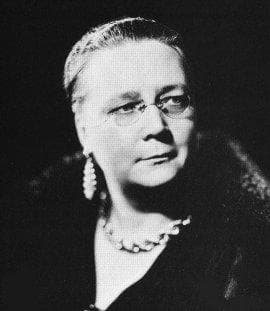
Dorothy Leigh Sayers was an English crime writer and poet. She was also a student of classical and modern languages.
Similar books
- THE MURDER OF ROGER ACKROYD
Agatha Christie
4.2 (153k) average on GoodreadsThrillerClassic Golden Age mystery with a clever plot and a surprising twist.
- Gaudy Night
Dorothy L. Sayers
4.2 (23k) average on GoodreadsHistorical FictionAnother Lord Peter Wimsey novel, showcasing Sayers's intricate plotting and character development.
- To Kill a Mockingbird
Harper Lee
4.3 (4.5M) average on GoodreadsHistorical FictionIn the 1930s Jim Crow South, Harper Lee writes about racial injustice, moral growth, and the quiet courage of a lawyer father, Atticus Finch, as seen through his young daughter's eyes.
- The Great Gatsby
F. Scott Fitzgerald
3.9 (3.8M) average on GoodreadsHistorical FictionIn the opulent Roaring Twenties, a mysterious millionaire's lavish parties hide his desperate, tragic pursuit of a lost love, exposing the emptiness within the American Dream.
- Pride and Prejudice
Jane Austen
4.3 (3M) average on GoodreadsHistorical FictionIn a society focused on status and money, Elizabeth Bennet navigates love and pride, challenging Mr. Darcy and social expectations to find true affection.
- Angels & Demons
Dan Brown
3.9 (2.7M) average on GoodreadsThrillerA Harvard symbologist races through Rome's ancient sites, deciphering cryptic clues to unmask the Illuminati and stop a vengeful plot to destroy the Vatican with a stolen antimatter weapon.




Enjoyed the summary?
A summary gives you the shape of the book. The book itself has the detail, the examples and the voice.
Find Clouds of Witness on AmazonAs an Amazon Associate, BookBrief earns from qualifying purchases. How we're funded