
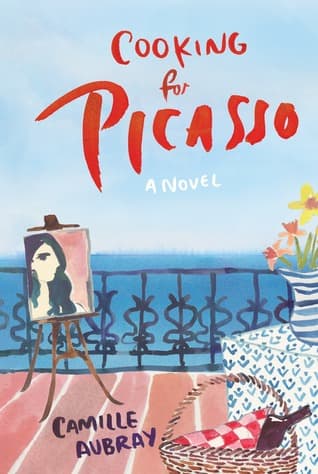
Synopsis
Covers the whole plot, including the ending.
- Difficulty
- Easy
- Pacing
- Moderate
- Mood
- Atmospheric, Romantic, Whimsical, Reflective
- Read it if
- You enjoy historical fiction set in the glamorous French Riviera, dual timelines, and stories that blend art, food, romance, and mystery.
- Skip it if
- You prefer fast-paced thrillers or dislike stories with a strong focus on art and culinary details.
Cooking for Picasso Plot Summary
Covers the whole plot, including the ending.
A Mysterious Guest Arrives in Juan-les-Pins (1936)
In the spring of 1936, seventeen-year-old Ondine, a talented cook in her family's Café Paradis in Juan-les-Pins, France, is recovering from a heartbreak. Her family struggles financially, and the off-season brings few customers. A mysterious new patron, known only as 'Monsieur P,' rents a villa nearby and asks for his lunch delivered daily, cooked by Ondine, and served discreetly, as he wants to remain anonymous. Ondine's mother, Madame Faurie, at first unsure, agrees because of the generous payment. Ondine begins her daily deliveries, curious and slightly intimidated by the reclusive artist, who she soon realizes is Pablo Picasso, seeking peace and ideas.
Ondine's Culinary and Artistic Awakening
Ondine’s daily interactions with Picasso, often through another person, greatly affect her. She carefully plans and makes his meals, trying to surprise and please him, finding her own creative voice through cooking. Picasso, watching her from his villa window, sometimes leaves her small drawings or notes, recognizing her talent. Their relationship, though never romantic, becomes a deep artistic exchange. Ondine feels a growing bond with the artist, who sees her not just as a cook but as an artist, encouraging her to trust her instincts and move past old rules, like his own artistic beliefs.
Picasso's Artistic and Personal Turmoil
During his stay in Juan-les-Pins, Picasso is at a turning point. He struggles with his art, feeling stuck, and dealing with his complex personal life, including his estranged wife Olga Khokhlova, his mistress Marie-Thérèse Walter (who is pregnant with their daughter Maya), and Dora Maar. The growing tensions in Europe, especially the Spanish Civil War, also worry him. He uses his time in the quiet villa to think, sketch, and find new ideas, often drawing and painting the local area and the people he sees, including subtle images of Ondine and her food.
The Unveiling of a Painting and a Secret
As Picasso prepares to leave Juan-les-Pins, he invites Ondine to his villa for a final meal, where he shows a large painting inspired by his time there. The painting, though abstract, has parts Ondine recognizes from her cooking and the local area, strengthening her feeling of connection to his art. He gives her a small, unsigned sketch. This meeting changes Ondine, helping her pursue her cooking goals with new confidence. Picasso leaves, giving Ondine a deep experience and a secret memory that will shape her future.
Present Day: Céline Discovers Her Grandmother's Past
In present-day New York, Hollywood makeup artist Céline is home for the holidays with her mother, Julie. Julie says that Grandmother Ondine, who recently passed away, once cooked for Picasso. Julie's mysterious stories and the hint of more family secrets lead Céline to travel to Juan-les-Pins to take a cooking class at a hotel, following a hidden instruction from her mother. Céline, feeling lost in her own life and career, starts this journey, hoping to connect with her grandmother’s past and perhaps find direction for herself.
Céline's Culinary Journey and New Acquaintances
When she arrives in Juan-les-Pins, Céline checks into the Hotel du Cap-Eden-Roc, where she joins a cooking class taught by Chef Antoine. Her classmates include an American art dealer, David, and a wealthy Frenchwoman, Madame Dupont. As Céline learns classic Provençal cuisine, she starts to put together parts of her grandmother's story, finding similarities between Ondine's cooking journey and her own growing artistic interests, all while dealing with her own work and personal uncertainties.
Unraveling the Mystery of the Lost Picasso
Céline learns from her mother that Ondine might have had a valuable Picasso painting, perhaps the one Picasso painted during his 1936 stay. David, an art expert, becomes interested in this and offers to help Céline investigate. Together, they look into Ondine's past, visiting local archives, interviewing old friends, and exploring the villa Picasso rented. Their search is made harder by Ondine's secretive nature and the time that has passed, but they find clues suggesting that a significant artwork, possibly given to Ondine, might exist, leading them on a search.
The Auction and the Competing Claimants
News of a possible Picasso painting connected to Ondine's family starts to spread, attracting the attention of various people, including an art collector and a representative from the Picasso estate. It is revealed that Ondine's family had always known about the painting but kept it hidden because of its controversial nature and its potential to change their lives. An unexpected auction is arranged for a painting found among Ondine's belongings. Céline, with David's help, deals with the art world, trying to understand the painting's true history and its importance to her family.
The Truth Behind Ondine's Painting
At the auction, the painting is shown to be a magnificent work, but its authenticity as a Picasso is questioned. Through dramatic discoveries, including a letter from Ondine and expert analysis, it is found that while Picasso influenced the painting, a large part, especially the food elements, was painted by Ondine herself, showing her own artistic talent. The painting is a collaboration, a sign of their unique artistic exchange. This discovery shifts the focus from money to Ondine's artistic and emotional legacy.
Embracing Her Own Future
With the truth about the painting known, Céline feels a deep connection to her grandmother. She realizes that Ondine’s journey was not just about cooking for a genius, but about finding her own voice and passion. Inspired by Ondine's courage and creativity, Céline decides to pursue her own artistic goals beyond makeup artistry. Her relationship with David grows into romance. Céline chooses to stay in Juan-les-Pins for a while, embracing the beauty and inspiration of the Côte d'Azur, ready to make her own path, continuing her grandmother's legacy of art, love, and joy.
Cooking for Picasso Characters
Ondine Faurie
Protagonist (past timeline)
Talented young chef who cooks for Picasso and discovers her own artistic voice.
Ondine is a spirited and passionate seventeen-year-old living in Juan-les-Pins in 1936. She works in her family's Café Paradis, where her natural talent for cooking shines. Initially heartbroken by a failed romance, she finds solace and purpose in creating exquisite meals for the mysterious 'Monsieur P,' who turns out to be Pablo Picasso. Ondine is observant, intuitive, and possesses a quiet strength, which allows her to connect with Picasso on an artistic level. She yearns for independence and creative expression beyond the confines of her family's expectations, and her encounter with Picasso profoundly influences her life's trajectory, leading her to embrace her own culinary artistry.
Relationships: Pablo Picasso (Artistic muse and mentor, complex platonic connection); Madame Faurie (Mother, initially strict but supportive); Céline (Granddaughter, whose journey is inspired by Ondine's past)
Céline
Protagonist (present timeline)
Hollywood makeup artist who travels to France to uncover her grandmother's past.
Céline is a modern-day Hollywood makeup artist feeling unfulfilled and at a crossroads in her career and personal life. She is intelligent, curious, and somewhat adrift, seeking meaning beyond the superficiality of her current profession. Tasked by her mother, Julie, to travel to Juan-les-Pins and attend a cooking class, Céline embarks on a journey of self-discovery. She is deeply affected by her grandmother Ondine's story, which resonates with her own artistic yearnings. Her investigation into the rumored Picasso painting leads her to embrace her own creative potential and find clarity about her future.
Relationships: Ondine Faurie (Grandmother, whose story inspires Céline); Julie (Mother, who guides Céline to uncover family secrets); David (Love interest and fellow art enthusiast)
Pablo Picasso
Supporting/Historical Figure
Iconic artist seeking inspiration and solitude during a pivotal period in his life.
Picasso, in 1936, is depicted as a complex, enigmatic figure, grappling with personal and artistic turmoil. He is at a crossroads, seeking refuge from his complicated romantic life and the looming political instability in Europe. He is observant, demanding, and recognizes artistic talent in others, particularly in Ondine's cooking. His interactions with Ondine, though minimal, are profound, as he subtly encourages her creativity. He sees art in everything, from the local landscape to the food she prepares, and his time in Juan-les-Pins is a period of significant artistic reflection and output, leading to the creation of important works.
Relationships: Ondine Faurie (Artistic muse and inspiration); Marie-Thérèse Walter (Mistress, mother of his child (mentioned)); Dora Maar (Emerging muse/lover (mentioned))
Julie
Supporting
Céline's mother, who holds the key to family secrets about Ondine and Picasso.
Julie is Céline's mother, a practical and somewhat guarded woman who, after her mother Ondine's death, initiates Céline's journey to Juan-les-Pins. She possesses fragments of Ondine's past and hints at the existence of a Picasso painting, guiding Céline without revealing all the details upfront. Julie's motivations are complex; she wants Céline to connect with her heritage and understand the depth of Ondine's story, potentially to help Céline find her own path. She represents the link between the past and present, facilitating the unraveling of the family mystery.
Relationships: Ondine Faurie (Mother, whose legacy Julie helps uncover); Céline (Daughter, whom she guides on a journey of discovery)
David
Supporting
Charming American art dealer and Céline's love interest.
David is an American art dealer whom Céline meets during her cooking class in Juan-les-Pins. He is charming, knowledgeable about art, and quickly becomes intrigued by Céline's family story and the potential existence of a lost Picasso painting. David is a supportive and encouraging presence in Céline's life, helping her navigate the complex world of art and authenticity. His expertise is crucial in the investigation, and his growing romantic connection with Céline adds another layer to her journey of self-discovery. He represents an outside perspective that helps Céline see the value and significance of her grandmother's story.
Relationships: Céline (Love interest, investigative partner); Ondine Faurie (Subject of his art expertise)
Madame Faurie
Supporting
Ondine's mother and co-owner of Café Paradis.
Madame Faurie is Ondine's mother, a hardworking and traditional woman who runs Café Paradis with her husband. She is initially cautious and practical, concerned with the family's financial stability and maintaining a good reputation. While she values tradition and discipline in the kitchen, she eventually recognizes Ondine's extraordinary talent and allows her to cook for Picasso, despite her initial reservations. She represents the generational expectations and constraints that Ondine must navigate, but also provides a foundation of love and support.
Relationships: Ondine Faurie (Daughter, whom she guides and eventually supports); Monsieur Faurie (Husband, co-owner of the café)
Chef Antoine
Supporting
Renowned chef who teaches Céline's cooking class.
Chef Antoine is the demanding but ultimately inspiring chef who leads the cooking class Céline attends in Juan-les-Pins. He is a master of Provençal cuisine, passionate about fresh ingredients and traditional techniques. Through his rigorous instruction, he not only teaches Céline culinary skills but also instills in her a deeper appreciation for the art of cooking and the importance of creativity and precision. He serves as a mentor figure, helping Céline connect with the spirit of culinary artistry that her grandmother Ondine embodied.
Relationships: Céline (Mentor/teacher); Other cooking students (Instructor)
Madame Dupont
Supporting
Eccentric, wealthy Frenchwoman and fellow cooking student.
Madame Dupont is one of Céline's fellow students in Chef Antoine's cooking class. She is a wealthy, somewhat eccentric Frenchwoman with a strong personality and a keen interest in both food and local gossip. Her presence adds humor and a touch of local flavor to Céline's experience. She provides Céline with insights into French culture and society, and her observations sometimes offer subtle clues or perspectives that aid Céline in her investigation into Ondine's past.
Relationships: Céline (Fellow student, casual acquaintance); Chef Antoine (Student)
Cooking for Picasso Themes
Identity and Self-Discovery Through Art and Cuisine
Both Ondine and Céline start journeys of self-discovery, finding their true selves through their artistic expressions. Ondine, at first defined by her family's café, finds her unique cooking style and artistic talent while cooking for Picasso, which helps her follow her own path. Céline, feeling unfulfilled in her makeup artistry career, finds inspiration and direction by looking into her grandmother's past and using her own creative potential, finding her passion beyond her first job. The book shows how creative work can lead to personal growth and self-awareness.
“She was no longer just a cook; she was an artist, creating edible masterpieces for a genius who saw the art in everything.”
The Intertwined Nature of Art and Life
The novel clearly shows how art, in all its forms, is deeply connected with personal experience, relationships, and society. Picasso's art directly shows his turbulent personal life and the coming political worries of 1936. Similarly, Ondine's cooking changes from just food to an expressive art form, influenced by her feelings and her connection with Picasso. In the present day, Céline's understanding of art, both fine art and cooking, helps her understand her family's history and her place in it, showing that art is not separate from life but a part of human experience.
“For him, art and women were always entwined. For her, food was her language, her canvas, her solace.”
Legacy and Family Secrets
The story is driven by the discovery of a family secret – the true story of Ondine's connection to Picasso and the existence of a mysterious painting. This secret, passed down through generations, greatly affects Céline's present-day journey. The novel explores how family histories, both celebrated and hidden, shape later generations. Céline's search to understand her grandmother's past is not just about a painting, but about understanding her own background and finding a sense of belonging. The legacy is not just about a famous artist, but about Ondine's own unrecognized talent and courage.
“Some stories, like some paintings, were meant to be discovered slowly, layer by layer, revealing truths only when the time was right.”
The Power of Place and Inspiration
The French Riviera, especially Juan-les-Pins, inspires both Picasso and Ondine, and later Céline. In 1936, the calm beauty of the Côte d'Azur gives Picasso the quiet and visual ideas he needs to overcome his creative block. For Ondine, the local ingredients and the lively atmosphere fuel her cooking imagination. In the present day, Céline's return to this beautiful place allows her to connect with her heritage, restart her own creativity, and find peace and direction. The setting is not just a background but an active force in the characters' artistic and personal changes.
“The light, the sea, the scent of pine and jasmine – it seeped into your soul here, demanding to be painted, to be tasted, to be lived.”
Breaking Free from Expectations
Both Ondine and Céline deal with what society and family expect. Ondine, as a young woman in 1936, is expected to marry and run the family café, but her meeting with Picasso awakens a desire for artistic freedom and a life beyond traditional roles. She secretly develops her talent and leaves her hometown to pursue her cooking goals. Céline, in the present, feels the pressure of a successful but unfulfilling career in Hollywood. Her journey to uncover Ondine's story helps her challenge her own expectations and those placed upon her, allowing her to make a new, more authentic path in her life and career.
“She had learned from him that to be an artist, you had to break the rules, even if they were your own.”
Plot Devices & Literary Techniques
Dual Timeline Narrative
Alternating chapters between 1936 and the present day.
The novel employs a dual timeline structure, weaving together Ondine's story in 1936 Juan-les-Pins with Céline's present-day journey to the same location. This device allows for a slow reveal of the central mystery surrounding Ondine and Picasso, building suspense. It also creates thematic parallels between the two women's lives, highlighting their shared struggles with identity, creativity, and love across generations. The past informs the present, and Céline's discoveries shed new light on Ondine's experiences, enriching the overall narrative and demonstrating the enduring impact of legacy.
The 'Lost' Painting
A rumored Picasso painting serves as the central mystery and catalyst for the plot.
The idea of a 'lost' or hidden Picasso painting, possibly gifted to Ondine, acts as the primary plot driver for Céline's present-day investigation. This device creates a compelling mystery that propels Céline's journey to France and her interactions with various characters. The painting symbolizes the unacknowledged artistic legacy of Ondine, the complex relationship between art and value, and the secrets held within families. Its eventual revelation as a collaborative work between Picasso and Ondine provides a satisfying resolution to the mystery and a profound thematic statement about shared creativity.
Culinary Artistry as Metaphor
Cooking is used to symbolize creativity, passion, and personal expression.
Throughout the novel, cooking is elevated beyond mere sustenance to a form of high art and personal expression. Ondine's meticulous meal preparation for Picasso is treated as a creative act, mirroring his painting. Her culinary skills are a metaphor for her artistic talent and her burgeoning identity. In the present, Céline's participation in a cooking class helps her reconnect with her own creative impulses and understand her grandmother's artistic spirit. The specific ingredients, techniques, and dishes described serve to ground the narrative in sensory detail while also illustrating deeper themes of passion, dedication, and the joy of creation.
Historical Figures and Fictional Characters
Integration of real historical figures (Picasso) with fictional characters (Ondine, Céline).
The novel skillfully blends historical fact with fiction by placing the fictional character Ondine in an intimate, albeit brief, relationship with the real-life Pablo Picasso during a documented period of his life. This allows the author to explore the artist's personal side and the impact he might have had on an ordinary individual, while also lending authenticity to the historical setting. The interaction between the known historical figure and the imagined character creates a compelling narrative, blurring the lines between what is known and what could have been, and inviting readers to imagine the untold stories behind famous lives.
Cooking for Picasso Quotes
“Art is not a thing, it is a way.”
“Every secret comes with a cost. The trick is knowing if the truth is worth the price.”
“Love, like a good recipe, requires the right ingredients and a touch of magic.”
“The greatest masterpieces are often born from the simplest of inspirations.”
“To truly see, one must look beyond the surface.”
“Sometimes the most extraordinary things happen in the most ordinary places.”
“Food is more than sustenance; it is a language of love, memory, and culture.”
“Creativity is not about perfection, but about passion.”
“History is not just dates and names; it's the stories of people, their desires, and their secrets.”
“The past is never truly gone; it echoes in the present, shaping who we are.”
“A good meal, like a good painting, should nourish the soul as well as the body.”
“Even the most celebrated artists have their insecurities, their doubts, their human moments.”
“Sometimes, the most profound revelations come from the quietest observations.”
“To truly live is to embrace the unexpected, to let life surprise you.”
Quiz
10 questions on the plot and the characters. Each answer comes with a short explanation.
Question 1
In what French Riviera village does seventeen-year-old Ondine work at her family's Café Paradis?
- Cannes
- Nice
- Juan-les-Pins
- Saint-Tropez
Show answer
C. Juan-les-Pins The story explicitly states that Ondine cooks with her mother in their family-owned Café Paradis in the lovely seaside village of Juan-les-Pins.
Question 2
What is the primary reason Pablo Picasso wishes to remain incognito in Juan-les-Pins?
- He is hiding from the press after a scandal.
- He is at a momentous crossroads in his personal and professional life.
- He is secretly working on a new art movement and doesn't want distractions.
- He is avoiding a specific woman he had a previous affair with.
Show answer
B. He is at a momentous crossroads in his personal and professional life. The book states that Picasso is 'at a momentous crossroads in his personal and professional life' during his time in Juan-les-Pins, which is why he seeks privacy.
Question 3
Who is Céline's grandmother, the character who cooked for Picasso?
- Julie
- Ondine
- Colette
- Margot
Show answer
B. Ondine The synopsis clearly states that Céline learns 'Grandmother Ondine once cooked for Picasso'.
Question 4
What is Céline's profession in New York before she embarks on her trip to the Côte d’Azur?
- Chef
- Art restorer
- Hollywood makeup artist
- Journalist
Show answer
C. Hollywood makeup artist Céline is described as 'a Hollywood makeup artist who’s come home for the holidays' at the beginning of her modern-day storyline.
Question 5
What prompts Céline to travel to the town where Ondine and Picasso first met?
- She inherits a villa there from Ondine.
- She is pursuing a new job opportunity in the South of France.
- Her mother, Julie, makes a request based on enigmatic stories and family secrets.
- She wants to attend an art exhibition featuring Picasso's work from that period.
Show answer
C. Her mother, Julie, makes a request based on enigmatic stories and family secrets. Céline 'carries out Julie’s wishes and embarks on a voyage to the very town where Ondine and Picasso first met,' prompted by her mother's mysterious stories.
Question 6
Which of the following themes is NOT explicitly mentioned as being explored in 'Cooking for Picasso'?
- The powers of trust and money
- The challenges of space travel
- Art and creativity
- The pursuit of love and joie de vivre
Show answer
B. The challenges of space travel The summary lists 'trust, money, art, and creativity' and 'love, success, and joie de vivre' as themes, but space travel is entirely unrelated to the book's premise.
Question 7
What activity does Céline participate in at her hotel in the Côte d’Azur that helps her discover truths about art, culture, and cuisine?
- An intense painting workshop
- A rigorous cooking class
- A historical literature seminar
- A local archaeological dig
Show answer
B. A rigorous cooking class Céline discovers truths 'with the help of several eccentric fellow guests attending a rigorous cooking class at her hotel'.
Question 8
How does Ondine's encounter with Picasso affect her life?
- It leads her to abandon cooking and become an artist's muse.
- It inspires her to open a chain of Michelin-starred restaurants.
- It continues to affect her life for many decades onward as she pursues her own passions.
- She quickly forgets about it, as it was a brief, insignificant interlude.
Show answer
C. It continues to affect her life for many decades onward as she pursues her own passions. The book states that 'Her encounter with Picasso will continue to affect her life for many decades onward, as the great artist and the talented young chef each pursue their own passions and destiny.'
Question 9
What is Ondine's emotional state when she first encounters Picasso, according to the description?
- Content and fulfilled with her family life.
- Chafing under her family’s authority and nursing a broken heart.
- Excited about a new romantic prospect.
- Overwhelmed by her responsibilities at the café.
Show answer
B. Chafing under her family’s authority and nursing a broken heart. Ondine is described as 'spirited... chafing under her family’s authority and nursing a broken heart,' indicating her emotional state at that time.
Question 10
The novel is described as being 'inspired by a little-known interlude in the artist’s life'. What does this imply about the historical accuracy of the entire narrative?
- Every detail and character in the book is historically factual.
- The central premise about Picasso's time in Juan-les-Pins is true, but many characters and events are fictionalized.
- Picasso never actually visited Juan-les-Pins, and the entire story is pure fiction.
- It's a biography of Picasso, with very little creative license taken.
Show answer
B. The central premise about Picasso's time in Juan-les-Pins is true, but many characters and events are fictionalized. As 'Historical Fiction' inspired by a 'little-known interlude,' it suggests a blend of historical fact (Picasso's presence) with fictionalized characters (Ondine) and events to create a compelling story. The description also mentions 'an array of both fictional characters and the French Riviera’s most famous historical residents'.
Cooking for Picasso FAQ
What is 'Cooking for Picasso' about?
'Cooking for Picasso' weaves together two timelines: 1936 Juan-les-Pins, where 17-year-old Ondine cooks for a mysterious, incognito Pablo Picasso, and present-day New York and the French Riviera, where Hollywood makeup artist Céline uncovers family secrets about her grandmother Ondine's encounter with the famous artist. It explores themes of art, creativity, love, and destiny through the eyes of two generations of women.
Why should I read 'Cooking for Picasso'?
You should read 'Cooking for Picasso' for its captivating blend of historical fiction, romance, and mystery, set against the beautiful backdrop of the French Riviera. It offers a unique perspective on a little-known period in Picasso's life and delves into the intertwining passions of art, food, and love, appealing to readers who enjoy rich character development and evocative settings.
What is the background/setting of 'Cooking for Picasso'?
The novel is primarily set in the glamorous French Riviera, specifically the seaside village of Juan-les-Pins. The 1936 storyline takes place during the off-season, capturing the quiet charm of the region as Ondine's family runs their Café Paradis. The present-day narrative sees Céline returning to this same lush, heady atmosphere, exploring its culture, cuisine, and history.
What are the most memorable quotes?
While specific quotes aren't provided in the summary, the book is described as 'touching, delectable, and wise,' likely featuring memorable lines about the powers of trust, money, art, and creativity. The narrative promises insights into the choices people make 'as they seek a path toward love, success, and joie de vivre.'
What writing style does the author use?
Camille Aubray employs a captivating and evocative writing style, blending historical detail with emotional depth. The prose is likely to be atmospheric, bringing to life both the 1930s French Riviera and the contemporary search for identity, appealing to readers who enjoy authors like Paula McLain and Melanie Benjamin known for their vivid historical narratives.
What minor details add significant meaning?
The detail of Picasso traveling 'under a different name' and wishing to remain 'incognito' in 1936 adds significant meaning, highlighting a moment of personal and professional crossroads for the artist. This secrecy not only fuels the mystery but also allows for a more intimate and less guarded interaction with Ondine, influencing her life's trajectory profoundly.
What are some subtle foreshadowing moments?
Ondine's 'chafing under her family's authority and nursing a broken heart' subtly foreshadows her receptiveness to Picasso's unconventional presence and her readiness to embrace her own talents and appetites, suggesting her future independence and the profound impact this encounter will have on her personal and professional journey.
What unexpected character connections exist?
The primary unexpected connection is between the famous artist Pablo Picasso and the young, spirited chef Ondine, whose lives intersect in a seemingly minor but ultimately life-altering way. Decades later, Ondine's granddaughter, Céline, unexpectedly connects with this past through her mother's enigmatic stories, revealing a deep, generational link forged by art and love.
What are unspoken character motivations?
Picasso's unspoken motivation for seeking solitude and an incognito existence in Juan-les-Pins likely stems from a need for reflection and a break from the pressures of his public life and complex personal entanglements, as he is described as being at a 'momentous crossroads.' This desire for anonymity allows him space to create and perhaps find new inspiration.
What psychological complexities do characters exhibit?
Ondine exhibits the psychological complexity of a young woman caught between societal expectations and her own burgeoning desires and talents, as she chafes under family authority while discovering her 'own talents and appetites.' Picasso, on the other hand, shows the complexity of an artistic genius whose 'art and women are always entwined,' hinting at the intricate interplay of his creative and personal lives.
What are the major emotional turning points?
A major emotional turning point for Ondine is her initial encounter with Picasso, which ignites her passion and shapes her future path. For Céline, discovering her grandmother's connection to Picasso and the 'family secrets' through her mother's wishes marks a significant emotional turning point, enabling her to embrace her own future and understand her heritage.
How do relationship dynamics evolve?
The relationship between Ondine and Picasso evolves from a professional one—chef and patron—into something more profound that impacts Ondine's life for decades. In the present, the relationship between Céline and her mother, Julie, deepens as they uncover shared family history, and Céline forms new connections with 'eccentric fellow guests' who help her understand love and art.
Which parts remain ambiguous or open-ended?
The nature of Ondine's full relationship with Picasso and the 'more family secrets yet to be uncovered' remain ambiguous at the outset, driving Céline's journey of discovery. The ultimate impact of this encounter on Ondine's personal life, beyond her culinary path, is also likely to be explored with some nuance and perhaps left open to interpretation.
What are controversial scenes or decisions?
The summary hints at potential controversial aspects through Picasso's character, noting that 'art and women are always entwined' for him, suggesting that his personal relationships, particularly with a young woman like Ondine, might involve decisions or dynamics that could be viewed as controversial, reflecting the artist's complex and often scandalous private life.
'Cooking for Picasso' ending explained: how it ends & what it means
While the specific ending isn't detailed, the summary indicates that Céline's journey culminates in her discovering 'truths about art, culture, cuisine, and love that enable her to embrace her own future.' This suggests an ending where both the historical mystery is resolved, and Céline achieves personal growth and understanding, finding her own 'path toward love, success, and joie de vivre,' echoing Ondine's pursuit of passion.
Similar books
- The Paris Wife
Paula McLain
3.8 (267k) average on GoodreadsHistorical FictionExplores the life of a famous artist (Hemingway) through the eyes of a woman in his orbit, set in a captivating historical period.
- Girl with a Pearl Earring
Tracy Chevalier
3.9 (627k) average on GoodreadsHistorical FictionChevalier's work masterfully uses a historical artistic setting to explore themes of class, gender, and the artist's gaze with greater subtlety and depth. While Aubray touches on similar themes, Chevalier's protagonist, Griet, feels more fully developed and her struggles against societal constraints are more incisively portrayed than Ondine's.
- To Kill a Mockingbird
Harper Lee
4.3 (4.5M) average on GoodreadsHistorical FictionIn the 1930s Jim Crow South, Harper Lee writes about racial injustice, moral growth, and the quiet courage of a lawyer father, Atticus Finch, as seen through his young daughter's eyes.
- The Great Gatsby
F. Scott Fitzgerald
3.9 (3.8M) average on GoodreadsHistorical FictionIn the opulent Roaring Twenties, a mysterious millionaire's lavish parties hide his desperate, tragic pursuit of a lost love, exposing the emptiness within the American Dream.
- Pride and Prejudice
Jane Austen
4.3 (3M) average on GoodreadsHistorical FictionIn a society focused on status and money, Elizabeth Bennet navigates love and pride, challenging Mr. Darcy and social expectations to find true affection.
- Angels & Demons
Dan Brown
3.9 (2.7M) average on GoodreadsThrillerA Harvard symbologist races through Rome's ancient sites, deciphering cryptic clues to unmask the Illuminati and stop a vengeful plot to destroy the Vatican with a stolen antimatter weapon.





Enjoyed the summary?
A summary gives you the shape of the book. The book itself has the detail, the examples and the voice.
Find Cooking for Picasso on AmazonAs an Amazon Associate, BookBrief earns from qualifying purchases. How we're funded