

Synopsis
Covers the whole plot, including the ending.
- Difficulty
- Medium
- Pacing
- Variable
- Mood
- Comic, Tragic, Satirical, Suspenseful, Reflective
- Read it if
- You enjoy dark humor, Southern gothic tales, and stories that blend personal drama with significant historical backdrops, particularly the American Civil Rights era.
- Skip it if
- You prefer straightforward narratives without significant shifts in tone between comedy and tragedy, or if you are sensitive to graphic descriptions of violence and racial injustice.
Crazy in Alabama Plot Summary
Covers the whole plot, including the ending.
The Summer of '65 and a Missing Head
The summer of 1965 in Industry, Alabama, starts with a shocking event. Lucille Vinson, a beautiful woman, drowns her abusive husband, Chester Vinson, in their kitchen sink. She then decapitates him with a butcher knife, wraps his head in a hatbox, and puts his body in their freezer. Wanting a new life and a Hollywood career, Lucille packs a suitcase, grabs the hatbox, and leaves her five children with her mother, Meemaw, before hitchhiking out of town. Her leaving begins two parallel journeys: Lucille's search for stardom and her nephew Peejoe's awareness of the segregated South's harsh realities.
Peejoe's Awakening in Industry
While Lucille heads to California, her 12-year-old nephew, Peejoe, stays in Industry, Alabama, and sees the growing racial tensions. The Civil Rights Movement is gaining strength, and the town is full of prejudice and violence. Peejoe sees several disturbing events, including the burning of a black church and the murder of a young black boy, Taylor Mead, by local white supremacists. These events greatly affect Peejoe, making him face the deep racism and corruption in his community, especially the involvement of Sheriff John Doggett and other local authorities. He starts to question the stories he has heard and the people he thought he knew.
Hollywood Dreams and a Secret Burden
Lucille arrives in Hollywood, full of ambition and a desire to escape her past. She quickly finds work as an extra and small character in various film and television productions, including her dream role on 'The Beverly Hillbillies.' Despite her growing success, she carries the burden of Chester's head, which she keeps hidden in her hatbox. The hatbox reminds her constantly of her crime and her desperate attempt to outrun her past. She makes friends with other aspiring actors and navigates the strange parts of Hollywood, all while trying to stay calm and keep her secret safe.
The Trial of the Black Teenagers
Back in Industry, Peejoe's innocence is further lost when two black teenagers, Ezekiel and Curtis, are falsely accused of Taylor Mead's murder. Peejoe, who saw what happened, knows they are innocent. He gets deeply involved in trying to prove their innocence, working with his grandmother, Meemaw, and other community members who are willing to oppose the racism. The trial shows the deep corruption in the local justice system, as Sheriff Doggett and other officials manipulate evidence and scare witnesses to ensure a conviction, showing the reality of Southern justice for African Americans.
The Hatbox Revelation
Lucille's secret comes out during a party in Hollywood. After some funny mishaps and misunderstandings, the hatbox with Chester's head is opened, showing its gruesome contents. The discovery throws Lucille's life into chaos and makes her face what she did. The incident attracts unwanted attention, including from the police, and threatens to ruin her growing career and new life. This revelation is a turning point for Lucille; she can no longer hide from her past and must face the results of her crime.
Lucille's Return to Alabama
After Chester's head is found, Lucille is arrested in California. News of her crime, especially the strange detail of the decapitation, makes national headlines. She is then sent back to Alabama to stand trial for her husband's murder. Her return to Industry brings her back to the world she tried to escape, forcing her to confront her family and the community she left. The media frenzy around her case makes the tragic events even more sensational, portraying her as both a femme fatale and a victim.
The Double Trial and Peejoe's Testimony
Peejoe finds himself in the middle of two concurrent and dramatic legal battles. He is a key witness in the trial of Ezekiel and Curtis, where his testimony is vital in showing the truth about Taylor Mead's murder and Sheriff Doggett's corruption. At the same time, he is called to testify in Lucille's murder trial. His testimony in both cases shows his growing moral sense and his courage to speak the truth, even when it means challenging respected figures in his community. His experiences solidify his understanding of justice, or the lack thereof, in the South.
The Verdicts and Their Aftermath
The trials end with mixed results. Despite Peejoe's brave testimony and the defense's efforts, Ezekiel and Curtis are convicted, showing the deep racial injustice in the South. In Lucille's trial, however, her defense successfully portrays her as a victim of domestic abuse, leading to a surprising acquittal. The verdicts highlight the different treatment of people based on race and gender in the Southern justice system. For Peejoe, the outcomes are a harsh lesson in the realities of the world, strengthening his cynical view of justice but also his resolve to fight for what is right.
Lucille's New Path
After her acquittal, Lucille decides not to return to Hollywood. The trial and her brief fame, or infamy, have changed her. She realizes that true freedom and happiness are not in escaping her past entirely or chasing superficial dreams, but in facing her problems and finding a more authentic path. She chooses to stay in Alabama, perhaps to reconcile with her children and rebuild her life, on her own terms. Her journey shifts from seeking outside approval to an internal search for peace and purpose, showing a significant change in her character.
Peejoe's Coming of Age
The summer of 1965 is a key coming-of-age experience for Peejoe. He sees murder, injustice, racial violence, and the complexities of human nature. His innocence is lost, replaced by a mature and nuanced understanding of the world's harsh realities, especially the hypocrisy and prejudice that fill his Southern community. He learns to question authority, to speak up for the wronged, and to tell the difference between superficial appearances and true realities. This summer shapes his future, giving him a strong sense of justice and a determination to make a difference.
Principal Figures
Lucille Vinson
Protagonist
A beautiful, ambitious woman who murders her abusive husband and flees to Hollywood.
Lucille is a vibrant, impulsive, and ultimately desperate woman who longs for a life beyond the confines of Industry, Alabama. She is driven by a powerful desire for freedom and self-expression, which manifests in her ambition to become an actress. While her actions are extreme (murder and decapitation), they stem from years of abuse at the hands of her husband, Chester. She is resilient and adaptable, quickly navigating the complexities of Hollywood, but also carries the heavy psychological burden of her crime, symbolized by Chester's head in the hatbox. She cares deeply for her family, despite leaving them.
Relationships: Chester Vinson (Abusive husband, murder victim); Peejoe (Nephew, confidante (indirectly)); Meemaw (Mother, caregiver for her children); Various Hollywood figures (Colleagues and acquaintances)
Peejoe
Protagonist
Lucille's 12-year-old nephew who witnesses the racial injustices of the segregated South.
Peejoe is an intelligent, observant, and morally upright young boy on the cusp of adolescence. He is initially naive, viewing his small town through the lens of childhood innocence, but the events of the summer of 1965 force him to mature rapidly. He possesses a strong sense of justice and courage, compelling him to speak out against the corruption and racism he witnesses, particularly during the trial of Ezekiel and Curtis. He is deeply affected by the violence and prejudice around him, leading to a profound loss of innocence and a more cynical, yet determined, worldview.
Relationships: Lucille Vinson (Aunt, a figure of fascination and concern); Meemaw (Grandmother, moral anchor); Taylor Mead (Murder victim, catalyst for Peejoe's involvement); Ezekiel and Curtis (Falsely accused teenagers, Peejoe advocates for them)
Meemaw
Supporting
Peejoe's grandmother and Lucille's mother, a resilient and morally strong matriarch.
Meemaw is the steadfast matriarch of the family, embodying the strength and resilience of Southern women. She is a grounding force for Peejoe, offering moral guidance and a sense of stability amidst the chaos. Despite her traditional Southern upbringing, she possesses a strong sense of justice and is willing to challenge the prevailing racism in her community, actively supporting the efforts to free Ezekiel and Curtis. She takes on the responsibility of raising Lucille's children without judgment, demonstrating her unwavering love and commitment to her family.
Relationships: Peejoe (Grandson, mentee); Lucille Vinson (Daughter, cares for her children); Sheriff John Doggett (Antagonist, represents corrupt authority)
Sheriff John Doggett
Antagonist
The corrupt local sheriff who embodies the racial prejudice and injustice of the South.
Sheriff Doggett represents the entrenched racism and abuse of power prevalent in the segregated South. He is a menacing figure who actively participates in covering up the murder of Taylor Mead and frames Ezekiel and Curtis. His actions are driven by prejudice and a desire to maintain the existing social order, regardless of justice. He uses intimidation and manipulation to control the narrative and suppress the truth, making him a formidable obstacle for Peejoe and those fighting for the falsely accused teenagers. He is a symbol of institutionalized injustice.
Relationships: Peejoe (Antagonist, target of his cover-up); Ezekiel and Curtis (Victims of his injustice); Meemaw (Opponent in the fight for justice)
Chester Vinson
Mentioned
Lucille's abusive husband, whose murder sets the plot in motion.
Chester Vinson is Lucille's abusive husband, whose violence drives her to commit murder. Though he is dead at the beginning of the story, his presence looms large, both literally (his head in the hatbox) and figuratively, as the catalyst for Lucille's journey and the source of her trauma. He represents the oppressive forces Lucille seeks to escape and the dark underbelly of domestic life that can exist behind closed doors. His character is defined by the impact of his abuse on Lucille.
Relationships: Lucille Vinson (Abusive husband, murder victim); His children (Father)
Taylor Mead
Mentioned
A young black boy whose murder exposes the racial violence in Industry, Alabama.
Taylor Mead is a young black boy whose brutal murder by white supremacists becomes a central event in Peejoe's storyline. His death is a stark illustration of the racial violence and injustice prevalent in 1960s Alabama. Although he is a victim, his murder serves as a powerful catalyst, igniting Peejoe's moral awakening and exposing the corruption within the local law enforcement. His fate underscores the vulnerability of African Americans in a segregated society and the systemic failure of justice.
Relationships: Peejoe (Witness to his murder, advocate for justice); Ezekiel and Curtis (Falsely accused of his murder)
Ezekiel
Supporting
One of two black teenagers falsely accused of Taylor Mead's murder.
Ezekiel is one of two young black men unjustly accused and convicted of Taylor Mead's murder. He, along with Curtis, becomes a symbol of the racial injustice and judicial corruption that Peejoe witnesses. His trial highlights the systemic prejudice against African Americans in the South, where evidence is fabricated and legal processes are manipulated to secure convictions. Despite the efforts to prove his innocence, his fate reflects the harsh realities faced by many black individuals during the Civil Rights era.
Relationships: Curtis (Co-accused); Peejoe (Advocate for his innocence); Sheriff John Doggett (Antagonist, framed him)
Curtis
Supporting
One of two black teenagers falsely accused of Taylor Mead's murder.
Curtis is the other young black man falsely accused alongside Ezekiel for Taylor Mead's murder. His story mirrors Ezekiel's, serving as a powerful illustration of the arbitrary nature of justice for African Americans in the segregated South. His innocence is clear to Peejoe, but the overwhelming forces of prejudice and corruption in the legal system lead to his wrongful conviction. His character further emphasizes the theme of racial injustice and the devastating impact it has on individuals and communities.
Relationships: Ezekiel (Co-accused); Peejoe (Advocate for his innocence); Sheriff John Doggett (Antagonist, framed him)
Themes & Insights
Justice and Injustice
The novel clearly contrasts two forms of justice: the corrupt, racially biased system in Alabama and the more sympathetic, though sensationalized, treatment Lucille receives. Peejoe sees the brutal injustice faced by black individuals, especially the false accusations and convictions of Ezekiel and Curtis, set up by Sheriff Doggett. In contrast, Lucille, a white woman, is acquitted of murder because she is shown as a victim of abuse. This contrast highlights the deep differences in how justice is applied based on race and gender in 1960s America, making Peejoe question what fairness and legality truly mean. The burning of the black church and the murder of Taylor Mead further show the lawlessness and prejudice that define 'justice' for many.
“What had happened in Industry, Alabama, was not justice. It was a dirty game played by dirty men.”
Coming of Age/Loss of Innocence
Peejoe's journey throughout the summer of 1965 is a classic coming-of-age story. He starts as a relatively sheltered 12-year-old, but the shocking events he sees—Lucille's crime, the racial violence, and the corrupt legal system—make him face the harsh realities of the adult world. His innocence is slowly taken away as he deals with murder, prejudice, and the betrayal of trust by authority figures like Sheriff Doggett. By the end of the summer, Peejoe has matured greatly, developing a cynical yet determined view of the world and a strong moral sense that will guide his future.
“He saw things that summer that no boy should ever see, and they changed him forever.”
Escape and Identity
Lucille's escape to Hollywood is a desperate attempt to leave her oppressive past and create a new identity. She seeks not just physical escape from her abusive husband and small town, but also a new self, one that is celebrated and free. Her ambition to become an actress on 'The Beverly Hillbillies' shows her desire for a glamorous, carefree life far from the grim realities of Industry, Alabama. However, the hatbox with Chester's head is a constant, gruesome reminder that she cannot truly escape her past or the person she was forced to become. Her eventual decision to stay in Alabama, on her own terms, shows a shift towards accepting her identity rather than running from it.
“She wanted to be someone else, somewhere else, anywhere but here.”
Racism and Segregation
The widespread and brutal racism of the American South in the 1960s is a central theme, especially through Peejoe's experiences. The novel clearly shows the systemic segregation, violence, and prejudice faced by African Americans. The burning of the black church, the murder of Taylor Mead, and the subsequent framing of Ezekiel and Curtis by Sheriff Doggett are clear examples of this racial hatred and institutionalized injustice. The everyday slights, the fear, and the powerlessness of the black community are brought to the forefront, highlighting the deep divisions and moral failures of the era. The novel comments powerfully on this dark chapter of American history.
“In Industry, Alabama, some lives were worth more than others, and everyone knew it.”
Plot Devices & Literary Techniques
The Hatbox
A physical object containing Chester's head, symbolizing Lucille's inescapable past.
The hatbox is a powerful symbol throughout Lucille's journey. It literally contains the physical evidence of her crime (Chester's head), but metaphorically, it represents the inescapable burden of her past, her guilt, and the trauma she carries. Despite her attempts to create a new life in Hollywood, the hatbox is a constant, gruesome reminder that she cannot simply outrun her actions or her identity. Its eventual revelation serves as the climax of Lucille's storyline, forcing her to confront the reality of her deeds and the consequences she tried so desperately to avoid.
Parallel Narratives
The simultaneous storytelling of Lucille's Hollywood journey and Peejoe's experiences in Alabama.
The novel employs parallel narratives, alternating between Lucille's flight to Hollywood and her pursuit of stardom, and Peejoe's coming-of-age amidst racial injustice in Industry, Alabama. This device effectively contrasts two vastly different worlds and experiences within the same time frame. Lucille's often comedic and surreal adventures in California highlight her personal struggle for freedom, while Peejoe's intense and tragic observations in Alabama illuminate the broader societal issues of racism and injustice. The eventual convergence of these narratives, particularly during the trials, underscores the interconnectedness of personal and public struggles for justice and identity.
First-Person Narration (Peejoe)
The story of Industry, Alabama, is primarily told through the eyes of young Peejoe.
Peejoe's first-person narration of the events in Industry, Alabama, is crucial. It provides an innocent yet observant perspective on the brutal realities of the segregated South, making the racial violence and injustice even more poignant. As a child, Peejoe is initially naive, but his growing understanding and moral outrage allow the reader to experience the loss of innocence alongside him. His voice lends authenticity and a sense of discovery to the unfolding horrors, making the systemic racism and corruption particularly impactful as seen through his developing moral lens.
Dramatic Irony
The audience is aware of Lucille's crime and the contents of the hatbox, while many characters are not.
Dramatic irony is used effectively, particularly in Lucille's storyline. The audience knows from the outset that Lucille has murdered her husband and is carrying his head in a hatbox, while the characters she encounters in Hollywood remain blissfully unaware. This creates tension, suspense, and often dark humor as Lucille navigates social situations and close calls with her gruesome secret. The irony heightens the sense of her desperation and the precariousness of her new life, making the eventual revelation of the hatbox's contents a powerful, albeit anticipated, climax.
Crazy in Alabama Quotes
“The past is never dead. It's not even past.”
“I was born into a world of women, and they were all crazy.”
“You can always tell a crazy person by the way they look at you. They look right through you, like you're not even there.”
“Freedom is a state of mind, not a place.”
“Sometimes you have to break the law to do the right thing.”
“The South is a place where the past is always present, and the present is always a little bit past.”
“Every family has its secrets, and some are bigger than others.”
“There's a fine line between crazy and genius, and most people can't tell the difference.”
“The best way to hide something is in plain sight.”
“You can run from your past, but you can't outrun yourself.”
“Prejudice is a disease of the mind, and it's contagious.”
“Sometimes the truth is too much for people to handle, so they invent their own.”
“The world is full of monsters, but some of them wear human faces.”
“Growing up is just learning how to live with the ghosts.”
Quiz
10 questions on the plot and the characters. Each answer comes with a short explanation.
Question 1
What does Lucille do with her abusive husband, Chester, that sets off the main plot of the story?
- She leaves him a note and runs away to California.
- She shoots him and decapitates his body.
- She divorces him and takes all his money.
- She reports him to the police for domestic violence.
Show answer
B. She shoots him and decapitates his body. Lucille's drastic action of shooting and decapitating Chester is the catalyst for her journey to Hollywood and the subsequent events in the novel.
Question 2
What is Peejoe's primary experience of 'Southern justice' related to the death of the black boy, Taylor Mead?
- The white sheriff immediately arrests the white perpetrator.
- The case is quickly dismissed with no charges filed against the white perpetrator.
- The black community successfully protests for a fair trial.
- Peejoe testifies in court, leading to the perpetrator's conviction.
Show answer
B. The case is quickly dismissed with no charges filed against the white perpetrator. Peejoe witnesses the stark injustice where the white man who killed Taylor Mead faces no legal repercussions, highlighting the racial bias in the Southern justice system.
Question 3
Which television show does Lucille dream of starring in, and eventually gets a part on?
- 'I Love Lucy'
- 'The Andy Griffith Show'
- 'The Beverly Hillbillies'
- 'Bonanza'
Show answer
C. 'The Beverly Hillbillies' Lucille's ambition is to become a star on 'The Beverly Hillbillies,' a goal she eventually achieves while on the run.
Question 4
What does Peejoe discover about his grandmother, Granny Fay, that challenges his perception of her?
- She secretly works as a civil rights activist.
- She has a hidden stash of money she stole.
- She has been having an affair with a local black man, Norman.
- She plans to move to California with Lucille.
Show answer
C. She has been having an affair with a local black man, Norman. Peejoe learns that his grandmother, Granny Fay, has been having a secret affair with Norman, a black man, which complicates his understanding of his family and the racial dynamics of his town.
Question 5
What is the primary thematic significance of the two 'journeys' in the novel – Lucille's to Hollywood and Peejoe's coming-of-age in Alabama?
- They both represent escapes from poverty and hardship.
- They both symbolize a search for fame and recognition.
- They represent different forms of seeking freedom and confronting harsh realities.
- They both highlight the importance of family loyalty above all else.
Show answer
C. They represent different forms of seeking freedom and confronting harsh realities. Lucille's journey is about escaping an abusive past and finding personal freedom, while Peejoe's journey is about confronting the harsh racial realities and moral complexities of his Southern upbringing, both representing quests for different kinds of freedom and truth.
Question 6
What is the name of the town in Alabama where Peejoe lives and most of the 'Southern justice' plot unfolds?
- Birmingham
- Mobile
- Industry
- Montgomery
Show answer
C. Industry Peejoe's story is set in the fictional town of Industry, Alabama, where he observes the racial injustices of the era.
Question 7
How does the novel use humor and outlandish situations despite its tragic undertones?
- By having characters constantly tell jokes and puns.
- Through Lucille's often bizarre and flamboyant behavior, juxtaposed with serious events.
- By ending every chapter with a comedic twist.
- The humor is primarily derived from slapstick comedy routines.
Show answer
B. Through Lucille's often bizarre and flamboyant behavior, juxtaposed with serious events. Lucille's larger-than-life personality, her outrageous actions (like carrying her husband's head in a hatbox), and her pursuit of Hollywood fame inject a unique, often comic, element into the otherwise dark narrative, creating a 'comic and tragic' tone.
Question 8
What is the significance of the hatbox Lucille carries throughout her journey to Hollywood?
- It holds her most prized possessions and jewelry.
- It contains her husband Chester's severed head.
- It is a prop she uses for her acting auditions.
- It stores important legal documents for her escape.
Show answer
B. It contains her husband Chester's severed head. The hatbox is a crucial and macabre detail, as it contains Chester's head, which Lucille carries with her, symbolizing her past actions and her desperate flight.
Question 9
How does Peejoe's perspective on the 'stories he's heard' and 'the people he knows' evolve by the end of the novel?
- He becomes completely disillusioned and rejects all Southern traditions.
- He gains a more complex understanding, realizing the hidden truths and hypocrisies beneath the surface.
- He reaffirms his belief in the inherent goodness of everyone he knows.
- He decides to leave Alabama permanently to escape its problems.
Show answer
B. He gains a more complex understanding, realizing the hidden truths and hypocrisies beneath the surface. Peejoe's journey is one of maturation, where he learns that the idealized stories of his youth often hide darker realities, particularly concerning race and justice, leading to a more nuanced and critical understanding of his community and family.
Question 10
What is the ultimate fate of Lucille in California regarding her legal troubles?
- She is apprehended by the police and extradited back to Alabama.
- She successfully evades capture and lives a free life as an actress.
- She turns herself in to the authorities after achieving her dream.
- She is killed in an accident before the police can find her.
Show answer
B. She successfully evades capture and lives a free life as an actress. Against all odds, Lucille manages to escape justice for her crime and achieves her dream of starring in 'The Beverly Hillbillies,' living freely in California, which adds to the novel's outlandish and unique quality.
Crazy in Alabama FAQ
What is the central premise of 'Crazy in Alabama'?
'Crazy in Alabama' follows two intertwining journeys in 1965: Lucille Vinson's escape from her abusive husband and small-town Alabama to pursue an acting career in Hollywood, and her 12-year-old nephew Peejoe's coming-of-age in Industry, Alabama, as he witnesses racial tensions and a murder investigation.
Who is Lucille Vinson and what is her primary goal at the beginning of the story?
Lucille Vinson is a vivacious, ambitious woman who, at the story's outset, murders her abusive husband, Chester, and flees Industry, Alabama. Her primary goal is to escape her past and fulfill her dream of becoming a movie star in Hollywood, specifically hoping to land a role on 'The Beverly Hillbillies'.
Who is Peejoe Vinson and what significant events does he experience in Industry, Alabama?
Peejoe Vinson is Lucille's 12-year-old nephew, who remains in Industry, Alabama, during Lucille's absence. He experiences the escalating racial tensions of the Civil Rights era, witnesses the brutal murder of a Black activist, and navigates the complexities of small-town justice while working at his uncle's funeral home.
How does the setting of 1965 Alabama influence Peejoe's storyline?
The 1965 Alabama setting deeply influences Peejoe's storyline by immersing him in the heart of the Civil Rights Movement. He directly observes the prejudice, violence, and systemic injustices faced by African Americans, shaping his understanding of the world and the moral failings of his community.
What role does 'The Beverly Hillbillies' play in Lucille's narrative?
'The Beverly Hillbillies' serves as both a literal destination and a symbolic aspiration for Lucille. She genuinely hopes to star on the show, viewing it as her ticket to fame and a new life, while also representing the often-unrealistic glamour of Hollywood that she pursues.
What is the significance of the 'black-and-white' thinking prevalent in Industry, Alabama, and how does it relate to the murder Peejoe witnesses?
The 'black-and-white' thinking refers to the deeply entrenched racial segregation and prejudice in Industry, Alabama, where people are judged solely by their skin color. This mindset directly leads to the murder of the Black activist, as his efforts to challenge the status quo are met with extreme violence by white supremacists, who believe their actions are justified.
How does the 'two kinds of Southern justice' theme manifest in the book?
The 'two kinds of Southern justice' manifests through the stark contrast between how white and Black individuals are treated by the legal system. Lucille, a white woman, largely evades immediate consequences for murder, while the murder of a Black activist goes unpunished, highlighting the systemic bias and lack of justice for African Americans.
Are there any subtle connections between Lucille's journey and Peejoe's experiences, beyond their familial ties?
Beyond familial ties, both Lucille and Peejoe are seeking a form of truth and justice, albeit in very different contexts. Lucille seeks personal liberation from an oppressive past, while Peejoe seeks to understand the moral truth of his community's injustices. Both are forced to confront uncomfortable realities about the world they inhabit.
How does Lucille's traumatic past, particularly her marriage to Chester, impact her actions and emotional state throughout her journey?
Lucille's traumatic marriage to Chester, characterized by his abuse and control, profoundly impacts her. Her flight to Hollywood is not just about ambition but a desperate escape from that trauma, coloring her interactions, driving her reckless decisions, and underlying her fierce determination to never be powerless again.
Analyze Peejoe's psychological development as he witnesses racial violence and injustice.
Peejoe undergoes a rapid psychological development, transitioning from childhood innocence to a more cynical understanding of the world. Witnessing racial violence shatters his naive perceptions of justice and community, forcing him to grapple with moral ambiguity, the hypocrisy of adults, and the inherent cruelty of prejudice, accelerating his maturation.
How does the novel explore the concept of freedom through Lucille's and Peejoe's eyes?
The novel explores freedom differently for Lucille and Peejoe. For Lucille, freedom is liberation from an abusive husband and the constraints of small-town life, a personal escape. For Peejoe, freedom is the broader societal struggle for civil rights and justice, a collective liberation he witnesses and begins to understand the importance of.
What psychological factors contribute to the pervasive racism depicted in Industry, Alabama?
The pervasive racism in Industry, Alabama, is fueled by a complex mix of fear, ignorance, economic insecurity, and ingrained generational prejudice. White residents cling to a perceived social hierarchy and tradition, using racism as a means to maintain power and justify their own discomfort with change, leading to collective denial and aggression.
Is Lucille a sympathetic character, despite committing murder? Discuss the novel's portrayal.
Lucille is arguably a sympathetic character, despite committing murder, because the novel portrays her act as self-preservation against extreme domestic abuse. Her subsequent journey, filled with determination and vulnerability, allows readers to empathize with her desire for a better life, framing her as a victim who finally fights back.
How does the novel balance its comic and tragic elements?
The novel masterfully balances comic and tragic elements by juxtaposing Lucille's outlandish Hollywood adventures and quirky personality with Peejoe's grim reality of racial violence and murder. The humor often serves as a coping mechanism or a stark contrast, highlighting the profound tragedies occurring beneath the surface.
What is the ultimate message or commentary the book makes about 'Southern justice'?
The book ultimately comments that 'Southern justice' in 1965 was deeply flawed and inherently biased, offering different standards for different races. It critiques the systemic racism that allowed white perpetrators of violence against Black individuals to go unpunished, while also suggesting that personal acts of justice, like Lucille's, were sometimes born of systemic failures.
How does the novel use Peejoe's narrative perspective to critique the adult world?
Peejoe's innocent yet observant narrative perspective serves as a powerful critique of the adult world. His unfiltered view exposes the hypocrisy, cowardice, and moral failings of the adults around him, particularly regarding racial injustice, making their prejudices and inaction seem all the more absurd and cruel through a child's eyes.
Does Lucille achieve true happiness or fulfillment by the end of her journey?
Lucille achieves a form of personal liberation and independence, but whether it's 'true happiness' is debatable. She escapes her past and finds a measure of fame, but her journey is also marked by loneliness and a continued struggle for genuine connection, suggesting that freedom doesn't always equate to complete fulfillment.
What is the significance of the title, 'Crazy in Alabama'?
The title 'Crazy in Alabama' signifies multiple layers: Lucille's perceived 'madness' for killing her husband and chasing Hollywood dreams, the actual insanity of the racial hatred and violence prevalent in 1960s Alabama, and the often surreal, larger-than-life characters and events that populate the narrative, reflecting a world turned upside down.
Similar books
- To Kill a Mockingbird
Harper Lee
4.3 (4.5M) average on GoodreadsHistorical FictionExplores racial injustice in the South through the eyes of a child, with a blend of humor and tragedy.
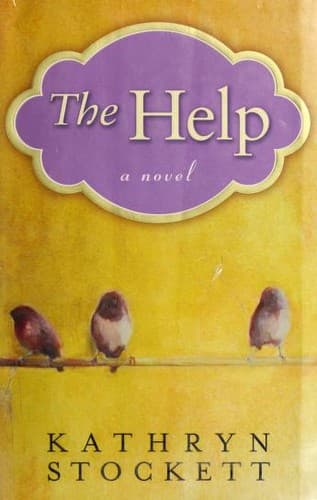
- The Help
Kathryn Stockett
4.5 (2.2M) average on GoodreadsHistorical FictionDeals with racial tensions and social issues in the 1960s American South, featuring strong female characters.
- A Confederacy of Dunces
John Kennedy Toole
3.9 (231k) average on GoodreadsLiterary FictionFeatures eccentric characters and dark humor set against a Southern backdrop.
- The Secret Life of Bees
Sue Monk Kidd
4.1 (1.1M) average on GoodreadsHistorical FictionWhile both novels feature a young protagonist coming of age in the American South amidst racial tension, Crazy in Alabama introduces a more pronounced element of dark humor and a broader, more farcical scope with Lucille's Hollywood adventures. Kidd's novel maintains a more consistent, introspective tone, whereas Childress embraces a bolder, more chaotic narrative that juggles multiple genres and moods.
- The Great Gatsby
F. Scott Fitzgerald
3.9 (3.8M) average on GoodreadsHistorical FictionIn the opulent Roaring Twenties, a mysterious millionaire's lavish parties hide his desperate, tragic pursuit of a lost love, exposing the emptiness within the American Dream.
- Pride and Prejudice
Jane Austen
4.3 (3M) average on GoodreadsHistorical FictionIn a society focused on status and money, Elizabeth Bennet navigates love and pride, challenging Mr. Darcy and social expectations to find true affection.





Enjoyed the summary?
A summary gives you the shape of the book. The book itself has the detail, the examples and the voice.
Find Crazy in Alabama on AmazonAs an Amazon Associate, BookBrief earns from qualifying purchases. How we're funded