

Core Idea
- Difficulty
- Hard
- Read it if
- You want to understand the profound and lasting impact of imperialism on culture, literature, and identity, and explore how power dynamics are embedded in cultural representations.
- Skip it if
- You are looking for a light read or a purely historical account without deep theoretical engagement with cultural studies and postcolonial thought.
Key Takeaways from Culture and Imperialism
Intertwined Destinies: Culture and Empire
Culture is not a neutral reflection of society but an active participant in the imperial project.
Said argues against separating culture from the political and economic realities of imperialism. He states that culture is not innocent or separate but deeply involved in the imperial project, both reflecting and strengthening its structures. This involvement is not passive but an active process where cultural forms—literature, music, art, history—are used to make colonial rule seem right, logical, and even natural. European high culture, often seen as universal, frequently contained stories, viewpoints, and assumptions that supported the 'civilizing mission' and the colonizers' superiority. Understanding this link helps to break down empire's legacies and see how cultural stories still shape our view of power and difference.
“For if we see culture as a system of discriminations and evaluations, then we can see how the imperial experience is not just a political or economic fact, but a cultural one as well.”
In the book: Said analyzes classic British novels like Jane Austen's 'Mansfield Park,' demonstrating how the seemingly domestic tranquility of the English estate is financially underpinned by slave labor on West Indian plantations, a connection often ignored or downplayed in literary analysis. The novel's cultural depiction of prosperity is inextricably linked to the imperial enterprise.
Try this: When consuming cultural products, especially historical ones, actively question the underlying assumptions about power, race, and geography. Consider whose voices are amplified and whose are silenced, and how seemingly apolitical narratives might implicitly support existing hierarchies.
Related ideas: cultural-hegemony, postcolonial-theory, orientalism
Contrapuntal Reading: Beyond Single Narratives
Analyze cultural texts by simultaneously considering the colonizer's perspective and the suppressed voices of the colonized.
Said introduces 'contrapuntal reading,' a method for interpreting cultural texts. This approach involves considering two or more distinct stories or viewpoints that are often presented as separate or unequal. When reading a colonial text, for example, it means understanding the author's meaning from the imperial side while also imagining the experiences and resistance of the colonized people, who are often ignored in the main story. This method helps us uncover hidden complexities, power dynamics, and suppressed histories in cultural works. It reveals the full range of voices and silences in the imperial encounter.
“Reading contrapuntally, then, means reading a text with an understanding of what is involved when an author places himself or herself in a work and simultaneously reading that work with a consciousness of what is involved when a colonial subject is also implied in the text.”
In the book: Said applies contrapuntal reading to Giuseppe Verdi's opera 'Aida,' noting how its grand Egyptian setting, while seemingly celebrating ancient Egypt, is filtered through a distinctly European lens, echoing 19th-century European fascination and appropriation of the Orient. A contrapuntal reading would consider not just the European spectacle but also the actual historical and political realities of Egypt under European influence.
Try this: When studying history or literature, actively seek out primary sources or interpretations from marginalized groups. Instead of accepting a single dominant narrative, try to layer different perspectives to gain a more comprehensive and nuanced understanding of events or cultural phenomena.
Related ideas: postcolonial-criticism, subaltern-studies, deconstruction
The Persistence of Imperialism
Imperialism is not a relic of the past but a continuously evolving force that adapts to contemporary global structures.
Said challenges the idea that imperialism ended with formal decolonization. He argues that the structures, attitudes, and power imbalances created during the colonial era continue and change into new forms of global dominance. These 'new imperialisms' might appear as economic control, cultural dominance, or political meddling, often carried out by international groups, large companies, and powerful nations. The ways of thinking established during the age of empire still shape how we see development, conflict, and global relations today. Recognizing this continuity is important for understanding current inequalities and for avoiding the temptation to see history as separate, disconnected periods.
“Imperialism did not just disappear; it was transformed, often into more insidious and less visible forms.”
In the book: Said discusses the ongoing influence of Western media and academic institutions in shaping narratives about the Middle East, even after formal colonial rule ended. He points to the continued 'othering' and stereotyping that echo earlier Orientalist discourses, influencing public opinion and foreign policy.
Try this: Critically analyze news coverage and policy debates regarding international relations, especially concerning former colonial regions. Look for underlying assumptions that might perpetuate old stereotypes or economic dependencies, and question narratives that simplify complex global issues into 'us vs. them' binaries.
Related ideas: neocolonialism, globalization, cultural-imperialism
Resistance as an Enduring Force
The colonized are not passive recipients of imperial power but active agents of resistance and self-definition.
Said emphasizes the many forms of resistance from colonized peoples. He rejects the image of the colonized as helpless victims, highlighting their active role in challenging, undermining, and ultimately ending colonial rule. Resistance was not only open military conflict. It also appeared in cultural preservation, language resilience, intellectual discussions, and the assertion of unique identities against attempts to erase them. This focus on resistance helps restore the full humanity and historical importance of colonized populations, moving past a one-sided account of power to show the dynamic interaction between oppressor and oppressed.
“The entire history of imperialism is not just a history of domination, but also of resistance, of peoples asserting their own identities against the imposition of foreign rule.”
In the book: Said references the anti-colonial movements and the intellectual output of figures like Frantz Fanon and Aimé Césaire, whose writings actively challenged colonial ideologies and articulated alternative visions of self-determination and liberation, demonstrating a robust intellectual resistance to imperial thought.
Try this: When studying historical events involving power imbalances, actively seek out the perspectives and actions of those who resisted or were marginalized. Recognize that historical narratives often privilege the powerful, and that understanding resistance offers a more complete and empowering view of human agency.
Related ideas: decolonization, agency, postcolonial-resistance
Geography as a Tool of Power
Imperialism fundamentally reconfigures geographical space, turning it into a managed territory for control and exploitation.
Said emphasizes that imperialism is deeply geographical. This means not just taking over land but also how space is thought about, mapped, and controlled. Imperial powers didn't just conquer lands; they redrew maps, renamed places, and created new administrative divisions, turning local geographies into managed territories. This geographical reorganization helped justify exploitation, extract resources, and control people. The 'discovery' of new lands, the creation of national borders in colonized areas, and the act of mapping itself were all acts of power that showed dominance and reshaped the world for imperial interests. Understanding this geographical aspect helps us see how physical space becomes a place of ideological and political struggle.
“Geography is not just a neutral backdrop to human activity but a crucial component of power, especially in the imperial project.”
In the book: Said cites the arbitrary drawing of borders in the Middle East by European powers after World War I (e.g., Sykes-Picot Agreement), which disregarded existing ethnic and religious divisions, leading to lasting political instability and conflict, illustrating how imperial geography continues to shape contemporary geopolitics.
Try this: When looking at maps or discussing international conflicts, consider the historical context of how borders were drawn and by whom. Question whether current geographical divisions reflect indigenous realities or historical power dynamics, and how this might influence present-day tensions.
Related ideas: geopolitics, cartography-of-power, spatial-justice
The Universalizing Gaze of Empire
Imperial culture often posits its own values, norms, and artistic expressions as universally applicable and superior.
A key feature of imperial culture, Said argues, is its tendency toward universalism. European powers often presented their cultural achievements—whether literature, music, philosophy, or political systems—as inherently superior and valid everywhere, not just as products of specific times. This 'universalizing view' justified the 'civilizing mission,' suggesting that other cultures were primitive, needed guidance, or were simply inferior. This idea erased the richness of non-Western cultures, making them objects of study or assimilation rather than equally valid human expressions. Recognizing this universalizing tendency helps challenge ethnocentrism and appreciate cultural diversity.
“The great cultural monuments of the West are not innocent; they are deeply implicated in the history of empire, often presenting their own values as universal truths.”
In the book: Said discusses how the British Empire exported its educational system, legal frameworks, and even parliamentary democracy to its colonies, often with the implicit assumption that these were the 'best' or 'most advanced' forms of governance and knowledge, disregarding indigenous systems.
Try this: Be critical of claims of universal truth, especially when they originate from dominant cultural or political centers. Actively seek out diverse perspectives and understand that different cultures offer equally valid and valuable ways of understanding the world, rather than measuring them against a single, imposed standard.
Related ideas: ethnocentrism, cultural-relativism, hegemony
The Role of the Intellectual in Post-Imperial World
Intellectuals have a moral obligation to challenge dominant narratives and speak truth to power, especially regarding legacies of empire.
Said sees the intellectual not as a distant observer but as a committed public figure with an important ethical role. In a post-imperial world still dealing with colonial legacies, this role is even more important. Intellectuals, especially those from former colonies or those who engage with postcolonial theory, have a duty to analyze power structures, expose hidden biases in cultural and historical stories, and advocate for justice and self-determination. This involves challenging 'official' histories, resisting academic specialization that separates knowledge from its social impact, and staying independent from both state and corporate power. Their work is to keep the memory of oppression alive and to imagine other possible futures.
“The intellectual is someone whose role is to speak the truth to power, to be an outsider, and to articulate the suffering and aspirations of the unrepresented.”
In the book: Said himself embodies this role through his outspoken criticism of US foreign policy in the Middle East and his advocacy for Palestinian rights, demonstrating how an intellectual can engage directly with contemporary political issues informed by historical and cultural analysis.
Try this: Support and engage with independent journalism, academic research, and cultural commentary that offers critical perspectives on power and historical injustices. Be a discerning consumer of information and actively seek out voices that challenge the status quo, especially concerning global affairs.
Related ideas: public-intellectual, activism, critical-theory
Hybridity and the Blurring of Borders
Imperialism, despite its oppressive nature, also created new, complex cultural formations through interaction and exchange.
While highlighting the destructive parts of imperialism, Said also acknowledges 'hybridity'—the mixing of cultures, identities, and languages that resulted from long colonial contact. This does not romanticize colonialism but recognizes its complex and often contradictory outcomes. New forms of music, literature, food, and social practices emerged from these interactions, defying simple categorization into 'pure' colonizer or 'pure' colonized cultures. Hybridity challenges fixed ideas of identity and shows culture as dynamic and fluid. It suggests that even within oppressive systems, there can be spaces for creative adaptation and new meanings, leading to rich, blended cultural expressions.
“The imperial experience, for all its horrors, also produced new, often hybrid forms of culture, identity, and consciousness.”
In the book: Said mentions the development of new literary forms and languages in postcolonial societies, where indigenous traditions merged with European influences, creating unique and powerful modes of expression that are neither fully one nor the other but a novel synthesis.
Try this: Embrace and celebrate cultural mixing and cross-cultural influences in art, food, and language. Recognize that identity is often fluid and multifaceted, and resist pressures to conform to rigid, singular cultural categories. Explore how different cultural elements can combine to create something new and enriching.
Related ideas: cultural-syncretism, creolization, diaspora
Memory and Forgetting in Imperial History
The construction of imperial narratives involves selective remembering and deliberate forgetting of certain histories.
Said shows how imperial powers create their own histories through selective memory and strategic forgetting. Certain events, cruelties, or inconvenient truths about colonial exploitation are often left out, downplayed, or rephrased to present a more positive, heroic, or 'civilizing' story of empire. Conversely, the achievements and views of the colonized are often erased or distorted. This manipulation of historical memory helps maintain national pride, justify past actions, and continue existing power imbalances. Uncovering these forgotten histories and challenging dominant stories is a vital act of decolonization, allowing for a more honest and full understanding of the past and its ongoing effects.
“History is not simply a record of facts, but a narrative constructed through acts of remembering and, crucially, forgetting.”
In the book: Said discusses how the 'glories' of the British Empire were often celebrated in official histories and public monuments, while the violence, exploitation, and resistance faced by colonized peoples were systematically marginalized or ignored in mainstream accounts.
Try this: Actively seek out diverse historical accounts, especially those written by marginalized communities or historians who challenge conventional wisdom. Be skeptical of nationalistic narratives that present a sanitized version of history, and advocate for the inclusion of previously suppressed voices and stories in education and public discourse.
Related ideas: historical-revisionism, collective-memory, trauma-studies
Solidarity and the Ethics of Coexistence
Understanding imperialism's cultural dimensions fosters a shared humanity and the possibility of genuine cross-cultural solidarity.
Ultimately, Said's work, though critical and analytical, also contains hope. By carefully detailing the links between culture and imperialism, he aims not just to expose injustice but to prepare the way for a more ethical and fair global future. Recognizing shared human experiences beneath imperial ideas and acknowledging the interconnectedness of cultures, even through conflict, can build real cross-cultural understanding and unity. This understanding moves beyond simple divisions of oppressor/oppressed and opens paths for dialogue, mutual respect, and collective action to overcome empire's lasting effects, encouraging a world where diverse cultures can exist without domination.
“To understand the cultural dynamics of imperialism is not just to condemn, but also to open pathways for a more just and interconnected future.”
In the book: Said's own intellectual journey, bridging Eastern and Western traditions and advocating for Palestinian rights while engaging with Western literary canons, exemplifies a commitment to finding common ground and fostering dialogue across seemingly intractable divides.
Try this: Actively engage in cross-cultural dialogue and learning, seeking to understand different perspectives and experiences without judgment. Support initiatives that promote peace, justice, and human rights globally, recognizing the interconnectedness of our struggles and the potential for collective liberation.
Related ideas: intercultural-dialogue, cosmopolitanism, human-rights
Culture and Imperialism Quotes
“The main point of my book is to emphasize the importance of culture in the modern world, as well as the need to understand its relationship to power and imperialism.”
“No longer is it possible to understand the great cultures of the past or present without also understanding the history of their entanglements with other cultures, their borrowings, their resistances, their transformations.”
“Imperialism is not something that happened and then ended. It is still with us, in the form of a world system, a culture, and an ideology.”
“The power to narrate, or to block other narratives from forming and emerging, is a very important power, and it is at the heart of culture and imperialism.”
“Culture is an archive of collective memory, a repository of shared experiences, a system of values, beliefs, and practices that shape the lives of individuals and communities.”
“Resistance to imperialism is not just a political act; it is also a cultural act, a reassertion of identity and dignity.”
“The study of culture and imperialism is therefore not only an academic pursuit but also a political and ethical one.”
“All cultures are hybrid, mixed, heterogeneous, extraordinarily differentiated, and unmonolithic.”
“The 'native' point of view is not a transparency but a highly mediated and constructed interpretation.”
“Contrapuntal reading means reading a text with an awareness of what is missing, what is repressed, what is silenced, what is marginalized by the dominant narrative.”
“The world is too small and too interdependent for us to afford the luxury of ignorance about each other.”
“The cultural realm is precisely where the contest for power and legitimacy is often fought and decided.”
“Identity is not a pristine, essential core but a dynamic and contested construction, shaped by history, power, and cultural interaction.”
“What is important to understand about culture is that it is not just an adornment, a luxury, but a vital element in human existence, a way of making sense of the world.”
Quiz
10 questions on the main ideas. Each answer comes with a short explanation.
Question 1
Which of the following best describes Said's central argument regarding the relationship between culture and imperialism in the book?
- Culture is largely independent of political and economic forces, including imperialism.
- Imperialism is a purely political and economic phenomenon with no significant cultural dimension.
- Culture actively participated in and legitimized the imperial project, often shaping the very idea of 'us' versus 'them'.
- The culture of colonized peoples was entirely suppressed by imperial powers, leaving no trace.
Show answer
C. Culture actively participated in and legitimized the imperial project, often shaping the very idea of 'us' versus 'them'. Said argues that culture, far from being separate, was deeply intertwined with and instrumental to the imperial project, providing justifications and frameworks for domination.
Question 2
Said introduces the concept of 'contrapuntal reading' as a methodological approach. What does this method primarily entail?
- Reading texts solely through the lens of the imperial power's perspective.
- Analyzing texts by focusing only on their aesthetic qualities, ignoring political context.
- Interpreting texts by simultaneously considering both the imperial and the subaltern/colonized perspectives.
- A method for identifying musical themes within literary works.
Show answer
C. Interpreting texts by simultaneously considering both the imperial and the subaltern/colonized perspectives. Contrapuntal reading, a key methodological innovation, involves reading texts 'with an awareness of simultaneous developments' in both the metropolitan center and the colonial periphery, allowing for a richer, more nuanced understanding of their imperial contexts.
Question 3
Which specific author's works does Said frequently analyze to demonstrate the imbrication of culture and empire, particularly in relation to the British Empire?
- Ernest Hemingway
- Jane Austen
- Franz Kafka
- Marcel Proust
Show answer
B. Jane Austen Said famously analyzes Jane Austen's 'Mansfield Park' to illustrate how the seemingly domestic world of English gentry is subtly but fundamentally supported by wealth derived from colonial exploitation (e.g., sugar plantations in Antigua).
Question 4
Said argues that the 'idea of empire' was not merely a political project but also a 'structure of feeling'. What does 'structure of feeling' imply in this context?
- A purely emotional response to imperial expansion.
- A coherent, fully articulated political ideology of empire.
- A pervasive, often unconscious, shared understanding, mood, and way of perceiving the world that underpins imperial attitudes.
- A formal governmental policy document outlining imperial ambitions.
Show answer
C. A pervasive, often unconscious, shared understanding, mood, and way of perceiving the world that underpins imperial attitudes. Drawing on Raymond Williams, Said uses 'structure of feeling' to describe the less formalized, more diffuse, and often subconscious ways in which imperial ideas permeated society, shaping common sense and cultural assumptions.
Question 5
In his discussion of musical works, Said points to operas like Verdi's 'Aida' to illustrate what about the relationship between culture and empire?
- That opera was entirely apolitical and focused solely on artistic beauty.
- How grand European cultural forms could simultaneously represent and appropriate exoticized 'Orientals' for Western consumption and self-affirmation.
- The successful integration of authentic Egyptian musical traditions into European classical music.
- The purely economic motivations behind commissioning such large-scale productions.
Show answer
B. How grand European cultural forms could simultaneously represent and appropriate exoticized 'Orientals' for Western consumption and self-affirmation. Said examines 'Aida' as a prime example of how European culture could frame and represent the 'Orient' in ways that reinforced imperial hierarchies, often creating a spectacle that simultaneously fascinated and contained the 'other.'
Question 6
Said criticizes the tendency in some post-colonial studies to create a 'pure' or 'authentic' counter-narrative of resistance. Why does he find this problematic?
- He believes all resistance is futile and ineffective.
- He argues that such narratives can inadvertently reproduce essentialist categories and ignore the hybridity and complex intermingling of cultures forged under imperialism.
- He thinks only Western scholars are capable of accurately narrating post-colonial experiences.
- He prefers to focus exclusively on the perpetrators of imperialism.
Show answer
B. He argues that such narratives can inadvertently reproduce essentialist categories and ignore the hybridity and complex intermingling of cultures forged under imperialism. Said advocates for understanding the complex, often hybridized nature of cultures shaped by imperialism, warning against the creation of new essentialisms that simplify the intricate interactions between colonizer and colonized.
Question 7
How does Said differentiate 'imperialism' from 'colonialism' in the book?
- He uses the terms interchangeably without distinction.
- Colonialism refers to the practice of settling distant territories, while imperialism is the broader ideology and practice of dominating an empire.
- Imperialism is a historical phenomenon, whereas colonialism is a contemporary one.
- Colonialism is always economic, and imperialism is always cultural.
Show answer
B. Colonialism refers to the practice of settling distant territories, while imperialism is the broader ideology and practice of dominating an empire. Said distinguishes colonialism as the direct occupation and administration of foreign territories, while imperialism is the broader ideological and structural framework of domination, which can persist even without direct colonial rule.
Question 8
Said argues that the 'geographical imagination' played a crucial role in imperial expansion. What does this 'geographical imagination' primarily involve?
- The scientific mapping and precise surveying of new territories.
- The imaginative construction of distant lands and peoples, often through literary and artistic representations, that made them legible and ripe for imperial intervention.
- The actual physical exploration and discovery of unknown regions.
- The strategic military planning based on accurate topographical data.
Show answer
B. The imaginative construction of distant lands and peoples, often through literary and artistic representations, that made them legible and ripe for imperial intervention. The 'geographical imagination' refers to how cultures imaginatively construct and represent the world, particularly distant lands, in ways that facilitate and justify imperial expansion, often creating simplified or exoticized images of 'others'.
Question 9
Which of the following literary figures is NOT extensively discussed by Said in 'Culture and Imperialism' as an exemplar of the cultural embeddedness of empire?
- Joseph Conrad
- Rudyard Kipling
- Chinua Achebe
- William Shakespeare
Show answer
D. William Shakespeare While Shakespeare is a foundational figure in English literature, Said primarily focuses on 19th and 20th-century authors like Conrad, Kipling, and Achebe (who wrote in response to colonialism) to illustrate his arguments about modern imperialism. Though he might allude to earlier periods, Shakespeare is not a central subject of detailed analysis in this particular book.
Question 10
Said argues that despite the formal end of colonialism, the 'afterlife of imperialism' persists. What does this 'afterlife' primarily refer to?
- The complete eradication of all imperial influences and structures.
- The continued influence of imperial power dynamics, cultural assumptions, and economic inequalities in the post-colonial world.
- A return to pre-colonial cultural forms and political structures.
- The nostalgic longing for the days of imperial rule by former colonial powers.
Show answer
B. The continued influence of imperial power dynamics, cultural assumptions, and economic inequalities in the post-colonial world. The 'afterlife of imperialism' highlights how the legacies of empire—in terms of political structures, economic dependencies, cultural representations, and intellectual frameworks—continue to shape the contemporary world, even after direct colonial rule has ended.
Culture and Imperialism FAQ
What is the main argument of Edward Said's 'Culture and Imperialism'?
'Culture and Imperialism' argues that Western imperial expansion was deeply intertwined with cultural production, showing how literature, music, and art not only reflected but actively supported and legitimized the imperial project. Said demonstrates that culture was not merely a byproduct but an integral part of the imperial endeavor.
Does 'Culture and Imperialism' offer a solution to the legacy of imperialism?
While the book primarily diagnoses the pervasive influence of imperialism on culture, Said does advocate for a 'contrapuntal' reading, urging us to understand history and culture from multiple, interconnected perspectives. This approach encourages a more nuanced understanding that acknowledges the shared, entangled histories of colonizer and colonized.
What is 'contrapuntal reading' as introduced in the book?
Contrapuntal reading is a critical method proposed by Said that involves analyzing cultural texts and historical events by simultaneously considering both the dominant imperial narrative and the often-silenced perspectives of the colonized. It encourages understanding the interconnectedness and mutual shaping of different cultures under imperialism.
How does 'Culture and Imperialism' differ from Said's earlier work 'Orientalism'?
While 'Orientalism' focused on the construction of the 'Orient' by Western scholarship and culture, 'Culture and Imperialism' broadens this scope to examine the global reach of imperialism across various cultural forms. It shifts from a specific regional analysis to a more general exploration of the relationship between culture and power worldwide.
What role does literature play in Said's analysis of imperialism?
Said argues that literature, particularly the novel, was crucial in shaping imperial consciousness and justifying colonial expansion. He analyzes how literary works often depicted colonized lands and peoples in ways that reinforced European dominance, while also showing instances where literature subtly challenged these narratives.
Is 'Culture and Imperialism' relevant to contemporary global politics?
Absolutely. Said's insights into the enduring legacies of imperialism, cultural hegemony, and the intertwined nature of power and representation remain highly relevant for understanding current geopolitical dynamics, postcolonial struggles, and cultural clashes in a globalized world.
What is the significance of music in 'Culture and Imperialism'?
Said uses music, particularly opera, to illustrate how cultural forms can embody and transmit imperial ideas, even without explicit political content. He also employs musical metaphors, like 'counterpoint,' to describe his method of understanding complex, interwoven histories.
Does Said critique all Western culture as imperialistic?
No, Said's argument is more nuanced. He identifies how imperial ideologies permeated much of Western culture, but he also acknowledges internal critiques and resistance within Western traditions. His goal is to reveal the often-unseen connections, not to universally condemn.
About the author

Edward W. Said was a Palestinian-American scholar and literary critic known for his influential work in postcolonial studies. His notable books include "Orientalism," which examines Western perceptions of the East, and "Culture and Imperialism," which explores the relationship between culture and colonialism. Said's writings have significantly shaped discussions on imperialism and cultural representation.
Similar books
- Orientalism
Edward W. Said
4.1 (18k) average on GoodreadsPoliticsExpands on Said's foundational concept of how the 'Orient' was constructed by Western scholarship and culture.
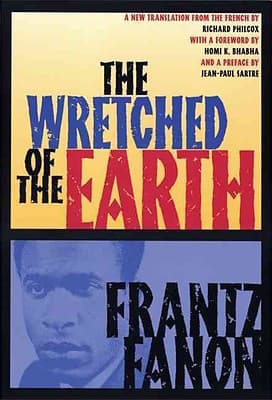
- The Wretched of the Earth
Frantz Fanon
4.2 (17k) average on GoodreadsPoliticsExamines the psychological and political effects of colonialism and the dynamics of decolonization and resistance.
- 1984
George Orwell
4.2 (3.1M) average on GoodreadsPoliticsIn a future where surveillance and thought control are absolute, a man's search for truth clashes with the Party, showing that hope can be a form of rebellion.
- Animal Farm
George Orwell
4.0 (2.7M) average on GoodreadsPoliticsA farm animals' rebellion against humans turns into a pig-led dictatorship, showing how power corrupts and revolutionary ideals are betrayed.
- Freakonomics: A Rogue Economist Explores the Hidden Side of Everything
Steven D. Levitt
4.0 (709k) average on GoodreadsBusinessThis book uses economic principles to reveal the surprising incentives behind everything from drug dealing and real estate to cheating teachers and the decline of crime.
- I Am Malala: The Story of the Girl Who Stood Up for Education and Was Shot by the Taliban
Malala Yousafzai
4.1 (419k) average on GoodreadsPoliticsA teenage girl from a Taliban-controlled valley refuses to give up her books, becoming a global voice for education even after an assassination attempt.





Enjoyed the summary?
A summary gives you the shape of the book. The book itself has the detail, the examples and the voice.
Find Culture and Imperialism on AmazonAs an Amazon Associate, BookBrief earns from qualifying purchases. How we're funded