
Core Idea
- Difficulty
- Hard
Key Takeaways from The Wretched of the Earth
The Violence of Decolonization
Decolonization is inherently a violent process, a 'tabula rasa' that demands total transformation.
Fanon argues that decolonization is not a peaceful process but a brutal confrontation. The colonial system relies on violence, and its removal must also involve violence. This violence is not just physical; it is a deep psychological and societal upheaval. It is the colonized's attempt to regain their humanity, dignity, and land from a system that took them away. This is not a call for random violence, but an observation that the colonial structure is so deeply set that only a radical, often violent, break can truly dismantle it and create a new society from scratch, a 'tabula rasa' where old structures disappear.
“Decolonization is always a violent phenomenon.”
In the book: Fanon's analysis is rooted in his observations of the Algerian War of Independence, where the French colonial power used extreme violence, and the Algerian people responded with armed struggle, which he saw as a necessary, albeit tragic, step towards liberation.
Try this: Understanding this perspective forces a re-evaluation of 'peaceful' transitions in post-colonial contexts, highlighting the underlying power dynamics and the potential for suppressed grievances to erupt if fundamental structural changes are not achieved.
The Psychological Impact of Colonialism
Colonialism inflicts profound psychological damage, creating a 'neurotic' state in both the colonizer and the colonized.
Fanon, as a psychiatrist, analyzes the psychological effects of colonialism. He describes how the colonized adopt the oppressor's view, leading to an inferiority complex, self-doubt, and an ongoing struggle for identity. This appears in many ways, from using the colonizer's language and culture to a sense of being disconnected from their own heritage. The constant dehumanization creates a 'neurotic' state, marked by rage, frustration, and a distorted self-image. This is arguably the book's strongest idea, showing that liberation needs psychological healing as much as political freedom.
“The colonial system, by creating a world of 'us' and 'them,' inflicts a deep psychological wound on the colonized, leading to feelings of inferiority, self-hatred, and a desire to emulate the oppressor.”
In the book: Fanon provides numerous clinical examples and case studies from his psychiatric practice in Algeria, illustrating the mental health disorders, such as anxiety, depression, and paranoia, directly attributable to the colonial experience and the violence it engendered.
Try this: Recognizing the deep psychological scars of historical oppression is crucial for effective post-colonial development, emphasizing the need for cultural revitalization, trauma-informed care, and policies that promote self-esteem and collective identity.
The Pitfalls of the National Bourgeoisie
Post-independence, the national bourgeoisie often mimics the colonizers, perpetuating exploitation rather than achieving true liberation.
Fanon examines the role of the national bourgeoisie (the educated elite) after colonialism. He argues that this class, often educated in the colonizer's schools, often fails to truly represent the people's interests. Instead, they often become go-betweens, copying the economic structures and even the exploitative practices of the former colonial power. They prioritize their own material gain and keep existing power structures, leading to a new form of oppression where the 'wretched of the earth' remain on the fringes, their hopes for real freedom unmet. This argument has unfortunately been seen in the corruption and violence that have affected many post-colonial nations.
“The national middle class discovers its spiritual mission: it stands as the intermediary.”
In the book: Fanon observed this phenomenon in newly independent African nations, where leaders, despite their anti-colonial rhetoric, often adopted authoritarian styles and continued to extract resources for personal enrichment, mirroring the colonial exploitation they ostensibly fought against.
Try this: This insight serves as a cautionary tale for liberation movements, emphasizing the importance of genuine grassroots representation and the need to guard against the emergence of new forms of elite-driven exploitation.
The Role of the Peasantry
The peasantry, often overlooked by the national bourgeoisie, represents the true revolutionary force for liberation.
Unlike traditional Marxist thought that places urban workers at the front of revolution, Fanon states that in colonial settings, the peasantry has the greatest revolutionary potential. They are the most exploited, the least absorbed into the colonial system, and thus, the most radical in their desire for basic change. Urban workers and intellectuals, having some stake in the colonial economy, are often more hesitant. The peasantry's direct link to the land and their strong feeling of being dispossessed fuel their revolutionary passion, making them the main agents of decolonization.
“It is the lumpen-proletariat, the wretched of the earth, the peasants, who are truly revolutionary.”
In the book: Fanon's analysis directly stems from his observations during the Algerian War, where the rural population, the fellahin, formed the backbone of the National Liberation Front (FLN) and sustained the armed struggle against the French.
Try this: This highlights the importance of understanding the specific socio-economic conditions of colonized societies and tailoring revolutionary strategies to empower the most marginalized segments of the population.
The Dangers of Tribalism and Regionalism
Post-independence, internal divisions like tribalism and regionalism can be exploited, hindering true national unity.
Fanon warns against the breakdown of national unity after independence. The shared enemy (the colonizer) brings different groups together, but once that enemy is gone, old tribal, ethnic, and regional conflicts can return. These divisions are often made worse by the national bourgeoisie, who use them to gain power, stopping a truly unified nation from forming. This leads to violence between communities, political instability, and a weakening of the newly independent state, taking attention and money away from real nation-building.
“The national unity, which was the driving force of the anti-colonial struggle, often fragments into tribal and regional rivalries after independence.”
In the book: Fanon witnessed the nascent signs of this phenomenon in various African nations during the early years of independence, where ethnic tensions, often inflamed by political opportunists, began to undermine the fragile unity forged during the liberation struggle.
Try this: Leaders of emerging nations must proactively address and mitigate internal divisions through inclusive governance, equitable resource distribution, and the promotion of a shared national identity that transcends narrower affiliations.
The Necessity of National Consciousness
True liberation requires a profound 'national consciousness' that extends beyond mere nationalism.
Fanon differentiates between mere nationalism and a deeper 'national consciousness.' While nationalism can unite during the anti-colonial fight, it can become superficial and exclusive after independence. True national consciousness, for Fanon, involves a commitment to the well-being of all citizens, an understanding of their shared history and goals, and a dedication to building a fair society. It is a process that requires constant work to overcome internal divisions and resist the appeal of superficial displays of nationhood. Without this, the nation risks becoming an empty shell, ruled by an exploitative elite.
“National consciousness, instead of being the all-embracing crystallization of the innermost hopes of the whole people, will be atrophied, and will be nothing more than a hollow shell of nationality.”
In the book: Fanon's critique of superficial nationalism stems from his observation that many post-colonial leaders prioritized personal power and symbolic gestures over substantive improvements in the lives of their citizens, leading to a disconnect between the state and the people.
Try this: Cultivating a robust national consciousness involves fostering civic engagement, promoting social justice, and ensuring that the benefits of independence are equitably distributed among all segments of society, not just the elite.
The Universalism of the Struggle
The struggle for decolonization is not just local but contributes to a broader human liberation.
While based on specific colonial situations, Fanon's analysis goes beyond particular struggles. He states that the dehumanization in colonialism affects all humanity, not just the colonized. Therefore, decolonization, the regaining of dignity and self-determination, is a universal human effort. By fighting for their own freedom, the 'wretched of the earth' are also fighting for a more just and humane world for everyone. This view raises the anti-colonial struggle beyond a local conflict to a moral requirement for global human freedom. This argument has limits as it could be seen as making violence seem good for a bigger cause.
“The colonized man, who has been dehumanized, must rehumanize himself through action, and in doing so, he contributes to the liberation of all humanity.”
In the book: Fanon's philosophical underpinnings draw from existentialism and humanism, viewing the struggle against oppression as a universal quest for human freedom and recognition, as echoed in Sartre's preface to the book.
Try this: This takeaway encourages solidarity between different liberation movements and emphasizes the interconnectedness of struggles against oppression worldwide, fostering a sense of shared purpose and global responsibility.
The Decolonization of Knowledge
True liberation demands a decolonization of thought and culture, rejecting colonial frameworks.
Fanon implies a decolonization of knowledge and culture. The colonial project not only controlled physical areas but also imposed its intellectual systems, histories, and values, often belittling indigenous cultures and knowledge. True freedom, therefore, requires a conscious effort to dismantle these intellectual controls. This involves reclaiming and reviving indigenous languages, histories, arts, and ways of knowing, and critically examining all imported knowledge for its colonial biases. It is about asserting intellectual independence and developing a self-defined cultural identity that is not just a reaction to colonialism.
“Colonialism is not content to merely physically confine the colonized, but to also psychologically control them through cultural and intellectual subjugation.”
In the book: Fanon's own intellectual journey and his critique of European psychoanalysis when applied to the colonial subject exemplify this need to decolonize existing frameworks and develop new ones suitable for the specific experiences of the colonized.
Try this: This calls for educational reforms that prioritize indigenous perspectives, support for local cultural production, and critical engagement with global knowledge systems to ensure they are not perpetuating colonial biases.
The Enduring Relevance of Fanon
Fanon's insights remain profoundly relevant for understanding contemporary struggles against oppression and inequality.
Despite being written decades ago, 'The Wretched of the Earth' still matters today. Its analysis of systemic oppression, the psychology of the oppressed, and power dynamics remains relevant for understanding racial injustice, neo-colonialism, and global inequalities. Fanon's focus on the need for radical change, the dangers of elite control, and the importance of grassroots movements offers a strong way to analyze current social and political struggles. His work reminds us that true liberation requires constant watchfulness and a commitment to removing all forms of dehumanization.
“Each generation must discover its mission, fulfill it, or betray it, in relative opacity.”
In the book: The book's continued impact on civil rights, black consciousness movements, and anti-colonial movements globally, along with its frequent citation in discussions of contemporary racial and economic injustice, attests to its enduring relevance.
Try this: Fanon's framework can be applied to analyze various modern issues, from systemic racism and police brutality to economic exploitation and the challenges faced by developing nations, providing a lens to understand the roots of oppression and the pathways to liberation.
Quiz
10 questions on the main ideas. Each answer comes with a short explanation.
Question 1
What is Frantz Fanon's primary profession mentioned in the text?
- Historian
- Psychiatrist
- Sociologist
- Philosopher
Show answer
B. Psychiatrist The text explicitly states, "Bearing singular insight into the rage and frustration of colonized peoples...". This points to his background as a psychiatrist.
Question 2
In which country did Frantz Fanon participate in a Nationalist Movement?
- Martinique
- Algeria
- France
- Egypt
Show answer
B. Algeria The text mentions, "...who took part in the Algerian Nationalist Movement...".
Question 3
What is considered Fanon's masterwork, according to the text?
- Orientalism
- The Autobiography of Malcolm X
- The Wretched of the Earth
- Black Consciousness Movements
Show answer
C. The Wretched of the Earth The text states, "Fanon's masterwork is a classic alongside Edward Said's Orientalism or The Autobiography of Malcolm X, and it is now available in a new translation...".
Question 4
According to Fanon's analysis, what are the 'twin perils of post-independence colonial politics'?
- Economic exploitation and foreign intervention
- Disenfranchisement of the masses by elites and intergroup animosities
- Lack of education and widespread poverty
- Political instability and external threats
Show answer
B. Disenfranchisement of the masses by elites and intergroup animosities The text says the book "incisively attacks the twin perils of post-independence colonial politics: the disenfranchisement of the masses by the elites on the one hand, and intertribal and interfaith animosities on the other."
Question 5
What role of violence does Fanon's book analyze?
- Violence as a tool for oppression by colonial powers
- Violence as a necessary component of revolutionary struggle and historical change
- Violence as a symptom of psychological distress in colonized populations
- Violence as a destructive force that hinders liberation
Show answer
B. Violence as a necessary component of revolutionary struggle and historical change The text highlights Fanon's "singular insight into the rage and frustration of colonized peoples, and the role of violence in effecting historical change."
Question 6
The text suggests that Fanon's analysis has been reflected in the issues plaguing present-day Africa. Which specific issues are mentioned?
- Economic sanctions and international debt
- Corruption and violence
- Lack of infrastructure and technological backwardness
- Interstate conflicts and border disputes
Show answer
B. Corruption and violence The text states, "Fanon's analysis... has been reflected all too clearly in the corruption and violence that has plagued present-day Africa."
Question 7
What kind of impact has 'The Wretched of the Earth' had globally?
- Primarily academic and theoretical
- Significant influence on civil rights, anticolonialism, and black consciousness movements
- Limited influence outside of specific academic circles
- Primarily focused on post-colonial economic development
Show answer
B. Significant influence on civil rights, anticolonialism, and black consciousness movements The text explicitly mentions, "The Wretched of the Earth has had a major impact on civil rights, anticolonialism, and black consciousness movements around the world...".
Question 8
The new translation of 'The Wretched of the Earth' is noted for updating what aspect of the book?
- Its historical context
- Its theoretical framework
- Its language
- Its geographical scope
Show answer
C. Its language The text states, "...and it is now available in a new translation that updates its language for a new generation of readers."
Question 9
What does the text imply about the nature of Fanon's analysis of the colonized?
- It is purely theoretical and detached from lived experience.
- It delves into the psychological effects and emotional responses of oppression.
- It focuses solely on the economic factors driving colonization.
- It primarily critiques the methods of the colonized rather than the colonizers.
Show answer
B. It delves into the psychological effects and emotional responses of oppression. The text describes the book as "a brilliant analysis of the psychology of the colonized" and mentions Fanon's "singular insight into the rage and frustration of colonized peoples."
Question 10
The text refers to 'The Wretched of the Earth' as a 'veritable handbook of social reorganization for leaders of emerging nations.' This suggests the book's primary audience and purpose are related to:
- Academic research on historical revolutions.
- Guiding the practical governance and development of newly independent countries.
- Understanding the psychological trauma of individuals.
- Analyzing the internal conflicts within colonial powers.
Show answer
B. Guiding the practical governance and development of newly independent countries. The phrase 'handbook of social reorganization for leaders of emerging nations' directly points to its practical application in the governance and rebuilding of post-colonial states.
The Wretched of the Earth FAQ
What is The Wretched of the Earth about?
Frantz Fanon's The Wretched of the Earth is a seminal work analyzing the psychological effects of colonialism on the colonized and exploring their path to liberation. It delves into the rage and frustration of oppressed peoples and the role of violence in historical change.
Who was Frantz Fanon?
Frantz Fanon was a psychiatrist from Martinique and a prominent theorist of revolutionary struggle, colonialism, and racial difference. He was actively involved in the Algerian Nationalist Movement.
What are the main themes in The Wretched of the Earth?
The book's main themes include the psychology of the colonized, the role of violence in liberation, the pitfalls of post-independence colonial politics such as elite disenfranchisement and intergroup animosities, and the broader impact of colonialism on societies.
Why is The Wretched of the Earth considered important?
It is considered a landmark text for its incisive analysis of colonialism and its lasting impact on civil rights, anticolonialism, and black consciousness movements globally. It serves as a handbook for understanding social reorganization after colonization.
What does Fanon say about violence in his book?
Fanon argues that violence can be a necessary tool for colonized peoples to achieve liberation and reclaim their humanity. He sees it as a response to the inherent violence of the colonial system.
What are the 'twin perils' of post-independence colonial politics Fanon discusses?
Fanon identifies two major dangers: the disenfranchisement of the masses by a new elite, and the resurgence of intertribal and interfaith animosities that were often exploited by colonial powers.
How has The Wretched of the Earth influenced other movements?
The book has had a profound influence on various liberation movements, including the civil rights movement in the United States, anticolonial struggles across Africa and Asia, and the broader black consciousness movement.
Is this book relevant today?
Yes, The Wretched of the Earth remains highly relevant for understanding contemporary issues of neocolonialism, global inequality, racial injustice, and the ongoing struggles for self-determination and social justice worldwide.
What is the significance of the new translation?
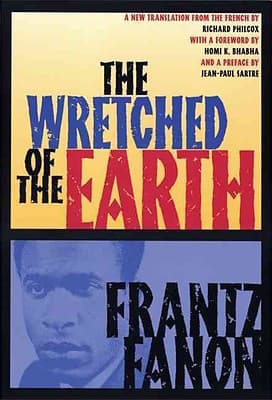
The new translation by Richard Philcox updates the language of Fanon's work for contemporary readers, making his complex ideas more accessible while reaffirming the book's status as a crucial text.
How does Fanon's background as a psychiatrist inform his analysis?
Fanon's psychiatric expertise allows him to deeply explore the psychological trauma, alienation, and dehumanization experienced by colonized individuals. He analyzes how colonialism damages the psyche and the process of healing and reclaiming identity.
About the author

Frantz Fanon was a French West Indian psychiatrist and philosopher, known for his influential writings on colonialism and race. His notable work, The Wretched of the Earth, examines the psychological and cultural impacts of colonial oppression and advocates for decolonization. Fanon's ideas have significantly shaped post-colonial studies and critical theory.
Similar books
- Orientalism
Edward W. Said
4.1 (18k) average on GoodreadsPoliticsWhile Fanon focuses on the direct psychological and political impact of colonialism on the colonized, Said's "Orientalism" meticulously deconstructs the Western academic and cultural construction of the 'Orient.' Both works are foundational to postcolonial theory, but Fanon examines the lived experience of oppression and the process of decolonization, whereas Said investigates the discursive power structures that enable and sustain colonial dominance. Fanon's work is more visceral and prescriptive regarding liberation, while Said's is a critical analysis of representation and knowledge production.
- 1984
George Orwell
4.2 (3.1M) average on GoodreadsPoliticsIn a future where surveillance and thought control are absolute, a man's search for truth clashes with the Party, showing that hope can be a form of rebellion.
- Animal Farm
George Orwell
4.0 (2.7M) average on GoodreadsPoliticsA farm animals' rebellion against humans turns into a pig-led dictatorship, showing how power corrupts and revolutionary ideals are betrayed.
- Freakonomics: A Rogue Economist Explores the Hidden Side of Everything
Steven D. Levitt
4.0 (709k) average on GoodreadsBusinessThis book uses economic principles to reveal the surprising incentives behind everything from drug dealing and real estate to cheating teachers and the decline of crime.
- I Am Malala: The Story of the Girl Who Stood Up for Education and Was Shot by the Taliban
Malala Yousafzai
4.1 (419k) average on GoodreadsPoliticsA teenage girl from a Taliban-controlled valley refuses to give up her books, becoming a global voice for education even after an assassination attempt.
- Atlas Shrugged
Ayn Rand
3.7 (354k) average on GoodreadsPoliticsIn a dystopian America where innovators vanish, a brilliant heiress races to uncover the truth behind the disappearing industrialists and the enigmatic John Galt, who vows to stop the world's progress.






Enjoyed the summary?
A summary gives you the shape of the book. The book itself has the detail, the examples and the voice.
Find The Wretched of the Earth on AmazonAs an Amazon Associate, BookBrief earns from qualifying purchases. How we're funded