
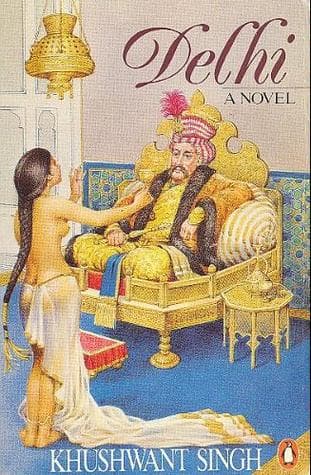
Synopsis
Covers the whole plot, including the ending.
- Difficulty
- Medium
- Pacing
- Variable
- Mood
- Epic, Erotic, Historical, Reflective, Cynical, Grand
- Read it if
- You enjoy epic historical fiction that blends personal narrative with grand historical events, appreciate a unique, often irreverent narrative voice, and are interested in the rich, complex history of India, particularly Delhi.
- Skip it if
- You prefer a straightforward, linear historical account, are uncomfortable with explicit sexual content and mature themes, or dislike a narrator who is morally ambiguous.
Delhi Plot Summary
Covers the whole plot, including the ending.
The Narrator's Return and Bhagmati
The novel begins with the unnamed narrator, an aging, cynical writer, returning to Delhi after traveling. He compares his return to the city to rejoining his longtime lover, Bhagmati. Bhagmati is a hijra (eunuch) who runs a brothel and shows both masculine and feminine traits. She is a constant in the narrator's life and his link to the city's underworld. Their first interactions have crude humor, sexual frankness, and an unconventional affection. The narrator expresses his deep love for Delhi, saying he will tell its history through personal thoughts and historical scenes, often mixing his present with Bhagmati with the city's past. This introduction sets the novel's tone, blending history with a personal, often irreverent, view.
Prithviraj Chauhan and the Fall of Hindu Rule
The narrator takes the reader to the late 12th century, focusing on Prithviraj Chauhan, Delhi's last great Hindu king. He details Prithviraj's valor, his elopement with Samyukta, his rival's daughter, and the weakening of Hindu alliances. The narrative describes the Battle of Tarain, where Prithviraj first defeats Muhammad of Ghor, only to be tricked and defeated later. The capture and blinding of Prithviraj are told with a sense of tragedy. This historical part highlights the brutal power shift, the start of Islamic rule in Delhi, and the lasting effects of these early conflicts, often showing historical figures with a mix of admiration and criticism, typical of the narrator.
The Sultanate Period: Raziya Sultan and Alauddin Khalji
Moving into the Delhi Sultanate, the narrator introduces Raziya Sultan, Delhi's only female ruler. He shows her as a strong, intelligent, and unconventional monarch who defied gender norms. She earned both admiration and resentment from her male courtiers, which led to her overthrow and death. Then, the focus shifts to Alauddin Khalji, shown as a ruthless, ambitious, and effective ruler known for his military skill, economic changes, and defense against Mongol invasions. The narrator describes Alauddin's internal conflicts, his relationship with his eunuch general Malik Kafur, and the paranoia that affected his later years. These episodes show the unstable nature of power during the Sultanate, marked by intrigue, violence, and the constant struggle for control.
Tughlaq Dynasty: Muhammad bin Tughlaq's Follies
The story moves to the Tughlaq dynasty, with a focus on Muhammad bin Tughlaq, often called the 'mad king.' The narrator details his ambitious but ruinous policies, such as moving the capital from Delhi to Daulatabad, which caused great suffering during the forced march. His introduction of token currency, widely faked, and his disastrous military campaigns are also told. The narrator portrays Muhammad bin Tughlaq as a brilliant but flawed intellectual, a visionary whose ideas were ahead of his time but had catastrophic results. This section shows how fragile power was and how a ruler's whims could devastate his subjects.
Timur's Invasion and the Decline of the Sultanate
The narrative shifts to the late 14th century, detailing the invasion of Delhi by Timur, the Central Asian conqueror. The narrator recounts the terror and devastation brought upon the city, describing widespread massacres, looting, and destruction that left Delhi in ruins and its population decimated. This event was a turning point, shattering the Delhi Sultanate's power and starting a period of instability. The narrator emphasizes the brutality of Timur's campaign and its lasting psychological scars on the city. This section serves as a reminder of Delhi's vulnerability to outside forces and the cycle of destruction and rebuilding.
Mughal Empire: Babur and Humayun
The story moves to the early 16th century with Babur's arrival, the founder of the Mughal Empire. The narrator describes Babur's early struggles, his victory at Panipat, and his establishment of a new dynasty that would shape India. After Babur, the narrative focuses on his son Humayun, showing him as a more thoughtful but less decisive ruler who faced challenges, including defeat by Sher Shah Suri and exile. Humayun's eventual return and re-establishment of Mughal rule, shortly before his accidental death, are also detailed. This section highlights the early struggles and consolidation of Mughal power, focusing on the personal traits and fortunes of its first emperors.
Akbar's Reign and Religious Tolerance
The narrative celebrates Emperor Akbar's reign, often seen as the greatest Mughal. The narrator details Akbar's military conquests, his administrative changes, and his policy of religious tolerance, shown by his 'Din-i Ilahi,' an attempt to combine faiths. The building of Fatehpur Sikri and the flourishing of art and culture during his time are also highlighted. The narrator portrays Akbar as a visionary leader who aimed to unite a diverse empire, bringing an era of peace and prosperity. This section contrasts with earlier conflicts, showing a period of cultural blending and enlightened rule that left a mark on Delhi.
Shah Jahan and the Splendor of Old Delhi
The narrative shifts to Shah Jahan, the great builder of the Mughal Empire. The narrator describes the building of Shahjahanabad, Delhi's seventh city, now known as Old Delhi. He details the creation of structures like the Red Fort, the Jama Masjid, and the Chandni Chowk, emphasizing their grandeur and planning. The narrator also mentions Shah Jahan's personal life, including his love for Mumtaz Mahal, for whom he built the Taj Mahal (though in Agra, its spirit is linked to Mughal Delhi). This section celebrates the artistic and architectural peak of the Mughal Empire, showing Delhi as a center of beauty and sophistication.
Aurangzeb's Orthodox Reign and Decline of Mughals
The narrative moves to Aurangzeb, Shah Jahan's son, whose reign differed from his predecessors. The narrator portrays Aurangzeb as a devout but rigid and intolerant ruler who reversed Akbar's policies of religious harmony. He imposed jizya (poll tax) on non-Muslims and persecuted Sikhs and Marathas. His long military campaigns, especially in the Deccan, drained the empire's resources and created rebellion. The narrator details the Mughal Empire's decline under Aurangzeb, attributing it to his divisive policies and his inability to maintain the vast empire. This section highlights the internal conflict and religious tensions that contributed to the empire's downfall, contrasting with earlier Mughal splendor.
Nadir Shah's Sack of Delhi and Maratha Ascendancy
The narrative goes into the mid-18th century, recounting Nadir Shah of Persia's invasion of Delhi. The narrator describes the brutal sack of the city, widespread massacres, looting of wealth (including the Peacock Throne and Koh-i-Noor diamond), and the Mughal emperor's humiliation. This event crippled the Mughal Empire, making it a shadow of its former self. After this devastation, the narrative touches on the Marathas' growing influence, who filled the power vacuum, becoming important players in Delhi's fragmented political landscape. This section shows the cycle of invasion and the constant struggle for dominance over the city.
The Arrival of the British and the Mutiny of 1857
The narrative moves to the 19th century, showing the British East India Company's rise and control over Delhi. The narrator describes the last parts of Mughal rule, with Bahadur Shah Zafar, the last emperor, reduced to a figurehead. The focus then shifts to the 1857 Sepoy Mutiny (or First War of Indian Independence), where Indian sepoys rebelled against British rule, briefly reclaiming Delhi. The narrator recounts the brutal British recapture of the city, the massacres, and Bahadur Shah Zafar's trial and exile. This marked the end of the Mughal Empire and the start of direct British Raj. This section highlights the clash of empires and colonial rule's impact.
British Raj and New Delhi
After the Mutiny, the narrative details direct British rule and the decision to move the capital from Calcutta to Delhi. The narrator describes the project of building New Delhi, designed by Edwin Lutyens and Herbert Baker, as an imperial capital. He contrasts New Delhi's planned elegance with Old Delhi's chaotic growth, reflecting the colonial power's desire to impose order and project authority. This section explores New Delhi's architectural and political symbolism, representing the height of British power in India and its attempt to create a new, modern identity for the city, while acknowledging tensions with the existing historical fabric.
Partition of India and Its Aftermath
The narrative recounts the traumatic 1947 Partition of India, a period of communal violence and displacement. The narrator describes the massacres, riots, and forced migrations that swept through Delhi, as Muslims fled to Pakistan and Hindu and Sikh refugees poured into the city. He details personal stories of loss, suffering, and the upheaval of social structures. Delhi, once a symbol of grandeur, became a city of refugees, camps, and communal hatred. This section is moving, highlighting the deep scars left by the Partition and its lasting impact on the city's demographic and cultural landscape, changing it forever.
Modern Delhi and the Narrator's Reflections
In the final sections, the narrator brings the historical journey to the present day (his present, the late 20th century). He reflects on modern Delhi—its growing population, chaos, and blend of ancient ruins and modernity. He continues his interactions with Bhagmati, whose aging body mirrors his own and whose resilience reflects the city's. The narrator thinks about history's cyclical nature, Delhi's constant destruction and rebirth, and its enduring spirit despite centuries of conquest. He repeats his deep, often contradictory, love for the city, seeing it as a living entity, a mistress who has seen countless human dramas and continues to thrive, carrying its past while facing an uncertain future. His personal thoughts on mortality mix with the city's timelessness.
Delhi Characters
The Narrator
Protagonist
An aging, cynical, and sexually frank Sikh writer who chronicles Delhi's history through personal and historical lenses.
The unnamed narrator is an elderly Sikh writer, highly educated yet uninhibited in his language and sexual appetites. He is a self-proclaimed 'whoremonger' and a connoisseur of Delhi's history and its underbelly. His love for Delhi is profound and complex, bordering on an obsession, often personifying the city as a demanding mistress. He is cynical, irreverent, and prone to philosophical musings, using his personal life and sexual exploits as a counterpoint to the grand sweep of history. He is a keen observer, often biased, and his voice permeates every historical account with his unique, often bawdy, perspective.
Relationships: Bhagmati (Long-term, unconventional, sexual and emotional partner, confidante.); Delhi (the city) (His 'mistress,' a complex, carnal, and intellectual love affair.)
Bhagmati
Supporting
A hijra (eunuch) prostitute and brothel owner, the narrator's long-term lover and a symbol of Delhi's resilience and unconventional spirit.
Bhagmati is a central figure in the narrator's contemporary life. As a hijra, she embodies a liminal existence, both male and female, powerful and vulnerable. She is portrayed as shrewd, pragmatic, and deeply affectionate towards the narrator, despite their often crude and transactional interactions. She runs a brothel, providing a grounded, earthy counterpoint to the narrator's intellectual pursuits. Bhagmati represents the enduring, often overlooked, aspects of Delhi – its resilience, its capacity for unconventional love, and its vibrant, sometimes seedy, underbelly. She is a constant presence, witnessing the city's changes through her own unique lens.
Relationships: The Narrator (Long-term, unconventional, sexual and emotional partner, confidante.)
Prithviraj Chauhan
Historical Figure
The last Hindu king of Delhi, whose defeat by Muhammad of Ghor marked the beginning of Islamic rule.
Prithviraj Chauhan is depicted as a valiant and romantic Rajput king, known for his military prowess and his legendary elopement with Princess Samyukta. He represents the pinnacle of Hindu power before the advent of Muslim conquests. The narrator portrays him with a mixture of admiration for his bravery and a hint of criticism for the internal rivalries that weakened his position against external threats. His story is a poignant tale of a glorious era ending, symbolizing the cyclical nature of power and the tragic consequences of disunity.
Relationships: Samyukta (His beloved wife, whose elopement caused political friction.); Muhammad of Ghor (His arch-rival and ultimate conqueror.)
Muhammad of Ghor
Historical Figure
The Afghan conqueror who defeated Prithviraj Chauhan, establishing the first Muslim dynasty in Delhi.
Muhammad of Ghor is presented as a shrewd and determined military leader whose persistence led to the conquest of Delhi. He is depicted as a formidable adversary, employing strategic cunning to overcome the Rajput forces. His victory at the Battle of Tarain is a pivotal moment, ushering in centuries of Islamic rule in India. The narrator portrays him as a force of historical change, an instrument of destiny that irrevocably altered the course of Delhi's history, bringing a new cultural and religious paradigm to the region.
Relationships: Prithviraj Chauhan (His primary military and political adversary.)
Raziya Sultan
Historical Figure
The only female ruler of the Delhi Sultanate, known for her intelligence and defiance of gender norms.
Raziya Sultan is presented as an exceptional and progressive ruler, who, despite being a woman in a male-dominated era, ascended to the throne of Delhi. The narrator highlights her intelligence, administrative capabilities, and her courage in adopting male attire and leading her armies. Her story is a testament to individual strength against societal prejudices, but also a tragic reminder of the resistance she faced from conservative nobles. Her ultimate downfall and assassination underscore the precariousness of power for women in medieval India.
Relationships: Turkish Nobility (Her primary political adversaries who resented her rule.)
Alauddin Khalji
Historical Figure
A powerful and ruthless Sultan of Delhi, known for his military conquests and economic reforms.
Alauddin Khalji is portrayed as a formidable and pragmatic ruler, renowned for his military genius, his defense against Mongol invasions, and his ambitious economic policies to control prices and supply. The narrator details his ruthlessness, his paranoia, and his complex relationship with his eunuch general, Malik Kafur. He is depicted as a figure who, despite his tyrannical tendencies, brought stability and strength to the Sultanate, albeit through harsh measures. His reign represents a period of strong, centralized, albeit often brutal, authority.
Relationships: Malik Kafur (His trusted and powerful eunuch general and rumored lover.)
Muhammad bin Tughlaq
Historical Figure
The eccentric and visionary Sultan of Delhi whose ambitious policies often led to disaster.
Muhammad bin Tughlaq is depicted as a complex and enigmatic ruler, often labeled the 'mad king.' The narrator portrays him as an intellectual and a visionary, whose ideas were often ahead of his time, but whose execution of these ideas was disastrous. His forced capital transfer to Daulatabad and his token currency experiment are highlighted as examples of his well-intentioned but catastrophic policies. He symbolizes the perils of unchecked intellectual ambition and the profound impact a single ruler's decisions can have on the populace.
Timur (Tamerlane)
Historical Figure
The Central Asian conqueror whose brutal invasion devastated Delhi in the late 14th century.
Timur is presented as a relentless and merciless conqueror, a force of nature whose invasion brought unparalleled destruction to Delhi. The narrator vividly describes the massacres, looting, and devastation wrought by his army, which left the city in ruins. Timur symbolizes the destructive power of external forces and the cyclical nature of Delhi's suffering and rebirth. His invasion is a stark reminder of the city's vulnerability and the brutal realities of medieval warfare.
Babur
Historical Figure
The founder of the Mughal Empire in India, a cultured but determined warrior.
Babur is depicted as a resilient and cultured Central Asian prince who, after numerous setbacks, established the Mughal Empire in India. The narrator highlights his military genius, his love for poetry and gardens, and his determination to carve out a new kingdom. He represents the beginning of a new, glorious chapter in Delhi's history, bringing with him a rich Persianate culture that would profoundly influence the subcontinent. His story is one of perseverance and the successful establishment of a powerful dynasty.
Akbar
Historical Figure
The greatest Mughal emperor, known for his administrative acumen and policies of religious tolerance.
Akbar is celebrated as a visionary and enlightened ruler, whose reign marked the golden age of the Mughal Empire. The narrator emphasizes his policies of religious tolerance, his attempts to synthesize different faiths (Din-i Ilahi), and his effective administrative reforms. He is portrayed as a leader who sought to unite a diverse empire, fostering an era of peace, prosperity, and cultural flourishing. Akbar symbolizes the potential for benevolent and inclusive rule, setting a high benchmark for governance in India.
Shah Jahan
Historical Figure
The Mughal emperor renowned for his architectural marvels, including the Red Fort and Jama Masjid in Delhi.
Shah Jahan is presented as the great builder of the Mughal Empire, whose reign saw an unparalleled flourishing of architecture and art. The narrator focuses on his creation of Shahjahanabad (Old Delhi), with its iconic structures like the Red Fort and Jama Masjid, showcasing his aesthetic sensibility and immense resources. He is also known for his deep love for his wife, Mumtaz Mahal. Shah Jahan embodies the grandeur and artistic peak of the Mughal dynasty, leaving an indelible architectural legacy that defines much of Delhi's historical identity.
Relationships: Mumtaz Mahal (His beloved wife, inspiring the Taj Mahal (though not in Delhi).)
Aurangzeb
Historical Figure
The last great Mughal emperor, known for his orthodox religious policies and the subsequent decline of the empire.
Aurangzeb is portrayed as a devout but rigid and religiously intolerant ruler, whose policies marked a significant departure from his liberal predecessors. The narrator details his reversal of Akbar's tolerance, his imposition of jizya, and his prolonged, costly military campaigns, particularly against the Marathas. He symbolizes the internal strife and religious divisions that ultimately weakened the Mughal Empire. Aurangzeb's reign is depicted as the beginning of the end for Mughal supremacy, leading to fragmentation and vulnerability.
Relationships: His brothers (Dara Shikoh) (Engaged in a brutal war of succession against them.)
Delhi Themes
The Cyclical Nature of History and Destruction/Rebirth
Delhi is constantly destroyed and rebuilt, conquered and reconquered. The narrative emphasizes this cycle, where each new ruler or invader brings both devastation and a new layer to the city's identity. From Timur's sack to the Partition riots, Delhi suffers greatly, yet always rises again, incorporating its wounds into its fabric. The narrator often marvels at this resilience, seeing the city as an eternal entity that goes beyond individual reigns. This theme shows Delhi's ability to absorb and transform its past.
“Delhi has been a graveyard of empires, and a cradle of civilizations. It has been built and destroyed, rebuilt and destroyed, seven times over. And each time it rises from its ashes, stronger and more beautiful.”
Love and Obsession for Delhi
The narrator's relationship with Delhi is central, described as a passionate obsession. He personifies the city as his 'mistress,' flawed but irresistible. This love is not blind; it acknowledges Delhi's chaos, violence, and contradictions, yet embraces them. This theme appears in the narrator's detailed history, his emotional investment in its past glories and tragedies, and his physical interactions with its present spaces, often mixed with his sexual encounters with Bhagmati. It is a love that goes beyond rational explanation, rooted in personal and historical connection.
“I return to Delhi as I return to my mistress Bhagmati when I have had my fill of whoring in foreign lands.”
Sexuality and the Human Condition
Sexuality, often explicit, is a theme used by the narrator to explore the basic aspects of human nature across different eras. From the narrator's own sexual experiences with Bhagmati to historical stories of royal harems and eunuchs, sex is shown as a driving force, a source of pleasure, power, and vulnerability. It connects grand historical narratives to the intimate experiences of individuals. Bhagmati, a hijra, further broadens the exploration of gender and sexual identity, challenging norms and highlighting the diversity of human desire.
“What is history, after all, but a record of man's desires, his conquests, his lusts, and his follies?”
Religious Syncretism and Conflict
The novel shows how different religions—Hinduism, Islam, Sikhism, and Christianity—shaped Delhi's identity. It presents periods of blending, especially under Akbar, where cultures and faiths mixed. However, it also shows brutal religious conflicts, from early Muslim conquests of Hindu kingdoms to Aurangzeb's orthodoxy and the communal violence during the Partition. This theme explores how religion has been both a unifying and dividing force, adding to Delhi's culture while also causing great suffering and historical turning points.
“Delhi has been a crucible where faiths have met, melted, and often clashed, leaving behind a residue of both beauty and bitterness.”
The Fallibility of Power and Human Nature
Across centuries, the novel highlights the temporary and often corrupting nature of power. Rulers, whether Hindu, Muslim, or British, are shown to be driven by ambition, lust, paranoia, and personal flaws, leading to both achievements and mistakes. From Prithviraj's pride to Muhammad bin Tughlaq's misguided brilliance and Aurangzeb's rigidity, human error is constant. This theme suggests that despite grand narratives of empires, history is often driven by the human strengths and weaknesses of individuals, showing the universal and unchanging aspects of human nature.
“Empires rise and fall, but the folly of man remains eternal.”
Plot Devices & Literary Techniques
First-Person Narrator (Unreliable/Subjective)
The entire history is filtered through the personal, often biased, and sexually explicit lens of an unnamed, aging writer.
The novel employs a first-person, often unreliable, narrator who is highly subjective and opinionated. His personal experiences, sexual encounters with Bhagmati, and cynical worldview constantly interrupt and color the historical accounts. This device blurs the line between historical fact and personal interpretation, making the reader question the objectivity of history itself. It allows the author to infuse the historical narrative with a unique, irreverent, and deeply personal voice, making the vast sweep of Delhi's past more intimate and engaging, while also reflecting on the nature of storytelling and memory.
Framing Device (Present-Day Narrator's Life)
The narrator's contemporary life with Bhagmati serves as a frame for the historical vignettes, grounding the past in the present.
The narrator's present-day interactions with Bhagmati and his daily life in modern Delhi act as a framing device for the historical chapters. These contemporary interludes provide a sense of continuity and allow the narrator to reflect on the parallels between past and present. The juxtaposition of the narrator's aging body and sexual escapades with the grand historical narratives creates a dynamic contrast, emphasizing the timelessness of human desires and the enduring spirit of Delhi. This device prevents the historical sections from becoming dry, constantly returning the reader to the narrator's immediate, visceral experience of the city.
Historical Vignettes/Episodic Structure
The history of Delhi is presented as a series of distinct, self-contained stories focusing on key figures and events.
Instead of a continuous chronological narrative, the novel is structured as a series of episodic historical vignettes. Each chapter or section focuses on a specific ruler, event, or period in Delhi's history, from Prithviraj Chauhan to the British Raj and Partition. This allows the narrator to jump across centuries, highlighting significant turning points and personalities without getting bogged down in exhaustive detail. This episodic structure mirrors the fragmented and layered nature of Delhi's history itself, where distinct eras leave their marks, often overlapping and coexisting in the city's memory and physical landscape.
Personification of Delhi
The city of Delhi is treated as a living entity, a 'mistress' with her own personality, desires, and resilience.
The narrator consistently personifies Delhi, referring to it as his 'mistress' – beautiful, demanding, resilient, and complex. This device infuses the historical narrative with emotional depth, transforming the city from a mere setting into a central character. It allows the narrator to express his profound, almost carnal, love and obsession for Delhi, making the city's triumphs and tragedies feel deeply personal. The personification underscores the idea that Delhi has a spirit and a memory that transcends its physical structures and the people who inhabit it, enduring through centuries of change.
Delhi Quotes
“There is no city like Delhi. It has been the capital of India for centuries, and has seen more history than any other city in the world.”
“Delhi is a city of ghosts, of jinns and djinns, of emperors and poets, of whores and saints.”
“The past is not dead. It is not even past. It is all around us, in the ruins, in the dust, in the very air we breathe.”
“Every stone in Delhi has a story to tell, if only you have the patience to listen.”
“Love, like death, is a great leveller. It strikes without regard for caste or creed, wealth or poverty.”
“The British came as traders and stayed as rulers. They built their own Delhi, but they could never truly conquer the spirit of the old city.”
“Power is a fickle mistress. It can elevate you to the heavens and cast you down to the dust.”
“In Delhi, one learns to live with ghosts. They walk alongside you, whisper in your ear, and remind you that you are but a fleeting moment in an eternal story.”
“The smell of jasmine and cow dung, of spices and exhaust fumes, of ancient dust and fresh rain - that is the true perfume of Delhi.”
“History is not just about kings and battles; it is also about the lives of ordinary people, their joys and sorrows, their struggles and triumphs.”
“Delhi is a courtesan, forever alluring, forever betraying, forever reinventing herself.”
“Every age thinks it's the most important. But Delhi has seen them all come and go, and she remains.”
“To understand Delhi, you must walk its streets, get lost in its alleys, and breathe its dust.”
“The greatest tragedy is not death, but to live without ever having truly lived.”
“Delhi is not just a city; it is a state of mind, a feeling, a destiny.”
Quiz
10 questions on the plot and the characters. Each answer comes with a short explanation.
Question 1
Who is the principal narrator of the saga in Khushwant Singh's 'Delhi'?
- Emperor Shah Jahan
- A bawdy, ageing reprobate
- Bhagmati, the hijra whore
- Khushwant Singh himself
Show answer
B. A bawdy, ageing reprobate The book explicitly states, 'The principal narrator of the saga... is a bawdy, ageing reprobate.'
Question 2
Over how many years does the saga of Delhi extend, as described in the book's synopsis?
- One hundred years
- Three hundred years
- Six hundred years
- Nine hundred years
Show answer
C. Six hundred years The synopsis mentions, 'The saga, which extends over six hundred years.'
Question 3
Who is Bhagmati in the context of the novel 'Delhi'?
- An ancient queen of Delhi
- The narrator's loyal wife
- A hijra whore loved by the narrator
- A historical monument in Delhi
Show answer
C. A hijra whore loved by the narrator The text describes Bhagmati as 'the hijra whore Bhagmati - half man, half woman with sexual inventiveness and energy of both the sexes.'
Question 4
What is the primary relationship the narrator has with the city of Delhi, as indicated by the opening line?
- He sees it as a place of business and trade.
- He views it as a stern, unforgiving ruler.
- He compares his return to Delhi to returning to a mistress after indulgence.
- He considers it a sacred pilgrimage site.
Show answer
C. He compares his return to Delhi to returning to a mistress after indulgence. The opening line states, 'I return to Delhi as I return to my mistress Bhagmati when I have had my fill of whoring in foreign lands,' clearly indicating a deeply personal, almost sensual relationship.
Question 5
The synopsis mentions the narrator meets a 'myriad of people' on his journey. Which of the following groups is NOT explicitly listed as someone he encounters?
- Poets and princes
- Saints and sultans
- Farmers and merchants
- Temptresses and traitors
Show answer
C. Farmers and merchants The text lists 'poets and princes, saints and sultans, temptresses and traitors, emperors and eunuchs.' Farmers and merchants are not specifically mentioned in the provided synopsis.
Question 6
What literary device is primarily used in the opening line, 'I return to Delhi as I return to my mistress Bhagmati...'?
- Metaphor
- Simile
- Personification
- Hyperbole
Show answer
B. Simile The use of 'as' to compare Delhi to a mistress explicitly makes this a simile.
Question 7
How does the narrator's perception of Bhagmati reflect the novel's broader themes regarding Delhi?
- Bhagmati represents the rigidity and tradition of Delhi's past.
- Bhagmati embodies Delhi's historical periods of peace and prosperity.
- Bhagmati, as 'half man, half woman' with 'sexual inventiveness,' symbolizes Delhi's complex, multifaceted, and often transgressive nature.
- Bhagmati is a symbol of Delhi's spiritual purity and devotion.
Show answer
C. Bhagmati, as 'half man, half woman' with 'sexual inventiveness,' symbolizes Delhi's complex, multifaceted, and often transgressive nature. The description of Bhagmati as 'half man, half woman with sexual inventiveness and energy of both the sexes' strongly parallels the multifaceted, often contradictory, and 'erotic, irreverent' nature attributed to Delhi itself.
Question 8
The synopsis describes the book as 'vast, erotic, irrelevant magnum opus.' What does 'irrelevant' suggest about the author's approach to history or storytelling in this context?
- It implies the historical details presented are factually inaccurate.
- It indicates a departure from conventional, linear, or overly earnest historical narratives, embracing a more personal and perhaps whimsical interpretation.
- It means the book has no significant impact on the reader.
- It suggests the events described are not important to the city's development.
Show answer
B. It indicates a departure from conventional, linear, or overly earnest historical narratives, embracing a more personal and perhaps whimsical interpretation. In an artistic context, 'irrelevant' can suggest a playful disregard for strict historical accuracy or conventional narrative structures, allowing for a more personal, subjective, and perhaps bawdy exploration of the city, fitting the narrator's character.
Question 9
How does the narrator's journey through 'time, space and history' contribute to the reader's understanding of Delhi?
- It provides a dry, academic chronicle of historical events.
- It allows the reader to experience Delhi's evolution through diverse perspectives and eras, 'transforming and immortalizing' the city in their minds.
- It primarily focuses on the narrator's personal struggles and triumphs.
- It serves to highlight the narrator's superior knowledge of history.
Show answer
B. It allows the reader to experience Delhi's evolution through diverse perspectives and eras, 'transforming and immortalizing' the city in their minds. The synopsis states, 'Travelling through time, space and history to 'discover' his beloved city... And as we accompany the narrator on his epic journey we find the city of emperors transformed and immortalized in our minds for ever.' This indicates a comprehensive and transformative understanding.
Question 10
What characteristic is shared by both the narrator and Bhagmati, according to the description?
- A preference for solitude and quiet reflection.
- A deep spiritual devotion and ascetic lifestyle.
- A bawdy, unconventional, and sexually inventive nature.
- A shared aristocratic background and noble lineage.
Show answer
C. A bawdy, unconventional, and sexually inventive nature. The narrator is described as a 'bawdy, ageing reprobate' and Bhagmati is noted for her 'sexual inventiveness and energy of both the sexes,' implying a shared unconventional and sensual nature, which the narrator appreciates.
Delhi FAQ
What is the central premise of Khushwant Singh's 'Delhi'?
'Delhi' is a historical fiction saga narrated by a bawdy, aging reprobate who journeys through six hundred years of Delhi's history. He explores the city's evolution through encounters with various historical figures and personal reflections, all while comparing his love for Delhi to his complex relationship with the hijra Bhagmati.
Who is the primary narrator, and what is his relationship with Delhi?
The primary narrator is an unnamed, aging, and sexually frank man who views Delhi as his eternal mistress. He expresses his deep, often carnal, affection for the city, returning to it after his 'whoring in foreign lands,' much like he returns to Bhagmati, finding solace and stimulation within its ancient embrace.
Who is Bhagmati, and what role does she play in the narrative?
Bhagmati is a hijra, described as half-man, half-woman, possessing the sexual inventiveness and energy of both sexes. She serves as a metaphorical representation of Delhi itself—complex, alluring, and embodying a blend of masculine power and feminine mystique. Her relationship with the narrator parallels his profound connection to the city.
How does the novel structure its historical journey through Delhi?
The novel structures its historical journey by having the narrator travel through time, encountering a myriad of historical figures from different eras. These encounters—with poets, princes, saints, sultans, temptresses, and emperors—allow the reader to witness the transformation and enduring mystique of Delhi through various lenses and pivotal moments in its history.
What kind of historical figures does the narrator encounter?
The narrator encounters a diverse cast of historical figures, including influential rulers like Timur and Aurangzeb, spiritual leaders, renowned poets such as Ghalib, and ordinary citizens. These interactions provide insights into the political, cultural, and social fabric of Delhi across different centuries, shaping the city's unique identity.
How does the narrator's personal life intertwine with Delhi's history?
The narrator's personal life, particularly his relationships and carnal desires, serves as a recurring motif that parallels Delhi's own tumultuous and vibrant history. His sexual exploits and emotional attachments, especially to Bhagmati, are presented as extensions of his deep, often sensual, connection to the city's enduring spirit and its ever-changing character.
What is the significance of the 'six hundred years' timeframe mentioned?
The six hundred years timeframe allows the novel to cover a vast sweep of Delhi's history, from the early Sultanates through the Mughal Empire and into more modern times. This extensive period enables Khushwant Singh to showcase the city's multiple destructions and rebirths, highlighting its resilience and continuous cultural evolution.
Are there any recurring symbols or motifs beyond Bhagmati and Delhi as a mistress?
Beyond Bhagmati and the mistress metaphor, the motif of destruction and rebuilding is central, symbolizing Delhi's cyclical history of conquest and renewal. The river Yamuna also serves as a subtle, constant presence, witnessing the city's changes and representing the flow of time and continuity amidst chaos.
How does Khushwant Singh use historical facts and fictional embellishment?
Khushwant Singh skillfully blends documented historical facts with fictional embellishment, particularly through the narrator's subjective experiences and dialogues with historical figures. While major events and personalities are historically accurate, the narrator's personal reflections, bawdy commentary, and intimate encounters add a layer of imaginative interpretation and emotional depth.
What psychological complexity does the narrator exhibit in his love for Delhi?
The narrator exhibits a complex, almost obsessive, love for Delhi, akin to a deeply personal and carnal relationship. His affection is not merely intellectual but visceral, reflecting a yearning for belonging, a connection to history, and an acceptance of the city's flaws alongside its grandeur, much like one would love a flawed but cherished individual.
How does the narrator's 'reprobate' nature influence his perspective on history?
The narrator's 'reprobate' nature, characterized by his bawdiness and frankness about sexuality, provides an unconventional and often irreverent lens through which to view history. He strips away academic formality, presenting historical figures and events with a raw, human, and often humorous perspective that emphasizes their passions and follies.
What is the psychological significance of Bhagmati being a hijra?
Bhagmati being a hijra carries significant psychological weight, symbolizing the duality and fluidity of Delhi itself—a city that has absorbed countless cultures, genders, and identities over centuries. Her existence challenges conventional norms, mirroring Delhi's ability to transcend simple classifications and embody a complex, multifaceted essence.
How does the novel explore themes of identity through its characters and the city?
The novel explores themes of identity by presenting characters, including the narrator and Bhagmati, who defy simple categorization, much like Delhi itself. The city's continuous transformation and absorption of diverse cultures reflect a dynamic and evolving identity, challenging fixed notions of self and place over centuries.
Is the narrator a reliable historical guide, given his personal biases?
The narrator is not a strictly reliable historical guide in the academic sense, as his narrative is heavily colored by personal biases, erotic fantasies, and subjective interpretations. However, his unreliability is precisely what makes him compelling, offering an emotional and humanized perspective on history rather than a dry factual account.
How does the 'erotic' aspect of the novel contribute to its overall message?
The 'erotic' aspect of the novel is central to its message, serving as a metaphor for the narrator's passionate, visceral connection to Delhi. It elevates his love for the city beyond mere admiration to a deep, sensual, and almost carnal devotion, suggesting that true understanding of a place comes from an intimate, uninhibited engagement with its essence.
What is meant by 'irrelevant magnum opus' in the description?
The term 'irrelevant magnum opus' suggests that while the book is a grand work, its narrative style and focus on personal, bawdy experiences might be seen as unconventional or tangential to traditional historical accounts. It implies that its greatness lies in its unique, often subjective, and perhaps 'unnecessary' yet profound exploration of Delhi's soul, rather than its adherence to conventional historical relevance.
How does Khushwant Singh challenge traditional historical narratives?
Khushwant Singh challenges traditional historical narratives by foregrounding a highly personal, often irreverent, and sexually explicit perspective. Instead of a detached, objective account, he offers a subjective, emotional journey through time, emphasizing the human passions, follies, and carnal desires that underpin historical events, making history feel alive and immediate.
What is the ultimate message about Delhi that the book conveys?
The book ultimately conveys that Delhi is not merely a collection of historical events or monuments, but a living, breathing entity with a complex soul, much like a beloved, challenging mistress. It is a city of enduring resilience, constant transformation, and profound mystique, capable of inspiring deep, often contradictory, emotions in those who truly engage with it.
About the author

Khushwant Singh was an Indian author, lawyer, diplomat, journalist, and politician, known for his contributions to English literature. His notable works include "Train to Pakistan," which explores the impact of the Partition of India, and "Delhi," a narrative that captures the city's history and culture. Singh's writing often reflects themes of love, loss, and the complexities of Indian society.
Similar books
- The Shadow Lines
Amitav Ghosh
3.9 (7k) average on GoodreadsLiterary FictionExplores themes of memory, history, and the impact of partition on personal and national identity, with a non-linear narrative.
- To Kill a Mockingbird
Harper Lee
4.3 (4.5M) average on GoodreadsHistorical FictionIn the 1930s Jim Crow South, Harper Lee writes about racial injustice, moral growth, and the quiet courage of a lawyer father, Atticus Finch, as seen through his young daughter's eyes.
- The Great Gatsby
F. Scott Fitzgerald
3.9 (3.8M) average on GoodreadsHistorical FictionIn the opulent Roaring Twenties, a mysterious millionaire's lavish parties hide his desperate, tragic pursuit of a lost love, exposing the emptiness within the American Dream.
- Pride and Prejudice
Jane Austen
4.3 (3M) average on GoodreadsHistorical FictionIn a society focused on status and money, Elizabeth Bennet navigates love and pride, challenging Mr. Darcy and social expectations to find true affection.
- Angels & Demons
Dan Brown
3.9 (2.7M) average on GoodreadsThrillerA Harvard symbologist races through Rome's ancient sites, deciphering cryptic clues to unmask the Illuminati and stop a vengeful plot to destroy the Vatican with a stolen antimatter weapon.
- The Kite Runner
Khaled Hosseini
4.3 (2.4M) average on GoodreadsHistorical FictionIn pre-Taliban Afghanistan, a wealthy boy's betrayal of his servant's son during a kite-running tournament starts a lifelong journey for amends as his country collapses.





Enjoyed the summary?
A summary gives you the shape of the book. The book itself has the detail, the examples and the voice.
Find Delhi on AmazonAs an Amazon Associate, BookBrief earns from qualifying purchases. How we're funded