
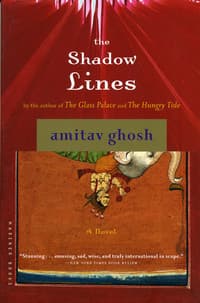
Synopsis
Covers the whole plot, including the ending.
- Difficulty
- Medium
- Pacing
- Moderate
- Mood
- Reflective, Atmospheric, Melancholic, Thought-provoking
- Read it if
- You enjoy richly layered literary fiction that explores themes of memory, identity, nationalism, and the impact of history on individual lives, with a non-linear narrative structure.
- Skip it if
- You prefer straightforward, chronological plots and dislike extensive philosophical digressions or narratives heavily reliant on memory and introspection.
The Shadow Lines Plot Summary
Covers the whole plot, including the ending.
Childhood Reveries and the English Cousin
The unnamed Bengali narrator, a boy in Calcutta in the 1960s, is captivated by his older cousin, Tridib. Tridib, an unusual and eccentric figure, shares vivid stories of his childhood visit to London during the war, especially his time with the Price family: Mrs. Price, her daughter May, and her son Nick. These stories, describing bombed streets, air raids, and everyday English life, form the basis of the narrator's imagination, making London and the Price family more real to him than his own surroundings. Tridib's way of storytelling, focusing on sights and sounds, influences the narrator's view of the world and history, blurring the lines between personal memory and shared narrative.
The Price Family's Arrival in Calcutta
Years later, May Price, the English girl from Tridib's stories, visits Calcutta. Her presence brings Tridib's fantastic anecdotes into sharp reality for the narrator. May stays with the narrator's family, and her interactions, especially with Tridib and the narrator's grandmother (Tha'mma), show cultural differences and shared human experiences. The narrator, now older, watches May and Tridib closely, trying to match the real May with the character from Tridib's tales. May's visit is a key meeting point, bringing London into Calcutta's present and deepening the narrator's understanding of their connected lives and histories.
Tha'mma's Journey to Dhaka
The narrator's grandmother, Tha'mma, tells a moving and terrible story of her trip to Dhaka (then Dacca) in 1964, after riots erupted over the theft of the Prophet's hair relic in Kashmir. Despite danger and her family's pleas, Tha'mma, a very independent woman, insists on going to retrieve her uncle's ancestral home and ensure his safety. Her journey across the new border between India and East Pakistan is full of fear and uncertainty, showing the human cost of the Partition. This story reveals Tha'mma's strong sense of duty and her complex connection to her homeland, highlighting how political divisions violently tear apart lives and family histories, leaving lasting scars on memory and identity.
The Dhaka Riots and Tridib's Death
In a terrible turn of events, Tridib, May Price, and the narrator's family are caught in the communal riots in Dhaka in 1964. They are visiting Tha'mma's ancestral home when the violence grows. While trying to help a Muslim rickshaw-puller attacked by a Hindu mob, Tridib intervenes. In the chaos, Tridib is brutally murdered while protecting the rickshaw-puller and May. May herself is badly hurt. This tragedy, a direct result of political and religious tensions from the Partition, shatters their lives and leaves a lasting trauma on the narrator and May, linking them forever through this shared, horrific memory. The event becomes the novel's central 'shadow line'.
The Narrator's London Years
Years after the Dhaka tragedy, the narrator moves to London for his studies, driven by an unconscious wish to live in the world Tridib had described and to piece together their shared history. He lives with the Price family, especially May, who is still dealing with the trauma from Dhaka. In London, the narrator explores Tridib's past, visiting places Tridib knew, seeking to understand the man and the events that shaped him. He observes the Price family, especially Nick, and his interactions with them help him connect memories, both personal and collective, between Calcutta and London, and between past and present. His time in London is a search for understanding and a way to keep Tridib's memory alive.
May's Lingering Trauma and Confession
In London, May Price, still troubled by the Dhaka riots, slowly confides in the narrator. She confesses her deep guilt and the details of her actions during the incident that led to Tridib's death. May reveals that she was the one who first tried to help the rickshaw-puller, drawing Tridib into the dangerous situation. Her confession shows the complex mix of innocence, good intentions, and the devastating results of political violence. The revelation deepens the narrator's understanding of the tragedy and May's lasting psychological scars, showing how individual choices, even well-meaning ones, can have unforeseen and fatal effects in a volatile political situation. Her confession is a turning point in their relationship and in the narrator's grasp of the past.
Nick's Detachment and Nationalism
The narrator also observes Nick Price, May's brother, who shows a different response to the shared history. Nick, unlike May, seems detached from the Dhaka tragedy and the emotional weight of the past. He becomes involved in right-wing nationalist politics in England, expressing views critical of immigration and multiculturalism. His political views and disinterest in his family's and the narrator's intertwined histories contrast with May's lingering trauma and the narrator's search for understanding. Nick's character highlights the different ways people face or ignore the 'shadow lines' of history and national identity, and how easily some can disconnect from the consequences of political extremism.
The Search for Robi-mama's House
Years after the traumatic events of 1964, the narrator's family, especially his mother, tries to find their ancestral home in Dhaka, now the capital of independent Bangladesh. The search for 'Robi-mama's house' symbolizes the family's desire to reconnect with their roots and reclaim a part of their identity lost to Partition. However, the search is difficult; the house has changed owners, its original inhabitants are gone, and the area itself has been changed by time and political upheaval. This failed quest shows the irreversible nature of historical displacement and how national borders can permanently cut off personal connections to place and heritage, leaving only fragmented memories and a sense of loss.
The Narrator's Reflections on Identity and Borders
Throughout his journey, the narrator thinks deeply about how arbitrary national borders are and how identity is built. He grapples with the idea that lines on maps, which dictate citizenship and belonging, are artificial and often violent, separating people who share common histories and cultures. He understands that 'shadow lines' are not just physical marks but also psychological and emotional barriers that influence how people see themselves and others. His experiences in Calcutta, Dhaka, and London lead him to question the idea of a fixed national identity, emphasizing instead the fluidity and interconnectedness of human lives across geographical and political divides, a main theme of the novel.
The Enduring Power of Stories and Memory
As the novel ends, the narrator, now an adult, recognizes the power of stories and memory in shaping understanding and preserving the past. He realizes that Tridib's tales, though not always factual, provided a framework for understanding the world and making connections across cultures and generations. Through his own narration, the narrator tries to piece together fragmented memories, personal stories, and historical events to create a cohesive understanding of his family's experiences and the larger historical forces that shaped them. The novel itself becomes an act of memory-keeping, showing how individual stories, when connected, can illuminate history and bridge the 'shadow lines' that divide humanity.
Principal Figures
The Narrator
Protagonist
A Bengali boy and later man, fascinated by history, memory, and the interconnectedness of lives.
The unnamed narrator begins as a young boy in Calcutta, deeply influenced by his older cousin Tridib's stories of London. He possesses an intensely imaginative and intellectual curiosity, driven to understand the world through fragmented memories and narratives. As an adult, he becomes a historian, reflecting his lifelong quest to piece together personal and historical events. He is observant, sensitive, and deeply empathetic, constantly seeking to bridge the gaps between different cultures, places, and times. His personal experiences, particularly the Dhaka riots, profoundly shape his understanding of identity, borders, and the human cost of political violence.
Relationships: Tridib (mentor, older cousin, object of fascination); Tha'mma (grandmother, source of historical accounts); May Price (childhood crush, later friend, shared trauma survivor); Nick Price (May's brother, acquaintance, ideological contrast)
Tridib
Supporting
The narrator's enigmatic older cousin, a storyteller who shapes the narrator's imagination.
Tridib is the narrator's older cousin, a charismatic and somewhat eccentric figure who works as an academic. He is a passionate storyteller, recounting vivid, detailed accounts of his childhood in London during the war, particularly his interactions with the Price family. Tridib's method of immersing himself and others in 'seeing' the past profoundly influences the narrator. He is an idealist, intellectually curious, and deeply sensitive to the human condition, which ultimately leads to his tragic death during the Dhaka riots when he tries to protect a stranger. He serves as a catalyst for the narrator's intellectual and emotional development, a figure whose absence continues to shape the narrator's understanding of the world.
Relationships: The Narrator (mentor, older cousin, inspirational figure); May Price (childhood acquaintance, shared traumatic experience); Tha'mma (aunt, source of family connection)
Tha'mma (Narrator's Grandmother)
Supporting
A strong-willed, traditional Bengali woman whose personal history illuminates the impact of Partition.
Tha'mma is the narrator's grandmother, a formidable and fiercely independent woman. She embodies a deep connection to her ancestral roots in Dhaka (East Pakistan/Bangladesh) and a profound sense of duty to her family. Her personal history, particularly her harrowing journey to Dhaka during the 1964 riots, provides a powerful narrative of the human cost of Partition and the arbitrary nature of national borders. She is pragmatic, resilient, and deeply attached to her memories and the physical places of her past. Her stories, though less imaginative than Tridib's, offer a grounded perspective on historical events and the enduring impact of political decisions on individual lives.
Relationships: The Narrator (grandmother, source of historical memory); Tridib (nephew, family connection)
May Price
Supporting
An English woman haunted by a shared past in Dhaka, symbolizing the interconnectedness of lives.
May Price is an Englishwoman who first appears in Tridib's childhood stories and later visits Calcutta. She is intelligent, sensitive, and deeply affected by the traumatic events of the 1964 Dhaka riots, where she witnessed Tridib's death and was injured herself. This experience leaves her with profound psychological scars and a lingering sense of guilt, which she eventually confides to the narrator. May represents the enduring impact of historical violence on individuals and the way personal histories can become intertwined across cultural and geographical divides. Her vulnerability and her quest for understanding mirror aspects of the narrator's own journey.
Relationships: Tridib (childhood acquaintance, shared traumatic experience); The Narrator (childhood crush, later friend, shared trauma survivor); Nick Price (brother)
Nick Price
Supporting
May's brother, an Englishman detached from the past and drawn to nationalist ideology.
Nick Price is May's brother, a character who stands in stark contrast to his sister and the narrator. He is portrayed as largely detached from the emotional weight of the past and the shared trauma of the Dhaka riots. As an adult, he becomes involved in right-wing nationalist politics in England, expressing views that reflect a desire for clear, defined borders and identities. His character represents a different response to history—one of disengagement and a preference for simplified, often exclusionary, narratives. He serves as a foil to the narrator's quest for understanding and interconnectedness, highlighting the ideological divides that run parallel to the physical 'shadow lines'.
Relationships: May Price (sister); The Narrator (acquaintance, ideological contrast)
Jethamoshai (Tha'mma's Uncle)
Mentioned
Tha'mma's elderly uncle living in Dhaka, representing the forgotten victims of Partition.
Jethamoshai is Tha'mma's elderly uncle, who remains in Dhaka after the Partition, becoming a symbol of the individuals left behind or displaced by the creation of new borders. His existence and the family's concern for his safety and property are the catalyst for Tha'mma's dangerous journey to Dhaka in 1964. He represents the deep personal connections that are severed by political divisions and the way ordinary lives are irrevocably altered by historical events. Although he is not a direct participant in much of the narrative, his fate underscores the novel's exploration of displacement, loss, and the enduring pull of ancestral homes.
Relationships: Tha'mma (uncle, family connection, source of concern)
Mrs. Price
Supporting
May and Nick's mother, a kind Englishwoman who hosts the narrator in London.
Mrs. Price is the mother of May and Nick, and the Englishwoman who took Tridib in during the war. She later hosts the narrator when he studies in London. She is portrayed as a kind, hospitable, and somewhat traditional Englishwoman who represents a certain continuity of the past, having known Tridib as a child. While she is aware of the Dhaka tragedy, her understanding of its complexities is perhaps less intense than May's or the narrator's. She provides a stable, comforting presence in the narrator's London life, acting as a gentle bridge between his Indian past and his English present.
Relationships: Tridib (host mother during childhood); May Price (daughter); Nick Price (son); The Narrator (host mother in London)
Themes & Insights
The Arbitrary Nature of Borders and National Identity
The novel explores how national borders, especially the 'shadow lines' of the Partition of India, are artificial constructs that violently divide people, families, and histories. Ghosh shows how these political lines on maps have little to do with the complex, fluid realities of human connection and cultural identity. Tha'mma's difficult journey to Dhaka and her inability to reclaim her ancestral home, along with Tridib's death in the riots, clearly show the human cost of these divisions. The narrator's thoughts highlight that identity is not just defined by nationality but by shared memories, stories, and human relationships that cross geographical and political lines.
“What are these lines anyway? They are not there for anyone to see, least of all by those who live in the places where the lines are drawn.”
Memory, History, and Storytelling
Memory, both personal and collective, is central to the novel. The narrator, a budding historian, constantly pieces together fragmented memories, stories, and historical facts to build a coherent understanding of the past. Tridib's imaginative storytelling and Tha'mma's practical recollections offer different but equally important ways of preserving history. The novel suggests that history is not just facts but a dynamic interplay of individual and collective memories, often shaped by narrative. Telling and retelling stories becomes a way to bridge gaps in time and space, allowing characters to connect with events and people they have never met, and to keep the past alive.
“I could not, I found, think of them as being separate any more. The two cities were linked, in my mind, by a bridge of stories.”
Interconnectedness of Lives and Cultures
Ghosh shows how lives across continents and generations are connected, often in unexpected ways. The Bengali and English families, despite their geographical and cultural differences, find their destinies linked through shared experiences, love, and tragedy. Tridib's stories of London, May's visit to Calcutta, and the narrator's later time in London all highlight these connections. The Dhaka riots, where an Englishwoman and a Bengali man are caught in political upheaval, are a strong symbol of this global interconnectedness. The novel argues against isolation, suggesting that human experiences, traumas, and joys extend far beyond immediate surroundings.
“Everywhere in the world there are families who have been sundered by the border lines of nations. But in the end, it is human beings who make up the lives that are caught in these lines.”
Trauma and Its Lingering Effects
The novel explores the psychological and emotional scars left by violence and historical upheaval. The Dhaka riots, particularly Tridib's death and May's injury, leave a lasting mark on the survivors. May's guilt and her struggle to talk about her trauma, as well as the narrator's lifelong search to understand the event, show how such experiences shape identities and relationships for decades. The trauma is not just individual but collective, affecting families and communities across generations. The novel suggests that healing is a long, complex process, often requiring a confrontation with the past and the sharing of difficult truths.
“It was only then that I understood that Tridib had died because he had tried to draw a line between himself and the world, and had found it impossible.”
The Nature of 'Home' and Belonging
The idea of 'home' is fluid and complex in the novel, often going beyond a physical place. For Tha'mma, home is tied to her ancestral house in Dhaka, a place she feels she must reclaim despite political borders. For the narrator, home is a mix of Calcutta, London (through Tridib's stories), and his family's shared memories. The novel questions the idea of a single, fixed home, suggesting that belonging can be found in shared stories, emotional connections, and the act of remembering, even when physical homes are lost or inaccessible. The 'shadow lines' disrupt traditional ideas of home, forcing characters to redefine what 'home' means.
“I was haunted by the fact that it was possible to live in a place and yet have no idea of its exact location, of its precise coordinates on a map.”
Plot Devices & Literary Techniques
Non-linear Narrative Structure
The story unfolds through fragmented memories, flashbacks, and shifting timelines.
The novel deliberately eschews a chronological narrative, instead moving back and forth in time and place, from Calcutta in the 1960s to London during WWII, and to Dhaka in 1964. This fragmented structure mirrors the narrator's own process of piecing together memories and historical events. It emphasizes the subjective and reconstructive nature of history, allowing Ghosh to explore how past events continually shape the present and how personal and collective memories are interwoven across different eras and geographical locations. This device reinforces the theme of interconnectedness and the fluidity of time.
The Unnamed Narrator
An anonymous first-person narrator, making his quest for understanding universal.
The narrator's anonymity allows his experiences and reflections to resonate more broadly, making his quest for understanding the 'shadow lines' a universal human endeavor rather than solely a personal one. By not giving him a name, Ghosh emphasizes the narrator's role as a conduit for collective memory and historical inquiry. This also draws attention to the act of storytelling itself, positioning the narrator as a historian and chronicler whose primary function is to observe, interpret, and connect disparate fragments of the past, underscoring the novel's thematic focus on memory and history.
Tridib's Storytelling
Tridib's vivid, imaginative narratives serve as a primary lens for understanding the past.
Tridib's unique method of storytelling, emphasizing visual details and imaginative reconstruction, acts as a powerful plot device. His detailed accounts of London during the war, particularly his experiences with the Price family, create a foundational 'mythology' for the young narrator. These stories not only introduce key characters and settings but also demonstrate how narratives can create a sense of reality more potent than direct experience. Tridib's stories blur the lines between fact and fiction, highlighting the subjective nature of memory and history, and profoundly influencing the narrator's intellectual development and his later pursuit of historical understanding.
The 'Shadow Lines' Metaphor
A pervasive metaphor for arbitrary borders and invisible divisions.
The central metaphor of 'shadow lines' refers to the invisible, yet profoundly impactful, political borders that divide nations, people, and families. These lines are not physically visible but have devastating real-world consequences, as seen in the Partition of India and the Dhaka riots. The metaphor extends beyond geographical boundaries to encompass the unseen divisions of class, culture, memory, and understanding. It underscores the novel's core argument that these divisions are artificial constructs, often leading to violence and suffering, and that true connection lies in recognizing the shared humanity that exists beyond these arbitrary lines.
The Shadow Lines Quotes
“Everywhere, in every town and village, a border ran through the middle of people's lives, and they had been so careful to make it invisible that they had succeeded in erasing it altogether from their minds.”
“I was a connoisseur of books, not of life.”
“The past is a foreign country; they do things differently there.”
“It was impossible to imagine a world where the lines were not drawn, where there were no borders between nations.”
“What had happened in that house was not just a historical event, but a personal tragedy, a wound that never healed.”
“Families, I learned, are like countries. They have their own borders, their own customs, their own secret histories.”
“To remember is to be alive, to forget is to die.”
“The real world was somewhere else, a place where people lived and died, where things happened, where you could feel the earth beneath your feet.”
“History was not a line, but a circle, a maze of intersecting paths that led back to the beginning.”
“We were all trapped in the stories we told ourselves, the fictions we created to make sense of our lives.”
“It was a strange feeling, to be a ghost in one's own life, to watch things happen without being able to touch them.”
“The past was not something that had happened and was over; it was something that was still happening, still unfolding, still casting its shadow.”
“There are no maps for the heart, you know. You just have to find your way as best you can.”
“The only way to cross a border is to imagine that it isn't there.”
Quiz
10 questions on the plot and the characters. Each answer comes with a short explanation.
Question 1
Which city does the narrator frequently travel to in his childhood memories, visiting his grandmother Thamma?
- Dhaka
- London
- Calcutta
- Delhi
Show answer
A. Dhaka The narrator's childhood memories are deeply intertwined with his visits to Dhaka, which his grandmother Thamma considers her true home, despite the partition.
Question 2
What is the primary relationship between the narrator and Tridib?
- They are brothers.
- Tridib is the narrator's uncle.
- They are childhood friends.
- Tridib is a distant cousin.
Show answer
B. Tridib is the narrator's uncle. Tridib is the narrator's uncle, and his stories and experiences profoundly influence the narrator's understanding of the world.
Question 3
Which historical event is a central backdrop to the novel, particularly concerning Thamma's past?
- The Quit India Movement
- The Bengal Famine of 1943
- The Partition of India in 1947
- The Bangladesh Liberation War of 1971
Show answer
C. The Partition of India in 1947 The Partition of India in 1947 is a crucial event, shaping Thamma's identity, her attachment to Dhaka, and the 'shadow lines' that divide nations and families.
Question 4
What object does Tridib give to May Price as a memento, symbolizing a shared moment?
- A silver locket
- A dried flower
- A small wooden bird
- A photograph
Show answer
C. A small wooden bird Tridib gives May a small wooden bird during their time together in London, a detail that the narrator often recounts and reflects upon.
Question 5
What is the significance of the 'shadow lines' in the novel's title?
- They refer to the literal borders drawn on maps during partition.
- They represent the invisible, often arbitrary, divisions between nations, people, and memories.
- They are a metaphor for the secrets and hidden pasts within families.
- They describe the lines of communication that break down between characters.
Show answer
B. They represent the invisible, often arbitrary, divisions between nations, people, and memories. The 'shadow lines' symbolize the artificial and often brutal divisions of borders, nations, and even personal spaces, which are real in their consequences but intangible in their nature.
Question 6
What is the ultimate fate of Tridib?
- He moves to London and marries May Price.
- He dies during the communal riots in Dhaka.
- He becomes a renowned academic in Calcutta.
- He disappears without a trace after a political protest.
Show answer
B. He dies during the communal riots in Dhaka. Tridib is tragically killed during the communal riots in Dhaka in 1964 while trying to protect a rickshaw puller, an event that deeply scars the narrator and his family.
Question 7
What role do stories and imagination play in the narrator's understanding of the world, particularly concerning Tridib?
- They are a distraction from the harsh realities of life.
- They provide a direct, factual account of historical events.
- They are a primary means through which he constructs and comprehends experiences he hasn't personally witnessed.
- They lead him to misunderstand the true nature of his family's past.
Show answer
C. They are a primary means through which he constructs and comprehends experiences he hasn't personally witnessed. The narrator's understanding of the world, especially events he didn't witness, is largely built through Tridib's vivid stories and his own powerful imagination, blurring the lines between memory and invention.
Question 8
How does the character of Ila represent a different approach to identity and belonging compared to Thamma?
- Ila embraces her Indian heritage, while Thamma rejects it.
- Ila seeks to transcend national boundaries and embrace a global, rootless identity, contrasting with Thamma's deep attachment to a specific place (Dhaka).
- Ila is deeply traditional, whereas Thamma is modern.
- Ila is intensely nationalistic, while Thamma is apolitical.
Show answer
B. Ila seeks to transcend national boundaries and embrace a global, rootless identity, contrasting with Thamma's deep attachment to a specific place (Dhaka). Ila embodies a desire for freedom from national and cultural ties, seeking a globalized existence, which stands in stark contrast to Thamma's profound, almost spiritual, connection to her ancestral home in Dhaka, partitioned or not.
Question 9
The novel frequently shifts between different time periods and locations (Calcutta, London, Dhaka). What effect does this narrative structure primarily achieve?
- It creates confusion and disorientation for the reader.
- It emphasizes the linear progression of historical events.
- It mimics the fluid, interconnected nature of memory and demonstrates how past events continuously shape the present across geographical divides.
- It allows for the introduction of multiple, unrelated subplots.
Show answer
C. It mimics the fluid, interconnected nature of memory and demonstrates how past events continuously shape the present across geographical divides. The non-linear, fragmented narrative structure reflects the way memory works, showing how past events, particularly those experienced by Tridib or Thamma, are constantly re-evaluated and re-lived in the present, connecting disparate places and times.
Question 10
What is the ultimate realization the narrator comes to regarding the concept of 'home' and 'borders' by the end of the novel?
- That national borders are immutable and define identity completely.
- That 'home' is a fixed geographical location that can never be lost.
- That the lines defining nations and homes are often arbitrary and imagined, yet have profound, real-world consequences on individual lives and identities.
- That escaping one's past and national identity is easily achievable through travel.
Show answer
C. That the lines defining nations and homes are often arbitrary and imagined, yet have profound, real-world consequences on individual lives and identities. The narrator ultimately understands that the 'shadow lines' of borders and the concept of 'home' are largely constructs of imagination and memory, yet these imagined lines dictate physical realities, violence, and profound emotional attachments and losses.
The Shadow Lines FAQ
What is the central premise of 'The Shadow Lines'?
'The Shadow Lines' explores the intricate connections between an English family (the Prices) and a Bengali family (the narrator's), spanning generations and geographies. The novel delves into how political upheavals, particularly the Partition of India and communal violence, profoundly impact their personal lives, memories, and sense of identity.
Who is the unnamed narrator, and what is his role in the story?
The unnamed narrator is a young Bengali man, educated in England, who acts as the primary consciousness of the novel. He pieces together family histories, stories, and fragmented memories, particularly those of his grandmother Thamma and cousin Tridib, to understand his family's past and the elusive nature of borders and belonging.
What significant historical events are depicted or referenced in the novel?
The novel prominently features the 1964 communal riots in Dhaka (then East Pakistan), which profoundly affect Thamma and the narrator's family. It also references the Partition of India, World War II, and the broader political tensions that shaped India, Pakistan, and Bangladesh, illustrating how these events invade private lives.
Who are Ila and Tridib, and what is their relationship to the narrator?
Ila is the narrator's cousin, a fiercely independent woman who lives in London and embodies a desire for freedom from traditional Indian constraints. Tridib is another cousin, a dreamer and storyteller, who profoundly influences the narrator's imagination and worldview, particularly through his vivid accounts of London and his own past.
What is the significance of London in the narrative?
London serves as a recurring setting and a symbol of both aspiration and disillusionment for several characters, especially Ila and Tridib. It represents a different way of life, a place where boundaries might seem less rigid, but ultimately reveals that personal and national 'shadow lines' persist regardless of geography.
How does Tridib's storytelling influence the narrator's perception of the world?
Tridib's imaginative and detailed stories, often about his experiences in London and his observations of people, provide the narrator with a framework for understanding the world beyond his immediate experience. The narrator internalizes Tridib's 'ways of seeing,' blurring the lines between personal memory and imagined reality, making Tridib a crucial mentor figure.
What is the 'golden age' that Mrs. Price refers to, and why is it significant?
Mrs. Price often reminisces about a 'golden age' of the British Empire, particularly her childhood in India before independence. This nostalgic view represents a colonial perspective, contrasting sharply with the realities of post-colonial India and highlighting the divergent memories and interpretations of history between the English and Bengali families.
What is the implied fate of Tridib and Mayadebi during the Dhaka riots?
During the 1964 Dhaka riots, Tridib is tragically killed while trying to protect his aunt Mayadebi and her driver from the mob. This event is a central trauma for the family and is recounted in fragmented, emotionally charged memories by Thamma and the narrator, underscoring the arbitrary violence of political conflict.
How does the symbol of the 'shadow lines' manifest throughout the novel?
The 'shadow lines' represent invisible, arbitrary borders—between nations, families, past and present, imagination and reality. They are the lines drawn by memory, politics, and personal choices, which, though not physically present, profoundly shape lives and can become terrifyingly real, as seen in the communal violence that erupts.
How does Ila's pursuit of freedom impact her relationships and happiness?
Ila's fierce independence and desire to escape the perceived constraints of her Indian heritage lead her to embrace a Western lifestyle, particularly in her marriage to Nick. However, her pursuit of absolute freedom often leaves her isolated and unhappy, as she struggles with loneliness and the complexities of her chosen path, ultimately highlighting the elusive nature of true liberation.
Analyze Thamma's psychological response to the 1964 Dhaka riots.
Thamma experiences profound trauma and guilt following the Dhaka riots, particularly over Tridib's death. Her memories are fragmented and painful, leading to a deep-seated fear and a desire to impose rigid boundaries and control in her life. This trauma shapes her worldview, making her wary of the world beyond her immediate experience and highlighting the lasting psychological scars of violence.
How does the narrator's act of remembering and reconstructing the past affect his own identity?
The narrator's obsessive act of piecing together family stories, particularly those of Tridib and Thamma, becomes a quest for self-understanding. By immersing himself in the past, he grapples with his own identity, his connection to his roots, and the influence of both Indian and English cultures on his being, shaping his worldview and sense of belonging.
What is the psychological impact of living with 'imagined' geographies and histories, as exemplified by Tridib?
Tridib's life is largely lived through imagined geographies and histories, fueled by his readings and observations, which he then translates into vivid stories. This allows him a rich inner life but also a detachment from certain realities. His ability to 'see' beyond physical borders profoundly influences the narrator, suggesting the power and potential pitfalls of living primarily in the realm of imagination.
To what extent does the novel argue that national borders are arbitrary constructs?
The novel strongly suggests that national borders are arbitrary, man-made constructs that often lead to tragic consequences, as seen with the Partition of India and the Dhaka riots. It emphasizes how these lines, though invisible, can become instruments of division and violence, ultimately failing to contain the fluid nature of human connection and memory.
How does Ghosh use non-linear time to explore themes of memory and history?
Ghosh employs a non-linear narrative, jumping back and forth in time, to mirror the fragmented and subjective nature of memory. This structure allows him to illustrate how the past constantly intrudes upon and shapes the present, demonstrating that history is not a linear progression but a complex tapestry of interwoven moments, stories, and recollections.
Is the ending of the novel optimistic or pessimistic about the future of human connection across divisions?
The ending offers a nuanced perspective. While it acknowledges the enduring pain of past divisions and the difficulty of overcoming 'shadow lines,' the narrator's persistent act of remembering and connecting disparate stories suggests a hopeful, albeit challenging, path toward understanding. It implies that while divisions persist, the human capacity for empathy and shared memory can bridge gaps.
What is the significance of the narrator's inability to fully understand Ila's choices?
The narrator's struggle to fully grasp Ila's choices, particularly her desire for absolute freedom and her complicated relationship with Nick, highlights the limitations of individual perspective and the complexities of human motivation. It underscores the idea that even within intimate family bonds, there remain 'shadow lines' of misunderstanding and differing worldviews.
How does the novel critique the romanticized view of both British colonialism and Indian nationalism?
The novel subtly critiques both romanticized views. It exposes the inherent injustices and selective memory of colonial nostalgia through characters like Mrs. Price, while also showing the violent and divisive consequences of fervent nationalism during the Partition and riots. It suggests that both ideologies simplify complex realities and can lead to suffering.
In what ways does 'The Shadow Lines' challenge the traditional concept of 'home'?
The novel challenges the idea of 'home' as a fixed geographical location, presenting it instead as a fluid, often elusive concept tied to memory, imagination, and personal connections rather than national borders. Characters like Ila and the narrator constantly grapple with where they truly belong, suggesting that home can be a composite of places and experiences.
About the author
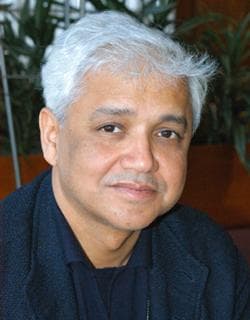
Amitav Ghosh is an Indian author known for his fiction that often explores themes of history, culture, and identity. His notable works include "Sea of Poppies," "The Glass Palace," "The Hungry Tide," "The Shadow Lines," and "In an Antique Land." Ghosh's writing frequently reflects his interest in the complexities of colonialism and migration.
Similar books
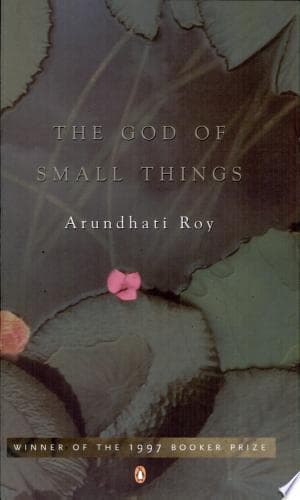
- The God of Small Things
Arundhati Roy
3.9 (244k) average on GoodreadsLiterary FictionFocuses on family dynamics, memory, and the impact of social and political history in India.
- The Old Man and the Sea
Ernest Hemingway
3.8 (831k) average on GoodreadsLiterary FictionA Cuban fisherman's long struggle with a giant marlin becomes a story of endurance and dignity, now retold for young adults with illustrations, phonetic guides, and writing prompts in Traditional Chinese.
- One Hundred Years of Solitude
Gabriel García Márquez
4.1 (753k) average on GoodreadsLiterary FictionThrough the multi-generational story of the Buendía family, a mythical town deals with the repeating patterns of time, love, and solitude, as the extraordinary mixes with the ordinary.
- The Goldfinch
Donna Tartt
3.9 (720k) average on GoodreadsLiterary FictionHaunted by a tragic explosion and clutching a stolen Dutch masterpiece, a young orphan navigates the opulent drawing rooms of New York and the gritty underbelly of the art world, desperately seeking connection and redemption amidst a life spiraling into crime and obsession.
- Little Fires Everywhere
Celeste Ng
4.1 (713k) average on GoodreadsLiterary FictionIn Shaker Heights, an artist and her daughter move in, and their free-spirited lives clash with a rule-bound matriarch, revealing hidden conflicts beneath a perfect surface.
- Eleanor Oliphant Is Completely Fine
Gail Honeyman
4.3 (708k) average on GoodreadsLiterary FictionA lonely woman's structured life changes when an IT guy and an elderly man help her learn to open her heart.





Enjoyed the summary?
A summary gives you the shape of the book. The book itself has the detail, the examples and the voice.
Find The Shadow Lines on AmazonAs an Amazon Associate, BookBrief earns from qualifying purchases. How we're funded