

Synopsis
Covers the whole plot, including the ending.
- Difficulty
- Medium
- Pacing
- Moderate
- Mood
- Adventurous, Historical, Intriguing, Suspenseful
- Read it if
- You enjoy historical mysteries with a plucky young heroine, political intrigue, and a touch of romance set against the backdrop of the French Revolution.
- Skip it if
- You prefer fast-paced thrillers without much historical detail or find love triangles tedious.
Den of Thieves Plot Summary
Covers the whole plot, including the ending.
A Sudden Departure
The novel begins with Cat Royal, an orphan and ward of Mr. Sheridan, living a lively life backstage at the Drury Lane Theatre in London. Her world changes when she is told she must leave immediately. Mr. Sheridan, fearing for her safety due to rising political tensions and her tendency to get into trouble, arranges for her to travel to France. Cat, who loves the chaos and excitement of the theatre, is dismayed by this sudden move. She is given a new identity as a young lady named Catherine, a stark contrast to her usual adventurous self, and departs for Paris with a stern chaperone, Mrs. Piggot, and a mysterious package she must deliver.
Arrival in a Tumultuous City
Cat arrives in Paris in 1792, a city already full of revolutionary fervor. The streets are dangerous, filled with political unrest, and the atmosphere is thick with suspicion. Her first attempts to navigate this new environment are challenging, especially with Mrs. Piggot's strict supervision. Cat quickly realizes that her new life as 'Catherine' offers far less freedom than she enjoyed at Drury Lane. She becomes aware of the stark contrast between the city's wealthy elite and the struggling common people, and the simmering anger that threatens to erupt into violence. The package she carries becomes a source of anxiety, as its contents and purpose remain unknown to her.
A New Identity and a Secret Mission
Unable to tolerate her restrictive life, Cat soon drops her 'Catherine' persona. Using her theatrical skills, she disguises herself as a young ballerina, allowing her more freedom to move through the city unnoticed. This new identity also gives her an unexpected opportunity: she is recruited by a mysterious individual to become an underground reporter, tasked with observing and documenting Paris's political climate. This role appeals to Cat's adventurous spirit and her curiosity, pulling her deeper into the city's political activities. She begins gathering information, often risking discovery, about the various factions and their actions.
The Network of Spies
As Cat gets further into her role as a reporter, she uncovers a complex network of spies, informants, and revolutionaries operating within Paris. She learns that both the Royalists and the revolutionaries have their own intelligence operations, and that trust is rare. She meets various figures, some genuinely committed to their cause, others opportunistic. She also discovers that the package she brought from England is more significant than she initially thought, connecting her to this intricate web of espionage. Cat must constantly be on guard, as a wrong word or a misplaced report could have dire consequences in such a volatile environment.
Encounters with Mysterious Suitors
Despite her disguise and dangerous mission, Cat finds herself receiving unexpected attention from several young men. Pedro, a charming and enigmatic Spaniard, frequently crosses her path, seemingly with a hidden agenda. Syd, a familiar face from her past at Drury Lane, also reappears, adding another layer of complexity to her situation. Then there is the mysterious French nobleman who seems to recognize her true identity despite her elaborate disguise. Cat is confused by their interest, unsure if they are genuinely attracted to her, or if their attention is connected to her secret activities and the political intrigues around her. She struggles to understand their true motives.
The Royal Family's Escape Attempt
Cat becomes involved in the desperate attempts of the French Royal Family, particularly Marie Antoinette, to escape the increasingly hostile city. Her reporting duties place her near key events and figures associated with the Royalists. She sees the growing paranoia and desperation of the monarchy as the revolution gains momentum. The escape attempt itself is a dramatic and tense sequence, highlighting the extreme risks involved for anyone associated with the Royalists. Cat's observations during this period are important for her reports, but also put her in significant danger of being discovered and implicated.
Betrayal and Imprisonment
The political climate in Paris quickly worsens, and suspicion is widespread. Cat's activities as an underground reporter become increasingly dangerous. She is eventually betrayed by someone she trusted, leading to her arrest. Accused of being a traitor to the revolution, she is imprisoned and faces execution by guillotine. This is a terrifying ordeal for Cat, who has always relied on her quick wit and resourcefulness to escape danger. In her confinement, she reflects on her choices and the true cost of her involvement in the revolution, realizing the seriousness of her situation.
Unmasking the Conspiracies
During her imprisonment, Cat's keen observational skills do not leave her. She pieces together fragments of conversations, observes her fellow prisoners, and uses her intelligence to uncover deeper political conspiracies. She realizes that her arrest is not just a random event, but part of a larger power struggle within the revolutionary factions. She identifies the true orchestrators of her downfall and the complex motives behind their actions. This new understanding fuels her determination to clear her name and expose the real traitors, even as her own life hangs precariously in the balance. She begins to plan her escape and vindication.
A Daring Escape and Confrontation
Using her theatrical ingenuity and the help of unexpected allies, Cat orchestrates a daring escape from prison. The escape is full of danger, requiring her to use all her skills in disguise and deception. Once free, she races against time to gather evidence and confront those responsible for her predicament. She uses her accumulated knowledge from her reporting and her understanding of the various political players to expose the truth. This confrontation is a climactic moment, where Cat must use her wits to outsmart powerful enemies and reveal the true nature of the betrayals that led to her near-execution.
The Power of the People
Through her experiences, from observing the common people's struggles to witnessing the fall of the monarchy and her own near-execution, Cat comes to understand the great power of the people. She sees how collective will can overturn centuries of tradition and how easily it can be manipulated. She observes the raw passion and the brutal realities of the revolution, realizing that while it promises freedom, it also brings immense suffering and injustice. Her journey through revolutionary Paris changes her understanding of society, politics, and the enduring strength of the human spirit, for better or worse.
Resolutions and Departures
With the immediate danger averted and the conspiracies unraveled, Cat begins to finish her Parisian adventure. She reconciles with some of her former companions and comes to a better understanding of the motives of others. The mystery surrounding the package she carried from England is finally resolved, revealing its true significance. While Paris's political landscape remains volatile, Cat's personal mission is complete. She reflects on the changes she has undergone and the lessons she has learned. With a new sense of maturity and purpose, she prepares to leave France, ready for whatever new challenges await her.
Principal Figures
Cat Royal
Protagonist
An adventurous and resourceful orphan from the Drury Lane Theatre.
Cat Royal is a spirited and independent young woman, originally an orphan raised backstage at the Drury Lane Theatre. She is quick-witted, observant, and possesses a natural talent for disguise and performance. Despite her humble origins, she navigates high society and dangerous political landscapes with remarkable ingenuity. Her adventurous spirit often leads her into trouble, but her strong moral compass and loyalty guide her actions. She values freedom and truth above all else, often speaking her mind even when it puts her at risk.
Relationships: Mr. Sheridan (Guardian and mentor); Mrs. Piggot (Strict chaperone); Pedro (Mysterious suitor and fellow spy); Syd (Childhood friend and potential suitor); Marie Antoinette (Observed subject and symbol of the old regime)
Pedro
Supporting
A charming and enigmatic Spanish nobleman with a hidden agenda.
Pedro is a captivating and mysterious figure who frequently crosses paths with Cat. He is charming, intelligent, and seems to be involved in the political intrigues of Paris, though his allegiances are often unclear. He shows a particular interest in Cat, sometimes aiding her, other times seemingly manipulating her. He is a master of disguise and deception, reflecting the dangerous world they inhabit. His motives are complex, driven by a mix of personal ambition and a desire for justice, though his methods can be ambiguous.
Relationships: Cat Royal (Love interest and fellow spy/informant); Various revolutionary factions (Loose allegiances)
Syd
Supporting
Cat's loyal childhood friend from Drury Lane, now in Paris.
Syd is a familiar and comforting presence for Cat, having known her since their days at the Drury Lane Theatre. He is earnest, loyal, and somewhat protective of Cat, though he often struggles to keep up with her adventurous spirit. His presence in Paris is initially mysterious, but he proves to be a valuable and trustworthy ally. He represents a connection to Cat's past life and offers a grounding influence amidst the chaos of the revolution. He is less politically astute than Cat, but his heart is in the right place.
Relationships: Cat Royal (Childhood friend and potential love interest)
Mr. Sheridan
Supporting
Cat's guardian and a prominent figure at the Drury Lane Theatre.
Mr. Sheridan is Cat's guardian and the owner of the Drury Lane Theatre. He is a man of influence and connections, who cares deeply for Cat's well-being, despite his often-distant demeanor. He is the one who arranges for Cat's departure to Paris, ostensibly for her safety, but also with a hidden agenda involving the political climate between England and France. He represents the English establishment and the theatrical world Cat leaves behind. His actions, though sometimes perplexing to Cat, are ultimately motivated by a complex understanding of the political landscape.
Relationships: Cat Royal (Guardian and mentor)
Mrs. Piggot
Supporting
Cat's strict and traditional chaperone during her journey to Paris.
Mrs. Piggot is the stern and traditional chaperone assigned to Cat for her journey to Paris. She represents the rigid social conventions of the time and attempts to mold Cat into a proper young lady, a task Cat finds stifling. Mrs. Piggot is often exasperated by Cat's independent spirit and her tendency to disregard rules. While seemingly an antagonist to Cat's freedom, she is ultimately doing what she believes is best, albeit through a very narrow worldview. Her presence highlights the contrast between Cat's natural inclinations and societal expectations.
Relationships: Cat Royal (Chaperone and source of exasperation)
Marie Antoinette
Mentioned
The Queen of France, a symbol of the old regime.
Marie Antoinette is the beleaguered Queen of France, whose lavish lifestyle and perceived indifference to the suffering of the common people make her a target of revolutionary anger. While Cat does not interact with her directly, Marie Antoinette is a central figure in the political turmoil Cat observes and reports on. Her desperate attempts to escape and her eventual fate highlight the extreme stakes of the French Revolution. She serves as a tragic symbol of the old order crumbling under the weight of popular discontent.
Relationships: Cat Royal (Observed subject)
Themes & Insights
Identity and Disguise
The novel explores how identity can change and be manipulated, especially during political unrest. Cat constantly shifts between her true self, 'Catherine' the proper lady, and her 'ballerina' disguise, each allowing her different levels of freedom and access. This theme is central to her survival and her ability to gather information. For example, her 'ballerina' persona allows her to move freely through revolutionary Paris, observing events that 'Catherine' would not see. The blurred lines of identity also extend to other characters like Pedro, whose true loyalties are often hidden behind a charming facade, making trust a constant challenge.
“A good disguise isn't just about changing your clothes; it's about changing who you are, even if just for a little while.”
The Power of the People vs. Authority
This theme is clearly shown through the French Revolution. The novel contrasts the absolute power of the monarchy with the growing collective power of the common people. Cat sees firsthand the shift in power dynamics, from the aristocracy's opulence to the sans-culottes' fervor. The revolutionary crowds, initially seen as chaotic, gradually show their formidable strength in challenging and ultimately overthrowing established authority. Cat's own experiences, including her near-execution, highlight the arbitrary and often brutal nature of power, whether monarchical or revolutionary. The story shows how easily the power of the people can be both a force for change and a tool for oppression.
“The roar of the crowd was not just noise; it was a living, breathing thing, capable of both creation and destruction.”
Loyalty and Betrayal
In the dangerous setting of revolutionary Paris, loyalty is rare and valuable, constantly tested by shifting allegiances and personal gain. Cat meets many characters whose loyalties are unclear, making it difficult to tell friend from foe. The betrayal that leads to her imprisonment is a key moment, forcing her to re-evaluate her trust in others. Conversely, the unwavering loyalty of characters like Syd provides a stark contrast to the widespread treachery. The novel shows how political ideologies, personal ambitions, and fear can all drive individuals to betray even those closest to them, making survival depend on good judgment of character.
“In a city where every whisper could be a lie, true loyalty was a jewel beyond price.”
Justice and Injustice
The novel looks at the complex nature of justice during a revolutionary period. Cat observes the clear injustices of the old regime, which fueled the revolution, but also sees the new forms of injustice done in the name of liberty. The arbitrary arrests, show trials, and public executions highlight the blurred lines between revolutionary justice and vengeful mob rule. Cat's own experience of being falsely accused and imprisoned for treason emphasizes how fragile justice is when political passions are high. The story ultimately questions whether true justice can ever be achieved when society is tearing itself apart, and whether the ends truly justify the means.
“They spoke of liberty and equality, but the guillotine spoke only of death.”
Plot Devices & Literary Techniques
The MacGuffin (The Package)
A mysterious package that drives Cat's initial journey and connects her to the larger plot.
The package Cat is instructed to deliver from England to France serves as an initial MacGuffin. Its contents are unknown to Cat, yet its importance is repeatedly emphasized, creating suspense and providing a clear motivation for her journey and early actions in Paris. As the story progresses, the package's true significance is gradually revealed, connecting Cat to the intricate web of espionage and political intrigue, and eventually providing a key piece of information or leverage in the climax. It's a tangible object that symbolizes the hidden forces at play.
Dramatic Irony
The audience often knows more about the political climate or certain characters' true intentions than Cat does.
Dramatic irony is frequently employed to heighten tension and suspense. For instance, the audience is often more aware of the escalating dangers of the French Revolution than Cat is in her initial naivety, or they might suspect the true allegiances of characters like Pedro or Syd before Cat fully grasps them. This creates a sense of foreboding and anticipation, as the reader watches Cat navigate perilous situations with incomplete information, making her eventual discoveries and narrow escapes more impactful. It underscores the dangerous environment she operates in.
Disguise and Role-Playing
Cat's theatrical skills are used for survival and information gathering.
Cat's background in the Drury Lane Theatre provides her with exceptional skills in disguise and role-playing, which become a crucial plot device. Her 'ballerina' persona is not merely a costume; it's a fully embodied character that allows her to move through different social strata and gather information undetected. This device enables her to access restricted areas, overhear conversations, and avoid suspicion. It also highlights her adaptability and quick thinking, demonstrating how her unique talents are perfectly suited for the clandestine world of espionage in revolutionary Paris.
The Unreliable Narrator (Subtle)
Cat's youthful perspective occasionally limits her understanding of complex political motives.
While Cat is an astute observer, her youthful exuberance and occasional naivety subtly position her as a somewhat unreliable narrator, especially concerning the deeper political machinations. She often interprets events through her personal lens, and her understanding of complex adult motives or historical significance evolves throughout the story. This allows for reveals and twists that genuinely surprise both Cat and the reader, as her initial perceptions are challenged by the harsh realities of the revolution. It emphasizes her journey of growth and political awakening.
Den of Thieves Quotes
“The city was a beast, and we were just its fleas, biting and scratching for a living.”
“There are more secrets in a single alleyway than in all the king's palaces.”
“A good thief isn't just nimble; they're invisible.”
“Trust is a rope, easily frayed and hard to mend once broken.”
“We may be thieves, but we have our own kind of honour.”
“Every shadow holds a story, if you know how to listen.”
“Fear can make you run faster, but courage makes you stand your ground.”
“The past is a heavy cloak, but you can choose to shed it.”
“Sometimes the greatest treasures aren't gold or jewels, but the truth.”
“Even in the darkest corners, a flicker of hope can survive.”
“A lie is a clever thing, but truth has a way of wriggling free.”
“The city never sleeps, and neither do its secrets.”
“We're not just a gang; we're a family, forged in the fires of the streets.”
“Justice isn't always found in a courtroom; sometimes you have to steal it.”
Quiz
10 questions on the plot and the characters. Each answer comes with a short explanation.
Question 1
Why does Cat Royal initially travel to Paris at the beginning of 'Den of Thieves'?
- She is sent there on a diplomatic mission by Lord Francis.
- She is fleeing London after being accused of a crime she didn't commit.
- She is homeless and stows away on a boat hoping for a new start.
- She is invited by a French theatre company to join their troupe.
Show answer
C. She is homeless and stows away on a boat hoping for a new start. Cat finds herself without a home in London and decides to stow away on a ship bound for Paris, seeking a fresh beginning.
Question 2
What disguise does Cat Royal adopt while in Paris to navigate the city and avoid detection?
- A young, aspiring painter.
- A prissy ballerina.
- A street urchin selling flowers.
- A quiet librarian's assistant.
Show answer
B. A prissy ballerina. To blend in and protect her identity, Cat disguises herself as a delicate, refined ballerina, which is a stark contrast to her true nature.
Question 3
What is Cat's primary occupation or role in the Parisian underground during the French Revolution?
- She works as a seamstress for the aristocracy.
- She becomes a spy for the English government.
- She secretly reports on revolutionary activities as an underground journalist.
- She performs as a street musician to earn money.
Show answer
C. She secretly reports on revolutionary activities as an underground journalist. Cat becomes an underground reporter, secretly documenting the events and sentiments of the French Revolution.
Question 4
Which historical event forms the backdrop for much of the action in 'Den of Thieves'?
- The American Revolution.
- The Napoleonic Wars.
- The French Revolution.
- The Glorious Revolution.
Show answer
C. The French Revolution. The entire novel is set against the tumultuous backdrop of the French Revolution, with the French Royal family fleeing and the power of the people rising.
Question 5
Cat is nearly executed for what specific accusation related to the revolution?
- Espionage against the revolutionaries.
- Theft of royal jewels.
- Inciting riots among the peasants.
- Attempting to assassinate a revolutionary leader.
Show answer
A. Espionage against the revolutionaries. Cat finds herself in grave danger and is nearly hung for being accused of being a traitor or spy against the revolutionary cause.
Question 6
What internal conflict does Cat experience regarding the attention she receives from various suitors in Paris?
- She is flattered by all the attention and enjoys stringing them along.
- She uses the suitors to gain information for her reporting.
- She finds it baffling and often an unwelcome distraction from her work.
- She actively seeks out suitors to secure her financial future.
Show answer
C. She finds it baffling and often an unwelcome distraction from her work. Despite her disguise, Cat receives significant attention from various suitors, which she finds baffling and often an annoying distraction from her more pressing matters.
Question 7
A key theme explored in the novel through Cat's experiences with the French Revolution is:
- The enduring power of monarchies.
- The importance of individual wealth over collective action.
- The power and agency of ordinary people.
- The superiority of English political systems.
Show answer
C. The power and agency of ordinary people. As the French Royal family flees, Cat observes and ultimately discovers the immense power and agency held by the common people during the revolution, a central theme.
Question 8
How does Cat's background as a 'theatre cat' influence her ability to survive and operate in Paris?
- Her knowledge of stagecraft allows her to design elaborate traps for her enemies.
- Her experience with different roles and disguises makes her adept at assuming her ballerina persona and navigating various social circles.
- She uses her singing voice to rally the revolutionaries.
- Her connections from the theatre help her escape from prison.
Show answer
B. Her experience with different roles and disguises makes her adept at assuming her ballerina persona and navigating various social circles. Cat's upbringing in the theatre world, constantly observing and adapting to different characters and situations, makes her exceptionally skilled at adopting disguises and navigating complex social environments, crucial for her survival and work as a reporter.
Question 9
What specific detail about the French Royal family's escape attempt is highlighted in the novel, and how does Cat react to it?
- Their successful escape to Austria, which Cat views with admiration.
- Their capture at Varennes, which solidifies Cat's understanding of the people's power.
- Their elaborate plan to use a hot air balloon, which Cat finds amusing.
- Their quiet departure from a secret tunnel, which Cat helps facilitate.
Show answer
B. Their capture at Varennes, which solidifies Cat's understanding of the people's power. The novel specifically references the French Royal family's attempt to flee and their subsequent capture, likely at Varennes, which serves as a pivotal moment for Cat in realizing the strength and determination of the revolutionary people.
Question 10
Beyond the immediate plot, what does Cat's journey from being homeless to an underground reporter symbolize about her character development?
- Her transformation from a naive child to a cynical adult.
- Her embrace of a life of crime and deception.
- Her growing independence, resilience, and commitment to justice and truth-telling, even in dangerous circumstances.
- Her desire to abandon her past and fully embrace a new aristocratic identity.
Show answer
C. Her growing independence, resilience, and commitment to justice and truth-telling, even in dangerous circumstances. Cat's journey showcases her remarkable resilience, adaptability, and an emerging sense of purpose, using her skills to report on the truth and fight for what she believes is right, symbolizing her growth into an independent and principled individual.
Den of Thieves FAQ
What is the central premise of 'Den of Thieves'?
The central premise involves Cat Royal, now homeless, traveling to revolutionary Paris where she adopts the disguise of a 'prissy ballerina' to navigate the dangerous political landscape. She becomes an underground reporter for the 'Argus', uncovering secrets and nearly facing execution, all while grappling with unexpected romantic attention.
How does Cat Royal end up in Paris and what is her initial goal there?
Cat finds herself in Paris after becoming homeless in London, likely due to circumstances related to her previous adventures or the dissolution of her living situation. Her initial goal is survival and perhaps to find a new purpose, which she quickly does by immersing herself in the burgeoning revolutionary fervor and the world of underground journalism.
What role does her 'prissy ballerina' disguise play in the story?
Her 'prissy ballerina' disguise is crucial for her survival and infiltration into various social circles in Paris. It allows her to move relatively unnoticed in aristocratic and theatrical settings, providing a cover for her true identity as a shrewd, observant reporter and revolutionary sympathizer, masking her true nature and intentions.
Who are some of the key suitors or romantic interests Cat encounters in Paris?
Cat encounters several suitors, including the enigmatic and charming French nobleman, Antoine, who represents the old regime, and the fervent revolutionary, Auguste, who embodies the spirit of the new order. There's also the persistent English spy, Bartholomew, who complicates her affections and allegiances, creating a complex romantic web.
What significant historical event forms the backdrop of 'Den of Thieves'?
The significant historical event forming the backdrop is the tumultuous period of the French Revolution, specifically the early stages leading up to the flight of the Royal family. This era of immense social and political upheaval provides a dangerous and dynamic setting for Cat's adventures and journalistic pursuits.
Are there any subtle nods to future historical events or figures within the narrative?
Yes, the novel subtly foreshadows the increasing radicalization of the revolution and the eventual Reign of Terror through the escalating rhetoric and actions of certain characters. There might also be veiled references to figures like Robespierre or Danton through the portrayal of zealous revolutionaries, hinting at the darker turns to come.
How does Cat's experience in London's theatrical world inform her actions and observations in Paris?
Cat's background in London's Drury Lane theatre gives her an innate understanding of performance, disguise, and reading people's true intentions behind their facades. This experience is invaluable in Paris, allowing her to adeptly maintain her ballerina persona, discern the 'acts' put on by various political factions, and gather information effectively.
What is the significance of the 'Argus' and its role in the story beyond just journalism?
The 'Argus' is not merely a newspaper; it represents the voice of the people and the burgeoning power of information in shaping public opinion during the revolution. Its existence allows Cat to directly influence events, expose injustices, and rally support, making it a powerful weapon against both the old regime and emerging radical elements.
How does Cat's internal conflict between her English origins and her growing sympathy for the French Revolution manifest?
Cat's internal conflict manifests as a struggle between her loyalty to her homeland and her burgeoning understanding of the injustices faced by the French populace. She grapples with the concept of patriotism versus universal human rights, often finding herself torn between defending her English identity and actively supporting the revolutionary cause.
What psychological impact does nearly being hung have on Cat, and how does she process this trauma?
Nearly being hung has a profound psychological impact on Cat, forcing her to confront her own mortality and the extreme stakes of her journalistic endeavors. She processes this trauma by redoubling her commitment to truth and justice, using the experience to fuel her resolve and deepen her understanding of the dangers inherent in political activism.
How does Cat's disguise as a 'prissy ballerina' affect her own sense of self and identity?
The 'prissy ballerina' disguise challenges Cat's inherent tomboyish and independent nature, forcing her to adopt a persona that is diametrically opposed to her true self. This creates an internal tension, making her question the authenticity of her actions while also proving her adaptability and the power of performance in shaping perception.
In what ways does Cat's experience in Paris mature her understanding of power and societal structures?
Cat's experiences in Paris profoundly mature her understanding of power by showing her its various forms: the oppressive power of monarchy, the volatile power of the people, and the persuasive power of the press. She learns that societal structures are not immutable and can be overturned, but often at a great and bloody cost.
Is Cat's ultimate loyalty to a specific political faction, or does she remain an independent observer/reporter?
While Cat initially sympathizes with the revolutionary cause, her experiences, particularly her near-execution, force her to question the excesses and injustices committed in the name of the revolution. She ultimately strives to remain an independent observer and reporter, loyal primarily to truth and justice, rather than any single faction.
How does the novel portray the 'power of the people' – is it unequivocally positive or more nuanced?
The novel portrays the 'power of the people' in a highly nuanced way. While it celebrates their ability to challenge tyranny and demand change, it also highlights the dangers of mob mentality, unbridled rage, and how easily revolutionary fervor can be manipulated, leading to chaos and injustice rather than pure liberation.
What is the significance of Cat being 'baffled by attention from numerous suitors' in the context of her character arc?
Cat being 'baffled' by suitors highlights her previous focus on adventure and independence over romance, and her initial naivete regarding her own attractiveness. It signifies her coming-of-age and the added layer of personal complexity that romantic entanglements bring to her already perilous existence, forcing her to consider new aspects of her identity.
Does the book suggest that disguise is an act of deception or a necessary tool for survival and truth-seeking?
The book largely suggests that disguise, for Cat, is a necessary tool for survival and truth-seeking in a dangerous world. While it involves deception, it enables her to access information, protect herself, and ultimately serve a higher purpose of exposing truths, rather than being an act of malicious intent.
How does the author balance the mystery elements with the historical fiction and character development?
The author expertly balances these elements by weaving the mystery around Cat's journalistic investigations into revolutionary plots and counter-plots. The historical setting provides the stakes and context, while Cat's personal growth and romantic entanglements are intricately tied to the unfolding mysteries she attempts to solve, creating a cohesive narrative.
What message does 'Den of Thieves' convey about the role of journalism during times of political unrest?
'Den of Thieves' conveys that journalism plays a vital, albeit dangerous, role during political unrest, serving as a powerful tool for truth-telling, exposing corruption, and mobilizing public opinion. It emphasizes the responsibility of reporters to remain objective even amidst chaos, and the personal risks involved in seeking and disseminating truth.
About the author

Julia Golding is a British author known for her works of fiction, particularly in the children's and young adult genres. Her notable books include "Cat Among the Pigeons," "Dragonfly," "The Diamond of Drury Lane," and "Den of Thieves," which showcase her storytelling skills and imaginative plots. Golding's writing often features adventure and historical elements, appealing to a wide range of readers.
Similar books
- The Scarlet Pimpernel
Emmuska Orczy
4.1 (124k) average on GoodreadsHistorical FictionFeatures a daring hero in disguise helping nobles escape during the French Revolution.
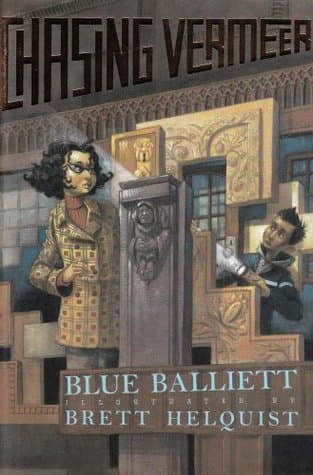
- Chasing Vermeer
Blue Balliett
3.7 (28k) average on GoodreadsChildren'sA children's mystery with clever young protagonists solving a complex puzzle.
- Harry Potter and the Sorcerer's Stone
J.K. Rowling
4.5 (7M) average on GoodreadsFantasyRescued from a miserable life under the stairs, an orphaned boy discovers he's a wizard destined for a magical school, where he uncovers a dangerous secret tied to the dark wizard who murdered his parents.
- The Hobbit, or There and Back Again
J.R.R. Tolkien
4.3 (2.9M) average on GoodreadsFantasyA comfort-loving hobbit named Bilbo Baggins is whisked away by a mischievous wizard and a band of dwarves on an unexpected journey to reclaim stolen treasure from a fearsome dragon, discovering courage and a magical ring along the way.
- Harry Potter and the Goblet of Fire
J.K. Rowling
4.6 (2.6M) average on GoodreadsFantasyA bewildered Harry Potter, underage and thrust into a deadly Triwizard Tournament, must brave dragons, mermaids, and a resurgent dark magic to survive a year that will forever alter the wizarding world.
- Harry Potter and the Order of the Phoenix
J.K. Rowling
4.5 (2.5M) average on GoodreadsFantasyIn a year of oppressive secrets and the threat of Voldemort, Harry Potter and Dumbledore's Army secretly train for war, shown through Jim Kay and Neil Packer's dark illustrations.





Enjoyed the summary?
A summary gives you the shape of the book. The book itself has the detail, the examples and the voice.
Find Den of Thieves on AmazonAs an Amazon Associate, BookBrief earns from qualifying purchases. How we're funded