

Synopsis
Covers the whole plot, including the ending.
- Difficulty
- Medium
- Pacing
- Moderate
- Mood
- Adventurous, Romantic, Suspenseful, Heroic
- Read it if
- You enjoy swashbuckling adventure, clever disguises, and a dash of historical romance set against a backdrop of revolutionary intrigue.
- Skip it if
- You prefer gritty realism over romanticized heroism, or find elaborate period dialogue and courtly manners tedious.
The Scarlet Pimpernel Plot Summary
Covers the whole plot, including the ending.
The Fisherman's Rest and the Reign of Terror
The story begins at 'The Fisherman's Rest' inn in Dover, England, in September 1792. French refugees arrive daily, trying to escape the guillotine. The English public is interested in the 'Scarlet Pimpernel,' a brave Englishman who, with his group, secretly rescues French aristocrats from execution and takes them to safety. His symbol, a small red flower, is well-known. French agent Chauvelin is introduced, determined to find and capture this hero, whose actions embarrass the French Republic. People talk a lot about the Pimpernel's latest rescue, which makes Chauvelin more frustrated and determined.
Lady Blakeney's Reputation and Sir Percy's Demeanor
Marguerite St. Just, a beautiful and smart French actress, is now Lady Blakeney. She is married to the rich, seemingly dull English baronet, Sir Percy Blakeney. She is admired for her beauty but disliked by English society, especially by the Prince of Wales's group. This is because she supposedly helped denounce the Marquis de St. Cyr and his family to the French tribunal, leading to their execution. She deeply regrets this past act, which she believes was an accident. It has created a distance between her and Sir Percy, who has become cold and distant since their marriage, acting like a silly, fashion-obsessed man. Marguerite struggles with being isolated and her husband's strange indifference.
Chauvelin's Blackmail and Marguerite's Dilemma
Chauvelin arrives in England, planning to use Lady Blakeney's past against her. He confronts Marguerite, telling her that her brother, Armand St. Just, is suspected of being part of the Scarlet Pimpernel's group and is in danger. Chauvelin blackmails Marguerite: if she helps him find the Pimpernel's identity, he will keep Armand safe. If she refuses, Armand will be arrested and guillotined. Torn between supporting the Pimpernel and loving her brother, Marguerite agrees to help Chauvelin. This puts her in a difficult moral situation and a dangerous game of espionage.
The Ball and the Crucial Note
At a ball hosted by the Prince of Wales, Marguerite, pressured by Chauvelin, watches the guests. She sees a note passed between Sir Andrew Ffoulkes and Lord Antony Dewhurst, two known associates of the Pimpernel. Fearing for Armand, she quietly picks up the discarded note and gives it to Chauvelin. The note has instructions for the Pimpernel's next meeting: 'Tonight, the supper-room of the Lord Grenville, a quarter past twelve.' Marguerite does not know that this information puts the Pimpernel and his group in danger, as Chauvelin now has a way to ambush them.
The Revelation of Sir Percy's Identity
Marguerite overhears Chauvelin talking with his men, confirming that the note she gave him will lead to the Pimpernel's capture. Overwhelmed with guilt and growing fear, she rushes home. In Sir Percy's study, she finds a ring with the scarlet pimpernel flower on it, along with a secret drawer containing papers about the group's activities. The truth hits her: her seemingly foolish husband, Sir Percy Blakeney, is the Scarlet Pimpernel. Her past resentment and his pretended foolishness disappear, replaced by love and fear for his life. She understands how much he sacrificed and why he acted distant.
Marguerite's Race Against Time
Realizing Sir Percy is in immediate danger, Marguerite decides she must warn him. She tells Sir Andrew Ffoulkes Percy's identity and Chauvelin's trap. Together, they travel across the English Channel to France, hoping to reach Percy before Chauvelin's agents. They follow clues, using Percy's known meeting points and disguises. Marguerite's love for Percy and her desire to make up for her unintentional betrayal drive her, as she races against time and Chauvelin's pursuit.
Pursuit Across France
Marguerite and Sir Andrew follow Percy's path through French towns, often just behind him and his group. They have many close calls, barely avoiding detection by Chauvelin's spies and soldiers. Marguerite, disguised as a peasant woman, shows courage and cleverness. They learn that Percy is going to a remote fishing hut on the coast near Calais, the meeting point for the escapees. The situation becomes more tense as Chauvelin and his men are also getting close, setting up an ambush at the place where Percy plans to meet the fugitives and arrange their transport to England.
The Old Jew and the Fishing Hut
Chauvelin and his men arrive at the fishing hut first, setting their trap. Percy, disguised as an old Jew named Reuben, approaches the hut. He uses his acting skills to trick Chauvelin, pretending to be old and confused. While Chauvelin is distracted, Percy creates a diversion by setting fire to a bundle of sticks, causing a small explosion and smoke. In the confusion, he manages to slip away, leaving Chauvelin angry and empty-handed. Marguerite, watching from a distance, feels hope and admiration for her husband's cleverness and bravery.
The Rendezvous on the Sands
After escaping the hut, Percy, still disguised as the old Jew, meets the waiting French aristocrats, including Armand St. Just, on the desolate sands. He reveals who he is and quickly arranges their escape onto a waiting schooner, 'The Day Dream,' which will take them to England. Chauvelin, realizing he was fooled, arrives with his soldiers, but they are too late. The schooner is already sailing away. Percy, with his usual confidence, leaves a note for Chauvelin, signed with his scarlet pimpernel, mocking the agent's failure and confirming his success.
Reunion and Reconciliation
Marguerite, having seen Percy's triumph from a hidden spot, eventually gets back to the schooner. On board, she and Percy are reunited. Percy, understanding Marguerite's true feelings and her efforts to save him, stops acting foolish. He tells her how much he loves her and explains his pretended foolishness was a way to protect his identity and to test her love after her supposed betrayal of the St. Cyr family. They make up, their love stronger and more honest, sailing back to England with their shared secrets and a secure future.
Principal Figures
Sir Percy Blakeney (The Scarlet Pimpernel)
Protagonist
The wealthy English baronet who secretly rescues French aristocrats
Sir Percy is the enigmatic hero, known publicly as a dull, fashion-obsessed fop, but secretly he is the brilliant and courageous Scarlet Pimpernel. He is incredibly intelligent, resourceful, and a master of disguise and deception, using his 'foolish' persona as a perfect cover. His motivations are humanitarian, driven by a desire to save innocent lives from the guillotine. He is deeply in love with his wife, Marguerite, but his faith in her was shaken by her past actions, leading him to adopt his foppish disguise even at home. He is fiercely loyal to his league and utterly fearless in the face of danger.
Relationships: Marguerite Blakeney (Husband, initially estranged but deeply in love); Chauvelin (Arch-nemesis); Sir Andrew Ffoulkes (Loyal member of his league and trusted friend); Lord Antony Dewhurst (Loyal member of his league and trusted friend)
Marguerite Blakeney (née St. Just)
Protagonist
Sir Percy's intelligent, beautiful French wife, caught in a web of espionage
Marguerite is a captivating and intelligent Frenchwoman, formerly a celebrated actress. She possesses a sharp wit, strong will, and deep capacity for love. Her past, specifically her unwitting denouncement of the Marquis de St. Cyr, haunts her and creates a rift with her husband. She initially finds Sir Percy's foppishness irritating but grows to love and admire him deeply upon discovering his true identity. Her journey is one of atonement, courage, and rediscovery of love, as she risks everything to save her husband and brother. She is fiercely loyal to those she loves.
Relationships: Sir Percy Blakeney (Wife, initially estranged but deeply in love); Armand St. Just (Beloved younger brother); Chauvelin (Oppressor and blackmailer); Sir Andrew Ffoulkes (Ally and confidante)
Chauvelin
Antagonist
The ruthless and cunning French agent determined to capture the Scarlet Pimpernel
Chauvelin is the chief agent of the French Committee of Public Safety, utterly devoted to the ideals of the Revolution and determined to stamp out any opposition. He is intelligent, cunning, and relentless in his pursuit of the Scarlet Pimpernel. He uses blackmail, manipulation, and espionage without remorse, viewing his actions as necessary for the Republic. Despite his intelligence, he consistently underestimates the Pimpernel's ingenuity and is repeatedly outwitted, leading to his increasing frustration and fury. He represents the cold, calculating brutality of the Reign of Terror.
Relationships: Sir Percy Blakeney (Arch-nemesis); Marguerite Blakeney (Manipulator and blackmailer); Armand St. Just (Political target)
Armand St. Just
Supporting
Marguerite's beloved younger brother and a member of the Pimpernel's league
Armand is Marguerite's younger brother, a passionate and idealistic young Frenchman who has joined the Scarlet Pimpernel's league to help rescue aristocrats. He is brave and loyal to the cause, but his involvement puts him in grave danger from Chauvelin. His peril is the primary leverage Chauvelin uses to blackmail Marguerite, making him a crucial plot device. He represents the innocent victims caught in the Revolution's crossfire and the personal stakes for Marguerite.
Relationships: Marguerite Blakeney (Beloved older sister); Sir Percy Blakeney (Leader and rescuer); Chauvelin (Political enemy)
Sir Andrew Ffoulkes
Supporting
A loyal and brave member of the Scarlet Pimpernel's league
Sir Andrew is one of the most prominent and trusted members of the Scarlet Pimpernel's league. He is courageous, loyal, and dedicated to the Pimpernel's cause. He acts as a crucial confidante and ally to Marguerite when she discovers Percy's secret, helping her in her desperate race to warn him. He demonstrates bravery and quick thinking, proving himself a reliable and capable member of the league. He also has a romantic interest in Suzanne de Tournay.
Relationships: Sir Percy Blakeney (Loyal subordinate and friend); Marguerite Blakeney (Ally and confidante); Suzanne de Tournay (Romantic interest)
Lord Antony Dewhurst
Supporting
Another dedicated member of the Scarlet Pimpernel's league
Lord Antony is another loyal and brave member of the Scarlet Pimpernel's league. He is captured early in the story by Chauvelin, demonstrating the very real dangers faced by the Pimpernel's men. His capture serves to highlight Chauvelin's ruthlessness and the Pimpernel's daring, as he is later rescued along with other French aristocrats. He embodies the chivalry and dedication of the young Englishmen who risk their lives for humanitarian causes.
Relationships: Sir Percy Blakeney (Loyal subordinate and friend); Sir Andrew Ffoulkes (Fellow league member)
Comtesse de Tournay
Supporting
A proud and aristocratic French refugee, initially hostile to Marguerite
The Comtesse de Tournay is a proud and dignified French aristocrat who has fled to England with her children. She holds a strong prejudice against Marguerite Blakeney, believing her responsible for the death of the Marquis de St. Cyr. She initially snubs Marguerite, reflecting the social condemnation Marguerite faces. Her eventual reconciliation with Marguerite, after learning of her efforts to save the Pimpernel, symbolizes the healing of social wounds and the triumph of understanding over prejudice. Her family is among those rescued by the Pimpernel.
Relationships: Marguerite Blakeney (Initially hostile, later reconciled); Suzanne de Tournay (Daughter); Sir Percy Blakeney (Rescuer of her family)
Suzanne de Tournay
Supporting
The Comtesse's daughter, who admires Marguerite and is loved by Sir Andrew
Suzanne is the daughter of the Comtesse de Tournay, a young French aristocrat who is more open-minded than her mother. She harbors no ill will towards Marguerite and maintains a friendly relationship with her. She is also the object of Sir Andrew Ffoulkes's affection. Her presence helps to soften the social ostracism Marguerite faces. Her rescue by the Pimpernel, along with her family, is one of the many successes of the league.
Relationships: Marguerite Blakeney (Friend); Sir Andrew Ffoulkes (Romantic interest); Comtesse de Tournay (Mother)
The Prince of Wales
Mentioned
The future King George IV, a prominent figure in English society
The Prince of Wales, later King George IV, is a figure of English high society. He is depicted as a man of leisure and fashion, often hosting lavish balls and gatherings where the English elite congregate. His social circle initially shuns Marguerite due to her past and her association with Sir Percy's perceived foolishness. He serves to establish the social context and the Pimpernel's standing within English society, as the Pimpernel is known to be a friend of the Prince.
Relationships: Sir Percy Blakeney (Acquaintance and fellow nobleman); Marguerite Blakeney (Initially shuns her socially)
Themes & Insights
Identity and Deception
The novel focuses on Sir Percy Blakeney's two identities: the silly baronet and the heroic Scarlet Pimpernel. His deception shows how people can present different versions of themselves for various reasons. Percy's 'idiotic' act protects his dangerous activities and tests Marguerite's love. Marguerite's past actions with the St. Cyr family lead to her social isolation and internal conflict about who she really is. Chauvelin's goal is to unmask the Pimpernel, showing how important it is to reveal true identities.
“'They seek him here, they seek him there, / Those Frenchies seek him everywhere. / Is he in heaven? Is he in hell? / That demmed elusive Pimpernel.'”
Love, Betrayal, and Forgiveness
The relationship between Sir Percy and Marguerite is central to the story. It has misunderstandings from past events. Marguerite's unintentional role in the St. Cyr tragedy makes Percy believe she betrayed him, causing him to withdraw and act foolish. Marguerite initially sees this as a betrayal of their love. Her later actions, driven by fear for her brother and then by a desperate wish to save Percy, show her true love and courage. This leads to their reconciliation and forgiveness. Their journey explores marriage under extreme pressure.
“'I was a fool ever to doubt the perfect loyalty of my wife... The only man who can hope to capture the Scarlet Pimpernel is the man who has a woman like you at his side.'”
Heroism and Sacrifice
The Scarlet Pimpernel represents selfless heroism. He and his group risk their lives to save strangers from the guillotine, driven by humanitarian reasons, not personal gain or politics. Percy's choice to keep his 'idiotic' facade, even if it harms his marriage and social standing, is a personal sacrifice for the greater good. Marguerite also shows heroism by risking her life to warn and save her husband. This shows that heroism is not only in the Pimpernel's rescues but also in personal acts of courage and loyalty.
“'It is to him that all these poor souls owe their lives, their freedom, their happiness.'”
Justice vs. Vengeance/Terror
The novel contrasts the Pimpernel's pursuit of humanitarian justice with the French Revolutionaries' reign of terror. While the revolutionaries claim to be creating a new form of justice, their methods involve executions and harsh suppression of disagreement, shown by Chauvelin's ruthless actions. The Pimpernel acts outside legal systems to provide true justice by saving innocent lives, representing a higher moral code. The story criticizes the excesses of revolution and supports individual acts of compassion over state violence.
“'The guillotine is the only cure for the ills of France!'”
Plot Devices & Literary Techniques
The Scarlet Pimpernel (Symbol)
The iconic symbol of the elusive hero and his cause
The scarlet pimpernel flower serves as the eponymous hero's calling card and a powerful symbol. It represents hope, courage, and defiance against tyranny. Its small, seemingly insignificant nature contrasts with the grand scale of the Pimpernel's daring rescues. For the oppressed, it's a beacon of salvation; for Chauvelin, it's a maddening taunt. The symbol allows the Pimpernel to leave a clear mark without revealing his identity, further frustrating his pursuers and solidifying his legend. It's a simple, yet universally recognizable motif that binds the league and inspires the public.
Disguise and Assumed Persona
Sir Percy's primary tool for secrecy and deception
Sir Percy's elaborate disguise as the dull, foppish Sir Percy Blakeney is the central plot device enabling his secret heroism. This persona is meticulously crafted and consistently maintained, making him appear utterly harmless and incapable of the Pimpernel's daring feats. It allows him to move freely in high society, gather information, and divert suspicion. The contrast between his public image and his true heroic nature is a constant source of dramatic irony and suspense, especially for Marguerite, who must reconcile the two. Other disguises, like the 'old Jew' Reuben, are also crucial for his escapes.
Blackmail
Chauvelin's leverage to force Marguerite's cooperation
Chauvelin's use of Armand St. Just's life as leverage against Marguerite is a critical plot device that drives a significant portion of the narrative. It forces Marguerite into a moral dilemma, compelling her to betray the Pimpernel, unknowingly her husband. This blackmail creates immense internal conflict for Marguerite, leading to her desperate actions and ultimately the revelation of Percy's identity. Without this pressure, Marguerite would not have inadvertently jeopardized Percy, and the subsequent chase and reconciliation would not have occurred, making it a powerful catalyst for the plot.
Dramatic Irony
The audience's knowledge of Sir Percy's true identity before Marguerite's
Dramatic irony is prevalent throughout the novel, particularly in the early chapters. The reader quickly deduces or strongly suspects Sir Percy's true identity long before Marguerite does. This creates tension and suspense as Marguerite struggles with her seemingly foolish husband and his perceived indifference, while the reader understands the deeper reasons behind his actions and the profound sacrifices he is making. It also heightens the impact of Marguerite's eventual discovery, as the reader has been anticipating her realization and its emotional fallout.
The Scarlet Pimpernel Quotes
“We seek him here, we seek him there, those Frenchies seek him everywhere. Is he in heaven?—Is he in hell? That demmed, elusive Pimpernel?”
“Sink me! but it's a good joke!”
“The Scarlet Pimpernel works in the dark, and his identity is only known under the solemn oath of secrecy.”
“Love is the most beautiful thing in the world. I know it now.”
“They seek him here, they seek him there, that damned elusive Pimpernel.”
“Fool that I was! I thought you a brainless nincompoop, and all the while you were the Scarlet Pimpernel.”
“In Heaven's name, let us save them!”
“The League of the Scarlet Pimpernel is sworn to help the innocent.”
“I pray you, let me die in peace.”
“He is here, he is there, he is everywhere.”
“My love, you have made me the happiest of men.”
“The guillotine is the only argument that the people of France understand.”
“A scrap of paper; that is all. But it holds the fate of many.”
“I would give my life to save one of them.”
Quiz
10 questions on the plot and the characters. Each answer comes with a short explanation.
Question 1
What is the Scarlet Pimpernel's real identity?
- Sir Andrew Ffoulkes
- Lord Anthony Dewhurst
- Sir Percy Blakeney
- Armand St. Just
Show answer
C. Sir Percy Blakeney Sir Percy Blakeney, a wealthy English baronet, pretends to be a foolish fop in public but is secretly the daring Scarlet Pimpernel who rescues French aristocrats from the guillotine.
Question 2
What is the Scarlet Pimpernel's signature symbol?
- A red rose
- A small red flower
- A scarlet letter
- A crimson dagger
Show answer
B. A small red flower The Scarlet Pimpernel leaves a small red flower (the pimpernel flower) as his calling card at rescue scenes, which becomes his identifying symbol throughout the novel.
Question 3
Why does Marguerite Blakeney initially help Chauvelin hunt the Scarlet Pimpernel?
- She is secretly in love with Chauvelin
- She believes the Pimpernel is a traitor to England
- Chauvelin threatens her brother Armand's life
- She wants to prove her loyalty to France
Show answer
C. Chauvelin threatens her brother Armand's life Chauvelin blackmails Marguerite by threatening to have her brother Armand, who is in France, executed unless she helps uncover the Scarlet Pimpernel's identity.
Question 4
How does Sir Percy Blakeney publicly behave to conceal his secret identity?
- As a brooding, silent intellectual
- As a loud, boastful military hero
- As a lazy, foolish fop obsessed with fashion
- As a reclusive scholar who avoids society
Show answer
C. As a lazy, foolish fop obsessed with fashion Sir Percy cultivates a public persona as a dim-witted, fashion-obsessed dandy who recites silly verses, making him an unlikely suspect as the brilliant Scarlet Pimpernel.
Question 5
What crucial mistake does Marguerite make that nearly leads to the Scarlet Pimpernel's capture?
- She reveals the Pimpernel's planned escape route to Chauvelin
- She accidentally leaves a note with his identity in a public place
- She repeats a verse from the Pimpernel's note to Chauvelin
- She wears the Pimpernel's symbol at a ball, drawing suspicion
Show answer
C. She repeats a verse from the Pimpernel's note to Chauvelin Marguerite unknowingly quotes a line from a secret note the Scarlet Pimpernel had sent her, which Chauvelin overhears and uses to deduce the Pimpernel's communication methods.
Question 6
What historical event provides the backdrop for the novel's plot?
- The American Revolution
- The Napoleonic Wars
- The French Revolution's Reign of Terror
- The English Civil War
Show answer
C. The French Revolution's Reign of Terror The story is set during the French Revolution's Reign of Terror (1793-1794), when the revolutionary government executed thousands of aristocrats and perceived enemies via the guillotine.
Question 7
Which theme is most prominently explored through the relationship between Sir Percy and Marguerite?
- The conflict between duty and love
- The importance of social class distinctions
- The inevitability of historical change
- The corruption of absolute power
Show answer
A. The conflict between duty and love Sir Percy's secret life as the Scarlet Pimpernel creates a rift with Marguerite, exploring how his heroic duty conflicts with their marital trust and love, which is ultimately reconciled.
Question 8
How does the Scarlet Pimpernel typically smuggle rescued aristocrats out of France?
- Through secret tunnels under the Channel
- Disguised as members of his theatrical troupe
- Hidden in wine barrels on fishing boats
- Using forged diplomatic papers
Show answer
C. Hidden in wine barrels on fishing boats The Pimpernel's band often uses clever disguises and hides refugees in seemingly ordinary cargo like wine barrels on small boats crossing the English Channel.
Question 9
What motivates Chauvelin's relentless pursuit of the Scarlet Pimpernel beyond his revolutionary duties?
- Personal revenge for the Pimpernel rescuing his family
- A desire to prove his superiority to the English aristocracy
- Financial reward offered by the French government
- A secret admiration for the Pimpernel's bravery
Show answer
B. A desire to prove his superiority to the English aristocracy Chauvelin is driven by personal pride and a need to demonstrate his intellectual superiority over the English upper class, whom he views as decadent fools.
Question 10
What literary device is central to the novel's structure, creating suspense about the Pimpernel's identity?
- Dramatic irony
- Allegory
- Stream of consciousness
- Epistolary form
Show answer
A. Dramatic irony The novel employs dramatic irony where readers know Sir Percy is the Scarlet Pimpernel while most characters (including Marguerite for much of the story) remain unaware, creating tension and suspense.
The Scarlet Pimpernel FAQ
What is 'The Scarlet Pimpernel' about?
Set during the French Revolution's Reign of Terror, the novel follows Sir Percy Blakeney, a seemingly foppish English aristocrat who secretly leads a daring league to rescue French nobles from execution. He operates under the alias 'The Scarlet Pimpernel,' evading the relentless French agent Chauvelin while navigating a strained marriage with his wife Marguerite, who is unwittingly drawn into Chauvelin's plot to uncover his identity.
Why should I read 'The Scarlet Pimpernel'?
The book masterfully blends swashbuckling adventure with psychological tension, featuring a classic dual-identity hero whose wit and bravery contrast with his public persona of frivolity. Its exploration of loyalty, sacrifice, and marital trust, set against the high-stakes backdrop of revolutionary France, offers both thrilling escapades and emotional depth that have made it a enduring favorite.
What is the background/setting of 'The Scarlet Pimpernel'?
The story takes place in 1792 during the French Revolution, primarily alternating between Paris, where the guillotine claims aristocrats daily, and England, where the rescued nobles find refuge. This historical context of political upheaval and terror heightens the stakes for the Pimpernel's missions and the personal conflicts between characters.
What are the most memorable quotes?
Key quotes include Sir Percy's mocking motto 'We seek him here, we seek him there,' which taunts his pursuers, and Marguerite's realization 'I have been blind, blind!' upon discovering his secret. Chauvelin's threat 'I will find him, and when I do, he will die' underscores the relentless hunt, while the Pimpernel's daring signature 'The Scarlet Pimpernel' left at rescue sites adds to his legend.
What writing style does the author use?
Emmuska Orczy employs a romantic and suspenseful style, rich in historical detail and dramatic irony. The narrative shifts between fast-paced action sequences, such as the rescue at the Chat Gris inn, and introspective moments exploring Marguerite's inner turmoil, all while maintaining a tone of genteel adventure that contrasts the brutality of the revolution.
What minor details add significant meaning?
Sir Percy's habit of quoting poetry and appearing bored masks his sharp intellect, subtly hinting at his secret life. The repeated use of the small red flower (the pimpernel) as his symbol not only identifies him but represents hope and resilience. Marguerite's initial distrust of Percy, fueled by gossip about his foppishness, ironically blinds her to his true heroism until critical moments.
What are some subtle foreshadowing moments?
Early scenes where Sir Percy dismisses politics as 'dull' foreshadow his hidden involvement in the rescues. Marguerite's accidental betrayal of the Comte de Tournay's escape plan, due to her conversation with Chauvelin, hints at later conflicts. The Pimpernel's coded messages, like the verse in Marguerite's prayer book, subtly prepare for the climax where she must decipher clues to save him.
What unexpected character connections exist?
Chauvelin is not just a political enemy but has a personal vendetta, as Marguerite's former suitor, adding layers to his pursuit. The Comte de Tournay, whom Marguerite helps betray, is later rescued by the Pimpernel, creating irony in her unwitting role. Sir Percy's league includes members of high society who publicly mock him, deepening the theme of hidden identities.
What are unspoken character motivations?
Sir Percy's heroism stems from a deep-seated sense of justice and a desire to atone for his initial coldness toward Marguerite, though he never admits this openly. Marguerite's actions are driven by guilt over her brother's death and a longing to regain Percy's trust, which she masks with pride. Chauvelin's obsession with capturing the Pimpernel is fueled by professional ambition and personal jealousy over Marguerite.
What psychological complexities do characters exhibit?
Sir Percy embodies a split identity, using his foppish facade as a psychological shield to protect his loved ones, which strains his marriage. Marguerite grapples with betrayal and redemption, evolving from a society belle to a courageous partner. Chauvelin's single-minded ruthlessness contrasts with moments of vulnerability, such as his humiliation when outwitted, revealing a fragile ego beneath his authority.
What are the major emotional turning points?
Marguerite's discovery of Sir Percy's secret at the Chat Gris inn marks a pivotal shift from alienation to alliance, as she risks her life to warn him. The scene where Percy coldly rejects Marguerite after learning of her inadvertent betrayal deepens their estrangement, only resolved when she proves her loyalty by aiding his escape. Chauvelin's final defeat, where the Pimpernel escapes under his nose, delivers a cathartic triumph of wit over brute force.
How do relationship dynamics evolve?
Sir Percy and Marguerite's marriage transforms from a distant, mistrustful union to a partnership based on mutual respect and shared danger, culminating in her active role in his missions. Chauvelin's relationship with Marguerite shifts from manipulative ally to bitter enemy as she chooses Percy over him. The league's loyalty to Percy, initially seen as mere camaraderie, is tested and strengthened through life-threatening rescues.
Which parts remain ambiguous or open-ended?
The novel leaves unclear how many nobles the Pimpernel rescues beyond the depicted events, hinting at ongoing adventures. Marguerite's exact feelings toward Chauvelin before his betrayal are only vaguely suggested, allowing interpretation of her past motivations. The fate of secondary characters like the Comte de Tournay after rescue is not detailed, emphasizing the focus on the central trio's conflicts.
What are controversial scenes or decisions?
Marguerite's initial decision to give Chauvelin information to save her brother, which inadvertently endangers the Pimpernel, sparks debate over whether her action was justified or naive. Sir Percy's cold treatment of Marguerite after discovering her role is often critiqued as overly harsh, though it drives the plot. Some readers question the romanticized portrayal of aristocrats as purely innocent victims, given the historical complexities of the revolution.
'The Scarlet Pimpernel' ending explained: how it ends & what it means
The climax at the Chat Gris inn sees Marguerite helping Sir Percy escape Chauvelin's trap by deciphering his coded message, leading to their emotional reconciliation and his safe return to England. This ending signifies the restoration of trust in their marriage and the triumph of cleverness over tyranny, with the Pimpernel's legend intact. It suggests that love and loyalty can overcome political chaos, leaving the door open for future rescues as the revolution continues.
About the author

Emmuska Orczy was a Hungarian-born author known for her contributions to fiction in the early 20th century. She is best known for her novel "The Scarlet Pimpernel," which features a daring Englishman who rescues aristocrats during the French Revolution. Orczy's work has had a lasting impact on the adventure and historical fiction genres.
Similar books
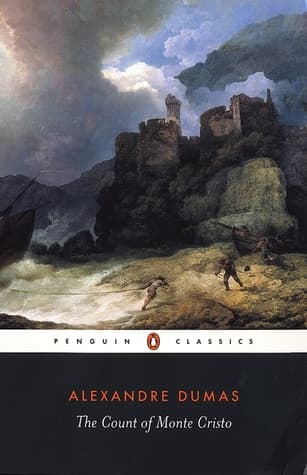
- The Count of Monte Cristo
Alexandre Dumas
4.3 (746k) average on GoodreadsHistorical FictionFeatures a clever protagonist with a secret identity seeking justice/revenge, set against a historical backdrop.
- A Tale of Two Cities
Charles Dickens
3.9 (810k) average on GoodreadsHistorical FictionSet during the French Revolution, exploring themes of sacrifice and heroism amidst political upheaval.
- Scaramouche
Rafael Sabatini
4.1 (8k) average on GoodreadsHistorical FictionA historical adventure with a protagonist who adopts a new identity during the French Revolution.
- The Prisoner of Zenda
Anthony Hope
3.9 (18k) average on GoodreadsFantasyHope's The Prisoner of Zenda (1894) shares The Scarlet Pimpernel's spirit of adventure, romance, and a hero operating under a guise. Both feature English gentlemen thrust into daring exploits in foreign lands, often involving mistaken identities and royal intrigue. However, Zenda is set in a fictional European kingdom, allowing for greater fantastical elements and less constraint by historical accuracy. Orczy's novel, by grounding itself in the brutal reality of the French Revolution, adds a layer of genuine historical dread and moral urgency that is less prominent in Hope's more purely escapist Ruritanian romance.
- To Kill a Mockingbird
Harper Lee
4.3 (4.5M) average on GoodreadsHistorical FictionIn the 1930s Jim Crow South, Harper Lee writes about racial injustice, moral growth, and the quiet courage of a lawyer father, Atticus Finch, as seen through his young daughter's eyes.
- The Great Gatsby
F. Scott Fitzgerald
3.9 (3.8M) average on GoodreadsHistorical FictionIn the opulent Roaring Twenties, a mysterious millionaire's lavish parties hide his desperate, tragic pursuit of a lost love, exposing the emptiness within the American Dream.




Enjoyed the summary?
A summary gives you the shape of the book. The book itself has the detail, the examples and the voice.
Find The Scarlet Pimpernel on AmazonAs an Amazon Associate, BookBrief earns from qualifying purchases. How we're funded