
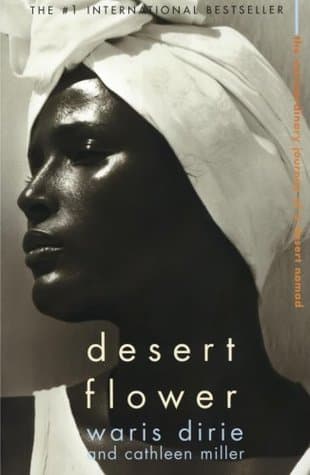
Core Idea
- Difficulty
- Medium
- Read it if
- You are interested in powerful true stories of survival, resilience, and advocacy against human rights abuses, especially FGM. This book is for those who seek inspiration from individuals who transform personal trauma into a mission for global change.
- Skip it if
- You are sensitive to graphic descriptions of childhood trauma, sexual violence (implied), and FGM. If you prefer lighthearted narratives or avoid stories with significant emotional weight, this might not be for you.
Key Takeaways from Desert Flower
The Indomitable Spirit of Survival
Waris Dirie's journey epitomizes resilience against unimaginable adversity.
Waris Dirie's early life in the Somali desert was very difficult. She faced poverty, no education, and female genital mutilation (FGM) at a young age. Her choice to run away as a child, alone, shows an amazing will to survive and create a different life. This first act of courage, crossing dangerous lands, set the stage for a life of overcoming huge challenges. Her story shows the human spirit's ability to endure and find strength even in the worst situations, proving that the wish for a better life can push people beyond what they think they can do.
“Every step I took away from the desert was a step towards a life I couldn't yet imagine, but knew I deserved.”
In the book: Her solo journey across the Somali desert to Mogadishu as a young girl, facing unknown dangers and relying solely on her wits and determination to reach relatives she barely knew.
Try this: Reflect on personal challenges and identify instances where a 'survival mindset' could help overcome current difficulties. Cultivate resilience by breaking down large problems into smaller, manageable steps, much like Waris's journey, which was a series of 'one foot in front of the other' moments.
Related ideas: resilience, survival, perseverance
The Silent Trauma of FGM
The book powerfully exposes the devastating and lifelong impact of female genital mutilation.
Waris Dirie's personal story of having FGM at age five is perhaps the most difficult and important part of the book. She describes not only the immediate, intense pain but also the long-term physical and emotional harm. This includes ongoing health issues, emotional scars, and a constant feeling of unfairness. Her story puts a human face on a practice often talked about impersonally. It forces the reader to face the harsh reality and its terrible effects on millions of women and girls worldwide. The book is an urgent call to action against this human rights abuse, stressing the need for global awareness and help.
“FGM is not just a physical wound; it's a wound to the soul that never truly heals.”
In the book: Waris's vivid descriptions of the FGM procedure itself, her subsequent health complications, and her emotional struggles with the memory and physical reality of it throughout her life.
Try this: Educate yourself and others about FGM by sharing resources and engaging in conversations. Support organizations working to eradicate FGM by donating or volunteering, recognizing that awareness is the first step towards change.
Related ideas: FGM, human-rights, gender-violence
From Servant to Supermodel
An unlikely trajectory demonstrating the power of serendipity and inner strength.
Waris's change from an uneducated house servant in London to a globally known fashion model is one of the most surprising parts of her story. This change was not a planned career move but a chance meeting with photographer Terence Donovan, who saw past her humble beginnings. Her success in the tough world of fashion, despite her lack of formal education or experience, speaks volumes about her natural grace, striking beauty, and determined strength. It shows that talent and opportunity can come from unexpected places, challenging common ideas of success and privilege.
“I was just a girl from the desert, but the camera saw something else in me.”
In the book: Her discovery by photographer Terence Donovan while working at McDonald's, leading to her first modeling shoot and subsequent rise in the fashion industry, including campaigns for major brands and magazines.
Try this: Remain open to unexpected opportunities and interactions, as they can lead to unforeseen paths. Recognize and nurture your unique qualities, as they may be the very attributes that set you apart in a new context.
Related ideas: serendipity, transformation, modeling-career
The Burden of Silence, The Power of Voice
Waris's decision to speak out transformed her personal trauma into a global advocacy platform.
For years, Waris kept the secret of her FGM silent, which is common for survivors. Her eventual choice to tell her story to journalist Laura Ziv and then to the world was a huge act of bravery. This choice not only brought her great personal healing but also helped her change from a fashion icon to a human rights activist. By breaking the taboo around FGM, she gave a voice to millions of silent women and girls. She turned her private pain into a strong tool for advocacy and change. Her journey shows the deep impact of personal stories in raising awareness and inspiring action against injustice.
“My silence was protecting no one. My voice, however small, could save lives.”
In the book: Her groundbreaking interview with Marie Claire magazine in 1997, where she publicly disclosed her experience with FGM for the first time, which then led to her appointment as a UN Special Ambassador.
Try this: Identify an injustice or issue you feel passionate about and consider how your personal experiences or unique perspective could contribute to raising awareness. Find platforms or communities where your voice can be heard and make a difference.
Related ideas: advocacy, voice, human-rights-activism
Cultural Clashes and Adaptations
Navigating vastly different worlds requires constant adaptation and understanding.
Waris's journey is a clear example of moving between very different cultures, from the nomadic traditions of the Somali desert to the busy modern life of London and global fashion cities. Her first struggles with basic ideas like money, cleanliness, and social rules in the Western world are touching and often funny. However, her ability to adapt, learn, and eventually succeed in these new environments shows her intelligence and openness. The book subtly explores the challenges of fitting into a new culture while keeping one's identity. It highlights the importance of empathy and understanding between cultures in a globalized world. It reminds us that what is 'normal' is often entirely relative.
“I was a girl of the desert trying to understand the rules of a world that made no sense to me, and often, vice versa.”
In the book: Her early experiences in London, where she struggled to understand basic amenities like toilets and refrigerators, and her initial confusion regarding Western social etiquette and the value of money.
Try this: When encountering new cultures or unfamiliar situations, practice active observation and seek to understand underlying norms rather than imposing your own. Be patient with yourself and others during the adaptation process, recognizing the inherent challenges.
Related ideas: cultural-assimilation, cross-cultural-understanding, adaptation
The Power of Unexpected Allies
Support from unlikely sources can be crucial for overcoming adversity.
Throughout her life, Waris met people who, often without fully understanding her background, offered important support and kindness. From the family who took her in Mogadishu, to the British diplomat's wife who hired her as a house servant, and the photographer who discovered her, these 'unexpected allies' were key to her survival and progress. Their willingness to help, often based on instinct or simple human kindness, shows the deep impact of individual acts of kindness. This theme shows that even in the darkest times, human connection and generosity can provide the necessary paths to a better future, emphasizing how connected our lives are.
“Sometimes, the people who help you the most are the ones you least expect.”
In the book: The kindness of her uncle's wife in Mogadishu, the support from the British diplomat's family in London, and the crucial intervention of photographer Terence Donovan in launching her modeling career.
Try this: Be open to giving and receiving help from diverse sources. Cultivate a mindset of generosity and look for opportunities to be an 'unexpected ally' to someone in need, recognizing the ripple effect of such actions.
Related ideas: mentorship, kindness, human-connection
Redefining Beauty and Purpose
Waris challenged conventional beauty standards and found a deeper purpose beyond glamour.
Waris Dirie's journey from a fashion model to a UN Ambassador for human rights shows a powerful new definition of 'beauty' and 'purpose.' First celebrated for her looks, she used her platform not for personal gain but to highlight the brutal practice of FGM. This change shows that real influence comes not just from physical appeal, but from the courage to use one's visibility for a greater cause. She effectively moved past the superficiality often linked with the modeling world, proving that a 'desert flower' could become a strong advocate. She used her unique position to give a voice to the voiceless and bring about meaningful societal change.
“I used my beauty to get attention, but I used my story to get change.”
In the book: Her transition from high-profile fashion campaigns and magazine covers to actively campaigning against FGM, culminating in her appointment as a UN Special Ambassador and the establishment of her own Desert Flower Foundation.
Try this: Consider how your personal strengths or platforms, no matter how small, can be leveraged for a cause greater than yourself. Seek to align your personal values with your public actions, striving for authenticity and impact.
Related ideas: purpose, advocacy, social-impact
The Scars That Tell a Story
Physical and emotional scars are not just wounds, but powerful narratives of survival.
Waris Dirie's story clearly shows that scars, both seen and unseen, are not signs of weakness or shame. Instead, they are powerful proof of strength and survival. Her physical scars from FGM and the emotional scars from her difficult childhood are a part of who she is and her story. By openly sharing these personal details, she changes them from sources of personal pain into triggers for empathy and understanding. The book encourages readers to see their own difficulties not as burdens, but as experiences that shape their strength and unique perspective. It emphasizes that true healing often starts with acceptance and sharing.
“My scars are a part of me, a map of where I've been, and a reminder of what I've overcome.”
In the book: Her candid descriptions of the lasting physical effects of FGM and the psychological impact of her early life, which she chose to reveal publicly as part of her advocacy.
Try this: Reflect on your own 'scars' (past difficulties or traumas) and consider how they have shaped your resilience and perspective. If comfortable, share your story to connect with others and foster empathy, transforming personal struggle into shared understanding.
Related ideas: trauma-healing, resilience, personal-narrative
The Global Reach of Local Issues
Personal stories can bridge cultural divides and highlight universal human rights concerns.
Waris Dirie's story shows how deeply personal and seemingly 'local' issues, like FGM in a remote Somali village, have universal human rights implications. Her journey, from the desert to the global stage as a UN Ambassador, shows how connected humanity is. By sharing her specific experience, she was able to educate, inspire, and unite people across different cultures and continents against a common injustice. The book stresses that no human rights violation is isolated; they are global concerns that need international attention and collective action. It proves that one person's testimony can cross borders and start a worldwide movement for change.
“What happens in a remote desert village can impact the world, if only we choose to listen.”
In the book: Her appointment as a UN Special Ambassador and the subsequent global attention and campaigns generated by her story, leading to increased awareness and efforts to ban FGM internationally.
Try this: Seek out stories from diverse global communities to broaden your understanding of human rights issues. Support organizations working on a global scale to address injustices, recognizing that local problems often have global solutions.
Related ideas: global-awareness, human-rights, social-justice
Education as Liberation
Despite her illiteracy, Waris's journey highlights the profound value of learning and knowledge.
Although Waris Dirie could not read or write for much of her early life and had no formal education, her story quietly supports the idea of education as freedom. Her sharp observation skills, quick learning, and ability to adapt to very different environments show a powerful, if unusual, form of intelligence. Her later commitment to learning to read and write, even as an adult, and her support for girls' education, highlight the life-changing power of knowledge. The book subtly argues that while formal education is vital, life's experiences can also be great teachers, and seeking knowledge, in any form, leads to empowerment and independence.
“I might not have learned to read from books, but life taught me lessons no school ever could.”
In the book: Her struggles with basic literacy in London and her eventual dedication to learning to read and write, as well as her later advocacy for educational opportunities for girls, particularly in her home country.
Try this: Value and pursue learning in all its forms, whether formal education or through life experiences. Support initiatives that provide educational opportunities, especially for marginalized communities, recognizing its role in empowerment.
Related ideas: education, empowerment, lifelong-learning
Desert Flower Quotes
“I was born in the desert, under a tree, in Somalia. I didn't know what a hospital was, or a doctor. I didn't even know what a country was.”
“My mother always told me, 'Waris, you are a flower, a desert flower. You will bloom in the most difficult places.'”
“When you are a child, you don't know that what is happening to you is wrong. You think it's normal because it's happening to everyone around you.”
“I ran away because I didn't want to marry an old man. I wanted to be free.”
“London was a city of lights, a city of dreams, but for me, it was a city of fear and loneliness.”
“I learned to speak English by watching television and listening to people on the bus. It was a slow and painful process.”
“I never thought I would be a model. I didn't even know what a model was. I just wanted to earn enough money to survive.”
“Being a supermodel was like living in a dream, but it was a dream that I knew could end at any moment.”
“I decided to speak out about FGM because I couldn't keep silent anymore. I had a voice, and I had to use it.”
“The hardest part was not the physical pain, but the shame, the silence, the feeling that you are dirty and incomplete.”
“It's not about revenge, it's about justice. It's about protecting the next generation of girls.”
“I want every girl to have the chance to bloom, to be free, to live a life without fear.”
“My life has been a journey from the desert to the world stage, but the desert is always in my heart.”
“Education is the key. It opens doors, it gives you power, it gives you a voice.”
Quiz
10 questions on the main ideas. Each answer comes with a short explanation.
Question 1
What was Waris Dirie's initial destination after running away from her nomadic family in the Somali desert?
- Addis Ababa, Ethiopia
- Nairobi, Kenya
- Mogadishu, Somalia
- Djibouti City, Djibouti
Show answer
C. Mogadishu, Somalia Waris first traveled alone across the dangerous Somali desert to Mogadishu, the capital city, to seek refuge with relatives.
Question 2
What was Waris's profession in London after she first arrived from Somalia?
- Factory worker
- Shop assistant
- House servant
- Waitress
Show answer
C. House servant After arriving in London, Waris worked as a house servant for the Somali embassy, a role that initially provided her with shelter and a small income.
Question 3
Who 'discovered' Waris Dirie and launched her modeling career?
- Richard Avedon
- Terence Donovan
- Patrick Demarchelier
- Annie Leibovitz
Show answer
B. Terence Donovan The renowned British photographer Terence Donovan discovered Waris while she was working at McDonald's and gave her her first modeling opportunity.
Question 4
What specific physical trauma from her childhood does Waris Dirie advocate against as a human rights ambassador?
- Child marriage
- Female Genital Mutilation (FGM)
- Forced labor
- Lack of education for girls
Show answer
B. Female Genital Mutilation (FGM) Waris Dirie became a vocal activist and UN Special Ambassador against Female Genital Mutilation (FGM), a practice she herself endured as a child.
Question 5
Waris describes her early nomadic life in the desert. What primary role did her family's camels play in their survival?
- Transportation for trading goods exclusively
- Only for racing and entertainment
- Source of milk, meat, and transportation for their nomadic lifestyle
- Guard animals against predators
Show answer
C. Source of milk, meat, and transportation for their nomadic lifestyle Camels were central to the survival of Waris's nomadic family, providing essential resources like milk and meat, and serving as their primary mode of transport.
Question 6
What significant event prompted Waris to publicly share her story about FGM for the first time?
- A request from her modeling agency for a publicity stunt
- An interview with Marie Claire magazine
- A personal plea from a fellow FGM survivor
- Her appointment as a UN ambassador
Show answer
B. An interview with Marie Claire magazine Waris first publicly revealed her experience with FGM in an interview with Laura Ziv of Marie Claire magazine, which marked a turning point in her advocacy.
Question 7
How did Waris initially manage to stay in London legally after the Somali embassy closed and her visa expired?
- She was granted immediate asylum due to her circumstances.
- She married a British citizen to obtain residency.
- She obtained a special work permit through her modeling career.
- She applied for and received a student visa.
Show answer
B. She married a British citizen to obtain residency. To avoid deportation after the Somali embassy closed, Waris entered into a marriage with a British citizen named Nigel, which allowed her to legally remain in the UK.
Question 8
What cultural aspect of her nomadic upbringing did Waris initially struggle to reconcile with her life in the Western world, particularly regarding personal relationships?
- The concept of individual ambition versus communal living.
- The openness and physical intimacy expected in Western romantic relationships.
- The importance placed on material possessions over spiritual well-being.
- The direct communication style versus indirect communication.
Show answer
B. The openness and physical intimacy expected in Western romantic relationships. Due to FGM and her conservative upbringing, Waris found it extremely difficult to navigate the physical and emotional intimacy of Western romantic relationships, particularly with men.
Question 9
Despite her international success, what personal yearning did Waris struggle with throughout much of her journey, particularly in her early modeling years?
- To become a successful businesswoman.
- To learn to read and write.
- To start a family immediately.
- To return to her nomadic life in the desert.
Show answer
B. To learn to read and write. Despite her fame, Waris often felt self-conscious and limited by her illiteracy, having never attended school in the desert. Learning to read and write was a significant personal goal.
Question 10
What is the overarching message Waris Dirie aims to convey to her readers through 'Desert Flower'?
- The glamour and challenges of the international modeling industry.
- The beauty and simplicity of traditional nomadic life.
- The importance of resilience, self-discovery, and using one's voice to fight for human rights, especially against FGM.
- The difficulties of cultural assimilation for immigrants in Western societies.
Show answer
C. The importance of resilience, self-discovery, and using one's voice to fight for human rights, especially against FGM. The book is a powerful testament to Waris's resilience and journey from victim to advocate, highlighting the importance of speaking out against human rights abuses like FGM.
Desert Flower FAQ
What is 'Desert Flower' by Waris Dirie about?
'Desert Flower' is the autobiography of Waris Dirie, chronicling her incredible journey from a nomadic upbringing in the Somali desert, through escaping an arranged marriage and female genital mutilation, to becoming a world-renowned fashion model and a U.N. Special Ambassador against FGM.
Does 'Desert Flower' accurately depict life in rural Somalia?
Yes, Waris Dirie's memoir provides a raw and authentic portrayal of her early life in the Somali desert, including the cultural practices, hardships, and the patriarchal society she grew up in, offering a valuable insight into that specific environment.
What is female genital mutilation (FGM) as described in 'Desert Flower'?
In 'Desert Flower,' FGM is depicted as a deeply ingrained cultural practice Waris Dirie endured as a child, involving the partial or total removal of external female genitalia. The book highlights its devastating physical and psychological impacts, which Waris later campaigned against globally.
How did Waris Dirie become a fashion model despite her background?
Waris Dirie's journey to becoming a fashion model began serendipitously after she moved to London. She was discovered by a photographer, which led to a modeling career that took her across the globe, a stark contrast to her humble beginnings in the desert.
Is 'Desert Flower' a true story?
Yes, 'Desert Flower' is a non-fiction memoir, recounting the real-life experiences of Waris Dirie. It details her personal struggles, triumphs, and her activism based on her own lived history.
How does Waris Dirie's story differ from other memoirs of overcoming adversity?
Waris Dirie's story is unique due to her specific cultural context, her escape from FGM and an arranged marriage, and her dramatic transition from an illiterate desert nomad to an international supermodel and human rights activist. It combines elements of cultural survival, personal triumph, and global advocacy.
What impact did 'Desert Flower' have on awareness of FGM?
'Desert Flower' played a significant role in raising global awareness about female genital mutilation. Waris Dirie's candid account brought the issue to mainstream attention, contributing to her appointment as a U.N. ambassador and inspiring further activism against the practice.
What challenges did Waris Dirie face in adapting to Western culture?
Waris Dirie faced immense challenges adapting to Western culture, including language barriers, cultural misunderstandings, and navigating a vastly different social environment, all while grappling with the trauma of her past and the pressures of her burgeoning career.
About the author

Waris Dirie is a Somali model, author, and human rights activist known for her work on female genital mutilation. Her notable book, "Desert Flower," is a memoir that details her life experiences and advocacy efforts. Through her writing, she raises awareness about women's rights and the challenges faced by women in her home country and beyond.
Similar books
- I Am Malala: The Story of the Girl Who Stood Up for Education and Was Shot by the Taliban
Malala Yousafzai
4.1 (419k) average on GoodreadsPoliticsShares a similar theme of a young woman overcoming extreme adversity and cultural oppression to become a global advocate for human rights and education.
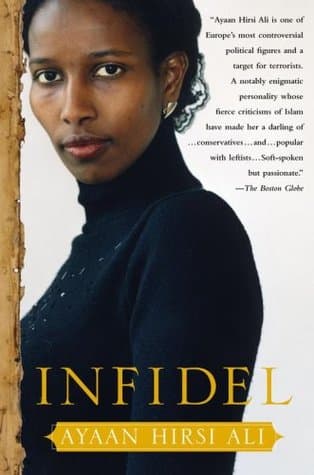
- Infidel
Ayaan Hirsi Ali
4.2 (78k) average on GoodreadsPoliticsAnother memoir by a Somali-born woman who escaped an oppressive cultural background and became a prominent critic of certain cultural practices, including FGM.
- The Glass Castle
Jeannette Walls
4.3 (903k) average on GoodreadsBiographyExplores a childhood of extreme poverty and unconventional upbringing, highlighting resilience and survival against difficult circumstances, though in a different cultural context.
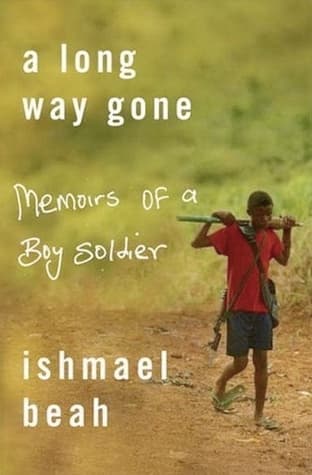
- A Long Way Gone: Memoirs of a Boy Soldier
Ishmael Beah
4.2 (163k) average on GoodreadsBiographyWhile both Desert Flower and A Long Way Gone are powerful memoirs of child trauma and survival in Africa, Dirie's focuses on gender-specific violence (FGM and forced marriage) and cultural adaptation, whereas Beah's details the horrors of child soldiery and the difficult path to rehabilitation. Both use personal narrative to humanize global crises, but Dirie's work specifically champions women's rights and bodily autonomy, while Beah's addresses the impact of conflict on children and the journey of healing from war trauma. Dirie's narrative features a more direct transition into advocacy.
- The Diary of a Young Girl
Anne Frank
4.2 (2.7M) average on GoodreadsBiographyDuring the Nazi occupation, a teenage girl's diary, written from a secret annex, shares observations on humanity, hope, and the wait for freedom.
- Eat, Pray, Love
Elizabeth Gilbert
3.6 (1.5M) average on GoodreadsLifestyleA heartbroken writer leaves her conventional life for a year-long global search for pleasure in Italy, spiritual devotion in India, and unexpected love and balance in Bali.




Enjoyed the summary?
A summary gives you the shape of the book. The book itself has the detail, the examples and the voice.
Find Desert Flower on AmazonAs an Amazon Associate, BookBrief earns from qualifying purchases. How we're funded