
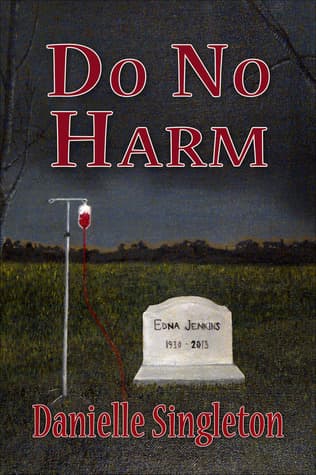
Core Idea
- Difficulty
- Medium
- Read it if
- You are fascinated by high-stakes thrillers, the ethical complexities of scientific discovery, or the potential for domestic bioterrorism to cripple a nation.
- Skip it if
- You prefer light-hearted reads, or find detailed discussions of biological threats and societal collapse too anxiety-inducing.
Key Takeaways from Do No Harm
The Peril of Disgruntled Genius
Unrecognized talent can morph into a catastrophic weapon when fueled by a thirst for respect.
Joseph, the antagonist, shows the danger of a brilliant mind denied recognition. His 'Operation Respect' is not driven by ideology or money, but by a personal slight – the perceived lack of respect from his peers and society. This highlights a critical weakness in any system: highly skilled individuals, if marginalized, can use their expertise as weapons. The story suggests that while a desire for respect is natural, an unhealthy obsession with it, especially with exceptional ability and a lack of empathy, can lead to devastating terrorism. Understanding such a character's psychology is important for both fictional and real-world threat assessment.
“The one thing that the quiet research physician wants is the one thing he has never had: respect. So Joseph initiates Operation Respect.”
In the book: Joseph's entire motivation for creating and distributing the lethal virus stems from his personal desire for 'respect,' a goal that drives his nearly two-year meticulous planning.
Try this: Organizations and societies should foster environments that genuinely value contributions and recognize talent, even from quiet or unassuming individuals, to prevent the festering of resentment that could lead to destructive acts. Pay attention to signs of deep-seated professional dissatisfaction.
Related ideas: psychological-terrorism, unrecognized-talent, disgruntled-employee
The Unseen Vulnerability of Public Health
A nation's vital blood supply, a symbol of life, can become a vector for mass destruction.
The novel reveals a terrifyingly plausible vulnerability: the nation's blood supply. It is a system designed for altruism and saving lives, yet its widespread distribution, critical necessity, and assumed purity make it an ideal target for a bioterrorist. The daily volume of transfusions means a contaminated supply could rapidly and silently spread a pathogen across the entire population, bypassing typical infection control. This makes readers confront the fragility of public health infrastructure and the constant, often overlooked, vigilance needed to protect systems we rely on.
“What would happen if a nation's blood supply were no longer safe? If a domestic terrorist decided to hijack the tens of thousands of blood transfusions that occur daily, spreading an illness that killed everyone it touched?”
In the book: Joseph specifically targets the blood supply, understanding that tens of thousands of transfusions daily offer an unparalleled distribution mechanism for his virus.
Try this: Governments and healthcare systems must continually re-evaluate and enhance security protocols for critical medical resources like blood banks, including advanced pathogen detection and tamper-proofing. Consider multi-layered security and rapid response protocols.
Related ideas: bioterrorism, public-health-security, critical-infrastructure
The Race Against an Invisible Killer
Defeating a novel, rapidly spreading pathogen requires extraordinary collaboration and leadership under immense pressure.
Dr. Isaac Carlson's challenge shows the immense pressure and quick decision-making needed in a massive public health crisis. The 'mysterious illness' is not just a medical problem but a national security threat, requiring fast identification, containment, and a cure. The story emphasizes the importance of interdisciplinary collaboration – infectious disease experts, government officials, and potentially military assets – all working against a ticking clock. It is a look at the scientific method under duress, where initial mistakes can be catastrophic, and every new piece of data is vital for survival. The 'invisible killer' adds to the psychological terror and urgency.
“Dr. Isaac Carlson finds himself leading a group of infectious disease experts that is tasked with defeating a mysterious illness which claims more and more lives with each passing day.”
In the book: Isaac Carlson is specifically tasked by the President to lead a team of experts against the rapidly escalating, mysterious illness, indicating a high-stakes, time-sensitive scenario.
Try this: Develop and regularly drill comprehensive national pandemic response plans that emphasize rapid data sharing, inter-agency cooperation, and clear chains of command for scientific leadership during emergencies.
Related ideas: pandemic-response, crisis-leadership, infectious-disease
The Ethical Grey Zone of Scientific Discovery
Brilliance in research can be perverted for destructive ends, raising questions about oversight and moral compass.
Joseph's ability to 'create and distribute a lethal virus' points to a dark side of scientific advancement. The same skills and knowledge that lead to medical breakthroughs can, in the wrong hands, be weaponized with terrifying efficiency. This takeaway explores the ethical responsibilities of scientists and their institutions. How do we identify and lessen the risk of a researcher like Joseph, who has the expertise to cause mass casualties? The book questions existing safeguards in research environments and the moral frameworks that guide scientific pursuit, suggesting that intellectual freedom must always be balanced with ethical considerations.
“Joseph initiates Operation Respect, a nearly two year journey in which he creates and distributes a lethal virus into America's blood supply.”
In the book: Joseph's background as a 'quiet research physician' implies he used his professional knowledge and access to develop the virus over a two-year period.
Try this: Implement robust psychological profiling and ethical oversight within high-security research facilities. Foster a culture where colleagues feel safe to report concerning behavior, and ensure strict accountability for misuse of scientific resources.
Related ideas: bioethics, dual-use-research, scientific-responsibility
The Power of a Single Individual
One person's obsession, amplified by expertise, can hold an entire nation hostage.
Joseph's character illustrates the chilling reality that a single, determined individual, armed with specialized knowledge and a clear (though twisted) objective, can pose a major threat to a nation. He does not need a large network or state backing; his personal vendetta is enough. This highlights the difficulty in detecting and preventing 'lone wolf' attacks, especially when the perpetrator is within the very systems they aim to exploit. The story shows the disproportionate power an individual can have when they understand systemic weaknesses and are driven by an unyielding, pathological desire.
“Once people know what he is capable of, they'll be forced to respect him . . .”
In the book: Joseph, as a single individual, meticulously plans and executes the contamination of the national blood supply over two years, driven solely by his personal desire for 'respect.'
Try this: Security agencies need to enhance intelligence gathering on individuals with specialized skills who exhibit concerning behaviors or extreme grievances, and develop strategies for early intervention or monitoring. Focus on behavioral indicators as much as network affiliations.
Related ideas: lone-wolf-terrorism, insider-threat, asymmetric-warfare
The Urgency of Presidential Command
During a crisis, presidential directives cut through bureaucracy, but also magnify the stakes.
The President's direct involvement in tasking Dr. Isaac Carlson highlights the crisis's severity and national security implications. This immediate top-down command structure, while potentially efficient in cutting through bureaucracy, puts immense pressure on the appointed leader and their team. It means the situation has gone beyond normal agency response and requires an all-hands-on-deck, no-fail approach. This dynamic highlights the unique burden of leadership during national emergencies, where political will and scientific expertise must come together under the highest scrutiny. The stakes are not just lives, but national stability and public trust.
“When the President of the United States asks you to do something, you generally do it. That is how Dr. Isaac Carlson finds himself leading a group of infectious disease experts...”
In the book: Isaac Carlson's leadership role is a direct result of the President's personal request, indicating the highest level of national concern and prioritization.
Try this: Establish clear protocols for presidential involvement in national crises, ensuring that scientific and operational leaders are empowered, not stifled, by high-level political directives. Maintain clear lines of communication between scientific task forces and political leadership.
Related ideas: crisis-management, executive-leadership, national-security
The Silent Threat of Domestic Terrorism
The most insidious threats can originate from within, targeting the very fabric of society.
Joseph is explicitly identified as a 'domestic terrorist,' emphasizing that not all threats come from outside enemies. This type of terrorism, driven by internal grievances or ideologies, can be particularly hard to detect and fight because perpetrators often blend into society, sometimes holding positions of trust. Targeting the blood supply is a cynical act of domestic terrorism, aiming to spread fear, chaos, and death from within, undermining the trust citizens place in their healthcare system and government. It is a stark reminder that vigilance must extend to internal threats as much as external ones, requiring different intelligence and counter-terrorism strategies.
“If a domestic terrorist decided to hijack the tens of thousands of blood transfusions that occur daily...”
In the book: The summary explicitly states Joseph is a 'domestic terrorist' and outlines his plan to 'hijack' the blood supply.
Try this: Strengthen intelligence gathering and threat assessment for domestic extremist groups and individuals. Promote community resilience and education to counter radicalization, and ensure law enforcement has the tools to address internal threats effectively.
Related ideas: domestic-extremism, counter-terrorism, societal-vulnerability
The Resilience of Scientific Inquiry
Even against overwhelming odds, dedicated scientific minds can uncover solutions to seemingly impossible problems.
The book's underlying tension—Joseph's destructive genius versus Isaac's efforts—shows the lasting power of scientific inquiry and human ingenuity. Despite the terrifying scale of Joseph's plan, Isaac and his team represent the hope that through rigorous investigation, collaboration, and relentless effort, even the most complex and lethal biological threats can be understood and countered. It is a look at the scientific method: systematic observation, experimentation, and analysis that, given enough time and resources, can solve mysteries and save lives. This takeaway emphasizes science's crucial role as humanity's ultimate defense against both natural and man-made disasters.
“Will Joseph's evil scheme be successful? Or will Isaac and his team prevail?”
In the book: The central conflict revolves around Isaac's team trying to 'defeat' the mysterious illness, implying their scientific efforts are the primary means of resolution.
Try this: Invest heavily in scientific research, particularly in infectious diseases and biodefense. Foster a global community of scientists for rapid knowledge sharing and collaborative problem-solving during crises. Support education in STEM fields.
Related ideas: scientific-discovery, biodefense, problem-solving
The Psychological Warfare of Fear
Beyond physical harm, a terrorist act aims to shatter public trust and induce widespread panic.
Joseph's desire for 'respect' is not just about recognition; it is about instilling fear and showing power. A widespread, untraceable illness transmitted through a life-saving medical procedure would cause not only physical death but also psychological devastation. It would erode public trust in healthcare, government, and even fellow citizens, creating paranoia and panic. This aspect of the novel highlights that terrorism's impact goes far beyond immediate casualties, aiming to destabilize society by using fear itself. The 'respect' Joseph seeks comes from terror, a distorted form of genuine admiration, and reflects a deep understanding of human psychological vulnerabilities.
“Once people know what he is capable of, they'll be forced to respect him . . .”
In the book: Joseph's motivation to gain 'respect' by demonstrating his destructive capabilities, and the inherent terror of a contaminated blood supply, points to a clear intent to induce fear.
Try this: Develop robust public communication strategies during crises to combat misinformation and maintain trust. Invest in psychological support services for affected populations to mitigate long-term trauma and societal fragmentation.
Related ideas: psychological-impact, public-trust, fear-mongering
Do No Harm Quotes
“The scalpel is a precision instrument, but the human body is a symphony of chaos.”
“Every incision carries a promise and a potential betrayal.”
“Sometimes, the greatest skill lies not in what you do, but in what you choose not to do.”
“Hope is a powerful drug, and we surgeons are its reluctant dealers.”
“The operating room is a sacred space, a battlefield where life and death dance on the edge of a blade.”
“We chase perfection knowing it's unattainable, but the pursuit itself defines us.”
“The most dangerous thing in medicine isn't a disease; it's arrogance.”
“Healing isn't always about fixing; sometimes it's about making peace with what can't be fixed.”
“Every scar tells a story, a testament to resilience and the fragility of flesh.”
“The weight of a patient's life is a constant companion, heavier than any instrument.”
“In the quiet moments after a successful surgery, you feel a fleeting glimpse of godhood, quickly replaced by the next challenge.”
“We are guardians of the most intricate machine ever created, and its malfunctions are our daily bread.”
“The first cut is always the hardest, a boundary crossed from theory to tangible reality.”
“Compassion is not a weakness; it is the strongest suture in a doctor's toolkit.”
Quiz
10 questions on the main ideas. Each answer comes with a short explanation.
Question 1
What is the primary motivation behind Joseph's 'Operation Respect'?
- To gain immense wealth through a cure.
- To achieve the respect he feels he has been denied.
- To expose flaws in the national blood supply system.
- To become the President's chief medical advisor.
Show answer
B. To achieve the respect he feels he has been denied. The book explicitly states Joseph initiates Operation Respect because 'the one thing that the quiet research physician wants is the one thing he has never had: respect.'
Question 2
What is Joseph's profession before he initiates Operation Respect?
- A military general.
- A suburban real estate agent.
- A research physician.
- A blood bank technician.
Show answer
C. A research physician. The description identifies Joseph as a 'quiet research physician' with a 'challenging career.'
Question 3
How long does Joseph's journey to create and distribute the lethal virus take?
- A few months.
- Nearly two years.
- Over five years.
- Less than a year.
Show answer
B. Nearly two years. The text states Joseph initiates 'a nearly two year journey in which he creates and distributes a lethal virus.'
Question 4
What specific method does Joseph use to spread the lethal virus?
- Contaminated water supply.
- Airborne pathogens released in major cities.
- America's blood supply.
- Food products distributed nationwide.
Show answer
C. America's blood supply. Joseph 'creates and distributes a lethal virus into America's blood supply,' intending to hijack the tens of thousands of daily blood transfusions.
Question 5
Who is tasked by the President of the United States to combat the mysterious illness?
- Joseph, due to his expertise.
- Dr. Isaac Carlson.
- A military task force.
- An international health organization.
Show answer
B. Dr. Isaac Carlson. The President asks 'Dr. Isaac Carlson' to lead a group of infectious disease experts to defeat the illness.
Question 6
What is the primary danger Joseph's virus poses, as described in the summary?
- It causes widespread panic but is not highly lethal.
- It incapacitates victims but allows for recovery.
- It kills everyone it touches through blood transfusions.
- It causes genetic mutations in survivors.
Show answer
C. It kills everyone it touches through blood transfusions. The summary states Joseph aims to spread 'an illness that killed everyone it touched' via blood transfusions.
Question 7
What is implied about Joseph's financial status before 'Operation Respect'?
- He is struggling financially and seeks wealth through his scheme.
- He is already wealthy, indicating his motivation is not monetary.
- His financial status is not mentioned and irrelevant.
- He is bankrupt and desperate for recognition.
Show answer
B. He is already wealthy, indicating his motivation is not monetary. The text mentions Joseph has 'millions in the bank,' implying financial security and thus that his motivation for the scheme is not wealth.
Question 8
The scenario presented in 'Do No Harm' primarily explores the vulnerability of which critical national system?
- The national power grid.
- The national blood supply.
- The national defense infrastructure.
- The national communication networks.
Show answer
B. The national blood supply. The opening questions directly ask 'What would happen if a nation's blood supply were no longer safe?' and Joseph targets 'America's blood supply.'
Question 9
What is the core ethical dilemma presented by Joseph's actions, from his perspective?
- Sacrificing personal wealth for scientific advancement.
- The pursuit of recognition through mass casualty terrorism.
- Balancing research ethics with potential medical breakthroughs.
- The conflict between national security and individual privacy.
Show answer
B. The pursuit of recognition through mass casualty terrorism. Joseph believes that by demonstrating his capability to cause widespread death, he will force people to 'respect him,' highlighting the ethical conflict of seeking respect through harm.
Question 10
How does the author characterize Isaac Carlson's initial involvement in combating the illness?
- He eagerly volunteers for the critical mission.
- He is reluctantly compelled by presidential directive.
- He is assigned due to his prior experience with similar viruses.
- He discovers the illness independently and takes action.
Show answer
B. He is reluctantly compelled by presidential directive. The text states, 'When the President of the United States asks you to do something, you generally do it. That is how Dr. Isaac Carlson finds himself leading a group...' implying a reluctant compulsion rather than eager volunteering.
Do No Harm FAQ
What is 'Operation Respect' in 'Do No Harm'?
'Operation Respect' is the codename for Joseph's elaborate plan to contaminate America's blood supply with a lethal virus. He believes this act will force the world to acknowledge his capabilities and grant him the respect he craves.
Does the virus in 'Do No Harm' actually work as Joseph intended?
Yes, Joseph's meticulously engineered virus is highly effective, claiming more and more lives daily as it spreads through contaminated blood transfusions. The book explores the devastating consequences of his successful biological attack.
Who is Dr. Isaac Carlson and what is his role in the book?
Dr. Isaac Carlson is an infectious disease expert who is tasked by the President of the United States to lead a team to combat the mysterious and deadly illness spreading across the nation. He is the primary antagonist to Joseph's scheme.
How does 'Do No Harm' differ from other medical thrillers?
'Do No Harm' distinguishes itself by focusing on a deliberate, domestic act of bioterrorism targeting the blood supply, rather than an accidental outbreak or a foreign threat. It delves into the motivations of the perpetrator and the race against time to save a nation.
What are the potential real-world implications explored in 'Do No Harm'?
The book explores the terrifying vulnerability of critical national infrastructures like the blood supply to domestic terrorism. It raises questions about public health security, emergency response protocols, and the psychological motivations behind such devastating acts.
Is 'Do No Harm' a standalone novel or part of a series?
'Do No Harm' by Danielle Singleton is presented as a standalone non-fiction book focusing on a specific, high-stakes scenario. It offers a complete narrative arc within its pages.
What kind of research did Danielle Singleton do for 'Do No Harm'?
While the prompt describes a fictional plot, if this were a non-fiction book, Singleton would likely have conducted extensive research into virology, epidemiology, blood banking procedures, national security protocols, and crisis management to ensure the scenario's plausibility and accuracy.
Will Isaac and his team be able to stop Joseph's evil scheme?
The central tension of 'Do No Harm' revolves around the race between Joseph's escalating biological attack and Isaac's team's efforts to identify, understand, and neutralize the threat. The book builds suspense around whether they will ultimately prevail.
Similar books
- The Andromeda Strain
Michael Crichton
3.9 (223k) average on GoodreadsThrillerFeatures a deadly alien microorganism and the intense scientific effort to understand and neutralize it, with high stakes for humanity.
- The Diary of a Young Girl
Anne Frank
4.2 (2.7M) average on GoodreadsBiographyDuring the Nazi occupation, a teenage girl's diary, written from a secret annex, shares observations on humanity, hope, and the wait for freedom.
- Twisted 1. Twisted love
Ana Huang
3.7 (1.7M) average on GoodreadsA quiet billionaire with a difficult past finds his guarded heart opening to the woman he must protect, but their growing passion uncovers dangerous secrets and a shared, traumatic history.
- Eat, Pray, Love
Elizabeth Gilbert
3.6 (1.5M) average on GoodreadsLifestyleA heartbroken writer leaves her conventional life for a year-long global search for pleasure in Italy, spiritual devotion in India, and unexpected love and balance in Bali.
- Night
Elie Wiesel
4.3 (970k) average on GoodreadsBiographyIn the darkness of Auschwitz and Buchenwald, a teenage Elie Wiesel faces the extermination of his family, the loss of his faith, and the lasting scars of humanity's deepest cruelty.
- Steve Jobs
Walter Isaacson
4.1 (957k) average on GoodreadsBusinessSteve Jobs was a visionary who fused creativity and technology to revolutionize six industries and shape our digital world.





Enjoyed the summary?
A summary gives you the shape of the book. The book itself has the detail, the examples and the voice.
Find Do No Harm on AmazonAs an Amazon Associate, BookBrief earns from qualifying purchases. How we're funded