
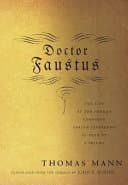
Synopsis
Covers the whole plot, including the ending.
- Difficulty
- Hard
- Pacing
- Slow
- Mood
- Philosophical, Tragic, Melancholy, Intellectual, Dark
- Read it if
- You are interested in a deep, allegorical exploration of German culture, the nature of artistic genius, and the Faustian myth, with a rich, intellectual narrative voice.
- Skip it if
- You prefer fast-paced plots, straightforward narratives, or lighthearted themes, or find extensive philosophical digressions challenging.
Doctor Faustus Plot Summary
Covers the whole plot, including the ending.
The Narrator's Introduction and Adrian's Childhood
The novel opens with Dr. Serenus Zeitblom, a humanist scholar, introducing himself as the biographer of his close friend, the composer Adrian Leverkühn. Zeitblom begins recounting Adrian's early life in Kaisersaschern, a small German town. Adrian shows extraordinary intellectual skill from a young age, especially in music and theology, but also a detached, almost cold, manner. His father, Jonathan Leverkühn, is a amateur scientist who introduces Adrian to nature and the occult. Adrian's early musical education is informal, but he shows an uncanny ability to grasp complex theoretical concepts. Zeitblom, despite his devotion, notes an unsettling, almost demonic, quality in Adrian's genius even then, hinting at the tragic path his friend will eventually take.
University Years and the Temptation of Music
Adrian initially enrolls at the University of Halle to study theology, influenced by his family's religious background and his own intellectual curiosity about the divine. However, he is increasingly drawn to music, attending lectures by the eccentric and revolutionary music theorist, Wendell Kretzschmar. Kretzschmar's passionate and often bizarre lectures on musical aesthetics, especially his emphasis on the 'demonic' in art, deeply influence Adrian. Despite his theological studies, Adrian's true calling becomes clear. He eventually abandons theology to fully commit to music, recognizing that his unique genius demands a path outside conventional academic or spiritual pursuits, a decision Zeitblom views with apprehension.
The Pact in Italy
After university, Adrian travels to Italy. While living in a brothel in Leipzig before his Italian journey, he deliberately seeks out a prostitute named Esmeralda, from whom he contracts syphilis. This act is presented not as a random mistake, but a conscious, almost ritualistic, embrace of the 'impure' and a catalyst for his artistic breakthrough. Later, during a feverish illness in Palestrina, Italy, Adrian has a vivid, extended hallucination—or genuine encounter—with the Devil. The Devil offers him twenty-four years of unparalleled musical genius and creative power, but at the cost of his soul, his ability to love, and eternal damnation. Adrian, in a moment of despair and artistic ambition, accepts the diabolical bargain.
Creative Isolation in Pfeiffering
Following his return from Italy and the 'pact,' Adrian settles in the quiet Bavarian village of Pfeiffering, seeking isolation to dedicate himself entirely to composition. He lives a reclusive life, attended by his landlady, Frau Schweigestill, and visited only by a select few, including Zeitblom and his friend Rüdiger Schildknapp. During this period, Adrian's musical output becomes astoundingly prolific and innovative, pushing the boundaries of harmony and form. His compositions are complex, challenging, and often unsettling, reflecting the demonic influence on his creative process. Zeitblom observes Adrian's increasing emotional detachment and the chilling intellectual rigor that now defines his art, recognizing the profound change brought by his Faustian bargain.
The Circle of Friends
Adrian maintains a small, intellectual circle of friends and admirers, including Zeitblom, Schildknapp, Jeanette Scheurl, and later, Rudolf Schwerdtfeger. These gatherings often involve deep discussions on art, philosophy, and the state of German culture, which Zeitblom interweaves with his narrative, drawing parallels to the political climate of the 1930s. Despite his growing fame, Adrian remains aloof, his genius both admired and feared. Zeitblom, the humanist, often finds himself in intellectual opposition to Adrian's more radical and nihilistic artistic views, yet remains loyal, sensing the tragic trajectory of his friend's life and the impending doom for Germany itself.
The Tragedy of Rudolf Schwerdtfeger
Rudolf Schwerdtfeger, a charming and talented violinist, becomes one of Adrian's closest friends and an enthusiastic interpreter of his music. Rudolf tries to draw Adrian out of his isolation, even attempting to arrange a marriage for him with Marie Godeau, but Adrian's pact prevents him from forming genuine emotional attachments. Rudolf then falls in love with Inez Institoris, a mutual friend, and proposes to her. However, Inez, obsessed with Adrian, rejects Rudolf and later, in a fit of despair and unrequited love for Adrian, shoots and kills Rudolf. This tragic event further solidifies Adrian's isolation and reinforces the Devil's curse on his ability to love and connect with others.
Nepomuk and the Loss of Innocence
Adrian's sister, Ursula, has a young son named Nepomuk Schneidewein, a beautiful, innocent child. Nepomuk, or 'Echo' as Adrian affectionately calls him, comes to live with Adrian in Pfeiffering for a period. Adrian, despite his emotional detachment, develops a deep and rare affection for his nephew. However, the Devil's curse dictates that Adrian's touch brings destruction. Nepomuk contracts meningitis and dies a slow, agonizing death. Adrian is devastated by this loss, seeing it as the ultimate proof of his damnation and the Devil's complete dominion over his life, reinforcing the idea that beauty and innocence cannot survive in his corrupted sphere.
The Apocalypsis cum figuris
As his twenty-four years draw to a close, Adrian dedicates himself to his greatest and most terrifying work, the oratorio 'Apocalypsis cum figuris' (Apocalypse with Figures). This monumental composition is a culmination of his radical musical theories and his pact with the Devil, a work of immense complexity, dissonance, and despair, reflecting the torment of damnation and the collapse of humanity. Zeitblom describes it as a work of artistic genius but also of chilling nihilism, embodying the Faustian bargain in every note. It is a musical representation of the end times, both for Adrian and, allegorically, for Germany itself, as the nation moves towards its own catastrophic fate.
The Farewell Speech
On the eve of the first performance of the 'Apocalypsis cum figuris,' Adrian gathers his remaining friends and colleagues at his home in Pfeiffering. In a harrowing and emotional 'farewell speech,' he confesses the full story of his pact with the Devil, the syphilis, the hallucinatory encounter, and the cost of his genius. He recounts the details of his bargain, the loss of his ability to love, and the damnation that awaits him. His friends react with shock, disbelief, and horror. As he finishes his confession, Adrian is overcome by a sudden and irreversible mental collapse, succumbing to the tertiary stage of syphilis, which manifests as general paralysis of the insane.
Adrian's Decline and Death
Following his confession and collapse, Adrian Leverkühn lives for another decade in a state of complete mental deterioration, cared for by his mother and Zeitblom. He becomes childlike, losing all his intellectual faculties and artistic abilities, a tragic and pathetic shadow of his former genius. Zeitblom remains faithfully by his side, witnessing the slow, agonizing decline of his friend. Adrian eventually dies, his life ending not with a bang, but a whimper, a victim of his own ambition and the Devil's bargain. Zeitblom concludes his biography, lamenting Adrian's fate and the parallel tragedy unfolding in Germany, holding out a faint, desperate hope for redemption.
Principal Figures
Adrian Leverkühn
Protagonist
A brilliant, reclusive composer who makes a Faustian pact for genius.
Adrian is the central figure, a composer of extraordinary, almost demonic, genius. From a young age, he displays a cold intellect and an unsettling detachment. Driven by an insatiable desire to break new ground in music, he consciously seeks out a Faustian bargain, contracting syphilis (which he interprets as a pact with the Devil) to achieve unparalleled creative power. He is intellectually rigorous, profoundly isolated, and incapable of genuine human connection due to the terms of his bargain. His music is radical, complex, and often chilling, reflecting his inner torment and the 'cold fire' of his genius.
Relationships: Serenus Zeitblom (Lifelong friend and biographer); Wendell Kretzschmar (Influential music teacher); Rudolf Schwerdtfeger (Close friend and violinist, tragically affected by Adrian's curse); Nepomuk Schneidewein (Beloved nephew, whose death is a direct consequence of Adrian's pact); The Devil (His tormentor and source of his genius)
Serenus Zeitblom
Narrator and Supporting Character
Adrian's loyal, humanist biographer and lifelong friend.
Dr. Serenus Zeitblom is the meticulously detailed and highly subjective narrator of Adrian's life story. A classical humanist, scholar, and devout Catholic, Zeitblom serves as a moral counterpoint to Adrian's radicalism and nihilism. He is deeply devoted to Adrian, yet constantly struggles with his friend's Faustian path, lamenting the tragic choices and the demonic influence on Adrian's genius. His narrative is infused with his anxieties about Germany's descent into barbarism, paralleling Adrian's personal damnation with the nation's political fate. He is a man of tradition, order, and morality, offering a perspective rooted in humanism and reason.
Relationships: Adrian Leverkühn (Lifelong friend and subject of his biography); Jonathan Leverkühn (Adrian's father, known to Zeitblom); The Reader (Directly addresses the reader throughout the narrative)
The Devil (Mephistopheles)
Antagonist
The supernatural entity who offers Adrian genius for his soul.
The Devil appears to Adrian in a vivid, extended hallucination (or genuine encounter) in Italy, offering him twenty-four years of unparalleled musical genius in exchange for his soul and the complete renunciation of human love. This figure is not a cartoonish demon but a sophisticated, articulate entity, capable of profound theological and artistic discourse, representing the ultimate temptation of limitless power at the cost of humanity. The Devil embodies the destructive, nihilistic forces that Adrian embraces in his pursuit of absolute art, and allegorically, the forces that gripped Germany during the rise of Nazism. He is a master manipulator, exploiting Adrian's ambition and despair.
Relationships: Adrian Leverkühn (The recipient of the Devil's bargain and his ultimate victim)
Wendell Kretzschmar
Supporting
Adrian's eccentric and influential music teacher.
Kretzschmar is Adrian's first formal music teacher, an eccentric and passionate lecturer whose ideas profoundly shape Adrian's early musical development. He is a fervent advocate for radical new music, emphasizing the 'demonic' and the 'breakthrough' in art. His lectures are often rambling but deeply insightful, filled with references to musical history and theory. He introduces Adrian to the concept of music pushing the boundaries of what is possible, inspiring Adrian's own revolutionary compositions. Kretzschmar represents the allure of artistic innovation and the rejection of traditional forms, albeit without the explicit diabolical pact Adrian later makes.
Relationships: Adrian Leverkühn (Teacher and mentor)
Rudolf Schwerdtfeger
Supporting
A charming violinist and Adrian's close friend, tragically linked to his curse.
Rudolf Schwerdtfeger is a talented and charming concert violinist, one of Adrian's closest friends and an enthusiastic interpreter of his works. He represents the human desire for connection and love, attempting to draw Adrian out of his reclusive existence and even proposing marriage for him. Rudolf is a foil to Adrian's coldness, embodying warmth and social grace. His fate, however, becomes tragically intertwined with Adrian's curse, as his romantic pursuits are thwarted, and he is ultimately murdered by Inez Institoris, who is obsessed with Adrian. His death underscores the destructive nature of Adrian's pact and his inability to foster happiness in others.
Relationships: Adrian Leverkühn (Close friend); Inez Institoris (Object of his affection and ultimately his murderer)
Nepomuk Schneidewein ('Echo')
Supporting
Adrian's angelic young nephew, a symbol of innocence.
Nepomuk, affectionately called 'Echo' by Adrian, is Adrian's young nephew, the son of his sister Ursula. He is depicted as a beautiful, innocent, and pure child, symbolizing untainted humanity and natural goodness. Adrian develops a rare and profound affection for Nepomuk, perhaps the only genuine love he experiences after his pact. However, the Devil's curse dictates that Adrian's touch brings destruction. Nepomuk tragically falls ill with meningitis and dies, a devastating blow to Adrian and a clear demonstration of the pact's power to destroy any semblance of happiness or innocence in Adrian's life. His death is a pivotal moment, confirming Adrian's damnation.
Relationships: Adrian Leverkühn (Nephew, beloved by Adrian); Ursula Leverkühn (Son)
Jonathan Leverkühn
Supporting
Adrian's father, a dilettante scientist with an interest in the occult.
Jonathan Leverkühn is Adrian's father, a man of curious intellect and a dilettante scientist. He has an interest in natural phenomena, alchemy, and the occult, which he shares with young Adrian. His home is filled with strange instruments and experiments, and he introduces Adrian to the wonders and mysteries of the natural world, as well as the 'demonic' aspects of creation. While not directly responsible for Adrian's pact, his early influence subtly prepares Adrian's mind for the darker intellectual paths he will later pursue. He represents a certain German intellectual tradition of seeking knowledge beyond conventional boundaries.
Relationships: Adrian Leverkühn (Father)
Inez Institoris
Supporting
A friend of Adrian's, obsessed with him and Rudolf's murderer.
Inez Institoris is a member of Adrian's intellectual circle, a woman of intense emotions and a somewhat unbalanced personality. She becomes deeply obsessed with Adrian, mistaking his intellectual detachment for a profound, unspoken connection. When Rudolf Schwerdtfeger proposes to her, she rejects him out of her fixation on Adrian. Driven by unrequited love and despair, she ultimately murders Rudolf. Inez represents the destructive power of unfulfilled desire and the tragic consequences that ripple outwards from Adrian's cursed existence, demonstrating how his inability to love affects those around him in devastating ways.
Relationships: Adrian Leverkühn (Object of her obsession); Rudolf Schwerdtfeger (Victim of her unrequited love)
Themes & Insights
The Faustian Bargain
The central theme of the novel, the Faustian bargain, explores the idea of sacrificing one's soul and humanity for unparalleled genius and artistic achievement. Adrian Leverkühn consciously makes a pact with the Devil (or succumbs to the effects of syphilis, interpreted as such) to achieve a breakthrough in music, forsaking love and human connection for twenty-four years of creative power. This theme is clear in Adrian's hallucinatory encounter with the Devil in Italy and the subsequent transformation of his music into something both sublime and terrifying. It questions the price of ultimate artistic freedom and the moral implications of artistic ambition, suggesting that true genius might demand a diabolical sacrifice. The 'Apocalypsis cum figuris' is the ultimate expression of this theme, a work born of torment and damnation.
“The artist is the brother of the criminal and the madman.”
Art and Nihilism
The novel explores the relationship between artistic creation and nihilism, particularly through Adrian's radical music. Adrian's compositions, especially the 'Apocalypsis cum figuris,' are characterized by dissonance, intellectual rigor, and despair, reflecting a rejection of traditional beauty and harmony. His art is not just innovative but often destructive, mirroring the nihilistic tendencies emerging in German society. The theme suggests that art, when pushed to its extreme, can lose its humanistic core and become an expression of chaos and meaninglessness, challenging the idea of art as a redemptive force. This is evident in Adrian's cold, intellectual approach to music, which avoids warmth and emotional connection.
“Is it not the artist’s task to make the world more beautiful?”
The German Soul and Its Fate
An allegory for Germany's fate in the first half of the 20th century, the novel links Adrian Leverkühn's personal damnation to the nation's descent into barbarism under Nazism. Adrian's genius, his isolation, his intellectual arrogance, and his embrace of the 'demonic' in art reflect the German character. His Faustian pact symbolizes Germany's 'selling its soul' for power and a misguided sense of destiny, leading to destruction. Zeitblom's narrative, written during the war, constantly draws parallels between Adrian's story and political events, lamenting how Germany, a land of culture and philosophy, could succumb to such darkness. The novel questions the nature of German genius and its potential for both creation and destruction.
“Germany, the land of the middle, had strayed to the outer edges.”
The Price of Genius
This theme examines the immense personal cost of extraordinary genius. Adrian Leverkühn's unparalleled musical talent comes at the expense of his humanity, his ability to love, and ultimately his sanity. The novel suggests that such a profound gift might require a sacrifice that goes beyond mere hard work, exploring the idea that genius can be a curse as much as a blessing. Adrian's isolation, the tragic deaths of those he cares for (like Rudolf and Nepomuk), and his final descent into madness all show the devastating price he pays for his artistic breakthroughs. His life is a cautionary tale about the burdens and responsibilities of the truly great artist.
“For genius is a disease, a malady, a monstrous perversion of nature.”
Humanism vs. Romanticism/Nihilism
The novel presents a clear intellectual and moral conflict between the humanist perspective, represented by Serenus Zeitblom, and the radical, nihilistic romanticism embodied by Adrian Leverkühn. Zeitblom champions reason, tradition, morality, and human connection, lamenting Adrian's embrace of the irrational and the destructive. Adrian, on the other hand, seeks to transcend these humanistic constraints in his art, pushing into realms of pure intellect and form, even if it means embracing the 'demonic.' This tension reflects Mann's own worries about the trajectory of German culture and thought, questioning whether a purely intellectual or aesthetic pursuit, divorced from humanistic values, inevitably leads to moral and societal decay. It is a debate about the soul of art and humanity itself.
“The true humanism consists in a certain cheerfulness, a certain serenity, a certain clarity.”
Plot Devices & Literary Techniques
The Narrator as Biographer
Serenus Zeitblom's subjective, moralizing account of Adrian's life.
The novel is framed as a biography written by Adrian's lifelong friend, Serenus Zeitblom. This device allows for a deeply personal, yet also highly subjective and moralizing, account of Adrian's life. Zeitblom's humanist perspective provides a constant counterpoint to Adrian's radicalism, allowing Mann to inject direct commentary on the unfolding events and their allegorical connections to Germany's fate. The narrative voice is not omniscient but filtered through Zeitblom's anxieties, loyalties, and intellectual framework, making the reader question the 'truth' of the events and the nature of genius itself. This also allows for digressions and philosophical musings that enrich the thematic depth.
Allegory
Adrian Leverkühn's life as a symbolic representation of Germany's fate.
The entire novel functions as a grand allegory. Adrian Leverkühn's Faustian bargain, his embrace of radicalism, his isolation, and his eventual damnation are symbolic of Germany's historical trajectory. His selling of his soul for artistic power mirrors Germany's 'selling its soul' for political power and a misguided sense of national destiny, leading to the horrors of Nazism and World War II. The descent into madness parallels the nation's descent into barbarism. This device allows Mann to critique and mourn the fate of his homeland through the lens of individual tragedy, making the personal story resonate with profound historical and cultural significance.
Intertextuality (Faust Legend)
A modern reinterpretation of the classic German legend of a pact with the Devil.
Mann explicitly draws upon the classic German Faust legend, particularly Goethe's version, but reinterprets it for the 20th century. Adrian Leverkühn is a modern Faust, a brilliant intellectual and artist who makes a literal or metaphorical pact with the Devil for enhanced creative power. However, Mann updates the legend by linking Adrian's 'pact' to syphilis and grounding it in the context of modern music and German intellectual history. This intertextual device allows Mann to engage in a dialogue with a foundational German myth, exploring its contemporary relevance and using it as a framework to analyze themes of genius, damnation, and national identity in a new light.
Musical Theory and Aesthetics
Extensive discussions of music theory and composition as a reflection of Adrian's art and pact.
The novel heavily incorporates detailed discussions of music theory, aesthetics, and composition, particularly relating to Adrian's revolutionary and often dissonant works. These sections are not merely academic but serve to illuminate Adrian's artistic philosophy, his intellectual rigor, and the 'demonic' nature of his creative process. The descriptions of his compositions, like the 'Apocalypsis cum figuris,' are integral to understanding the consequences of his pact and the expression of nihilism in art. This device allows Mann to explore the intellectual and spiritual implications of artistic innovation, showing how Adrian's radical music is a direct manifestation of his Faustian bargain and his rejection of traditional humanistic values.
Doctor Faustus Quotes
“For the artist, the world is a stage for his own suffering, and his art is the means by which he makes this suffering productive.”
“We are not in the business of making people happy. We are in the business of making people think.”
“The devil's bargain is not for power, but for the ability to love, to be human.”
“True originality is a product of isolation and obsession.”
“The greatest freedom is to choose one's own necessity.”
“Melancholy is the true muse of all profundity.”
“What is genius but a higher degree of sickness?”
“Culture is the mask of barbarism.”
“The tragic is not merely suffering, but suffering that has meaning.”
“Music is the most demonic of all arts.”
“To be a German is to be world-historic.”
“The spirit of music is the spirit of ambiguity.”
“Life is a dream, a phantasmagoria, a deception.”
“The truly creative mind is always on the verge of madness.”
Quiz
10 questions on the plot and the characters. Each answer comes with a short explanation.
Question 1
Who is the narrator of Adrian Leverkühn's biography in 'Doctor Faustus'?
- Serenus Zeitblom
- Rudolf Schwerdtfeger
- Jonathan Leverkühn
- Wendell Kretzschmar
Show answer
A. Serenus Zeitblom Serenus Zeitblom, a humanist and Leverkühn's childhood friend, narrates the story of Adrian's life, often providing a contrasting perspective to Adrian's nihilism.
Question 2
What is the primary artistic field in which Adrian Leverkühn excels after making his pact?
- Painting
- Literature
- Music composition
- Sculpture
Show answer
C. Music composition Adrian Leverkühn is a brilliant composer whose radical new music is the central focus of his artistic genius, granted by his pact.
Question 3
For how many years of unparalleled accomplishment does Adrian Leverkühn bargain away his soul?
- 12 years
- 24 years
- 30 years
- 40 years
Show answer
B. 24 years The Devil offers Leverkühn twenty-four years of genius in exchange for his soul and the inability to love.
Question 4
What specific physical affliction does Adrian Leverkühn contract early in his life that is linked to his pact?
- Blindness
- Deafness
- Syphilis
- Tuberculosis
Show answer
C. Syphilis Leverkühn intentionally contracts syphilis from a prostitute, which is implicitly and explicitly linked to his pact with the Devil and his artistic inspiration.
Question 5
Which historical event serves as a significant allegorical backdrop and parallel to Leverkühn's downfall?
- The Franco-Prussian War
- World War I
- The rise of the Third Reich
- The Weimar Republic
Show answer
C. The rise of the Third Reich The novel is a brilliant allegory of the rise of the Third Reich, paralleling Germany's renunciation of humanity with Leverkühn's soul-bargain.
Question 6
What is the name of Leverkühn's final, monumental composition, which he presents before his complete mental collapse?
- Apocalypsis cum figuris
- The Lamentation of Dr. Faustus
- The German Requiem
- Temptation of St. Anthony
Show answer
A. Apocalypsis cum figuris His final, most significant work is 'Apocalypsis cum figuris,' a complex oratorio that reflects his despair and the themes of his pact.
Question 7
What specific ability does Leverkühn lose as part of his bargain with the Devil, beyond his soul?
- The ability to hear music
- The ability to feel physical pain
- The ability to love his fellow man
- The ability to speak
Show answer
C. The ability to love his fellow man The pact explicitly states that Leverkühn bargains away his soul and 'the ability to love his fellow man,' leading to his profound isolation.
Question 8
What musical technique or system does Leverkühn develop and master, which is central to his 'radical new music'?
- Counterpoint
- Twelve-tone (dodecaphonic) technique
- Impressionism
- Minimalism
Show answer
B. Twelve-tone (dodecaphonic) technique Leverkühn's groundbreaking work involves the development and application of the twelve-tone or dodecaphonic system, mirroring Arnold Schoenberg's innovations in real music history.
Question 9
How does Adrian Leverkühn's nephew, Nepomuk 'Echo' Leverkühn, die, and what is the significance of his death?
- He dies in a tragic accident; it signifies the loss of pure innocence.
- He dies from meningitis; Leverkühn believes it is the Devil's punishment for his brief moment of love.
- He is murdered by a rival composer; it symbolizes the envy of genius.
- He commits suicide; it represents the despair of the younger generation.
Show answer
B. He dies from meningitis; Leverkühn believes it is the Devil's punishment for his brief moment of love. Nepomuk dies of meningitis, and Leverkühn interprets this as the Devil's cruel revenge for the love he felt for the child, solidifying his despair and isolation.
Question 10
What is the ultimate fate of Adrian Leverkühn after his twenty-four years of genius conclude?
- He achieves international acclaim and lives a long, peaceful life.
- He becomes a hermit and continues to compose in secret.
- He suffers a complete mental collapse, succumbing to paresis, and lives out his remaining years in madness.
- He repents and is saved by divine intervention.
Show answer
C. He suffers a complete mental collapse, succumbing to paresis, and lives out his remaining years in madness. At the end of his twenty-four years, Leverkühn suffers a complete mental breakdown due to paresis (a late stage of syphilis) and lives in a state of madness until his death, a tragic fulfillment of his pact.
Doctor Faustus FAQ
What is the central premise of 'Doctor Faustus' and how does it relate to the Faust legend?
'Doctor Faustus' reimagines the classic Faust legend, with Adrian Leverkühn, a brilliant German composer, bargaining his soul to the Devil for 24 years of unparalleled musical genius. This pact grants him artistic transcendence but at the cost of his capacity for human love and connection, mirroring the traditional Faustian trade-off for forbidden knowledge or power.
Who is Adrian Leverkühn, and what makes him a compelling protagonist?
Adrian Leverkühn is the novel's protagonist, a reclusive and intellectually formidable composer who embodies the pinnacle of German cultural genius. His compelling nature stems from his radical musical innovations, his profound internal struggles with his artistic ambition and the consequences of his demonic pact, and his tragic isolation.
How does the novel serve as an allegory for Germany's historical trajectory?
The novel allegorizes Germany's descent into Nazism and the Third Reich. Leverkühn's embrace of nihilism, his renunciation of humanity for artistic ambition, and the eventual madness that consumes him reflect Germany's own 'deal with the devil' and its catastrophic embrace of totalitarianism and destruction.
Who is Serenus Zeitblom, and what is his role in the narrative?
Serenus Zeitblom is Adrian Leverkühn's lifelong friend and the narrator of the novel. He is a humanist and classical scholar, offering a counterpoint to Adrian's radicalism and providing a retrospective, often moralizing, account of Adrian's life and the unfolding tragedy of Germany.
What kind of music does Adrian Leverkühn compose, and how is it described?
Adrian Leverkühn composes highly innovative and radical music, often described as atonal, twelve-tone, and deeply intellectual, pushing the boundaries of traditional harmony. His works, such as 'Apocalypsis cum figuris' and 'The Lamentation of Dr. Faustus,' are portrayed as both technically brilliant and emotionally devastating, reflecting his pact and the spiritual state of his time.
What is the significance of the 'coldness' that afflicts Adrian after his pact?
The 'coldness' Adrian experiences after his demonic pact signifies his loss of the ability to love, sympathize, and connect genuinely with other human beings. This emotional frigidity is a direct consequence of his bargain, isolating him from personal warmth and mirroring the dehumanizing aspects of the allegorical German tragedy.
How does the character of Esmeralda, the prostitute, tie into Adrian's musical themes?
Esmeralda, the prostitute Adrian contracts syphilis from, becomes a recurring motif in his music. He incorporates the musical letters of her name (E-S-B-E-A, or E-flat, C, B, E, A in German notation) into his compositions, symbolizing the intertwining of his genius with the 'devil's gift' and the tragic, infected source of his inspiration.
What role does the 'Devil' character play, and is he a literal or metaphorical figure?
The 'Devil' in 'Doctor Faustus' is presented as a literal figure who visits Adrian, detailing the terms of their pact, yet he can also be interpreted metaphorically as Adrian's inner daemonic drive, his artistic hubris, and the dark impulses within German culture. Mann cleverly blurs the line, making the encounter psychologically real for Adrian.
How does Adrian's relationship with his nephew, Nepomuk Schneidewein, underscore his tragedy?
Adrian's deep affection for his young nephew, Nepomuk, highlights the tragedy of his inability to love. Nepomuk's purity and innocence briefly thaw Adrian's 'coldness,' but the child's subsequent death from meningitis, which Adrian feels responsible for, confirms the Devil's curse and plunges Adrian into deeper despair, emphasizing the cost of his pact.
How does Adrian's isolation contribute to his psychological state and artistic output?
Adrian's profound isolation, both self-imposed and a consequence of his demonic pact, fuels his intense psychological state and innovative artistic output. It allows him to delve into radical musical ideas without external distractions but also contributes to his emotional detachment, paranoia, and eventual mental breakdown.
Discuss the theme of genius and madness as it applies to Adrian Leverkühn.
The novel deeply explores the intricate link between genius and madness through Adrian. His extraordinary musical brilliance is inextricably tied to his psychological deterioration, fueled by his syphilis and the demonic pact. His final descent into madness is presented as the ultimate manifestation of his overreaching genius and the price of his artistic transcendence.
How does the novel explore the concept of the 'German genius'?
Mann's novel offers a profound and critical meditation on the 'German genius,' portraying it as capable of immense intellectual and artistic achievement but also susceptible to dangerous extremes, nihilism, and a tragic embrace of destructive forces. Adrian embodies this duality, reflecting the nation's capacity for both cultural brilliance and profound moral failure.
What is the psychological impact of Adrian's syphilis on his creative process and mental health?
Adrian's syphilis, contracted from Esmeralda, is presented as a direct catalyst for both his heightened creative powers and his eventual mental collapse. The disease is subtly linked to the Devil's pact, suggesting that his 'genius' is a symptom of his affliction, progressively eroding his sanity while paradoxically enabling his most radical musical visions.
Does the novel ultimately condemn or lament the Faustian bargain made by Adrian and, by extension, Germany?
The novel ultimately laments the Faustian bargain, portraying its consequences as tragic and destructive, both for Adrian personally and allegorically for Germany. While it explores the allure of radical ambition, Mann's narrative, especially through Zeitblom's humanist perspective, clearly mourns the loss of humanity and the embrace of nihilism.
How does the ending of the novel, with Adrian's madness, reflect the broader allegorical message?
Adrian's final descent into madness, where he lives for a decade in a state of childlike dependency, powerfully reflects the allegorical message of Germany's ruin after its 'deal with the devil.' It symbolizes the utter collapse and self-destruction that results from renouncing humanity for destructive ambition, leaving behind only devastation and a profound silence.
What is the significance of the narrator, Serenus Zeitblom, writing the biography during World War II?
Zeitblom's act of writing Adrian's biography during the catastrophic events of World War II lends immediate historical and moral weight to the narrative. It emphasizes the parallels between Adrian's personal tragedy and Germany's national catastrophe, allowing Zeitblom to comment on the unfolding horrors of the war through the lens of Adrian's life.
How does 'Doctor Faustus' engage with the conflict between humanism and artistic modernism?
'Doctor Faustus' deeply engages with this conflict through the interplay between Zeitblom's humanism and Adrian's radical modernism. Zeitblom represents the values of tradition, reason, and human connection, while Adrian embodies the avant-garde's pursuit of new forms, often at the expense of traditional morality and human feeling, highlighting the tension between these worldviews.
Is there any hope or redemption offered in the novel's conclusion?
The novel offers a bleak conclusion, with Adrian's madness and Germany's destruction. While there is no clear redemption for Adrian, Zeitblom's act of chronicling Adrian's life, and his lament for the tragic path taken, can be seen as a small, humanistic gesture of remembrance and warning, a faint echo of hope for future understanding, but not for the characters themselves.
About the author
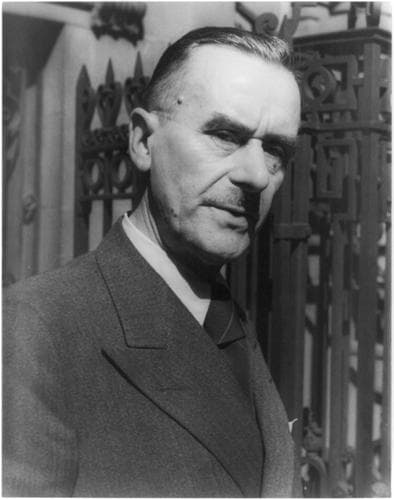
Paul Thomas Mann was a German novelist, short story writer, social critic, philanthropist, essayist, and the 1929 Nobel Prize in Literature laureate. His highly symbolic and ironic epic novels and novellas are noted for their insight into the psychology of the artist and the intellectual. His analysis and critique of the European and German soul used modernized versions of German and Biblical stories, as well as the ideas of Johann Wolfgang von Goethe, Friedrich Nietzsche, and Arthur Schopenhauer.
Similar books
- The Magic Mountain
Thomas Mann
4.1 (38k) average on GoodreadsLiterary FictionExplores philosophical themes and German intellectual life through a detailed, contemplative narrative.
- The Master And Margarita
Mikhail Bulgakov
4.3 (243k) average on GoodreadsFantasyFeatures a satirical yet profound exploration of good and evil, with a prominent role for the Devil in human affairs.
- Steppenwolf
Hermann Hesse
4.1 (136k) average on GoodreadsLiterary FictionBoth Doctor Faustus and Steppenwolf delve into the isolation of the intellectual artist and their struggle with societal norms and their own inner demons. Hesse's novel, however, is more intensely psychological and existential, focusing on Harry Haller's internal fragmentation and search for self-integration, often through surreal and symbolic experiences. Mann's Faustus, while exploring similar themes of isolation and artistic suffering, embeds these within a much broader historical and cultural critique of Germany, making its scope more expansive and outwardly focused on national destiny.
- The Old Man and the Sea
Ernest Hemingway
3.8 (831k) average on GoodreadsLiterary FictionA Cuban fisherman's long struggle with a giant marlin becomes a story of endurance and dignity, now retold for young adults with illustrations, phonetic guides, and writing prompts in Traditional Chinese.
- One Hundred Years of Solitude
Gabriel García Márquez
4.1 (753k) average on GoodreadsLiterary FictionThrough the multi-generational story of the Buendía family, a mythical town deals with the repeating patterns of time, love, and solitude, as the extraordinary mixes with the ordinary.
- The Goldfinch
Donna Tartt
3.9 (720k) average on GoodreadsLiterary FictionHaunted by a tragic explosion and clutching a stolen Dutch masterpiece, a young orphan navigates the opulent drawing rooms of New York and the gritty underbelly of the art world, desperately seeking connection and redemption amidst a life spiraling into crime and obsession.





Enjoyed the summary?
A summary gives you the shape of the book. The book itself has the detail, the examples and the voice.
Find Doctor Faustus on AmazonAs an Amazon Associate, BookBrief earns from qualifying purchases. How we're funded