
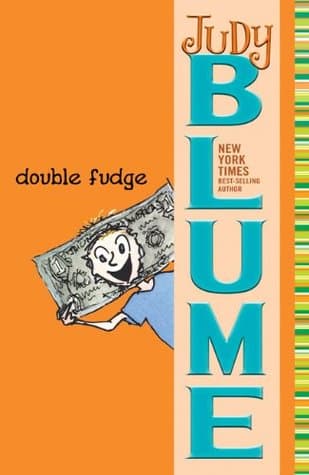
Synopsis
Covers the whole plot, including the ending.
- Difficulty
- Easy
- Pacing
- Moderate
- Mood
- Humorous, Lighthearted, Relatable, Chaotic
- Read it if
- You enjoy humorous, relatable stories about sibling dynamics and family life from a child's perspective, especially if you're a fan of Judy Blume's other 'Fudge' books.
- Skip it if
- You prefer fantasy or adventure stories, or if you dislike books with a focus on quirky family situations and a slightly mischievous younger sibling.
Double Fudge Plot Summary
Covers the whole plot, including the ending.
Fudge's Obsession with Money
The story begins with five-year-old Fudge Hatcher developing a strong interest in money. He starts collecting coins and bills, saying he will be rich. This obsession appears in various ways, such as him trying to 'buy' things from his family, like Peter's privacy or his mother's attention. Peter, now in sixth grade, finds his brother's new hobby annoying, as it often involves Fudge looking through his things or interrupting his attempts at a normal life. The family initially finds it funny but soon realizes it is a complete fixation, with Fudge even trying to 'sell' his baby sister, Tootsie, for a dollar.
The Arrival of the Long-Lost Relatives
The Hatcher family gets an unexpected letter from their relatives, the Fudges, who live in Hawaii. It turns out that Peter's grandmother, Nana, has a cousin named Howie Hatcher. Howie, his wife Norma, and their two children, Flora and Farley (also nicknamed Fudge), are planning a trip to New York and want to stay with the Hatchers. This news makes Peter worried. The idea of another 'Fudge' living in their already busy apartment, especially one from a family he has never met, is too much. He expects more disruptions to his life and privacy.
The Hawaiian Fudges Descend on New York
The Hawaiian Fudges arrive, and their presence immediately causes disorder in the Hatcher home. Howie and Norma are free-spirited and relaxed, quite different from the Hatchers. Their daughter, Flora, is a quirky, nature-loving girl who carries a pet rat named Uncle Feather in her pocket. Their son, Farley, who is the same age as Peter's Fudge, is also nicknamed Fudge. This leads to endless confusion and sibling rivalry between the two Fudges. The Hawaiian Fudges' habits, like walking around in swimsuits and eating unusual foods, create a culture clash that Peter finds embarrassing and hard to bear, especially when his friends are around.
Two Fudges, Double Trouble
With two Fudges in the apartment, the noise and disorder grow a lot. Farley, the Hawaiian Fudge, is as mischievous and attention-seeking as Peter's brother, Fudge. They constantly compete for toys, attention, and even the family's affection. This leads to many arguments, elaborate pranks, and general chaos. Peter is especially annoyed by the double Fudges. His own brother's antics are now stronger because of his Hawaiian counterpart, making his life even harder and less private than before. The two Fudges' shared nickname causes endless confusion for everyone.
Flora and Uncle Feather
Flora, the Hawaiian cousin, introduces her pet rat, Uncle Feather, to the Hatcher home. Peter is at first disgusted and scared by the rat, while Fudge is interested in it. Flora treats Uncle Feather like a family member, carrying him everywhere. The rat's presence causes a stir, especially for Mrs. Hatcher, who is not happy about having a rodent in her apartment. Uncle Feather appears often in the story, often escaping, causing scares, and showing more differences between the two families and how much they tolerate unusual pets.
Fudge's Money-Making Schemes
Driven by his wish to be rich, Peter's Fudge starts making various plans to earn money. These include trying to 'sell' his drawings, charging people to watch him eat, and even trying to get a job at a local store. His efforts are mostly unsuccessful and often cause more trouble than profit. He even tries to 'invest' his collected money in strange ways. Peter finds his brother's constant search for wealth both irritating and sometimes embarrassing, especially when Fudge tries to involve him in his poorly thought-out plans. This obsession is a central funny part of the book.
The Hawaiian Fudges' Departure
After a long and often difficult stay, the Hawaiian Fudges finally announce they are leaving. While Peter at first is happy at the thought of getting his privacy and normal life back, he feels a surprising sadness. Despite all the chaos and embarrassment, he had gotten used to their eccentric presence. The two Fudges also say a tearful goodbye, showing that despite their rivalry, they had formed a bond. Their departure leaves the Hatcher apartment quieter, but also a little emptier. This marks the end of a unique and memorable time for the family.
Fudge's Continuing Money Obsession
Even after the Hawaiian Fudges leave, Peter's brother, Fudge, does not stop his money obsession. He continues to collect, count, and talk about money, though perhaps with slightly less strength than before. He learns some basic ideas about saving and spending, though in his own unique, Fudge-like way. Peter, accepting his brother's lasting quirks, continues to handle the difficulties of being Fudge's older brother. He realizes that some things, like Fudge's personality, do not change. The family tries to guide his interest in a more useful direction, teaching him about banks and allowances.
Peter's Reflection and Growth
Throughout the time with the Hawaiian Fudges and his brother's money obsession, Peter grows personally. He learns to tolerate, and even sometimes appreciate, the chaos that Fudge brings into his life. He also realizes that despite his constant complaints, he cares deeply for his family, including his eccentric brother. Hosting the Hawaiian Fudges broadens his view and makes him appreciate his own family's unique ways. He accepts that his life will always be somewhat unusual with Fudge around, and he finds a way to cope and even find humor in it.
A New Normal for the Hatchers
The Hatcher family eventually settles into a new 'normal.' For them, this still involves a fair amount of noise and unexpected events, mainly because of Fudge. Fudge's money obsession becomes a running joke, but also an accepted part of his personality. Peter continues to be the older brother who puts up with a lot, but with a new sense of acceptance and even affection for his little brother. The experience with the Hawaiian Fudges leaves a lasting impression. It reminds them of the joy and difficulties that come with family, both near and far, and strengthens their unique family bond.
Double Fudge Characters
Peter Hatcher
Protagonist
Sixth-grade older brother, often exasperated by his younger brother, Fudge.
Peter is an eleven-year-old boy in sixth grade who constantly finds himself in the crosshairs of his younger brother Fudge's antics. He yearns for privacy, normalcy, and a life free from embarrassment, all of which are frequently denied by Fudge. He is generally responsible and tries to be mature, but often loses his temper or feels deeply frustrated by the chaos Fudge creates. His internal monologues reveal his struggles with sibling rivalry, the challenges of growing up, and his reluctant affection for his family. He often feels like his parents favor Fudge.
Relationships: Fudge Hatcher (Younger brother, source of constant annoyance and reluctant affection); Tootsie Hatcher (Baby sister); Mrs. Hatcher (Mother, often seen as biased towards Fudge); Mr. Hatcher (Father, understanding but sometimes oblivious); Sheila Tubman (Friend/rival, neighborhood girl)
Fudge Hatcher (Farley Drexel Hatcher)
Supporting
Mischievous five-year-old brother, obsessed with money.
Fudge is Peter's five-year-old brother, known for his boundless energy, vivid imagination, and often disruptive behavior. In this book, his primary obsession is money – collecting it, counting it, and devising schemes to get more. He is charmingly manipulative, attention-seeking, and completely uninhibited, often causing embarrassment for Peter. Despite his antics, he is deeply loved by his family, who often indulge his whims. He is also very curious and takes things literally, leading to humorous misunderstandings.
Relationships: Peter Hatcher (Older brother, frequent target of his pranks and source of attention); Tootsie Hatcher (Baby sister, sometimes seen as a commodity); Mrs. Hatcher (Mother, doting and understanding); Mr. Hatcher (Father, patient and often amused); Farley (Hawaiian Fudge) (Cousin, rival, and friend)
Mrs. Hatcher (Anne)
Supporting
Peter and Fudge's mother, trying to balance family life and creative pursuits.
Mrs. Hatcher is Peter and Fudge's mother, a patient and loving parent who often finds herself mediating between her two sons. She is an artist and illustrator, often working from home, which means she is frequently caught in the middle of Fudge's disruptions. She tries to be fair but often appears to Peter to be more understanding and indulgent of Fudge. She handles the arrival of the Hawaiian relatives with a mix of hospitality and bewilderment, trying to maintain order amidst the chaos. She is also a caring mother to baby Tootsie.
Relationships: Mr. Hatcher (Husband); Peter Hatcher (Son); Fudge Hatcher (Son); Tootsie Hatcher (Daughter)
Mr. Hatcher (Warren)
Supporting
Peter and Fudge's father, an advertising executive.
Mr. Hatcher is Peter and Fudge's father, an advertising executive who works in the city. He is generally a calm and understanding presence, though sometimes oblivious to the full extent of the chaos at home. He often tries to reason with Fudge and offers Peter advice, sometimes more effectively than others. He welcomes the Hawaiian relatives with an open mind, despite the disruptions they bring. He is a loving father who tries to engage with his children's interests, even if they are as unusual as Fudge's money obsession.
Relationships: Mrs. Hatcher (Wife); Peter Hatcher (Son); Fudge Hatcher (Son); Tootsie Hatcher (Daughter)
Tootsie Hatcher (Tamara Roxanne Hatcher)
Supporting
Baby sister, largely an observer of the family's antics.
Tootsie is the Hatcher's baby daughter, still very young and mostly an observer of the family's chaos. She is a source of affection for the family, but also occasionally becomes an object of Fudge's schemes, like when he tries to 'sell' her. Her presence adds to the general busyness of the Hatcher household, requiring constant care and attention, which sometimes further strains Peter's patience. She is generally good-natured and provides moments of sweetness amidst the family's boisterous activities.
Relationships: Peter Hatcher (Older brother); Fudge Hatcher (Older brother); Mrs. Hatcher (Mother); Mr. Hatcher (Father)
Farley Hatcher (Hawaiian Fudge)
Supporting
Hawaiian cousin, the same age as Peter's Fudge, also nicknamed Fudge.
Farley, also known as Fudge, is the five-year-old son of Howie and Norma Hatcher from Hawaii. He is the same age as Peter's brother and shares his nickname, leading to much confusion and rivalry. Farley is equally mischievous and energetic, and his presence amplifies the chaos in the Hatcher household. He quickly forms a competitive bond with Peter's Fudge, engaging in various games and arguments. He is a free spirit, reflecting his parents' laid-back lifestyle, and contributes to the culture clash experienced by Peter.
Relationships: Fudge Hatcher (Cousin, rival, and friend); Flora Hatcher (Sister); Howie Hatcher (Father); Norma Hatcher (Mother)
Flora Hatcher
Supporting
Hawaiian cousin, a quirky, nature-loving girl with a pet rat.
Flora is the daughter of Howie and Norma Hatcher and Farley's older sister. She is a unique and somewhat eccentric girl who loves nature and carries her pet rat, Uncle Feather, everywhere. She is calm and observant, often providing a quieter contrast to the boisterous Fudges. Her unusual pet and her laid-back demeanor further highlight the cultural differences between the two Hatcher families. She is kind and gentle, but her presence, especially with Uncle Feather, causes some discomfort for Peter and his mother.
Relationships: Farley (Hawaiian Fudge) (Brother); Howie Hatcher (Father); Norma Hatcher (Mother); Uncle Feather (Pet rat)
Howie Hatcher
Supporting
Peter's great-uncle from Hawaii, laid-back and free-spirited.
Howie Hatcher is Nana's cousin and the patriarch of the Hawaiian Hatcher family. He is a relaxed, easygoing man who embodies the stereotype of a Hawaiian surfer, often wearing casual clothes and having a very relaxed attitude towards life. He is genuinely friendly and appreciative of the Hatchers' hospitality but also somewhat oblivious to the disruptions his family causes. His presence, along with his family's, introduces a new dynamic and culture clash into the Hatcher household, often to Peter's dismay.
Relationships: Norma Hatcher (Wife); Flora Hatcher (Daughter); Farley (Hawaiian Fudge) (Son); Nana (Cousin)
Norma Hatcher
Supporting
Howie's wife, a free-spirited and unconventional woman.
Norma Hatcher is Howie's wife and the mother of Flora and Farley. Like her husband, she is very laid-back and unconventional, often walking around in a swimsuit in the apartment and having different ideas about food and daily routines than the New York Hatchers. She is kind and friendly but also adds to the chaotic atmosphere with her relaxed approach to things like cleanliness and privacy. Her interactions with Mrs. Hatcher highlight the differing lifestyles and values between the two families.
Relationships: Howie Hatcher (Husband); Flora Hatcher (Daughter); Farley (Hawaiian Fudge) (Son)
Uncle Feather
Mentioned
Flora's pet rat.
Uncle Feather is Flora Hatcher's beloved pet rat, who she carries with her everywhere, often in her pocket. He is a quiet but significant presence, serving as a source of fascination for Fudge, disgust for Peter, and mild alarm for Mrs. Hatcher. His occasional escapes and appearances add moments of humor and tension to the narrative, further emphasizing the unconventional nature of the Hawaiian Hatchers.
Relationships: Flora Hatcher (Owner)
Double Fudge Themes
Sibling Rivalry and Acceptance
The main theme is the ongoing rivalry between Peter and Fudge. Peter constantly struggles with Fudge's behavior. He wants peace and privacy, but he eventually accepts his brother more deeply, though still with frustration. The arrival of Hawaiian Fudge makes this theme stronger, as Peter now deals with double the sibling chaos. Despite the frustrations, the bond between Peter and Fudge, and even between the two Fudges, shows an underlying affection that goes beyond the constant arguments. For example, Peter's thoughts often show annoyance but also moments of reluctant pride or concern for Fudge.
“Sometimes I think my little brother, Fudge, is a genius. Other times I think he's a pest. Most of the time I think he's both.”
The Value of Money
Fudge's strong obsession with money drives much of the story. The book shows how a young child sees and values money. This ranges from collecting coins and bills to making elaborate, though silly, plans to earn it. Fudge's understanding of money is simple and often literal. This leads to funny situations where he tries to 'buy' family members or services. This theme contrasts with the more mature, though still developing, understanding of money held by Peter and the practical concerns of the adults. It shows different views on wealth and what it means.
“I'm going to be rich, rich, rich! I'm going to have so much money, I'll buy everything!”
Family Dynamics and Chaos
The Hatcher home is a place of activity and chaos, largely because of Fudge. The arrival of the Hawaiian Hatcher family makes this stronger, bringing new personalities, cultural differences, and double the mischief with two 'Fudges.' The book humorously shows how families adapt (or struggle to adapt) to unexpected guests and changes in routine. It explores the give-and-take of family life, the compromises made, and the underlying love that keeps them together despite the constant disruptions. Peter's wish for peace is constantly challenged by his extended family's loving but loud nature.
“Our apartment was already small for five people and a baby. Now with five more, it felt like a sardine can.”
Culture Clash and Acceptance of Differences
The visit from the Hawaiian Hatcher family highlights a culture clash. The New York Hatchers, especially Peter, are used to a certain routine and level of privacy. This is completely disrupted by the free-spirited, relaxed ways of Howie, Norma, Flora, and Farley. Their different customs, from clothing choices to pet preferences (like Uncle Feather the rat), create funny and sometimes embarrassing situations. This theme explores the difficulties and eventual, though sometimes reluctant, acceptance of different lifestyles and personalities within an extended family. It teaches Peter about tolerance and broadens his view.
“They were so different from us. It was like they lived on another planet, even though they were family.”
Plot Devices & Literary Techniques
First-Person Narration (Peter's Perspective)
The story is told entirely from Peter Hatcher's point of view.
The entire narrative is filtered through the eyes and thoughts of Peter Hatcher. This allows readers to experience the frustrations, humor, and occasional tenderness of dealing with Fudge directly from Peter's perspective. It highlights his internal struggles, his exasperation with his brother, and his longing for normalcy. This device makes Peter a highly relatable character for young readers who may have younger siblings, and it allows for comedic timing and emotional depth as Peter reacts to the unfolding chaos.
Repetitive Nickname (Fudge)
The shared nickname 'Fudge' for two characters creates confusion and humor.
The fact that both Peter's younger brother and his Hawaiian cousin share the nickname 'Fudge' is a significant plot device. It immediately creates confusion and comedic situations, as characters, and even the reader, must constantly distinguish between 'our Fudge' and 'Hawaiian Fudge.' This device amplifies the chaos in the Hatcher household, doubles Peter's exasperation, and fuels much of the sibling rivalry and competition between the two boys, making the title 'Double Fudge' particularly apt.
Running Gag (Fudge's Money Obsession)
Fudge's relentless pursuit of money serves as a recurring source of humor and plot points.
Fudge's intense and often misguided obsession with money is a continuous running gag throughout the book. From his attempts to 'sell' his baby sister to his various schemes to earn money, this fixation provides a constant source of humor and drives many of the smaller plot developments. It highlights Fudge's unique personality and his childlike understanding of the adult world, consistently setting up comedic scenarios and testing Peter's patience.
Symbolism (Uncle Feather the Rat)
Flora's pet rat symbolizes the unconventional nature of the Hawaiian family.
Uncle Feather, Flora's pet rat, serves as a symbolic element. He represents the unconventional, free-spirited, and sometimes jarring differences of the Hawaiian Hatcher family compared to the New York Hatchers. His presence initially causes disgust and fear, particularly for Peter and Mrs. Hatcher, but he eventually becomes an accepted, if unusual, part of the temporary household. He highlights the theme of accepting differences and learning to tolerate what might initially seem strange or unpleasant.
Double Fudge Quotes
“I'm not a baby! I'm a big kid!”
“Money, money, money!”
“You can't buy everything with money.”
“I'm going to be a millionaire when I grow up.”
“Sometimes I think my little brother is from another planet.”
“Family is more important than money.”
“Why does everything have to be about money with you?”
“I'm not greedy, I'm just interested.”
“Being rich doesn't make you happy.”
“You have to earn money, not just want it.”
“I wish I had a normal brother.”
“Money can't buy love or friendship.”
“Sometimes the best things in life are free.”
“I'm not a little kid anymore!”
Quiz
10 questions on the plot and the characters. Each answer comes with a short explanation.
Question 1
What is Fudge's obsession that drives much of the plot in 'Double Fudge'?
- Collecting baseball cards
- Making money and becoming rich
- Learning to ride a bicycle
- Winning a school spelling bee
Show answer
B. Making money and becoming rich Fudge becomes obsessed with money in 'Double Fudge', creating his own currency called 'Fudge Bucks' and constantly talking about becoming rich, which leads to many humorous situations and conflicts throughout the book.
Question 2
How does Peter Hatcher feel about his younger brother Fudge's money obsession?
- He thinks it's funny and encourages it
- He's embarrassed and annoyed by it
- He doesn't notice or care about it
- He's worried Fudge will become a criminal
Show answer
B. He's embarrassed and annoyed by it As the older brother, Peter is frequently embarrassed and annoyed by Fudge's antics, including his money obsession. This is consistent with Peter's character throughout the Fudge series, where he often finds Fudge's behavior exasperating.
Question 3
What surprising family connection do the Hatchers discover in 'Double Fudge'?
- They find out they're related to the President
- They meet distant cousins they didn't know existed
- They learn Fudge was adopted
- They discover they're heirs to a fortune
Show answer
B. They meet distant cousins they didn't know existed The Hatcher family meets their distant cousins, the Tubmans, including know-it-all Sheila Tubman and her family. This connection brings new characters into the story and creates additional humorous situations.
Question 4
Why does Fudge create his own currency called 'Fudge Bucks'?
- To play a board game with his friends
- To teach his class about economics
- Because he wants to be in charge of his own money system
- To pay his brother Peter for chores
Show answer
C. Because he wants to be in charge of his own money system Fudge creates 'Fudge Bucks' as part of his money obsession, wanting to control his own currency system. This reflects his desire for independence and control, which is characteristic of his mischievous personality throughout the series.
Question 5
How does Sheila Tubman react when she first meets Fudge and learns about his money obsession?
- She's immediately impressed and wants to help him
- She's critical and acts superior about it
- She's scared of him and avoids him
- She doesn't notice or comment on it
Show answer
B. She's critical and acts superior about it Sheila Tubman, known for being a know-it-all, reacts in her typical superior manner when she meets Fudge. Her character consistently displays confidence and a tendency to correct others throughout the Fudge series.
Question 6
What theme about family relationships is explored through Peter's experiences with Fudge?
- The importance of always agreeing with siblings
- How younger siblings should always obey older ones
- The challenges and humor in sibling relationships
- Why parents should never have more than one child
Show answer
C. The challenges and humor in sibling relationships The Fudge series, including 'Double Fudge', consistently explores the humorous challenges of sibling relationships. Peter's exasperation with Fudge's antics, combined with their underlying bond, reflects realistic family dynamics that many readers can relate to.
Question 7
What does the 'Double Fudge' in the title primarily refer to?
- A type of dessert Fudge loves to eat
- Meeting another boy named Fudge
- Fudge getting in twice as much trouble
- Peter having to deal with two mischievous brothers
Show answer
B. Meeting another boy named Fudge The title 'Double Fudge' refers to the Hatchers meeting distant cousins, including another boy named Farley Drexel Hatcher (the same as Fudge's real name). This creates confusion and humorous situations with two characters having the same name.
Question 8
How does Fudge's money obsession affect his relationship with his parents?
- They completely ignore it as a phase
- They try to use it to teach him financial responsibility
- They punish him severely for talking about money
- They encourage him to start a real business
Show answer
B. They try to use it to teach him financial responsibility Fudge's parents attempt to channel his money obsession into teachable moments about financial responsibility, which is consistent with the parenting style shown throughout the series where they try to guide their children's interests constructively.
Question 9
What broader commentary about childhood and development does Fudge's money obsession represent?
- Children's tendency to develop intense, temporary fixations
- How schools fail to teach economics properly
- The dangers of exposing children to adult concepts
- Why children should never be given money
Show answer
A. Children's tendency to develop intense, temporary fixations Fudge's intense focus on money reflects a common childhood pattern of developing passionate, sometimes obsessive interests that may be temporary. This mirrors real child development where children often fixate on particular topics as they explore the world around them.
Question 10
Which aspect of Judy Blume's writing style is particularly evident in how she portrays Fudge's money obsession?
- Her use of complex financial terminology
- Her ability to find humor in ordinary childhood experiences
- Her preference for tragic story elements
- Her focus on historical accuracy
Show answer
B. Her ability to find humor in ordinary childhood experiences Judy Blume is known for finding humor in everyday childhood experiences, and Fudge's money obsession is a perfect example. She takes an ordinary concept (a child's interest in money) and develops it into a humorous, engaging storyline that resonates with young readers.
Double Fudge FAQ
What is 'Double Fudge' about?
'Double Fudge' follows Peter Hatcher as he deals with his younger brother Fudge's latest obsession: money. Fudge becomes fixated on earning, saving, and spending money, leading to chaotic situations like creating his own currency called 'Fudge Bucks' and embarrassing Peter at every turn. The story also introduces long-lost cousins, the Hatchers, who show up unexpectedly and add to the family's humorous complications.
Why should I read 'Double Fudge'?
You should read 'Double Fudge' for its laugh-out-loud humor, relatable family dynamics, and Judy Blume's signature ability to capture the frustrations and joys of sibling relationships. It's a lighthearted yet insightful look at childhood obsessions, financial literacy through a kid's perspective, and the chaos that ensues when extended family arrives unannounced.
What is the background/setting of 'Double Fudge'?
The story is set in contemporary New York City, primarily in the Hatcher family's apartment and around the city, including visits to places like the Empire State Building and the Museum of Natural History. The urban setting provides a backdrop for Fudge's money-themed adventures and the family's interactions with their new cousins.
What are the most memorable quotes from 'Double Fudge'?
Memorable quotes include Fudge's repeated exclamation 'I'm rich!' as he obsesses over money, Peter's exasperated thoughts like 'Why me?' when dealing with Fudge's antics, and Sheila Tubman's know-it-all lines such as 'I read about that in a book.' These capture the characters' personalities and the book's humorous tone.
What writing style does Judy Blume use in 'Double Fudge'?
Judy Blume uses a first-person narrative from Peter Hatcher's perspective, with a conversational, witty tone that appeals to young readers. The style is straightforward and humorous, blending dialogue-driven scenes with Peter's internal monologues to highlight family dynamics and childhood frustrations in an accessible way.
What minor details add significant meaning in 'Double Fudge'?
Minor details like Fudge's creation of 'Fudge Bucks'—hand-drawn money with his face on it—symbolize his childish understanding of finance and desire for control. The Hatcher cousins' sudden appearance and their contrasting personalities (e.g., their baby brother Tootsie's name) subtly emphasize themes of family unpredictability and connection.
What are some subtle foreshadowing moments in 'Double Fudge'?
Early mentions of Fudge's fascination with money and his tendency to take things literally foreshadow later events, such as his attempt to buy the Empire State Building. Peter's initial annoyance with Sheila Tubman hints at their evolving, slightly more tolerant relationship by the book's end.
What unexpected character connections exist in 'Double Fudge'?
The unexpected arrival of the Hatcher cousins—Farley, Flora, and their baby brother Tootsie—reveals a previously unknown branch of the family. Their similar names and chaotic energy mirror Fudge's antics, creating instant bonds and comedic conflicts, especially when Fudge and Farley team up for money-making schemes.
What are unspoken character motivations in 'Double Fudge'?
Peter's motivation is largely unspoken: he wants to maintain his dignity and avoid embarrassment from Fudge's antics, driven by a preteen's desire for normalcy. Fudge's obsession with money stems from a deeper need for attention and a sense of power in a world where he's often the little brother.
What psychological complexities do characters exhibit in 'Double Fudge'?
Fudge exhibits a blend of innocence and cunning, using his money obsession to manipulate situations for fun and gain. Peter shows resilience mixed with frustration, navigating sibling rivalry while secretly caring for Fudge. Sheila Tubman's know-it-all demeanor masks a desire for validation and friendship.
What are the major emotional turning points in 'Double Fudge'?
Key emotional turning points include Fudge's realization that money isn't everything after his 'Fudge Bucks' scheme fails, Peter's grudging acceptance of his cousins when they bond over shared family quirks, and the moment Fudge and Farley's friendship shows that chaos can lead to positive connections.
How do relationship dynamics evolve in 'Double Fudge'?
Peter and Fudge's relationship evolves from pure annoyance to a slightly more patient dynamic as Peter sees Fudge's money obsession as a phase. The Hatcher family's dynamic expands with the cousins' arrival, shifting from nuclear family chaos to extended family camaraderie, with Sheila Tubman becoming a more integrated, if still annoying, friend.
Which parts of 'Double Fudge' remain ambiguous or open-ended?
The book leaves ambiguous whether Fudge's money obsession will fully fade or resurface in new ways, and it doesn't specify the long-term impact of the Hatcher cousins' visit on the family. Sheila Tubman's exact role in the friend group remains open-ended, hinting at future interactions without resolution.
What are controversial scenes or decisions in 'Double Fudge'?
Some readers might find Fudge's attempt to buy the Empire State Building controversial for its unrealistic portrayal of childhood logic, or view Peter's frequent exasperation with Fudge as overly negative. The sudden introduction of long-lost cousins could be seen as a contrived plot device for added chaos.
'Double Fudge' ending explained: how it ends & what it means
The book ends with the Hatcher cousins departing, Fudge's money obsession slightly tempered by real-world lessons, and Peter reflecting on family bonds. It means that childhood phases pass, family connections—even unexpected ones—are valuable, and humor helps navigate life's chaos, leaving room for future adventures in the series.
About the author

Judith Blume is an American writer of children's, young adult, and adult fiction. Blume began writing in 1959 and has published more than 25 novels. Among her best-known works are Are You There God? It's Me, Margaret. (1970), Tales of a Fourth Grade Nothing (1972), Deenie (1973), and Blubber (1974). Blume's books have significantly contributed to children's and young adult literature. She was named one of the 100 most influential people in the world by Time magazine in 2023.
Similar books
- Tales of a Fourth Grade Nothing
Judy Blume
4.1 (132k) average on GoodreadsChildren'sFirst book in the 'Fudge' series, featuring the same characters and humor.
- The One and Only Ivan
Katherine Applegate
4.3 (141k) average on GoodreadsFantasyWhile different in subject, it shares a gentle, character-driven narrative appealing to the same age group.
- Harry Potter and the Sorcerer's Stone
J.K. Rowling
4.5 (7M) average on GoodreadsFantasyRescued from a miserable life under the stairs, an orphaned boy discovers he's a wizard destined for a magical school, where he uncovers a dangerous secret tied to the dark wizard who murdered his parents.
- The Hobbit, or There and Back Again
J.R.R. Tolkien
4.3 (2.9M) average on GoodreadsFantasyA comfort-loving hobbit named Bilbo Baggins is whisked away by a mischievous wizard and a band of dwarves on an unexpected journey to reclaim stolen treasure from a fearsome dragon, discovering courage and a magical ring along the way.
- Harry Potter and the Goblet of Fire
J.K. Rowling
4.6 (2.6M) average on GoodreadsFantasyA bewildered Harry Potter, underage and thrust into a deadly Triwizard Tournament, must brave dragons, mermaids, and a resurgent dark magic to survive a year that will forever alter the wizarding world.
- Harry Potter and the Order of the Phoenix
J.K. Rowling
4.5 (2.5M) average on GoodreadsFantasyIn a year of oppressive secrets and the threat of Voldemort, Harry Potter and Dumbledore's Army secretly train for war, shown through Jim Kay and Neil Packer's dark illustrations.




Enjoyed the summary?
A summary gives you the shape of the book. The book itself has the detail, the examples and the voice.
Find Double Fudge on AmazonAs an Amazon Associate, BookBrief earns from qualifying purchases. How we're funded