

Synopsis
Covers the whole plot, including the ending.
- Difficulty
- Medium
- Pacing
- Fast
- Mood
- Gritty, Suspenseful, Empowering, Dark
- Read it if
- You enjoy historical fiction with a speculative twist, strong female protagonists, and social commentary on race and class. Perfect for fans of action-packed zombie stories with depth.
- Skip it if
- You prefer traditional historical fiction without fantasy elements, or are not comfortable with graphic violence and themes of racial oppression.
Dread Nation Plot Summary
Covers the whole plot, including the ending.
Miss Preston's School and the Missing Families
Jane McKeene, a student at Miss Preston's School of Combat in Baltimore, is learning weaponry and etiquette, training to become an Attendant to the wealthy. Despite her mixed heritage, she is treated as a second-class citizen in a post-Reconstruction America where the dead, known as shamblers, roam. Jane wants to return to her family's farm in Kentucky, but her plans are disrupted by a series of disappearances in Baltimore County. Wealthy white families are vanishing, leaving no bodies, only signs of a struggle. This mystery, combined with growing racial tensions and Miss Preston's strict discipline, makes Jane's life complicated, forcing her to confront the realities of a society built on fear and prejudice.
The Incident at the Cemetery and Katherine's Betrayal
During a routine cemetery patrol with her rival, Katherine Devereaux, Jane encounters an aggressive shambler. Their teamwork allows them to dispatch it. However, Katherine, motivated by jealousy, reports Jane for a minor infraction during the encounter. This act of betrayal results in Jane being publicly whipped, a brutal punishment that confirms her distrust of Katherine and shows the harsh realities and injustices faced by students at Miss Preston's. The incident also foreshadows deeper conflicts and betrayals that will unfold as Jane investigates the mysteries surrounding Baltimore.
Forced Relocation to Summerland
A shambler attack on Baltimore, more organized and aggressive than usual, causes chaos. Afterward, authorities, claiming public safety, round up many Negro and Native American children, including Jane and Katherine, and forcibly relocate them to Summerland, a remote, fortified settlement in western Maryland. Summerland is presented as a utopian community, a safe haven from the shamblers. However, Jane immediately senses that something is wrong, finding the settlement's rigid rules and the behavior of its leader, Mayor Redfearn, suspicious.
Uncovering Summerland's Dark Secret
Life in Summerland is not a paradise. Residents face harsh labor, constant surveillance, and peculiar medical treatments. Jane, with Katherine's reluctant help, begins to investigate the disappearances within Summerland and the strange behavior of the shamblers outside its walls. They discover that Mayor Redfearn and his associates are not protecting the residents, but using them for grotesque experiments. Redfearn is manipulating the shamblers, creating a more intelligent and controlled variant, and using the residents' blood for his research, making Summerland a human farm.
Meeting Gideon and Forming Alliances
While exploring the forbidden parts of Summerland, Jane encounters Gideon, a resourceful young man who also suspects the settlement's true nature. Gideon reveals he is Mayor Redfearn's nephew and has been secretly gathering evidence of his uncle's atrocities. Recognizing a shared enemy, Jane and Gideon form an alliance, pooling their knowledge and resources to uncover the full extent of Redfearn's experiments and find a way to expose him. Their combined efforts help them navigate the dangers of Summerland and plan an escape.
The Revelation of the 'New World' Project
Jane and Gideon's investigations lead them to a discovery: Mayor Redfearn's goal is not just to control shamblers, but to use them to establish a new world order. He plans to unleash a controlled horde of intelligent shamblers, wiping out society and rebuilding it with himself as leader, using the surviving Negro and Native American populations as a subservient workforce. The missing white families from Baltimore were not random victims but test subjects for his experiments, proving the efficacy of his controlled shamblers. This revelation shows the danger Redfearn poses and the urgency of stopping him.
Escaping Summerland and Confronting Redfearn
With Redfearn's depravity revealed, Jane, Katherine, and Gideon rally a group of Summerland residents, including some of the younger children, to stage an escape. They face numerous obstacles, including Redfearn's guards and the controlled shamblers. The escape ends in a violent fight with Mayor Redfearn. Jane, using all her combat training, defeats Redfearn, though not without significant cost. The battle is a brutal display of survival, leaving Summerland in ruins and Redfearn's reign of terror ended.
The Journey to Nicodemus
Following the destruction of Summerland and Redfearn's defeat, Jane, Katherine, Gideon, and the remaining survivors are left without a home or a clear path forward. They decide to journey west, seeking a rumored all-black settlement called Nicodemus, a place said to be a true safe haven from the prejudices and dangers of the 'dread nation.' The journey is full of peril, as they must evade both shamblers and suspicious white communities, relying on their collective strength and Jane's leadership to navigate the treacherous path and uncertain future.
Confronting the Past and Forging New Bonds
As they travel towards Nicodemus, their situation forces Jane and Katherine to confront their past animosity. Stripped of the social hierarchies of Miss Preston's, they begin to see each other not as rivals, but as fellow survivors. Katherine, initially resistant, slowly starts to trust Jane and contribute to the group's survival. Gideon proves to be a valuable ally, his knowledge and resourcefulness aiding their progress. New bonds of friendship are formed amidst the shared hardship, showing the resilience of the human spirit in adversity.
Arrival at Nicodemus and a Glimmer of Hope
After a long journey, Jane and the survivors finally reach Nicodemus. They discover a thriving, self-sufficient black community, well-fortified against shamblers and independent from the wider 'dread nation.' While Nicodemus offers a sense of belonging and safety, it also presents new challenges, as Jane and her companions must integrate into an established society with its own rules and expectations. Nevertheless, the arrival at Nicodemus marks a turning point, offering hope for a future where they can live freely and safely, and where Jane can find a place to call home.
Principal Figures
Jane McKeene
Protagonist
A skilled fighter and quick-witted student, seeking freedom and a place to belong.
Jane is a sharp, independent, and fiercely protective young woman training at Miss Preston's School of Combat. Daughter of a wealthy white Southern planter and a black house servant, she navigates a world where her mixed heritage places her in a marginalized position. She is exceptionally skilled with a blade and rifle, but also possesses a keen intellect and a rebellious spirit. Her primary motivation is to return to her family's farm in Kentucky, but her journey leads her to fight for a greater cause: freedom and survival for her community. She is pragmatic and often sarcastic, using humor as a defense mechanism, but deeply cares for those she considers family.
Relationships: Katherine Devereaux (Rival turned uneasy ally); Gideon Redfearn (Ally and potential romantic interest); Miss Preston (Stern mentor and authority figure); Jackson (Family friend and stable hand)
Katherine Devereaux
Supporting
Jane's elegant, outwardly refined rival, who hides vulnerabilities and a desire for acceptance.
Katherine is Jane's primary rival at Miss Preston's, known for her impeccable etiquette and social graces. She is beautiful, sophisticated, and initially appears to be a snob, constantly trying to best Jane. However, beneath her polished exterior lies a vulnerable and insecure young woman, desperate for approval and a place within society. Her actions are often driven by fear and a desire for stability, which sometimes leads her to betray others. As the story progresses, she is forced to shed her pretensions and develop genuine courage, becoming a more complex and ultimately sympathetic character.
Relationships: Jane McKeene (Rival turned uneasy ally); Mr. Devereaux (Father (absent))
Gideon Redfearn
Supporting
Mayor Redfearn's intelligent and resourceful nephew, secretly working to expose his uncle's atrocities.
Gideon is the nephew of the villainous Mayor Redfearn, but he is nothing like his uncle. Intelligent, observant, and morally upright, Gideon has been secretly gathering evidence of Redfearn's horrific experiments in Summerland. He is resourceful and brave, willing to risk his life to expose the truth and help the victims. He forms a strong alliance with Jane, providing crucial information and assistance in their escape. Gideon represents a glimmer of hope and moral integrity within the corrupt world of Summerland, and his scientific knowledge proves invaluable.
Relationships: Jane McKeene (Ally and potential romantic interest); Mayor Redfearn (Antagonistic uncle)
Mayor Redfearn
Antagonist
The charismatic but sinister leader of Summerland, orchestrating a terrifying conspiracy.
Mayor Redfearn is the primary antagonist, a charismatic and seemingly benevolent leader who established Summerland as a supposed safe haven. However, beneath his charming facade lies a ruthless and megalomaniacal scientist. He is responsible for the disappearances in Baltimore and the horrific experiments conducted in Summerland, where he manipulates shamblers and uses human subjects for his vision of a 'new world order.' Redfearn is driven by a twisted sense of superiority and a desire for absolute control, seeing himself as a savior who will rebuild society, even if it means sacrificing countless lives.
Relationships: Gideon Redfearn (Nephew and unwitting saboteur); Jane McKeene (Primary adversary)
Miss Preston
Supporting
The strict and imposing headmistress of Miss Preston's School of Combat.
Miss Preston is the stern and unyielding headmistress of Miss Preston's School of Combat. She is a formidable figure, dedicated to her school's mission of training Negro and Native American girls to become Attendants. While she enforces discipline with an iron fist, her actions are rooted in a belief that she is preparing her students for survival in a dangerous world. She demands excellence and adherence to etiquette, believing these skills are essential for their protection and advancement. Though rigid, she instills a sense of duty and competence in her students, even if her methods are harsh.
Relationships: Jane McKeene (Teacher/Student); Katherine Devereaux (Teacher/Student)
Daniel
Supporting
A fellow student at Miss Preston's and Jane's friend.
Daniel is one of Jane's classmates and a close friend at Miss Preston's School. He is intelligent, observant, and often serves as a sounding board for Jane's frustrations and observations. While not as outwardly rebellious as Jane, he shares her cynicism about the system and provides a sense of camaraderie. He is a loyal friend and contributes to the group dynamic, often offering quiet support and practical insights.
Relationships: Jane McKeene (Friend and classmate)
Jackson
Supporting
A stable hand from Jane's home, representing her past and connection to Kentucky.
Jackson is a stable hand from Jane's family farm in Kentucky, a familiar face from her past. He represents Jane's longing for home and the life she left behind. Although he has a minor role, his presence grounds Jane and reminds her of her roots and the people she cares about. He is a kind and steady presence, providing a link to her personal history and motivations.
Relationships: Jane McKeene (Family friend)
Sheriff Williams
Mentioned
A local authority figure in Baltimore who is part of the conspiracy.
Sheriff Williams is a corrupt local law enforcement officer in Baltimore who is complicit in Mayor Redfearn's sinister plans. He is responsible for rounding up the Negro and Native American children and forcibly relocating them to Summerland, under the guise of public safety. His character represents the systemic racism and abuse of power prevalent in the 'dread nation,' highlighting how those in authority can be manipulated or actively participate in oppression.
Relationships: Mayor Redfearn (Co-conspirator)
Mr. Devereaux
Mentioned
Katherine's father, who abandoned her at Miss Preston's.
Mr. Devereaux is Katherine's father, who placed her at Miss Preston's School and is largely absent from her life. His abandonment contributes to Katherine's insecurities and her desperate need for acceptance and a stable future. He represents the broader societal tendency to discard or marginalize those deemed 'other' or inconvenient, even within one's own family.
Relationships: Katherine Devereaux (Absent father)
Themes & Insights
Racism and Systemic Oppression
The novel has themes of racism and systemic oppression, reflecting post-Civil War America where the 'Native and Negro Reeducation Act' forces black and Native American children into combat schools. Jane, despite her skills, faces constant prejudice because of her race. Summerland is a manifestation of this, where black and Native American individuals are exploited and experimented upon under the guise of protection. The narrative shows how race determines one's rights, opportunities, and even humanity in this 'dread nation.'
“It was a white man's world, no matter how many shamblers you put down. You were still black, still less.”
Identity and Self-Discovery
Jane's journey explores identity. As a biracial woman navigating a world that constantly tries to define and limit her based on her heritage, she struggles with where she belongs. Her training as an Attendant challenges her to reconcile her combat skills with societal expectations of feminine behavior. Her experiences in Summerland and her leadership role force her to confront her own capabilities and desires, leading her to embrace her strength and forge a new path for herself and her community, rather than simply returning to her past.
“I was caught between two worlds, the white and the black, and neither one truly wanted me.”
Survival and Resilience
The constant threat of shamblers and the pervasive racism require resilience from the characters. Jane's combat training is about survival, but the theme extends to emotional and psychological endurance. The residents of Summerland, despite being victims, show spirit in their struggle against Redfearn. The journey to Nicodemus shows the characters' ability to overcome physical danger, betrayal, and despair, demonstrating humanity's will to live and build a better future, even in the worst circumstances.
“We were survivors, every last one of us, and that was a power all its own.”
The Nature of Humanity and Monstrosity
While shamblers are the obvious monsters, the book explores the monstrosity of human beings. Mayor Redfearn, with his scientific experiments and dehumanization of others, is more terrifying than any shambler. The casual racism and systemic cruelty of society also show how prejudice can turn humans into monsters. The novel questions who the real 'dread' in the nation is, often pointing to the living rather than the dead, exploring the moral compromises and atrocities humans are capable of.
“The dead were a problem, but the living? They were the real monsters.”
Community and Belonging
Initially, Jane is concerned with her own survival and returning to her farm. However, her experiences in Summerland and the journey that follows make her recognize the importance of community. She forms bonds with Katherine and Gideon, and her leadership helps create a sense of collective purpose among the survivors. The goal of reaching Nicodemus symbolizes the search for a place where individuals can belong, free from external threats and internal divisions, and build a self-determined future together.
“Home wasn't just a place. It was the people you chose to keep safe.”
Plot Devices & Literary Techniques
The 'Dread Nation' Setting
A reimagined post-Civil War America infested with zombies.
This alternate history setting is the foundational plot device, creating the unique context for the story. The presence of shamblers (zombies) fundamentally altered the course of the Civil War and the subsequent social structure. It justifies the existence of combat schools for black and Native American children, providing a plausible (within the fictional world) reason for their forced training and marginalization. This setting also allows for exploration of historical themes like racism and Reconstruction through a fantastical lens, making the societal injustices feel both familiar and terrifyingly new.
Miss Preston's School of Combat
A training ground for young black and Native American girls to become Attendants.
This institution serves as a microcosm of the 'dread nation's' oppressive social structure. It is where Jane and Katherine are trained, providing a clear illustration of the 'Native and Negro Reeducation Act.' It establishes the characters' skills and their initial rivalry, while also highlighting the systemic control over their lives. The school functions as a starting point for the plot, establishing the rules and expectations that Jane will eventually rebel against, and setting the stage for her larger journey of self-discovery and resistance.
Summerland
A deceptive utopian settlement that serves as the primary antagonist's base of operations.
Summerland is a classic dystopian trope disguised as a utopia. It functions as the central location for the novel's major conflict, where Mayor Redfearn's horrific experiments are conducted. The initial promise of safety and community draws the characters in, only to reveal a darker, more sinister purpose. This device allows for the slow unveiling of the antagonist's true nature and the escalation of stakes, forcing Jane to move beyond personal survival to fighting for the lives of many. It represents the ultimate betrayal of trust and the perversion of ideals.
The Shamblers (Zombies)
The ever-present undead threat, manipulated for human gain.
The shamblers are more than just a horror element; they are a catalyst for the plot and a symbol. Their initial appearance derailed history, creating the world Jane inhabits. Later, Mayor Redfearn's ability to manipulate and control them elevates them from a natural disaster to a weapon, making them a direct tool of human oppression. This manipulation reveals the true villainy of Redfearn and highlights how even a widespread threat can be co-opted and exploited by those seeking power and control, blurring the lines between natural and man-made horrors.
The Journey to Nicodemus
A symbolic quest for a true safe haven and self-determination.
The journey to Nicodemus serves as a classic quest narrative, providing a clear goal for Jane and the survivors after the destruction of Summerland. It symbolizes the search for freedom, self-governance, and a place where their community can thrive without oppression. This device allows for character development through shared hardship, solidifying bonds and forcing characters to rely on each other. It represents a hope for a better future and a departure from the 'dread nation,' offering a vision of autonomy and resilience.
Dread Nation Quotes
“We are a nation of laws, Miss Deveraux, not a nation of feelings. And the law says you are chattel.”
“The dead don’t care about your pretty dresses or your polite manners. They only care about one thing: hunger.”
“It’s hard to be a lady when you’re covered in zombie guts.”
“Some battles you fight with a blade. Others you fight with your mind.”
“The only thing worse than a regular zombie is a smart zombie. And the only thing worse than a smart zombie is a smart zombie with a plan.”
“History is written by the victors, and if you’re not careful, you won’t even be a footnote.”
“Sometimes you have to break a few rules to save the world.”
“Hope is a dangerous thing, Miss Deveraux. It can get you killed.”
“We are all just trying to survive, no matter what color our skin is. It’s just that some of us have more obstacles than others.”
“You can't fight what you don't understand, and you can't understand what you refuse to see.”
“There are worse things than being dead, Miss Deveraux. There are things that can make you wish you were.”
“A lady knows when to fight and when to flee. And sometimes, a lady knows when to make sure she’s the one doing the chasing.”
“The South may have lost the war, but it never lost its prejudices.”
“Sometimes the greatest strength is knowing when to ask for help.”
Quiz
10 questions on the plot and the characters. Each answer comes with a short explanation.
Question 1
What significant historical event, unique to the world of Dread Nation, occurred two days after Jane McKeene's birth?
- The signing of the Emancipation Proclamation.
- The start of the War Between the States.
- The dead began to walk the battlefields.
- The Native and Negro Reeducation Act was passed.
Show answer
C. The dead began to walk the battlefields. The book explicitly states that Jane McKeene was born two days before the dead began to walk the battlefields of Gettysburg and Chancellorsville, which fundamentally altered the course of American history in this fictional world.
Question 2
What is the primary purpose of the 'Native and Negro Reeducation Act' in the world of Dread Nation?
- To provide advanced academic education to minority children.
- To train certain children in combat to put down the dead.
- To integrate Native and Negro children into mainstream society.
- To teach etiquette and social graces to children of color.
Show answer
B. To train certain children in combat to put down the dead. The Native and Negro Reeducation Act mandates that certain children attend combat schools to learn how to deal with the shamblers, making them essential for the nation's safety.
Question 3
What is Jane McKeene's primary goal upon almost finishing her education at Miss Preston's School of Combat?
- To become an Attendant for a prominent political family in Baltimore.
- To join the military and fight on the front lines against the dead.
- To return to her Kentucky home.
- To establish her own combat school for girls.
Show answer
C. To return to her Kentucky home. Despite the opportunities presented by being an Attendant, Jane's personal desire is to return to her home in Kentucky, showing her independent spirit and lack of interest in the politics of the eastern cities.
Question 4
What dual training does an 'Attendant' receive at schools like Miss Preston's?
- Cooking and cleaning.
- Weaponry and etiquette.
- Farming and animal husbandry.
- Medicine and nursing.
Show answer
B. Weaponry and etiquette. Attendants are trained to protect the well-to-do, which requires proficiency in both combat (weaponry) and social graces (etiquette) to serve in upper-class households.
Question 5
What makes Jane McKeene's background unique and somewhat complicated in the context of her society's expectations?
- She is an orphan with no known family connections.
- She is the daughter of a wealthy white Southern woman, despite being Negro.
- She was born in a Northern state but attends a Southern school.
- She comes from a long line of famous Attendants.
Show answer
B. She is the daughter of a wealthy white Southern woman, despite being Negro. The text highlights that 'not even being the daughter of a wealthy white Southern woman could save her from society’s expectations' regarding her racial identity and the Reeducation Act.
Question 6
What specific problem begins to occur in Baltimore County that pulls Jane into a larger conspiracy?
- A massive surge in shambler attacks in the city center.
- A widespread famine due to crop failure.
- Families around the county begin to go missing.
- A political uprising against the current government.
Show answer
C. Families around the county begin to go missing. The synopsis states that 'when families around Baltimore County begin to go missing, Jane is caught in the middle of a conspiracy,' indicating this is the inciting incident for the main conflict.
Question 7
What is the overarching theme suggested by the phrase 'the restless dead, it would seem, are the least of her problems'?
- The dead are easily defeated with proper training.
- Human threats and societal issues can be more dangerous than supernatural ones.
- Jane is exceptionally skilled at fighting the dead.
- The dead are merely a distraction from internal conflicts.
Show answer
B. Human threats and societal issues can be more dangerous than supernatural ones. This phrase strongly implies that while shamblers are a constant threat, the human conspiracy and powerful enemies Jane faces pose an even greater, more complex danger, highlighting the theme of internal societal corruption versus external monstrous threats.
Question 8
How did the rising of the dead impact the American Civil War (War Between the States) in this fictional history?
- It led to a swift Union victory.
- It caused the war to escalate into a global conflict.
- It completely derailed the war and changed America forever.
- It had no significant impact, as the war continued as planned.
Show answer
C. It completely derailed the war and changed America forever. The text clearly states the dead walking 'derailing the War Between the States and changing America forever,' indicating a fundamental shift in the nation's history due to this event.
Question 9
What does the 'talk of returning America to the glory of its days before the dead rose' reveal about some political factions in the eastern cities?
- They advocate for radical new technologies to eliminate the dead.
- They desire to revert to a pre-zombie apocalypse social and political order.
- They are focused on expanding the Attendant training programs.
- They believe the dead can be cured and integrated into society.
Show answer
B. They desire to revert to a pre-zombie apocalypse social and political order. This phrase suggests a conservative or nostalgic political movement that wishes to undo the changes brought by the dead, longing for a past societal structure and perhaps ignoring the new realities and opportunities.
Question 10
Why is the role of an Attendant considered an 'opportunity' for Negro girls like Jane, despite its demanding nature?
- It guarantees them a high social status and political power.
- It provides a chance for a better life and security through valuable skills and employment.
- It allows them to escape the Reeducation Act entirely.
- It offers a path to becoming independent plantation owners.
Show answer
B. It provides a chance for a better life and security through valuable skills and employment. The text states it's 'a chance for a better life for Negro girls like Jane,' implying that the training and subsequent employment as an Attendant offer stability, protection, and a measure of upward mobility or security that might otherwise be unavailable in their society.
Dread Nation FAQ
What is Dread Nation about?
Dread Nation is set in an alternate post-Civil War America where the conflict was interrupted by a zombie apocalypse, known as 'the Rising.' The story follows Jane McKeene, a Black girl trained in combat and etiquette at a school for Attendants, who are tasked with protecting wealthy white families from the undead. Jane finds herself embroiled in a conspiracy involving missing families and powerful enemies, making the living far more dangerous than the shambling dead.
Why should I read Dread Nation?
You should read Dread Nation for its unique blend of historical fiction, zombie horror, and sharp social commentary. It offers a thrilling adventure with a fiercely independent protagonist, Jane McKeene, who navigates a world filled with both literal monsters and the deeply entrenched racism and classism of the era. The book challenges traditional narratives and provides a fresh perspective on survival and identity.
What is the background/setting of Dread Nation?
The story is set in an alternate 1880s America, specifically Baltimore and later the segregated settlement of Summerland, following a zombie plague that began during the Civil War. This event led to the 'Native and Negro Reeducation Act,' forcing Black and Native American children into combat schools. The setting vividly portrays a society still grappling with racial inequality and segregation, even as humanity faces a common undead enemy, highlighting how systemic oppression persists despite existential threats.
What are the most memorable quotes?
While the book doesn't have a single universally recognized quote like 'Call me Ishmael,' memorable lines often highlight Jane's resilience and wit, such as her internal thoughts on defying expectations or her sharp retorts to those who underestimate her. Many memorable passages focus on the stark realities of her world, like 'I'm a survivor, and I'm good at it,' encapsulating her determined spirit and the harsh environment she navigates.
What writing style does the author use?
Justina Ireland employs a direct, engaging, and often sarcastic first-person narrative through Jane McKeene's perspective. The prose is sharp and action-oriented, reflecting Jane's pragmatic and no-nonsense personality, yet it also delves into poignant reflections on identity, race, and societal expectations. The style effectively balances thrilling combat sequences with thoughtful social commentary.
What minor details add significant meaning?
The detailed descriptions of the 'Attendant' training, which combines rigorous combat with strict etiquette, subtly highlight the dual expectations placed upon Black women: to be both protectors and subservient. Another minor detail is the constant underestimation of Jane and her peers by white characters, which underscores the pervasive racism that blinds many to the true capabilities of those they oppress, even in the face of a zombie apocalypse.
What are some subtle foreshadowing moments?
Early mentions of the 'Preservationist' movement and their seemingly benign goals subtly foreshadow their true, sinister intentions to use Black and Native people as fodder for their experiments. Also, the unusual efficiency and organization of some zombie attacks hint that there's more than just mindless shambling at play, suggesting intelligent manipulation behind the scenes long before the full conspiracy is revealed.
What unexpected character connections exist?
One significant unexpected connection is the revelation of Major Fouche's true allegiance and his role in the conspiracy, linking him to the very forces Jane is fighting against, despite his initial appearance as an authority figure. Another is the complex, strained relationship between Jane and her half-sister Katherine, which evolves from rivalry to a grudging, yet vital, alliance born of shared peril and unexpected respect.
What are unspoken character motivations?
Jane's unspoken motivation, beyond mere survival, is a fierce desire for self-determination and a refusal to be defined by society's expectations, whether as a subservient attendant or a tragic figure. Likewise, the motivations of characters like Mayor Gideon Carr often stem from a deeply ingrained belief in racial superiority and a fear of losing their privileged societal status, driving their horrific actions under the guise of 'progress' or 'preservation.'
What psychological complexities do characters exhibit?
Jane McKeene exhibits a complex mix of vulnerability and hardened pragmatism. Despite her tough exterior and combat prowess, she grapples with the trauma of loss and the constant threat to her identity and freedom. Katherine, initially appearing as a superficial rival, reveals her own internal struggles with societal expectations and a hidden desire for agency, showcasing a deeper strength beneath her refined facade.
What are the major emotional turning points?
A major emotional turning point occurs when Jane is forced to leave Miss Preston's and embark on the perilous journey to Summerland, realizing the full scope of the conspiracy and the danger facing her community. Another is the moment she confronts the true nature of the Preservationists' experiments, shattering any lingering illusions about the 'benevolence' of the ruling class and solidifying her resolve to fight for justice, not just survival.
How do relationship dynamics evolve?
The relationship between Jane and Katherine evolves significantly, moving from initial rivalry and resentment, fueled by their differing upbringings and social statuses, to a bond of mutual respect and reliance as they face shared dangers. Similarly, Jane's interactions with Gideon Carr shift from wary suspicion to outright hostility and defiance, as his true, villainous nature is revealed, solidifying their roles as adversaries.
Which parts remain ambiguous or open-ended?
The ultimate fate of some of the secondary characters and the full extent of the Preservationist network beyond Summerland remain somewhat open-ended at the close of the book, hinting at ongoing battles. The larger question of how the 'dread nation' will truly overcome its deep-seated racial prejudices and systemic inequalities, even after defeating a major threat, is left for future exploration, reflecting the complexity of real-world social change.
What are controversial scenes or decisions?
The entire premise of the Native and Negro Reeducation Act, which forcibly trains Black and Native children to fight zombies for the protection of white society, is inherently controversial and a powerful critique of systemic racism. Within the narrative, the decision by Mayor Carr and the Preservationists to experiment on and exploit marginalized communities for their own perceived safety is a deeply controversial and horrifying plot point, highlighting moral depravity.
Dread Nation ending explained: how it ends & what it means
Dread Nation ends with Jane and her allies successfully exposing and largely dismantling the horrific experiments in Summerland, preventing the Preservationists from creating an army of controlled undead. While they achieve a victory against a major villain and rescue many victims, the ending is not a complete resolution; they are still on the run, and the broader societal issues of racism and inequality persist. It signifies a battle won, but the war for true freedom and equality is far from over, setting the stage for future conflicts and continued struggle.
About the author

Justina Ireland is an author known for her work in speculative fiction. Her notable book, "Dread Nation," explores themes of race and identity in a reimagined post-Civil War America. Ireland's writing often combines elements of horror and historical fiction.
Similar books
- The Underground Railroad
Colson Whitehead
4.0 (290k) average on GoodreadsLiterary FictionExplores themes of race and freedom with a speculative element, though 'Dread Nation' is more action-oriented.
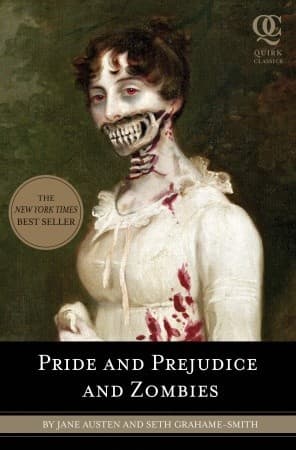
- Pride and Prejudice and Zombies
Seth Grahame-Smith
3.3 (129k) average on GoodreadsFantasyCombines classic period drama with zombie horror, offering a similar genre blend.
- Harry Potter and the Sorcerer's Stone
J.K. Rowling
4.5 (7M) average on GoodreadsFantasyRescued from a miserable life under the stairs, an orphaned boy discovers he's a wizard destined for a magical school, where he uncovers a dangerous secret tied to the dark wizard who murdered his parents.
- The Hunger Games
Suzanne Collins
4.3 (6.4M) average on GoodreadsFantasyIn a future where children fight to the death on live television, Katniss Everdeen volunteers for the arena, turning a death sentence into a fight for survival and a spark of rebellion.
- 1984
George Orwell
4.2 (3.1M) average on GoodreadsPoliticsIn a future where surveillance and thought control are absolute, a man's search for truth clashes with the Party, showing that hope can be a form of rebellion.
- Divergent
Veronica Roth
4.2 (2.9M) average on GoodreadsFantasyIn a society divided by virtues, a sixteen-year-old's difference from the norm starts a rebellion that threatens her world.





Enjoyed the summary?
A summary gives you the shape of the book. The book itself has the detail, the examples and the voice.
Find Dread Nation on AmazonAs an Amazon Associate, BookBrief earns from qualifying purchases. How we're funded