

Core Idea
- Difficulty
- Hard
- Read it if
- You are deeply interested in the psychological significance of dreams beyond superficial interpretations, want to understand Jung's complex theories on the unconscious, symbolism, and individuation, or seek a foundational text on analytical psychology.
- Skip it if
- You are looking for a simple dream dictionary, a quick-fix guide to dream interpretation, or prefer a purely neuroscientific explanation of dreams without delving into psychological or philosophical dimensions.
Key Takeaways from Dreams
Dreams as Compensatory Functions
Dreams restore psychological balance by highlighting neglected aspects of the psyche.
Jung states that dreams are not random brain firings but purposeful expressions from the unconscious. They aim to balance our conscious mind. If our conscious life is too logical and suppresses emotion, dreams might show strong emotional scenes. Conversely, someone overly emotional might dream of intellectual challenges. This balancing act ensures no single psychological function or attitude dominates at the expense of the whole personality. Dreams work as a self-regulating system, offering a broader, more complete view than our often-limited conscious perspective. They guide individuals toward greater psychological integration and wholeness. Understanding this function turns dream analysis into a tool for self-knowledge and personal growth, revealing what the conscious mind avoids or overlooks.
“The dream is a natural reaction to our conscious attitude. It is a compensation which aims at re-establishing the psychic equilibrium.”
In the book: Jung frequently cites case studies where patients' conscious attitudes were clearly one-sided (e.g., an overly analytical man neglecting his emotional life) and their dreams consistently presented imagery or narratives that directly counterbalanced this imbalance, leading to a more integrated personality over time.
Try this: Reflect on your waking life's dominant attitudes, values, and neglected areas. When a recurring dream theme emerges, consider what aspect of your conscious life it might be compensating for. If you consistently dream of failure, perhaps your conscious ambition is too high or your self-criticism too strong. If you dream of wildness, perhaps your waking life is too constrained.
Related ideas: compensation, unconscious, psychic-equilibrium
Symbolic Language of the Unconscious
Dreams communicate through universal symbols, not literal narratives.
Jung stresses that the unconscious mind, especially in dreams, communicates through symbols, not logical thought. These symbols are not random; they come from a shared human experience, appearing as archetypes and patterns common across cultures and times. Understanding a dream means interpreting these symbols within the dreamer's life, cultural background, and the collective unconscious. A snake, for example, might mean healing, danger, wisdom, or change, depending on the context. The analyst helps the dreamer find the personal and shared meaning of these symbols, recognizing that a symbol is 'the best possible expression of a relatively unknown fact.' This symbolic language lets the unconscious convey complex, often pre-rational insights that waking thought cannot express.
“The dream speaks in images and gives expression to instincts, to the primitive and natural man, to the feelings and affects, and it does so in a symbolic language.”
In the book: Jung's extensive comparative mythology and cross-cultural studies reveal recurring symbolic patterns (e.g., the hero's journey, the shadow, the anima/animus) in dreams, myths, and fairy tales worldwide, demonstrating a collective foundation for dream symbolism.
Try this: Instead of trying to 'figure out' a dream literally, approach its elements as metaphors. Ask yourself: 'What does this symbol (e.g., house, animal, person) *feel* like to me? What does it *represent* in my life or in general human experience?' Look for associations rather than direct translations.
Related ideas: symbols, archetypes, collective-unconscious, mythology
The Objective and Subjective Levels
Dreams can reflect external reality or internal psychological states.
Jung made a key distinction between interpreting dreams on the objective (or causal) level and the subjective (or final) level. On the objective level, dream figures and situations represent actual people or events in the dreamer's external life. For example, dreaming of an angry boss literally refers to one's boss. However, the subjective level is often deeper: the angry boss in the dream might symbolize the dreamer's own internalized critical parent, their suppressed aggression, or an aspect of their 'shadow' personality. Jung argued that the subjective interpretation usually leads to more psychological growth, as it makes the dreamer responsible for their internal world rather than blaming external factors. Both levels can be valid, and a full analysis often considers both, but the subjective approach leads to deeper self-reflection and integration, showing how external conflicts often mirror internal ones.
“The dream can be interpreted on the objective level, referring to persons or situations in the outer world, or on the subjective level, referring to complexes and aspects of the dreamer's own personality.”
In the book: Jung provides examples of patients initially interpreting dream figures as external individuals, only to realize through analysis that these figures embodied their own repressed qualities or internal conflicts. For instance, a patient dreaming of a tyrannical ruler might, on the subjective level, be confronting their own inner tyrant or their struggle with authority.
Try this: When you dream of a person or situation, first consider if it literally relates to your waking life. Then, ask: 'What quality or aspect of *myself* might this person or situation represent? What part of *me* is acting this way or experiencing this?' This shifts the focus from external blame to internal growth.
Related ideas: objective-level, subjective-level, projection, shadow, complexes
The Role of Complexes
Dreams reveal and activate emotionally charged psychological complexes.
Jung's 'complexes' are emotionally charged groups of ideas, images, and memories that are mostly unconscious but can strongly affect behavior and perception. Dreams often bring these complexes into conscious awareness, or show them in action. If a person has a 'power complex,' dreams might show struggles for control, feelings of helplessness, or authority figures. The dream acts as a diagnostic tool, highlighting which complexes are active and how they impact the individual's mind. By recognizing these complexes in dreams, a person can start to integrate them, reducing their unconscious influence and stopping them from automatically controlling reactions. Dreams don't just reflect complexes; they can also be a place where the ego confronts and tries to resolve the tension these unconscious forces create.
“The dream is an involuntary and spontaneous psychic product, and its contents are not arbitrary but are determined by certain complexes, which are the focal points of psychic energy.”
In the book: Jung's word association experiments famously demonstrated the existence of complexes, where delayed reactions or unusual responses indicated an emotionally charged area. He then found these same complexes manifesting symbolically and thematically in the subjects' dreams, providing a direct link between waking psychological 'hot spots' and dream content.
Try this: If you notice recurring themes, characters, or emotions in your dreams that evoke strong feelings (positive or negative), consider if they relate to a 'complex' in your waking life. For example, if you consistently dream of being judged, you might have a 'shame complex' at play. Explore the feelings and associations these dream elements trigger.
Related ideas: complexes, psychic-energy, unconscious, word-association
The Prospective Function of Dreams
Dreams can anticipate future psychological developments and provide guidance.
Beyond balancing, Jung also gave dreams a prospective function. This means dreams are not just about the past or present, but can also hint at future psychological states or the best path for a person's development. They are not necessarily literal predictions, but they show unconscious readiness for certain changes or problems, or suggest solutions to current dilemmas that the conscious mind has not yet formed. A dream might offer a symbolic 'roadmap' for handling a personal crisis or for reaching a new level of self-realization. This function highlights the unconscious as a source of wisdom and foresight, actively guiding the individual toward individuation. It suggests that paying attention to dreams can provide internal guidance for future challenges and growth, making them a powerful tool for conscious decision-making.
“The dream, far from being a mere replica of waking life, is a creative and constructive activity, which builds up future situations or anticipates future developments.”
In the book: Jung describes cases where patients, facing significant life decisions, had dreams that clearly pointed towards a psychologically healthier or more integrated path, even when their conscious minds were leaning in a different direction. Following the dream's guidance often led to positive outcomes and personal growth.
Try this: When facing a significant life decision or feeling stuck, pay close attention to your dreams. Consider if any dream imagery, narrative, or feeling offers a 'hint' or a different perspective on your situation. Don't take it literally, but explore its symbolic guidance. What direction does your deeper self seem to be nudging you towards?
Related ideas: prospective-function, individuation, guidance, foresight
The Amplification Method
Expanding dream symbols through associations and collective parallels.
Jung's 'amplification' method is central to his dream analysis, differing greatly from Freud's free association. Instead of letting associations wander, amplification involves taking a dream image or symbol and expanding its meaning by exploring personal associations for the dreamer, as well as its universal, collective, mythological, and cultural parallels. If a dreamer dreams of a 'red king,' for instance, amplification would involve asking what 'red' means to them, what 'king' means, and then exploring figures of red kings in history, mythology, and fairy tales. This process enriches the symbol's meaning, revealing its deeper layers and connecting it to the collective unconscious. It prevents overly simple interpretations and ensures that the dream's full symbolic weight is understood, leading to a more complete grasp of the unconscious message. Amplification helps make the unknown more known through expanding a symbol.
“The method of amplification consists in taking a dream-image and elaborating it by means of directed association, by historical parallels, and by its mythological and ethnological connections.”
In the book: Jung's analysis of individual dream series, especially in relation to alchemical symbolism, vividly demonstrates amplification. He would take a patient's dream image (e.g., a specific animal or a chemical process) and then show how its meaning resonated with ancient alchemical texts, Gnostic myths, or Eastern philosophies, revealing a deeper, archetypal layer to the personal symbol.
Try this: When analyzing a dream symbol, don't just stop at your first association. Actively research its meaning in mythology, religion, folklore, and art. Consider what it has meant across cultures and throughout history. For example, if you dream of a tree, explore the symbolism of trees in different traditions (tree of life, sacred groves, etc.) alongside your personal memories of trees.
Related ideas: amplification, collective-unconscious, mythology, archetypes, symbolism
The Personal and Collective Unconscious
Dreams draw from individual history and universal human experience.
Jung famously distinguished between the personal unconscious, which contains forgotten or repressed individual experiences and memories, and the collective unconscious, a deeper, inherited layer of the psyche common to all humanity. Dreams draw from both. While some dream content is clearly rooted in personal history and daily events, other, more profound dream experiences tap into the collective unconscious, appearing as archetypal images, patterns, and themes that go beyond individual experience. Recognizing this difference is crucial for dream analysis: it prevents an overly personal interpretation and allows for understanding how individual struggles connect with universal human themes. The collective unconscious provides the 'software' for the human psyche, and dreams are one of the main ways its archetypes appear, guiding the individual toward a deeper connection with humanity's shared spiritual and psychological heritage. It explains why certain symbols and stories hold universal power.
“The unconscious is not merely a receptacle for forgotten contents; it also contains the collective unconscious, an inheritance of psychic forms which are common to all humanity.”
In the book: Jung's extensive work on mythology, religion, and folklore across diverse cultures revealed striking parallels in symbols, narratives, and character types (e.g., the wise old man, the great mother, the hero). He argued that these archetypal patterns, also found in dreams, could not be explained by individual experience alone but pointed to a deeper, inherited psychic structure.
Try this: When a dream feels particularly profound, mysterious, or features grand, unusual figures or settings, consider if it's tapping into the collective unconscious. Ask yourself: 'What universal story or archetype does this remind me of? What fundamental human experience does this symbol represent?' Don't just look for personal meaning, but also for its broader human significance.
Related ideas: personal-unconscious, collective-unconscious, archetypes, numinous, human-psyche
Dreams and Individuation
Dreams are essential guides on the path to psychological wholeness and self-realization.
For Jung, the ultimate goal of psychological development is individuation—the process by which a person becomes a whole, integrated, and unique self. Dreams are vital to this journey. They serve as a constant conversation between the conscious ego and the deeper Self, revealing what needs to be integrated, what complexes need to be faced, and what potential needs to be realized. Dreams provide the raw material and often the direction for individuation, pushing the individual beyond their ego's limits toward a more complete understanding of their true nature. By regularly engaging with and interpreting dreams, people can consciously take part in their own psychological evolution, moving toward greater self-awareness, authenticity, and meaning. Dreams are not just about solving problems; they are about realizing one's full human potential, a lifelong process guided by the unconscious's wisdom.
“The dream is a 'secret' teaching, a revelation of the inner life, and it is the most important means by which the individual can discover his own unique way.”
In the book: Jung’s own lifelong self-analysis, heavily documented through his dreams and active imagination, served as a primary example of individuation. He also presented numerous patient cases where consistent dream analysis over years led to profound personal transformations, helping individuals integrate their shadow, anima/animus, and connect with their deeper Self, resulting in greater life satisfaction and meaning.
Try this: View your dreams as ongoing messages from your deeper self, guiding your life's purpose. Keep a dream journal and regularly reflect on recurring themes or symbols. Consider how your dreams are pushing you to grow, confront uncomfortable truths, or embrace neglected aspects of yourself. Engage with them as a partner in your journey of self-discovery.
Related ideas: individuation, self, ego, wholeness, self-realization
The Numinous Quality of Archetypal Dreams
Dreams from the collective unconscious can evoke profound, spiritual awe.
Not all dreams are equally powerful; some have a 'numinous' quality, a sense of awe, mystery, and deep importance. These dreams often connect directly to the collective unconscious and feature archetypal imagery (e.g., God-like figures, cosmic events, powerful symbols of death and rebirth). Such dreams are not simply balancing or prospective; they are transformative experiences that can change a person's worldview, offer deep spiritual insights, or start a new phase of individuation. Their impact is often deeply emotional and can feel like a direct message from a higher source. Jung believed that facing these numinous dreams is crucial for connecting with the spiritual side of the psyche, offering meaning and transcendence beyond personal ego concerns. They can be disorienting but ultimately enriching, requiring respect and careful thought.
“The archetypes manifest themselves as numinous, fascinating, and overpowering images and experiences, which can profoundly affect the conscious mind.”
In the book: Jung frequently recounts dreams from patients (and his own) that were undeniably numinous, often involving powerful religious or mythological figures, visions of cosmic order, or profound encounters with death and rebirth. He observed that these dreams often marked turning points in an individual's therapeutic journey or spiritual development, initiating a deep reorientation of their life.
Try this: If you experience a dream that leaves you with a lasting feeling of awe, fear, wonder, or profound significance, treat it with immense respect. Don't try to reduce it to a simple explanation. Journal its details meticulously, draw it, and meditate on its images. Consider its potential spiritual or life-altering message, even if it remains mysterious.
Related ideas: numinous, archetypes, collective-unconscious, spiritual-experience, transcendence
The Danger of One-Sided Interpretation
Reducing dreams to a single theory misses their multifaceted complexity.
Jung strongly advised against a rigid, dogmatic approach to dream interpretation, especially against reducing all dreams to a single theory (e.g., only sexual or only balancing). He argued that each dream is a unique and complex expression of the individual mind, requiring a flexible approach. To force a pre-set theory onto a dream is to miss its specific message and its potential for new insight. A good dream analyst must be open to the unexpected, willing to follow the dream's unique logic, and consider multiple meanings at once. This humility and openness are essential because the unconscious is far more intelligent and creative than the conscious mind. A narrow interpretation not only distorts the dream's message but also hinders the individuation process by failing to engage with the full range of unconscious wisdom. The dream's power lies in its ability to surprise and challenge our conscious assumptions.
“Every dream is a specific content with a specific tendency; it is not merely a repetition of a general schema, but a unique expression of the individual's psyche.”
In the book: Jung often critiqued Freudian dream analysis for its reductionist tendency to interpret almost all symbols as sexual. He provided numerous counter-examples where such interpretations were clearly inadequate or misleading, demonstrating how a broader, more symbolic and contextual approach yielded far richer and more relevant insights for the dreamer.
Try this: Avoid trying to fit your dreams into a neat box or a single 'dream dictionary' meaning. If an interpretation feels forced or doesn't resonate, discard it. Be patient and allow the dream's meaning to unfold over time, considering various possibilities and contexts. The 'right' interpretation often feels like a click, a moment of profound understanding and resonance.
Related ideas: reductionism, interpretation, nuance, flexibility, unconscious-wisdom
Dreams Quotes
“The dream is a little hidden door in the innermost and most secret recesses of the psyche, opening into that cosmic night which was psyche a million years before there was any ego-consciousness, and which will be psyche no matter how many millions of years hence our tiny individual ego-consciousness may have perished.”
“The dream is a spontaneous self-portrayal, in symbolic form, of the actual situation of the unconscious.”
“Every dream is a pipeline to the unconscious.”
“Until you make the unconscious conscious, it will direct your life and you will call it fate.”
“The interpretation of dreams is the via regia to the unconscious.”
“Dreams are impartial, spontaneous products of the unconscious psyche, outside the control of the will. They are pure nature; they show us the unvarnished, natural truth, and are therefore of inestimable value for self-knowledge.”
“The dream is not a deception but a living experience.”
“The dream speaks in images, and addresses itself to the feeling.”
“The dream is an involuntary and spontaneous psychic phenomenon which expresses the actual situation of the unconscious in symbolic form.”
“Dreams are often anticipatory, showing us not only what has been, but also what will be.”
“The dream is essentially a symbolical expression of the total situation of the individual.”
“We do not interpret dreams; they interpret us.”
“The dream is a natural product of the psyche and should be treated as such.”
“The dream is an expression of an unknown quantity, for the unconscious is not known.”
Quiz
10 questions on the main ideas. Each answer comes with a short explanation.
Question 1
According to Jung in 'General Aspects of Dream Psychology,' what is the primary function of dreams in relation to the conscious mind?
- To provide literal predictions of future events.
- To compensate for any one-sidedness or deficiencies in the conscious attitude.
- To purely reflect physiological processes during sleep.
- To repress traumatic memories into the unconscious.
Show answer
B. To compensate for any one-sidedness or deficiencies in the conscious attitude. Jung extensively discusses the compensatory function of dreams, stating that they aim to restore psychological balance by presenting material that the conscious mind has neglected or suppressed.
Question 2
In 'The Practical Use of Dream-Analysis,' Jung emphasizes that the interpretation of a dream should ideally begin with what specific step?
- Consulting a universal dream dictionary for symbol meanings.
- Asking the dreamer for their personal associations to the dream images.
- Categorizing the dream into a known archetypal pattern.
- Analyzing the dreamer's recent waking life events.
Show answer
B. Asking the dreamer for their personal associations to the dream images. Jung consistently advocated for the importance of the dreamer's personal associations as the starting point for interpretation, moving from the subjective meaning before considering archetypal or objective levels.
Question 3
Jung differentiates between two main levels of dream interpretation. What are these two levels?
- The manifest content and the latent content.
- The objective level and the subjective level.
- The Freudian level and the Adlerian level.
- The personal unconscious and the collective unconscious.
Show answer
B. The objective level and the subjective level. Jung distinguishes between interpreting dream figures as objective external persons or situations (objective level) and interpreting them as aspects of the dreamer's own psyche (subjective level).
Question 4
In 'On the Significance of Number Dreams,' Jung discusses the meaning of numbers appearing in dreams. What is the primary characteristic Jung attributes to numbers in this context?
- They always represent specific mathematical calculations.
- They are primarily rational constructs of the conscious mind.
- They possess an archetypal, ordering, and structuring quality.
- They are random elements with no inherent symbolic value.
Show answer
C. They possess an archetypal, ordering, and structuring quality. Jung views numbers in dreams as not merely quantitative but as archetypal patterns that express an ordering principle and structure within the psyche, often related to wholeness or stages of development.
Question 5
What concept, central to Jungian psychology, is frequently illustrated through individual dream symbolism, particularly as discussed in relation to alchemy?
- Repression of infantile sexuality.
- The inferiority complex.
- The process of individuation.
- Behavioral conditioning.
Show answer
C. The process of individuation. Jung saw the alchemical process as a symbolic parallel to the process of individuation, where the disparate elements of the psyche are integrated to form a more whole self. Dream symbolism frequently reflects this journey.
Question 6
According to Jung, what is the 'prospective' function of dreams?
- To predict the exact future with certainty.
- To anticipate future conscious developments and provide guidance for future action.
- To relive past traumatic experiences in a symbolic form.
- To solely reflect current physical health conditions.
Show answer
B. To anticipate future conscious developments and provide guidance for future action. Beyond compensation, Jung also attributed a prospective function to dreams, meaning they can anticipate future conscious developments, prepare the individual for upcoming situations, or indicate potential paths for growth.
Question 7
Jung argues against a purely 'reductive' approach to dream analysis. What does he mean by a reductive approach in this context?
- Interpreting dreams solely based on archetypal patterns.
- Reducing all dream content to its origins in infantile wishes or past traumas.
- Simplifying dream images into easily understandable concepts.
- Focusing only on the manifest content of the dream.
Show answer
B. Reducing all dream content to its origins in infantile wishes or past traumas. Jung criticized the Freudian method for being overly reductive, reducing complex dream symbols to their presumed infantile sexual or aggressive origins. Jung emphasized the prospective and synthetic aspects of dreams, not just their causal past.
Question 8
In 'On the Nature of Dreams,' Jung states that dreams are 'natural products of the psyche.' What implication does this have for their interpretation, contrasting with a purely cultural or learned perspective?
- Dreams are entirely random and lack any inherent meaning.
- Dreams are solely dictated by cultural symbols and societal norms.
- Dreams possess an autonomous, purposeful quality and speak in their own symbolic language, independent of conscious intent.
- Dreams are merely epiphenomena of brain activity with no psychological significance.
Show answer
C. Dreams possess an autonomous, purposeful quality and speak in their own symbolic language, independent of conscious intent. Jung's view of dreams as natural products of the psyche means they are spontaneous, objective manifestations of the unconscious, speaking a symbolic language that is not invented but arises organically, often revealing deeper truths than the conscious mind.
Question 9
When discussing 'Individual Dream Symbolism in Relation to Alchemy,' Jung often highlights the 'transcendent function.' How does this concept relate to the interplay of conscious and unconscious material revealed in dreams?
- It refers to the conscious mind's ability to completely suppress unconscious content.
- It describes the process where conscious and unconscious contents unite to form a new, third perspective or understanding.
- It is the act of dreams directly communicating with a divine entity.
- It signifies the complete dominance of the unconscious over the conscious.
Show answer
B. It describes the process where conscious and unconscious contents unite to form a new, third perspective or understanding. The transcendent function, for Jung, is the process by which the confrontation between conscious and unconscious material (often brought forth in dreams) leads to a synthesis, creating a new, third position that transcends the original conflict and moves the individual towards greater wholeness.
Question 10
Which of the following best summarizes Jung's view on the 'truth' of a dream, as presented across his various writings on dream psychology?
- A dream's truth lies solely in its literal depiction of external reality.
- A dream's truth is purely subjective and has no universal implications.
- A dream's truth is psychological, revealing the inner state and tendencies of the dreamer, often in a symbolic or compensatory manner.
- A dream's truth is only valid if it can be scientifically proven through empirical observation.
Show answer
C. A dream's truth is psychological, revealing the inner state and tendencies of the dreamer, often in a symbolic or compensatory manner. Jung consistently argued that dreams offer profound psychological truth, reflecting the state of the unconscious, compensating conscious attitudes, and guiding the individual towards individuation, rather than providing literal or purely objective facts.
Dreams FAQ
What is C.G. Jung's core theory about dreams?
Jung viewed dreams not as random noise but as meaningful expressions from the unconscious mind, offering compensatory insights to the conscious attitude. They serve a prospective function, guiding individuals toward wholeness and self-realization through symbolic language.
Does dream analysis, as presented by Jung, actually work in modern psychology?
While Jungian dream analysis is not a mainstream empirical science in the same way as cognitive behavioral therapy, it remains a foundational practice within analytical psychology and depth psychology. Many find it highly effective for personal growth, self-discovery, and understanding complex psychological dynamics.
How does Jung's approach to dreams differ from Freud's?
Jung diverged from Freud by emphasizing the prospective and compensatory nature of dreams, rather than solely repressed wishes or infantile sexuality. Jung also introduced the concept of the collective unconscious and archetypes, suggesting dreams tap into universal patterns beyond individual experience, unlike Freud's more personalistic focus.
What is the 'collective unconscious' in the context of dream interpretation?
The collective unconscious is a concept introduced by Jung, referring to a layer of the unconscious mind shared by all humanity, containing universal archetypes and instincts. In dreams, these archetypes manifest as recurring symbols, myths, and patterns that transcend individual cultural or personal experiences.
Can dreams truly predict the future or offer spiritual guidance?
Jung believed dreams could have a 'prospective' function, meaning they anticipate future psychological developments or bring unconscious material to consciousness that might guide future actions, rather than literal precognition. They often offer symbolic guidance for one's spiritual or psychological journey.
What role do numbers play in Jungian dream symbolism?
Jung explored the significance of numbers in dreams, viewing them not just as quantities but as archetypal patterns reflecting order, completeness, and stages of psychological development. They can symbolize underlying structures or the process of individuation within the dreamer's psyche.
Is Jungian dream analysis accessible for someone without a psychology background?
While Jung's concepts can be complex, 'Dreams' aims to make his insights accessible. The book provides foundational texts that can be understood by an attentive reader, though practical application often benefits from further study or guidance from a trained analytical psychologist.
How does alchemy relate to individual dream symbolism in Jung's work?
Jung saw parallels between the alchemical process of transforming base metals into gold and the psychological process of individuation. He interpreted alchemical symbols in dreams as metaphors for the transformation of the psyche, representing the integration of unconscious elements into consciousness.
What is the practical use of dream analysis according to Jung?
Jung emphasized the practical use of dream analysis for understanding unconscious conflicts, integrating neglected aspects of the personality, and fostering psychological growth. It helps individuals gain self-knowledge, resolve inner tensions, and move towards a more balanced and complete self (individuation).
About the author

Carl Jung was a Swiss psychiatrist and psychoanalyst who founded analytical psychology. His extensive writings, including "Man and His Symbols" and "The Archetypes and the Collective Unconscious," explored the human psyche, dreams, and the concept of the collective unconscious. Jung's work profoundly influenced depth psychology, philosophy, and comparative religion.
Similar books
- Man and His Symbols
C.G. Jung
4.2 (21k) average on GoodreadsPsychologyProvides a more accessible introduction to Jungian concepts, including dreams and symbolism, for a general audience.
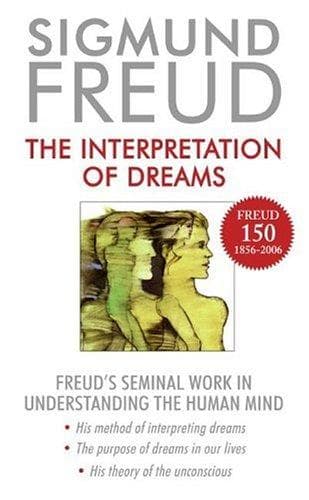
- The Interpretation of Dreams
Sigmund Freud
Offers a contrasting, yet foundational, psychoanalytic perspective on dreams, focusing on wish fulfillment and repressed desires.
- The Perks of Being a Wallflower
Stephen Chbosky
4.2 (1.3M) average on GoodreadsPsychologyThrough letters, a shy high school freshman learns to navigate first love, trauma, and self-discovery, stepping off the sidelines and into life.
- Eleanor Oliphant Is Completely Fine
Gail Honeyman
4.3 (708k) average on GoodreadsLiterary FictionA lonely woman's structured life changes when an IT guy and an elderly man help her learn to open her heart.
- One Flew Over the Cuckoo's Nest
Ken Kesey
4.2 (631k) average on GoodreadsPsychologyIn a mind-bending asylum, the boisterous Randle McMurphy wages a defiant war against the tyrannical Nurse Ratched, inspiring his fellow inmates, including the seemingly catatonic Chief Bromden, to reclaim their lost humanity.
- The Bell Jar
Sylvia Plath
4.0 (591k) average on GoodreadsPsychologyIn the suffocating grip of 1950s expectations, a brilliant young woman's descent into mental illness is painted with such vivid, internal clarity that her 'insanity' feels terrifyingly rational and inevitable.





Enjoyed the summary?
A summary gives you the shape of the book. The book itself has the detail, the examples and the voice.
Find Dreams on AmazonAs an Amazon Associate, BookBrief earns from qualifying purchases. How we're funded