

Core Idea
- Difficulty
- Hard
- Read it if
- You are seeking a profound, poetic exploration of human existence, suffering, beauty, and the spiritual dimensions of loss, and are prepared for dense, lyrical language requiring deep reflection.
- Skip it if
- You prefer straightforward philosophical prose, are looking for practical self-help, or find highly symbolic, abstract poetry frustrating.
Key Takeaways from Duino Elegies
The Anguish of the Human Condition
Rilke grapples with humanity's unique position between the temporal and the eternal.
Rilke's Elegies are steeped in the deep anxiety of human existence, a constant pull between our earthly limits and our desire for transcendence. We are presented as beings in a middle space, unable to fully grasp the divine 'Angels' yet burdened by a consciousness that separates us from the unthinking natural world. This isolation and the struggle to find meaning in an often indifferent world are central themes. The poems explore the pain of this condition, life's short nature, and the loneliness that comes with self-awareness, setting a somber yet thoughtful tone.
“Who, if I cried out, would hear me among the angelic orders?”
In the book: The opening lines of the First Elegy immediately establish this existential cry, questioning the possibility of divine intervention or even acknowledgement.
Try this: Embrace the inherent melancholy of human existence as a catalyst for deeper introspection and a more profound appreciation for the fleeting beauty of life. Acknowledge the tension between our earthly state and our spiritual longing.
Related ideas: existentialism, transcendence, human-condition
The Unbearable Beauty of Loss
Death and sorrow are not ends, but transformative forces that deepen life's meaning.
Rilke changes our understanding of loss and suffering. He presents them not as mere tragedies but as necessary parts of a full life. He suggests that deep beauty is tied to knowing its impermanence and the fear of losing it. The Elegies often mourn the passing of things – childhood, love, specific people – but also find a strange, almost spiritual, uplift in this very transience. This view offers a different kind of comfort, found not in avoiding pain but in embracing its power to transform and reveal deeper truths about existence.
“For beauty is nothing but the beginning of terror we are still just able to bear, and why we adore it so is because it serenely disdains to destroy us.”
In the book: The Second Elegy directly addresses the 'beginning of terror' within beauty, and the Third Elegy delves into childhood fears and the origins of love and sorrow.
Try this: Cultivate a mindset that views loss and change not as purely negative events, but as opportunities for growth, deeper understanding, and a more profound appreciation of life's fragile beauty. Allow sorrow to refine, not diminish, your capacity for joy.
Related ideas: impermanence, grief, transformation
The Poetic Task: Naming and Preserving
Poetry's sacred duty is to give voice to the ineffable and immortalize the ephemeral.
Rilke gives the act of poetic creation great spiritual meaning. For him, the poet is not just an observer but a vital interpreter and preserver of the world's fleeting things. Through language, the poet can 'name' things, giving them permanence and saving them from being forgotten. This is not just description; it is about giving objects, experiences, and emotions a deeper, almost sacred, resonance. The poet's job is to turn the temporary into the lasting, to make the 'invisible visible' through words. In doing so, the poet offers a form of immortality to human experience and the world. This act of naming is also an act of spiritual responsibility, demanding a deep engagement with life.
“For here there is no place that does not see you. You must change your life.”
In the book: The Sonnets to Orpheus, often read as a companion to the Elegies, explicitly state the poet's role in 'singing' and transforming. The exhortation 'You must change your life' from 'Archaic Torso of Apollo' (often associated with Rilke's poetic awakening) underscores this profound responsibility.
Try this: Engage in creative expression (writing, art, music) as a means of processing and preserving your experiences, giving them form and meaning. Recognize the power of language to transform the mundane into the meaningful.
Related ideas: poetics, immortalization, creativity
The Unseen Interior of Existence
True reality resides not in external events, but in the internal landscape of the soul.
Rilke consistently directs our attention inward, arguing that the deepest truths are found not in the external, measurable world but in the rich, complex inner life of human consciousness. The Elegies are a journey into the soul's landscape, exploring its fears, desires, memories, and its unique way of processing reality. He suggests that our perception of the world is deeply personal, and that true understanding comes from exploring this inner realm. This focus on the 'inward' aligns with mystical traditions, where the self becomes a vessel for deeper spiritual insights, often contrasting with the superficiality of modern life.
“Oh, not to be cut off, not to be excluded from the ranks of the angels and the dead.”
In the book: The Tenth Elegy describes a journey through the 'Land of Lament,' a deeply internalized, allegorical landscape of sorrow and memory.
Try this: Practice mindfulness and introspection to cultivate a deeper awareness of your inner world. Recognize that your subjective experience and internal landscape are as real and significant as external events, and a source of profound wisdom.
Related ideas: introspection, subjectivity, mysticism
The Path of the Lover
Love, in its purest form, transcends individual desire to become a cosmic force.
While often seen as sad, the Elegies also celebrate love, though not in a conventional romantic way. Rilke presents love as a deep, almost mystical force that connects individuals to the universal. True love, for him, involves deep empathy and a capacity to see the beloved not just as an individual, but as a gateway to understanding broader human and cosmic experience. It is a love that embraces both joy and sorrow, presence and absence, leading to a more expansive and less self-centered attachment. This transcendent love helps break individual isolation and allows participation in the larger flow of existence.
“For lovers, if they could, would speak it all out of the night. For all things call to them.”
In the book: The Fourth Elegy delves into the complexities of human relationships and the yearning for a pure, unblemished love, while the Ninth Elegy speaks of 'being here' and 'loving what is here' as a form of praise.
Try this: Seek to cultivate a love that extends beyond mere personal affection, embracing empathy and a recognition of shared humanity. View relationships as opportunities for spiritual growth and connection to something larger than yourself.
Related ideas: agape, empathy, universal-love
The Dignity of Suffering
Suffering is an inherent part of the human journey, demanding acceptance and integration.
Rilke does not avoid the harsh realities of pain and suffering; instead, he elevates them. He suggests that to truly live is to fully experience the entire range of human emotion, including its darkest parts. There is no escaping suffering, and trying to do so lessens our capacity for a full and authentic life. The Elegies invite us to face our pain, to sit with it, and to integrate it into our understanding of self and world. This acceptance is not passive resignation, but an active engagement that turns suffering into a source of deep insight and a greater appreciation for life's fleeting joys. This is a challenging but ultimately freeing perspective.
“And we, who think of happiness ascending, would feel the emotion that almost startles when a happy thing falls.”
In the book: The Tenth Elegy's journey through the 'Land of Lament' with its 'sisters of sorrow' personifies and dignifies suffering, showing it as a part of a necessary pilgrimage.
Try this: Instead of resisting or denying difficult emotions, practice acknowledging and accepting them as valid parts of your experience. Learn to find wisdom and resilience within periods of struggle and pain.
Related ideas: resilience, acceptance, emotional-integration
Childhood: A Lost Paradise of Unselfconsciousness
Childhood offers a glimpse into a state of pure being, untainted by adult consciousness.
Rilke often returns to childhood, seeing it as a time of innocent, direct experience. Children, unlike adults, are not yet burdened by self-consciousness, the fear of death, or the complexities of language. They exist in a state of pure presence, deeply connected to the world around them. This childhood state represents a lost paradise, a time when the world was seen with unfiltered intensity and wonder. While we cannot return to this state, Rilke suggests that adults can learn from it, trying to regain a sense of wonder and direct engagement with life, shedding the cynicism and intellectualization that often hide true perception.
“Oh, childhood, that knew not what it was.”
In the book: The Fourth Elegy explicitly laments the loss of childhood and its unselfconscious joy, contrasting it with the adult's complex and often painful awareness.
Try this: Cultivate a childlike sense of wonder and curiosity in your daily life. Practice being fully present in moments, observing the world with fresh eyes, and allowing yourself to experience emotions without immediate intellectual judgment.
Related ideas: innocence, presence, wonder
The Burden of Language
While essential for meaning, language simultaneously limits and distorts pure experience.
Rilke, a master of language, also explores its limits. While acknowledging its power to give form to the inexpressible and make experience lasting, he also suggests that language can create a barrier between us and direct reality. Words categorize and define, potentially reducing the fluid, whole nature of experience into separate concepts. There is a longing in the Elegies for a state beyond language, a pure, direct connection with existence, similar to the unselfconscious state of children or animals. This tension between language's necessity and its inadequacy is a recurring philosophical idea, challenging us to look beyond words for deeper truths.
“And if we only could be silent, more silent, and more whole.”
In the book: The opening lines of the First Elegy, 'Who, if I cried out, would hear me among the angelic orders?' highlight the inadequacy of human language to reach the divine.
Try this: Practice moments of silence and non-verbal contemplation to experience the world more directly. Be aware of how language shapes your perceptions and strive to look beyond labels to the essence of things.
Related ideas: linguistic-relativity, ineffable, non-duality
The Call to 'Say Yes' to Life
Embrace the entirety of existence – its joys and sorrows – with radical affirmation.
Despite their sad undertones, the Duino Elegies end with a powerful call for complete affirmation. Rilke urges us not to shrink from life's difficult aspects – suffering, death, impermanence – but to embrace them fully, to 'say yes' to all of human experience. This is not naive optimism, but a deep acceptance that finds beauty and meaning even in sorrow. By affirming everything, we integrate ourselves more fully into the cosmic dance of creation and destruction, overcoming individual fears and finding a sense of belonging in the vastness of existence. This 'yes' is an act of courage and shows the resilience of the human spirit.
“Only in the realm of the living can we say yes.”
In the book: The Ninth Elegy's concluding lines are a powerful affirmation of 'being here' and 'loving what is here,' serving as a crescendo to the entire sequence.
Try this: Consciously practice affirming all aspects of your life, both positive and challenging. Cultivate an attitude of gratitude and acceptance for the full spectrum of experiences that contribute to your growth and understanding.
Related ideas: radical-acceptance, affirmation, carpe-diem
The Angel: A Mirror of Our Potential
The Angel represents the ultimate transformation and the fully realized human spirit.
Rilke's Angels are not traditional religious figures; they are more like pure beings of spirit and consciousness. They embody a state of complete integration and transcendence that humans can only hope for. They are 'terrifying' because they represent a level of existence so intense and unified that it would overwhelm our fragmented human consciousness. Yet, they also serve as a mirror, reflecting humanity's ultimate potential for transformation and unity with the cosmos. The Angel is a goal, a symbol of what we might become if we fully embrace our human condition, transform suffering, and achieve a complete 'inwardness' and affirmation of life. They are a constant, sublime challenge to our limited perceptions.
“Every Angel is terrifying.”
In the book: The Second Elegy's description of the Angels as 'terrifying' and the subsequent exploration of their nature throughout the Elegies establish their symbolic role.
Try this: Reflect on your own highest aspirations and potentials. Consider what it would mean to live a life of complete authenticity, integration, and radical acceptance, striving towards a more unified self.
Related ideas: transfiguration, enlightenment, ideal-self
Duino Elegies Quotes
“Who, if I cried out, would hear me among the hierarchies of angels?”
“For beauty is nothing but the beginning of terror we are still just able to endure, and we admire it so much because it serenely disdains to destroy us.”
“Every angel is terrifying.”
“We are not allowed to stay. We are moving always into the future.”
“For here there is no place that does not see you. You must change your life.”
“That is what the world wants: to be changed in invisible hands to the invisible in us.”
“Oh, but to be dead and to know that the dead have no need of us, that they have no need of our pain, no need of our joy. Not even the living.”
“Never, not for a single day, can we accept the space that stretches endlessly through which a flower's unfolding passes back into itself.”
“Once, I thought I could understand a little about love, but it was too difficult.”
“Perhaps we are here only to say: house, bridge, well, gate, jug, fruit tree, window—at most: column, tower… but to say them, understand, oh, to say them more intensely than the things themselves ever dreamed of existing.”
“Sing the praise to the world to the Angel, not the unsayable one, you can't impress him with glorious feeling; you must praise to him the things that are here, the sayable things.”
“And we, who always think of happiness as rising, would feel the emotion that almost overwhelms us whenever a happy thing falls.”
“Look, I am living. On what? Neither childhood nor future are growing smaller… Supernumerous existence wells up in my heart.”
Quiz
10 questions on the main ideas. Each answer comes with a short explanation.
Question 1
Which celestial beings are central to the 'Duino Elegies' and often serve as messengers or embodiments of a higher, terrifying beauty?
- Muses
- Angels
- Fates
- Gods
Show answer
B. Angels The Angels in the 'Duino Elegies' are not the benevolent figures of Christian tradition, but rather beings of overwhelming, terrifying beauty and power, representing the 'pure excess' of existence that humanity struggles to comprehend.
Question 2
What concept does Rilke introduce as a way for humans to transform earthly experience into an 'invisible' or 'inner' reality, especially through suffering and love?
- Transcendence
- Inwardness
- Transformation (Verwandlung)
- Sublimation
Show answer
C. Transformation (Verwandlung) Rilke's concept of 'Verwandlung' (transformation) is crucial, suggesting that human experience, including suffering and love, can be internalized and transmuted into a spiritual or 'invisible' reality, thereby giving it lasting significance.
Question 3
In the First Elegy, Rilke asks, 'Who, if I cried out, would hear me among the orders of the ____?'
- Gods
- Angels
- Stars
- Saints
Show answer
B. Angels This famous opening line immediately establishes the central role of the Angels and the human speaker's profound sense of isolation and longing for connection to a higher realm.
Question 4
What is the primary role of the 'hero' figure in the 'Duino Elegies', particularly as described in the Third Elegy?
- To conquer earthly foes and establish a new order.
- To embrace the 'eternal' and confront the terrifying aspects of existence without fear.
- To represent the average human's struggle with mundane life.
- To serve as a warning against excessive pride and ambition.
Show answer
B. To embrace the 'eternal' and confront the terrifying aspects of existence without fear. The hero in Rilke's elegies is distinct from traditional heroes; they are those who, in their intense engagement with life and death, manage to achieve a form of acceptance and transformation of existence, facing the Angels without being annihilated.
Question 5
The 'Duino Elegies' were significantly inspired by Rilke's experiences and surroundings at which location?
- Paris, France
- Muzot, Switzerland
- Schloss Duino, near Trieste
- Worpswede, Germany
Show answer
C. Schloss Duino, near Trieste The title itself, 'Duino Elegies,' directly references Schloss Duino, a castle near Trieste where Rilke began writing the elegies in 1912, experiencing a profound inspiration while walking along the cliffs.
Question 6
What is the primary concern regarding the modern human condition expressed throughout the Elegies, particularly the Fourth and Sixth?
- The loss of faith in traditional religion.
- The fragmentation of experience and the difficulty of authentic being in a world of superficiality.
- The overwhelming power of nature over human endeavors.
- The threat of war and political instability.
Show answer
B. The fragmentation of experience and the difficulty of authentic being in a world of superficiality. Rilke laments the modern human tendency towards distraction and the inability to fully inhabit the present moment or achieve a unified, authentic self, often contrasting this with the focused intensity of animals or the 'pure' existence of Angels.
Question 7
The Ninth Elegy features a powerful imperative: 'Earth, isn't this what you want: to arise in us invisibly?' What does this line reveal about Rilke's philosophy of human purpose?
- Humanity's role is to physically colonize and transform the planet.
- Humans are meant to transcend the physical world entirely and exist purely in spirit.
- Our purpose is to perceive, internalize, and transform the visible world into an 'invisible' spiritual reality.
- The Earth desires humans to simply appreciate its beauty without action.
Show answer
C. Our purpose is to perceive, internalize, and transform the visible world into an 'invisible' spiritual reality. This line encapsulates Rilke's central idea of 'Verwandlung' (transformation) – that the human task is to perceive the transient, visible world, internalize it through feeling and consciousness, and thereby allow it to 'arise invisibly' within us, giving it eternal meaning.
Question 8
In the Tenth Elegy, which symbolic figures are depicted lamenting the human condition and guiding the newly dead?
- The Fates
- The Muses
- The Laments
- The Sirens
Show answer
C. The Laments The Tenth Elegy introduces the 'Laments' as personified figures of sorrow and mourning, who guide the young dead through a landscape of suffering and ultimately towards a deeper understanding of existence, embodying the necessary acceptance of grief.
Question 9
How does Rilke ultimately reconcile the human experience of love and loss with the terrifying indifference of the Angels?
- By suggesting that Angels are ultimately benevolent and will save humanity.
- By advocating for a complete rejection of earthly attachments in favor of the divine.
- Through the idea that human love and suffering, when fully experienced and transformed, contribute to the 'invisible' order that even Angels partake in.
- He concludes that reconciliation is impossible, leaving humanity in despair.
Show answer
C. Through the idea that human love and suffering, when fully experienced and transformed, contribute to the 'invisible' order that even Angels partake in. Rilke's resolution is not a simple escape but a profound integration: human love, suffering, and the conscious transformation of earthly transience into an 'invisible' interiority give meaning to existence and connect humanity to the larger cosmic order, making our fleeting lives valuable even in the face of the Angels' 'pure excess.'
Question 10
Which of the following best describes the 'Duino Elegies' as a whole?
- A narrative epic detailing a hero's journey through mythological lands.
- A collection of sonnets celebrating nature's beauty and human love.
- A profound meditation on human existence, suffering, love, death, and the quest for spiritual meaning in a world of transience.
- A political commentary on early 20th-century European society.
Show answer
C. A profound meditation on human existence, suffering, love, death, and the quest for spiritual meaning in a world of transience. The Elegies are deeply philosophical and spiritual, exploring the core questions of human life, our place in the cosmos, and the unique human capacity for consciousness and transformation, rather than focusing on narrative or political themes.
Duino Elegies FAQ
What are the Duino Elegies about?
The Duino Elegies are a profound exploration of human existence, beauty, suffering, and the nature of spirituality. Rilke grapples with themes of love, death, the role of the artist, and the search for meaning in a rapidly changing world, often through the lens of angels and an unnamed speaker's inner turmoil.
Who was Rainer Maria Rilke?
Rainer Maria Rilke was an Austrian poet and novelist, considered one of the most significant poets in the German language. His work is known for its intense lyricism, philosophical depth, and mystical qualities, greatly influencing 20th-century literature and thought.
Does reading the Duino Elegies require prior knowledge of philosophy or spirituality?
While the Elegies are deeply philosophical and spiritual, they are accessible to readers without extensive prior knowledge. The beauty of the language and the emotional resonance of the themes can be appreciated directly, though a willingness to engage with complex ideas will enhance the experience.
What is the role of angels in the Duino Elegies?
Angels in the Duino Elegies are not traditional religious figures but rather symbols of ultimate being, pure consciousness, and terrifying beauty. They represent an idealized state of existence that humanity strives for but cannot fully attain, serving as a measure of our own limitations and potential.
How different are the Duino Elegies from Rilke's other major work, 'Sonnets to Orpheus'?
While both works are late Rilke and share thematic concerns like transience and art, the Duino Elegies are more expansive and struggle-filled, grappling with existential angst. The Sonnets to Orpheus, written immediately after, offer a more affirmative and celebratory resolution, often through the figure of the mythical poet Orpheus.
What is the significance of 'Duino' in the title?
The 'Duino' in the title refers to Duino Castle on the Adriatic coast, where Rilke began writing the Elegies. It was there, during a period of deep creative block and personal crisis, that he reputedly heard an opening line of the first Elegy carried on the wind, sparking the monumental creation.
What makes this particular edition of the Duino Elegies special?
This edition is special due to its pocket-sized format, making it convenient for carrying and reflection, and its brilliant new cover design. It offers a fresh aesthetic presentation of a timeless work, inviting both new readers and long-time admirers to engage with Rilke's masterpiece.
Are the Duino Elegies considered a spiritual text?
Yes, the Duino Elegies are widely considered a significant spiritual text, though not in a conventional religious sense. They delve into the human soul's longing for transcendence, the acceptance of mortality, and the sacralization of earthly life, offering a profound, non-dogmatic spiritual vision.
About the author
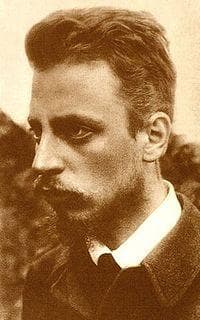
René Karl Wilhelm Johann Josef Maria Rilke, shortened to Rainer Maria Rilke, was an Austrian poet and novelist. Acclaimed as an idiosyncratic and expressive poet, he is widely recognized as a significant writer in the German language. His work is viewed by critics and scholars as possessing undertones of mysticism, exploring themes of subjective experience and disbelief. His writings include one novel, several collections of poetry and several volumes of correspondence.
Similar books
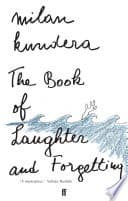
- The Book of Laughter and Forgetting
Milan Kundera
4.0 (41k) average on GoodreadsLiterary FictionExplores themes of memory, loss, and the human condition, albeit in a novelistic form, with a philosophical underpinning.
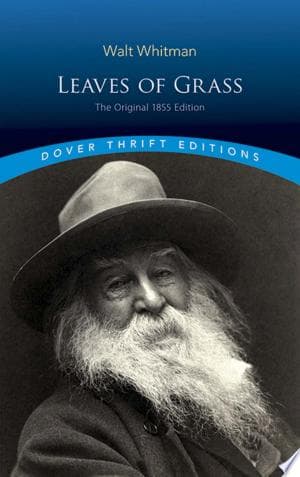
- Leaves of Grass
Walt Whitman
4.1 (90k) average on GoodreadsPhilosophyComparing Rilke's Duino Elegies to Whitman's Leaves of Grass highlights contrasting visions of humanity and its place in the cosmos. Rilke often grapples with the 'anguish of the human condition' and the burden of consciousness, seeking solace in the internalization of loss and beauty. His poetry is intensely personal, almost hermetic, focusing on the individual's spiritual journey. Whitman, on the other hand, celebrates the self as intrinsically connected to the collective, embracing democratic ideals, the physical body, and the vastness of the American experience with exuberant optimism. While both poets engage with themes of life and death, Whitman's approach is one of expansive inclusion and affirmation of the tangible world, whereas Rilke often navigates the tension between the transient and the eternal, finding meaning in the acceptance of sorrow. As Harold Bloom suggests, Whitman’s 'eagerness to embrace the common' stands in stark contrast to Rilke's more isolated, contemplative stance.
- Eat, Pray, Love
Elizabeth Gilbert
3.6 (1.5M) average on GoodreadsLifestyleA heartbroken writer leaves her conventional life for a year-long global search for pleasure in Italy, spiritual devotion in India, and unexpected love and balance in Bali.
- Educated
Tara Westover
4.5 (796k) average on GoodreadsBiographyRaised in the Idaho mountains by fundamentalist survivalists, a young woman forges her own path to education, battling fierce family loyalty and personal demons to discover a world beyond her isolated upbringing.
- The Poisonwood Bible
Barbara Kingsolver
4.1 (659k) average on GoodreadsLiterary FictionA zealous missionary's rigid faith clashes with the Belgian Congo's wilderness and people, unraveling his family through the eyes of his five unforgettable women.
- Siddhartha
Hermann Hesse
4.0 (583k) average on GoodreadsHistorical FictionSiddhartha leaves a life of privilege and piety, embracing asceticism, wealth, and love to find enlightenment not in dogma, but in the whispers of a river and the unity of all existence.




Enjoyed the summary?
A summary gives you the shape of the book. The book itself has the detail, the examples and the voice.
Find Duino Elegies on AmazonAs an Amazon Associate, BookBrief earns from qualifying purchases. How we're funded