
Synopsis
Covers the whole plot, including the ending.
- Difficulty
- Medium
- Pacing
- Moderate
- Mood
- Thought-provoking, Hopeful, Utopian, Reflective
- Read it if
- You are interested in utopian societies, environmentalism, alternative political and economic models, and exploring a future where humanity lives in harmony with nature.
- Skip it if
- You prefer fast-paced, plot-driven narratives, or are not interested in detailed descriptions of societal structures and philosophical discussions.
Ecotopia Plot Summary
Covers the whole plot, including the ending.
Will Weston Enters Ecotopia
Will Weston, a New York Times-Post reporter, receives access to Ecotopia. This nation formed when Northern California, Oregon, and Washington seceded twenty years ago. His trip begins with a train ride from Reno, Nevada, through a guarded border. Dr. Vera Allwen, his official Ecotopian guide, meets him. Weston immediately notices the differences: clean landscapes, advanced sustainable technology, and a clear sense of peace. He learns his job is to report objectively on Ecotopian society, and his reports will go to the US for publication. His first thoughts are a mix of professional doubt and a growing interest in this society that has separated itself from the world.
Initial Impressions and Cultural Shock
Weston's first days in Ecotopia involve observing its culture. He sees advanced recycling, widespread solar energy, and no private cars in cities, replaced by public transport and bicycles. He learns about their twenty-hour workweek, focus on craft and local production, and communal living. Socially, Ecotopians are direct and emotionally open, especially about physical intimacy and personal relationships, which contrasts with his American views. He also learns about 'ritual war games,' a way to channel aggression and stay fit, and the strong presence of women in leadership.
Encountering Ecotopian Education and Healthcare
During his travels, Weston examines Ecotopian education. It focuses on hands-on learning, environmental care, and individual pacing, not competitive grading. Children are encouraged to explore interests and develop practical skills. He also looks at their healthcare system, which emphasizes preventative medicine, natural remedies, and mental well-being, rather than treating illness after it occurs. Hospitals are less common; community health centers and personal health responsibility are more important. These systems aim for a deep connection to nature and a holistic view of human well-being, fitting with Ecotopia's ecological principles.
The Role of Women and Sexual Freedom
Weston observes that Ecotopian society is largely matriarchal. Women hold power in government and business. This has led to policies that prioritize social welfare, environmental protection, and non-violence. He also learns about their open approach to sexuality, seen as a natural and healthy part of life, free from American taboos and commercialization. He notes the presence of 'stable relationships' rather than traditional marriage, and acceptance of different forms of intimacy. This aspect of Ecotopian life challenges Weston's conservative background and starts to change his views on relationships and gender roles.
Forests, Food, and Sustainable Living
Weston travels through Ecotopia's managed forests. These are carefully maintained and seen as sacred. He learns about their sustainable logging practices, which prioritize ecological balance over profit, and the respect Ecotopians have for trees and nature. He visits farms that use organic agriculture, growing many crops without pesticides or artificial fertilizers. Food is local, fresh, and often prepared communally. This deep connection to the land reinforces Ecotopia's commitment to a 'stable-state' ecosystem, where human activity works with natural processes, and waste is minimal.
The Ritual War Games and Aggression
One of the most confusing parts of Ecotopian society for Weston is the 'ritual war games.' These are not actual wars but organized, intense physical fights between groups, often using mock weapons and strategies. He learns these games let out human aggression and competition in a controlled way, stopping it from becoming destructive in society. Participants get injured, sometimes seriously, but the games focus on catharsis and group bonding, not conquest. This practice shows Ecotopia's practical approach to human nature, recognizing inherent drives and redirecting them for social benefit.
The Economic Model and Employee Ownership
Weston looks into Ecotopia's economy. It works without traditional capitalism or central planning. Businesses are mostly employee-owned cooperatives, which creates a sense of shared responsibility. Production is local, reducing the need for long-distance transport and promoting self-sufficiency. There is a focus on durable and repairable goods, different from the planned obsolescence of American consumerism. The twenty-hour workweek and a guaranteed basic income ensure everyone's needs are met, allowing for leisure time and personal growth. This system aims to stop economic exploitation and create a more equal society.
Falling in Love with Marissa
As Weston's stay continues, he forms a deep relationship with Marissa, an Ecotopian woman. Their intimacy is deep and open, challenging his ideas about love and sex. Marissa helps him understand the emotional and spiritual depth of Ecotopian life, showing him the possibilities of human connection and environmental harmony. Through their relationship, Weston begins to lose his journalistic detachment and experiences Ecotopia as a participant, not just an observer. This personal connection becomes a big part of his changing view of both Ecotopia and his American identity.
Confronting His American Identity
The longer Weston stays in Ecotopia, the more he questions his American values and the society he came from. He sees the environmental damage, social inequalities, and spiritual emptiness of the United States clearly against Ecotopia's sustainable culture. His reports, initially doubtful, become more sympathetic and even supportive of Ecotopian ways. He feels torn between his reporting duty and his growing belief that Ecotopia offers a good way of life. This internal conflict is a turning point in his journey, making him face his own biases and beliefs.
The Choice and Its Aftermath
As his reporting job ends, Will Weston faces a personal decision. His experiences in Ecotopia, especially his relationship with Marissa, have changed him. He can no longer accept the values and lifestyle of the United States. Weston decides to leave America and seek Ecotopian citizenship, committing to this new life. His final report to the New York Times-Post, which he secretly writes but might never send, expresses his admiration for Ecotopia and his hope that its message of sustainability and harmony can inspire the world.
Ecotopia Characters
Will Weston
Protagonist
New York Times-Post reporter, the first official American visitor to Ecotopia.
Will Weston is initially a skeptical, objective journalist from a major American newspaper, tasked with reporting on the enigmatic nation of Ecotopia. He represents the typical American perspective, initially viewing Ecotopia with a mix of curiosity and cynicism. Throughout his journey, he undergoes a profound transformation, shedding his preconceptions as he experiences Ecotopian life firsthand. He is intelligent and observant, but also somewhat emotionally repressed at the start. His journey is one of self-discovery, challenging his values, and ultimately leading him to question his own identity and allegiance. He is driven by a journalistic desire for truth, which ultimately leads him to embrace a different kind of truth.
Relationships: Dr. Vera Allwen (Official guide and initial professional contact); Marissa (Lover and emotional guide)
Dr. Vera Allwen
Supporting
Weston's official Ecotopian guide and a prominent government official.
Dr. Vera Allwen is a highly intelligent, articulate, and dedicated Ecotopian official who serves as Will Weston's primary guide and liaison. She embodies the rational and principled aspects of Ecotopian society, patiently explaining its systems and philosophies to Weston. While initially formal, she gradually develops a more open relationship with Weston, representing the Ecotopian desire for understanding and connection. She is a strong, independent woman, indicative of the matriarchal structure of Ecotopian governance, and is instrumental in shaping Weston's initial understanding of the nation.
Relationships: Will Weston (Official guide and intellectual interlocutor)
Marissa
Supporting
An Ecotopian woman who becomes Weston's lover and emotional catalyst.
Marissa is a vibrant, emotionally uninhibited, and sexually liberated Ecotopian woman who forms a deep personal relationship with Will Weston. She represents the sensual, communal, and spiritually connected aspects of Ecotopian life. Through their passionate affair, Marissa helps Weston break down his emotional barriers and experience intimacy and connection in a way he never had before. She is crucial in allowing Weston to move beyond intellectual observation to a profound emotional understanding and appreciation of Ecotopian culture, ultimately influencing his decision to stay.
Relationships: Will Weston (Lover and emotional guide)
The Ecotopian People (Collective)
Mentioned
The citizens of Ecotopia, embodying its unique culture and values.
The Ecotopian people, though not individual characters, are a collective presence that shapes Will Weston's experience. They are depicted as healthy, physically fit, environmentally conscious, and deeply connected to nature. They value community, craft, and personal freedom within a framework of ecological responsibility. They are emotionally expressive, often direct and uninhibited, and participate actively in their society's unique social and political structures, such as the ritual war games and communal living. Their collective behavior and values form the backdrop against which Weston's transformation occurs.
President Richard Allwen
Mentioned
The President of the United States, representing the external American perspective.
President Richard Allwen is the head of the United States government, who grants Will Weston permission to enter Ecotopia. He represents the external, somewhat wary, perspective of the American establishment towards the secessionist nation. His character is largely off-stage, but his presence symbolizes the political and ideological divide between Ecotopia and the US. His decision to send Weston is an attempt to understand and potentially normalize relations with Ecotopia, highlighting the political tension and curiosity surrounding the isolated nation.
Ecotopia Themes
Sustainability and Ecological Harmony
The main theme of 'Ecotopia' is the possibility of a sustainable society. This shows in every part of Ecotopian life: their solar-powered mini-cities, zero-waste policies, and recycling programs, to their respect for forests and organic farming. The Ecotopians respect natural systems, seeing humans as part of the ecosystem, not its rulers. Will Weston's observations of their clean environment, efficient resource use, and rejection of consumerism show how a society can thrive in balance with nature, as he notes their public transport and lack of private cars.
“'We are not trying to be a utopia, Mr. Weston. We are trying to be an ecotopia. A place where humans and nature can live in harmony.'”
Identity and Self-Discovery
Will Weston's journey is about identity and self-discovery. He starts as an American journalist, detached and objective. But his time in Ecotopian culture, especially his relationship with Marissa, makes him face his own values, desires, and emotions. He struggles with the difference between his American upbringing and the Ecotopian way of life, leading to a deep internal conflict. This theme ends with his decision to leave his old identity and become an Ecotopian citizen, meaning he completely re-evaluates who he is and where he belongs, as his reports become less objective and more personal.
“'I was afraid to admit it, even to myself, but Ecotopia was changing me. Not just my opinions, but my very being.'”
Alternative Social and Political Structures
The novel looks at different ways of organizing society and politics than traditional Western models. Ecotopia is a matriarchal society with a decentralized government, focusing on communal decisions and local control. Its economy uses employee-owned cooperatives and local production, rejecting both capitalism and state socialism. Socially, it promotes sexual freedom, communal living, and ritualized aggression outlets, like the war games. These structures aim to create social unity, reduce conflict, and prioritize well-being over economic growth, offering a plan for a society built on different ideas than those in the United States.
“'Our goal is not to maximize production, but to maximize human satisfaction and ecological stability.'”
Human Nature and Aggression
Ecotopia recognizes human aggressive tendencies but provides constructive ways to express them, rather than suppressing them. The 'ritual war games' are an example. They are a controlled, cathartic release for competition and violence, stopping it from becoming destructive in society. This approach shows a practical understanding of human psychology, integrating these drives into a healthy social structure. Weston at first finds these games barbaric, but later understands their role in keeping Ecotopian peace and social order.
“'We believe that aggression, like any other human drive, must be channeled, not eliminated. Suppress it, and it will find uglier outlets.'”
Technology and Simplicity
Ecotopia shows a balanced view of technology, advocating for its use to help sustainability and human well-being, not for endless consumption or convenience. While Ecotopians use advanced solar power, efficient public transport, and sophisticated recycling, they reject technologies that cause pollution, deplete resources, or lead to social isolation. There is a focus on simplicity, craft, and direct interaction with the physical world, different from the consumerist, gadget-driven culture of America. This theme is clear in their durable goods, local production, and the absence of disposable items, showing a deliberate choice for appropriate technology.
“'We use technology to free ourselves, not to enslave ourselves to endless production and consumption.'”
Plot Devices & Literary Techniques
First-Person Journal Entries
Weston's personal thoughts and reflections, offering deeper insight into his transformation.
Interspersed with Will Weston's official newspaper dispatches are his private journal entries. These entries serve as a crucial plot device, revealing his true, unfiltered thoughts, doubts, and emotional responses to Ecotopia. While his dispatches are initially objective and later increasingly sympathetic, his journal provides an intimate window into his internal conflict, his growing affection for Marissa, and his ultimate decision to defect. This dual narrative perspective allows the reader to witness his transformation on both an intellectual and emotional level, tracking his journey from skepticism to full embrace of Ecotopian values.
The Outsider's Perspective
Will Weston's role as an American reporter, highlighting the contrast between two societies.
The narrative is primarily told through the eyes of Will Weston, an 'outsider' to Ecotopian society. This device allows the author to present Ecotopia through a lens of initial skepticism and gradual enlightenment, making the society's radical ideas more accessible and persuasive to the reader. By having Weston constantly compare Ecotopian practices to those of the United States, the novel effectively critiques modern American society while simultaneously showcasing Ecotopia's strengths. His outsider status makes his eventual conversion all the more impactful, demonstrating the transformative power of the Ecotopian way of life.
Utopian/Dystopian Contrast
The stark comparison between Ecotopia and the external 'polluted' world.
The novel heavily relies on the contrast between the idealized, sustainable society of Ecotopia and the implied, environmentally degraded, and socially fragmented United States. This contrast is a key plot device for demonstrating the feasibility and benefits of Ecotopian principles. Will Weston's observations constantly highlight the differences in everything from air quality and urban planning to social interactions and economic systems. This serves to both critique contemporary society and present Ecotopia as a hopeful, albeit radical, alternative, pushing the reader to consider what kind of world they inhabit versus what could be.
The 'Stable-State' Ecosystem
The foundational principle of Ecotopian society and its guiding philosophy.
The concept of a 'stable-state' ecosystem is not just a thematic element but a core plot device that dictates all aspects of Ecotopian life and governance. It provides the logical framework for their policies on resource management, population control, economic models, and even social customs. This principle explains why Ecotopia is so isolated, why they prioritize ecological balance over economic growth, and why they have such strict environmental regulations. It serves as the driving force behind every decision made by the Ecotopian people, shaping the world Will Weston observes and ultimately chooses to join.
Ecotopia Quotes
“We have learned to live with our forests, our rivers, our wild animals, our land. They are not just resources; they are our relatives.”
“In Ecotopia, we measure wealth not in money, but in the health of our people and the richness of our environment.”
“The stability-state economy is not about growth, but about balance—a steady state with nature.”
“War games are our national sport; they keep us fit and remind us of the horrors we have left behind.”
“We have no advertising because we have no need to create desires for things we do not truly need.”
“The personal is political, and the political is personal—in Ecotopia, every choice reflects our values.”
“Our cities are gardens, not concrete jungles; we build with nature, not against it.”
“Technology serves life, not the other way around. We use only what harmonizes with our ecosystem.”
“In the old world, they feared scarcity; here, we have learned that sharing creates abundance.”
“We do not have leaders in the traditional sense; we have facilitators who help the community decide.”
“The forest is our cathedral, the river our hymn. Nature is our spiritual guide.”
“Work is not a burden here; it is a way to contribute to the whole, and everyone finds meaning in it.”
“We recycle everything, not out of duty, but because waste is a crime against the future.”
“In Ecotopia, children learn from the land first, books second. Education is rooted in experience.”
“Our laws are few, but they are deep—based on respect for all life, human and non-human.”
Quiz
10 questions on the plot and the characters. Each answer comes with a short explanation.
Question 1
What is the primary reason Will Weston travels to Ecotopia?
- To negotiate a trade deal on behalf of the United States
- As the first officially sanctioned American reporter to document the society
- To reunite with family members who moved there after secession
- To study Ecotopia's advanced environmental technology
Show answer
B. As the first officially sanctioned American reporter to document the society Will Weston is a New York Times-Post reporter sent as the first officially sanctioned American visitor to Ecotopia twenty years after its secession, tasked with objectively reporting on this mysterious society.
Question 2
Which U.S. states seceded to form Ecotopia?
- California, Nevada, and Arizona
- Oregon, Washington, and Idaho
- Northern California, Oregon, and Washington
- All of California, Oregon, and Washington
Show answer
C. Northern California, Oregon, and Washington Ecotopia was founded when northern California (not the entire state), Oregon, and Washington seceded from the United States to create an ecologically balanced society.
Question 3
What is a key feature of Ecotopia's urban planning mentioned in the book?
- Massive skyscrapers to maximize population density
- Energy-efficient 'mini-cities' to eliminate urban sprawl
- Underground cities to preserve surface ecosystems
- Floating cities on waterways to reduce land use
Show answer
B. Energy-efficient 'mini-cities' to eliminate urban sprawl Ecotopia uses energy-efficient 'mini-cities' as part of its earth-friendly agenda to prevent urban sprawl and promote sustainable living, which Weston observes during his visit.
Question 4
How does Ecotopia's government differ significantly from the United States in terms of gender representation?
- It has a strictly equal gender balance in all positions
- It is dominated by women who have instituted peaceful reforms
- It excludes men from political roles entirely
- It rotates leadership between genders annually
Show answer
B. It is dominated by women who have instituted peaceful reforms Ecotopia has a woman-dominated government that has implemented reforms like the twenty-hour workweek and employee ownership, contrasting with traditional U.S. structures and challenging Weston's beliefs.
Question 5
What is the 'stable-state' ecosystem that Ecotopia aims to achieve?
- A system where technology completely replaces natural processes
- A balance between human activities and environmental sustainability
- A society that prioritizes economic growth over ecology
- A return to pre-industrial agricultural methods only
Show answer
B. A balance between human activities and environmental sustainability Ecotopia's 'stable-state' ecosystem is central to its ideology, seeking a perfect balance where human beings live in harmony with the environment, avoiding depletion and pollution.
Question 6
What personal transformation does Will Weston undergo during his stay in Ecotopia?
- He becomes a militant activist against the United States
- His cynicism is replaced by hope as his old beliefs are challenged
- He rejects all Ecotopian values and returns more skeptical
- He loses interest in journalism and takes up farming
Show answer
B. His cynicism is replaced by hope as his old beliefs are challenged Initially skeptical, Weston is deeply affected by Ecotopia's society; his experiences, including a relationship with an Ecotopian woman, lead him to question his cynicism and find hope, culminating in a critical choice between two worlds.
Question 7
Which of the following is NOT a practice or policy Weston encounters in Ecotopia?
- Ritual war games
- Zero-tolerance pollution control
- A thirty-hour workweek mandated by law
- Tree worship as part of cultural rituals
Show answer
C. A thirty-hour workweek mandated by law Ecotopia has a twenty-hour workweek, not thirty, as part of its peaceful revolutions. The other options—ritual war games, strict pollution control, and tree worship—are all features Weston observes.
Question 8
What critical choice does Will Weston face at the end of the book?
- Whether to publish a biased report or an objective one
- Choosing between staying in Ecotopia or returning to the United States
- Deciding to lead a rebellion against Ecotopia's government
- Whether to marry his Ecotopian partner or not
Show answer
B. Choosing between staying in Ecotopia or returning to the United States Weston's journey leads him to a pivotal decision between two worlds: remaining in Ecotopia, where he has found hope and connection, or returning to his old life in the United States, reflecting his internal conflict and the book's themes of transformation.
Question 9
How does Ecotopia handle economic ownership in key sectors like agriculture?
- All property is owned communally by the state
- Farms and businesses are owned by employees as part of peaceful revolutions
- Private corporations dominate with strict environmental regulations
- Foreign investors control most industries
Show answer
B. Farms and businesses are owned by employees as part of peaceful revolutions Ecotopia implements employee ownership of farms and businesses, aligning with its egalitarian and sustainable principles, which Weston notes as a contrast to U.S. capitalism.
Question 10
What role does the relationship with an Ecotopian woman play in Weston's experience?
- It serves as a minor subplot with little impact on the main story
- It provides comic relief from the serious environmental themes
- It deepens his immersion into Ecotopian culture and intensifies his personal conflict
- It leads him to uncover a government conspiracy
Show answer
C. It deepens his immersion into Ecotopian culture and intensifies his personal conflict Weston's relationship with a sexually forthright Ecotopian woman is pivotal; it helps him understand the society's values on a personal level, intensifies his emotional connection to Ecotopia, and contributes to his ultimate choice between two worlds.
Ecotopia FAQ
What is 'Ecotopia' about?
'Ecotopia' follows New York Times-Post reporter Will Weston as he becomes the first officially sanctioned American visitor to Ecotopia, a nation formed when northern California, Oregon, and Washington seceded from the U.S. to create an ecologically sustainable society. Weston documents this 'stable-state' ecosystem with its energy-efficient mini-cities, zero-tolerance pollution control, and woman-dominated government, while his skepticism gradually transforms into hope through his experiences and relationships.
Why should I read 'Ecotopia'?
You should read 'Ecotopia' for its visionary and hopeful blueprint of an environmentally sustainable society that addresses contemporary ecological concerns through speculative fiction. The novel offers a thought-provoking exploration of alternative political and social structures, such as the twenty-hour workweek and employee ownership, while following Weston's personal transformation from cynicism to engagement with this green world.
What is the background/setting of 'Ecotopia'?
The setting is Ecotopia, a nation that seceded from the United States twenty years prior, comprising northern California, Oregon, and Washington. It's a 'stable-state' ecosystem designed to balance human activity with the environment, featuring innovations like mini-cities to prevent urban sprawl, strict pollution controls, and a government dominated by women that has implemented social reforms such as shorter workweeks.
What are the most memorable quotes?
While specific quotes vary, memorable lines often highlight Ecotopia's ecological ethos, such as descriptions of 'tree worship' as a cultural practice or declarations about the importance of living in harmony with nature. The novel's dialogue and narration emphasize themes of sustainability, community, and the critique of American consumerism, resonating with its prophetic environmental message.
What writing style does the author use?
Ernest Callenbach uses a straightforward, journalistic style blended with speculative fiction elements, reflecting Weston's role as a reporter. The narrative includes detailed observations of Ecotopia's society, making it both descriptive and analytical, with a focus on world-building to present the ecological and social innovations in a credible, immersive way.
What minor details add significant meaning?
Minor details like the 'ritual war games' in Ecotopia add meaning by symbolizing a controlled outlet for aggression in a peaceful society, contrasting with real-world violence. Similarly, the emphasis on 'employee ownership of farms and businesses' subtly critiques capitalist hierarchies, highlighting Ecotopia's commitment to economic equality and community control.
What are some subtle foreshadowing moments?
Early in Weston's visit, his initial skepticism and discomfort with Ecotopian practices, such as the woman-dominated government and environmental laws, foreshadow his eventual internal conflict and critical choice between two worlds. His growing attraction to an Ecotopian woman hints at his deeper emotional and ideological shift away from his American roots.
What unexpected character connections exist?
An unexpected connection arises between Weston and the sexually forthright Ecotopian woman he meets, which deepens into a relationship that challenges his preconceptions and ties his personal transformation to the societal values of Ecotopia. This connection serves as a bridge between the outsider perspective and the intimate realities of the green society.
What are unspoken character motivations?
Weston's unspoken motivation is a desire for meaning and hope beyond the cynicism of his American life, which drives his gradual embrace of Ecotopia's ideals. The Ecotopian woman's motivation includes fostering understanding and integration with outsiders, using their relationship to subtly advocate for the society's values and lifestyle.
What psychological complexities do characters exhibit?
Weston exhibits psychological complexity through his internal struggle between journalistic objectivity and personal transformation, as he grapples with nostalgia for America versus hope in Ecotopia. Ecotopians show complexities in balancing communal sustainability with individual freedoms, such as in the ritual war games that manage aggression within a peaceful framework.
What are the major emotional turning points?
Major emotional turning points include Weston's first experiences of Ecotopia's innovations, which shift him from skepticism to curiosity; his deepening relationship with the Ecotopian woman, which fosters emotional attachment; and the climax where he faces a critical choice between returning to America or staying in Ecotopia, reflecting his complete ideological and personal realignment.
How do relationship dynamics evolve?
Relationship dynamics evolve from Weston's initial detached, observational stance toward Ecotopians to one of engagement and intimacy, particularly through his relationship with a local woman. This mirrors the broader dynamic between Ecotopia and the outside world, moving from isolation and mystery toward potential integration and mutual influence.
Which parts remain ambiguous or open-ended?
The ending remains ambiguous regarding Weston's final decision between the two worlds, leaving it open to interpretation whether he chooses to stay in Ecotopia or return to America. Additionally, the long-term viability and global impact of Ecotopia's model are not fully resolved, inviting readers to ponder its real-world applicability.
What are controversial scenes or decisions?
Controversial scenes include the depiction of a woman-dominated government and ritual war games, which may challenge readers' views on gender roles and violence. Weston's critical choice between worlds is controversial as it pits personal fulfillment against professional duty, raising debates about loyalty and ideological commitment.
'Ecotopia' ending explained: how it ends & what it means
The novel ends with Weston facing a critical choice between returning to America or remaining in Ecotopia, after his transformation from a skeptical reporter to someone hopeful about the green society. This ending symbolizes the tension between old and new worldviews, suggesting that true change requires personal sacrifice and commitment, while leaving his decision open to emphasize the ongoing struggle for ecological and social reform.
About the author
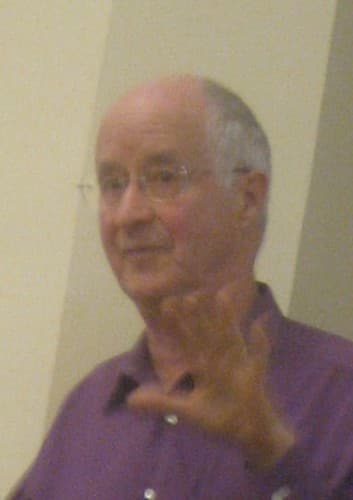
Ernest Callenbach was an American author known for his contributions to the genre of speculative fiction. His most notable work, "Ecotopia," explores themes of environmentalism and sustainable living through a fictional society. Callenbach's writing often reflects his interests in ecology and social change.
Similar books
- Walden Two
B.F. Skinner
3.5 (6k) average on GoodreadsPsychologyExplores a fictional utopian community based on behavioral principles.
- Island
Aldous Huxley
3.8 (6k) average on GoodreadsThrillerPresents a utopian counterpoint to 'Brave New World', focusing on a harmonious, isolated society.
- The Dispossessed
Ursula K. Le Guin
4.2 (88k) average on GoodreadsPoliticsFeatures an anarchist society on a moon, contrasting it with a capitalist planet, examining political and social structures.
- 1984
George Orwell
4.2 (3.1M) average on GoodreadsPoliticsIn a future where surveillance and thought control are absolute, a man's search for truth clashes with the Party, showing that hope can be a form of rebellion.
- Animal Farm
George Orwell
4.0 (2.7M) average on GoodreadsPoliticsA farm animals' rebellion against humans turns into a pig-led dictatorship, showing how power corrupts and revolutionary ideals are betrayed.
- Freakonomics: A Rogue Economist Explores the Hidden Side of Everything
Steven D. Levitt
4.0 (709k) average on GoodreadsBusinessThis book uses economic principles to reveal the surprising incentives behind everything from drug dealing and real estate to cheating teachers and the decline of crime.



Enjoyed the summary?
A summary gives you the shape of the book. The book itself has the detail, the examples and the voice.
Find Ecotopia on AmazonAs an Amazon Associate, BookBrief earns from qualifying purchases. How we're funded