

Synopsis
Covers the whole plot, including the ending.
- Difficulty
- Medium
- Pacing
- Slow
- Mood
- Philosophical, Detached, Reflective, Absurdist
- Read it if
- You are interested in existentialist philosophy, exploring themes of absurdity, alienation, and the human condition, or enjoy a protagonist who challenges conventional moral and emotional responses.
- Skip it if
- You prefer emotionally resonant characters, a fast-paced plot, or a clear sense of justice and traditional morality.
El extranjero Plot Summary
Covers the whole plot, including the ending.
The Mother's Death and Funeral
Meursault, a clerk in Algiers, receives a telegram that his mother died at the Marengo old people's home. He travels there by bus, noticing the heat and his wish for a cigarette and coffee. At the vigil, he refuses to see his mother's body and feels distant from the other mourners, especially the director and Thomas Pérez, his mother's close friend. During the funeral, the intense heat and bright sun bother him more than the event itself. He thinks about the formal nature of it all, feeling no deep sadness, only physical discomfort and a desire for it to end so he can return to his life.
Return to Algiers and Marie's Reappearance
The day after the funeral, Meursault goes to the public swimming pool where he meets Marie Cardona, a former typist from his office. They swim together, and later that evening, they go to the cinema to see a comedy. They spend the night together, and Meursault notices her beauty and their mutual pleasure. When Marie asks if he loves her, Meursault replies that it means nothing, and he does not think so. He finds their relationship mostly physical and convenient, fitting his indifferent approach to life. He resumes his normal weekend activities, including watching people from his balcony.
Raymond Sintès and the Affair
Meursault meets his neighbor, Raymond Sintès, a man with a bad reputation, who invites him to dinner. Raymond tells how he beat his mistress after finding she was cheating. He asks Meursault to write a letter to her, inviting her back only to humiliate her further. Meursault agrees to write the letter, seeing no reason not to. He observes Raymond's violent tendencies and his desire for revenge without judgment. This interaction further highlights Meursault's passive nature and his willingness to take part in others' plans without personal involvement or moral thought, even when they involve violence.
The Beach House and the Arabs
Raymond invites Meursault and Marie to spend a Sunday at the beach house of his friend, Masson. The group enjoys swimming and eating. After lunch, Raymond, Masson, and Meursault walk and encounter two Arabs, one of whom is the brother of Raymond's mistress. A fight breaks out, and Raymond is cut with a knife. They return to the house, and Raymond insists on going back to confront the Arabs, taking a pistol. Meursault goes with him, feeling the intense heat and sun. They find the Arabs again, and Raymond, after a tense moment, hands the pistol to Meursault.
The Murder on the Beach
Meursault returns to the spring alone, seeking relief from the scorching sun. He meets one of the Arabs again, who still has a knife. The sun, reflecting off the blade and the sand, overwhelms Meursault, causing a sensory overload. He feels a sudden, unexplainable urge and fires Raymond's pistol, killing the Arab. After a pause, he fires four more shots into the body. The act is presented as a result of the oppressive heat and light, rather than a planned decision or self-defense. Meursault feels no immediate regret or emotion about the murder.
Arrest and Interrogation
Meursault is arrested and taken into custody. During his interrogation by the examining magistrate, he answers truthfully but with his usual indifference. He admits to the murder but struggles to explain a motive beyond the sun and discomfort. The magistrate is particularly bothered by Meursault's lack of remorse and his apparent coldness about his mother's death, which is brought up to describe his character. Meursault finds the legal process boring and confusing, viewing it as a detached observer rather than an active participant in his own defense.
Life in Prison
While in prison, Meursault initially struggles with the lack of freedom and Marie. However, he gradually adjusts to the routine. He learns to spend his time by sleeping, recalling memories, and reading an old newspaper clipping about a Czech man murdered by his family. He notices the physical sensations of hunger and thirst, and the passage of time. He finds that he can get used to almost anything, and his indifference allows him to endure confinement without deep suffering or despair, further emphasizing his detachment from common human emotions.
The Trial Begins
The trial begins, drawing a large crowd and public interest. Meursault is struck by the surreal atmosphere of the courtroom, feeling like an outsider watching the events. The prosecutor, the defense attorney, and the judge all present their arguments, but Meursault feels increasingly distant from the story being built about him. The focus quickly shifts from the murder of the Arab to Meursault's character, especially his lack of emotion at his mother's funeral, which the prosecution uses to paint him as a heartless monster incapable of remorse.
Witness Testimony and the Prosecution's Case
Witnesses are called, including the director of the old people's home, Céleste, Marie, and Raymond. Their testimonies, often twisted or taken out of context, add to the prosecution's image of Meursault as a morally corrupt person. The prosecutor highlights Meursault's indifference at his mother's funeral, his relationship with Marie right after, and his connection with Raymond as proof of his depravity. He argues that Meursault is a danger to society, a man without human feeling, whose actions were planned and malicious, leading to the murder.
The Verdict and Sentencing
Despite his lawyer's attempts to portray him as a victim of circumstances and argue for self-defense, the jury is swayed by the prosecution's strong words about Meursault's moral character. Meursault, watching the proceedings, feels great tiredness and a sense of detachment as the verdict is delivered. He is found guilty of planned murder and sentenced to death by public decapitation. The news of his coming execution leaves him with dread, but also a growing awareness of his own existence and the absurdity of the world.
The Chaplain's Visit and Meursault's Epiphany
In the days before his execution, Meursault repeatedly refuses to see the chaplain. When the chaplain insists on visiting him, Meursault initially remains calm, but the chaplain's talk of God and repentance causes a violent outburst. Meursault grabs the chaplain and shouts at him, rejecting false hopes and the meaninglessness of existence. In this moment, he realizes something profound: he fully embraces the indifference of the universe and recognizes his place within it. He finds a strange peace and accepts his fate, wishing for a large crowd to greet him with shouts of hate on his execution day.
Principal Figures
Meursault
Protagonist
An indifferent and apathetic clerk living in Algiers.
Meursault is characterized by his profound emotional detachment and his inability to conform to societal expectations of grief, love, or remorse. He lives in the present moment, driven by physical sensations rather than emotional or moral considerations. He is honest to a fault, often stating things plainly, which is misinterpreted as coldness. His apathy extends to his relationships, his job, and even his own life, making him an 'outsider' in his own world. He acts without malice but also without conventional moral compass.
Relationships: Marie Cardona (girlfriend, physical and convenient relationship); Raymond Sintès (acquaintance, neighbor, involved in his violent schemes); Mama (his mother) (deceased, subject of his initial indifference)
Marie Cardona
Supporting
Meursault's girlfriend, who enjoys his company despite his indifference.
Marie is a former typist from Meursault's office. She is lively, physically affectionate, and enjoys simple pleasures like swimming and going to the cinema. She genuinely cares for Meursault and even proposes marriage, despite his admission that he doesn't love her in the conventional sense. Her presence highlights Meursault's emotional detachment, as she represents a more conventional path of love and companionship that he cannot fully embrace. She remains loyal to him during his trial, testifying on his behalf.
Relationships: Meursault (girlfriend, physical and convenient relationship)
Raymond Sintès
Supporting
Meursault's neighbor, a pimp with a violent streak.
Raymond is a man with a questionable reputation, known for his violent temper and his involvement in illicit activities. He seeks Meursault's help to exact revenge on his unfaithful mistress, demonstrating his manipulative and vengeful nature. Despite his flaws, Raymond considers Meursault a friend and is loyal to him during the trial, attempting to defend him. He represents a form of passionate, albeit morally dubious, existence that contrasts with Meursault's apathy.
Relationships: Meursault (acquaintance, neighbor, involved in his violent schemes); His Mistress (the Arab woman) (abusive, vengeful relationship)
The Examining Magistrate
Supporting
The judicial official who tries to understand Meursault's motives.
The Examining Magistrate is the first legal authority to interrogate Meursault. He is deeply disturbed by Meursault's lack of remorse and his apparent indifference to his mother's death and the murder he committed. He attempts to find a logical explanation or a sign of repentance, even brandishing a crucifix, but Meursault's unwavering honesty and emotional blankness frustrate him. He represents society's need for order, meaning, and conventional morality, which Meursault utterly defies.
Relationships: Meursault (interrogator, judge)
The Prosecutor
Antagonist
The legal representative who condemns Meursault's character.
The Prosecutor is the primary antagonist in Meursault's trial. He is a skilled orator who uses Meursault's emotional detachment, particularly his behavior at his mother's funeral, to paint him as a monstrous, heartless individual. He argues that Meursault's crime was premeditated and that his lack of remorse makes him a danger to society. He embodies the societal demand for meaning, morality, and justice, contrasting sharply with Meursault's existential indifference. He successfully turns the trial into a judgment of Meursault's character rather than just his actions.
Relationships: Meursault (accuser, legal adversary)
The Chaplain
Supporting
The religious figure who tries to offer Meursault spiritual solace.
The Chaplain visits Meursault in prison before his execution, attempting to persuade him to find God and repent for his sins. He represents traditional religious comfort and the societal belief in an afterlife and divine justice. His persistent attempts to impose his beliefs on Meursault ultimately provoke Meursault's final, violent outburst, which leads to Meursault's profound acceptance of the universe's indifference. He serves as the final catalyst for Meursault's existential epiphany.
Relationships: Meursault (spiritual advisor (rejected))
Céleste
Supporting
The owner of the restaurant Meursault frequents, and a witness at his trial.
Céleste is the proprietor of the restaurant where Meursault often eats. He is a kind and simple man who views Meursault as a regular and friend. He testifies at Meursault's trial, speaking positively about Meursault's character, despite Meursault's emotional distance. His testimony highlights the contrast between how Meursault is perceived by those who know him casually and how he is portrayed by the prosecution and the general public. He represents a more genuine, unpretentious humanity.
Relationships: Meursault (acquaintance, regular customer)
Thomas Pérez
Mentioned
His mother's devoted companion at the old people's home.
Thomas Pérez was a close friend and companion to Meursault's mother at the Marengo old people's home. He is an old man whose devotion to Meursault's mother is evident in his profound grief at her funeral. His sorrow provides a stark contrast to Meursault's detached demeanor, further emphasizing Meursault's unusual emotional landscape. His physical suffering during the funeral procession also highlights the oppressive environment.
Relationships: Mama (Meursault's mother) (devoted companion)
Themes & Insights
The Absurdity of Existence
The main theme of 'El Extranjero' is absurdism, which comes from the human need for meaning in a universe that offers none. Meursault shows this absurdity through his indifference to social rules, his lack of emotion for major life events like his mother's death, and his seemingly motiveless crime. His trial further shows this, as society tries to force meaning and moral judgment on actions that, for Meursault, are simply reactions to immediate feelings. The universe's silence and Meursault's acceptance of its indifference illustrate Camus's exploration of this theme.
“Había sido feliz y lo era todavía. Para que todo se consumara, para que me sintiera menos solo, sólo me quedaba desear que hubiera muchos espectadores el día de mi ejecución y que me recibieran con gritos de odio.”
Indifference and Detachment
Meursault's main trait is his deep indifference to the world. He does not grieve his mother, does not tell Marie he loves her, and commits murder without ill will or strong feeling. This detachment is not presented as cruelty but as a basic part of him. He watches life rather than actively taking part in its emotional currents. This theme is clear from the first lines ('Mamá ha muerto hoy. O puede que ayer, no lo sé.') and continues through his trial, where his lack of normal regret is considered more damning than the murder itself. His indifference makes the reader question the truth of society's emotional displays.
“Encontré a Marie y le propuse que nos casáramos. Dijo que sí. Le pregunté si me quería. Dijo que no significaba nada, pero que sin embargo pensaba que sí. Yo le dije que no significaba nada, pero que sin embargo no la quería.”
The Role of Society and Justice
The novel examines society and its justice system. Meursault's trial becomes a place for society to impose its values and stories on someone who defies them. The court cares less about the facts of the murder and more about Meursault's perceived moral character, especially his failure to show expected emotional responses. The prosecutor creates a story of a heartless monster, and the jury, representing society, condemns him not just for the crime but for being 'other.' This shows how society tries to create order and meaning, even if it means twisting truth and punishing those who challenge its norms.
“Se me reprochaba haber enterrado a mi madre con un corazón de criminal.”
The Significance of the Physical World
Throughout the novel, Meursault's experiences are heavily shaped by the physical world, especially the oppressive heat and bright sun of Algiers. The sun is not just a background but an active force, adding to his discomfort at the funeral and directly causing the murder. His actions are often described in terms of physical sensations rather than emotional reasons. This focus on the tangible and sensory highlights Meursault's connection to the immediate, physical present, contrasting with the abstract emotional and moral ideas that society tries to impose on him.
“Era el mismo sol que el día en que había enterrado a mamá y, como entonces, me dolían las sienes, y todas las venas me latían a la vez en la superficie de la piel.”
Plot Devices & Literary Techniques
First-Person Narration
Meursault's detached perspective shapes the entire story.
The story is told entirely from Meursault's first-person perspective, which is crucial for conveying his emotional detachment and indifferent worldview. His flat, factual, and often repetitive language mirrors his lack of emotional depth and subjective interpretation of events. This narrative choice forces the reader to experience the world through his unique lens, without the benefit of an omniscient narrator's judgment or external emotional commentary. It allows the reader to understand his internal logic, even if it defies conventional morality, and to feel the full impact of his alienation.
Symbolism of the Sun
The sun represents both physical oppression and the indifference of the universe.
The sun is a powerful and recurring symbol in 'El extranjero.' It is constantly present, often described as oppressive, blinding, and burning. It causes Meursault physical discomfort at his mother's funeral and is presented as a direct catalyst for the murder of the Arab. Beyond its literal effect, the sun can be interpreted as symbolizing the indifferent and overwhelming force of the universe itself – a constant, inescapable presence that acts without malice but also without care, much like the absurd reality Meursault eventually embraces.
Juxtaposition
Contrasting elements highlight Meursault's 'otherness'.
Camus frequently uses juxtaposition to highlight Meursault's detachment and the absurdity of his situation. For example, Meursault's indifference at his mother's funeral is contrasted with Thomas Pérez's profound grief. His physical pleasure with Marie immediately after the funeral stands in stark contrast to societal expectations of mourning. During the trial, the prosecution's passionate condemnation of his character is juxtaposed with Meursault's calm, often confused observations. These contrasts emphasize Meursault's 'outsider' status and the chasm between his internal experience and societal norms.
Foreshadowing
Subtle hints prepare the reader for Meursault's actions and fate.
While Meursault's actions often seem spontaneous, there are subtle instances of foreshadowing. His casual acceptance of Raymond's violent nature, his indifference to moral consequences, and even his early observations about the heat and light setting him on edge, all subtly prepare the reader for the eventual murder. The recurring motif of the sun's oppressive nature, particularly, hints at its role in the climactic event. This device creates a sense of inevitability, reinforcing the idea that Meursault's actions, though seemingly unmotivated, are consistent with his character and the world he inhabits.
El extranjero Quotes
“Aujourd'hui, maman est morte. Ou peut-être hier, je ne sais pas.”
“Il n'y a pas de soleil dans l'après-midi, et il n'y a pas de soleil le matin. Il n'y a pas de soleil du tout.”
“J'ai compris que j'avais détruit l'équilibre du jour, le silence exceptionnel d'une plage où j'avais été heureux.”
“Cela m'était égal d'être son copain ou de ne pas l'être. Il voulait savoir si je l'aimais. Je lui ai répondu que cela ne voulait rien dire, mais que sans doute je ne l'aimais pas.”
“J'ai ouvert les yeux et j'ai vu le sourire de la nuit sur mon visage.”
“J'ai dit que je n'avais rien à dire, que je n'avais jamais rien à dire.”
“Pour la première fois, j'ai pensé que j'allais être condamné.”
“J'ai compris alors que j'avais été heureux et que je l'étais encore.”
“J'étais sûr de moi, sûr de tout, plus sûr que lui, sûr de ma vie et de cette mort qui allait venir.”
“Pour que tout soit consommé, pour que je me sente moins seul, il me restait à souhaiter qu'il y ait beaucoup de spectateurs le jour de mon exécution et qu'ils m'accueillent avec des cris de haine.”
“J'avais l'impression que le ciel était comme un couvercle qui s'abattait sur moi.”
“Puisque nous allions tous mourir, il était évident que le moment et la façon n'avaient aucune importance.”
“Le soleil était le même que le jour où j'avais enterré maman.”
Quiz
10 questions on the plot and the characters. Each answer comes with a short explanation.
Question 1
¿Cuál es la primera frase de la novela 'El extranjero'?
- Hoy he ido a la playa.
- Mamá ha muerto hoy. O puede que ayer, no sé.
- El sol brillaba con fuerza.
- Me llamo Meursault.
Show answer
B. Mamá ha muerto hoy. O puede que ayer, no sé. La novela comienza con la famosa frase que establece de inmediato la apatía del protagonista ante la muerte de su madre.
Question 2
¿Qué siente Meursault al recibir la noticia de la muerte de su madre?
- Una profunda tristeza y desesperación.
- Indiferencia y una ligera molestia por el viaje.
- Cólera hacia el director del asilo.
- Alivio por la liberación de una carga.
Show answer
B. Indiferencia y una ligera molestia por el viaje. Meursault reacciona con una notable impasibilidad a la noticia, preocupándose más por la duración del funeral que por el luto.
Question 3
¿Dónde transcurre la mayor parte de la acción de 'El extranjero'?
- París, Francia.
- Argel, Argelia.
- Orán, Argelia.
- Marsella, Francia.
Show answer
B. Argel, Argelia. La novela está ambientada en Argelia, siendo Argel la ciudad principal donde vive Meursault y donde ocurren los eventos clave.
Question 4
¿Qué personaje es la amante de Meursault?
- Marie Cardona.
- Celeste.
- Masson.
- Salamano.
Show answer
A. Marie Cardona. Marie Cardona es la ex-mecanógrafa con la que Meursault inicia una relación poco después del funeral de su madre, mostrando su característica apatía ante el compromiso.
Question 5
¿Cuál es el motivo superficial que Meursault da para el crimen que comete?
- Venganza por una afrenta personal.
- Defensa propia en una pelea.
- El sol cegador y el calor intenso.
- Un robo fallido.
Show answer
C. El sol cegador y el calor intenso. Meursault describe cómo el calor y la luz del sol lo abrumaron y lo llevaron a disparar, lo que subraya su incapacidad para articular una motivación racional o emocional profunda.
Question 6
¿Por qué la sociedad y el tribunal condenan a Meursault más allá del asesinato en sí?
- Por su historial criminal previo.
- Por su falta de remordimiento y su indiferencia ante la muerte de su madre.
- Por su afiliación a grupos subversivos.
- Por intentar escapar de la justicia.
Show answer
B. Por su falta de remordimiento y su indiferencia ante la muerte de su madre. El verdadero 'crimen' de Meursault a los ojos de la sociedad es su incapacidad para conformarse a las expectativas emocionales y sociales, especialmente su falta de luto por su madre.
Question 7
¿Cuál de las siguientes afirmaciones describe mejor la visión del mundo de Meursault antes de su detención?
- Una búsqueda constante de significado y propósito.
- Una profunda conexión emocional con los demás.
- Una existencia pasiva, sin apego a las normas sociales o las consecuencias morales.
- Un compromiso firme con la justicia y la verdad.
Show answer
C. Una existencia pasiva, sin apego a las normas sociales o las consecuencias morales. Meursault vive en una perpetua apatía, sin reaccionar a los eventos significativos de su vida y sin entender el alcance moral de sus actos, lo que lo convierte en un 'extranjero' en su propio mundo.
Question 8
¿Qué representa el personaje de Salamano y su perro?
- La amistad incondicional.
- La conexión ineludible y a menudo dolorosa entre seres, y la costumbre.
- La crueldad inherente a la naturaleza humana.
- La libertad absoluta de la existencia.
Show answer
B. La conexión ineludible y a menudo dolorosa entre seres, y la costumbre. La relación de Salamano con su perro, marcada por el maltrato pero también por una profunda dependencia, simboliza la fuerza de la costumbre y la conexión, incluso cuando es conflictiva, en contraste con la desconexión de Meursault.
Question 9
¿Cómo cambia la perspectiva de Meursault sobre la vida y la muerte en la cárcel, especialmente hacia el final de la novela?
- Se vuelve profundamente religioso y busca la salvación.
- Acepta la indiferencia del universo y encuentra una especie de paz en la certeza de su muerte.
- Se arrepiente sinceramente de sus acciones y desea redimirse.
- Cae en una desesperación profunda y sin esperanza.
Show answer
B. Acepta la indiferencia del universo y encuentra una especie de paz en la certeza de su muerte. Al final, Meursault confronta la 'tierna indiferencia' del mundo y se abre a ella, aceptando su destino y encontrando una forma de libertad en esa aceptación del absurdo.
Question 10
¿Qué papel juega el sol en la narrativa de 'El extranjero'?
- Es un símbolo de esperanza y alegría para Meursault.
- Actúa como una fuerza opresora y un catalizador para la apatía y la violencia de Meursault.
- Representa la justicia divina que eventualmente alcanzará a Meursault.
- Es un elemento ambiental neutro sin significado simbólico.
Show answer
B. Actúa como una fuerza opresora y un catalizador para la apatía y la violencia de Meursault. El sol es un elemento recurrente y opresivo, presente en momentos clave como el funeral de la madre y el asesinato, contribuyendo a la sensación de malestar físico y mental de Meursault, e incluso siendo invocado como una 'razón' para su crimen.
El extranjero FAQ
¿Cuál es el evento central que desencadena la trama de El Extranjero?
La trama se desencadena con la muerte de la madre de Meursault, un evento que él recibe con una indiferencia notable, marcando su naturaleza apática desde el principio. Su reacción al funeral y su incapacidad para mostrar el luto esperado son cruciales para el desarrollo de su personaje y su posterior juicio.
¿Quién es Meursault y qué características principales definen su personalidad?
Meursault es un joven oficinista en Argelia, caracterizado por su profunda apatía y desapego emocional. Vive en un estado de indiferencia existencial, incapaz de reaccionar a eventos significativos como la muerte de su madre, el afecto de su amada Marie, o incluso el crimen que comete, lo que lo convierte en un 'extranjero' en su propio mundo.
¿Qué relación tiene Meursault con Marie Cardona?
Meursault inicia una relación con Marie Cardona poco después del funeral de su madre. Aunque ella le expresa su amor y el deseo de casarse, Meursault responde con su característica indiferencia, aceptando la idea del matrimonio sin un compromiso emocional profundo, simplemente porque a ella le gustaría.
¿Cuál es el crimen que comete Meursault y bajo qué circunstancias?
Meursault asesina a un árabe en la playa, un incidente que ocurre bajo el sol abrasador después de un altercado entre su vecino Raymond Sintès y el hermano de la víctima. Meursault dispara no una, sino cinco veces, explicando que fue por el calor y el resplandor del sol, sin aparente remordimiento moral inmediato.
¿Cómo se desarrolla el juicio de Meursault y qué elementos son cruciales en su condena?
El juicio de Meursault se enfoca menos en el asesinato en sí y más en su "monstruosa" indiferencia ante la muerte de su madre. La fiscalía utiliza su falta de luto, su relación con Marie y su amistad con Raymond como pruebas de su falta de moralidad y su naturaleza insensible, condenándolo por su personalidad más que por el crimen en sí.
¿Qué papel juega el personaje de Raymond Sintès en la vida de Meursault?
Raymond Sintès es un vecino de Meursault que lo arrastra a sus problemas, incluyendo una disputa con su ex-amante y su hermano. Es la invitación de Raymond a la playa la que lleva directamente al encuentro fatal con el árabe, implicando a Meursault en un conflicto que no es directamente suyo.
¿Hay alguna indicación sutil de que Meursault no es completamente ajeno a las emociones, a pesar de su apatía general?
Aunque Meursault es en gran medida apático, hay momentos en que parece experimentar sensaciones físicas intensas, como el calor del sol o el placer del agua, que son casi sus únicas conexiones con el mundo. Su explosión final de rabia contra el capellán también sugiere una pasión latente, aunque se manifiesta como negación.
¿Cómo influye el entorno argelino y el clima en las acciones y percepciones de Meursault?
El sofocante calor y la luz cegadora del sol argelino son elementos recurrentes que Meursault percibe con gran intensidad. En el asesinato del árabe, el calor y el resplandor son presentados como factores directos que lo impulsan a disparar, sugiriendo que el entorno físico ejerce una influencia casi determinante en su comportamiento.
¿Qué simboliza la figura del capellán en la celda de Meursault?
El capellán representa la búsqueda de significado religioso y la esperanza de una vida después de la muerte, valores que Meursault rechaza vehementemente. Su confrontación con el capellán es un clímax donde Meursault afirma su propia verdad existencial y su aceptación de la indiferencia del universo.
¿Cómo se manifiesta el absurdo camusiano a través de Meursault?
Meursault encarna el absurdo a través de su conciencia de la falta de sentido inherente a la existencia y la indiferencia del universo. Su incapacidad para encontrar significado en las convenciones sociales o en los eventos trágicos refleja la colisión entre la búsqueda humana de sentido y el silencio irracional del mundo.
¿Qué implicaciones psicológicas tiene la "indiferencia" de Meursault para la condición humana?
La indiferencia de Meursault puede interpretarse como una crítica a la alienación y deshumanización del hombre moderno, incapaz de conectar emocionalmente con su propia vida o con la de los demás. Refleja una desconexión fundamental entre el individuo y las expectativas sociales, llevando a una vida sin propósito aparente.
¿Cómo afecta la falta de remordimiento de Meursault a la percepción del lector sobre su culpabilidad?
La falta de remordimiento de Meursault lo hace parecer más ajeno y, para muchos, más culpable en un sentido moral, incluso si el crimen es el resultado de un impulso irracional. Desafía las expectativas del lector sobre cómo debería reaccionar un ser humano ante la violencia, subrayando su singularidad psicológica.
¿Qué revelan las últimas reflexiones de Meursault en prisión sobre su visión del mundo?
En prisión, Meursault llega a una aceptación lúcida de la indiferencia del universo y la insignificancia de la vida. Esta epifanía, provocada por su condena a muerte, lo libera de las ilusiones y le permite abrazar la "tierna indiferencia" del mundo, encontrando una extraña paz en la aceptación del absurdo.
¿Es Meursault un antihéroe o un héroe trágico?
Meursault es comúnmente visto como un antihéroe. Carece de las cualidades heroicas tradicionales, actuando sin propósito o grandes pasiones. Sin embargo, su trágico destino reside en su lucidez final al confrontar la indiferencia del universo, lo que lo eleva a una figura que, a su manera, desafía las normas y encuentra una verdad personal.
¿Cuál es el significado del título "El Extranjero" en relación con Meursault?
El título se refiere a Meursault como un extranjero en varios niveles: es un extraño para las convenciones sociales y emocionales de su sociedad, un extraño para sí mismo al no comprender sus propias motivaciones, y un extranjero en un universo que percibe como indiferente y sin sentido, ajeno a sus propias esperanzas y miedos.
¿Podría interpretarse la "sinceridad" de Meursault como una forma de autenticidad existencial?
Sí, la "sinceridad" de Meursault, su incapacidad o falta de deseo de mentir o fingir emociones que no siente, puede verse como una forma de autenticidad existencial. Al negarse a jugar el juego social de las apariencias, Meursault vive de acuerdo con su propia verdad, por más incómoda que sea para los demás, lo que resuena con los principios del existencialismo.
¿Qué crítica social o filosófica se puede extraer de la condena de Meursault?
La condena de Meursault es una crítica mordaz a la hipocresía social y la incapacidad de la sociedad para tolerar a aquellos que no se ajustan a sus normas emocionales y morales. Se le condena no tanto por el asesinato, sino por no llorar a su madre y por desafiar las expectativas de cómo debe comportarse un "buen hijo" o un "buen ciudadano".
¿Cómo se compara la visión de la justicia en la novela con la realidad o la ética?
La novela presenta una visión cínica de la justicia, donde la verdad de los hechos es menos importante que la narrativa que se construye alrededor del acusado. La justicia se convierte en un espectáculo que castiga la desviación social y la falta de conformidad, en lugar de buscar una verdad objetiva o una comprensión ética de los actos de Meursault.
About the author

Albert Camus was a French-Algerian philosopher, author, dramatist, and journalist. He was the recipient of the 1957 Nobel Prize in Literature at the age of 44, the second-youngest recipient in history. His works include The Stranger, The Plague, The Myth of Sisyphus, The Fall, and The Rebel.
Similar books
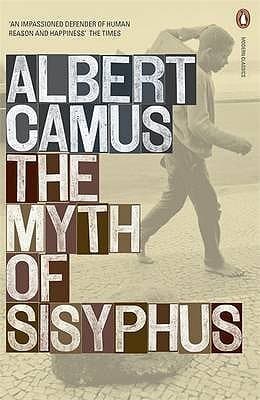
- The Myth of Sisyphus
Albert Camus
4.2 (25k) average on GoodreadsPhilosophyExplores the philosophical concepts of absurdity that underpin 'El extranjero'.
- Nausea
Jean-Paul Sartre
3.9 (86k) average on GoodreadsPhilosophyAnother seminal work of existentialism, featuring an alienated protagonist grappling with existence.
- Metamorphosis
Franz Kafka
Kafka's Metamorphosis shares with El Extranjero a protagonist who is suddenly alienated from society through an inexplicable event (Gregor Samsa's transformation into an insect) and whose subsequent experiences highlight societal indifference and the absurdity of existence. Both Gregor and Meursault become 'outsiders' through no fault of their own, facing incomprehension and condemnation from those around them. However, Kafka's narrative style is characterized by its dreamlike, allegorical, and often grotesque imagery, creating a sense of nightmarish illogic. Camus's prose, while equally detached, maintains a stark, realistic clarity, focusing on sensory perception rather than symbolic surrealism, even as it conveys an absurd reality. Both works critique societal norms and the isolating nature of modern life, but through distinct stylistic and thematic lenses.
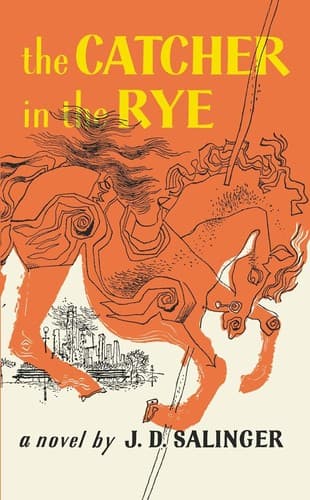
- The Catcher in the Rye
J.D. Salinger
3.8 (2.7M) average on GoodreadsYoung AdultWhile stylistically and thematically distinct, Salinger's The Catcher in the Rye offers a point of comparison through its exploration of an alienated protagonist who struggles with societal phoniness and conformity. Holden Caulfield, like Meursault, is an outsider who observes the world with a critical, often detached, eye. However, Holden's alienation stems from a deeply emotional and moral disgust with adult hypocrisy and a longing for innocence, leading to extensive internal monologue filled with angst and judgment. Meursault's detachment, conversely, is primarily emotional and sensory, a lack of conventional feeling rather than a moral critique, until his realization of the world's indifference. Both characters are rebels against societal expectations, but Holden's rebellion is driven by intense feeling, Meursault's by a lack thereof that eventually transforms into defiant acceptance.
- Nineteen Eighty-Four
George Orwell
4.2 (5.5M) average on GoodreadsFictionWinston Smith dreams of truth and rebellion in a world where Big Brother watches all, but he confronts the terrifying power of a regime that controls not just actions, but thoughts.
- The Frozen River
Ariel Lawhon
4.4 (600k) average on GoodreadsFictionIn 1789 Maine, a heroic midwife's diary helps her expose a murder and get justice in a town that wants to silence her.


Enjoyed the summary?
A summary gives you the shape of the book. The book itself has the detail, the examples and the voice.
Find El extranjero on AmazonAs an Amazon Associate, BookBrief earns from qualifying purchases. How we're funded