

Synopsis
Covers the whole plot, including the ending.
- Difficulty
- Medium
- Pacing
- Slow
- Mood
- Introspective, Melancholy, Cynical, Reflective
- Read it if
- You enjoy introspective literary fiction with a focus on psychological depth, marital infidelity, and cultural commentary.
- Skip it if
- You prefer fast-paced plots, clear-cut resolutions, or optimistic narratives.
Europa Plot Summary
Covers the whole plot, including the ending.
The Bus to Strasbourg
Jerry Marlow, an English university lecturer, is on a bus from Milan to Strasbourg for a conference on 'European Identity.' He is in a deep personal crisis: his marriage to his wife, Margaret, is over; his daughter, Emily, is troubled; and he is reeling from the end of a passionate, yet destructive, affair with a younger Italian colleague, Caterina. The bus journey is a physical and metaphorical transit, allowing Jerry to re-examine the ruins of his past, particularly his relationship with Caterina, and to think about the broader failures and disappointments of his middle-aged life. He observes his fellow passengers with a cynical, often judgmental, eye, projecting his own anxieties onto the diverse group of Europeans.
The Genesis of an Affair
Jerry flashes back to the origins of his affair with Caterina, an intelligent Italian woman who was a colleague at the university where he taught in Verona. He describes the initial attraction, the intellectual spark, and the thrill of secret meetings that quickly escalated into a full physical and emotional entanglement. He was drawn to her youth, her intensity, and the escape she offered from the routine of his marriage. The affair provided a potent, albeit temporary, antidote to his encroaching sense of boredom and professional stagnation, making him feel alive and desired again, despite the inherent risks and moral compromises involved.
The Escalation and Secrecy
As the affair with Caterina progresses, it becomes an increasingly central and demanding part of Jerry's life. He crafts lies and excuses to hide his activities from Margaret and Emily, leading to a growing emotional distance from his family. He describes the elaborate choreography of their secret rendezvous, the heightened senses, and the constant fear of discovery. The affair, initially an exciting diversion, slowly begins to consume him, blurring the lines between his two lives and forcing him to confront uncomfortable truths about his own capacity for deceit and self-absorption. His guilt is palpable, yet the allure of Caterina proves too strong to resist.
The Unraveling and Confession
The inevitable end of Jerry's secret life begins. Margaret, sensing his increasing detachment and suspicious of his frequent absences, eventually discovers the truth about his affair with Caterina. The confrontation is explosive and deeply painful, shattering the fragile peace of their household. Jerry describes the raw emotion, the accusations, and the profound sense of betrayal that rips through his family. This period marks a critical turning point, as the consequences of his actions become undeniable and the illusion of his double life is irrevocably broken, leaving him to face the wreckage of his marriage and his own moral failings.
Post-Affair Desolation
With the affair exposed and his marriage in ruins, Jerry is in a state of deep desolation. The relationship with Caterina also begins to fray under the pressure of its exposure and the impossibility of a future together. He struggles with the emotional void left by both relationships, haunted by memories of Caterina and the guilt over his treatment of Margaret. The narrative details his attempts to process the end of the affair, his lingering obsession with Caterina, and his inability to fully detach from her, even as he recognizes the destructive nature of their connection. His professional life also suffers, mirroring his personal collapse.
Reflections on Masculinity and Europe
Throughout the bus journey and his recollections, Jerry frequently intersperses his personal narrative with cynical, often misogynistic, observations on the differences between men and women, the nature of desire, and the complexities of human relationships. He also reflects on the conference's theme of 'European Identity,' questioning its validity and coherence in a continent marked by such diversity and historical conflict. His internal monologue reveals a man deeply entrenched in his own worldview, struggling to reconcile his personal experiences with broader societal expectations and ideals. He sees Europe as a fragmented entity, much like his own fractured life.
The Conference in Strasbourg
Upon arrival in Strasbourg, Jerry attends the conference, which he finds to be largely an exercise in academic posturing and platitudes. He observes the other delegates with his characteristic detached cynicism, finding little genuine intellectual engagement or meaningful discussion about European identity. The conference, intended to be a professional engagement, only serves to highlight his own sense of alienation and the superficiality he perceives in much of modern intellectual discourse. He feels a profound disconnect between the grand ideals discussed and the messy reality of individual lives, including his own.
Lingering Obsession and Attempts at Closure
Despite the affair's official end, Jerry cannot truly move on from Caterina. He recounts instances of attempting to contact her, replaying conversations, and analyzing every detail of their time together. His obsession borders on the pathological, revealing a man trapped in a cycle of regret and longing. He struggles to understand why he allowed himself to be so consumed by the affair and why he continues to carry such a powerful emotional attachment to a relationship that ultimately brought him so much pain. This internal struggle is a significant part of his journey towards self-understanding.
The State of His Family
Jerry is forced to confront the deep damage his actions have inflicted on his wife, Margaret, and his daughter, Emily. He acknowledges the emotional toll on Margaret, her pain and disillusionment, and the practical difficulties of their separation. He also worries about Emily, whose behavior has become increasingly withdrawn and troubled in the wake of her parents' marital breakdown. While his reflections are often self-serving, there are moments where he grapples with genuine remorse and recognizes the extent to which his selfish pursuit of happiness has shattered the lives of those closest to him, leaving a trail of emotional wreckage.
The Return Journey and Uncertain Future
As Jerry begins his journey back, the bus ride mirrors his initial outward bound trip. He continues to reflect on the past, but there is a subtle shift in his perspective. While still cynical and self-pitying at times, there are hints of a dawning self-awareness, an understanding of his own complicity in his misfortunes. He doesn't arrive at a clear resolution or a hopeful new beginning, but rather an acceptance of his current, fractured state. The future remains uncertain, his marriage likely irreconcilable, his job precarious, and his relationship with his daughter strained. He is left with the weight of his experiences, perhaps a little wiser, but certainly not absolved.
Principal Figures
Jerry Marlow
Protagonist
An English university lecturer grappling with a mid-life crisis and the fallout of an affair.
Jerry Marlow is an English university lecturer in his mid-forties, characterized by his sharp intellect, cynical wit, and profound self-absorption. He is a man caught in a mid-life crisis, disillusioned with his marriage, his career, and the general state of the world. His internal monologues are filled with acerbic observations on human nature, particularly the dynamics between men and women, and a relentless self-analysis that often borders on self-pity. He is an unreliable narrator, frequently rationalizing his own poor choices while harshly judging others. He seeks escape and validation through an affair, only to find himself more lost than before.
Relationships: Caterina (Ex-lover; passionate but destructive affair); Margaret (Estranged wife; long-suffering and betrayed); Emily (Troubled daughter; distant and impacted by parental conflict)
Caterina
Supporting
Jerry's passionate and enigmatic Italian mistress, a younger colleague.
Caterina is a vibrant, intelligent, and younger Italian colleague with whom Jerry has a passionate affair. She is depicted through Jerry's biased lens, initially as an intoxicating force who reawakens his sense of vitality and desire. She is independent, emotionally intense, and seemingly unburdened by the same societal expectations that weigh on Jerry. While the affair with her is central to Jerry's narrative, her own motivations and inner life are largely filtered through his perceptions, making her somewhat enigmatic. She represents escape, youth, and a temporary reprieve from Jerry's marital ennui.
Relationships: Jerry Marlow (Ex-lover; intense and ultimately destructive affair)
Margaret
Supporting
Jerry's long-suffering and betrayed wife.
Margaret is Jerry's wife, a woman who has endured years of his emotional distance and eventually discovers his infidelity. She is depicted as the steady, grounding force in Jerry's life, though he often perceives her as stifling. Her character primarily serves to highlight Jerry's failings and the devastating impact of his actions. Her pain and betrayal are palpable, representing the collateral damage of Jerry's self-indulgence. While not given much direct voice, her presence is a constant reminder of Jerry's responsibilities and the life he has jeopardized.
Relationships: Jerry Marlow (Estranged husband; long-suffering and betrayed); Emily (Daughter; shares a bond of mutual concern and suffering)
Emily
Supporting
Jerry and Margaret's troubled daughter, affected by her parents' marital breakdown.
Emily is Jerry and Margaret's daughter, a teenager whose behavior reflects the turmoil in her parents' marriage. She is portrayed as increasingly withdrawn and troubled, acting out in subtle but significant ways. Her struggles symbolize the innocent casualties of adult infidelity and marital discord. Jerry's concern for Emily, though often overshadowed by his own preoccupations, represents one of his few genuine emotional connections and a source of lingering guilt. She is a silent observer of her parents' disintegrating relationship.
Relationships: Jerry Marlow (Father; distant but a source of concern); Margaret (Mother; shares a bond of mutual concern and suffering)
The Bus Passengers
Mentioned
A diverse group of Europeans observed and judged by Jerry.
The other passengers on the bus serve as a microcosm of European society, viewed through Jerry's cynical and often prejudiced lens. They include a young Italian couple, a German woman, and various other nationalities. Jerry projects his own anxieties and judgments onto them, using their perceived flaws and behaviors to reinforce his own worldview. They are not developed characters but rather symbolic figures that allow Jerry to ruminate on broader themes of national identity, cultural differences, and human folly, reflecting his internal state and his detached observation of the world.
Themes & Insights
Mid-life Crisis and Disillusionment
The novel explores the theme of mid-life crisis through Jerry Marlow's character. He is disillusioned with his marriage, his academic career, and the general trajectory of his life. His affair with Caterina is an attempt to escape this boredom and reclaim a sense of youth and vitality, but it ultimately leads to further wreckage. His internal monologues are filled with a sense of futility and regret, questioning the choices he has made and the meaning of his existence. This is evident in his cynical observations about the conference on 'European Identity,' which he sees as equally hollow.
“What was the point of all this? Of the conference, of Europe, of his life?”
The Nature of Love, Desire, and Infidelity
A central theme is the complex and often destructive nature of love, desire, and infidelity. Jerry's affair with Caterina is depicted as a potent, almost addictive, force that offers temporary escape but ultimately proves unsustainable and devastating. The novel explores the thrill of illicit desire, the web of lies required to maintain it, and the emotional fallout when it inevitably unravels. It also examines the deterioration of marital love, looking at how neglect and emotional distance can pave the way for betrayal, as seen in Jerry's relationship with Margaret.
“Desire, he thought, was a kind of hunger, a gnawing, insatiable thing that cared nothing for consequences.”
European Identity and Cultural Differences
The novel uses the backdrop of a conference on 'European Identity' and Jerry's bus journey across Europe to explore the elusive and often contradictory nature of this concept. Jerry, an Englishman, constantly observes and judges his fellow European passengers, highlighting cultural stereotypes and national characteristics. His cynical perspective suggests that a unified 'European identity' is largely an academic construct, divorced from the messy reality of individual lives and historical rivalries. This theme mirrors Jerry's personal fragmentation, suggesting a parallel between the fractured self and a fractured continent.
“Europe, he mused, was a collection of solitudes, each fiercely guarding its own particular brand of misery.”
Self-Deception and Moral Responsibility
Jerry Marlow is a master of self-deception, constantly rationalizing his actions and blaming external factors for his unhappiness. The novel details his internal justifications for his affair and his emotional neglect of his family. However, as the narrative progresses, there are moments of painful self-awareness where he confronts his own moral failings and the deep damage he has inflicted. This theme highlights the struggle to accept personal responsibility and the difficulty of escaping one's own character flaws, even in the face of overwhelming evidence.
“He had built his own prison, brick by careful brick, and now he was condemned to wander its lonely corridors.”
Plot Devices & Literary Techniques
Stream of Consciousness Narration
The story is primarily told through Jerry Marlow's unfiltered thoughts and reflections.
The novel employs a stream of consciousness narrative style, immersing the reader directly into Jerry Marlow's mind. His thoughts, memories, observations, and cynical commentary flow uninterrupted, often shifting between past and present without clear transitions. This device allows for deep characterization, revealing Jerry's complex inner world, his intellectual prowess, his self-deception, and his emotional turmoil. It makes the reader privy to his often unpleasant but brutally honest assessments of himself and others, creating an intimate yet often uncomfortable reading experience.
The Journey Motif
The bus journey serves as a physical and metaphorical exploration of Jerry's life.
The physical journey on a bus from Milan to Strasbourg (and back) acts as a powerful motif throughout the novel. It provides the literal framework for Jerry's reflections, allowing him to observe the European landscape and its inhabitants, which in turn triggers his memories and philosophical musings. Metaphorically, the journey represents Jerry's internal quest for understanding and self-reckoning. As he moves across geographical space, he simultaneously traverses the landscape of his past relationships and decisions, hoping to find some clarity or resolution, even if none is explicitly found by the end.
Cynical and Acerbic Tone
The narrative is characterized by Jerry's sharp, often misanthropic, and critical voice.
The novel's tone is predominantly cynical, acerbic, and often misanthropic, dictated entirely by Jerry Marlow's personality. His observations are frequently judgmental, sarcastic, and critical, whether directed at his fellow passengers, his colleagues, his family, or himself. This distinctive tone shapes the reader's perception of events and characters, creating a sense of intellectual detachment even amidst emotional turmoil. It underscores Jerry's disillusionment and his defensive posture, while also providing moments of dark humor and incisive social commentary.
Europa Quotes
“The problem with Italy, you see, is that it's too beautiful. It's too easy to live here. It seduces you into a kind of gentle torpor.”
“I was an Englishman in Italy, and that was my identity, my role, my cross to bear. And sometimes, my saving grace.”
“The train, for all its speed, seemed to move through a landscape of the past, a landscape of memory and regret.”
“Love, I decided, was not about grand gestures, but about the accumulation of small, almost imperceptible acts of kindness.”
“The bureaucracy, of course, was a constant, infuriating presence, a kind of low-grade fever that never quite broke.”
“We build these elaborate structures of lies, not to deceive others, but to convince ourselves.”
“There was a certain melancholy in the air, a sense of things ending, or perhaps, just changing, which can be even more unsettling.”
“The trick, perhaps, was not to find happiness, but to learn to live with a tolerable level of unhappiness.”
“Every journey, no matter how short, is a kind of emigration, a leaving behind of one self for another.”
“The past, like a stubborn stain, could never be entirely scrubbed away, only faded.”
“To be a writer, I thought, was to be a professional observer of one's own failings.”
“The silence between people can be more eloquent, more loaded with meaning, than any words.”
“Italy was a mistress who demanded everything and gave back only in beauty and frustration.”
“We are all, in the end, just collections of habits, good and bad, that we cling to out of comfort or fear.”
Quiz
10 questions on the plot and the characters. Each answer comes with a short explanation.
Question 1
Where is Jerry Marlow traveling by bus at the beginning of the novel?
- From London to Paris
- From Milan to Strasbourg
- From Rome to Berlin
- From Geneva to Brussels
Show answer
B. From Milan to Strasbourg The novel opens with Jerry Marlow on a bus journey from Milan to Strasbourg, reflecting on his life.
Question 2
What is Jerry Marlow's profession that is described as being 'in peril'?
- A lawyer
- A journalist
- A teacher
- A businessman
Show answer
C. A teacher The synopsis mentions that 'Even his teaching job is in peril,' indicating his profession.
Question 3
Which of the following personal issues is NOT explicitly mentioned as part of the 'wreckage' in Jerry Marlow's life?
- A failed marriage
- A daughter going astray
- An affair that has left him numb
- Financial bankruptcy
Show answer
D. Financial bankruptcy The synopsis lists a failed marriage, a daughter going astray, and an affair as his personal problems, but not financial bankruptcy.
Question 4
What is a central stylistic characteristic of Jerry Marlow's commentary, as described in the book's blurb?
- Melancholy and understated
- Flowery and romantic
- Scalpel-sharp and ferocious wordplay
- Optimistic and naive
Show answer
C. Scalpel-sharp and ferocious wordplay The description states, 'Fueled by Marlow's scalpel-sharp commentary, Europa bristles with ferocious wordplay.'
Question 5
At what stage of life does Jerry Marlow find himself, according to the synopsis?
- At the beginning of his career
- In his late twenties
- At the midpoint of his life
- Nearing retirement
Show answer
C. At the midpoint of his life The synopsis explicitly states, 'At the midpoint of his life, Jerry Marlow finds himself on a bus...'
Question 6
How is the novel's vision of the sexes characterized in the description?
- Utopian and idealized
- As honest as it is incorrect
- Progressive and modern
- Traditional and conservative
Show answer
B. As honest as it is incorrect The blurb describes the vision of the sexes as 'as honest as it is incorrect,' suggesting a provocative and unconventional perspective.
Question 7
Despite the 'appalling premonitions' and 'wreckage,' what human quality does Jerry Marlow still feel the pull of?
- Revenge
- Despair
- Hope
- Nostalgia
Show answer
C. Hope The synopsis mentions, 'There are times when the most appalling premonitions seem all too plausible, yet the pull of hope cannot be resisted.'
Question 8
The affair Jerry Marlow had is described as leaving him in what state?
- Content and fulfilled
- Excited and invigorated
- Both numb and licking every wound
- Relieved and liberated
Show answer
C. Both numb and licking every wound The blurb states the affair 'has left him both numb and licking every wound, self-inflicted or otherwise.'
Question 9
What aspect of Jerry Marlow's commentary contributes to the novel 'bristling with ferocious wordplay'?
- His philosophical ponderings on European history
- His detailed descriptions of landscapes
- His scalpel-sharp and incisive observations
- His humorous anecdotes about fellow passengers
Show answer
C. His scalpel-sharp and incisive observations The text states, 'Fueled by Marlow's scalpel-sharp commentary, Europa bristles with ferocious wordplay,' linking his sharp observations to the wordplay.
Question 10
What does the title 'Europa' primarily suggest in the context of the novel's setting and themes?
- A focus on ancient Greek mythology
- Jerry Marlow's literal journey across the European continent
- An exploration of European culinary traditions
- A critique of the European Union's policies
Show answer
B. Jerry Marlow's literal journey across the European continent Given Jerry is on a bus from Milan to Strasbourg (cities in Europe) and reflecting on his life, 'Europa' most directly refers to his physical journey across the continent, which serves as a backdrop for his internal reflections.
Europa FAQ
What is the central premise of 'Europa' and Jerry Marlow's journey?
'Europa' centers on Jerry Marlow, an English lecturer, as he travels by bus from Milan to Strasbourg for a European conference. The journey serves as a physical and metaphorical vehicle for him to reflect on his crumbling personal life, particularly his failed marriage, his daughter's struggles, and the aftermath of a passionate but destructive affair with an Italian woman named Manuela.
Who is Manuela and what is her significance to Jerry's narrative?
Manuela is Jerry Marlow's former Italian lover, an affair that forms a significant emotional core of the novel. Their intense and volatile relationship, characterized by both passionate connection and profound misunderstanding, is relived through Jerry's fragmented memories and obsessive introspection. Her absence and the lingering impact of their dynamic deeply influence Jerry's present state of mind.
What is the 'wreckage' Jerry is taking stock of during his bus trip?
The 'wreckage' Jerry contemplates includes his failed marriage to an unnamed wife, his concern for his daughter who is 'going astray,' and most prominently, the emotionally devastating end of his affair with Manuela. Beyond personal relationships, his teaching job is also in jeopardy, contributing to his overall sense of crisis and professional instability.
How does the setting of a bus journey contribute to the novel's themes?
The bus journey from Milan to Strasbourg provides a confined, liminal space that forces Jerry into solitude and introspection. It physically moves him across Europe while mentally he traverses his past, allowing for an uninterrupted stream of consciousness that mirrors his internal restlessness and inability to escape his thoughts, even as the landscape changes outside.
What role does the 'European conference' play in the story?
The European conference in Strasbourg is Jerry's ostensible destination and professional obligation, but it largely serves as a backdrop. Its theme of European unity ironically contrasts with Jerry's personal disunity and his struggles with cross-cultural relationships, particularly with Manuela. The conference offers a stark, intellectual counterpoint to his emotional chaos.
Are there specific details about Jerry's daughter or his relationship with her?
While Jerry's daughter is mentioned as 'going astray,' specific details about her struggles or their relationship are intentionally vague, serving more as another facet of Jerry's overall personal failure and anxiety. Her situation contributes to his sense of being a failed parent, adding to the layers of regret and self-recrimination he experiences.
How does Jerry's 'scalpel-sharp commentary' manifest in the narrative?
Jerry's commentary is characterized by his cynical, often brutally honest observations about human nature, relationships, and societal norms. He dissects his own motivations and those of others with an almost clinical detachment, using ferocious wordplay and intellectual wit to express his disillusionment and frustration, particularly regarding gender dynamics and cultural differences.
Is there any indication of Jerry's wife's perspective or her role in the marriage's failure?
The novel is primarily from Jerry's first-person perspective, so his wife's perspective is largely absent or filtered through his biased lens. She is presented more as a casualty of his self-absorption and the affair with Manuela, contributing to the 'wreckage' he surveys. Her voice is not given directly, reinforcing Jerry's isolated worldview.
What is the significance of the title 'Europa' beyond the geographical setting?
'Europa' signifies not just the continent Jerry traverses, but also an exploration of European identity, cultural clashes, and the ideal versus the reality of cross-cultural relationships. It represents the broader stage for Jerry's personal drama, where his very British sensibilities clash with Manuela's Italian passion, highlighting themes of unity and division on both macro and micro levels.
How does Jerry Marlow's midlife crisis influence his psychological state?
Jerry's midlife crisis manifests as profound introspection, self-pity, and an obsessive re-evaluation of his past choices. He grapples with feelings of failure, regret, and a sense of being lost, leading to a psychological state marked by anxiety, numbness, and a desperate search for meaning. This period of life amplifies his existing flaws and vulnerabilities.
What psychological defense mechanisms does Jerry employ throughout his journey?
Jerry frequently employs intellectualization, using his sharp wit and analytical mind to dissect his emotional pain rather than directly confronting it. He also engages in a degree of self-pity and projection, often blaming external factors or Manuela for his unhappiness, while simultaneously acknowledging his own complicity in the 'wreckage.'
How does Jerry's perception of love and relationships evolve or devolve?
Jerry's perception of love seems to devolve into cynicism and disillusionment, particularly after the intensity and ultimate failure of his affair with Manuela. He views relationships through a lens of struggle and inevitable pain, questioning the possibility of genuine connection and often reducing interactions to power dynamics and fundamental misunderstandings between sexes.
Is Jerry a sympathetic character, and how does the author achieve this?
Jerry is a complex character who often evokes a mix of sympathy and frustration. While his self-pity and intellectual arrogance can be off-putting, his raw honesty, vulnerability, and clear pain make him relatable. The author achieves this by allowing readers deep access to Jerry's unfiltered thoughts, revealing his inner torment despite his outward cynicism.
How does the novel portray the 'vision of the sexes as honest as it is incorrect'?
The novel portrays gender relations through Jerry's highly subjective and often misogynistic lens, characterized by his belief in inherent, irreconcilable differences between men and women. His 'vision' is 'honest' in its unfiltered expression of his biased beliefs, but 'incorrect' in its generalization and failure to acknowledge individual complexity, reflecting his own inability to connect deeply.
Does Jerry find any form of redemption or resolution by the end of the novel?
The novel does not offer a clear or easy redemption for Jerry. While he undergoes intense introspection, the ending leaves his future ambiguous, suggesting that true resolution is not easily achieved. The journey is more about the process of self-reckoning than a definitive arrival at peace or understanding, reflecting the complexities of life's midpoints.
What is the significance of the 'appalling premonitions' Jerry experiences?
Jerry's 'appalling premonitions' highlight his deep-seated anxiety and pessimism about the future, reflecting his belief that his life is on an irreversible downward spiral. These premonitions underscore his internal turmoil and the sense of dread that accompanies his self-assessment, contrasting with the 'pull of hope' that occasionally surfaces.
How does 'Europa' engage with themes of cultural identity and nationalism?
'Europa' subtly engages with cultural identity through Jerry's interactions and reflections on Manuela's Italian passion versus his own English reserve, and the broader context of a unified Europe. Jerry often attributes certain behaviors or misunderstandings to national characteristics, using them as a framework to understand (or misunderstand) his relationships and the world around him.
Is the novel primarily a character study or does it offer broader social commentary?
While 'Europa' is undeniably a deep character study of Jerry Marlow's internal world, it also offers broader social commentary, particularly on gender relations, the challenges of cross-cultural communication, and the disillusionment inherent in modern life. Jerry's personal struggles become a microcosm for larger societal and existential questions.
About the author

Tim Parks is a British author known for his fiction, including the novel "Europa." His works often explore themes of identity and culture, reflecting his experiences living in Italy. Parks has also written essays and non-fiction, contributing to discussions on literature and translation.
Similar books
- The End of the Affair
Graham Greene
3.9 (52k) average on GoodreadsLiterary FictionExplores themes of illicit love, guilt, and existential reflection with a similar introspective tone.
- Herzog
Saul Bellow
3.8 (19k) average on GoodreadsLiterary FictionFeatures a middle-aged male protagonist reflecting on his past failures, relationships, and intellectual life through an epistolary style.
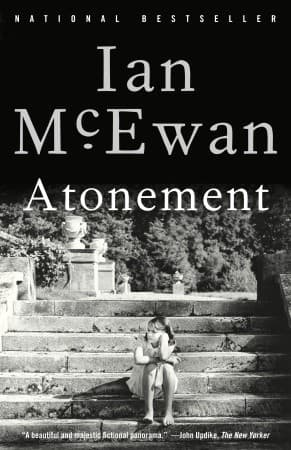
- Atonement
Ian McEwan
4.4 (70) average on GoodreadsWhile both novels deal with illicit love and its devastating consequences, 'Europa' offers a narrower, more intense psychological study of an individual's moral decay, lacking the broader historical sweep and intricate narrative structure of 'Atonement'. McEwan's novel explores themes of guilt, memory, and the power of fiction across generations, whereas Parks focuses almost exclusively on the immediate, internal experience of an affair.
- Portnoy's Complaint
Philip Roth
3.7 (59k) average on GoodreadsLiterary FictionParks shares Roth's unflinching willingness to explore male desire, sexual obsession, and the protagonist's often uncomfortable interior monologue. Both authors delve into the neurotic self-analysis of their male leads. However, 'Europa' is less overtly comedic and more focused on the quiet, agonizing unraveling of a specific affair, whereas 'Portnoy's Complaint' uses a more expansive, stream-of-consciousness approach to explore identity, upbringing, and sexual neuroses.
- The Old Man and the Sea
Ernest Hemingway
3.8 (831k) average on GoodreadsLiterary FictionA Cuban fisherman's long struggle with a giant marlin becomes a story of endurance and dignity, now retold for young adults with illustrations, phonetic guides, and writing prompts in Traditional Chinese.
- One Hundred Years of Solitude
Gabriel García Márquez
4.1 (753k) average on GoodreadsLiterary FictionThrough the multi-generational story of the Buendía family, a mythical town deals with the repeating patterns of time, love, and solitude, as the extraordinary mixes with the ordinary.




Enjoyed the summary?
A summary gives you the shape of the book. The book itself has the detail, the examples and the voice.
Find Europa on AmazonAs an Amazon Associate, BookBrief earns from qualifying purchases. How we're funded