

Synopsis
Covers the whole plot, including the ending.
- Difficulty
- Medium
- Pacing
- Moderate
- Mood
- Epic, Sweeping, Dramatic, Informative, Intense
- Read it if
- You love sprawling historical sagas with multiple interconnected storylines, focusing on the human impact of major global events like WWI and the Russian Revolution.
- Skip it if
- You prefer character-driven narratives over plot-heavy historical epics, or find large casts of characters overwhelming.
Fall of Giants Plot Summary
Covers the whole plot, including the ending.
A Welsh Boy's First Day and a Lord's Indiscretion
The year is 1911 in Aberowen, Wales. Thirteen-year-old Billy Williams goes into the coal mine for his first day of work, a dangerous tradition for boys there. His father, David Williams, a strong union man, worries about his son's safety. At the nearby Fitzherbert estate, 'The Place,' Lady Maud Fitzherbert, a suffragette, gets ready for her brother Fitz's twenty-first birthday party. She finds Fitz in bed with Clara von Ulrich, sister of Walter von Ulrich, a German diplomat. Maud is upset by her brother's casual meanness and Clara's vulnerability, showing the complicated relationships between these families and nations.
Love Across Social Divides and International Intrigue
Lady Maud Fitzherbert, despite not liking German aristocrats at first, feels attracted to Walter von Ulrich, a cultured and smart attaché at the German Embassy in London. Their secret romance grows, going against the social rules of their time. At the same time, Ethel Williams, the housekeeper at 'The Place' and Billy's sister, has a secret affair with Earl Fitzherbert. She gets pregnant, but Fitz, afraid of scandal, refuses to admit the child or marry her. This betrayal deeply affects Ethel, making her want social justice and independence.
Russian Revolutionaries and American Ambitions
In Russia, the orphaned brothers Grigori and Lev Peshkov struggle in pre-revolutionary society. Grigori, older and more hopeful, gets involved in revolutionary activities, including a strike at a St. Petersburg factory. Lev, more practical, wants to move to America for a better life. Their paths separate as Grigori joins the socialist cause. Across the Atlantic, Gus Dewar, a bright and ambitious young graduate, starts working as an aide to Senator Joe Thawley in President Woodrow Wilson's administration. He quickly shows he is good at politics, setting the stage for his involvement in international matters.
The Spark of War and Personal Sacrifices
The killing of Archduke Franz Ferdinand in Sarajevo in June 1914 breaks the peace in Europe. The alliances quickly pull nations into conflict. Walter von Ulrich, despite loving Maud, is called back to Germany to serve his country, leaving Maud sad. Billy Williams, feeling patriotic and dutiful, joins the British army, despite his father's peaceful views and the dangers of the trenches. Grigori Peshkov is drafted into the Russian army, separating him from his revolutionary friends and sending him to the front lines against Germany.
Trench Warfare and Political Awakening
Billy Williams sees the horrors of trench warfare on the Western Front, witnessing the loss of life and the brutal conditions. His experiences make him tough but also strengthen his will to fight for a better world. Meanwhile, Ethel Williams, after giving birth to her son, Georgie, and being cast out by Fitz, finds her voice in the women's suffrage movement. She becomes a strong organizer, rising in the ranks and pushing for political and social change, often clashing with the established order and even Fitz.
The Russian Revolution Unfolds
Grigori Peshkov, fighting on the Eastern Front, endures the hardships of war, seeing the Tsarist regime's incompetence and the Russian people's suffering. He becomes more and more unhappy with the current system and more open to revolutionary ideas. When the February Revolution starts in 1917, he gets caught up in the change, eventually joining the Bolsheviks. He takes part in the October Revolution, helping to overthrow the Provisional Government and establish Soviet power, believing it will lead to a better future for Russia.
America Enters the Fray and Diplomacy Falters
Gus Dewar, now a key advisor to President Woodrow Wilson, helps shape American foreign policy. He goes with Wilson to Europe, seeing the destruction. The United States eventually enters World War I, changing the balance of power. Gus deals with the difficulties of international diplomacy and the moral problems of war. Lady Maud, despite her personal sadness, becomes a pacifist, working to promote peace and understanding between nations, often using her social status to influence political discussions, even as her own family is divided by the conflict.
Post-War Struggles and Shifting Alliances
As World War I ends, the characters deal with the big changes it brought. Billy Williams returns home, scarred by his experiences but determined to fight for workers' rights in the coal mines. Ethel Williams, now a Labour activist, continues her fight for social equality and women's rights. Walter von Ulrich, having survived the war, faces a Germany in chaos and struggles to rebuild his life amid the economic and political instability of the Weimar Republic. Their personal lives and political goals connect with the larger forces shaping the post-war world.
The Fight for Suffrage and Social Justice
Ethel Williams, using her growing political influence, becomes a leader in the Labour Party, strongly advocating for women's voting rights and better conditions for the working class. Her son, Georgie, eventually forms a bond with Fitz, his biological father, though their relationship stays complicated. Lady Maud, now married to Walter von Ulrich, continues her work for social justice, using her position to support progressive causes. Both women, from different social classes, work for a more fair society, showing the spirit of change that swept through the early 20th century.
A New World Order and Lingering Shadows
The novel ends with the characters navigating the new political world of the 1920s. Gus Dewar continues his career in American politics, seeing new global powers rise. Grigori Peshkov, now a Bolshevik, becomes a figure in the Soviet government; his ideals are both met and compromised by the realities of power. Lev Peshkov, having made his way to America, finds success through less honest means, showing the darker side of the American Dream. The families, changed forever by the war and revolutions, look towards an uncertain future, with the beginnings of future conflicts already present.
Fall of Giants Characters
Lady Maud Fitzherbert
Protagonist
An aristocratic suffragette who falls in love with a German diplomat.
Lady Maud is the rebellious younger sister of Earl Fitzherbert, a progressive woman who champions women's suffrage and social justice. Intelligent, headstrong, and principled, she defies societal expectations by falling in love with Walter von Ulrich, a German diplomat, and later marrying him. Her journey involves navigating the complexities of class, patriotism, and personal desire during a time of immense global upheaval. She uses her position to advocate for peace and equality, often clashing with her conservative family and the established order.
Relationships: Walter von Ulrich (lover, then husband); Earl Fitzherbert (brother); Ethel Williams (employer-employee, later political allies)
Walter von Ulrich
Protagonist
A German diplomat and spy caught between loyalty to his country and love for Maud.
Walter is a cultured and intelligent German diplomat, initially stationed in London. He is deeply patriotic but also possesses a progressive worldview, often clashing with the rigid militarism of his own country's elite. His secret romance with Lady Maud Fitzherbert puts him in a difficult position as war looms. He serves his country during WWI, enduring personal hardship and disillusionment, before returning to a politically volatile Germany. He represents the more moderate, intellectual side of Germany, striving for peace and understanding.
Relationships: Lady Maud Fitzherbert (lover, then wife); Clara von Ulrich (sister)
Ethel Williams
Protagonist
A working-class housekeeper who becomes a prominent Labour activist and suffragette.
Ethel is the ambitious and intelligent daughter of a Welsh coal miner. Initially a housekeeper at 'The Place,' she becomes pregnant by Earl Fitzherbert, who abandons her. This betrayal fuels her drive for social justice and personal independence. She becomes a fierce advocate for women's suffrage and workers' rights, rising through the ranks of the Labour Party. Her journey is one of overcoming adversity and fighting for a voice for the working class and for women, embodying the spirit of social change in early 20th-century Britain.
Relationships: Earl Fitzherbert (lover, father of her child, later political opponent); Billy Williams (brother); Lady Maud Fitzherbert (former employer, later political ally)
Billy Williams
Protagonist
A Welsh coal miner's son who experiences the horrors of WWI and becomes a union activist.
Billy is introduced as a thirteen-year-old boy beginning his dangerous life in the Aberowen coal mine. He is patriotic and eager to serve his country, enlisting in the British army during WWI. His experiences in the trenches on the Western Front profoundly scar him, making him question authority and the true cost of war. Upon his return, he becomes a committed trade unionist, fighting for better conditions and rights for his fellow miners, carrying on his father's legacy but with the added weight of his wartime trauma.
Relationships: David Williams (father); Ethel Williams (sister)
Grigori Peshkov
Protagonist
An orphaned Russian idealist who becomes a Bolshevik revolutionary.
Grigori is the older of the two orphaned Peshkov brothers, characterized by his strong sense of justice and idealism. He becomes involved in revolutionary activities in Russia, believing in the promise of a socialist future. Conscripted into the Tsarist army, he witnesses the inefficiencies and brutality of the regime, further solidifying his revolutionary convictions. He becomes a key figure in the Russian Revolution, aligning himself with the Bolsheviks and participating in the overthrow of the old order, driven by his vision of a classless society.
Relationships: Lev Peshkov (brother); Katerina (lover, later wife)
Lev Peshkov
Protagonist
Grigori's opportunistic younger brother who seeks fortune in America.
Lev is the younger, more pragmatic, and opportunistic brother of Grigori. Unlike his idealistic brother, Lev is primarily driven by personal gain and a desire to escape poverty. He dreams of emigrating to America, seeing it as a land of opportunity. He is resourceful and cunning, often employing less scrupulous methods to achieve his goals. His path diverges sharply from Grigori's, as he navigates the criminal underworld and the cutthroat world of business, embodying a different response to the harsh realities of early 20th-century life.
Relationships: Grigori Peshkov (brother)
Gus Dewar
Protagonist
An ambitious American aide to President Woodrow Wilson.
Gus is a brilliant and ambitious young American, a graduate of Harvard, who begins his career as an aide to Senator Joe Thawley and later President Woodrow Wilson. He is intelligent, perceptive, and dedicated to public service. Gus provides an American perspective on the unfolding global events, particularly WWI and its aftermath. He grapples with the complexities of international diplomacy, political maneuvering, and the moral responsibilities of power, representing the idealism and growing influence of the United States on the world stage.
Relationships: Woodrow Wilson (employer, mentor); Senator Joe Thawley (employer, mentor); Carla von Ulrich (lover)
Earl Fitzherbert (Fitz)
Supporting
A powerful but morally flawed aristocrat and coal mine owner.
Fitz is Lady Maud's elder brother and the owner of the Aberowen coal mine. He represents the entrenched aristocracy, initially dismissive of workers' rights and women's suffrage. He is charming but also arrogant and morally ambiguous, as evidenced by his affair with Ethel Williams and his refusal to acknowledge their child. His character embodies the resistance to change from the ruling class, but he also shows moments of reluctant adaptation as the world around him shifts.
Relationships: Lady Maud Fitzherbert (sister); Ethel Williams (lover, father of her child); Billy Williams (employer of his family)
David Williams
Supporting
Billy and Ethel's father, a staunch Welsh coal miner and union man.
David is the patriarch of the Williams family, a respected and principled coal miner in Aberowen. He is a strong advocate for trade unionism and workers' rights, often clashing with the mine owners, particularly Fitz. He is a loving father, though his traditional views sometimes conflict with his children's choices. He embodies the resilience and solidarity of the Welsh mining community and the early struggles for labor rights.
Relationships: Billy Williams (son); Ethel Williams (daughter)
Clara von Ulrich
Supporting
Walter's sister, whose affair with Fitz causes early scandal.
Clara is Walter von Ulrich's younger sister, initially portrayed as somewhat naive and vulnerable. Her affair with Earl Fitzherbert at the beginning of the novel highlights the casual cruelty of the upper classes and the precarious position of women. She later becomes involved with Gus Dewar, further intertwining the families. Her character serves to connect the German and British aristocratic circles and to illustrate the broader social dynamics and personal consequences of the era.
Relationships: Walter von Ulrich (brother); Earl Fitzherbert (lover); Gus Dewar (lover)
Fall of Giants Themes
The Decline of Aristocracy and Rise of the Working Class
The novel shows the old aristocratic order, like the Fitzherberts, losing power as the working class, like the Williams family and the Peshkov brothers, gains influence. Scenes in the coal mines show the hard lives of laborers, a contrast to the rich lives of landowners. The suffrage movement, supported by Ethel and Maud, also challenges old power structures, showing a shift from inherited privilege to earned rights and group action.
“The world was changing. It was changing fast, and the old order was dying.”
War's Devastation and Its Human Cost
World War I is the central event of the novel, affecting every character regardless of their country or social class. Billy Williams's experiences show the brutal realities of trench warfare, including the loss of life, the mental trauma, and the disappointment it caused. The war also forces hard choices on characters like Walter von Ulrich, caught between love and duty, and fuels revolutionary feelings in Russia, showing its wide effects beyond the battlefield.
“He had seen enough men die to know that God was not on the side of the British, or the Germans, or anyone else.”
Social Justice and Equality
A main theme is the fight for social justice, which includes women's voting rights, workers' rights, and the struggle against class oppression. Ethel Williams's journey from a wronged housekeeper to a leading suffragette and Labour activist shows this, as does David and Billy Williams's dedication to trade unions. Lady Maud, despite being an aristocrat, also supports these causes, showing how different social groups can unite for change. The Russian Revolution, led by Grigori Peshkov, represents a more radical pursuit of social and economic equality.
“We want the vote because we are human beings, not because we are women.”
Love and Loyalty Across Borders
The novel explores how love and loyalty can go beyond national and social boundaries, often conflicting with political loyalties. The secret romance between Lady Maud Fitzherbert (British) and Walter von Ulrich (German) is an example, challenging the strong nationalism and hatred during WWI. Their personal commitment to each other lasts despite the war that divides their nations, showing the shared humanity that can exist even during global conflict. This theme questions the random nature of national identity when faced with deep personal connections.
“Love was a country in itself, and it had no borders.”
The Nature of Power and Revolution
The story looks at different kinds of power: the inherited power of the aristocracy, the political power of figures like President Wilson, and the revolutionary power of the people. The Russian Revolution, seen through Grigori Peshkov's eyes, shows how brutal and transformative it is to overthrow an existing government. The novel examines how power is gained, kept, and challenged, and the often unplanned results of revolutionary change, suggesting that while old orders fall, new kinds of oppression or idealism can appear.
“The revolution was a storm, and he was caught in its eye, a tiny speck in a whirlwind of change.”
Plot Devices & Literary Techniques
Multiple Perspective Narrative
Tells the story through the eyes of five interconnected families across different nations.
Ken Follett employs a multiple perspective narrative, following the lives of characters from five distinct families (Welsh, English, German, Russian, American). This allows the reader to experience the same historical events from various social, economic, and national viewpoints. For example, the build-up to WWI is seen from a German diplomat's perspective (Walter), a British aristocrat's (Maud), and an American politician's (Gus), providing a panoramic view of the conflict and its causes, rather than a singular, biased account.
Historical Realism
Integrates fictional characters seamlessly into actual historical events and periods.
The novel is meticulously researched, grounding its fictional characters and their personal dramas within the accurate historical context of the early 20th century. Key events like the Coronation of King George V, the assassination of Archduke Franz Ferdinand, trench warfare on the Western Front, the Russian Revolutions, and the women's suffrage movement are not just backdrops but integral to the plot. Characters interact with real historical figures (e.g., Woodrow Wilson, Lenin), making the narrative feel authentic and immersive.
Foreshadowing
Hints at future events and character developments to build suspense.
Follett frequently uses foreshadowing to build tension and hint at future calamities or triumphs. For instance, the early discussions about alliances and military build-up among the diplomats subtly hint at the impending global conflict. Similarly, the dangerous conditions in the coal mines foreshadow the struggles for workers' rights and the potential for accidents. Ethel's early experiences of betrayal and injustice foreshadow her later emergence as a powerful advocate for social change, creating a sense of inevitability and dramatic irony.
Social Class as a Dividing and Unifying Force
Explores how social strata both separate and connect characters' destinies.
Social class is a fundamental plot device, dictating opportunities, relationships, and conflicts. The stark contrast between the lives of the Welsh coal miners (Williams family) and the English aristocracy (Fitzherberts) drives much of the early conflict. However, the novel also shows how class lines can be crossed through love (Maud and Walter), shared political ideals (Maud and Ethel), or the unifying experience of war. This dynamic highlights the rigid social structures of the era while also demonstrating their eventual erosion.
Fall of Giants Quotes
“The world is not run by the people who are right, but by the people who have power.”
“War is a crime against humanity.”
“In politics, the middle ground is where you get shot from both sides.”
“The rich will always find a way to protect their wealth, even in a revolution.”
“Love is not a calculation; it is a surrender.”
“History is written by the victors, but it is lived by the people.”
“A man's character is not judged by his wealth, but by his actions in times of crisis.”
“The old order is dying, and the new order struggles to be born.”
“In war, there are no unwounded soldiers.”
“Freedom is not given; it is taken.”
“The greatest tragedy is not the loss of life, but the loss of humanity.”
“Hope is the last thing to die in the human heart.”
“Power corrupts, but absolute power corrupts absolutely, and quickly.”
“The bonds of family can withstand even the collapse of empires.”
Quiz
10 questions on the plot and the characters. Each answer comes with a short explanation.
Question 1
What major historical event serves as the backdrop for the opening of 'Fall of Giants'?
- The assassination of Archduke Franz Ferdinand
- The Russian Revolution
- The Coronation Day of King George V in 1911
- The signing of the Treaty of Versailles
Show answer
C. The Coronation Day of King George V in 1911 The novel opens in 1911 on the Coronation Day of King George V, setting the stage for the pre-World War I era and introducing key characters like the Williams and Fitzherbert families.
Question 2
Which two families are linked by romance and enmity due to their connection to the coal mining industry in Wales?
- The Fitzherberts and the von Ulrichs
- The Williamses and the Fitzherberts
- The Russian brothers and the American aide
- The Williamses and the von Ulrichs
Show answer
B. The Williamses and the Fitzherberts The Williams family are Welsh coal miners, while the Fitzherberts are aristocratic coal-mine owners, creating a dynamic of class conflict and personal relationships central to the plot.
Question 3
What is Walter von Ulrich's role at the German Embassy in London when he meets Lady Maud Fitzherbert?
- A diplomat
- A spy
- A military attaché
- A cultural ambassador
Show answer
B. A spy Walter von Ulrich is a spy at the German Embassy in London, which adds tension to his romance with Lady Maud Fitzherbert and reflects the espionage themes of the pre-war period.
Question 4
Which of the following historical events is NOT directly depicted or heavily featured in 'Fall of Giants'?
- The First World War
- The Russian Revolution
- The struggle for women's suffrage
- The Great Depression
Show answer
D. The Great Depression The novel focuses on the First World War, the Russian Revolution, and the women's suffrage movement, but it does not cover the Great Depression, which occurred later in the 20th century.
Question 5
How does the novel connect the personal lives of its characters to global historical events?
- By having all characters become political leaders
- Through romantic relationships that cross national borders
- By intertwining their destinies with war, revolution, and social change
- By focusing solely on economic struggles
Show answer
C. By intertwining their destinies with war, revolution, and social change The novel seamlessly blends personal dramas with major events like WWI and the Russian Revolution, showing how individuals' lives are shaped by and contribute to historical upheavals.
Question 6
What prevents the two orphaned Russian brothers from emigrating to America as planned?
- A personal feud with the Fitzherbert family
- Financial bankruptcy
- War, conscription, and revolution
- A shipwreck during their voyage
Show answer
C. War, conscription, and revolution The outbreak of World War I, subsequent conscription, and the turmoil of the Russian Revolution disrupt their plans, illustrating how global conflicts derail individual aspirations.
Question 7
Which character is an ambitious young aide to U.S. President Woodrow Wilson, and what role does this play in the story?
- Walter von Ulrich; he influences German-American relations
- Gus Dewar; he provides an American perspective on international politics
- Billy Williams; he advocates for labor rights in the U.S.
- Earl Fitzherbert; he negotiates war treaties
Show answer
B. Gus Dewar; he provides an American perspective on international politics Gus Dewar serves as an aide to President Wilson, offering insights into American diplomacy and the entry of the U.S. into WWI, connecting the personal narratives to broader political machinations.
Question 8
In what way does 'Fall of Giants' explore the theme of social class and inequality?
- By depicting only aristocratic lifestyles
- Through the contrast between coal miners and mine owners
- By ignoring economic disparities
- Through a focus on technological advancements
Show answer
B. Through the contrast between coal miners and mine owners The novel highlights class struggles through the Williams family (miners) and Fitzherbert family (owners), showing tensions that mirror the broader social changes of the early 20th century.
Question 9
How does the setting shift throughout 'Fall of Giants' to reflect its epic scope?
- It remains primarily in London for consistency
- It moves from Welsh coal mines to palaces and across continents like Washington and St Petersburg
- It focuses only on battlefields during WWI
- It centers on rural America throughout
Show answer
B. It moves from Welsh coal mines to palaces and across continents like Washington and St Petersburg The novel's settings range from the gritty coal mines of Wales to the opulent palaces of aristocracy and key political hubs worldwide, emphasizing the interconnectedness of different social strata and nations during this turbulent period.
Question 10
What overarching narrative technique does Ken Follett use to weave together the stories of the five families?
- A series of unrelated short stories
- A linear focus on one family at a time
- Intertwining plots that connect through historical events and personal relationships
- A documentary-style report on historical facts
Show answer
C. Intertwining plots that connect through historical events and personal relationships Follett employs a complex, interwoven plot where the fates of the five families—British, German, American, and Russian—are linked by romance, enmity, and shared experiences in WWI and the Russian Revolution, creating a cohesive epic.
Fall of Giants FAQ
What is 'Fall of Giants' about?
'Fall of Giants' follows five interconnected families—the Welsh mining Williams family, the aristocratic British Fitzherberts, the German von Ulrichs, the American Dewar family, and the Russian Peshkov brothers—through the cataclysmic events of World War I, the Russian Revolution, and the women's suffrage movement. The novel weaves their personal dramas with historical events from 1911 to 1924, showing how war and revolution transform their lives across continents.
Why should I read 'Fall of Giants'?
This epic historical fiction masterfully blends intimate character stories with sweeping historical events, making complex historical periods accessible and emotionally engaging. Through characters like Billy Williams navigating coal mine dangers and Lady Maud Fitzherbert fighting for women's rights, readers experience the human impact of world-changing events while enjoying Ken Follett's signature storytelling with intricate plotting and meticulous historical research.
What is the background/setting of 'Fall of Giants'?
The novel spans 1911-1924 across multiple continents, primarily in Wales (coal mining communities), London (aristocratic society and political circles), Germany (diplomatic and military settings), Russia (pre- and post-revolution St. Petersburg), and Washington D.C. (American political corridors). Key historical backdrops include King George V's coronation, World War I battlefields, the Russian Revolution's turmoil, and suffrage movement protests.
What are the most memorable quotes?
Notable quotes include Walter von Ulrich's 'War is the failure of diplomacy' reflecting the novel's anti-war themes, and Lady Maud's declaration 'I will not be what men want me to be' capturing the feminist struggle. Billy Williams' observation 'In the pit, you learn who you can trust' illustrates working-class solidarity, while Grigori Peshkov's 'In Russia, the future is always worse than the past' foreshadows revolutionary disillusionment.
What writing style does the author use?
Ken Follett employs an accessible, detail-rich narrative style with multiple third-person perspectives that shift between characters and families. The prose is straightforward yet immersive, blending historical exposition with dramatic personal scenes—from coal mine disasters to palace intrigues—while maintaining a fast-paced plot that connects intimate moments with global events through clear, chronological storytelling.
What minor details add significant meaning?
The recurring motif of coal dust on aristocratic hands symbolizes the inseparable link between the wealthy Fitzherberts and the mining Williams family. Walter von Ulrich's careful documentation of British naval movements—seemingly minor diplomatic notes—becomes crucial intelligence foreshadowing war. Ethel Williams' saved suffrage pamphlets, initially hidden, later empower her political activism, showing how small acts accumulate into revolution.
What are some subtle foreshadowing moments?
Early scenes of Russian brothers Grigori and Lev Peshkov dreaming of America foreshadow their divergent paths—Grigori's revolutionary involvement and Lev's criminal escapades. Fitzherbert family discussions about mine safety ignore warnings, hinting at future disasters. Walter and Maud's secret romance amid diplomatic tensions subtly predicts their cross-national loyalty conflicts during WWI. President Wilson's aide Gus Dewar's idealistic speeches about peace ironically precede the novel's brutal war depictions.
What unexpected character connections exist?
Billy Williams' sister Ethel becomes the Fitzherbert housekeeper and later a political activist linked to both aristocratic and working-class circles. Lev Peshkov's journey unexpectedly intersects with American diplomat Gus Dewar in Russia. Lady Maud's brother Earl Fitzherbert commands troops including Billy Williams in WWI, creating a battlefield reversal of their Welsh mine owner/worker dynamic. These connections show how war and revolution erase social boundaries.
What are unspoken character motivations?
Earl Fitzherbert's rigid adherence to tradition masks his fear of losing aristocratic privilege in a changing world. Grigori Peshkov's revolutionary fervor stems partly from unacknowledged guilt over his brother Lev's departure. Lady Maud's suffrage activism is driven by repressed anger at her constrained role as a woman in high society. Walter von Ulrich's spying is motivated by unspoken patriotic duty conflicting with his love for Maud, creating internal tension he never fully articulates.
What psychological complexities do characters exhibit?
Billy Williams shows both courageous labor activism and deep-seated loyalty to community traditions. Lev Peshkov displays charming opportunism alongside profound selfishness that damages those closest to him. Maud Fitzherbert balances aristocratic privilege with genuine revolutionary sympathy, creating cognitive dissonance. Grigori Peshkov evolves from hopeful immigrant to disillusioned revolutionary, his idealism hardening into pragmatic survivalism during Russia's turmoil.
What are the major emotional turning points?
The Aberowen mine disaster shatters Billy Williams' trust in the Fitzherbert family. Walter and Maud's separation at WWI's outbreak tests their forbidden love across enemy lines. Grigori Peshkov witnessing the Tsarist massacre of protesters radicalizes him permanently. Ethel Williams' illegitimate child with Earl Fitzherbert forces her into social exile, fueling her political transformation. The Armistice brings relief but also exposes characters' irreversible personal losses.
How do relationship dynamics evolve?
Billy Williams and Earl Fitzherbert move from miner/owner hostility to battlefield interdependence, then post-war political opposition. Maud and Walter's romance evolves from secret diplomacy to wartime separation, then strained reunion amid national hatreds. The Peshkov brothers' bond fractures as Lev's betrayal strands Grigori in revolutionary Russia. Ethel Williams transitions from Fitzherbert servant to independent activist, her relationship with the aristocracy becoming one of confrontation rather than subservience.
Which parts remain ambiguous or open-ended?
The ultimate fate of Lev Peshkov in America is left uncertain, reflecting the immigrant experience. Whether Maud and Walter's cross-national marriage can survive postwar prejudices remains unresolved. The novel doesn't definitively judge if characters' sacrifices in war and revolution were worthwhile, leaving readers to ponder the cost of historical change. The Fitzherbert family's future in a diminished aristocracy is hinted at but not fully revealed.
What are controversial scenes or decisions?
Earl Fitzherbert's refusal to improve mine safety despite warnings sparks debate about capitalist responsibility. Walter's spying activities while romancing Maud raise ethical questions about patriotism versus personal loyalty. Grigori's participation in revolutionary violence challenges notions of justified rebellion. Lev's abandonment of his brother and child for American opportunity presents morally ambiguous survival choices. The novel's depiction of suffragette violence divides characters over means versus ends.
'Fall of Giants' ending explained: how it ends & what it means
The novel concludes in 1924 with characters forever changed: Billy Williams enters politics, Ethel leads social reforms, Maud and Walter rebuild in Germany, Grigori survives revolutionary Russia disillusioned, and Lev pursues American dreams. The ending suggests that while WWI and revolutions toppled 'giants' of aristocracy and empire, new struggles emerge—fascism's rise hinted through Walter's concerns. Personal resilience persists despite historical trauma, with characters finding purpose in reconstruction rather than old hierarchies.
About the author

Kenneth Martin Follett, is a British author of thrillers and historical novels who has sold more than 160 million copies of his works.
Similar books
- The Pillars of the Earth
Ken Follett
4.3 (649k) average on GoodreadsFantasyAnother multi-generational historical epic by the same author, focusing on the building of a cathedral in medieval England.
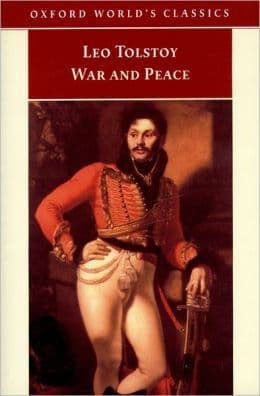
- War and Peace
Leo Tolstoy
4.1 (265k) average on GoodreadsHistorical FictionA classic epic novel intertwining the lives of aristocratic families with the Napoleonic Wars and Russian society.
- Hawaii
James A. Michener
4.2 (72k) average on GoodreadsLifestyleA vast historical novel following multiple generations and cultures through the development of a unique place.
- Nicholas and Alexandra
Robert K. Massie
4.2 (25k) average on GoodreadsPoliticsMassie's work offers a more concentrated and deeply researched focus on a single historical family (the Romanovs) during a similar period, providing greater psychological depth and historical detail within that specific context, whereas Follett opts for a broader, multi-family, multi-national panorama.
- The Winds of War
Herman Wouk
4.4 (51k) average on GoodreadsHistorical FictionWhile both cover major 20th-century conflicts through intertwined family sagas, Wouk's novel often delves into deeper philosophical and moral dilemmas, with a more literary prose style and greater introspective character development than Follett's more action-oriented and accessible narrative.
- To Kill a Mockingbird
Harper Lee
4.3 (4.5M) average on GoodreadsHistorical FictionIn the 1930s Jim Crow South, Harper Lee writes about racial injustice, moral growth, and the quiet courage of a lawyer father, Atticus Finch, as seen through his young daughter's eyes.




Enjoyed the summary?
A summary gives you the shape of the book. The book itself has the detail, the examples and the voice.
Find Fall of Giants on AmazonAs an Amazon Associate, BookBrief earns from qualifying purchases. How we're funded