

Synopsis
Covers the whole plot, including the ending.
- Difficulty
- Medium
- Pacing
- Slow
- Mood
- Epic, Informative, Sweeping, Reflective, Grand
- Read it if
- You love sprawling, multi-generational historical sagas that explore the birth and evolution of a society from its very origins.
- Skip it if
- You prefer fast-paced plots and character-driven stories over detailed historical exposition and a vast cast.
Hawaii Plot Summary
Covers the whole plot, including the ending.
From the Primordial Deep
The novel starts with a geological account of the Hawaiian Islands' formation, from volcanic eruptions on the Pacific Ocean floor. Michener describes the lava cooling, land emerging, and plants and animals arriving over millennia. This section establishes the islands' age and natural isolation before humans arrived, setting a grand scale for the story. It shows the raw power of nature that shaped this environment, a force that will influence the lives of all who live there.
The Polynesians Arrive
Around 800 A.D., the first humans arrive in Hawaii: Polynesian voyagers led by the navigator, Tamatoa. They make a dangerous journey from Bora Bora in double-hulled canoes, guided by stars and ancient knowledge. After finding the fertile islands, they create a society based on their traditional kapu system, a set of laws and social rules. This section introduces the first inhabitants, their culture, their connection to the land and sea, and their beliefs, especially their worship of Pele, the volcano goddess, and their practice of human sacrifice, which supports their social order.
Generations of Chiefs and Commoners
For centuries, Polynesian society in Hawaii thrives. It has a strict caste system with powerful ali'i (chiefs) like Kamehameha I, who unites the islands, and commoners (maka'ainana). The kapu system guides every part of life, from farming to marriage and war. The story follows various generations, showing their struggles, alliances, and their following or breaking of tradition. It shows how their culture developed, their strength, and their eventual weakness to outside influences, hinting at changes to come with Westerners. The balance between strong independence and community survival is a constant theme.
The Arrival of the Missionaries
In 1820, American Calvinist missionaries, led by Reverend Abner Hale and his wife Jerusha, arrive in Lahaina, Maui. They are driven to convert the Hawaiians to Christianity. The missionaries, including Dr. John Whipple, a doctor, and Mr. and Mrs. Hewlett, a printer and his wife, face challenges: cultural clashes, Hawaiian resistance, the heat, and their own strict beliefs. Their arrival marks the start of major and often destructive changes for the islanders, challenging their old customs and way of life.
Clash of Cultures
Reverend Abner Hale immediately works to end the kapu system, seeing Hawaiian customs like hula, polygamy, and communal living as sinful. He clashes with Queen Malama, a powerful ali'i who at first tolerates the missionaries but protects her people's traditions. The missionaries bring Western clothing, education, and medicine, leading to fast changes in Hawaiian society. While some Hawaiians accept the new religion and its benefits, many dislike the imposition of foreign values and the loss of their culture, causing deep divisions and setting the stage for ongoing conflict.
The Whaling Industry and Western Influence
As the 19th century continues, Hawaii becomes an important port for American whaling ships. The arrival of whalers brings money but also more Western influence, including prostitution, alcohol, and diseases that kill many natives. The missionaries, especially Reverend Hale, try to keep moral order against the whalers' bad influence. Dr. Whipple, seeing the seriousness of the diseases, works to treat the sick. This period shows the Hawaiian people's vulnerability to outside forces, and the missionaries' limited power in controlling the wider effects of Western expansion.
The Rise of the Sugar Plantations
With whaling declining, sugar cane becomes Hawaii's new economic base. This needs large areas of land and many workers. American business owners, often descendants of the missionaries, start large plantations. As the native Hawaiian population decreases due to disease, plantation owners, like the Bromley family, begin importing contract laborers from China, Japan, Portugal, and later the Philippines. This marks a big demographic shift, bringing new cultures and creating a complex, multi-ethnic society with its own tensions and hierarchies, mainly between the haole (white) owners and the diverse immigrant workers.
Immigrant Waves and Cultural Blending
The novel details the experiences of various immigrant groups: the Chinese, represented by the Kee family; the Japanese, by the Sakagawa family; and the Portuguese, who brought their own traditions and Catholicism. Each group faces discrimination, harsh working conditions on the sugar plantations, and struggles to keep their culture while adapting to their new home. Over generations, these groups slowly intermarry and integrate, creating the multicultural mix of modern Hawaii, though often with underlying racial and economic tensions that remain between the haole ruling class and the various immigrant communities.
The Overthrow of the Monarchy
As American economic and political influence grows, especially among the haole plantation owners, pressure increases to annex Hawaii to the United States. The Hawaiian monarchy, represented by figures like Queen Liliʻuokalani, struggles to keep sovereignty but is overcome. In 1893, American business interests, supported by the U.S. Marines, overthrow the monarchy, leading to Hawaii's annexation in 1898. This event represents the success of Western expansion and the loss of Hawaiian independence, a moment that changes the political landscape and future of the islands, solidifying American control.
The Modern Era and Statehood
The story moves into the 20th century, covering events like the attack on Pearl Harbor, which further confirmed Hawaii's strategic importance to the U.S. The descendants of the original missionary and immigrant families continue to shape the islands, dealing with racial integration, labor rights, and political power. The novel ends with Hawaii becoming a state in 1959, showing its final integration into the United States. This period shows the ongoing development of Hawaii's unique identity, a mix of its Polynesian heritage, missionary influence, and the contributions of its diverse immigrant populations, creating a complex modern society.
The Legacy of Intermarriage and Identity
Through the historical periods, Michener shows the theme of intermarriage and cultural blending. Characters from different backgrounds—Polynesian, American, Chinese, Japanese, Portuguese—form relationships and families, leading to new generations of Hawaiians with mixed heritage. This blending, while sometimes hard, creates a unique identity that goes beyond individual ethnic origins. The novel ends by reflecting on this rich mix, suggesting that despite historical conflicts, the people of Hawaii have formed a distinct, strong, and multicultural society, showing a spirit of aloha that combines all its diverse influences.
Hawaii Characters
Reverend Abner Hale
Protagonist
A rigid and zealous Calvinist missionary from New England.
Abner Hale is a man of unshakeable faith and unyielding principles. Driven by a fierce conviction to save souls, he views Hawaiian culture as inherently sinful and strives relentlessly to impose his Puritanical values. He is intelligent and hardworking but lacks empathy and understanding for customs different from his own. His dedication often borders on fanaticism, making him a complex and often unsympathetic figure, yet one whose impact on Hawaii is undeniably profound. He embodies the rigid, often destructive, aspects of early missionary zeal.
Relationships: Jerusha Hale (Wife, initially devoted and submissive, later more independent and critical of his rigidity.); Queen Malama (Antagonist, a powerful Hawaiian chiefess who resists his attempts to dismantle her culture.); Dr. John Whipple (Colleague and friend, often in ideological opposition but united by their mission.)
Jerusha Hale
Supporting
Abner's devoted but increasingly disillusioned wife.
Jerusha initially shares Abner's missionary zeal but is more open-minded and compassionate. She struggles with the harsh realities of missionary life and her husband's unyielding nature. Over time, she develops a deeper appreciation for the Hawaiian people and their culture, often acting as a bridge between the missionaries and the natives. Her internal conflict between loyalty to her husband and her growing understanding of the islanders makes her a sympathetic and evolving character. She represents the more humane and adaptable side of the missionary effort.
Relationships: Reverend Abner Hale (Husband, a complex relationship marked by love, duty, and growing ideological differences.); Noelani (Friend and confidante, a Hawaiian woman she teaches and learns from.)
Queen Malama
Supporting
A powerful and intelligent Hawaiian ali'i (chiefess).
Queen Malama is a strong, pragmatic, and intelligent Hawaiian chiefess who initially welcomes the missionaries for the practical benefits they offer (literacy, medicine) but fiercely resists their attempts to dismantle her people's traditions and spiritual beliefs. She is a symbol of Hawaiian sovereignty and cultural resilience. Her wisdom and political acumen are evident in her efforts to navigate the encroaching Western influence while trying to preserve her people's identity. She embodies the dignity and strength of the traditional Hawaiian leadership.
Relationships: Reverend Abner Hale (Antagonist, a clash of cultures and ideologies.); Kamehameha I (Her predecessor and a figure whose legacy she strives to uphold.)
Kamehameha I
Mentioned/Historical
The great king who united the Hawaiian Islands.
Kamehameha I is a legendary figure in Hawaiian history, revered as the chief who, through military prowess and shrewd political maneuvering, united the warring islands into a single kingdom. Although he appears briefly, his presence looms large over the early Polynesian sections and his legacy deeply influences subsequent Hawaiian leaders like Queen Malama. He represents the peak of indigenous Hawaiian power and the sophisticated political structure that existed before significant Western intervention. His unification efforts lay the groundwork for the later monarchy.
Relationships: Queen Malama (His successor, who tries to uphold his legacy.)
Dr. John Whipple
Supporting
A compassionate and pragmatic missionary physician.
Dr. John Whipple is a medical missionary who accompanies the Hales. Unlike Abner, he is more pragmatic and less dogmatic, prioritizing the physical well-being of the Hawaiians. He is deeply concerned by the diseases brought by Westerners and works tirelessly to treat the sick. He often serves as a voice of reason and compassion, providing a counterpoint to Abner's rigid moralism. His scientific understanding and humanitarian efforts offer a different perspective on the missionary endeavor, highlighting its potential for good beyond religious conversion.
Relationships: Reverend Abner Hale (Colleague and ideological sparring partner, but a professional ally.); Jerusha Hale (Friend and confidante, sharing a more compassionate view.)
Kee Family (e.g., Kee Chong)
Supporting
A family representing the Chinese immigrant experience.
The Kee family, particularly Kee Chong, embodies the struggles and resilience of Chinese immigrants who came to Hawaii to work on the sugar plantations. They face discrimination, harsh labor conditions, and the challenge of preserving their cultural identity while adapting to a new land. Kee Chong is often depicted as hardworking, ambitious, and resourceful, striving to build a better life for his family. Their story highlights the economic motivations for immigration and the slow process of integration and eventual success within the multi-ethnic Hawaiian society.
Relationships: Bromley Family (Employers/landowners, a relationship marked by economic dependency and racial hierarchy.)
Sakagawa Family (e.g., Kenji Sakagawa)
Supporting
A family representing the Japanese immigrant experience.
The Sakagawa family, notably Kenji, represents the Japanese immigrants who arrived in Hawaii seeking opportunity. They bring with them a strong work ethic, a deep sense of honor, and a commitment to family. Their story illustrates the challenges of plantation life, the importance of community support, and the efforts to maintain Japanese traditions and language while adapting to Hawaiian society. Kenji often displays quiet determination and resilience, symbolizing the enduring spirit of the Japanese community in Hawaii. Their narrative explores themes of cultural preservation and assimilation.
Relationships: Bromley Family (Employers/landowners, similar to the Kee family.)
Bromley Family (e.g., Micah Bromley)
Supporting
Descendants of missionaries who become powerful sugar magnates.
The Bromley family represents the powerful haole (white) elite who, often as descendants of the early missionaries, transition from religious endeavors to economic dominance in the sugar industry. Figures like Micah Bromley embody the entrepreneurial spirit and ambition that drove the development of Hawaii's plantation economy. They are often portrayed as shrewd, sometimes ruthless, businessmen who exert significant political and economic control over the islands. Their story highlights the shift in power dynamics and the establishment of a new ruling class distinct from the native Hawaiian ali'i.
Relationships: Kee Family (Employers of the Chinese immigrants.); Sakagawa Family (Employers of the Japanese immigrants.)
Tamatoa
Supporting
The skilled Polynesian navigator who leads the first migration to Hawaii.
Tamatoa is the legendary leader of the first Polynesian voyagers to reach Hawaii. He is depicted as an exceptionally skilled navigator, courageous leader, and a figure deeply connected to the ancient Polynesian traditions of seafaring and exploration. His vision and determination drive the perilous journey across the Pacific, establishing the first human presence on the islands. He embodies the spirit of discovery, resilience, and the sophisticated knowledge systems of the early Polynesians, setting the foundation for the entire Hawaiian civilization.
Relationships: His people (Leader and guide.)
Hawaii Themes
The Clash of Cultures
This theme is central to the entire story, seen most clearly with the arrival of American missionaries led by Reverend Abner Hale. Their strict Calvinist beliefs and desire to 'civilize' the Hawaiians immediately clash with the old Polynesian kapu system, spiritual practices, and communal way of life. Scenes showing Abner's disapproval of hula and his efforts to impose Western clothing and monogamy highlight this conflict. Later, the arrival of diverse immigrant groups (Chinese, Japanese, Portuguese) further complicates this dynamic, creating a rich but often tense multicultural society where each group tries to keep its identity while adapting to new norms and the dominant haole culture.
“For good or ill, the first white men to arrive in Hawaii were missionaries, and they were, of all white men, the most determined to change what they found.”
The Impact of Colonialism and Western Expansion
Michener carefully records the destructive effects of Western contact on Hawaii, from diseases that killed many natives to economic exploitation through whaling and sugar plantations, and finally the overthrow of the Hawaiian monarchy and annexation by the United States. The story shows how the good intentions of the missionaries often paved the way for less ethical economic and political forces. The Bromley family's rise from missionary descendants to powerful sugar barons shows this transition, explaining how religious influence became economic and political dominance, changing the sovereignty and population of the islands.
“The white man brought not only his God but his diseases, his greed, and his laws.”
The Search for Identity and Belonging
This theme appears across all main character groups. The early Polynesians, having made a dangerous journey, form a new identity tied to the land. The missionaries deal with their identity as agents of God in a foreign land. Later, waves of Chinese, Japanese, and Portuguese immigrants try to keep their ancestral cultures while building new lives in Hawaii. Their descendants, often of mixed heritage, face the challenge of forming a 'Hawaiian' identity that includes diverse cultural influences. The novel explores how people and communities define themselves when faced with migration, cultural assimilation, and the mixing of traditions.
“In Hawaii, a man could be many things, but eventually he had to be Hawaiian.”
The Power and Resilience of Nature
The novel begins with the dramatic geological birth of the islands, emphasizing the raw power of nature, especially the volcanoes. This force remains constant throughout the story, influencing the lives of all inhabitants. The land itself, with its fertile valleys, volcanoes, and surrounding ocean, shapes the culture of the Polynesians and challenges the efforts of the missionaries and later the sugar planters. Despite human efforts to control it, nature often shows its power, reminding characters of their place within a larger system. The beauty and destructive potential of Hawaii's landscape are always present.
“The land was Hawaii, and Hawaii was the land, and it would endure long after the men had passed.”
The Evolution of Family and Community
Michener traces the multi-generational stories of several key families—the Hales, the Kees, the Sakagawas—showing how family units adapt and last through historical change. The idea of community is also explored, from the close Polynesian villages ruled by kapu to the missionary compounds, and later the diverse plantation camps where immigrants from different lands formed new bonds. The novel shows how families and communities offer support, pass on culture, and navigate the challenges of assimilation and social change, often through intermarriage and the blending of traditions, ultimately forming the social fabric of modern Hawaii.
“A family was a tree, with roots that went deep into the past, and branches that reached into the future.”
Plot Devices & Literary Techniques
Multi-Generational Saga
Following families across centuries to illustrate historical change.
Michener employs a multi-generational narrative structure, tracing the lineage of key families (the Hales, the Kees, the Sakagawas) over hundreds of years. This allows him to depict the long-term impacts of historical events, cultural clashes, and social changes on individuals and communities. By following the descendants, the novel illustrates how initial encounters evolve into complex social structures, how traditions are maintained or lost, and how the identity of Hawaii itself is forged through the intermingling of diverse peoples across centuries, providing a panoramic view of its development.
Historical Detail and Research
Extensive factual information embedded within the fictional narrative.
The novel is renowned for its meticulous historical research, with Michener embedding vast amounts of factual detail about geology, Polynesian navigation, kapu systems, missionary life, whaling, sugar cultivation, and political events. This serves to create a highly immersive and credible world, lending an epic, almost documentary feel to the narrative. While the characters are fictional, their experiences are grounded in historical realities, making the novel a powerful educational tool that brings the history of Hawaii vividly to life and underscores the authenticity of the overarching narrative.
Symbolism of the Land
Hawaii itself as a character, embodying resilience and change.
The land of Hawaii is not merely a setting but a powerful symbolic presence, almost a character in itself. Its volcanic birth and ongoing geological activity symbolize the raw, untamed power of nature and the constant forces of creation and destruction. The fertile valleys represent abundance and the promise of new life, while the isolation of the islands underscores their unique development. The land witnesses all human endeavors, enduring long after individual lives and empires pass, symbolizing resilience, the deep connection of its original inhabitants, and the ultimate permanence of nature over human transient struggles.
Cultural Archetypes
Characters embodying the traits and struggles of their ethnic groups.
Michener often uses characters as archetypes to represent the broader experiences of their respective cultural or ethnic groups. Reverend Abner Hale embodies the rigid Puritan missionary, Queen Malama represents the proud and resilient Hawaiian ali'i, and figures from the Kee and Sakagawa families stand for the struggles and triumphs of Chinese and Japanese immigrants. While this can sometimes lead to simplified characterizations, it effectively allows Michener to explore the grand sweep of cultural interaction and conflict, making the individual stories reflective of larger historical and sociological trends within Hawaii's development.
Hawaii Quotes
“The past is a guidepost, not a hitching post.”
“There are no easy answers, only difficult choices.”
“A man's worth is not measured by the size of his wallet but by the depth of his character.”
“The sea never gives up its secrets easily.”
“To understand a land, you must first understand its people.”
“Sometimes the greatest strength is found in quiet endurance.”
“The future belongs to those who are willing to build it.”
“Love, like a banyan tree, sends roots deep and spreads wide.”
“Prejudice is a disease of the ignorant.”
“The islands have a way of changing those who come to them.”
“It is not enough to survive; one must also thrive.”
“History is not just dates and names; it is the living breath of generations.”
“The greatest riches are not found in gold, but in the richness of human experience.”
“Even the smallest seed can grow into a mighty forest.”
Quiz
10 questions on the plot and the characters. Each answer comes with a short explanation.
Question 1
Which group of people were the first to make the perilous journey across the Pacific and settle the Hawaiian Islands, according to the book?
- Japanese fishermen
- American missionaries
- Polynesian seafarers
- Spanish explorers
Show answer
C. Polynesian seafarers The book details how Polynesian seafarers were the first to arrive and flourish in the tropical paradise, long before other groups.
Question 2
When did American missionaries first arrive in Hawaii, bringing a new creed and way of life?
- In the late eighteenth century
- In the early nineteenth century
- In the mid-twentieth century
- In the sixteenth century
Show answer
B. In the early nineteenth century The synopsis explicitly states that American missionaries arrived in the early nineteenth century.
Question 3
What is a central theme explored in 'Hawaii' regarding the different peoples who come to the islands?
- The inevitable decline of indigenous cultures
- The struggle of disparate peoples to keep their identity, live in harmony, and ultimately join together
- The superiority of Western civilization over ancient traditions
- The economic exploitation of natural resources by colonial powers
Show answer
B. The struggle of disparate peoples to keep their identity, live in harmony, and ultimately join together The book's description highlights 'the story of disparate peoples struggling to keep their identity, live in harmony, and, ultimately, join together' as its core theme.
Question 4
The narrative of 'Hawaii' begins with what geological event?
- The arrival of Captain Cook
- The first Polynesian settlement
- The formation of the volcanic Hawaiian Islands from the ocean floor
- The establishment of the first pineapple plantation
Show answer
C. The formation of the volcanic Hawaiian Islands from the ocean floor The book starts with the geological origins of the islands: 'As the volcanic Hawaiian Islands sprout from the ocean floor...'
Question 5
What is the primary motivation for the American missionaries traveling to Hawaii?
- To establish new trade routes for goods
- To explore the islands for scientific research
- To introduce their new creed and way of life
- To seek refuge from religious persecution
Show answer
C. To introduce their new creed and way of life The text states the missionaries arrived 'bringing with them a new creed and a new way of life,' indicating their primary purpose was religious and cultural conversion.
Question 6
How long did the land of Hawaii remain untouched after its volcanic formation, according to the book?
- A few decades
- Hundreds of years
- Centuries
- Thousands of years
Show answer
C. Centuries The text mentions, 'the land remains untouched for centuries—until, little more than a thousand years ago, Polynesian seafarers make the perilous journey.'
Question 7
The book 'Hawaii' is described as a 'classic saga' that has captivated readers since its initial publication in which year?
- 1949
- 1959
- 1969
- 1979
Show answer
B. 1959 The description clearly states the book 'has captivated readers since its initial publication in 1959.'
Question 8
What kind of research did James A. Michener conduct for 'Hawaii'?
- Primarily anecdotal interviews with modern Hawaiians
- Exhaustive research
- Limited research focused only on geological surveys
- Mainly relying on existing historical novels about the region
Show answer
B. Exhaustive research The text states the book is 'Based on exhaustive research,' indicating a thorough approach to historical accuracy.
Question 9
What does the description imply about the nature of the Polynesians' journey to Hawaii?
- It was a simple, well-charted voyage.
- It was a perilous journey across the Pacific.
- They were accidentally blown off course to Hawaii.
- They were guided by European navigators.
Show answer
B. It was a perilous journey across the Pacific. The text describes the Polynesians making 'the perilous journey across the Pacific,' emphasizing the danger and difficulty involved.
Question 10
What does the phrase 'disparate peoples' primarily refer to in the context of the book's theme?
- Different social classes within a single culture.
- Various individual characters with unique personalities.
- Culturally distinct groups, such as Polynesians and American missionaries, who arrive in Hawaii.
- People from different Hawaiian islands.
Show answer
C. Culturally distinct groups, such as Polynesians and American missionaries, who arrive in Hawaii. Given the historical context of the book, 'disparate peoples' refers to the distinct cultural groups, like the indigenous Polynesians and the arriving American missionaries, who interact and shape Hawaii's history.
Hawaii FAQ
What is the overarching narrative structure of 'Hawaii'?
'Hawaii' is structured as a multi-generational saga, tracing the history of the Hawaiian Islands from their geological formation through the arrival of Polynesian settlers, the subsequent arrival of American missionaries, and the eventual cultural and political transformations up to the mid-20th century. It focuses on the intertwining destinies of several key families representing these different waves of migration.
Who are the primary Polynesian characters introduced in the early sections of the book?
The early sections introduce figures like Teroro and his wife, Brom, who are among the first Polynesian voyagers to reach Hawaii. Their descendants, such as the powerful Chief Malama and his family, establish the foundational social and religious structures that govern the islands for centuries before European contact.
What prompts the arrival of the American missionaries in Hawaii?
The American missionaries, led by figures like Abner Hale and Jerusha Bromley, arrive in Hawaii in the early 19th century, driven by a fervent desire to convert the native Hawaiians to Christianity. They view the islanders' traditional practices as pagan and seek to impose their strict Puritanical values and moral code.
How does the book portray the initial interactions between the Polynesian natives and the American missionaries?
The initial interactions are marked by profound cultural clashes and misunderstandings. The Hawaiians, accustomed to a more relaxed social structure and polytheistic beliefs, are bewildered by the missionaries' rigid morality, particularly their views on sexuality and alcohol. Conversely, the missionaries are often horrified by native customs, such as polygamy and hula.
Which families become central to the narrative in the later stages of Hawaiian history?
As the story progresses, the descendants of the original Polynesian settlers (like the Kee family), the American missionaries (such as the Hales and Hewitts), and later arrivals like the Chinese (the Char family) and Japanese (the Sakagawa family) become central. Their intermarriages and struggles for power and identity shape modern Hawaii.
What is the significance of the 'Golden Men' concept mentioned in the Polynesian sections?
The 'Golden Men' refers to the strong, capable men chosen to lead the epic voyages across the Pacific. They embody the peak of Polynesian navigational skill, physical prowess, and leadership, representing the meticulous planning and courage required for their incredible journeys to new lands.
How does the disease brought by Westerners subtly underscore the missionaries' impact?
While the missionaries preach salvation, the diseases they inadvertently introduce, like measles and smallpox, decimate the native Hawaiian population, leading to a catastrophic loss of life. This tragic consequence often goes unacknowledged by the missionaries themselves, highlighting a profound irony in their 'civilizing' mission.
What is the subtle irony in the Hale family's later generations regarding their missionary ancestors?
The Hale family's later generations, though still influential, often drift from the strict religious fervor of Abner and Jerusha. Some become successful businessmen, politicians, or even embrace more secular lifestyles, subtly demonstrating how the very society their ancestors helped create moved beyond their initial puritanical vision.
How does Abner Hale's repressed sexuality impact his ministry and marriage?
Abner Hale's deeply repressed sexuality and puritanical views significantly impact his relationship with Jerusha, making their marriage often cold and unfulfilling. His inability to embrace physical intimacy and his constant struggle with perceived sin also fuel his rigid judgments of the Hawaiians' more open culture, driving much of his zealous, often harsh, ministry.
Analyze Jerusha Bromley's psychological journey from hopeful missionary to disillusioned wife.
Jerusha Bromley arrives with idealistic zeal but experiences profound disillusionment as she confronts the harsh realities of missionary life, Abner's emotional distance, and the destructive impact of Western culture on the Hawaiians. She develops a deeper empathy for the native people than Abner, often feeling torn between her duty to her husband and her growing understanding of Hawaiian traditions.
How does Chief Malama's decision-making reflect a blend of pragmatism and traditionalism?
Chief Malama initially resists the missionaries but eventually allows them to stay, demonstrating a pragmatic desire to acquire Western technology and knowledge while simultaneously trying to protect his people's traditions. He attempts to navigate the encroaching foreign influence by selectively adopting what he believes will benefit his society, even as it ultimately undermines his own authority.
Discuss the psychological impact of cultural displacement on the characters like Noelani as Hawaii transforms.
Characters like Noelani, a descendant of Hawaiian royalty, experience profound psychological distress due to cultural displacement. They witness their traditional way of life erode, their land taken, and their people marginalized. This often leads to a sense of loss, identity crisis, and a struggle to find their place in the rapidly changing, Westernized society.
To what extent is Abner Hale a hero or a villain in the narrative?
Abner Hale is a complex figure, neither purely hero nor villain. He is driven by sincere, if misguided, religious conviction and a desire to 'save' souls, which could be seen as heroic. However, his rigid intolerance, lack of empathy, and the destructive consequences of his actions on Hawaiian culture could cast him as an antagonist, making his role highly debatable.
Does the book ultimately celebrate or lament the Westernization of Hawaii?
The book presents a nuanced perspective, neither fully celebrating nor entirely lamenting Westernization. It acknowledges the material advancements and new ideas brought by the West but also deeply mourns the loss of indigenous culture, language, and population. Michener portrays the transformation as an inevitable, yet often tragic, process with mixed results for the islands.
How does Michener use the geological formation of the islands as a metaphor for its human history?
Michener uses the slow, violent, yet ultimately creative geological formation of the islands as a powerful metaphor for its human history. Just as volcanoes erupted and cooled to form new land, waves of human migration brought conflict and destruction, but also new life, cultures, and ultimately, a unique, blended society, constantly evolving and reshaping itself.
What is the book's stance on the concept of 'progress' when applied to cultural change?
The book critiques a simplistic view of 'progress.' While it shows some benefits of Western influence, it also highlights the immense cost—loss of native sovereignty, cultural identity, and lives. It suggests that what one culture deems 'progress' can be devastating for another, prompting a reevaluation of the true meaning and value of cultural evolution.
How does the final section, 'The Golden Men,' bring the narrative full circle?
The final section, 'The Golden Men,' brings the narrative full circle by linking modern Hawaii back to its ancient Polynesian roots, emphasizing the enduring spirit of the original voyagers. It suggests that despite centuries of change and foreign influence, the core identity and resilience of the Hawaiian people, symbolized by their ancestors' epic journey, continue to define the islands.
About the author
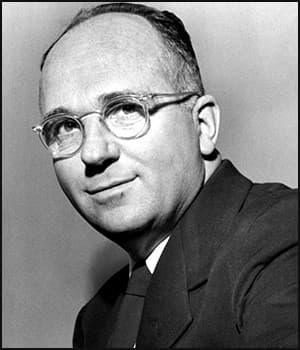
James A. Michener was an American author known for his historical fiction. His notable works include Hawaii, Chesapeake, Alaska, The Source, Poland, and Space, which often explore the history and culture of specific regions. Michener's storytelling is characterized by extensive research and a focus on the human experience within historical contexts.
Similar books
- The Source
James A. Michener
4.0 (11k) average on GoodreadsFantasyA deep dive into the history of Israel, from ancient times to the modern era, using an archaeological dig as a narrative device.
- Eat, Pray, Love
Elizabeth Gilbert
3.6 (1.5M) average on GoodreadsLifestyleA heartbroken writer leaves her conventional life for a year-long global search for pleasure in Italy, spiritual devotion in India, and unexpected love and balance in Bali.
- Wild: From Lost to Found on the Pacific Crest Trail
Cheryl Strayed
4.0 (615k) average on GoodreadsLifestyleAfter losing her mother and her marriage, a young woman impulsively hikes over a thousand miles of the Pacific Crest Trail alone, finding strength and healing in the unforgiving wilderness.
- Into Thin Air: A Personal Account of the Mount Everest Disaster
Jon Krakauer
4.2 (395k) average on GoodreadsLifestyleOn May 10, 1996, ambition and a sudden, violent storm turned Mount Everest into a deadly trap, leaving Jon Krakauer to tell the harrowing story of a disaster that took lives and shattered climbers' dreams.
- On The Road
Jack Kerouac
3.6 (349k) average on GoodreadsLifestyleDean Moriarty and Sal Paradise go on a wild, cross-country trip with jazz, drugs, and a desperate search for meaning on America's post-war roads.
- A Walk in the Woods: Rediscovering America on the Appalachian Trail
Bill Bryson
4.1 (346k) average on GoodreadsLifestyleBill Bryson humorously describes his ill-prepared yet insightful attempt to hike the Appalachian Trail, meeting unique characters and the raw beauty of the wilderness.






Enjoyed the summary?
A summary gives you the shape of the book. The book itself has the detail, the examples and the voice.
Find Hawaii on AmazonAs an Amazon Associate, BookBrief earns from qualifying purchases. How we're funded