
Synopsis
Covers the whole plot, including the ending.
- Difficulty
- Easy
- Pacing
- Moderate
- Mood
- Inspiring, Thought-provoking, Heartwarming, Reflective
- Read it if
- You enjoy stories about unlikely friendships, literary mentorships, and the journey of a young writer finding their voice.
- Skip it if
- You prefer fast-paced thrillers or stories without a strong focus on character development and the creative process.
Finding Forrester Plot Summary
Covers the whole plot, including the ending.
A Dare, a Break-in, and a Backpack Left Behind
Jamal Wallace, a sixteen-year-old student from the South Bronx, is good at basketball but secretly loves writing. He attends a local public high school where he often gets average grades to avoid standing out. One day, his friends dare him to break into the apartment of William Forrester, a reclusive man known as 'the Window' to neighborhood kids. Jamal enters Forrester's dimly lit apartment. Startled by Forrester's sudden appearance, Jamal runs away, accidentally leaving his backpack. The next day, he finds his backpack returned, but all his writings inside have been critiqued and edited with red pen.
A Scholarship, a New School, and a Literary Connection
Jamal's high scores on standardized tests, especially in English, combined with his basketball talent, earn him a scholarship to Mailor-Callow, a prestigious Manhattan prep school. He hesitates to leave his friends and familiar surroundings but accepts. On his first day, while in the school library, Jamal sees William Forrester watching him. This second meeting makes Jamal curious, and he confronts Forrester, asking why he edited his writings. This starts their unusual mentorship, as Forrester, a Pulitzer Prize-winning author who disappeared from public life years ago, begins to guide Jamal's writing.
The Mentor and the Student: Rules of Engagement
Jamal starts visiting Forrester's apartment regularly for secret writing sessions. Forrester, a gruff and eccentric man, sets rules: Jamal must never speak of their meetings, and he must never ask about Forrester's past or why he stopped writing. In their sessions, Forrester critiques Jamal's writing, pushing him to find his own voice and to 'write the first draft with your heart, then go back and rewrite with your head.' Forrester stresses originality and warns Jamal against plagiarism. He gives Jamal typewriters and books, creating an intense, unconventional learning environment that challenges Jamal more than his new school does.
Growing Pains at Mailor-Callow
At Mailor-Callow, Jamal faces challenges beyond schoolwork. He is a star player on the basketball team, but his coach, Coach Crawford, is demanding. His English teacher, Professor Robert Crawford (the coach's brother), initially doubts Jamal's writing talent, suspecting plagiarism due to his sudden improvement. Jamal becomes friends with Claire Spence, a kind classmate, and learns the social rules of the elite school. He constantly switches between his Bronx identity and Mailor-Callow's expectations, all while keeping his writing sessions with Forrester secret from everyone, including his family and new friends.
The Plagiarism Accusation
Professor Crawford assigns an essay for a writing contest. Jamal, inspired by a writing exercise with Forrester, submits a piece that uses some themes and phrases Forrester had used in his own exercises. Unknowingly, it echoes Forrester's Pulitzer-winning novel, 'Avalon Landing.' Professor Crawford, already suspicious of Jamal's writing skill, notices the similarities and accuses Jamal of plagiarism. Jamal is put on academic probation, risking his scholarship and basketball eligibility. He has to choose between revealing his secret mentorship with Forrester or facing expulsion.
Forrester's Reluctance and Jamal's Plea
Desperate, Jamal tells Forrester about the plagiarism accusation, explaining that his academic future and his place at Mailor-Callow are at risk. He asks Forrester to come forward and confirm their mentorship, clearing his name. However, Forrester, who has not left his apartment or been seen publicly for decades, is very reluctant. He explains that his reclusion comes from the pressure he faced after winning the Pulitzer, and the pain of losing his brother shortly after. He feels guilt and fear about returning to public view, even to help Jamal.
A Change of Heart and a Trip to the Game
Despite his initial refusal, Forrester eventually changes his mind. He takes a big step by leaving his apartment to attend one of Jamal's important basketball games. His presence, though mostly unnoticed, is a strong show of support for Jamal and a sign that he is starting to overcome his fear of the outside world. This act strengthens their bond and gives Jamal hope that Forrester might help clear his name. It also shows Forrester's growing fatherly feelings for Jamal, recognizing the importance of Jamal's future.
The Literary Contest and Forrester's Appearance
The Mailor-Callow writing contest arrives, and Jamal is expected to read an essay. As part of the plagiarism hearing, Jamal is pressured to apologize publicly, but he refuses. To everyone's surprise, William Forrester walks into the auditorium. He takes the stage, first reading from Jamal's disputed essay. Then he reveals that he himself is the author of 'Avalon Landing,' and that the essay's similarities are due to their shared writing exercises, not plagiarism. He then reads a new, deeply personal essay written by Jamal, 'A Season in Hell,' which moves the audience and clearly shows Jamal's unique voice and talent, clearing his name.
A Farewell and a Legacy
After the dramatic events at Mailor-Callow, Forrester tells Jamal that he has cancer and is near the end of his life. He plans to return to Scotland, his homeland, to live out his remaining days. He thanks Jamal for reigniting his passion for life and writing. Before leaving, Forrester leaves his apartment and all its contents — including his library and unpublished manuscripts — to Jamal. He asks Jamal to keep writing and to eventually publish Forrester's final, unfinished work. This act establishes Jamal as Forrester's literary heir and surrogate son.
Jamal's Future and Forrester's Enduring Influence
Two years later, Jamal is doing well at Mailor-Callow. He is a successful student and athlete, having overcome the plagiarism scandal. He receives a letter from Forrester's lawyer, saying Forrester has passed away in Scotland. The letter also includes Forrester's final manuscript, completed before his death, with a note encouraging Jamal to finish and publish it under his own name, if he chooses. Jamal, now a confident young man, continues to write, inspired by Forrester's mentorship. He has found his own voice and a path forward, shaped by his extraordinary friendship with the reclusive literary legend.
Finding Forrester Characters
Jamal Wallace
Protagonist
A gifted African-American scholar-athlete with a hidden passion for writing.
Jamal is a sixteen-year-old from the South Bronx who excels both academically and athletically, though he deliberately tries to fit in by not fully showcasing his intelligence. He possesses a keen observational eye and a natural talent for writing, which he initially keeps secret. His journey to Mailor-Callow and his mentorship with William Forrester force him to confront his fears of standing out, to embrace his intellect, and to define his own identity. He is loyal, resilient, and deeply empathetic, capable of seeing beyond Forrester's gruff exterior.
Relationships: William Forrester (Mentor and surrogate father figure); Claire Spence (Love interest and supportive friend); Terrell Wallace (Older brother and confidante); Professor Robert Crawford (Antagonist and English teacher)
William Forrester
Supporting/Mentor
A reclusive, Pulitzer Prize-winning author who becomes Jamal's literary mentor.
William Forrester is a brilliant but eccentric writer who achieved literary fame with his novel 'Avalon Landing' decades ago, only to retreat into self-imposed seclusion in his Bronx apartment. He is gruff, cynical, and fiercely private, haunted by past loss and the pressures of public life. Despite his harsh exterior, he possesses a deep love for language and a paternal affection for Jamal. He pushes Jamal to reach his full potential, eventually finding a renewed purpose and connection through their friendship. His reclusion is a coping mechanism for grief and anxiety.
Relationships: Jamal Wallace (Mentee and surrogate son); Professor Robert Crawford (Former student (implied))
Professor Robert Crawford
Antagonist
Jamal's skeptical English teacher at Mailor-Callow and Forrester's former student.
Professor Crawford is a highly educated and seemingly arrogant English teacher at Mailor-Callow. He holds a deep reverence for William Forrester's work but also harbors resentment and professional jealousy, having been a student of Forrester's during his brief teaching stint. He is quick to accuse Jamal of plagiarism, driven by a combination of suspicion towards Jamal's rapid improvement and perhaps an underlying insecurity about his own literary contributions. His rigid adherence to academic rules blinds him to Jamal's genuine talent and the true nature of his mentorship.
Relationships: Jamal Wallace (Accuser/teacher); William Forrester (Former student/literary idol (and rival)); Coach Crawford (Brother)
Claire Spence
Supporting
Jamal's kind and supportive girlfriend at Mailor-Callow.
Claire is a fellow student at Mailor-Callow who quickly befriends Jamal. She is intelligent, empathetic, and comes from a privileged background but is not defined by it. She genuinely cares for Jamal and stands by him, even when he faces accusations of plagiarism. She represents a positive influence and a source of emotional support for Jamal, helping him navigate the social and academic challenges of his new school. Her belief in Jamal's character and talent is unwavering.
Relationships: Jamal Wallace (Girlfriend and friend)
Terrell Wallace
Supporting
Jamal's older brother, a loyal and protective figure.
Terrell is Jamal's older brother, who works as a parking attendant. He is fiercely protective of Jamal and proud of his achievements, especially his basketball talent. While he doesn't fully understand Jamal's literary aspirations, he offers practical advice and unwavering family support. He represents Jamal's connection to his roots and the working-class community from which he comes. Terrell's presence highlights the contrast between Jamal's old and new worlds, and his concern for Jamal's well-being is always evident.
Relationships: Jamal Wallace (Brother)
Coach Crawford
Supporting
The demanding basketball coach at Mailor-Callow and Professor Crawford's brother.
Coach Crawford is the intense and results-driven basketball coach at Mailor-Callow. His primary focus is on winning games, and he sees Jamal as a crucial asset to his team. While supportive of Jamal's athletic talent, he is less understanding of his academic struggles, especially when they threaten Jamal's eligibility. He represents the pressure Jamal faces to conform to athletic expectations, sometimes at the expense of his other talents. He is Professor Crawford's brother, adding another layer to the institutional challenges Jamal faces.
Relationships: Jamal Wallace (Coach/player); Professor Robert Crawford (Brother)
Dr. Spence
Supporting
Claire's father and a board member at Mailor-Callow.
Dr. Spence is Claire's father and a well-respected member of the Mailor-Callow board. He is a pragmatic and fair-minded individual who listens to both sides of the plagiarism accusation. He is instrumental in ensuring that Jamal receives a fair hearing, even when Professor Crawford is determined to expel him. Dr. Spence represents the more reasonable and just elements within the Mailor-Callow administration, ultimately playing a role in Jamal's exoneration.
Relationships: Claire Spence (Father); Jamal Wallace (Acquaintance/supporter)
Ms. Joyce
Mentioned
Jamal's mother, a supportive figure in his life.
Ms. Joyce is Jamal and Terrell's mother. Although not a central character, she is mentioned as a loving and supportive parent who encourages Jamal's academic and athletic pursuits. Her presence underscores the family foundation from which Jamal comes, providing a sense of stability and warmth in his home life.
Relationships: Jamal Wallace (Mother); Terrell Wallace (Mother)
Finding Forrester Themes
Mentorship and the Power of Guidance
The film explores how mentorship can change lives through the relationship between Jamal and Forrester. Forrester, a reclusive literary genius, sees Jamal's talent and provides the guidance and challenges Jamal needs to develop his unique writing voice. This theme is central to the story, as Forrester's influence directly leads to Jamal's growth and eventual exoneration. Their bond shows how a mentor can teach skills, build confidence, and help a student navigate life's problems, as seen when Forrester leaves his reclusion to defend Jamal.
“You write your first draft with your heart. You rewrite with your head.”
Identity and Self-Discovery
Jamal's story is about finding himself. He deals with many identities: the basketball star, the quiet intellectual from the Bronx, and the aspiring writer at an elite prep school. He first hides his writing talent to fit in, but Forrester's mentorship pushes him to be true to himself. The plagiarism accusation forces him to publicly defend his identity as a writer. By the end, Jamal combines these different parts of himself, learning to be authentic and confident in his intellectual and creative abilities, rather than conforming to others' expectations or hiding his gifts.
“The hardest thing to do is to write something that is true.”
Prejudice and Stereotypes
The film addresses prejudice and stereotypes Jamal faces as a talented African-American student from the Bronx attending an elite, mostly white school. Professor Crawford's quick suspicion of Jamal's writing, despite his high test scores, shows implicit bias. The assumption that a student like Jamal could not produce such sophisticated work without cheating highlights societal stereotypes about race and class. Jamal constantly has to prove himself against these ideas, both in school and socially, making his eventual victory against the plagiarism charge a win over prejudice.
“What's the difference between a good writer and a bad writer? The bad writer is afraid to look like a fool.”
The Fear of Failure and Success
Both Jamal and Forrester struggle with fear. Jamal initially fears standing out and the scrutiny that comes with success, causing him to deliberately underperform in school. Forrester, on the other hand, fears public attention and the pressures that came with his Pulitzer Prize, leading to his decades-long reclusion after a personal tragedy. Their relationship helps each overcome their fears: Jamal learns to use his talent, and Forrester finds the courage to re-enter the world, even briefly, to defend his student. The film suggests that real growth often comes from facing these fears.
“He who writes for himself has a fool for a reader.”
The Nature of Writing and Creativity
The film celebrates writing and the creative process. Forrester teaches Jamal not just technique, but how to find one's voice, write from the heart, and the discipline of revision. He emphasizes originality, authenticity, and overcoming writer's block. The film shows writing as a powerful tool for self-expression, connection, and even vindication, as Jamal's final essay ultimately proves his talent and clears his name. It makes the creative process understandable while showing its impact.
“No thinking - that comes later. You must write your first draft with your heart, not your head. You can't think and write at the same time.”
Plot Devices & Literary Techniques
The Reclusive Genius
Forrester's mysterious seclusion creates intrigue and a unique mentorship dynamic.
William Forrester's self-imposed reclusion is a central plot device. It establishes him as an enigmatic figure, drawing Jamal's initial curiosity and setting the stage for their secret mentorship. His isolation highlights the film's themes of overcoming fear and the burden of fame, and it creates the dramatic tension when Jamal needs him to come forward. Forrester's apartment, filled with books and typewriters, becomes a sanctuary and a symbol of intellectual pursuit, inaccessible to the outside world, mirroring his own withdrawal.
The Plagiarism Accusation
A major conflict that forces Jamal to confront his fears and Forrester to break his reclusion.
The accusation of plagiarism serves as the primary external conflict driving the plot. It jeopardizes Jamal's future, forcing him to choose between protecting Forrester's secret and clearing his own name. This device highlights themes of prejudice, academic integrity, and the difficult choices faced when loyalty conflicts with self-preservation. Crucially, it acts as the catalyst for Forrester's eventual public appearance, forcing him to overcome his deepest fears for Jamal's sake, thus bringing their mentorship to its emotional climax.
The Backpack and the Red Pen
Symbolic objects initiating the mentorship and representing critical guidance.
Jamal's backpack, accidentally left in Forrester's apartment, is the inciting incident that begins their relationship. The red pen marks and critiques inside the backpack symbolize Forrester's initial, anonymous guidance and his discerning eye. Later, the red pen becomes a tool of their direct mentorship, representing the rigorous but ultimately beneficial process of revision and critical feedback. These objects underscore the accidental yet fated nature of their meeting and the direct, hands-on approach of Forrester's teaching.
The Window
A symbolic nickname for Forrester, representing his observational nature and eventual connection to the world.
Forrester's neighborhood nickname, 'the Window,' initially refers to his habit of observing the world from his apartment without being part of it. It symbolizes his reclusive nature and his role as a detached observer. As his relationship with Jamal develops, the 'window' takes on a new meaning: it's through Jamal that Forrester begins to reconnect with the outside world and eventually 'opens' himself up. The window, initially a barrier, ultimately becomes a metaphor for his gradual re-engagement and the perspective he offers Jamal.
Finding Forrester Quotes
“You write your first draft with your heart. You rewrite with your head.”
“The key to a woman's heart is an unexpected gift at an unexpected time.”
“Punch the keys, for God's sake!”
“You're the man now, dog!”
“Why is it the words we write for ourselves are always so much better than the words we write for others?”
“Sometimes the simple things are the most extraordinary.”
“You must write to your own drummer.”
“We walk away from our dreams afraid that we may fail or worse yet, afraid we may succeed.”
“The rest of the world might not see it, but I do.”
“You have a gift, but you also have a responsibility.”
“Writers write. That's what we do.”
“It's not about where you're from, it's about where you're going.”
“The first step to writing is reading.”
Quiz
10 questions on the plot and the characters. Each answer comes with a short explanation.
Question 1
What is the primary reason Jamal Wallace is recruited by the elite Manhattan prep school?
- His exceptional writing talent alone
- His academic brilliance and basketball skills
- His family connections to the school
- A recommendation from William Forrester
Show answer
B. His academic brilliance and basketball skills Jamal is recruited for his dual talents as a scholar-athlete—his academic potential and his basketball prowess—which the prep school values for both intellectual and athletic programs.
Question 2
How does Jamal first come into contact with William Forrester?
- Forrester seeks him out as a writing prodigy
- Jamal sneaks into Forrester's apartment on a dare
- They meet at a local library writing workshop
- Forrester tutors him at the prep school
Show answer
B. Jamal sneaks into Forrester's apartment on a dare Jamal invades Forrester's sheltered existence by sneaking into his South Bronx apartment, which leads to their initial, accidental encounter.
Question 3
What critical item does Jamal accidentally leave behind in Forrester's apartment?
- His basketball jersey
- A copy of Forrester's Pulitzer-winning novel
- His backpack full of personal writings
- A letter of recommendation for school
Show answer
C. His backpack full of personal writings Jamal's backpack, containing his secret writings, is left in Forrester's apartment, sparking Forrester's interest and leading to their mentorship.
Question 4
Why has William Forrester been a recluse for decades?
- He was traumatized by the critical failure of his second novel
- He chose self-imposed solitude after his early literary success
- He was exiled from the literary community for plagiarism
- A family tragedy forced him into isolation
Show answer
B. He chose self-imposed solitude after his early literary success Forrester withdrew from public life after writing his Pulitzer-winning classic, living as a mysterious recluse in the South Bronx until Jamal re-engages him.
Question 5
What role does Forrester play in Jamal's life after their meeting?
- A strict academic tutor focused on test scores
- A mentor who challenges and changes Jamal through writing
- A financial benefactor for Jamal's education
- A rival writer competing for recognition
Show answer
B. A mentor who challenges and changes Jamal through writing Forrester becomes Jamal's first fan and mentor, pushing him to develop his writing talent and personal growth, which profoundly impacts Jamal.
Question 6
How does the book illustrate the theme 'family isn't always what you're born with'?
- Jamal discovers long-lost relatives through Forrester
- Forrester legally adopts Jamal to provide stability
- Their mentor-mentee bond forms a chosen family across generations
- The prep school replaces Jamal's biological family entirely
Show answer
C. Their mentor-mentee bond forms a chosen family across generations The relationship between Jamal and Forrester transcends typical boundaries, creating a familial connection based on mutual respect, guidance, and shared passion, rather than blood ties.
Question 7
What challenge does Jamal face in balancing his identity at the prep school?
- Hiding his basketball skills to fit in academically
- Navigating expectations as an African-American scholar-athlete in a privileged environment
- Choosing between writing and a career in professional sports
- Concealing his friendship with Forrester from teachers
Show answer
B. Navigating expectations as an African-American scholar-athlete in a privileged environment Jamal must reconcile his talents and background with the elite, often presumptive setting of the prep school, dealing with stereotypes and personal integrity.
Question 8
What literary achievement is William Forrester known for prior to meeting Jamal?
- Winning the National Book Award for a debut novel
- Writing a Pulitzer Prize-winning classic novel four decades earlier
- Publishing a bestselling series of young adult books
- Being a famous literary critic for major newspapers
Show answer
B. Writing a Pulitzer Prize-winning classic novel four decades earlier Forrester's reputation stems from a Pulitzer-winning novel he wrote decades ago, after which he became a recluse, adding to his mythical status.
Question 9
In what way does Jamal 're-ignite the dreams' of Forrester?
- By convincing Forrester to publish a sequel to his classic novel
- Through his enthusiasm and talent, giving Forrester a reason to re-engage with writing and life
- By exposing Forrester's work to a new generation through social media
- Arranging a public speaking tour for Forrester at literary events
Show answer
B. Through his enthusiasm and talent, giving Forrester a reason to re-engage with writing and life Jamal's intrusion and shared passion for writing pull Forrester out of his solitude, inspiring him to mentor and potentially revive his own creative aspirations.
Question 10
What is a key outcome of Jamal and Forrester's relationship regarding societal perceptions?
- It proves that literary genius is inherited, not learned
- It challenges assumptions based on race, age, and background, fostering mutual growth
- It leads to a public scandal that discredits both characters
- It results in Forrester winning another Pulitzer for Jamal's work
Show answer
B. It challenges assumptions based on race, age, and background, fostering mutual growth Their bond forces them to look past skin color and suppositions, highlighting how genuine connections can transcend societal barriers and enrich both individuals.
Finding Forrester FAQ
What is 'Finding Forrester' about?
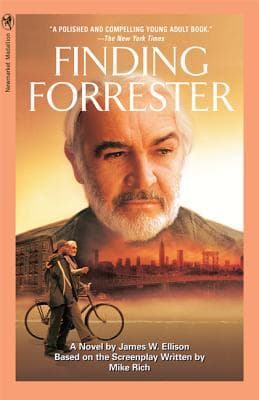
The novel follows Jamal Wallace, a 16-year-old African-American scholar-athlete from the South Bronx who secretly loves writing. After sneaking into the apartment of reclusive Pulitzer Prize-winning author William Forrester and accidentally leaving his backpack of writings behind, Jamal forms an unlikely mentorship with Forrester that challenges both of them to confront their fears and prejudices.
Why should I read 'Finding Forrester'?
The book explores powerful themes of mentorship across generations, racial and class divides, and the courage to pursue creative passions against societal expectations. Through the evolving relationship between Jamal and Forrester, it shows how authentic connections can transform lives and break down isolation.
What is the background/setting of 'Finding Forrester'?
Set in the South Bronx during winter, the story contrasts Jamal's urban neighborhood with the elite Manhattan prep school he attends on scholarship. Forrester's apartment serves as a symbolic sanctuary where writing and truth transcend the outside world's judgments and pressures.
What are the most memorable quotes?
Key quotes include Forrester's writing advice: 'You write your first draft with your heart, and you rewrite with your head.' Another is the thematic line: 'Family isn't always what you're born with—sometimes it's the people you find, sometimes it's the people who find you,' highlighting the book's core message about chosen connections.
What writing style does the author use?
James W. Ellison employs a straightforward, character-driven narrative with realistic dialogue that captures the voices of both a reclusive older writer and a vibrant teenager. The prose balances introspective moments with the tension of Jamal's dual life as a student-athlete and secret writer.
What minor details add significant meaning?
Forrester's collection of classic books and typewriter in his cluttered apartment symbolize his literary legacy and isolation. Jamal's backpack, left behind with his personal writings, becomes the physical catalyst for their relationship, representing vulnerability and trust.
What are some subtle foreshadowing moments?
Early scenes of Jamal hiding his writing talent foreshadow his eventual confrontation with accusations of plagiarism at school. Forrester's initial reluctance to engage with the world hints at past trauma that is later revealed to involve professional betrayal.
What unexpected character connections exist?
Beyond Jamal and Forrester, connections emerge between Jamal's basketball coach and Forrester's past, illustrating how the literary and athletic worlds intersect in unexpected ways. Jamal's friendships at his prep school also reveal hidden alliances and prejudices.
What are unspoken character motivations?
Forrester's reclusiveness stems from a deep fear of failure and betrayal after his early literary success, which he never articulates until pushed by Jamal. Jamal hides his writing to avoid standing out in his neighborhood and to protect himself from racial stereotypes at school.
What psychological complexities do characters exhibit?
Forrester displays a mix of genius and fragility, using gruffness to mask vulnerability from past disappointments. Jamal grapples with imposter syndrome, balancing his athletic identity with his intellectual passions while navigating microaggressions in predominantly white spaces.
What are the major emotional turning points?
Key moments include Jamal's decision to trust Forrester with his writing, Forrester's emergence from solitude to defend Jamal against plagiarism accusations, and the climax where both characters publicly acknowledge their bond, breaking their emotional barriers.
How do relationship dynamics evolve?
Jamal and Forrester's relationship shifts from suspicion to mutual respect, with Forrester transitioning from a critical mentor to a protective father figure. Jamal, in turn, helps Forrester reconnect with his creativity and the outside world, reversing their initial roles.
Which parts remain ambiguous or open-ended?
The exact details of Forrester's past betrayal and his decades of isolation are hinted at but not fully explained, leaving room for interpretation about what specifically drove him into seclusion. The future of Jamal and Forrester's relationship after the story ends is also left open.
What are controversial scenes or decisions?
Jamal's initial trespass into Forrester's apartment raises ethical questions about boundaries. Later, Forrester's harsh critique of Jamal's writing and the school's accusation of plagiarism spark debates about mentorship methods and racial bias in academic institutions.
'Finding Forrester' ending explained: how it ends & what it means
The story concludes with Forrester breaking his isolation to publicly support Jamal, symbolizing his redemption and Jamal's validation as a writer. This ending reinforces the theme that true family and mentorship can heal past wounds and inspire future growth, leaving both characters transformed.
Similar books
- The Catcher in the Rye
J.D. Salinger
3.8 (2.7M) average on GoodreadsYoung AdultExplores themes of youth, alienation, and authenticity through a distinct narrative voice.
- Ink and Bone
Rachel Caine
4.0 (23k) average on GoodreadsFantasyFocuses on the power of books and writing, with a young protagonist discovering literary passion.
- The Secret History
Donna Tartt
3.9 (2k) average on GoodreadsPoliticsBoth explore the transformative power of mentorship in academic settings. However, Tartt's novel delves into a darker, morally ambiguous, and intellectually snobbish environment, while 'Finding Forrester' offers a more idealized and inspirational portrayal of mentorship and academia, suitable for a YA audience.
- Harry Potter and the Sorcerer's Stone
J.K. Rowling
4.5 (7M) average on GoodreadsFantasyRescued from a miserable life under the stairs, an orphaned boy discovers he's a wizard destined for a magical school, where he uncovers a dangerous secret tied to the dark wizard who murdered his parents.
- The Hunger Games
Suzanne Collins
4.3 (6.4M) average on GoodreadsFantasyIn a future where children fight to the death on live television, Katniss Everdeen volunteers for the arena, turning a death sentence into a fight for survival and a spark of rebellion.
- To Kill a Mockingbird
Harper Lee
4.3 (4.5M) average on GoodreadsHistorical FictionIn the 1930s Jim Crow South, Harper Lee writes about racial injustice, moral growth, and the quiet courage of a lawyer father, Atticus Finch, as seen through his young daughter's eyes.




Enjoyed the summary?
A summary gives you the shape of the book. The book itself has the detail, the examples and the voice.
Find Finding Forrester on AmazonAs an Amazon Associate, BookBrief earns from qualifying purchases. How we're funded