
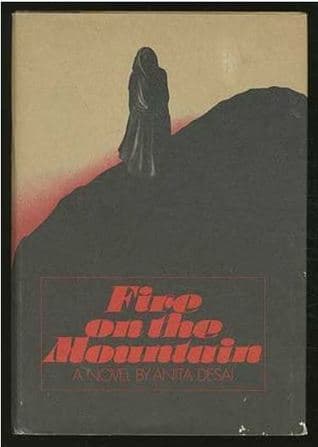
Synopsis
Covers the whole plot, including the ending.
- Difficulty
- Medium
- Pacing
- Slow
- Mood
- Atmospheric, Melancholy, Introspective, Dark
- Read it if
- You appreciate introspective literary fiction that delves into the psychological landscape of its characters, exploring themes of solitude, memory, and the impact of the past.
- Skip it if
- You prefer fast-paced plots, clear-cut resolutions, or stories with overtly optimistic tones.
Fire on the Mountain Plot Summary
Covers the whole plot, including the ending.
Carignano and the Solitude
Nanda Kaul, an elderly woman, lives alone in her bungalow, Carignano, in the Kasauli hills. After a life as a Vice-Chancellor's wife and raising a large family, she now enjoys quiet and freedom from home duties. She manages her house with her cook, Ram Lal, and spends her days watching nature, reading, and thinking. Her solitude is a chosen refuge, an escape from her past life's demands and expectations, which she often felt was a performance. She finds peace in the mountains' stark, wild beauty, preferring nature's company to people.
The Arrival of Raka
Nanda's quiet life is suddenly broken by a telegram announcing her great-granddaughter, Raka, will arrive soon. Raka's mother, Tara, is unwell and needs to recover, so Raka comes to Kasauli. Nanda is upset and resents this intrusion, seeing Raka's presence as a burden on her hard-won peace. She prepares for Raka's arrival out of duty, feeling the familiar weight of responsibility return. Raka, a thin, quiet, and wild child, arrives without much fuss, immediately showing she prefers exploring the hills to talking with her great-grandmother.
Raka's Wild Explorations
Raka, unlike most children, shows no interest in Nanda's attempts at home life or stories. Instead, she is drawn to Kasauli's wild environment. She spends her days walking through dry grass, climbing trees, exploring ravines, and watching insects and animals. Her explorations are solitary and intense, showing a deep, almost basic connection to nature. Nanda watches Raka's independence with a mix of confusion and respect, seeing a similar wild spirit in the child that she herself has, but had suppressed for years.
The Disconnect and Shared Traits
Despite being close, Nanda and Raka remain emotionally distant. Nanda tries to engage Raka with stories from her past, adding wild details to make her life seem more exciting than it was. However, Raka stays mostly quiet, preferring her own silent world. Still, a subtle connection begins to form. Both Nanda and Raka strongly prefer being alone, dislike social pleasantries, and are fiercely independent. Raka's strong self-reliance reflects Nanda's own wish to escape her past life's limits and demands.
Nanda's Fabricated Past
Feeling the need to justify her life and perhaps impress the indifferent Raka, Nanda starts telling elaborate tales about her past. She describes grand parties, important guests, and her husband's high position, making herself seem like a central, admired person. These stories are mostly made up, exaggerations of a life that was, in truth, often stifling and demanding. She describes living in a beautiful house, riding horses, and enjoying an easy, adventurous life, trying to make up for the unglamorous truth of her former existence as a dutiful, often resentful, wife and mother.
The Arrival of Ila Das
The fragile peace of Carignano is further broken by the arrival of Ila Das, Nanda's childhood friend. Ila Das is a clear opposite to Nanda's calm, isolated life; she is a cheerful, somewhat sad figure, still working as a social worker despite her age and poverty. Her arrival forces Nanda to face the harsh truths of their shared past. Ila Das, through her innocent talk, accidentally reveals the truth behind Nanda's made-up stories, showing the struggles and disappointments both women faced, including Nanda's husband's affairs and their general hard lives.
Ila Das's Tragic News
Ila Das tells her own tragic story: her family's financial ruin, her brothers' failures, and her ongoing, low-paid work as a social worker in rural areas, trying to teach villagers and fight child marriage. She then shares a terrible personal experience — she was recently raped and beaten by a villager on her way home. This confession deeply troubles Nanda, bringing the brutal reality of the world into her secluded haven. The incident highlights women's vulnerability and the widespread violence outside Nanda's carefully built sanctuary.
Nanda's Confrontation with Truth
Ila Das's horrific account makes Nanda face painful, hidden memories of her own life. The glamorous stories she told Raka and even believed herself begin to fall apart. She remembers her marriage's suffocating demands, her husband's infidelity, and her own emotional neglect. The idea of her contented, solitary life starts to crack, showing the deep resentments and unfulfilled desires that had long been hidden. She realizes her escape to Carignano was not just for peace, but also from a life of quiet desperation and pretense.
Raka's Act of Defiance
While Nanda is reeling from Ila Das's revelations, Raka, who has been quietly watching the adults, acts drastically. Driven by her wild spirit and perhaps sensing the underlying trouble, she purposefully sets fire to the dry grass and pine needles on the surrounding mountainside. The fire quickly spreads, burning the dry land. This act is Raka's ultimate expression of wildness and defiance, a destructive urge that mirrors Nanda's internal burning and emotional upheaval. It shows a rejection of domestic life and a powerful statement of a raw, untamed nature.
The Fire and the Aftermath
As the fire burns on the mountain, consuming the landscape, Nanda gets a phone call from Ram Lal, her cook. He tells her that Ila Das has been found dead, likely murdered by the same villager who attacked her. This news, coming amid the physical fire, completely shatters Nanda. The fire on the mountain becomes a literal and symbolic representation of her illusions' destruction, her carefully built solitude, and life's painful reality. Nanda is left alone, her world consumed by fire and tragedy, with her past's stark truth finally revealed.
Principal Figures
Nanda Kaul
Protagonist
An elderly woman seeking solitude after a life of performance.
Nanda Kaul is the central character, an elderly great-grandmother who has retreated to her secluded bungalow, Carignano, in Kasauli. She spent her life as the wife of a Vice-Chancellor, raising a large family, a role she often found stifling and performative. She craves solitude and freedom from familial demands, finding solace in nature and her own thoughts. She initially presents herself as strong and self-sufficient, but harbors deep-seated resentments and a history of emotional neglect. She fabricates stories about her past to protect herself from painful truths.
Relationships: Raka (great-grandmother and great-granddaughter, a complex mix of distant observation and unspoken understanding); Ila Das (childhood friend, a link to Nanda's past and the catalyst for her emotional unraveling); Ram Lal (loyal cook and household manager, a quiet presence in her solitary life); Tara (Nanda's granddaughter and Raka's mother, a distant, often unwell figure)
Raka
Supporting
Nanda's wild and independent great-granddaughter.
Raka is Nanda's great-granddaughter, a thin, quiet, and fiercely independent child. Sent to Kasauli due to her mother's illness, she shows little interest in conventional child-like activities or social interaction. Instead, she is drawn to the wild, untamed aspects of the mountain landscape, exploring ravines and observing nature with intense focus. She is a mirror to Nanda's own untamed spirit, albeit expressed more directly and destructively. Her taciturn nature and preference for solitude make her difficult to connect with, yet she profoundly impacts Nanda's emotional landscape.
Relationships: Nanda Kaul (great-granddaughter and great-grandmother, a distant but impactful relationship centered on observation and unspoken understanding)
Ila Das
Supporting
Nanda's impoverished and tragic childhood friend.
Ila Das is Nanda's childhood friend, a character who embodies the harsh realities of life that Nanda has tried to escape. She is perpetually cheerful despite her poverty, family misfortunes, and her difficult work as a social worker in rural areas. Her naivete and honesty inadvertently expose the fabricated nature of Nanda's past. Her tragic story of assault and murder serves as a brutal reminder of the world's cruelty and shatters Nanda's carefully constructed illusions of peace and safety. She represents a stark contrast to Nanda's privileged, albeit stifling, past.
Relationships: Nanda Kaul (childhood friends, a bond that is both comforting and ultimately destructive to Nanda's illusions)
Ram Lal
Supporting
Nanda's loyal and quiet cook.
Ram Lal is Nanda Kaul's cook and household manager at Carignano. He is a quiet, dutiful, and loyal presence in Nanda's solitary life. He efficiently manages the household, providing meals and maintaining the bungalow without much fuss or conversation. He observes the dynamics between Nanda and Raka with a silent understanding. His role is primarily functional, highlighting Nanda's continued reliance on others even in her pursuit of solitude, and he serves as the messenger for the final tragic news.
Relationships: Nanda Kaul (employer and employee, a long-standing and respectful working relationship)
Tara
Mentioned
Nanda's unwell granddaughter and Raka's mother.
Tara is Nanda Kaul's granddaughter and Raka's mother. She is mentioned as being unwell, which is the reason for Raka's stay with Nanda. She represents the distant, 'busier world' that Nanda has left behind, and her illness indirectly triggers the events of the novel by sending Raka to Carignano. Her presence is felt more through her absence and the impact of her condition on Raka's life.
Relationships: Nanda Kaul (granddaughter and grandmother, a distant but familial bond); Raka (mother and daughter, a relationship that is strained by Tara's illness and Raka's wild nature)
The Vice-Chancellor (Nanda's Husband)
Mentioned
Nanda's deceased husband, whose legacy shaped her life.
Nanda's deceased husband, the Vice-Chancellor, is a significant figure in her past, though never physically present. His position and expectations dictated much of Nanda's life, forcing her into a performative role as a dutiful wife and hostess. Nanda's embellishments of her past life often revolve around his status, highlighting her attempts to reconcile with or escape from the reality of their marriage, which was marked by his infidelity and her emotional neglect. He symbolizes the societal constraints Nanda sought to escape.
Relationships: Nanda Kaul (husband and wife, a complex and often painful marriage marked by infidelity and societal expectations)
Themes & Insights
Solitude vs. Loneliness
The novel explores chosen solitude and loneliness. Nanda Kaul seeks solitude in Carignano, seeing it as freedom from her past life's performance and family duties. She finds peace in quiet and nature. However, her talks with Raka and Ila Das show that her solitude also hides painful truths and unresolved feelings. Others' arrival breaks her peace, forcing her to confront the loneliness and emotional neglect beneath her 'solitary' life, ending in deep isolation after Ila Das's death. This theme is central to Nanda, as her 'solitude' is a fragile defense against a deeper, more devastating loneliness.
“She wanted to be left alone. She wanted to be left alone, at last. She had got what she had wanted – solitude. But solitude is an oppressive thing to a woman. It is a thing that will not let her alone.”
The Burden of the Past
The past strongly influences the characters, especially Nanda. Her life in Carignano is a reaction to her past as a Vice-Chancellor's wife, a role she found stifling. She tries to escape it by making up grand stories for Raka, but Ila Das's arrival forces her to face painful truths: her husband's affairs, her own emotional neglect, and her sacrifices. The past is not just memory but an active force that shapes Nanda's present and leads to her emotional breakdown, showing that truly escaping one's history is impossible.
“All her life she had been a provider, a giver, a nurturer. Now she was empty, dry, like a husk. And the past, like a torrent, came rushing in.”
Untamed Nature and Wildness
Untamed nature and wildness appear in the Kasauli landscape and Raka. The dry, rugged mountains, with their ravines and sparse plants, show a raw, untamed beauty. Raka, with her solitary explorations and dislike of home life, mirrors this wildness. She is untamed, preferring trees and insects to people. Her act of setting the mountain on fire is a powerful, destructive expression of this wildness, a force that cannot be controlled, and which connects with Nanda's own suppressed, wild spirit and her wish for freedom from social rules.
“She liked the untended garden, the wild, dry hills, the ravines and gorges, the wild animals that came to the water hole.”
Illusion vs. Reality
Nanda builds a world of illusions to escape her past's harsh realities. She tells Raka embellished stories of a glamorous life, creating a facade of contentment and self-sufficiency. This illusion breaks when Ila Das arrives. Ila, through her simple honesty and tragic experiences, reveals the painful truths of Nanda's marriage, her husband's affairs, and their shared history's struggles. The novel shows how these self-deceptions, while offering temporary comfort, eventually crumble under reality's weight, leading to a profound and devastating confrontation with truth. The fire on the mountain symbolizes these illusions burning away.
“She had invented it all to amuse Raka, but it was to amuse herself too. It was a game, a performance, a charade.”
Plot Devices & Literary Techniques
Setting as Metaphor
The Kasauli mountains reflect the characters' internal states.
The setting of Carignano in the Kasauli hills is not merely a backdrop but a powerful metaphor. The isolated, dry, and rugged mountain landscape mirrors Nanda's desire for solitude and her internal barrenness. The wildness of the hills reflects Raka's untamed nature and her destructive impulses. The eventual fire on the mountain serves as a literal and symbolic representation of the emotional conflagration within Nanda, the destruction of her illusions, and the harsh, unyielding reality of life and death. The environment directly influences and reflects the psychological states of the characters.
Foreshadowing
Subtle hints of impending tragedy and revelation.
The novel employs subtle foreshadowing to build tension and hint at the tragic climax. Nanda's initial dismay at Raka's arrival, her carefully constructed solitude, and her repeated attempts to escape the past all suggest that her peace is fragile and will eventually be shattered. The dry, flammable nature of the Kasauli landscape is frequently described, hinting at the eventual fire. Ila Das's vulnerability and her work in dangerous rural areas foreshadow her brutal assault and murder, creating a sense of impending doom that culminates in the novel's tragic ending.
Symbolism of Fire
Fire represents destruction, purification, and emotional intensity.
Fire is a potent symbol throughout the novel, culminating in the literal 'fire on the mountain.' Initially, it can represent Nanda's suppressed anger and the burning resentments from her past. Raka's act of setting the mountain ablaze symbolizes a destructive, untamed wildness, a rejection of order, and a parallel to the emotional conflagration within Nanda. The fire ultimately signifies the destruction of Nanda's illusions, the burning away of her carefully constructed peace, and the raw, unvarnished reality of suffering and death that she can no longer escape. It is both an end and a stark, painful revelation.
Dramatic Irony
The audience is aware of truths characters are not, or are unwilling to face.
Dramatic irony is present in Nanda's narrative of her past. The reader quickly understands that her glamorous stories are fabrications, designed to impress Raka and perhaps herself, while Nanda continues to present them as truth. This creates a tension as the reader anticipates the inevitable moment when these illusions will be challenged or shattered. Ila Das's arrival serves as the catalyst for this, as her naive honesty inadvertently exposes the harsh realities that Nanda has long suppressed, making Nanda's eventual emotional collapse more poignant.
Fire on the Mountain Quotes
“All her life she had been fleeing from the actual, and it had led her to this, a desert.”
“The house was a shell, and she was a hermit crab within it, perfectly suited.”
“Children, she thought, were like little animals, with instincts so clear, so unadulterated.”
“She had thought that by coming to Kasauli, she was escaping, not just from the plains, but from life itself.”
“It was her own creation, this silence, this emptiness, this freedom.”
“The wind was a constant presence, a reminder of the vast, indifferent spaces beyond the small confines of her life.”
“She had always been a storyteller, but the stories had been for others, not for herself.”
“Raka, with her fierce independence, her absolute detachment, was a mirror of her own deepest, most unacknowledged desires.”
“The past was a long, dusty corridor, full of closed doors.”
“She had wanted to be left alone, and now she was.”
“The fire was not in the mountain, but in her own heart, a slow, smouldering resentment that had finally burst into flame.”
“There was no one to tell, no one to hear, no one to understand.”
“She had thought the truth would set her free, but it had only left her more utterly exposed.”
“The mountain was indifferent. It had seen fires before. It would see them again.”
Quiz
10 questions on the plot and the characters. Each answer comes with a short explanation.
Question 1
Where has Nanda Kaul chosen to spend her last years alone?
- In a bustling city apartment
- In a secluded bungalow in Kasauli
- With her children in the real world
- Traveling across India
Show answer
B. In a secluded bungalow in Kasauli Nanda Kaul has chosen to spend her last years alone in the mountains in Kasauli, in a secluded bungalow called Carignano.
Question 2
What is the name of Nanda Kaul's secluded bungalow?
- The Hermitage
- Pine Crest
- Carignano
- Mountain View
Show answer
C. Carignano Nanda Kaul's secluded bungalow in Kasauli is named Carignano.
Question 3
Who unexpectedly arrives at Nanda Kaul's bungalow, disrupting her solitude?
- Her son
- Her old friend
- Her great-granddaughter, Raka
- A distant cousin
Show answer
C. Her great-granddaughter, Raka Nanda's great-granddaughter Raka is dispatched to Kasauli, breaking Nanda's solitude.
Question 4
How does Nanda Kaul initially react to Raka's arrival?
- With overwhelming joy and excitement
- With dismay at the break in her solitude
- With indifference, barely noticing her presence
- With immediate warmth and maternal affection
Show answer
B. With dismay at the break in her solitude Nanda is at first dismayed at this break in her preciously acquired solitude.
Question 5
Which of the following best describes Raka's personality, as observed by Nanda?
- Outgoing and talkative
- Fiercely taciturn and untamed
- Shy but eager to please
- Demanding and attention-seeking
Show answer
B. Fiercely taciturn and untamed Raka is described as 'fiercely taciturn' and 'quite untamed,' preferring nature to human company.
Question 6
What does Raka prefer to do in her afternoons?
- Read books indoors with Nanda
- Help Nanda with household chores
- Rambling over the mountainside and enjoying nature
- Playing games with other children in the village
Show answer
C. Rambling over the mountainside and enjoying nature Raka prefers the company of apricot trees and animals and spends her afternoons rambling over the mountainside.
Question 7
What is a key similarity noted between Nanda Kaul and Raka?
- Their love for cooking
- Their shared interest in social events
- Their untamed nature and preference for solitude
- Their desire to live in a busy city
Show answer
C. Their untamed nature and preference for solitude The text states, 'Fiercely taciturn, Raka is, like her, quite untamed. The two are more alike than they know.'
Question 8
What is the ultimate outcome of the summer Nanda and Raka spend together?
- A heartwarming reconciliation with Nanda's children
- Nanda finding renewed purpose in life
- Tragedy, as Nanda's old dependencies and wounds surface
- Raka deciding to move in permanently with Nanda
Show answer
C. Tragedy, as Nanda's old dependencies and wounds surface The summer ends 'inevitably, in tragedy' as Nanda's old, hidden dependencies and wounds come to the surface.
Question 9
What overarching theme does 'Fire on the Mountain' speak of, according to the description?
- The joy of new beginnings and family reunions
- The power of nature to heal all wounds
- The past and its unshakable hold over the present
- The challenges of raising children in a modern world
Show answer
C. The past and its unshakable hold over the present The description states, 'Marvellous yet restrained, Fire on the Mountain speaks of the past and its unshakable hold over the present.'
Question 10
Before moving to Kasauli, what role did Nanda Kaul play?
- A renowned artist
- A successful businesswoman
- Vice-Chancellor's wife and family matriarch
- A reclusive scholar
Show answer
C. Vice-Chancellor's wife and family matriarch The text mentions, 'Gone are the days when Nanda Kaul watched over her family and played the part of Vice-Chancellor's wife.'
Fire on the Mountain FAQ
What is the central premise of 'Fire on the Mountain'?
The novel centers on Nanda Kaul, an elderly woman who has retreated to a solitary life in her Kasauli bungalow, Carignano, seeking peace after a busy family life. Her carefully constructed solitude is disrupted when her great-granddaughter, Raka, is sent to live with her for the summer, forcing Nanda to confront her past and hidden truths.
Who are the main characters in the book?
The primary characters are Nanda Kaul, a former Vice-Chancellor's wife seeking isolation, and her great-granddaughter Raka, a fiercely independent and withdrawn child. Other characters, like Ila Das and Nanda's deceased husband, are significant through Nanda's memories and their impact on her past.
Where does the story primarily take place?
The story is set in the isolated hill station of Kasauli, specifically at Nanda Kaul's dilapidated bungalow, Carignano. The surrounding mountainside and apricot orchards also play a crucial role as Raka's preferred haunts, symbolizing wildness and escape.
What brings Raka to Nanda Kaul's home in Kasauli?
Raka is dispatched to Kasauli to stay with Nanda for the summer, likely due to her parents' inability or unwillingness to care for her, as hinted by her detached nature and the general neglect she seems to have experienced prior to her arrival.
How does Nanda initially react to Raka's arrival?
Nanda is initially dismayed and resistant to Raka's presence, viewing it as an unwelcome intrusion on her cherished solitude. She has carefully curated her isolated existence and sees Raka as a disruption to her hard-won peace.
What is the significance of the bungalow, Carignano, to Nanda Kaul?
Carignano represents Nanda's deliberate escape from her past life and the confines of her family. It is her sanctuary, a place where she hopes to shed the obligations and deceits of her former existence and live authentically, or at least in peace.
How does Raka's personality mirror Nanda's?
Raka is fiercely taciturn and untamed, preferring nature and solitude over human interaction, much like Nanda's chosen lifestyle. This shared independence and emotional detachment highlight a deeper, unspoken connection and a mirroring of their inner selves.
What 'old, hidden dependencies and wounds' surface for Nanda throughout the summer?
Nanda's idealized memories of her past life, particularly her marriage and her role as a mother, begin to unravel. She confronts the reality of her husband's infidelities, her own emotional neglect, and the facade she maintained, revealing a lifetime of unfulfilled desires and suppressed pain.
What is the role of Ila Das in Nanda's memories and the plot?
Ila Das is Nanda's childhood friend, whose tragic fate (rape and murder) is revealed towards the end of the novel. Her story serves as a stark contrast to Nanda's imagined serene past and acts as a catalyst for Nanda's final breakdown, shattering her illusions of a safe and ordered world.
How does Nanda's desire for solitude reflect a deeper psychological need?
Nanda's intense desire for solitude is a manifestation of her need to escape from a lifetime of performance, emotional suppression, and the pain of an unfulfilling marriage. It is an attempt to reclaim an authentic self, free from the demands and deceits of her past.
What psychological impact does Raka's presence have on Nanda?
Raka's presence, though initially unwelcome, slowly chips away at Nanda's carefully constructed detachment. Raka's own wildness and self-sufficiency force Nanda to confront her own similar traits and the emotional barrenness that has defined much of her life.
How does the author use the setting of Kasauli to reflect Nanda's internal state?
Kasauli's isolated, decaying beauty mirrors Nanda's own internal landscape—a place of sought-after peace that is ultimately tinged with decay and unspoken trauma. The wildness of the mountains also reflects the untamed, repressed aspects of both Nanda and Raka's personalities.
What does Raka's fascination with fire symbolize?
Raka's fascination with fire symbolizes destruction, rebellion, and a primal urge for change or cleansing. Her act of setting the forest ablaze at the end can be interpreted as an expression of her own untamed nature and a mirroring of the emotional conflagration within Nanda.
Is Nanda's retreat to Kasauli a success or a failure?
Nanda's retreat is ultimately a tragic failure. While she initially finds a semblance of peace, Raka's arrival and the revelation of Ila Das's death shatter her illusions, forcing her to confront the painful truths of her past, leading to her emotional collapse and the novel's tragic conclusion.
How does the ending, with the 'fire on the mountain,' contribute to the book's themes?
The literal 'fire on the mountain' ignited by Raka at the end symbolizes the destructive culmination of Nanda's internal turmoil and the burning away of her lifelong illusions. It represents the inescapable hold of the past and the tragic unraveling of her carefully constructed solitude, ending in catastrophe.
What is the significance of the title 'Fire on the Mountain'?
The title refers both to the literal fire Raka sets, symbolizing destruction and untamed nature, and metaphorically to the burning intensity of Nanda's suppressed emotions and the painful truths that erupt from her past, consuming her illusions and leading to tragedy.
Does the novel offer any hope or redemption for its characters?
The novel is largely devoid of traditional hope or redemption, ending in tragedy and despair for Nanda. While Raka's untamed spirit might suggest a different path, the immediate outcome for Nanda is a complete breakdown, emphasizing the inescapable grip of the past and its consequences.
How does Anita Desai use nature imagery in the novel?
Desai uses nature imagery, particularly the desolate Kasauli landscape, the apricot trees, and the wild mountainside, to reflect the characters' inner states. The untamed natural world mirrors Raka's wildness and Nanda's desire for an unburdened existence, while its harshness foreshadows the story's tragic end.
Similar books
- The House of the Spirits
Isabel Allende
4.2 (190k) average on GoodreadsFantasyExplores complex family dynamics and the weight of the past through generations of women.
- A Passage to India
E.M. Forster
3.7 (70k) average on GoodreadsHistorical FictionOffers a rich, atmospheric portrayal of India and delves into cultural and psychological alienation.
- The God of Small Things
Arundhati Roy
3.9 (244k) average on GoodreadsLiterary FictionFeatures lush prose, a strong sense of place, and themes of childhood trauma and societal constraints in India.
- Nectar In A Sieve
Kamala Markandaya
3.6 (9k) average on GoodreadsHistorical FictionNectar in a Sieve primarily focuses on external hardships, poverty, and the resilience of a rural Indian family. In contrast, Fire on the Mountain delves deeply into the internal psychological landscape of an individual, Nanda Kaul, prioritizing her emotional and mental state over overt societal struggles. While both depict aspects of Indian life, Markandaya's novel is more socio-economic, whereas Desai's is intensely psychological.
- The Old Man and the Sea
Ernest Hemingway
3.8 (831k) average on GoodreadsLiterary FictionA Cuban fisherman's long struggle with a giant marlin becomes a story of endurance and dignity, now retold for young adults with illustrations, phonetic guides, and writing prompts in Traditional Chinese.
- One Hundred Years of Solitude
Gabriel García Márquez
4.1 (753k) average on GoodreadsLiterary FictionThrough the multi-generational story of the Buendía family, a mythical town deals with the repeating patterns of time, love, and solitude, as the extraordinary mixes with the ordinary.





Enjoyed the summary?
A summary gives you the shape of the book. The book itself has the detail, the examples and the voice.
Find Fire on the Mountain on AmazonAs an Amazon Associate, BookBrief earns from qualifying purchases. How we're funded