

Synopsis
Covers the whole plot, including the ending.
- Difficulty
- Medium
- Pacing
- Moderate
- Mood
- Ambitious, Dramatic, Intriguing, Historical
- Read it if
- You enjoy intricate political thrillers, multi-decade sagas of ambition, or behind-the-scenes looks at the British parliamentary system.
- Skip it if
- You prefer fast-paced action over political maneuvering, or are not interested in detailed historical fiction about UK politics.
First Among Equals Plot Summary
Covers the whole plot, including the ending.
The New Intake of 1964
In 1964, four distinct individuals are elected to the House of Commons. Simon Kerslake, a brilliant Conservative from a privileged background, wins a by-election. Raymond Gould, a working-class Labour politician with a sharp mind, secures his seat in a mining constituency. Charles Seymour, an Old Etonian and Conservative, is elected from a safe rural seat, carrying the weight of family tradition. Andrew Fraser, a pragmatic and intelligent Labour MP, wins a challenging Scottish seat. Their paths immediately cross in Parliament, starting a decades-long rivalry and complex relationship as they each want to be Prime Minister.
Early Parliamentary Careers and Personal Lives
As the four MPs begin their parliamentary journeys, their personal lives mix with their political careers. Simon Kerslake marries Elizabeth and quickly establishes himself as a rising star within the Conservative Party, known for his economic skill. Raymond Gould, despite his humble origins, is a strong debater and a fierce advocate for his working-class constituents, marrying the steadfast Margaret. Charles Seymour, with his aristocratic background, struggles initially to connect with the common man but relies on his political lineage and his supportive wife, Fiona. Andrew Fraser, a more reserved but equally ambitious Labour MP, navigates early political challenges with his wife, Philippa, and focuses on policy and strategic thinking.
The First Bids for Leadership
The political landscape shifts, offering the first real tests of the four men's ambitions. Simon Kerslake gains recognition for his economic proposals and is considered for junior ministerial roles. Raymond Gould builds a reputation as a powerful speaker and a champion of socialist causes, making him popular on the Labour backbenches. Charles Seymour, using his connections and social standing, also begins to climb the Conservative ranks, though more slowly than Kerslake. Andrew Fraser, though less flashy, quietly builds support and shows a keen understanding of parliamentary procedure, positioning himself for future influence. Their initial moves are closely watched by their rivals, setting the stage for future confrontations.
Challenges and Setbacks
The path to power is full of personal and political challenges. Simon Kerslake faces scrutiny over his financial dealings and endures personal heartache. Raymond Gould's outspoken nature sometimes alienates potential allies, and he grapples with the demands of public life on his family. Charles Seymour, despite his privileged background, experiences political rejection and struggles to gain widespread popularity beyond his traditional base. Andrew Fraser, while generally steady, encounters moments of doubt and strategic miscalculation. These setbacks force each man to re-evaluate their approaches and strengthen their resolve, often with the unwavering support, or sometimes the quiet suffering, of their wives.
The Leadership Contests Begin
As the years pass, opportunities for leadership begin to emerge within both major parties. Simon Kerslake, having served in various capacities, makes a strong bid for the Conservative leadership, showing his experience and vision for the country. He faces stiff competition, and the contest is a grueling one, testing his political mettle and his ability to rally support. On the Labour side, Raymond Gould, having cemented his reputation as a formidable figure, also eyes the top position, believing his working-class roots and principles make him the ideal leader. Andrew Fraser, ever the strategist, often plays a role behind the scenes in these contests, either supporting or subtly opposing his rivals, while Charles Seymour continues to build his influence within the Conservative Party, though not yet ready for the top job.
Shifting Alliances and Betrayals
The relentless pursuit of power inevitably leads to shifting alliances and occasional betrayals. Simon Kerslake and Charles Seymour, though both Conservatives, find themselves in competition, sometimes subtly undermining each other. Raymond Gould and Andrew Fraser, while both Labour, also have different ideological approaches and personal ambitions that lead to friction and strategic maneuvering. Friendships are strained, and political expediency often takes precedence over loyalty. Wives, too, become entangled in these complex webs, offering support, advice, or sometimes suffering the consequences of their husbands' choices. Each man learns that trust is fragile in Westminster, and that yesterday's ally can be tomorrow's rival.
The Road to Downing Street
Decades into their careers, the ultimate prize, 10 Downing Street, seems within reach for one of the protagonists. Simon Kerslake, having endured previous leadership bids and consolidated his position within the Conservative Party, launches a final, determined campaign for the leadership. His experience, economic policies, and ability to unite different factions of the party position him as a strong contender. Similarly, Raymond Gould, after years of tireless work and building a loyal following, sees an opening for the Labour leadership, believing he can finally lead the party to victory. The narrative intensifies as the political stakes reach an all-time high, with each man giving everything to achieve their lifelong ambition.
A Close-Run Thing
A general election looms, and the outcome is incredibly close, with the fate of the nation and the careers of the four men hanging in the balance. Simon Kerslake leads the Conservative Party, presenting a vision of economic stability and national pride. Raymond Gould, leading Labour, champions social justice and equality, galvanizing his base. Charles Seymour and Andrew Fraser play roles in their respective parties' campaigns, either as senior ministers, shadow ministers, or strategists. The campaign is grueling, marked by intense debates, media scrutiny, and unexpected twists, as the public decides who will govern the country, and ultimately, which of these ambitious men will achieve their ultimate goal.
The Ultimate Victory
After years of relentless ambition, political maneuvering, and personal sacrifice, one of the four principal characters finally achieves the ultimate prize: the Prime Ministership. The election results are announced, and the victor is declared, leading their party to a narrow but decisive victory. This moment is the culmination of decades of effort, the realization of a lifelong dream. The narrative focuses on the immediate aftermath of this achievement, the reactions of the victor's family and supporters, and the quiet reflections of the defeated rivals, who must now come to terms with their own political futures and the success of their long-time competitor. The book explores the feeling of triumph and the heavy weight of responsibility that comes with leading a nation.
The Weight of Office
The newly appointed Prime Minister immediately confronts the immense pressures and challenges of leading the country. From international crises to domestic policy debates, the weight of office is clear. The narrative explores the Prime Minister's first decisions, the formation of the new government, and the ongoing interactions with the now-defeated rivals, who remain in Parliament as opposition figures or backbenchers. The personal cost of the highest office becomes evident, impacting family life and demanding unwavering dedication. The story highlights that achieving the top job is only the beginning; the real test lies in the ability to govern effectively and navigate the complex, often unforgiving, world of national politics.
Principal Figures
Simon Kerslake
Protagonist
The ambitious and intelligent Conservative MP from a privileged background.
Simon Kerslake is a highly intelligent and charismatic Conservative politician. Born into a comfortable, well-connected family, he possesses a keen intellect, particularly in economics, and a natural ability to command attention. He is driven by a deep-seated ambition to lead and genuinely believes in his capacity to improve the country. While generally principled, he is not above strategic maneuvering to advance his career. His journey is marked by both political triumphs and personal struggles, including financial scrutiny and marital challenges, which temper his ambition with a degree of resilience.
Relationships: Elizabeth (Wife, supportive but sometimes strained by his ambition.); Raymond Gould (Chief political rival, ideological opponent.); Charles Seymour (Conservative colleague and rival, initially an ally.); Andrew Fraser (Political opponent, respected adversary.)
Raymond Gould
Protagonist
The passionate and principled working-class Labour MP.
Raymond Gould is a formidable Labour politician, emerging from a working-class background in a mining community. He is an exceptionally gifted orator, known for his passionate speeches and unwavering commitment to socialist ideals. Gould is driven by a genuine desire to represent the common man and fight for social justice, often making him a powerful, if sometimes uncompromising, figure. His ambition is fueled by a belief in his own vision for a fairer society, and he is willing to fight fiercely for his convictions. His journey highlights the challenges of maintaining principles in the pragmatic world of politics.
Relationships: Margaret (Wife, steadfastly supportive and a grounding force.); Simon Kerslake (Chief political rival, ideological opponent.); Andrew Fraser (Labour colleague, sometimes an ally, sometimes a strategic competitor.); Charles Seymour (Conservative opponent.)
Charles Seymour
Protagonist
The aristocratic Conservative MP, burdened by family legacy.
Charles Seymour embodies the traditional, aristocratic wing of the Conservative Party. An Old Etonian, he carries the weight of a long political family lineage and feels a strong sense of duty. While initially less charismatic than Kerslake or Gould, he possesses a shrewd political mind and an ability to navigate the party's inner circles. His ambition is often tempered by a desire to uphold tradition and his family's honor. He struggles at times to connect with the wider electorate, but his resilience and strategic thinking allow him to remain a significant force within the party, often vying for influence with Simon Kerslake.
Relationships: Fiona (Wife, elegant, politically astute, and supportive.); Simon Kerslake (Conservative colleague and rival, a complex relationship of competition and occasional alliance.); Raymond Gould (Political opponent.)
Andrew Fraser
Protagonist
The pragmatic and strategic Scottish Labour MP.
Andrew Fraser is the most pragmatic and strategically minded of the four Labour MPs. Hailing from Scotland, he is intelligent, reserved, and less prone to the fiery rhetoric of Raymond Gould. Fraser is a meticulous planner and a skilled negotiator, often working behind the scenes to build alliances and influence policy. His ambition is quiet but persistent, driven by a belief in effective governance and a desire to see his party succeed. He is a keen observer of human nature and political dynamics, making him a formidable opponent or a valuable ally, depending on the situation. He often serves as a tactical counterpoint to Gould's more ideological approach.
Relationships: Philippa (Wife, provides stability and intellectual companionship.); Raymond Gould (Labour colleague, complex relationship of strategic alliance and occasional rivalry.); Simon Kerslake (Political opponent, respected rival.)
Elizabeth Kerslake
Supporting
Simon Kerslake's supportive but increasingly independent wife.
Elizabeth Kerslake is Simon's wife, a woman of intelligence and grace who initially dedicates herself to supporting her ambitious husband. She is perceptive and often provides Simon with valuable insights and emotional support. As Simon's political career progresses, Elizabeth experiences the immense pressure and sacrifices demanded by public life, leading her to develop her own interests and a stronger sense of independence. Her character arc reflects the personal cost of political ambition on family life, and she often grapples with the compromises required to stay married to a man obsessed with power.
Relationships: Simon Kerslake (Husband, a relationship tested by ambition and public scrutiny.)
Margaret Gould
Supporting
Raymond Gould's steadfast and loyal wife.
Margaret Gould is Raymond's devoted wife, a woman of strength and unwavering loyalty. From a similar working-class background, she understands Raymond's motivations and supports his political endeavors with quiet determination. Margaret provides a crucial grounding presence for Raymond, often acting as his moral compass and reminding him of his roots. She endures the hardships of political life with stoicism and resilience, offering a consistent source of comfort and stability amidst the turbulent world of Westminster. Her presence highlights the personal sacrifices made by those behind the politicians.
Relationships: Raymond Gould (Husband, a deeply loving and supportive relationship.)
Fiona Seymour
Supporting
Charles Seymour's elegant and politically savvy wife.
Fiona Seymour is Charles's elegant and socially adept wife. Coming from a similar aristocratic background, she is well-versed in the social intricacies of the political world and uses her connections to support Charles's career. Fiona is intelligent and politically astute, often offering Charles strategic advice and acting as a gracious hostess for political gatherings. She is fiercely loyal to her husband and his family's legacy, understanding the importance of maintaining appearances and navigating the complex social circles of power. Her character provides a glimpse into the traditional, upper-class side of British politics.
Relationships: Charles Seymour (Husband, a partnership built on shared ambition and social standing.)
Philippa Fraser
Supporting
Andrew Fraser's intelligent and often intellectual wife.
Philippa Fraser is Andrew's intelligent and thoughtful wife. She shares Andrew's more reserved and intellectual nature, often engaging in political discussions and offering keen insights. Philippa provides Andrew with intellectual companionship and a stable home life, understanding the demands of his political career without seeking the spotlight herself. She is less outwardly emotional than some of the other wives, but her quiet strength and perceptive observations are a valuable asset to Andrew. Her character underscores the importance of intellectual partnership in a political marriage.
Relationships: Andrew Fraser (Husband, a partnership based on mutual respect and intellectual connection.)
Themes & Insights
The Corrupting Nature of Ambition
The relentless pursuit of the Prime Ministership drives the four protagonists, often leading them to make difficult moral compromises. Simon Kerslake faces scrutiny over financial dealings, Raymond Gould's principles sometimes alienate allies, and Charles Seymour's ambition can make him ruthless. Andrew Fraser, while pragmatic, is not immune to strategic maneuvering. The narrative consistently shows how the desire for power tests personal integrity and family loyalties, forcing characters to weigh their ideals against the realities of political advancement. For example, alliances shift and friendships are strained when leadership contests arise, showing that the ultimate prize often comes at a high personal cost.
“In politics, there are no permanent friends, only permanent interests.”
The Personal Cost of Public Life
The book portrays the sacrifices made by politicians and their families. The wives of the four MPs – Elizabeth, Margaret, Fiona, and Philippa – each experience the emotional strain, neglect, and public scrutiny that come with being married to an ambitious politician. Marriages are tested, children often grow up without constant parental presence, and personal lives become fodder for media speculation. Simon Kerslake's wife, Elizabeth, for instance, struggles with her own identity as her husband's career consumes their lives. This theme highlights the often-unseen toll that the pursuit of power takes on individuals and their closest relationships.
“The higher you climb, the harder the wind blows, and the lonelier it gets.”
Class and Opportunity in British Politics
The novel explores how social class influences political careers in Britain. Simon Kerslake and Charles Seymour benefit from privileged, establishment backgrounds, giving them networks and an easier path to advancement, though they still face challenges. Raymond Gould, from a working-class mining community, must overcome significant social barriers, relying on his intellect and speaking skills to rise. Andrew Fraser, while Labour, is portrayed as more middle-class and intellectual. This theme highlights the differing starting points and obstacles faced by individuals based on their social origins, and how these backgrounds shape their ideologies, alliances, and public perception within politics.
“He knew that for every Old Etonian who slipped effortlessly into the Commons, there were a hundred like him who had to fight for every inch.”
The Nature of Leadership
The book examines the varied qualities needed for effective leadership, looking at different styles through its protagonists. Simon Kerslake shows charismatic, economically astute leadership; Raymond Gould represents principled, populist leadership; Charles Seymour, traditional, establishment leadership; and Andrew Fraser, strategic, pragmatic leadership. The narrative constantly questions what truly makes a great leader – is it charisma, integrity, strategic brilliance, or a combination? It shows that the path to power often requires a blend of these, along with resilience and a willingness to adapt, as each character learns from their successes and failures on their journey to the top.
“A leader must be able to inspire, but also to calculate. To dream, but also to deliver.”
Plot Devices & Literary Techniques
Parallel Journeys
The simultaneous tracking of four distinct political careers.
The novel employs the device of parallel journeys by following the political careers of Simon Kerslake, Raymond Gould, Charles Seymour, and Andrew Fraser from their entry into Parliament in 1964. This allows for a comprehensive look at the political landscape from multiple perspectives – both Conservative and Labour, and from different social backgrounds. By charting their concurrent rises, rivalries, and interactions over decades, the device creates a sense of continuous competition and suspense, as readers are left to wonder which of the 'first among equals' will ultimately achieve the premiership. It also highlights the cyclical nature of political ambition and the constant jockeying for position.
Time Jumps and Historical Context
Spanning decades to cover significant political and social shifts.
The narrative utilizes significant time jumps, often covering several years between chapters or sections, allowing it to span over three decades of British political history. This device enables the author to integrate real historical events and political figures (often thinly veiled) into the fictional plot, grounding the story in a realistic context. It also shows the evolution of the characters' careers and personal lives against a backdrop of changing social attitudes, economic challenges, and shifts in political ideology, emphasizing the long game played in the pursuit of power and how external events influence individual trajectories.
The Wives' Perspectives
Exploring the political world through the eyes of the protagonists' spouses.
A significant plot device is the inclusion of the wives' perspectives (Elizabeth, Margaret, Fiona, and Philippa). While not always central, their chapters or sections provide crucial insights into the personal toll of political life. They offer a grounded, often emotional, counterpoint to the political machinations of their husbands. This device humanizes the politicians, revealing their vulnerabilities and the sacrifices made by their families. It also broadens the scope of the story beyond the confines of Westminster, showing how political ambition reverberates through private lives and shapes the identities of those connected to power.
The 'Race' Metaphor
The consistent framing of the pursuit of power as a competitive race.
Throughout the novel, the ambition to become Prime Minister is consistently framed as a 'race,' a competition with clear winners and losers. This metaphor reinforces the high stakes and competitive nature of political life. It helps to build tension as the protagonists vie for positions, leadership bids, and ultimately, the top job. The language used often reflects this, with characters 'running' for leadership, 'gaining ground,' or 'falling behind.' This device makes the political struggle more immediate and dramatic, providing a clear narrative drive towards the ultimate goal of one man becoming 'first among equals.'
First Among Equals Quotes
“The price of power, he reflected, was eternal vigilance. And occasional ruthlessness.”
“A man without ambition is like a ship without a rudder.”
“In politics, there are no permanent friends and no permanent enemies, only permanent interests.”
“The ballot box is more powerful than the bullet.”
“You can always tell a true leader by the quality of the enemies he makes.”
“Compromise is not a dirty word, it is the art of government.”
“Luck, like opportunity, often knocks only once.”
“The greatest danger in politics is to believe your own propaganda.”
“History is not made by those who stand on the sidelines.”
“Every man has his price, it's just a matter of finding out what it is.”
“The only thing more dangerous than a politician with a secret is a journalist who knows it.”
“To govern is to choose, and to choose is to displease.”
“True leadership is not about being popular, it's about doing what is right, even when it's unpopular.”
“The past is a foreign country; they do things differently there.”
Quiz
10 questions on the plot and the characters. Each answer comes with a short explanation.
Question 1
Which of the four main characters is initially portrayed as the most aristocratic and traditional Conservative MP, often clashing with others due to his background?
- Simon Kerslake
- Charles Seymour
- Raymond Gould
- Andrew Fraser
Show answer
B. Charles Seymour Charles Seymour is depicted as coming from a very privileged, aristocratic background, which often influences his political views and interactions.
Question 2
What significant personal tragedy does Raymond Gould face early in his political career that deeply affects him?
- His wife leaves him for another politician.
- He is involved in a major financial scandal.
- His daughter dies in a car accident.
- He loses his seat in a snap election.
Show answer
C. His daughter dies in a car accident. Raymond Gould's daughter's death in a car accident is a pivotal and tragic event that shapes his character and motivations.
Question 3
Which of the following describes the political party Andrew Fraser represents?
- Conservative Party
- Labour Party
- Liberal Democrats
- Scottish National Party
Show answer
B. Labour Party Andrew Fraser is the Labour MP among the four main protagonists, representing a working-class background.
Question 4
What is the primary motivation driving Simon Kerslake's political ambitions throughout the novel?
- To dismantle the welfare state.
- To avenge a past injustice.
- To achieve the highest office and implement his vision for the country.
- To expose corruption within the government.
Show answer
C. To achieve the highest office and implement his vision for the country. Simon Kerslake is consistently portrayed as driven by a genuine desire to become Prime Minister and lead the country according to his principles.
Question 5
What specific event involving a vote of no confidence significantly impacts the political landscape and the characters' careers?
- A vote of no confidence against the Leader of the Opposition, leading to a leadership challenge.
- A vote of no confidence in the Prime Minister, which nearly brings down the government.
- A vote of no confidence in the Speaker of the House, leading to his resignation.
- A vote of no confidence within a specific party's shadow cabinet.
Show answer
B. A vote of no confidence in the Prime Minister, which nearly brings down the government. The book features a dramatic vote of no confidence in the sitting Prime Minister, creating immense tension and political maneuvering among the characters.
Question 6
Which character, despite his humble origins, proves to be a shrewd and pragmatic politician, often willing to make difficult choices for career advancement?
- Charles Seymour
- Simon Kerslake
- Raymond Gould
- Andrew Fraser
Show answer
C. Raymond Gould Raymond Gould, despite his personal tragedies, is depicted as highly intelligent and politically astute, making calculated decisions to further his career.
Question 7
What role does the media, particularly newspapers, play in the lives and careers of the MPs in the novel?
- It is largely irrelevant, with politicians relying on internal party communications.
- It is a powerful force, capable of making or breaking careers through endorsement or scandal.
- It primarily focuses on international affairs, ignoring domestic politics.
- It serves merely as a platform for official government announcements.
Show answer
B. It is a powerful force, capable of making or breaking careers through endorsement or scandal. The media, especially the press, is shown to wield significant power, influencing public opinion and often being manipulated or feared by the politicians.
Question 8
What is the ultimate outcome for the four main characters at the end of the novel, regarding the Prime Minister's office?
- All four achieve the position at different times.
- None of them ever reach the top office.
- Only one of them successfully becomes Prime Minister.
- They form a coalition government, sharing the power.
Show answer
C. Only one of them successfully becomes Prime Minister. The central premise of the book is the race for the ultimate goal, and only one of the four main protagonists ultimately achieves the office of Prime Minister.
Question 9
Which character faces a scandal involving an extramarital affair that threatens to derail his political aspirations?
- Andrew Fraser
- Raymond Gould
- Simon Kerslake
- Charles Seymour
Show answer
C. Simon Kerslake Simon Kerslake's affair with Fiona Seymour is a major plot point, creating personal and political tension that nearly costs him his career.
Question 10
What underlying theme explores the personal sacrifices and compromises required to reach the pinnacle of political power?
- The importance of unwavering moral integrity above all else.
- The idea that political success is solely based on merit and hard work.
- The erosion of personal relationships and ethical boundaries in pursuit of ambition.
- The ease with which politicians can balance family life and public service.
Show answer
C. The erosion of personal relationships and ethical boundaries in pursuit of ambition. The novel consistently highlights how the relentless pursuit of power often leads to strained family relationships, moral compromises, and personal sacrifices for the characters.
First Among Equals FAQ
What is the central premise of 'First Among Equals'?
'First Among Equals' follows the political careers of four ambitious Members of Parliament – Simon Kerslake, Charles Seymour, Raymond Gould, and Andrew Fraser – from their election in 1964 through three decades. The core narrative tracks their individual struggles, alliances, and rivalries as each man, with the support or hindrance of their families, strives to achieve the ultimate goal of becoming Prime Minister.
Who are the four primary protagonists vying for the Prime Ministership?
The four main characters are Simon Kerslake, a Conservative from a working-class background; Charles Seymour, an aristocratic Conservative with a strong sense of duty; Raymond Gould, a brilliant and pragmatic Labour politician; and Andrew Fraser, a charismatic Scottish Labour MP. Their diverse backgrounds and political ideologies fuel much of the novel's conflict and character development.
How do the wives of the main characters influence their political journeys?
The wives play significant roles, often acting as crucial support systems or sources of tension. Elizabeth Kerslake provides steadfast support and astute social navigation for Simon; Fiona Seymour grapples with the pressures of public life and her husband's ambition; Kate Gould is a fiercely independent and intellectual woman who challenges Raymond; and Jean Fraser struggles with Andrew's frequent absences and ambition, leading to personal sacrifices.
What historical events and political climate serve as the backdrop for the novel?
The novel is set against the turbulent political landscape of Britain from the 1960s to the 1990s, incorporating real historical events like general elections, leadership challenges within parties, economic crises, and social changes. These events directly impact the characters' careers, forcing them to adapt to evolving party lines and public sentiment.
Without revealing the ending, what is the ultimate ambition each protagonist shares?
Each of the four main protagonists – Simon Kerslake, Charles Seymour, Raymond Gould, and Andrew Fraser – is driven by the singular, all-consuming ambition to become the Prime Minister of the United Kingdom. This shared goal fuels their competition, their temporary alliances, and their personal sacrifices throughout their decades-long careers in Parliament.
Are there any subtle hints about the eventual Prime Minister planted early in the narrative?
Archer subtly weaves in details about the eventual Prime Minister, often showcasing their resilience, strategic thinking, and ability to navigate setbacks. For instance, early successes in debates or unexpected acts of political courage might foreshadow their long-term viability, while others might face early, seemingly insurmountable challenges that test their mettle.
How does the 'missing' fifth candidate or the idea of an outsider factor into the political game?
While the novel focuses on four main contenders, there are often mentions of other powerful figures within the parties or external events that could derail any of the main four. These 'outsiders' or unforeseen circumstances represent the unpredictable nature of politics, reminding the reader that the race isn't just between the protagonists but also against the broader political current and potential dark horses.
What is the significance of the recurring theme of 'luck' versus 'skill' in the characters' advancement?
The novel frequently explores how much of political success is due to genuine skill and strategic planning versus sheer luck or opportune timing. Characters like Simon Kerslake often benefit from fortuitous events, while others, despite their competence, are hampered by ill-timed scandals or shifts in public opinion, highlighting the capricious nature of political fortune.
Are there any characters whose loyalty or motivations are not as straightforward as they initially appear?
Yes, several supporting characters and even some of the protagonists exhibit complex motivations. For example, some MPs who appear to be allies might harbor their own ambitions or switch allegiances when it benefits them. The nuanced portrayal of characters like Sir Percy Browne or even within the four main protagonists' inner circles reveals the often-duplicitous nature of Westminster politics.
How does the ambition for power psychologically affect each of the four protagonists?
The ambition for power profoundly impacts each man. Simon Kerslake often struggles with balancing his principles against political expediency. Charles Seymour grapples with the burden of expectation and duty. Raymond Gould's intellect can lead to isolation, and Andrew Fraser's charisma sometimes masks personal vulnerabilities. Each faces stress, moral compromises, and strains on their personal lives.
In what ways do the characters' personal sacrifices for their careers manifest psychologically?
Their personal sacrifices manifest as strained marriages, neglected children, and a pervasive sense of loneliness despite being in the public eye. For instance, Fiona Seymour's quiet unhappiness, or Jean Fraser's resentment over Andrew's political demands, illustrate the emotional toll. Raymond Gould often prioritizes his career over his family's needs, leading to emotional distance.
How does the constant public scrutiny and media attention impact the mental state of the politicians and their families?
The constant public scrutiny and media attention create immense pressure. Politicians like Simon Kerslake and Raymond Gould must always be 'on,' guarding their words and actions, which can lead to paranoia or a sense of performance. Their families, especially the wives, often bear the brunt of invasive press, leading to anxiety, resentment, and a loss of privacy.
Does the novel suggest that a certain personality type is more suited for the role of Prime Minister?
The novel explores various personality types, from Simon Kerslake's principled pragmatism to Raymond Gould's intellectual prowess and Andrew Fraser's charisma. Ultimately, it suggests that a blend of resilience, strategic intelligence, adaptability, and perhaps a degree of ruthlessness, coupled with the ability to connect with the public, is most crucial. No single 'ideal' type is definitively presented, as each character has strengths and weaknesses.
What ethical dilemmas do the characters face, and how do their choices reflect their core values?
Characters frequently face ethical dilemmas, such as compromising principles for party loyalty, making difficult decisions for the 'greater good' that harm individuals, or succumbing to temptation for career advancement. Simon Kerslake, for example, often wrestles with his conscience, while Raymond Gould is more pragmatic. Their choices reveal their underlying integrity, ambition, or capacity for ruthlessness.
Is the novel a critique of the British political system, or a celebration of its endurance?
The novel offers elements of both. It critiques the backroom deals, the personal sacrifices, and the moral compromises inherent in the system, showing how it can corrupt. However, it also subtly celebrates the endurance of democratic institutions, the dedication of many public servants, and the fundamental belief in the process of parliamentary democracy, even amidst its flaws.
How does the portrayal of the families contribute to the overall message about the pursuit of power?
The families serve as a crucial counterpoint to the relentless pursuit of power, highlighting the human cost. The strain on marriages, the neglect of children, and the personal sacrifices made by wives underscore that political ambition rarely comes without significant personal consequences. It suggests that power, while intoxicating, often demands a heavy price from those closest to the politician.
To what extent is the ultimate winner determined by merit, and to what extent by external factors or 'the slings and arrows of outrageous fortune'?
The novel strongly suggests that the ultimate winner is a complex interplay of merit, strategic maneuvering, and external factors. While intelligence, hard work, and political skill are essential, unforeseen events, public mood swings, scandals, and even sheer luck often play decisive roles. It highlights that even the most deserving candidate can be derailed by circumstances beyond their control.
Does the book lean towards a cynical view of politics, or does it maintain a sense of idealism?
The book skillfully balances cynicism with idealism. It is cynical in its portrayal of backstabbing, ambition, and the compromises necessary for power, showing the less glamorous side of Westminster. However, it also maintains an underlying idealism through characters like Simon Kerslake, who genuinely wish to serve, and the enduring belief in the democratic process, suggesting that good intentions can still exist within a flawed system.
What is the significance of the title 'First Among Equals' in the context of the Prime Ministership?
The title 'First Among Equals' (Primus inter pares) is a traditional description of the British Prime Minister, signifying that while they hold the highest office, they are technically still a Member of Parliament, simply the 'first' among their 'equals' in the House of Commons. It underscores the idea that the power is not absolute and that even the PM is part of a collective, albeit the leader.
About the author

Jeffrey Howard Archer, Baron Archer of Weston-super-Mare is an English novelist, life peer, convicted criminal, and former politician. Before becoming an author, Archer was a Member of Parliament (1969–1974), but did not seek re-election after a financial scandal that left him almost bankrupt.
Similar books
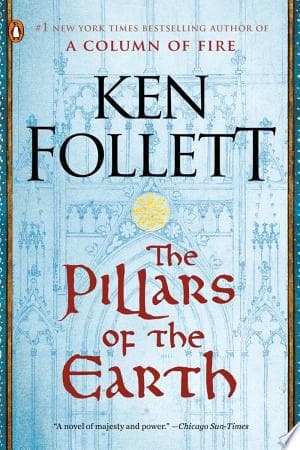
- The Pillars of the Earth
Ken Follett
4.3 (649k) average on GoodreadsFantasyA multi-generational saga spanning many years with interwoven character destinies, albeit in a different genre.
- 1984
George Orwell
4.2 (3.1M) average on GoodreadsPoliticsIn a future where surveillance and thought control are absolute, a man's search for truth clashes with the Party, showing that hope can be a form of rebellion.
- Animal Farm
George Orwell
4.0 (2.7M) average on GoodreadsPoliticsA farm animals' rebellion against humans turns into a pig-led dictatorship, showing how power corrupts and revolutionary ideals are betrayed.
- Freakonomics: A Rogue Economist Explores the Hidden Side of Everything
Steven D. Levitt
4.0 (709k) average on GoodreadsBusinessThis book uses economic principles to reveal the surprising incentives behind everything from drug dealing and real estate to cheating teachers and the decline of crime.
- I Am Malala: The Story of the Girl Who Stood Up for Education and Was Shot by the Taliban
Malala Yousafzai
4.1 (419k) average on GoodreadsPoliticsA teenage girl from a Taliban-controlled valley refuses to give up her books, becoming a global voice for education even after an assassination attempt.
- Atlas Shrugged
Ayn Rand
3.7 (354k) average on GoodreadsPoliticsIn a dystopian America where innovators vanish, a brilliant heiress races to uncover the truth behind the disappearing industrialists and the enigmatic John Galt, who vows to stop the world's progress.





Enjoyed the summary?
A summary gives you the shape of the book. The book itself has the detail, the examples and the voice.
Find First Among Equals on AmazonAs an Amazon Associate, BookBrief earns from qualifying purchases. How we're funded