

Synopsis
Covers the whole plot, including the ending.
- Difficulty
- Medium
- Pacing
- Moderate
- Mood
- Melancholy, Romantic, Intense, Reflective
- Read it if
- You enjoy classic Russian literature, coming-of-age stories, or tales of unrequited love and romantic obsession.
- Skip it if
- You prefer fast-paced plots, happy endings, or lighthearted romance.
First Love Plot Summary
Covers the whole plot, including the ending.
A Gathering of Gentlemen and a Tale Retold
The story begins with gentlemen in a drawing-room, sharing stories of their first love. When it is Vladimir Petrovich's turn, he says his story is not typical and asks for a few days to write it down properly, feeling he cannot tell it spontaneously. He later gives his manuscript to his friends, describing his experiences as a sixteen-year-old during a summer at a dacha outside Moscow. This introduction sets the scene for the personal and somewhat sad story, showing the lasting impact this first love had on him.
Zinaida's Arrival and Vladimir's Infatuation
Vladimir Petrovich, sixteen, is spending the summer with his family at their dacha near Moscow. His quiet life changes with the arrival of new neighbors, Princess Zasyekin and her daughter, Zinaida Alexandrovna. Zinaida, a beautiful and charming twenty-one-year-old, immediately catches Vladimir's eye. He is completely taken by her beauty, wit, and air of mystery. His days, once filled with childish activities, now center on seeing her, hearing her voice, and dreaming of her. This initial attraction quickly becomes a deep and overwhelming first love.
Joining Zinaida's Circle
Driven by his growing love, Vladimir finds ways to get closer to Zinaida. He is eventually accepted into her lively group of admirers, which includes various young men: Count Malevsky, Dr. Lushin, Belovzorov, and Maidanov. Vladimir, the youngest and most naive, watches Zinaida as she playfully manipulates and teases her suitors, charming them with a mix of grace and unpredictability. He is both happy to be near her and tormented by jealousy and the feeling that he is just one of many seeking her attention, often feeling like a mere boy compared to the older men.
The Game of Forfeits and Zinaida's Power
During one evening gathering, Zinaida suggests a game of forfeits, which quickly becomes a way for her to show her power over her admirers. She makes them do various tasks, often humiliating, which they readily obey. Vladimir, though hesitant at first, also gives in to her will. He feels a strange mix of adoration and pleasure in her control. This game shows Zinaida's manipulative charm and the strong influence she has over the men around her, making Vladimir's fascination and his feeling of being completely captivated by her deeper.
A Midnight Encounter and a Confession of Love
One night, Vladimir finds Zinaida alone in the garden. He takes the chance to speak with her closely. During their conversation, full of youthful awkwardness and strong emotion, Vladimir finally tells her he loves her. Zinaida, while not returning his feelings as he wishes, treats him with surprising tenderness and a hint of maternal affection, acknowledging his feelings without fully accepting them. This moment is a turning point for Vladimir, solidifying his devotion despite her lack of a clear romantic response.
Vladimir's Torment and Zinaida's Shifting Moods
After his confession, Vladimir's emotional state is a rollercoaster. Zinaida's behavior towards him is unpredictable; one moment she is affectionate, the next cold or playfully cruel. He is consumed by jealousy, especially when she seems to favor other suitors, and his days are filled with worry and longing. He constantly seeks her out, watching her every move, trying to understand her true feelings. This time shows the intense suffering and joy that define his first experience with love, highlighting the turbulent nature of young passion.
The Mystery Deepens
Vladimir starts to notice Zinaida's increasingly secretive behavior. She withdraws from her usual group of admirers, and he often sees her going out late at night or meeting someone in the garden. His suspicions grow that she has a secret lover, a realization that fills him with agonizing jealousy and confusion. He secretly follows her, desperate to find the truth, his young heart tormented by the thought of her affections going to another. This mystery adds suspense and heartbreak to his already intense emotional state.
The Shocking Revelation
Driven by a need to know the truth, Vladimir follows Zinaida one night to an old greenhouse. Looking through a crack, he sees something that shatters his world: Zinaida in a passionate embrace with his own father, Pyotr Vasilyevich. The shock is immense, a betrayal that crushes his innocence and turns his love into a complex mix of horror, pain, and continued, agonizing devotion. This discovery is the story's climax, forever changing Vladimir's view of his father, Zinaida, and the very nature of love and betrayal.
The Aftermath and Departure
After the shocking discovery, life at the dacha becomes unbearable for Vladimir. His father, seemingly unaffected outwardly, keeps his distant manner. Zinaida, too, stays composed, though Vladimir now sees her through a different, painful lens. Soon after, both families leave their dachas. Vladimir is left to deal with the devastating truth, the image of his father and Zinaida burned into his memory. This departure marks the end of his ideal summer and the start of a deep loss of innocence, leaving him with a deep, unhealed wound.
A Final Glimpse and a Tragic End
Some time after the summer, Vladimir sees Zinaida one last time, by chance, in a carriage. She looks different, more mature, and he feels a pang of his old affection mixed with the pain of their past. Years later, while at university, Vladimir's father dies suddenly from a stroke, leaving a brief, mysterious note hinting at his complex feelings for Zinaida. Even later, Vladimir learns from Dr. Lushin that Zinaida had married a wealthy man and died in childbirth. This sad news brings a final, melancholic end to Vladimir's first love, reinforcing its lasting impact on his life.
Principal Figures
Vladimir Petrovich
Protagonist
A sixteen-year-old boy experiencing his first, devastating love.
Vladimir is the narrator and protagonist, a sensitive, imaginative, and somewhat naive sixteen-year-old. He is quickly and completely consumed by his infatuation with Zinaida, experiencing the full spectrum of adolescent emotions: adoration, jealousy, despair, and devotion. His first love profoundly shapes his understanding of life, love, and human nature, marking a painful loss of innocence. He is introspective and observant, but also prone to intense emotional swings. The story is told from his adult perspective, reflecting on the enduring impact of these formative events.
Relationships: Zinaida Alexandrovna (object of his intense, unrequited first love); Pyotr Vasilyevich (Father) (father, rival for Zinaida's affection); Maria (Mother) (mother, largely unaware of his emotional turmoil); Dr. Lushin (friend and fellow suitor of Zinaida, later a source of information)
Zinaida Alexandrovna
Object of Affection
A beautiful, capricious, and manipulative twenty-one-year-old princess.
Zinaida is the central female figure, a captivating and enigmatic twenty-one-year-old princess. She is beautiful, intelligent, witty, and possesses a strong, dominant personality. She enjoys holding court among her many suitors, playfully manipulating them and asserting her power. Beneath her charming and capricious exterior lies a deeper, more passionate and perhaps troubled soul. Her actions are often contradictory, reflecting her own complex desires and internal conflicts. She embodies the intoxicating and dangerous allure of first love for Vladimir.
Relationships: Vladimir Petrovich (receives his intense, unrequited love, treats him with a mix of affection and condescension); Pyotr Vasilyevich (Father) (secret lover, a passionate and complex relationship); Count Malevsky (suitor, whom she often teases and manipulates); Dr. Lushin (suitor and friend, later informs Vladimir of her death)
Pyotr Vasilyevich
Supporting Character / Antagonist (unwitting)
Vladimir's distant and secretly passionate father.
Pyotr Vasilyevich is Vladimir's father, a handsome, aristocratic, and somewhat detached man. He generally maintains a reserved and conventional demeanor, often critical of Vladimir's youthful exuberance. However, he harbors a deep, passionate, and ultimately illicit secret: an affair with Zinaida. His hidden nature and betrayal profoundly impact Vladimir, shattering his son's idealized view of him and contributing to Vladimir's loss of innocence. His brief, enigmatic note after his death hints at the depth of his feelings for Zinaida.
Relationships: Vladimir Petrovich (father, distant but later a rival for Zinaida's affection); Zinaida Alexandrovna (secret lover, a passionate and ultimately tragic relationship); Maria (Wife) (husband, but emotionally distant and unfaithful)
Maria
Supporting Character
Vladimir's mother, a conventional and somewhat oblivious woman.
Maria is Vladimir's mother, a woman who appears kind and conventional but is largely oblivious to the emotional turmoil around her, particularly her husband's affair and her son's intense first love. She is concerned with social proprieties and her son's well-being but lacks a deep emotional connection to his inner world. Her presence highlights the generational and emotional divide within the family, serving as a contrast to the intense passions unfolding in secret.
Relationships: Vladimir Petrovich (mother, caring but not deeply understanding); Pyotr Vasilyevich (Husband) (wife, unaware of his infidelity)
Dr. Lushin
Supporting Character
One of Zinaida's older, more cynical suitors.
Dr. Lushin is one of Zinaida's more mature and cynical suitors. He is observant and intelligent, often providing a more grounded, albeit jaded, perspective on Zinaida's behavior and the dynamics of her admirers. He is somewhat protective of Vladimir and later serves as the messenger of Zinaida's tragic fate, providing a final piece of closure to Vladimir's story. He represents a more experienced, world-weary approach to love.
Relationships: Zinaida Alexandrovna (suitor and friend, often aware of her manipulative tendencies); Vladimir Petrovich (fellow suitor, later a source of information)
Count Malevsky
Supporting Character
A handsome but deceitful suitor of Zinaida.
Count Malevsky is one of Zinaida's suitors, characterized by his handsome appearance and polite manners, which mask a deceitful and somewhat malicious nature. He is a rival for Zinaida's attention, and Vladimir often feels a strong dislike for him. Malevsky's presence adds to the tension and jealousy Vladimir experiences, representing the superficial and sometimes treacherous aspects of the social circle around Zinaida.
Relationships: Zinaida Alexandrovna (suitor, often teased and manipulated by her); Vladimir Petrovich (rival for Zinaida's attention, disliked by Vladimir)
Belovzorov
Supporting Character
A passionate and somewhat rough suitor of Zinaida.
Belovzorov is another of Zinaida's suitors, a hussar known for his passionate and somewhat boisterous nature. He is deeply infatuated with Zinaida and expresses his feelings more openly and intensely than some of the other suitors. His jealousy and devotion are palpable, making him a more direct rival to Vladimir in terms of emotional intensity, though he is less refined than some of the others.
Relationships: Zinaida Alexandrovna (passionate suitor); Vladimir Petrovich (fellow suitor and rival)
Maidanov
Supporting Character
A romantic poet and suitor of Zinaida.
Maidanov is a young poet among Zinaida's admirers. He is sensitive, romantic, and somewhat melancholic, often reciting his verses to Zinaida. He represents the more artistic and idealistic aspect of Zinaida's court. While less prominent than some of the other suitors, his presence contributes to the diverse array of personalities drawn to Zinaida's charm and charisma, and he often mirrors Vladimir's own romantic inclinations, albeit in a more expressive way.
Relationships: Zinaida Alexandrovna (suitor, who recites poetry to her); Vladimir Petrovich (fellow suitor)
Themes & Insights
The Pain and Ecstasy of First Love
The novella explores the overwhelming emotional intensity of young first love. Vladimir experiences extreme highs of joy and hope, followed by devastating lows of jealousy, despair, and humiliation. His attraction to Zinaida consumes him, changing how he sees the world. This theme is central, showing how love can be both exhilarating and deeply painful, a formative experience that leaves a lasting mark. For example, Vladimir's obsessive tracking of Zinaida's movements and his agony over her every glance show this all-consuming nature.
“Oh, what a strange, what a sweet, what a terrifying feeling to be sixteen, to believe in everything, to love everything, to be afraid of nothing, and to know nothing!”
Loss of Innocence and Disillusionment
Vladimir's journey is from naive boyhood to a more cynical understanding of the adult world. His idealized view of love, his father, and Zinaida is broken by the discovery of the affair. This event forces him to face the complexities of human relationships, betrayal, and hidden passions, leading to deep disappointment. The story shows how one devastating experience can permanently change one's view of life and love, marking the end of childhood innocence. His reaction to seeing his father and Zinaida together is the ultimate cause for this loss.
“My world was turned upside down; everything was confused in it; the beautiful, the noble, the pure were mixed with the base, the vile, the dirty.”
Power Dynamics in Love and Relationships
Zinaida's character shows power dynamics. She has great influence over her many suitors, including Vladimir, playfully manipulating them and asserting her dominance. The game of forfeits is a clear example of her controlling nature. However, Zinaida herself is finally subject to her own desires and the social limits of her time, leading her into a secret and finally tragic relationship with Vladimir's father. This theme explores who has emotional control and the results of such imbalances.
“She was a princess, but she treated us like her vassals.”
The Enigma of the Human Heart
The story emphasizes how hard it is to understand human emotions and motivations, especially Zinaida's. Vladimir, despite his intense observation, can never fully understand her true feelings or reasons for her actions. His father's hidden passion also highlights this theme, showing a secret life beneath a calm exterior. The novella suggests that even those closest to us can have deep, hidden parts of their personalities and desires, making true understanding difficult. Zinaida's changing moods and secretive behavior illustrate this central mystery.
“What was going on in her soul, I could not guess.”
Memory and the Passage of Time
The narrative is an adult Vladimir recounting his past, emphasizing memory's lasting power and how formative experiences shape a person's life long after they happen. Writing his story suggests a need to process and understand these events years later. Time allows for reflection and a deeper, though sad, appreciation of first love's impact, even as details might fade or gain new meaning. The story begins and ends with the adult narrator, highlighting this theme.
“What is youth? It is the same as the spring in the year. The spring is the time of hope, the time of joy, the time of fresh green leaves.”
Plot Devices & Literary Techniques
Frame Narrative
An adult narrator recounts a story from his youth.
The novella employs a frame narrative, where the adult Vladimir Petrovich recounts his story of first love to a group of friends. This device allows for a reflective, retrospective tone, providing the perspective of experience and melancholy to the intense, immediate emotions of youth. It also creates a sense of intimacy between the narrator and the reader, as if listening to a personal confession. The framing emphasizes the lasting impact of the events on the narrator's life and his mature understanding of them.
Symbolism of the Garden/Greenhouse
Representing innocence, secrets, and the loss of purity.
The garden, initially a place of youthful freedom and romantic encounters for Vladimir and Zinaida, gradually transforms into a setting for hidden secrets and ultimately, betrayal. The old greenhouse, specifically, becomes the site of Vladimir's devastating discovery of his father's affair with Zinaida. It symbolizes the shattering of innocence and the intrusion of the adult world's complexities and moral ambiguities into Vladimir's pure, youthful love, marking the transition from idyllic romance to harsh reality.
Dramatic Irony
The reader (and adult narrator) knows more than the young protagonist.
Dramatic irony is prevalent as the adult Vladimir narrates his youthful experiences. The reader, along with the older narrator, is aware of the impending heartbreak and the true nature of the relationships before the young Vladimir fully comprehends them. For example, the sophisticated banter between Zinaida and Vladimir's father often holds double meanings that the young Vladimir misses, but the reader can infer, heightening the tension and pathos of the story as it unfolds towards its tragic revelation.
Foreshadowing
Hints and clues that build suspense towards the climax.
Turgenev uses subtle foreshadowing throughout the narrative to hint at the tragic turn of events. Zinaida's erratic moods, her secret excursions, and the unusual interactions between her and Vladimir's father all serve as clues. Vladimir's own vague sense of unease and his growing suspicions contribute to the suspense, preparing the reader for the shocking revelation. This device creates a sense of inevitability and heightens the emotional impact of the climax when the truth is finally revealed.
First Love Quotes
“First love is a kind of vaccination which saves a man from catching the complaint a second time.”
“I was not yet sixteen; but I already knew what it was to be in love.”
“She was a creature of another world, and I worshipped her.”
“Love... is not a feeling; it is an art, and like every art it requires study and practice.”
“I felt that I was living in a dream, and that I should wake up to find myself alone again.”
“To love and to be loved is the greatest happiness of existence.”
“She had a way of looking at you that made you feel she saw right through you.”
“Youth is the time for dreams, and first love is the sweetest of them all.”
“I would have given my life for one kind word from her.”
“The heart has its reasons which reason knows nothing of.”
“There is no despair so absolute as that which comes with the first dawn of love.”
“She was like a star that shone brightly but distantly, forever out of reach.”
“In love, as in everything else, experience is the best teacher.”
“The memory of first love remains with us, a fragrant flower pressed between the pages of life.”
Quiz
10 questions on the plot and the characters. Each answer comes with a short explanation.
Question 1
Who is the narrator of 'First Love'?
- Vladimir Petrovich
- Pyotr Vasilyevich
- Zinaida's father
- An unnamed observer
Show answer
A. Vladimir Petrovich The story is narrated by Vladimir Petrovich, who recounts his adolescent experiences from his perspective as an older man, reflecting on his first love.
Question 2
How old is Vladimir when he falls in love with Zinaida?
- 14 years old
- 16 years old
- 18 years old
- 20 years old
Show answer
B. 16 years old Vladimir is 16 years old when he experiences his first love with Zinaida, which is a key detail in the book's exploration of adolescent emotions.
Question 3
What is Zinaida's relationship to the narrator's family?
- She is a distant cousin
- She is a neighbor living nearby
- She is a family tutor
- She is a servant in their household
Show answer
B. She is a neighbor living nearby Zinaida is a neighbor who lives nearby, and her proximity allows Vladimir to frequently visit and develop his infatuation with her.
Question 4
Why does Vladimir experience jealousy in the story?
- Because Zinaida ignores him completely
- Because Zinaida flirts with other men, including his father
- Because his friends mock his feelings
- Because Zinaida moves away suddenly
Show answer
B. Because Zinaida flirts with other men, including his father Vladimir becomes jealous as Zinaida engages in flirtatious behavior with various men, most notably with his own father, which intensifies his emotional turmoil.
Question 5
What event marks the climax of Vladimir's romantic despair?
- Zinaida's marriage to another man
- A physical fight between Vladimir and his father
- Vladimir witnessing a kiss between Zinaida and his father
- Zinaida confessing she never loved him
Show answer
C. Vladimir witnessing a kiss between Zinaida and his father Vladimir's despair peaks when he secretly witnesses Zinaida kissing his father, revealing the complex love triangle and shattering his idealized view of love.
Question 6
How does the story end regarding Zinaida's fate?
- She dies in childbirth
- She moves abroad and never returns
- She marries Vladimir years later
- She becomes a nun
Show answer
A. She dies in childbirth The story concludes with Vladimir learning that Zinaida died in childbirth four years after their summer romance, adding a tragic note to his memories of first love.
Question 7
Which theme is most central to 'First Love'?
- The corruption of aristocracy
- The intensity and naivety of adolescent love
- The struggle for social reform
- The importance of family loyalty
Show answer
B. The intensity and naivety of adolescent love The book focuses on the intense, often naive emotions of first love in adolescence, as Vladimir experiences exaltation, jealousy, and despair through his relationship with Zinaida.
Question 8
What role does Vladimir's father play in the love triangle?
- He is unaware of Vladimir's feelings for Zinaida
- He actively discourages the relationship
- He becomes Zinaida's lover, competing with Vladimir
- He arranges for Zinaida to marry someone else
Show answer
C. He becomes Zinaida's lover, competing with Vladimir Vladimir's father becomes Zinaida's lover, creating a painful love triangle that deepens Vladimir's jealousy and emotional conflict.
Question 9
How does Turgenev use the setting to reflect Vladimir's emotions?
- Through harsh winter landscapes symbolizing despair
- Through idyllic summer scenes mirroring his initial exaltation
- Through urban chaos representing confusion
- Through historical events shaping his views
Show answer
B. Through idyllic summer scenes mirroring his initial exaltation Turgenev sets the romance during a summer in the countryside, with serene and beautiful scenes that mirror Vladimir's initial joyful exaltation, which later contrasts with his inner turmoil.
Question 10
What literary device is prominent in Vladimir's retrospective narration?
- Satire
- Foreshadowing
- Irony
- Allegory
Show answer
C. Irony Irony is key as Vladimir, now older, narrates with hindsight, often highlighting the naivety and intensity of his youthful feelings, which adds depth to the story's emotional impact.
First Love FAQ
What is 'First Love' by Ivan Turgenev about?
'First Love' follows 16-year-old Vladimir Petrovich, who becomes infatuated with his neighbor Zinaida Alexandrovna, a beautiful 21-year-old woman. Through his intense, often painful experiences of love, jealousy, and devotion, the novella explores the tumultuous emotions of adolescent awakening and the bittersweet nature of first love.
Why should I read 'First Love'?
Turgenev's novella offers a masterful psychological portrait of adolescent emotion that remains universally relatable. Its concise yet profound exploration of love's intensity, vulnerability, and inevitable disillusionment makes it a timeless classic that captures the essence of human experience in under 100 pages.
What is the background/setting of 'First Love'?
The story takes place in 19th-century Russia, primarily at a country estate where Vladimir's family spends the summer. This pastoral setting contrasts with the emotional turbulence of the characters, particularly the confined social environment that heightens the intensity of Vladimir's obsession with Zinaida.
What are the most memorable quotes from 'First Love'?
Key quotes include Zinaida's declaration 'Love... is not a feeling... it's a malady' and Vladimir's reflection 'First love is like a revolution: the monotonous regularity of life is smashed to pieces in an instant.' These lines encapsulate the novella's themes of love as both transformative and destructive.
What writing style does Turgenev use in 'First Love'?
Turgenev employs a lyrical, introspective first-person narrative that blends psychological realism with poetic sensitivity. His prose is economical yet richly evocative, using precise details to convey emotional states rather than lengthy descriptions, characteristic of his mastery of the novella form.
What minor details add significant meaning to 'First Love'?
The repeated imagery of Zinaida's white dress symbolizes both purity and unattainability, while Vladimir's observation of her playing with a whip foreshadows her emotional dominance. The garden setting where much of the action occurs represents both natural beauty and the artificial constraints of their social world.
What are some subtle foreshadowing moments in 'First Love'?
Early scenes where Vladimir's father appears indifferent yet watches Zinaida closely foreshadow their secret relationship. Zinaida's comment about 'loving those who are unattainable' hints at her attraction to Vladimir's father long before the revelation of their affair.
What unexpected character connections exist in 'First Love'?
The most shocking connection is between Zinaida and Vladimir's father, Pyotr Vasilyevich, whose secret affair forms the story's emotional core. This revelation transforms Vladimir's understanding of both his idolized father and his beloved Zinaida, creating a complex triangle of desire and betrayal.
What are Zinaida's unspoken motivations in 'First Love'?
Beneath her coquettish behavior with multiple admirers, Zinaida seeks genuine emotional connection and escape from her constrained position as a dependent young woman. Her attraction to Vladimir's father represents both genuine passion and a subconscious rebellion against the superficial attentions of her younger suitors.
What psychological complexities do Vladimir and Zinaida exhibit?
Vladimir experiences the typical adolescent confusion between idealization and possession, while Zinaida displays a more sophisticated conflict between her desire for freedom and her recognition of social limitations. Both characters navigate the gap between romantic fantasy and painful reality.
What are the major emotional turning points in 'First Love'?
Key turning points include Vladimir's first declaration of love, his discovery of Zinaida kissing another man, the climactic revelation of her affair with his father, and the final scene where he learns of her death in childbirth. Each moment deepens his understanding of love's complexities.
How do the relationship dynamics evolve between Vladimir, Zinaida, and his father?
Initially, Vladimir idolizes both Zinaida and his father separately. The discovery of their affair shatters these idealizations, forcing him to see them as flawed individuals. The power dynamics shift from Vladimir's innocent pursuit to his painful recognition of being an outsider in their more mature, secret relationship.
Which parts of 'First Love' remain ambiguous or open-ended?
The exact nature of Zinaida's feelings for Vladimir remains ambiguous—whether she genuinely cared for him or merely enjoyed his admiration. The story also leaves open whether Vladimir's father truly loved Zinaida or viewed their relationship as a passing affair, adding layers of interpretation to their tragedy.
What are controversial scenes or decisions in 'First Love'?
Zinaida's manipulation of multiple admirers while secretly involved with a married man challenges conventional morality. Vladimir's father's decision to pursue his son's love interest raises ethical questions about paternal responsibility versus personal desire in 19th-century Russian society.
'First Love' ending explained: how it ends & what it means
The story ends with Vladimir learning of Zinaida's death in childbirth four years after their summer romance. This conclusion suggests that first love, however painful, becomes a permanent part of one's emotional history. The mature narrator's reflection implies that such experiences, though bittersweet, are essential to human growth.
How does Turgenev portray the social constraints affecting the characters?
Through Zinaida's dependent position as a poor relation and Vladimir's father's marital obligations, Turgenev shows how 19th-century Russian aristocracy limited personal freedom. These constraints make the characters' emotional rebellions both more desperate and ultimately tragic, as seen in Zinaida's doomed relationship.
About the author
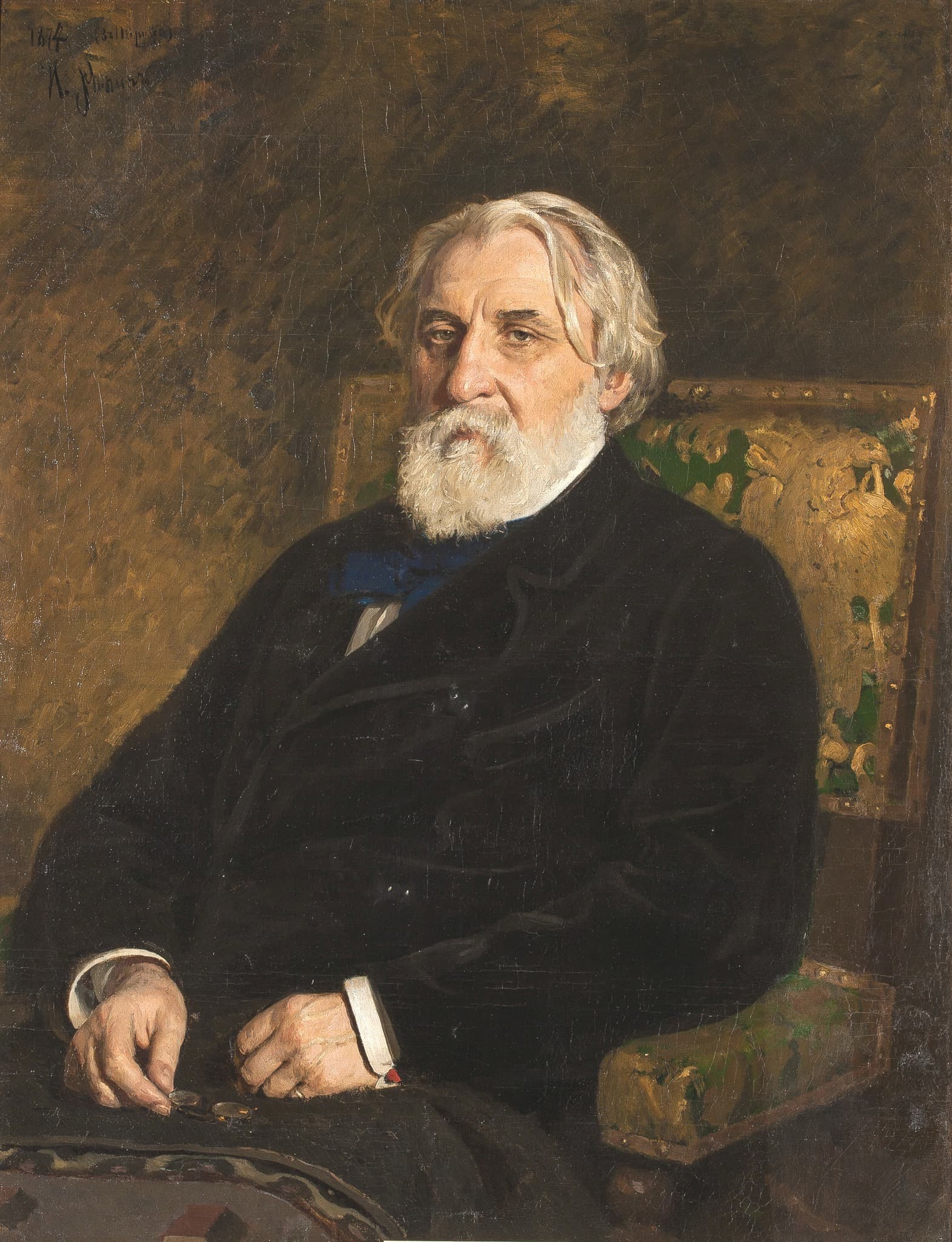
Ivan Sergeyevich Turgenev was a Russian novelist, short story writer, poet, playwright, translator and popularizer of Russian literature in the West.
Similar books
- Pride and Prejudice
Jane Austen
4.3 (3M) average on GoodreadsHistorical FictionAusten's novel meticulously charts the societal and personal journey towards a successful, mutually understood romantic union often culminating in marriage. Turgenev's novella, in contrast, portrays love as an inherently destabilizing, often painful, and ultimately unfulfilled experience, highlighting passion's destructive power and disillusionment.
- The Hunger Games
Suzanne Collins
4.3 (6.4M) average on GoodreadsFantasyIn a future where children fight to the death on live television, Katniss Everdeen volunteers for the arena, turning a death sentence into a fight for survival and a spark of rebellion.
- The Great Gatsby
F. Scott Fitzgerald
3.9 (3.8M) average on GoodreadsHistorical FictionIn the opulent Roaring Twenties, a mysterious millionaire's lavish parties hide his desperate, tragic pursuit of a lost love, exposing the emptiness within the American Dream.
- The Fault in Our Stars
John Green
4.2 (3.6M) average on GoodreadsYoung AdultA girl with a terminal illness finds her story rewritten when a charming boy with a similar past enters her life at a cancer support group, leading to a star-crossed romance.
- Divergent
Veronica Roth
4.2 (2.9M) average on GoodreadsFantasyIn a society divided by virtues, a sixteen-year-old's difference from the norm starts a rebellion that threatens her world.
- Catching Fire
Suzanne Collins
4.3 (2.5M) average on GoodreadsFantasyAfter defying the Capitol and starting a rebellion, Katniss and Peeta are forced on a dangerous Victory Tour, navigating political schemes, a fake romance, and the constant threat of a government eager to crush the uprising they began.






Enjoyed the summary?
A summary gives you the shape of the book. The book itself has the detail, the examples and the voice.
Find First Love on AmazonAs an Amazon Associate, BookBrief earns from qualifying purchases. How we're funded