
Synopsis
Covers the whole plot, including the ending.
- Difficulty
- Easy
- Pacing
- Fast
- Mood
- Humorous, Satirical, Absurdist, Witty
- Read it if
- You enjoy satirical historical fiction with a quirky, naive protagonist who stumbles into greatness and reshapes history.
- Skip it if
- You prefer serious, character-driven dramas or are easily offended by coarse humor and a lack of political correctness.
Forrest Gump Plot Summary
Covers the whole plot, including the ending.
A Peculiar Childhood and Formative Friendships
Forrest Gump, a man of large physical size but limited intellect, begins his life story in Mobile, Alabama. He describes his childhood, raised by his practical mother who teaches him a simple but strong moral compass. Despite his low IQ of 70, Forrest often finds himself in the right place at the right time, or rather, the wrong place at the right time for comical effect. He befriends Jenny Curran in elementary school, a girl who is a constant, though often brief, presence in his life. His early experiences include being an exceptional football player, despite not understanding the game's complexities, and navigating the social challenges of being 'different' in a small Southern town.
Football Stardom and College Antics
Forrest's natural athletic ability, especially his speed and strength, gets the attention of college recruiters. Despite his academic shortcomings, he gets a scholarship to the University of Alabama, where he plays under the legendary Coach Bear Bryant. His time in college has bizarre incidents, including accidentally streaking across campus during a protest and meeting President John F. Kennedy. He continues to do well on the football field, becoming an All-American, but his understanding of the world remains simple, leading to constant misunderstandings and accidental involvement in significant events of the era. He also has a brief relationship with a girl named Barbara.
Vietnam and the Bubba Gump Shrimp Company
After college, Forrest is drafted into the U.S. Army and sent to Vietnam. There, he befriends Benjamin Buford 'Bubba' Blue, a fellow soldier who dreams of starting a shrimping business after the war. Forrest, loyal as always, promises to go into business with Bubba. During a fierce battle, Forrest heroically saves Bubba and several other men, including his commanding officer, Lieutenant Dan Taylor, though Bubba is killed. Forrest himself is wounded. His actions earn him the Congressional Medal of Honor, presented by President Lyndon B. Johnson, during which Forrest accidentally exposes his wound.
Ping-Pong Diplomacy and Presidential Encounters
After his recovery, Forrest discovers a talent for ping-pong while recovering in a military hospital. His skill is so great that he is chosen to be part of the U.S. Ping-Pong team sent to China, an important event in easing Cold War tensions. He accidentally meets Chairman Mao Zedong and becomes an international celebrity. Upon returning to the U.S., he is again honored, this time by President Richard Nixon, whom he accidentally helps expose the Watergate break-in by reporting suspicious activity in a hotel across the street. Forrest's fame grows, but his humility and simple nature remain unchanged.
Professional Wrestling and Hollywood Stardom
Forrest's post-Vietnam life continues its surreal path. He briefly becomes a professional wrestler, called 'The Dunce' and performing with a gorilla named Sue. His wrestling career is short-lived but entertaining. Later, a film producer scouts him, and he ends up starring in a B-movie, a ridiculous sci-fi flick. His acting career, like his other ventures, is more a product of circumstance and his unique presence than any actual talent or ambition. Throughout these escapades, he occasionally meets Jenny, who is following her own difficult path through the counterculture movement.
The Apollo Mission and Space Travel
In perhaps his most outlandish adventure, Forrest is recruited by NASA, again due to a series of improbable events, to become an astronaut. He goes on an Apollo mission to the moon, sharing the spacecraft with a female chimpanzee named Sue and an alien named 'Yossarian' (though Forrest often misidentifies him as 'the Ape-Man'). The mission has comical mishaps and surreal encounters, further cementing Forrest's reputation as a man who accidentally stumbles into the most extraordinary situations. Upon his return, he is celebrated as a national hero, unaware of the true absurdity of his journey.
Chess Master and Entrepreneurial Ventures
After his space adventure, Forrest discovers an unexpected talent for chess, becoming a grandmaster and competing in international tournaments. His simple, logical mind seems to find a natural home in the game's complexities. More significantly, he decides to honor his promise to Bubba. Using the money he accumulated from his various exploits, including his ping-pong earnings and movie residuals, Forrest starts the Bubba Gump Shrimp Company. Despite his lack of business knowledge, the company unexpectedly does well, becoming a massive success due to a combination of Forrest's luck and the capable management of Lieutenant Dan, who has become his business partner.
Jenny's Return and a Family Revealed
Years later, Forrest receives a letter from Jenny, who has been mostly absent from his life, living a bohemian and often troubled existence. She asks him to meet her. When they reunite, Jenny reveals that Forrest is the father of her young son, also named Forrest. This revelation greatly impacts Forrest, as he finally has a family of his own. Jenny is ill, but she and Forrest share a period of domesticity, allowing Forrest to experience the joys and responsibilities of fatherhood. He dedicates himself to caring for his son, a role he embraces with his usual earnestness and devotion.
A Quiet Ending and Reflective Thoughts
Jenny eventually dies from her illness, leaving Forrest to raise their son alone. Forrest, always resilient, dedicates himself to being a good father. He continues to run the Bubba Gump Shrimp Company, which thrives under Lieutenant Dan's guidance. The novel ends with Forrest reflecting on his incredible, improbable life. Despite his low intellect, he has lived a life richer and more impactful than most, meeting historical figures, participating in events, and finding love and family. He maintains his simple, optimistic outlook, concluding that while he may be a 'dunce,' he has certainly had an eventful existence.
Principal Figures
Forrest Gump
Protagonist
A large, simple-minded man who inadvertently participates in major historical events.
Forrest Gump is the novel's titular protagonist, a man of immense physical stature and strength but a very low IQ. Despite his intellectual limitations, Forrest possesses an unwavering moral compass, loyalty, and an earnest, guileless nature. He is a passive participant in most of his adventures, often stumbling into extraordinary situations due to circumstance rather than intent. His narration is literal and straightforward, highlighting his unique perspective on the world. He is driven by simple desires: friendship, loyalty, and eventually, love and family. His journey is a satirical commentary on the American experience.
Relationships: Jenny Curran (Lifelong on-again, off-again love interest and mother of his son.); Bubba Blue (Best friend from the army, business inspiration.); Lieutenant Dan Taylor (Commanding officer, later business partner and friend.); Mrs. Gump (Mother) (His loving and pragmatic mother, his primary caregiver and moral guide.)
Jenny Curran
Supporting
Forrest's lifelong love interest, a troubled woman seeking her own path.
Jenny Curran is Forrest's childhood friend and enduring love interest. Unlike Forrest, Jenny's life is marked by trauma and a constant search for identity and belonging. She frequently reappears in Forrest's life, often in different counter-cultural movements or difficult circumstances. She is intelligent and spirited but struggles with her past and makes many poor choices, leading to a turbulent existence. Her relationship with Forrest is complex; she cares for him but often pushes him away or takes advantage of his simple nature. She ultimately becomes the mother of Forrest's son.
Relationships: Forrest Gump (Lifelong love interest and father of her son.); Forrest Gump Jr. (Her son with Forrest.)
Benjamin Buford 'Bubba' Blue
Supporting
Forrest's best friend in Vietnam, who dreams of a shrimping empire.
Bubba Blue is Forrest's best friend during their time serving in Vietnam. He is a kind, gentle soul with a singular passion for shrimping. He constantly talks about his family's shrimping legacy and his dream of starting his own shrimping business after the war. Bubba is loyal and supportive of Forrest, and his dream becomes a significant motivating factor for Forrest later in life. His tragic death in Vietnam deeply affects Forrest and sets in motion Forrest's entrepreneurial venture.
Relationships: Forrest Gump (Best friend and fellow soldier.)
Lieutenant Dan Taylor
Supporting
Forrest's commanding officer, who becomes his business partner and friend.
Lieutenant Dan Taylor is Forrest's commanding officer in Vietnam. A proud, decorated soldier from a long line of military men, he is initially bitter and resentful after losing his legs in battle, an injury Forrest inadvertently causes while saving him. He struggles with his disability and his perceived loss of purpose. Over time, however, he forms an unlikely bond with Forrest, eventually becoming his business partner in the Bubba Gump Shrimp Company. Lieutenant Dan provides the shrewd business acumen that Forrest lacks, transforming the company into a success and finding his own redemption.
Relationships: Forrest Gump (Commanding officer, later business partner and friend.)
Mrs. Gump (Forrest's Mother)
Supporting
Forrest's pragmatic and loving mother, his moral anchor.
Forrest's mother is a strong, pragmatic, and loving woman who raises Forrest on her own. She accepts Forrest's intellectual limitations but instills in him a strong sense of right and wrong, teaching him important life lessons through simple analogies and unwavering support. She is the foundation of Forrest's moral character and provides the stable home environment that allows him to develop his unique personality. Her wisdom, though often overlooked by Forrest, guides him throughout his life.
Relationships: Forrest Gump (Her son.)
Sue (the Ape)
Supporting
A chimpanzee who accompanies Forrest on his space mission and wrestling career.
Sue is a female chimpanzee who becomes Forrest's companion during his professional wrestling career and, most notably, his astronaut training and space mission. She is intelligent and surprisingly articulate (in Forrest's perception, at least). Her presence adds to the surreal and absurd nature of Forrest's adventures, highlighting his unique ability to attract unusual companions and find himself in highly improbable situations. She represents the bizarre and unpredictable elements of Forrest's life.
Relationships: Forrest Gump (Companion and fellow adventurer.)
Forrest Gump Jr.
Supporting
Forrest and Jenny's son, a normal child who brings purpose to Forrest's life.
Forrest Gump Jr. is the son of Forrest Gump and Jenny Curran. Unlike his father, he appears to be of normal intelligence. His existence is revealed to Forrest late in the story, transforming Forrest's life by giving him a profound sense of purpose and a family to care for. He represents the culmination of Forrest's journey, providing him with a quiet, domestic happiness that contrasts sharply with his earlier chaotic adventures. Forrest's love for his son is pure and unwavering.
Relationships: Forrest Gump (His father.); Jenny Curran (His mother.)
President John F. Kennedy
Mentioned
Briefly encountered by Forrest during his college years.
President John F. Kennedy is a historical figure Forrest briefly encounters during his college football career. Forrest shakes his hand, a small but significant detail that exemplifies Forrest's accidental proximity to pivotal historical moments and figures. His appearance serves to ground Forrest's fantastical narrative in real-world history, albeit with a humorous twist.
President Lyndon B. Johnson
Mentioned
Presents Forrest with the Congressional Medal of Honor.
President Lyndon B. Johnson is another historical figure Forrest encounters, presenting him with the Congressional Medal of Honor for his heroism in Vietnam. This encounter is memorable for Forrest's accidental exposure of his wounded buttocks, a moment that perfectly encapsulates the blend of honor and absurdity that defines Forrest's life. His presence further emphasizes Forrest's unwitting role in shaping or witnessing history.
President Richard Nixon
Mentioned
Honors Forrest for his ping-pong diplomacy and is unwittingly involved in Watergate.
President Richard Nixon honors Forrest for his role in ping-pong diplomacy with China. More significantly, Forrest inadvertently plays a role in the Watergate scandal by reporting suspicious activity in the hotel across from his own, leading to the discovery of the break-in. Nixon's interaction with Forrest highlights the protagonist's ability to be a catalyst for major historical events without understanding their full implications.
Themes & Insights
The Absurdity of Life and History
The novel consistently shows life's arbitrary and often nonsensical nature, especially through Forrest's experiences. He stumbles into historical events, meets famous figures, and achieves extraordinary feats not through intellect or ambition, but sheer dumb luck and circumstance. This theme satirizes the idea of a grand, purposeful narrative, suggesting that much of what we perceive as significant is merely a series of accidental occurrences. Forrest's simple perspective often makes the 'important' events seem even more ridiculous.
“'Let me say this: bein' a idiot is no box of chocolates. People laugh at you, they turn you down, they don't understand nothin' what you say. But bein' an idiot ain't all that bad. At least you don't have to worry about nothin'.'”
Innocence and Moral Simplicity
Forrest's low intelligence is consistently paired with a steady moral simplicity and innocence. He acts out of loyalty, kindness, and a literal interpretation of instructions, often without grasping the complex social or political meanings of his actions. This innocence allows him to cut through societal pretenses and hypocrisy, often exposing the absurdity of the 'sane' world around him. His moral compass remains steady, even as he navigates the corruption and cynicism of the 20th century.
“'Mama always said, 'Stupid is as stupid does.' And I guess I was doin' somethin' stupid when I got myself shot in the butt.'”
The American Dream and Satire
The novel is a satire of the American Dream and various aspects of American culture, from sports to politics to war. Forrest, an unlikely hero, achieves success in multiple fields (football, war hero, ping-pong champion, astronaut, businessman) without ever truly trying for it. His journey critiques the superficiality of celebrity, the arbitrary nature of success, and the often-unquestioned patriotism of the era. He represents a distorted, yet ultimately successful, version of the American Dream, achieved through accident rather than ambition.
“'I was famous, you know? And I was an idiot. So I guess that made me a famous idiot.'”
Friendship and Loyalty
Despite his intellectual limitations, Forrest shows great loyalty and a deep capacity for friendship. His bond with Bubba, his commitment to Lieutenant Dan, and his lasting love for Jenny are central to the narrative. These relationships, especially his promise to Bubba, give Forrest motivation and purpose, even when he doesn't fully understand the complexities of human connection. His steadfastness in these relationships offers a grounding human element amidst the fantastical plot.
“'Bubba had a dream. And I was gonna see that it came true, no matter what.'”
Fate vs. Free Will
Forrest's life is a continuous exploration of fate versus free will. He rarely makes conscious, ambitious choices; instead, he is swept along by circumstances, often ending up in significant places at significant times. This raises questions about how much control individuals truly have over their destinies and how much is simply a matter of chance. Forrest's simple acceptance of whatever comes his way suggests a fatalistic view, where even the most incredible achievements are simply part of a predetermined, if illogical, path.
“'I don't know if I was just lucky, or if I just happened to be in the right place at the right time. But things just kept happenin' to me.'”
Plot Devices & Literary Techniques
First-Person Naive Narrator
Forrest Gump's simple and literal narration shapes the reader's understanding of events.
The entire novel is told from Forrest Gump's perspective, whose low IQ and literal interpretation of events provide a unique and often humorous lens through which to view complex historical moments and human interactions. His naiveté allows the author to satirize society and politics without explicit commentary, as Forrest simply reports what he sees and experiences, often missing the deeper implications. This device highlights the absurdity of the world by presenting it through an unjaded, innocent viewpoint.
Picaresque Structure
A series of episodic adventures as Forrest journeys through life.
The novel employs a picaresque structure, with Forrest Gump, the 'picaro' (rogue/outsider), embarking on a series of loosely connected, often comical, adventures. Each episode sees Forrest stumble into a new situation, meet new characters, and participate in significant historical events, before moving on to the next. This episodic nature allows for broad social satire and a rapid pace of events, without needing a complex overarching plot, perfectly suiting Forrest's meandering and accidental journey through life.
Historical Allusions and Cameos
Forrest's accidental encounters with real historical figures and events.
The novel frequently incorporates real historical figures (e.g., Presidents Kennedy, Johnson, Nixon, Chairman Mao) and events (e.g., Vietnam War, Watergate, Ping-Pong Diplomacy, Apollo missions) into Forrest's fantastical narrative. These allusions serve as a satirical device, showing how a simple-minded individual can inadvertently impact or be present at pivotal moments in history. It grounds the absurd story in a recognizable reality, while simultaneously mocking the gravitas often associated with such events by having Forrest misunderstand or trivialise them.
The 'Box of Chocolates' Metaphor
A recurring simile representing the unpredictable nature of life.
While more famously associated with the film adaptation, the novel also uses simple, homespun aphorisms, often attributed to Forrest's mother, to explain life's complexities. The idea that 'life is like a box of chocolates, you never know what you're gonna get' (or similar sentiments in the book regarding being an idiot) encapsulates the theme of fate and the unpredictable nature of Forrest's journey. It's a simple, relatable image that perfectly reflects Forrest's understanding of the world and his passive acceptance of its randomness.
Forrest Gump Quotes
“Life is like a box of chocolates. You never know what you're gonna get.”
“Stupid is as stupid does.”
“I must have drunk me about fifteen Dr Peppers.”
“We was always taking long walks, and we was always looking for a guy named 'Charlie'.”
“I'm not a smart man, but I know what love is.”
“My mama always said you've got to put the past behind you before you can move on.”
“That's all I have to say about that.”
“I just felt like running.”
“Bubba was my best good friend. And even I know that ain't something you can find just around the corner.”
“Sometimes, I guess there just aren't enough rocks.”
“I'm not a smart man, Jenny, but I know what love is.”
“From that day on, if I was ever going somewhere, I was running!”
“We was like peas and carrots.”
“I don't know if we each have a destiny, or if we're all just floating around accidental-like on a breeze.”
Quiz
10 questions on the plot and the characters. Each answer comes with a short explanation.
Question 1
What physical characteristic makes Forrest Gump particularly noticeable according to the book's description?
- He has bright red hair
- He is 6'6" and 240lbs
- He has a distinctive limp
- He always wears colorful clothing
Show answer
B. He is 6'6" and 240lbs The book's description explicitly states Forrest is '6'6" and 240lbs' and 'difficult to ignore,' establishing his imposing physical presence as a key characteristic.
Question 2
Which literary figures does Jim Harrison compare Forrest Gump to in the promotional quote?
- Don Quixote and Sancho Panza
- Voltaire and Huck Finn
- Mark Twain and Jonathan Swift
- Charles Dickens and Tom Sawyer
Show answer
B. Voltaire and Huck Finn Jim Harrison's quote states 'Forrest Gump is line bred out of Voltaire and Huck Finn,' connecting the character to Voltaire's satirical tradition and Huck Finn's American innocence.
Question 3
What historical period does Forrest NOT experience according to the book's summary?
- The Vietnam War
- The American Civil War
- Presidencies of Johnson and Nixon
- A NASA mission
Show answer
B. The American Civil War The summary mentions Vietnam, Presidents Johnson and Nixon, and a NASA mission - all mid-to-late 20th century events. The American Civil War (1860s) is not mentioned as part of Forrest's experiences.
Question 4
According to the book's promotional quotes, what is the primary literary genre of 'Forrest Gump'?
- Tragedy
- Romance
- Satire
- Mystery
Show answer
C. Satire Multiple quotes identify the book as satire: 'this satire follows him,' 'a satire right on the money,' 'A superbly controlled satire,' and 'Poking fun at everything' all emphasize its satirical nature.
Question 5
Which famous football coach is mentioned in connection with Forrest's early experiences?
- Vince Lombardi
- Bear Bryant
- Tom Landry
- Don Shula
Show answer
B. Bear Bryant The summary states the book follows Forrest 'from the football dynasties of Bear Bryant,' referencing the legendary University of Alabama coach Paul 'Bear' Bryant.
Question 6
What does P.J. O'Rourke call Forrest Gump in his promotional quote?
- A tragic hero
- The ideal citizen for the modern world
- A misunderstood genius
- A voice of reason
Show answer
B. The ideal citizen for the modern world P.J. O'Rourke's quote states: 'Winston Groom has created the ideal citizen for the modern world - a perfect idiot,' highlighting the satirical contrast between Forrest's simplicity and modern society's complexities.
Question 7
Which international leader does Forrest have 'pow-wows' with according to the book's summary?
- Winston Churchill
- Charles de Gaulle
- Chairman Mao
- Nikita Khrushchev
Show answer
C. Chairman Mao The summary mentions Forrest has 'pow-wows with Chairman Mao,' placing him in improbable encounters with Mao Zedong, the Chinese communist revolutionary and founding father of the People's Republic of China.
Question 8
What does Jim Harrison humorously suggest as punishment for those who don't read 'Forrest Gump'?
- Being forced to watch bad television
- Spending the winter in North Dakota
- Reading boring textbooks
- Listening to political speeches
Show answer
B. Spending the winter in North Dakota Harrison's full quote ends with: 'Anyone who doesn't read this book deserves to spend the winter in North Dakota' - a humorous exaggeration emphasizing the book's entertainment value.
Question 9
How does the Washington Post describe the satire in 'Forrest Gump'?
- Subtle and nuanced
- Superbly controlled
- Over-the-top and chaotic
- Gentle and affectionate
Show answer
B. Superbly controlled The Washington Post quote calls it 'A superbly controlled satire,' suggesting the wild humor and improbable events are carefully crafted rather than random or chaotic.
Question 10
What aspect of American culture and history does Jim Harrison say the book brings to judgement?
- Its economic policies
- Its educational system
- Its woebegone archangels
- Its artistic achievements
Show answer
C. Its woebegone archangels Harrison states the book brings 'the woebegone archangels of our culture and history to judgement' - using poetic language to describe how the satire critiques revered American institutions, leaders, and myths through Forrest's innocent perspective.
Forrest Gump FAQ
What is 'Forrest Gump' about?
The novel follows the life of Forrest Gump, a 6'6" 240lb man with low intelligence but extraordinary luck, as he inadvertently participates in major historical events from the 1950s to the 1970s. His adventures include playing football for Bear Bryant at Alabama, serving in Vietnam, meeting Presidents Johnson and Nixon, attending Harvard, working in Hollywood, and even going on a NASA mission to space with an orangutan.
Why should I read 'Forrest Gump'?
The book offers a wildly satirical take on American history and culture through the eyes of an 'ideal idiot' who stumbles through pivotal moments with hilarious results. Unlike the sentimental film adaptation, Groom's original novel is a bawdy, coarse-humored satire that pokes fun at everything from politics to academia while delivering surprisingly sharp social commentary.
What is the background/setting of 'Forrest Gump'?
The story spans from the 1950s through the 1970s across various American and international locations. Key settings include Alabama (where Forrest plays college football), Vietnam (where he serves and becomes a war hero), Washington D.C. (where he meets multiple presidents), Harvard University, Hollywood film sets, and even outer space during his NASA mission.
What are the most memorable quotes?
While the novel doesn't have the famous 'life is like a box of chocolates' line from the film, it features Forrest's deadpan observations like 'I may be stupid, but I know what love is' and his matter-of-fact descriptions of absurd situations. The satire shines through lines describing historical figures and events through Forrest's naive perspective.
What writing style does the author use?
Winston Groom employs a first-person narrative from Forrest's perspective, using simple, direct language that contrasts sharply with the complex historical events being described. The style is deliberately naive and literal, which amplifies the satire as Forrest misunderstands or oversimplifies everything from political scandals to academic theories.
What minor details add significant meaning?
Forrest's constant references to his physical size (6'6", 240lbs) emphasize how he's physically impossible to ignore while being intellectually dismissed. His various jobs and roles - from football player to astronaut - highlight how society values different types of 'usefulness' while never truly understanding the person beneath the roles.
What are some subtle foreshadowing moments?
Forrest's early success in football despite his lack of strategic understanding foreshadows how he'll succeed in other fields through pure physicality and luck rather than intelligence. His accidental discoveries and good fortune in minor situations early in the book establish the pattern for his improbable involvement in major historical events later.
What unexpected character connections exist?
Forrest's life intersects with an astonishing array of historical figures beyond just presidents - he meets Chairman Mao during cultural exchanges, interacts with Hollywood stars, and even has encounters with intellectuals at Harvard. These connections highlight how someone considered an 'idiot' can move through the highest levels of society unnoticed.
What are unspoken character motivations?
While Forrest appears to have no ambitions, his actions suggest a deep desire for connection and purpose that he can't articulate. The people who use him - from coaches to politicians to NASA officials - are motivated by seeing him as a tool rather than a person, exploiting his physical abilities and naive compliance for their own ends.
What psychological complexities do characters exhibit?
Forrest's simplicity masks a profound emotional intelligence - he understands love, loyalty, and basic human decency better than the 'smart' characters who manipulate him. The historical figures he encounters show their own psychological flaws through how they interact with him, revealing their vanity, ambition, or insecurity when faced with someone who doesn't recognize their importance.
What are the major emotional turning points?
Key emotional moments include Forrest's experiences in Vietnam where he performs heroic acts without understanding their significance, his various romantic encounters that highlight his capacity for love despite social awkwardness, and his gradual realization that people are using him while rarely seeing him as a complete human being.
How do relationship dynamics evolve?
Forrest's relationships consistently follow a pattern: people initially dismiss him, then exploit his abilities, and occasionally develop genuine affection despite themselves. His interactions with authority figures (coaches, officers, presidents) show how power dynamics work when one participant doesn't understand or care about social hierarchies.
Which parts remain ambiguous or open-ended?
The novel leaves ambiguous whether Forrest's incredible luck is divine intervention, statistical anomaly, or satirical device. His NASA mission with an orangutan partner raises unanswered questions about what really happened in space. The ending doesn't provide clear resolution about Forrest's ultimate understanding of his own life story.
What are controversial scenes or decisions?
The novel's coarse humor and satirical treatment of serious historical events (Vietnam, political scandals, space exploration) can be controversial. Forrest's sexual encounters are described with bawdy humor that some readers find offensive. His meeting with Chairman Mao and other world leaders presents potentially sensitive political satire.
'Forrest Gump' ending explained: how it ends & what it means
The novel ends with Forrest reflecting on his improbable life without reaching any grand philosophical conclusions. Unlike the film's sentimental ending, the book maintains its satirical tone, suggesting that American history looks equally absurd whether viewed through the eyes of a genius or an 'idiot.' The ending reinforces that Forrest's value comes from being himself rather than achieving any particular goal.
How does the book's satire differ from the film adaptation?
While the film focuses on sentimentality and Forrest's heartwarming journey, the novel is much darker and more explicitly satirical. The book's Forrest is cruder, more sexual, and less innocent, and the historical satire is more biting and political. The NASA mission with an orangutan and other absurd elements are played for sharp comedy rather than whimsy.
What historical events does Forrest participate in?
Forrest accidentally becomes part of numerous historical moments: he plays college football during Bear Bryant's dynasty, serves as a war hero in Vietnam, meets Presidents Johnson and Nixon during political scandals, attends Harvard during intellectual ferment, works in Hollywood during its golden age, and joins a NASA mission during the space race - all while misunderstanding most of what's happening.
How does the book use Forrest's intelligence as a narrative device?
Forrest's low intelligence serves as a perfect satirical lens - he describes complex historical events and sophisticated people with simple, literal language that exposes their absurdities. His inability to understand social cues or political nuances allows the satire to work because he reports events exactly as he sees them, without ideological filtering.
About the author

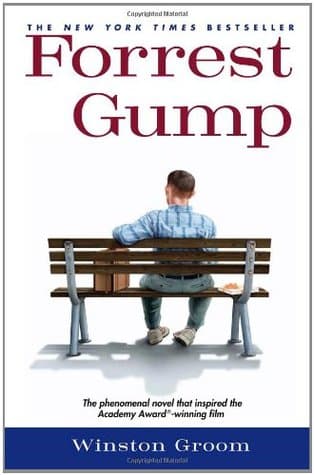
Winston Groom was an American author known primarily for his fiction. He is best recognized for his novel "Forrest Gump," which tells the story of a man with a low IQ who inadvertently influences several historical events. Groom's work has been adapted into a successful film, further cementing its place in popular culture.
Similar books
- A Confederacy of Dunces
John Kennedy Toole
3.9 (231k) average on GoodreadsLiterary FictionFeatures an eccentric, larger-than-life protagonist whose unique worldview clashes with society, leading to comedic situations.
- Catch-22
Joseph Heller
4.0 (723k) average on GoodreadsHistorical FictionA satirical war novel that uses dark humor and absurdity to critique society and institutions.
- Ragtime
E.L. Doctorow
3.9 (38k) average on GoodreadsLiterary FictionRagtime offers intricate, multi-layered social commentary and a deliberate blending of fictional and historical figures to explore themes of race, class, and social change in a specific era. Forrest Gump, by contrast, uses its historical backdrop more as a stage for its character's personal, often accidental, journey, prioritizing individual whimsy over deep societal analysis.
- The Pillars of the Earth
Ken Follett
4.3 (649k) average on GoodreadsFantasyThe Pillars of the Earth meticulously researches and constructs an entire historical world (medieval England) to explore grand societal forces, human ambition, and faith, emphasizing historical immersion. Forrest Gump takes a lighter, more episodic approach, focusing on an individual's accidental navigation through a broad span of history rather than deep historical reconstruction or the study of societal dynamics.
- To Kill a Mockingbird
Harper Lee
4.3 (4.5M) average on GoodreadsHistorical FictionIn the 1930s Jim Crow South, Harper Lee writes about racial injustice, moral growth, and the quiet courage of a lawyer father, Atticus Finch, as seen through his young daughter's eyes.
- The Great Gatsby
F. Scott Fitzgerald
3.9 (3.8M) average on GoodreadsHistorical FictionIn the opulent Roaring Twenties, a mysterious millionaire's lavish parties hide his desperate, tragic pursuit of a lost love, exposing the emptiness within the American Dream.




Enjoyed the summary?
A summary gives you the shape of the book. The book itself has the detail, the examples and the voice.
Find Forrest Gump on AmazonAs an Amazon Associate, BookBrief earns from qualifying purchases. How we're funded