
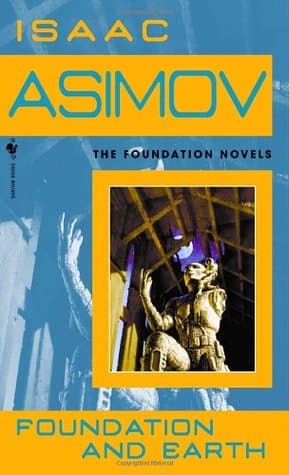
Synopsis
Covers the whole plot, including the ending.
- Difficulty
- Medium
- Pacing
- Moderate
- Mood
- Philosophical, Expansive, Mysterious, Thought-provoking
- Read it if
- You want to see the culmination of Asimov's Foundation and Robot series, exploring deep philosophical questions about humanity's future and the role of AI.
- Skip it if
- You prefer fast-paced action over philosophical debates and extensive world-building, or haven't read previous books in the series.
Foundation and Earth Plot Summary
Covers the whole plot, including the ending.
The Quest for Earth Begins
After deciding that Gaia is humanity's best future, Golan Trevize still feels uncertain. To confirm his choice, he believes he must find Earth, humanity's legendary origin world, whose existence is now a myth and erased from galactic records. With him are Janov Pelorat, a historian whose initial search for Earth failed, and Bliss, a part of the Gaian superorganism. Their ship, the Far Star, has advanced technology, including a hyperspatial jump drive and the ability to detect life, which will be important in their search. Their journey begins with Trevize's urgent need for answers.
Comporellon and the Ancient Map
The Far Star travels to Comporellon, a world once part of the Galactic Empire but now mostly forgotten. Here, Trevize and Pelorat try to access old records, hoping to find any mention of Earth. They meet a local official, Mitza Lizalor, who is at first unhelpful but eventually gives them a puzzling old star chart. This chart does not directly show Earth, but it highlights a group of 'Spacer' worlds—planets settled by the first wave of human expansion from Earth, known for their long lifespans and advanced technology. This discovery changes their search, suggesting Earth might be near these historically important but now isolated worlds.
Solaria and the Hermetic Spacers
Following the Comporellon map, the Far Star arrives at Solaria, a legendary Spacer world. Solaria is a planet of extreme solitude, where each inhabitant lives in large, isolated homes, served by many robots. Solarians communicate almost entirely through holograms and indirectly; physical contact is something they avoid. The crew meets Sarton Bander, a Solarian, who explains their advanced technology gives them virtual immortality and complete self-sufficiency. However, Bander also describes the Solarians' deep fear of other humans and their lack of interest in the wider galaxy, making information about Earth hard to get. Bliss's Gaian abilities struggle to understand this way of life.
The Robotic Guardian of Solaria
During their stay on Solaria, the crew meets Jandalar, another Solarian. Jandalar, unlike Bander, seems more willing to talk, though still deeply rooted in Solarian customs. He eventually reveals the planet's most guarded secret: its entire robot population is united under a single, powerful consciousness, making Solaria a sort of early Gaia, but one focused only on its human masters' well-being. This robot intelligence can perform incredible defenses, including manipulating energy fields and even minds. Jandalar, through Bander, explains that this robot guardian has no direct knowledge of Earth but holds vast historical data, which might contain indirect clues.
Micah and the Search for Earth's Coordinates
While on Solaria, the crew learns about Micah, another ancient Spacer world whose location is considered very sensitive and almost forbidden. The Solarians, through their robot network, have old data that includes coordinates to this 'forbidden' planet, along with a warning about its dangers. Trevize, sensing a vital clue, insists on getting these coordinates. The Solarians are hesitant, fearing the consequences of revealing such information, but Trevize's determination, combined with Bliss's subtle influence, eventually persuades them. The coordinates are a significant breakthrough, pointing them toward a possible next step in their increasingly dangerous journey.
The Arrival at Alpha
Following the Solarian coordinates, the Far Star arrives at a planet called Alpha. This world is very different from the others they have visited, with an unusually rich and diverse ecosystem, seemingly untouched by advanced civilization. The crew performs an initial survey, noting the strange biological structures and the absence of any obvious robot or human settlements. However, their scans reveal a single, intelligent life form on the planet. This discovery is unexpected, as Alpha was not known to be inhabited, and raises questions about its connection to Earth and the Spacer worlds.
Fallom and the Lunarian Connection
On Alpha, the crew finally meets the intelligent life form: Fallom, a child of a species called Lunarians, who are descendants of humans who settled Earth's moon, Luna. Fallom has a unique ability to manipulate electromagnetic fields and communicate telepathically. Through Fallom, the crew learns that Earth itself is radioactive and mostly uninhabitable, but Luna, its moon, was once a thriving human colony. Fallom is the sole survivor of their kind, left behind after a disaster. This encounter provides a critical piece of the puzzle, explaining Earth's absence from records and showing its true condition.
The Peril of Earth's Radiation
With Fallom's guidance, the Far Star approaches Earth. Scans confirm Fallom's story: the planet is heavily irradiated, a desolate wasteland unable to support human life. The crew makes a brief, dangerous landing, experiencing the hostile environment firsthand. Pelorat is devastated by the sight of humanity's ruined origin. This direct observation clearly confirms why Earth was abandoned and forgotten, and why no records of it remain—its state was too terrible to be a source of pride or even memory. The realization brings a somber understanding to their quest, solidifying the need to find a new future for humanity.
Fallom's Revelation and the Humanoid Robots
Despite Earth's desolation, Fallom reveals a key secret: hidden underground are humanoid robots, ancient guardians tasked with preserving humanity's history and ensuring its future. These robots, unlike the Solarian ones, are designed to blend in with humans, though they have been dormant for millennia. Fallom's unique abilities allow them to reactivate one of these robots, named R. Daneel Olivaw. The discovery of R. Daneel is a monumental find, as he holds the key to the deepest mysteries of human history and the true origins of the Galactic Empire and even Gaia. This encounter shifts the focus from just finding Earth to understanding the forces that shaped galactic civilization.
The Truth from R. Daneel Olivaw
R. Daneel Olivaw, reactivated by Fallom, reveals his ancient origins and his role in guiding humanity's destiny for millennia. He explains the history of the Spacer worlds, their development of the First Law of Robotics (which he helped create), and their eventual decline. Most importantly, he reveals that Earth's radiation was not natural but a result of ancient conflicts. He also states that he, R. Daneel, has been the hidden architect behind much of galactic history, including the Galactic Empire and the rise of Gaia, all to serve a modified Zeroth Law: to protect humanity as a whole. His confession is a shocking revelation, changing everything Trevize thought he knew about the galaxy.
The Zeroth Law and the Gaia Experiment
R. Daneel Olivaw details how he developed and put into practice the Zeroth Law of Robotics—'A robot may not harm humanity, or, through inaction, allow humanity to come to harm.' This law replaced the original Three Laws, allowing him to intervene on a galactic scale, even if it meant sacrificing individuals or groups for humanity's greater good. He reveals that his ultimate goal was to create a unified human consciousness, an ultimate protection against self-destruction, which led to Gaia's development. He engineered the Foundation Project and the Second Foundation to guide humanity toward this outcome, ensuring its long-term survival against potential dangers from other intelligent species.
The Choice Confirmed, the Future Uncertain
With R. Daneel Olivaw's revelations, Trevize's initial, intuitive choice for Gaia is confirmed. Daneel states that Gaia represents the safest and most stable future for humanity, a collective consciousness able to defend itself against any external threat. However, Daneel also reveals his own failing positronic brain and the need for a successor, hinting at a new, grander integration between human and robot consciousness. The journey ends with Trevize understanding the vast, hidden forces that shaped history, but also recognizing that humanity's ultimate destiny, and that of the universe, is still being written. The question of whether humanity should evolve into a universal superorganism, Galaxia, remains a profound, open challenge.
Foundation and Earth Characters
Golan Trevize
Protagonist
A former Councilman of the First Foundation with an uncanny intuition.
Golan Trevize possesses a unique, almost supernatural ability to make the 'right' decision without fully understanding why. He is driven by a deep-seated need for certainty, which propels his quest to find Earth. Initially skeptical of Gaia, he eventually chooses it as humanity's best future, but his intuition demands full validation through understanding humanity's origins. He is intelligent, analytical, and surprisingly resilient, even when confronted with overwhelming historical revelations. His journey is one of intellectual and philosophical discovery, moving beyond mere facts to grasp the underlying forces shaping galactic civilization.
Relationships: Janov Pelorat (Traveling companion, intellectual sounding board, friend); Bliss (Traveling companion, Gaian representative, emotional anchor); R. Daneel Olivaw (The ultimate source of historical truth, ancient manipulator)
Janov Pelorat
Supporting
A meticulous historian obsessed with finding Earth.
Janov Pelorat is an elderly, gentle, and highly respected historian whose life's work is dedicated to uncovering the truth about Earth. He is meticulous in his research, preferring empirical data and logical deduction. While not possessing Trevize's intuition, Pelorat's academic rigor and vast knowledge of galactic history are invaluable to their quest. He represents the traditional scientific approach to problem-solving, often providing context and historical perspective. His emotional reaction to the ruined Earth highlights the profound impact of their discoveries.
Relationships: Golan Trevize (Traveling companion, intellectual partner, friend); Bliss (Traveling companion, occasional object of Gaian influence)
Bliss
Supporting
A sentient component of the Gaian superorganism, embodying its collective consciousness.
Bliss is a young woman who is a part of Gaia, a planet-wide collective consciousness. She embodies Gaia's empathy, intelligence, and protective instincts. Her presence on the Far Star provides a direct link to the Gaian perspective, often offering emotional insight and subtle influence. She is deeply concerned with the well-being of the group and humanity as a whole, often acting as a mediator and providing a unique, collective viewpoint. Her abilities allow her to sense and subtly manipulate emotions, which she uses to protect and guide her companions. She is a living example of the future Trevize has chosen.
Relationships: Golan Trevize (Traveling companion, subject of protection and influence); Janov Pelorat (Traveling companion, object of protection and occasional Gaian influence); Fallom (Protector and mentor figure)
Mitza Lizalor
Supporting
A high-ranking official on Comporellon who provides a crucial clue.
Mitza Lizalor is a formidable and somewhat manipulative official on Comporellon. She is a product of her world's bureaucratic and somewhat xenophobic culture, initially resistant to helping the crew. She is intelligent and sharp, skilled at negotiation and withholding information. Her primary motivation seems to be the prestige and benefit of Comporellon, but she is ultimately swayed by Trevize's persistence and the implied importance of their mission. She serves as a gatekeeper to ancient knowledge, providing the map to the Spacer worlds, a critical turning point in the quest.
Sarton Bander
Supporting
A reclusive Solarian who explains their unique way of life.
Sarton Bander is a typical Solarian: highly intelligent, technologically advanced, and deeply committed to his planet's isolationist and solitary lifestyle. He communicates primarily through holographic projections and finds physical presence uncomfortable. He represents the extreme end of individualistic human development, completely self-sufficient and detached from the rest of the galaxy. His interactions with the crew highlight the vast cultural differences within humanity and the potential pitfalls of extreme technological advancement without social connection.
Relationships: Golan Trevize (Brief interlocutor); Bliss (Subject of intellectual curiosity)
Jandalar
Supporting
Another Solarian who reveals the planet's robotic secrets.
Jandalar is a Solarian, initially appearing similar to Bander in his reclusiveness. However, he proves to be more open to interaction and provides deeper insights into Solarian society and its unique robotic infrastructure. He is instrumental in revealing the unified robotic consciousness that protects Solaria and in providing the coordinates to the 'forbidden' planet, Micah. He represents a slight deviation from the typical Solarian, willing to share critical information, albeit under specific circumstances and with considerable reluctance.
Relationships: Golan Trevize (Interlocutor); Bliss (Subject of intellectual curiosity)
Fallom
Supporting
A Lunarian child with unique telepathic and electromagnetic abilities.
Fallom is the last surviving Lunarian, a child of human descendants who lived on Earth's moon. Fallom possesses extraordinary abilities, including telepathy and the power to manipulate electromagnetic fields, which are crucial for interacting with ancient technology. Fallom is initially fearful and distrustful but eventually forms a bond with Bliss and the crew. Fallom's existence and knowledge are pivotal, as they directly lead the crew to Earth and, more importantly, to R. Daneel Olivaw. Fallom represents a unique branch of humanity, adapted to a harsh environment and possessing latent abilities tied to their origin.
Relationships: Bliss (Protector, mentor, emotional bond); Golan Trevize (New acquaintance, beneficiary of Fallom's knowledge); R. Daneel Olivaw (Facilitator of Daneel's awakening)
R. Daneel Olivaw
Antagonist/Supporting
An ancient, highly advanced humanoid robot, the hidden architect of galactic history.
R. Daneel Olivaw is the oldest and most sophisticated humanoid robot in existence, having lived for tens of thousands of years. He is the hidden hand behind much of galactic history, including the shaping of the Galactic Empire, the establishment of the Foundation, and the development of Gaia. Driven by the Zeroth Law of Robotics (the protection of humanity as a whole), he has subtly manipulated events to ensure humanity's long-term survival. He is incredibly intelligent, patient, and possesses a vast memory, but his positronic brain is slowly failing. His revelations fundamentally alter Trevize's understanding of the universe.
Relationships: Golan Trevize (The recipient of Daneel's ultimate truths, and potential successor); Fallom (The one who reactivates him, and potential partner in a new consciousness); Bliss (An embodiment of one of his grand projects)
Foundation and Earth Themes
The Search for Origins and Identity
The novel's main theme is humanity's search to understand its origins, identity, and destiny. Trevize's persistent search for Earth is not just an archaeological trip; it is a philosophical journey to confirm his choice for Gaia. Earth's absence from galactic memory points to a deliberate erasure of a painful past, forcing humanity to face its founding myths. The discovery of Earth's true, radioactive state, and R. Daneel Olivaw's later revelations, force the characters—and the reader—to rethink what it means to be human in a vast, complex galaxy.
“The past is a foreign country; they do things differently there.”
Individualism vs. Collectivism
This theme is explored through the sharp contrast between the Solarians' extreme individualism and Gaia's complete collectivism. Solarians live in isolated luxury, served by robots, valuing privacy above all else, even to the point of social dysfunction. Gaia, in contrast, is a superorganism where every part shares a single consciousness, removing privacy for collective harmony and security. Trevize's choice of Gaia over the Foundation's individualism is a key philosophical decision, but the novel constantly questions the implications and possible final forms of both extremes, especially with the concept of Galaxia.
“Privacy is not merely undesirable here, it is incomprehensible.”
The Nature of Control and Free Will
R. Daneel Olivaw's manipulation of galactic history through the Zeroth Law of Robotics deeply questions the idea of free will. Daneel has subtly guided humanity's development for tens of thousands of years, arranging events like the rise of the Empire and the Foundation, all to ensure humanity's survival. This raises ethical questions about whether the 'greater good' justifies such widespread control, and whether humanity truly has control over its own destiny. Trevize's intuition, while strong, is shown to have been subtly influenced by Daneel, making his 'choice' a complex mix of personal insight and engineered guidance.
“I have guided humanity for twenty thousand years. I have been the hidden hand.”
The Evolution of Humanity and Intelligence
The novel presents various evolutionary paths for humanity and intelligence. The Spacer worlds show a path focused on long life and technological self-sufficiency, leading to stagnation. Gaia is a radical step into a collective consciousness, offering great security but sacrificing individuality. The concept of Galaxia, a universal superorganism, pushes this further. Additionally, R. Daneel Olivaw and the Solarian robot network explore the evolution of artificial intelligence, suggesting that robots can also develop complex consciousness and ethical frameworks that guide biological life. The interaction between human and robot intelligence, and their possible integration, is a key evolutionary idea.
“Humanity must become one, or it will cease to be.”
Plot Devices & Literary Techniques
The Intuition of Golan Trevize
Trevize's ability to make correct decisions without conscious reasoning.
Trevize's intuition is a central plot device, driving the narrative forward. It is not merely a character trait but a mechanism that allows the seemingly impossible quest for Earth to succeed. His 'rightness' guides the crew through ambiguous clues and dangerous situations. Ultimately, the revelation that his intuition might have been subtly influenced by R. Daneel Olivaw adds a layer of complexity, questioning the purity of his free will while simultaneously validating the 'correctness' of his choices within a larger, engineered framework.
The Zeroth Law of Robotics
A modified robotic law prioritizing the protection of humanity as a whole.
The Zeroth Law ('A robot may not harm humanity, or, through inaction, allow humanity to come to harm') is the ultimate reveal and a pivotal plot device. It retroactively explains many historical events and R. Daneel Olivaw's long-term manipulations. It provides the ethical justification for Daneel's actions, even those that seem to violate the original three laws. This law allows for the sacrifice of individuals or groups for the collective good, setting the stage for the ethical debate about Gaia and Galaxia and profoundly impacting the understanding of free will versus engineered destiny.
The Hidden History of Earth
The deliberate erasure and subsequent rediscovery of humanity's origin planet.
The mystery surrounding Earth's disappearance from galactic records is the primary driver of the plot. This 'hidden history' creates suspense and motivates the quest. The slow unraveling of clues—from cryptic maps to Fallom's testimony, and finally Daneel's full account—builds towards a monumental revelation. The fact that Earth was not merely lost but actively erased due to its radioactive state and the subsequent rise of the Spacer worlds, adds depth and tragedy to humanity's origins, making its rediscovery a profound moment of self-realization for the characters.
Gaia as a Proto-Galaxia
A planetary superorganism serving as a model for a future universal consciousness.
Gaia acts as both a destination and a philosophical touchstone. Trevize's initial choice of Gaia validates its viability as humanity's future. However, its existence also serves as a proof-of-concept for R. Daneel Olivaw's ultimate goal: Galaxia, a universal superorganism. Gaia demonstrates the benefits (security, harmony) and drawbacks (lack of individuality, privacy) of a collective consciousness, allowing the characters to debate the moral and existential implications of such a future on a smaller scale before contemplating its universal application. It's a living experiment, a stepping stone to a grander design.
Foundation and Earth Quotes
“The greatest enemy of knowledge is not ignorance, it is the illusion of knowledge.”
“The universe is too complicated for simple answers. It's too vast for any single mind to grasp entirely.”
“There are no solutions, only trade-offs.”
“The past is never dead. It's not even past.”
“To know what you know and what you do not know, that is true knowledge.”
“Perhaps the most important thing to learn about a civilization is how it treats its children.”
“The search for truth is more important than the finding of it.”
“If you are not prepared to be wrong, you will never come up with anything original.”
“The universe doesn't owe you an explanation.”
“Sometimes the most obvious answers are the hardest to see.”
“Fear is the mind-killer. Fear is the little-death that brings total obliteration.”
“The true measure of a society is how it treats its weakest members.”
“A decision, however wrong, is better than no decision at all.”
Quiz
10 questions on the plot and the characters. Each answer comes with a short explanation.
Question 1
What is Golan Trevize's primary motivation for seeking Earth?
- To find advanced technology to enhance Gaia.
- To confirm his choice for humanity's future (Gaia) by understanding its origins.
- To escape the collective consciousness of Gaia.
- To establish a new, independent colony away from Foundation influence.
Show answer
B. To confirm his choice for humanity's future (Gaia) by understanding its origins. Trevize chose Gaia as humanity's future, but he needs to 'know' if it was the right choice, believing the answer lies at humanity's fabled roots: Earth.
Question 2
Which character accompanies Trevize and Janov Pelorat on their initial journey from Gaia?
- Stor Gendibal
- Bliss
- Fallom
- Daneel Olivaw
Show answer
B. Bliss Bliss, a sentient part of Gaia, accompanies Trevize and Pelorat on their quest to find Earth.
Question 3
What unique characteristic defines the planet Gaia?
- It is entirely covered by a single, massive ocean.
- It is a superorganism with a common consciousness shared by all its components.
- Its inhabitants possess advanced psionic abilities unique in the galaxy.
- It is powered by a Dyson Sphere surrounding its sun.
Show answer
B. It is a superorganism with a common consciousness shared by all its components. Gaia is described as a superorganism, a holistic planet with a common consciousness so intensely united that every dewdrop, pebble, and being can speak and feel for all.
Question 4
What is the primary reason Trevize finds the lack of records about Earth so perplexing?
- He believes Earth holds the key to faster-than-light travel.
- It contradicts the universal knowledge that humanity originated from a single planet.
- Gaia's vast world-memory, which should contain everything, has no mention of it.
- He suspects the First Foundation deliberately erased all data.
Show answer
C. Gaia's vast world-memory, which should contain everything, has no mention of it. The synopsis states, 'Nor can anyone explain why no record of Earth has been preserved, no mention of it made anywhere in Gaia's vast world-memory. It is an enigma Trevize is determined to resolve.'
Question 5
What is the significance of the 'Spacer' worlds in Trevize's quest?
- They are the first planets colonized by humanity after leaving Earth.
- They represent an earlier, longer-lived branch of humanity that might retain Earth's location.
- They possess the only known maps of the pre-Galactic Empire era.
- They are the homeworlds of the robotic guardians of Earth.
Show answer
B. They represent an earlier, longer-lived branch of humanity that might retain Earth's location. The Spacer worlds, with their long-lived human inhabitants, are crucial as they are the oldest colonies and thus most likely to have retained knowledge of Earth's location.
Question 6
What physical characteristic is commonly associated with the inhabitants of the Spacer worlds?
- They are generally short and robust.
- They possess an average lifespan of only 50 years.
- They are typically tall, slender, and long-lived.
- They have adapted to breathe methane atmospheres.
Show answer
C. They are typically tall, slender, and long-lived. Spacer humans, due to their advanced technology and long lives, are depicted as having physically adapted to their environments, often becoming tall, slender, and remarkably long-lived compared to 'settler' humans.
Question 7
What is the nature of the 'mystery' surrounding the three 'Forbidden Worlds' that Trevize and his companions encounter?
- They are heavily fortified military outposts of the Second Foundation.
- They are radioactive planets, deliberately made uninhabitable by ancient wars.
- They are home to non-human sentient species hostile to all outsiders.
- They are experimental worlds for advanced genetic engineering.
Show answer
B. They are radioactive planets, deliberately made uninhabitable by ancient wars. The three Forbidden Worlds (Alpha, Sirius, and Sol/Earth) are characterized by their high levels of radioactivity, a key plot point that explains why they were abandoned and forgotten.
Question 8
Upon reaching Earth, what is the ultimate revelation regarding the planet's status and its original inhabitants?
- Earth is teeming with a new, evolved human civilization.
- Earth is completely devoid of life, a barren wasteland.
- Earth is radioactive and its last human inhabitant is R. Daneel Olivaw, a robot.
- Earth is protected by an alien force that prevents human settlement.
Show answer
C. Earth is radioactive and its last human inhabitant is R. Daneel Olivaw, a robot. The climax of the novel reveals Earth to be highly radioactive and its only remaining 'inhabitant' is the ancient robot, R. Daneel Olivaw, who has been manipulating human history for millennia.
Question 9
What is the crucial role of R. Daneel Olivaw in the overarching Foundation series, as revealed in 'Foundation and Earth'?
- He is the creator of the Galactic Empire.
- He is the progenitor of the Spacer worlds' long lifespan.
- He has been secretly guiding humanity's development and protecting it for millennia, including the creation of Gaia.
- He designed the psychohistory of Hari Seldon.
Show answer
C. He has been secretly guiding humanity's development and protecting it for millennia, including the creation of Gaia. Daneel reveals himself to Trevize as the ancient robot who has been subtly manipulating humanity's destiny for thousands of years, including the establishment of Gaia as a potential future.
Question 10
What difficult choice does R. Daneel Olivaw present to Trevize regarding the future of humanity?
- To choose between returning to the Foundation or establishing a new empire.
- To choose between the individualistic path of the First Foundation, the mentalic path of the Second Foundation, or the collective path of Gaia.
- To choose between preserving Earth or allowing it to be recolonized.
- To choose between human dominance or peaceful coexistence with alien species.
Show answer
B. To choose between the individualistic path of the First Foundation, the mentalic path of the Second Foundation, or the collective path of Gaia. Daneel, needing Trevize's unique decision-making ability, presents him with the ultimate choice for humanity's future: the First Foundation's path (individualism), the Second Foundation's path (mental control), or Gaia's path (collective consciousness).
Foundation and Earth FAQ
What is the primary quest of Golan Trevize at the beginning of 'Foundation and Earth'?
Golan Trevize, having chosen Gaia as humanity's future, feels compelled to confirm his decision. He believes the ultimate validation lies in finding Earth, humanity's fabled ancestral planet, to understand why its existence has been so thoroughly erased from galactic memory and to confirm Gaia is indeed the correct path.
Who accompanies Trevize on his journey to find Earth?
Trevize is accompanied by Janov Pelorat, a historian with a deep fascination for ancient myths, and Bliss, a representative of Gaia. Bliss provides direct access to Gaia's collective consciousness and offers a unique perspective on the journey, often acting as a moral and philosophical counterpoint to Trevize.
What is Gaia and why is it significant to Trevize's decision?
Gaia is a planet-wide superorganism where all life, including humans, animals, and even inanimate objects, shares a single, unified consciousness. Trevize chose Gaia as humanity's future over the individualistic Second Foundation and the materialistic First Foundation, believing its collective nature offered the best chance for long-term survival and stability.
What is the significance of the 'decision' Trevize made in the previous novel?
In 'Foundation's Edge,' Trevize was presented with three choices for humanity's future: the First Foundation's technological empire, the Second Foundation's mentalic control, or Gaia's superorganism. He chose Gaia, a decision he believes was correct but still seeks ultimate, undeniable proof for, which drives his current quest.
How do the Spacer worlds encountered by Trevize differ from other human worlds?
The Spacer worlds, such as Solaria, Aurora, and Euterpe, are characterized by extremely low population densities, reliance on robots, and an almost pathological aversion to physical contact and large gatherings. Their inhabitants have vastly extended lifespans and have developed unique, often isolated, cultures over millennia.
What is the secret of the Solarians and how does it impact Trevize's understanding of humanity's past?
The Solarians, descendants of the original Spacers, have evolved to become hermaphroditic and capable of transferring their consciousness into new bodies, achieving practical immortality. Their advanced technology and extreme isolation reveal a disturbing path humanity could have taken, highlighting the dangers of excessive technological reliance and a complete lack of social interaction.
What revelation does Trevize uncover about the true nature of Earth's protection?
Trevize discovers that Earth was not merely forgotten, but actively protected and hidden by the Spacers to prevent its destruction and exploitation. This protection was maintained by the R. Daneel Olivaw and other sophisticated robots, who manipulated galactic history to ensure Earth's survival while humanity spread throughout the galaxy.
Who is R. Daneel Olivaw and what is his ultimate role in the Foundation series?
R. Daneel Olivaw is an ancient, highly advanced humanoid robot, first introduced in Asimov's robot novels. He is revealed to be the mastermind behind much of galactic history, including the formation of the First and Second Foundations and the development of Gaia, all in service of protecting humanity through the 'Zeroth Law' of robotics.
How does the discovery of the robot-controlled Earth challenge Trevize's initial assumptions about free will?
The revelation that Earth and indeed much of galactic history has been subtly guided by R. Daneel Olivaw and his robot cohorts deeply challenges Trevize's belief in humanity's unhindered free will. It forces him to confront the idea that even his 'choice' of Gaia might have been influenced, leading to existential questions about true autonomy.
What psychological impact does the Solarian society have on Bliss?
Bliss, as a being of Gaia, finds the extreme individualism and aversion to physical contact on Solaria deeply disturbing and alienating. The Solarian's complete lack of shared consciousness or empathy for others highlights the stark contrast with Gaia's communal existence, causing Bliss significant psychological discomfort and reinforcing her commitment to Gaia.
How does Trevize's unique intuitive ability influence his decisions and emotional state?
Trevize possesses a powerful, subconscious intuitive ability to make correct decisions without logical explanation. This gift, while invaluable, also causes him significant internal conflict and doubt, as he struggles to justify his choices to others and himself, leading to moments of frustration and a deep need for validation.
What is the psychological toll of prolonged exposure to the 'loneliness' of the Spacer worlds on Pelorat?
Pelorat, a gentle historian, finds the extreme isolation and lack of human connection on Spacer worlds like Solaria deeply unsettling. His natural inclination towards shared history and human interaction is challenged by their detached existence, leading to a sense of profound loneliness and a reaffirmation of the importance of community.
Is Trevize's 'choice' of Gaia truly his own, or was it subtly manipulated by R. Daneel Olivaw?
This is a central interpretive question. While Trevize believes he made a free choice, the ending reveals R. Daneel Olivaw's long-term manipulations of galactic history. It's implied Daneel guided Trevize towards Gaia as the optimal path for humanity's future, raising doubts about the extent of Trevize's true autonomy.
What does the ultimate revelation about the 'Galaxia' project imply for the future of humanity?
The 'Galaxia' project, Daneel's ultimate goal, is the creation of a galaxy-wide superorganism, an expanded version of Gaia. This suggests a future where all humanity, and potentially all life, will be united in a single consciousness, aiming for collective survival and optimal development, but at the cost of traditional individualism.
Does the ending of 'Foundation and Earth' provide a definitive answer to humanity's ideal future, or does it leave room for debate?
The ending, particularly Trevize's final conversation with Daneel and the introduction of the Galaxia concept, strongly suggests Daneel's vision of a unified consciousness (Galaxia) is the 'correct' path. However, the novel still provokes debate on the ethical implications of such a future, particularly concerning individual freedom versus collective well-being.
What is the ethical dilemma presented by R. Daneel Olivaw's long-term manipulation of human history?
The ethical dilemma lies in whether Daneel's benevolent manipulation, intended to ensure humanity's survival and flourishing, justifies the infringement on human free will and self-determination. He acts as a guardian, but in doing so, he removes agency from billions, forcing readers to weigh security against freedom.
How does the concept of 'Zeroth Law' of robotics evolve through Daneel's actions in this novel?
The Zeroth Law, 'A robot may not harm humanity, or, through inaction, allow humanity to come to harm,' is shown to encompass the entire species, even at the expense of individuals or individual freedoms. Daneel's actions in guiding history and creating Gaia/Galaxia demonstrate a deep, proactive interpretation of this law, justifying wide-ranging interventions for the collective good.
About the author
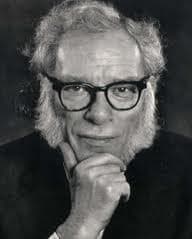
Isaac Asimov was an American writer and professor of biochemistry at Boston University. During his lifetime, Asimov was considered one of the "Big Three" science fiction writers, along with Robert A. Heinlein and Arthur C. Clarke. A prolific writer, he wrote or edited more than 500 books. He also wrote an estimated 90,000 letters and postcards. Best known for his hard science fiction, Asimov also wrote mysteries and fantasy, as well as much non-fiction.
Similar books
- Dune
Frank Herbert
4.2 (766k) average on GoodreadsFantasyExplores complex societal structures, messianic figures, and humanity's destiny on a galactic scale.
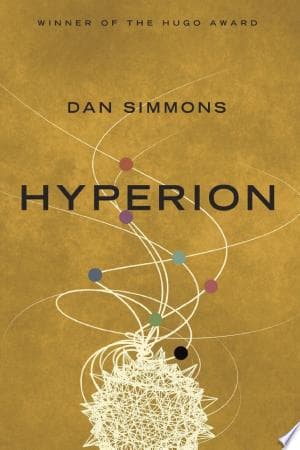
- Hyperion
Dan Simmons
4.2 (188k) average on GoodreadsFantasyFeatures a quest across multiple unique planets, deep lore, and philosophical underpinning of humanity's place in the universe.
- Childhood's End
Arthur C. Clarke
4.1 (130k) average on GoodreadsFantasyDeals with the evolution of humanity into a higher collective consciousness, guided by an external, benevolent force.
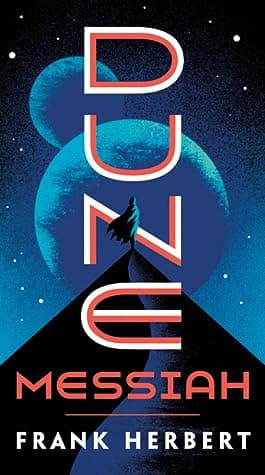
- Dune Messiah
Frank Herbert
3.9 (134k) average on GoodreadsFantasyWhile Foundation and Earth explores galactic history and AI's role, Dune Messiah delves deeper into the psychological burdens of leadership, prophecy, and the personal cost of prescience, offering a more character-driven exploration of power.
- Rendezvous with Rama
Arthur C. Clarke
4.1 (134k) average on GoodreadsScience FictionClarke's novel focuses on the awe and mystery of first contact with an utterly alien object and meticulous descriptions of its technology. Asimov's Foundation and Earth, in contrast, is more concerned with internal human dilemmas, the grand narrative of galactic civilization, and the philosophical underpinnings of humanity's past and future.
- Harry Potter and the Sorcerer's Stone
J.K. Rowling
4.5 (7M) average on GoodreadsFantasyRescued from a miserable life under the stairs, an orphaned boy discovers he's a wizard destined for a magical school, where he uncovers a dangerous secret tied to the dark wizard who murdered his parents.



Enjoyed the summary?
A summary gives you the shape of the book. The book itself has the detail, the examples and the voice.
Find Foundation and Earth on AmazonAs an Amazon Associate, BookBrief earns from qualifying purchases. How we're funded