
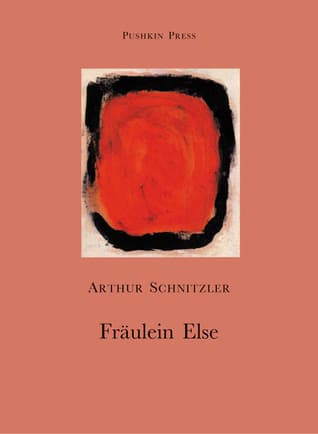
Synopsis
Covers the whole plot, including the ending.
- Difficulty
- Medium
- Pacing
- Slow
- Mood
- Introspective, Tragic, Intense, Anguished
- Read it if
- You appreciate deep psychological dives into a character's mind and explorations of societal pressures on women.
- Skip it if
- You prefer fast-paced plots or lighthearted stories, or are sensitive to themes of exploitation and suicidal ideation.
Fräulein Else Plot Summary
Covers the whole plot, including the ending.
The Urgent Letter
Fräulein Else, a beautiful and lively young woman, vacations in a luxurious Alpine resort with her Aunt and Uncle. Her carefree existence of tennis, walks, and flirtations is abruptly shattered by an urgent letter from her mother. The letter reveals a devastating truth: Else's father, a respected lawyer, has embezzled client funds and faces imminent arrest and imprisonment for debt. Her mother asks Else to approach Herr von Dorsday, a wealthy art dealer and family acquaintance also staying at the resort, to borrow 30,000 gulden to save her father from scandal and ruin. The request plunges Else into shock and despair, forcing her to confront the precariousness of her family's social standing and her own vulnerability.
The Uncomfortable Proposition
Else, wracked with anxiety and the weight of her family's fate, seeks out Herr von Dorsday. Initially, she finds it difficult to discuss the subject, feeling deep shame. When she finally explains her predicament, Dorsday, a man known for his astute business sense and predatory nature, agrees to lend the money. However, his offer comes with a shocking and degrading condition: Else must appear before him, alone, for fifteen minutes, completely naked. He assures her it is merely for his personal pleasure, a private viewing, and not for any sexual act. This proposition utterly repulses Else, who is torn between her revulsion and the desperate need to save her father.
Internal Conflict and Deliberation
Following Dorsday's proposition, Else retreats to her room, consumed by a furious internal monologue. Her mind races, oscillating between outrage, shame, and a cold, pragmatic assessment of her options. She considers refusing, but the image of her father in prison, her mother's despair, and the family's public disgrace weigh heavily on her. She contemplates suicide as an escape, but dismisses it as cowardly. She imagines revealing Dorsday's demand to others, but fears the scandal and the perception of her own complicity. The prospect of sacrificing her dignity for her family's honor becomes a tormenting obsession, highlighting the stark contrast between her privileged upbringing and the harsh realities of her situation.
The Public Spectacle
Driven to a breaking point by the unbearable pressure and the perceived lack of alternatives, Else decides to comply with Dorsday's demand, but on her own terms. Instead of going to Dorsday's private room, she chooses a public setting. During an evening concert in the hotel's salon, filled with guests, Else walks into the room, removes her clothes, and stands naked before the shocked assembly for a brief, defiant moment. Her act is a desperate cry for agency, a public shaming of Dorsday, and a perverse assertion of her own body's worth beyond his private gaze. The room erupts in gasps and whispers, and a young man, a fellow guest, quickly covers her with a cloak.
The Aftermath and Collapse
Immediately after her shocking public display, Else collapses. She is carried away, her mind descending into a chaotic torrent of thoughts, hallucinations, and self-recrimination. The shame, the violation, and the sheer audacity of her act overwhelm her. Her internal monologue becomes increasingly fragmented and delirious, reflecting her shattered mental state. She yearns for oblivion, for an escape from the unbearable reality she has created. The once vibrant and self-assured Fräulein Else is now a broken figure, her innocence and dignity irrevocably compromised by the demands placed upon her and her own desperate response.
The Hypnotic State and Poison
In her state of delirium and despair, Else fixates on the idea of death as the only true liberation. She recalls seeing a bottle of veronal, a powerful sedative, in her aunt's room. With chilling resolve, she obtains the drug and consumes a large, fatal dose. Her final thoughts are a mixture of regret, defiance, and a longing for peace. She imagines her funeral, the reactions of her family and acquaintances, and a final, desperate plea for understanding. The veronal takes effect, slowly pulling her into an irreversible sleep, a final act of control in a life that had spiraled beyond her command.
The Journey Home
As the veronal takes hold, Else is placed on a train to be transported back to Vienna. She drifts in and out of consciousness, her internal monologue continuing, though increasingly disjointed and hallucinatory. She is aware of the journey, the concern of her aunt and uncle, and the hushed discussions around her. Yet, her mind is primarily occupied with images, memories, and a growing sense of detachment from her physical body. The journey becomes a metaphor for her transition from life to death, a slow, inevitable fading as the drug works its fatal magic, ultimately silencing her tormented thoughts.
Final Moments and Peace
In her final moments, Else experiences a brief flicker of peace amidst the chaos. Her thoughts become simpler, focusing on the sensation of fading, the release from unbearable pressure and shame. She imagines herself free, unburdened by societal expectations or financial demands. Her life, once so full of promise and youthful exuberance, is extinguished. Her death is a tragic indictment of the societal pressures and moral compromises that can destroy an innocent life, leaving behind only the silence where her vibrant internal world once existed.
Fräulein Else Characters
Fräulein Else
Protagonist
A beautiful, vivacious young woman thrust into a moral crisis.
Else is initially portrayed as a carefree, somewhat vain young woman, enjoying the privileges of her bourgeois upbringing. She is acutely aware of her beauty and its power, often using it, subconsciously or consciously, in her interactions. Beneath this surface, she possesses a keen intellect and a strong sense of personal dignity. However, she is also naive about the harsher realities of the world, particularly financial ones. Her internal monologue reveals a complex mix of vulnerability, defiance, and a desperate desire to maintain her integrity in the face of impossible choices.
Relationships: Herr von Dorsday (antagonistic, exploitative); Else's Mother (demanding, manipulative, dependent); Else's Father (absent, irresponsible, object of Else's duty); Paul (flirtatious acquaintance, object of fleeting romantic interest)
Herr von Dorsday
Antagonist
A wealthy, manipulative art dealer who preys on Else's vulnerability.
Herr von Dorsday is depicted as an older, powerful, and shrewd art dealer. He represents the corrupting influence of wealth and the objectification of women. He is calm, calculating, and utterly devoid of empathy, seeing Else not as a person but as a means to satisfy his desires. His proposition to Else is delivered with a chilling matter-of-factness, highlighting his ingrained sense of entitlement and his belief that everything, including human dignity, has a price. He embodies the societal hypocrisy that Else ultimately rebels against.
Relationships: Fräulein Else (exploiter and victim)
Else's Mother
Supporting
The demanding parent whose desperate plea initiates Else's crisis.
Else's mother is a largely unseen but powerful presence, primarily conveyed through her urgent letter and Else's internal reflections. She is portrayed as manipulative and dependent, placing an immense burden on Else to save the family from ruin. Her pleas are laced with emotional blackmail, emphasizing the family's honor and the dire consequences if Else fails. She represents the societal pressure and familial obligation that traps Else, forcing her into an impossible situation. Her actions, though born of desperation, ultimately lead to Else's tragic fate.
Relationships: Fräulein Else (demanding parent, burdened child)
Else's Father
Mentioned
The absent, irresponsible lawyer whose debts drive the plot.
Else's father is never seen directly but is the unseen force behind the entire crisis. He is a respected lawyer who, through financial mismanagement and embezzlement, brings his family to the brink of ruin. He symbolizes the hidden corruption and moral failings within the seemingly respectable bourgeois society. Else's desperate actions are primarily driven by a sense of duty to protect his reputation and save him from prison, even though she harbors resentment towards his irresponsibility. He is the catalyst for her moral dilemma.
Relationships: Fräulein Else (irresponsible father, dutiful daughter)
Paul
Supporting
A young man who shows fleeting romantic interest in Else.
Paul is a young man Else encounters at the resort. He is part of her social circle, a charming but ultimately superficial figure who engages in lighthearted flirtation with Else. He represents the carefree world Else is forced to abandon and the potential for a normal, pleasant life she might have had. His presence highlights the stark contrast between Else's internal turmoil and the seemingly idyllic, oblivious world around her. He is the one who eventually covers Else with a cloak after her public display, a gesture of unexpected kindness amidst the shock.
Relationships: Fräulein Else (flirtatious acquaintance)
Aunt and Uncle
Supporting
Else's unsuspecting chaperones at the resort.
Else's aunt and uncle are well-meaning but largely oblivious figures who provide her with a comfortable, albeit superficial, social environment at the resort. They represent the conventional, bourgeois society that Else is trying to navigate and protect. They are unaware of the depth of her family's financial crisis or Dorsday's vile proposition until Else's public breakdown. Their presence underscores Else's isolation and the silent burden she carries, as she feels she cannot confide in them without bringing shame upon her family.
Relationships: Fräulein Else (chaperones, distant relatives)
Fräulein Else Themes
The Commodification of Women
The novel clearly illustrates how women, particularly their bodies and dignity, can be treated as commodities in a patriarchal society. Dorsday's demand for Else to appear naked is an act of objectification, valuing her body over her personhood and linking it directly to a financial transaction. Else's internal struggle reveals her understanding that her beauty, once a source of power, is now being used against her. Her public display, while an act of defiance, also tragically confirms her body as a spectacle, albeit one she controls in her final, desperate moments.
“I must show myself to him naked. For thirty thousand gulden. It is a business transaction. My body for thirty thousand gulden.”
Societal Hypocrisy and Appearances
Schnitzler exposes the hypocrisy underlying bourgeois society. Else's family, despite their respected position, is built on financial impropriety. The urgent need to maintain appearances and prevent scandal drives Else's mother to make an outrageous demand of her daughter. The 'respectable' Herr von Dorsday, a pillar of society, harbors depraved desires. The novel critiques a world where reputation and social standing are prioritized above genuine morality, forcing individuals like Else to make impossible choices to uphold a facade.
“It's all about money. Always about money. And reputation. What would people say?”
The Illusion of Freedom and Agency
Else initially believes herself to be free and independent, enjoying her vacation. However, the letter from her mother shatters this illusion, revealing her deep lack of agency. She is trapped by familial duty, societal expectations, and financial constraints. While she attempts to reclaim agency through her public act of defiance, this freedom is ultimately self-destructive, leading to her death. Her internal monologue, though vibrant, highlights her isolation and her inability to truly control her own destiny in a world where her choices are dictated by external forces.
“I am free. I am free. And yet I am a slave. A slave to my family, to money, to a vile old man.”
The Power of the Internal Monologue
The entire novel is presented through Else's stream of consciousness, offering a raw and unfiltered look into her mind. This device allows the reader to experience her escalating panic, moral deliberations, and eventual descent into delirium in real-time. It highlights the gap between her inner turmoil and the placid, oblivious exterior she often presents. The monologue reveals her intelligence, her vanity, her fears, and her desperate attempts to rationalize or escape her situation, making her a complex and sympathetic character despite her flaws.
“If only I could scream. Scream so loud that the whole world would hear me. But I must be quiet. I must smile. I must pretend.”
Youth and Innocence Corrupted
Else embodies youthful innocence and vivacity at the start of the novel, enjoying the simple pleasures of her vacation. However, the harsh realities of her family's financial crisis and Dorsday's predatory demand quickly corrupt this innocence. She is forced to confront the darker aspects of human nature and the transactional nature of morality. Her eventual suicide is the tragic consequence of this corruption, signaling the complete destruction of her youthful spirit and the loss of her future.
“I was a girl. Now I am a woman. A fallen woman. And it is all his fault. And my father’s. And my mother’s.”
Plot Devices & Literary Techniques
Stream of Consciousness
The entire narrative unfolds through Else's unfiltered thoughts.
This is the primary narrative device, providing direct access to Else's internal world. The reader experiences her thoughts, feelings, memories, and fantasies in a continuous, unedited flow, often shifting rapidly between topics. This technique immerses the reader in Else's escalating psychological torment, allowing for a deep exploration of her moral dilemma, her anxieties, and her eventual breakdown. It blurs the line between reality and Else's perceptions, making her a highly subjective and unreliable narrator, yet profoundly empathetic.
The Urgent Letter
The catalyst that propels Else into her moral crisis.
The letter from Else's mother serves as the inciting incident, abruptly shattering Else's idyllic vacation and introducing the central conflict. It functions as a classic plot device to deliver crucial exposition about her father's financial ruin and the desperate need for money. More importantly, it immediately establishes the immense pressure and familial obligation Else faces, setting the stage for her agonizing internal struggle and the subsequent tragic events.
The Veronal
The instrument of Else's self-destruction and final act of agency.
The veronal, a sedative Else obtains from her aunt's room, is a crucial plot device that facilitates her suicide. It represents her ultimate escape from an unbearable reality and her final, desperate attempt to reclaim control over her own body and destiny. The act of taking the poison, though self-destructive, is presented as Else's only remaining form of agency after her public humiliation, allowing her to dictate the terms of her exit rather than succumb entirely to the exploitation of others.
The Public Nudity
Else's defiant, self-destructive act of protest.
Else's decision to expose herself publicly in the hotel salon, rather than privately to Dorsday, is a pivotal plot device. It is a dramatic, shocking climax that serves multiple functions: it's a desperate act of defiance against Dorsday's exploitation, a public shaming of his predatory nature, and a perverse reclaiming of her own body on her own terms. While intended as an assertion of agency, it simultaneously leads to her complete mental and physical collapse, making it a tragically self-destructive form of protest.
Fräulein Else Quotes
“I feel as if I were standing on a high mountain peak, and all the world is spread out before me, and I see everything so clearly, and yet I am so terribly alone.”
“Yes, I am beautiful. Beautiful and lost.”
“Money, money, money! Always money! That's all they ever talk about.”
“How easily one can lose one's honor, and how difficult it is to regain it.”
“I am a commodity. A plaything. An object.”
“The world is full of people who want something from you.”
“To be looked at, to be admired, to be desired... and then to be discarded.”
“Oh, the horror of it! To be naked before strangers, to expose one's very soul!”
“I must be dreaming. This cannot be real. This cannot be happening to me.”
“What is honor? A word. A breath. A nothing.”
“I want to disappear. To vanish. To be free.”
“The air is so heavy, I can hardly breathe.”
“They will talk about it for days. For weeks. For months. For years.”
“And then... nothing. Silence. Peace.”
Quiz
10 questions on the plot and the characters. Each answer comes with a short explanation.
Question 1
What is the primary reason Fräulein Else's mother contacts her, begging for help?
- To ask Else to return home for a family emergency.
- To inform Else that her father is gravely ill.
- To request Else borrow money from an acquaintance to save her father from debtor's prison.
- To arrange Else's engagement to a wealthy suitor.
Show answer
C. To request Else borrow money from an acquaintance to save her father from debtor's prison. Else's mother writes to her with an urgent plea: her father is facing debtor's prison, and Else must secure a loan from the wealthy Herr von Dorsday.
Question 2
Where is Fräulein Else staying when she receives her mother's letter?
- At her family's country estate.
- At a spa resort in the Alps.
- Visiting relatives in Vienna.
- Working as a governess in a wealthy household.
Show answer
B. At a spa resort in the Alps. Else is on vacation at a luxurious spa resort in the Alps when the fateful letter from her mother arrives, disrupting her carefree existence.
Question 3
Who is the wealthy acquaintance Else is asked to approach for a loan?
- Herr von Dorsday
- Herr Fiala
- Herr Specht
- Herr von Stein
Show answer
A. Herr von Dorsday The man Else must approach for the loan is the elderly, wealthy art dealer, Herr von Dorsday.
Question 4
What is Herr von Dorsday's shocking condition for lending the money?
- That Else agrees to marry him.
- That Else spends three nights with him.
- That Else allows him to view her naked for a quarter of an hour.
- That Else gives him her valuable family heirloom necklace.
Show answer
C. That Else allows him to view her naked for a quarter of an hour. Dorsday's repulsive condition is that Else must display herself naked to him for fifteen minutes, a demand that humiliates and traumatizes her.
Question 5
What is Else's initial internal reaction to Herr von Dorsday's proposition?
- Immediate outrage and refusal.
- Calculated consideration of the financial benefit.
- A mixture of horror, disgust, and a dawning realization of her powerlessness.
- Amusement at the absurdity of the request.
Show answer
C. A mixture of horror, disgust, and a dawning realization of her powerlessness. Else is initially horrified and disgusted, but her internal monologue reveals a desperate struggle between her sense of morality and the immense pressure to save her father, leading to a profound sense of helplessness.
Question 6
How does Else attempt to escape her predicament after receiving Dorsday's offer?
- She immediately confides in her aunt and uncle.
- She tries to find other ways to raise the money, like selling her jewelry.
- She considers running away or committing suicide.
- She confronts Dorsday, threatening to expose him.
Show answer
C. She considers running away or committing suicide. Else's internal monologue shows her spiraling into despair, contemplating drastic measures like fleeing or ending her life rather than submitting to Dorsday's demand.
Question 7
What is the broader societal critique implied by Else's situation?
- The hypocrisy of the medical profession.
- The superficiality of high society and the vulnerability of women within it.
- The decline of the Austro-Hungarian Empire.
- The inherent corruption of financial institutions.
Show answer
B. The superficiality of high society and the vulnerability of women within it. The novel exposes the precarious position of women in society, where their value and even their bodies can be commodified, especially when their families' financial stability is at stake. It critiques the moral decay beneath the glittering surface of the upper class.
Question 8
How does Else ultimately 'fulfill' Dorsday's demand?
- She privately appears before him in his hotel room.
- She exposes herself briefly in the public drawing-room of the hotel.
- She sends him a compromising photograph of herself.
- She agrees to a discreet meeting in a secluded garden.
Show answer
B. She exposes herself briefly in the public drawing-room of the hotel. In a desperate and defiant act, Else dramatically exposes herself in front of a horrified Dorsday and other guests in the hotel's public drawing-room, turning his private degradation into a public spectacle.
Question 9
What is the immediate consequence of Else's public act of defiance?
- Herr von Dorsday immediately withdraws his offer.
- She is arrested for public indecency.
- She takes an overdose of veronal and collapses.
- Her aunt and uncle offer to pay her father's debt.
Show answer
C. She takes an overdose of veronal and collapses. After her public act, Else, overwhelmed by the ordeal and having already taken veronal, collapses, indicating her complete mental and physical breakdown.
Question 10
The novel is primarily presented through which narrative technique?
- Third-person omniscient narration.
- A series of letters and diary entries.
- Stream of consciousness, primarily from Else's perspective.
- Dialogue-heavy scenes with minimal description.
Show answer
C. Stream of consciousness, primarily from Else's perspective. The entire novel is a profound example of stream of consciousness, allowing the reader direct access to Else's tumultuous thoughts, fears, desires, and internal monologues as she grapples with her impossible situation.
Fräulein Else FAQ
What is the central conflict Else faces at the beginning of the novel?
Else is enjoying a vacation in the Dolomites when she receives an urgent telegram from her mother. Her father, a lawyer, has embezzled client funds and needs 30,000 guilders by morning to avoid arrest and a public scandal. Else's mother implores her to ask Herr von Dorsday, an elderly millionaire acquaintance also staying at the resort, for the money.
Who is Herr von Dorsday and what is his initial demand?
Herr von Dorsday is a wealthy, older acquaintance of Else's family, known for his refined but somewhat predatory nature. When Else approaches him for the loan, he initially agrees to provide the 30,000 guilders. However, he quickly reveals his true price, demanding that Else allow him to see her completely naked for five minutes.
How does Else initially react to Dorsday's demand?
Else is utterly horrified and disgusted by Dorsday's proposition, feeling a profound sense of humiliation and violation. Her internal monologue reveals a desperate struggle between her revulsion and the immense pressure to save her father from ruin, highlighting her moral agony.
What role does Paul, Else's cousin and companion, play in her dilemma?
Paul is Else's cousin and a young man with whom she has a flirtatious, somewhat undefined relationship. Else briefly considers confiding in him or asking for his help, but ultimately decides against it, believing he would either be unable to help or would judge her, further isolating her in her crisis.
How does Else ultimately resolve her predicament with Dorsday?
Driven to a breaking point by the pressure and her inability to find another solution, Else decides to comply with Dorsday's demand, but on her own terms. She appears naked in the hotel's salon, deliberately exposing herself not just to Dorsday but to other guests, transforming an act of private humiliation into a public spectacle of defiance and despair.
What is the significance of the 'white dress' Else wears and often thinks about?
The white dress symbolizes Else's perceived innocence, purity, and her social standing, which she feels is being irrevocably stained. Her constant references to it, especially as she considers Dorsday's demand, underscore her awareness of how her actions will compromise her 'spotless' reputation and inner self.
Are there any clues that Else's father has a history of financial irresponsibility?
While not explicitly stated as a long history, the urgency and size of the debt, coupled with the mother's immediate desperation and expectation that Else will 'fix' it, suggest this isn't an isolated incident. Else's internal thoughts hint at her father's past recklessness and her family's precarious financial situation.
What is the implied fate of Else at the end of the novella?
After her public display, Else takes an overdose of veronal, a sleeping draught, indicating her intent to commit suicide. The novella ends with her fading consciousness and visions, strongly implying that she dies as a result of her desperate act, unable to live with the humiliation and compromise.
How does the setting of a luxurious resort amplify Else's internal conflict?
The opulent, carefree atmosphere of the resort, filled with wealthy, unburdened guests, starkly contrasts with Else's internal torment and financial desperation. This juxtaposition intensifies her feelings of isolation, shame, and the brutal reality of her family's struggles against a backdrop of superficial bliss.
How does Else's internal monologue reflect her psychological state?
Else's internal monologue is a stream-of-consciousness narrative, revealing her rapid shifts between panic, anger, defiance, despair, and moments of almost detached self-observation. It showcases her fragmented thoughts, her struggle to maintain composure, and the mounting pressure that eventually shatters her psyche.
What psychological impact does her mother's letter have on Else?
Her mother's letter, with its tone of desperate pleading and placing the entire burden on Else, creates immense guilt and filial obligation. It strips Else of her youthful innocence and forces her into an adult role of protector, profoundly impacting her sense of self-worth and autonomy.
To what extent is Else's decision influenced by societal expectations of women at the time?
Else's decision is heavily influenced by the societal expectations of women in early 20th-century Vienna, where a woman's 'honor' and reputation were paramount. Her fear of scandal, her family's reliance on her, and the shame associated with public exposure or her father's disgrace all underscore the constrained choices available to her.
How does Else's final act represent both surrender and defiance?
Her final act of public nudity is a surrender to Dorsday's demand and the family's plight, as she gives her body. However, it is also a powerful act of defiance, as she reclaims some agency by turning a private humiliation into a public spectacle, forcing others to witness her degradation and exposing the hypocrisy of the society that cornered her.
Is Else a victim or an active agent in her own tragedy?
Else can be seen as both. She is undeniably a victim of her father's irresponsibility, her mother's manipulation, and Dorsday's predatory behavior. However, her decision to make her nudity public and her subsequent suicide are acts where she reclaims agency, choosing her own terms of suffering and exit, rather than passively accepting her fate.
How does the novella critique Viennese society of the Fin de siècle?
The novella critiques the hypocrisy and moral decay beneath the surface of elegant Viennese society. It exposes the fragility of reputation, the power of wealth to corrupt, and the vulnerability of individuals, especially women, to exploitation by those in power, all while maintaining a facade of respectability.
Could Else have made a different choice to save her father without compromising herself?
This is a central interpretive question. While she feels utterly trapped, the narrative doesn't explicitly offer other realistic avenues for her to secure such a large sum of money quickly. However, her refusal to confide in Paul or expose Dorsday earlier suggests that her ingrained sense of shame and social conditioning limited her perceived options.
What is the significance of the story being told almost entirely through Else's internal monologue?
The stream-of-consciousness narrative immerses the reader directly into Else's subjective experience, allowing for an intimate understanding of her escalating anxiety, moral conflict, and ultimate breakdown. It emphasizes the psychological drama and makes the reader complicit in her torment, without external judgment.
Does the novella suggest that money is the ultimate corrupting force?
The novella strongly suggests that money, or the lack thereof, is a powerful corrupting and controlling force. It drives Else's father to embezzlement, Else's mother to manipulation, Dorsday to exploitation, and ultimately forces Else into an impossible moral compromise, demonstrating its pervasive influence over human morality and dignity.
About the author
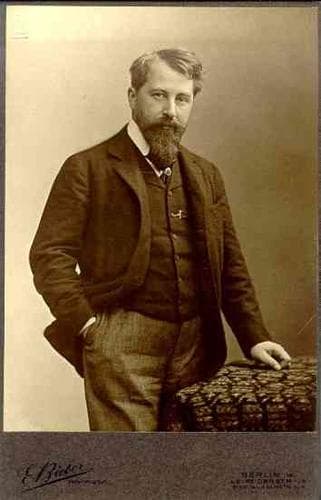
Arthur Schnitzler was a prominent Austrian novelist and playwright, a leading figure in Viennese Modernism. His works, including "Dream Story" (basis for the film "Eyes Wide Shut"), the play "La Ronde," and the novella "Fräulein Else," are celebrated for their psychological depth and exploration of human sexuality and mortality. Schnitzler's incisive prose and keen observation of societal mores cemented his literary legacy.
Similar books
- A Room of One's Own
Virginia Woolf
4.2 (118k) average on GoodreadsCreativityWhile non-fiction, it deeply examines the societal and economic constraints placed upon women, reflecting Else's predicament.
- Mrs Dalloway
Virginia Woolf
3.8 (361k) average on GoodreadsFictionWhile both Fräulein Else and Mrs Dalloway utilize stream-of-consciousness to explore a woman's inner world over a single day, Woolf's novel offers a broader social canvas, incorporating multiple perspectives and a wider array of societal observations in post-WWI London. Schnitzler's focus is much narrower, almost exclusively on Else's immediate psychological torment.
- Ulysses
James Joyce
3.7 (111k) average on GoodreadsLiterary FictionBoth novels are seminal works employing stream-of-consciousness. However, Ulysses is significantly vaster in scope, exploring the minds of multiple characters across Dublin and incorporating a wider range of experimental literary techniques. Fräulein Else is a more concentrated and focused psychological study, operating on a tragic, almost thriller-like scale, rather than a sprawling epic.
- The Old Man and the Sea
Ernest Hemingway
3.8 (831k) average on GoodreadsLiterary FictionA Cuban fisherman's long struggle with a giant marlin becomes a story of endurance and dignity, now retold for young adults with illustrations, phonetic guides, and writing prompts in Traditional Chinese.
- One Hundred Years of Solitude
Gabriel García Márquez
4.1 (753k) average on GoodreadsLiterary FictionThrough the multi-generational story of the Buendía family, a mythical town deals with the repeating patterns of time, love, and solitude, as the extraordinary mixes with the ordinary.
- The Goldfinch
Donna Tartt
3.9 (720k) average on GoodreadsLiterary FictionHaunted by a tragic explosion and clutching a stolen Dutch masterpiece, a young orphan navigates the opulent drawing rooms of New York and the gritty underbelly of the art world, desperately seeking connection and redemption amidst a life spiraling into crime and obsession.






Enjoyed the summary?
A summary gives you the shape of the book. The book itself has the detail, the examples and the voice.
Find Fräulein Else on AmazonAs an Amazon Associate, BookBrief earns from qualifying purchases. How we're funded