
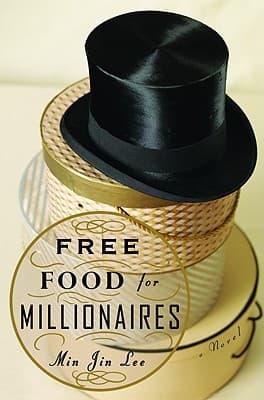
Synopsis
Covers the whole plot, including the ending.
- Difficulty
- Medium
- Pacing
- Moderate
- Mood
- Reflective, Socially aware, Introspective, Realistic
- Read it if
- You enjoy sweeping generational sagas about immigrant experiences, class divides, and the search for identity in a bustling metropolis.
- Skip it if
- You prefer fast-paced plots with clear-cut resolutions or find extensive character development and social commentary less engaging.
Free Food for Millionaires Plot Summary
Covers the whole plot, including the ending.
Casey's Post-Princeton Predicament
The novel opens with Casey Han, a recent Princeton graduate, facing the realities of post-collegiate life in New York City. Despite her elite education, she is unemployed, deeply in debt from her high-spending habits, and estranged from her working-class Korean immigrant parents, Mr. and Mrs. Han, who run a dry-cleaning business in Queens. Her parents, particularly her father, are furious about her broken engagement to Philip Kim, a respectable Korean-American medical student, and disapprove of her independent, seemingly aimless lifestyle. Casey is squatting in a friend's apartment, struggling to maintain a facade of success while dealing with her financial woes and the cultural clash between her upbringing and her aspirations.
The World of Manhattan's Elite
Casey eventually secures a low-paying administrative job at an investment firm, where she observes the lives of Manhattan's elite. She reconnects with her wealthy Princeton friend, Ella Shim, who is engaged to Ted Kim, a successful investment banker. Through Ella, Casey meets various socialites and businessmen, including Jay, a charming and enigmatic man she meets at a party. Despite her initial reservations about his playboy reputation, Casey begins a passionate and tumultuous affair with Jay, drawn to his charisma and the lavish lifestyle he represents, further complicating her financial and emotional state.
Family Demands and Cultural Expectations
The tension with Casey's parents escalates. Her father insists she marry a Korean-American man and secure a stable future, criticizing her choices and perceived disrespect for their sacrifices. He even attempts to arrange meetings with potential suitors. Mrs. Han, while more sympathetic, is equally concerned about Casey's lack of stability and her estrangement from the family. Casey feels immense pressure to reconcile her American individualistic desires with her Korean filial duties, leading to frequent arguments and a growing sense of isolation from her family, despite her underlying love for them.
Jay's Secrets and Ella's Struggles
Casey's relationship with Jay becomes complicated. She learns that Jay is married and has a child, a revelation that deeply wounds her and exposes the superficiality of their affair. Jay's manipulative tendencies and his inability to commit become clear. Meanwhile, Ella's marriage to Ted Kim begins to unravel. Ted, a workaholic, struggles with infertility issues and mental health, leading to emotional distance and infidelity. Ella confides in Casey, revealing the cracks in her seemingly perfect life, showing the hidden struggles beneath the veneer of wealth.
The Dry Cleaner's Plight and Financial Desperation
The Han family's dry-cleaning business faces severe financial difficulties because of competition and a changing neighborhood. Mr. Han, proud and stubborn, refuses to acknowledge the severity of their situation or adapt. Casey, despite her own struggles, feels responsible and tries to help, but her efforts are often met with her father's resistance and accusations. The impending loss of the business symbolizes the erosion of their immigrant dream and further exacerbates the family's stress and internal conflicts, pushing Casey to consider drastic measures to alleviate their financial burden.
Desperate Measures and Moral Compromises
In a moment of desperation, Casey considers engaging in a morally questionable scheme to earn money quickly, contemplating using her connections to secure an illegal loan or participate in a dubious business venture. This reflects her growing cynicism and the immense pressure she feels to escape poverty and prove her worth to her family. While she ultimately pulls back from the most extreme actions, the temptation shows the ethical dilemmas faced by those striving for upward mobility in a cutthroat environment, and her willingness to bend her own moral code.
The Tragedy of Ella and Ted
Ella and Ted's marriage reaches a breaking point. Ted's mental health deteriorates significantly, exacerbated by the stress of his work, his infertility, and his wife's increasing emotional distance. He experiences a severe breakdown, leading to his hospitalization. This tragic event deeply impacts Ella, forcing her to confront the realities of her marriage and the limitations of wealth in ensuring happiness. Casey supports Ella through this crisis, showing the enduring bond of their friendship despite their vastly different circumstances and past tensions.
Reconciliation and New Beginnings
Following the various crises, Casey begins to re-evaluate her priorities. She makes a concerted effort to reconcile with her parents, understanding their sacrifices and the depth of their love, despite their strictness. She starts working at a bakery, a more humble but fulfilling job that offers stability and purpose. This shift shows her move away from chasing superficial success and towards finding contentment in meaningful work and genuine relationships, beginning to bridge the gap between her two worlds.
The Dry Cleaner's Closure and Acceptance
Ultimately, the Han family is forced to close their dry-cleaning business. This painful decision is a turning point, as it forces Mr. Han to confront his pride and adapt to change. While a source of deep sadness and a symbol of their lost dreams, its closure also makes way for a new beginning. The family, though scarred, begins to heal and find a new equilibrium, symbolizing their resilience and the ongoing process of adaptation for immigrant families in America.
Casey's Evolving Identity
By the novel's end, Casey has matured significantly. She has come to terms with her Korean heritage and her American upbringing, no longer feeling the need to choose exclusively one over the other. She continues her relationship with Jay, but with a more realistic understanding of its limitations and without sacrificing her own self-worth. She finds contentment in her work at the bakery and in her relationships, having learned valuable lessons about money, love, family, and identity. She is still navigating her life, but with greater self-awareness and a more grounded perspective.
Free Food for Millionaires Characters
Casey Han
Protagonist
A recent Princeton graduate grappling with financial struggles and cultural identity.
Casey is intelligent, ambitious, and fiercely independent, but also deeply insecure and prone to self-sabotage. She is torn between the traditional expectations of her Korean immigrant parents and her desire for American success and autonomy. Her expensive tastes and pride lead her into debt and conflict with her family, yet she possesses a strong moral compass and a capacity for resilience. She navigates the complex social strata of New York, trying to define her own worth beyond material possessions. Her journey is one of self-discovery and reconciliation.
Relationships: Mr. Han (Strained father-daughter, marked by cultural clash and financial disapproval); Mrs. Han (Loving but concerned mother-daughter, often acting as a mediator); Ella Shim (Complex friendship, marked by class differences and underlying loyalty); Jay (Volatile romantic affair, characterized by passion and manipulation); Philip Kim (Former fiancé, representing a path Casey rejected)
Mr. Han
Supporting
Casey's proud, traditional Korean immigrant father, struggling to maintain his dry-cleaning business.
Mr. Han is a hardworking, proud, and often stubborn Korean immigrant who immigrated to America with hopes of providing a better life for his family. He embodies traditional Korean values, prioritizing family honor, financial stability, and filial piety. He is deeply disappointed by Casey's choices, particularly her broken engagement and her perceived lack of respect for his sacrifices. His struggles with the failing dry-cleaning business highlight the challenges faced by many first-generation immigrants. Despite his harshness, his actions are motivated by a deep love and concern for his daughter's future.
Relationships: Casey Han (Strained father-daughter, marked by cultural clash and financial disapproval); Mrs. Han (Devoted marital partnership, built on shared struggles and mutual support)
Mrs. Han
Supporting
Casey's empathetic and traditional Korean immigrant mother, caught between her husband and daughter.
Mrs. Han is a compassionate and practical woman who works alongside her husband in their dry-cleaning business. She is often the emotional anchor of the family, trying to mediate between Mr. Han's rigid expectations and Casey's rebellious spirit. While she shares many of her husband's traditional values, she is more understanding of Casey's desire for independence. She carries the weight of their family's struggles and often acts as a bridge between the Korean and American worlds her family inhabits. Her quiet strength and resilience are a backbone for the family.
Relationships: Casey Han (Loving but concerned mother-daughter, often acting as a mediator); Mr. Han (Devoted marital partnership, built on shared struggles and mutual support)
Ella Shim
Supporting
Casey's wealthy Princeton friend, whose seemingly perfect life hides deep marital and personal struggles.
Ella is Casey's wealthy Korean-American friend from Princeton, representing the pinnacle of social and financial success Casey often envies. She is beautiful, sophisticated, and outwardly composed, but her life is far from perfect. Her marriage to Ted Kim is fraught with issues, including infidelity, infertility, and mental health challenges. Ella struggles with the expectations placed upon her as a wealthy woman and the emotional emptiness that can accompany a life of privilege. She is a loyal friend to Casey, offering support and a glimpse into a world Casey both desires and resents.
Relationships: Casey Han (Complex friendship, marked by class differences and underlying loyalty); Ted Kim (Troubled marital relationship, marred by infidelity, infertility, and mental health issues)
Jay
Supporting
A charming and wealthy, but manipulative and married, man with whom Casey has an affair.
Jay is a charismatic, handsome, and wealthy man who captivates Casey with his charm and sophisticated lifestyle. He is a prominent figure in Manhattan's elite social circles. However, he is also manipulative, dishonest, and emotionally unavailable, revealing himself to be married with a child. He represents the allure of the 'free food for millionaires' lifestyle, offering Casey fleeting moments of luxury and excitement but ultimately causing her pain and confusion. His character highlights the moral compromises and superficiality present in the world Casey aspires to join.
Relationships: Casey Han (Volatile romantic affair, characterized by passion and manipulation)
Ted Kim
Supporting
Ella's successful but troubled husband, battling mental health issues and infertility.
Ted is Ella's husband, a highly successful investment banker who represents the achievement of the American dream. However, beneath his polished exterior, he struggles with severe mental health issues, including depression and anxiety, exacerbated by the pressures of his career and his inability to conceive a child with Ella. His emotional distance and infidelity contribute to the breakdown of his marriage. Ted's character illustrates that wealth and success do not guarantee happiness and can even mask profound personal suffering.
Relationships: Ella Shim (Troubled marital relationship, marred by infidelity, infertility, and mental health issues)
Philip Kim
Supporting
Casey's former fiancé, a respectable Korean-American medical student.
Philip Kim is Casey's former fiancé, a Korean-American medical student from a good family, representing the stable, traditional path her parents desperately wanted for her. He is kind, reliable, and represents a secure future, but Casey breaks off their engagement, feeling stifled and unwilling to conform to a life she didn't choose. Although he appears briefly, his presence underscores the pressure Casey faces from her family and the sacrifices she makes in pursuit of her own identity.
Relationships: Casey Han (Former fiancé, representing a path Casey rejected)
Mina
Supporting
Casey's sister, who has conformed more closely to parental expectations.
Mina is Casey's younger sister, who, in contrast to Casey, has followed a more traditional path, making choices more aligned with their parents' expectations. She represents the 'good daughter' in the family dynamic, often highlighting Casey's perceived failings. While she sometimes offers Casey practical advice, there's an underlying tension between the sisters, stemming from their different life choices and their parents' favoritism or disapproval. Mina's presence emphasizes the pressure on Casey to conform.
Relationships: Casey Han (Sisterly relationship, marked by comparison and occasional tension); Mr. & Mrs. Han (Daughter, largely conforming to parental expectations)
Free Food for Millionaires Themes
Identity and Assimilation
The novel explores the struggle of second-generation Korean Americans like Casey to forge an identity that reconciles their Korean heritage with American individualism. Casey grapples with filial piety, parental expectations, and traditional values while simultaneously striving for autonomy, financial independence, and social mobility in a predominantly white, wealthy American society. Her choices, from her career to her relationships, are constantly filtered through the lens of cultural expectations versus personal desires. The Han family's dry-cleaning business is their immigrant dream and the challenges of assimilation.
“What did her parents know about this new life she was attempting to create for herself? And what did she know about the sacrifices they had made for her?”
Class and Wealth Disparity
A central theme is the stark contrast between the 'haves' and 'have-nots' in New York City. Casey, despite her Ivy League education, struggles financially and is deeply in debt, while her friends like Ella and Jay inhabit a world of inherited wealth and privilege. The novel details the material trappings of both worlds — from the modest dry cleaner's in Queens to lavish Manhattan apartments and exclusive social clubs. It examines how wealth dictates opportunities, shapes relationships, and influences self-perception, often revealing the hidden costs and anxieties even among the affluent.
“Money was not freedom. Money was a gate. Money was a security system. Money was a wall.”
Family and Filial Duty
The complex dynamics of family, particularly within an immigrant context, are paramount. Casey's relationship with her parents is a constant source of tension and love. Her parents' sacrifices, their rigid expectations for her marriage and career, and their disapproval of her choices highlight filial piety. Casey's struggle to balance her personal desires with her perceived duty to honor her parents and their heritage forms a significant emotional core of the narrative. The failing dry-cleaning business further stresses these familial bonds.
“She was their debt. She was their investment. She was their future. She was their America.”
Love and Relationships
The novel explores various forms of love — romantic, familial, and platonic — often complicated by class, cultural expectations, and personal insecurities. Casey's tumultuous affair with Jay, Ella's unraveling marriage to Ted, and the enduring but strained love within the Han family all reveal the complexities of human connection. The characters grapple with infidelity, emotional unavailability, and the search for genuine intimacy versus superficial attraction. The narrative suggests that true love and stable relationships require honesty, sacrifice, and a deep understanding of oneself and others, regardless of wealth.
“Love was not a destination, but a journey, and she was only just beginning to learn how to walk.”
The American Dream Reimagined
Min Jin Lee deconstructs the traditional notion of the American Dream through the experiences of the Han family and Casey. For Mr. and Mrs. Han, the dream was about hard work, owning a business, and providing a better life for their children. For Casey, it evolves from a pursuit of wealth and status to a search for personal fulfillment and authenticity. The novel suggests that the American Dream is not a monolithic concept but a constantly evolving ideal, shaped by individual circumstances, cultural background, and the changing socio-economic environment, often requiring significant personal sacrifice.
“The American Dream was a lie. Or maybe it was just for other people. Or maybe it just looked different from the inside.”
Plot Devices & Literary Techniques
Social Realism
Detailed depiction of diverse New York City social strata.
The novel meticulously portrays the daily lives, struggles, and aspirations of its characters across various socio-economic classes in New York City. From the gritty reality of a Queens dry cleaner to the opulent world of Manhattan's elite, Lee provides an unvarnished look at financial pressures, cultural clashes, and the pursuit of status. This device allows for a comprehensive exploration of the 'haves' and 'have-nots,' grounding the narrative in believable, often harsh, realities and enhancing the themes of class disparity and identity.
Foil Characters
Characters highlighting contrasts in choices and outcomes.
Ella Shim and Philip Kim serve as significant foils to Casey. Ella, with her inherited wealth and seemingly perfect life, initially represents what Casey aspires to, but her marital struggles reveal the emptiness beneath the surface. Philip Kim represents the traditional, stable path Casey rejects, highlighting her desire for independence. These comparisons allow the reader to better understand Casey's motivations, the sacrifices she makes, and the complex trade-offs inherent in her choices, enriching the exploration of identity and societal expectations.
Symbolism of 'Free Food for Millionaires'
Metaphor for unearned privilege and the allure of wealth.
The title itself is a powerful symbol. It refers literally to the free food served at exclusive events attended by the wealthy, which Casey, as an outsider, occasionally partakes in. More broadly, it symbolizes the unearned privileges, opportunities, and luxurious lifestyle that seem effortlessly available to the affluent, in stark contrast to Casey's struggles. It represents the alluring but potentially corrupting nature of wealth and the false promises of a life built on superficiality, highlighting Casey's journey to understand true value.
The Dry Cleaner's Business
Symbol of immigrant dreams, family sacrifice, and cultural identity.
The Han family's dry-cleaning business is a central symbol throughout the novel. It represents Mr. and Mrs. Han's immigrant dream, their hard work, and the sacrifices they made for their children's future. Its financial struggles and eventual closure symbolize the challenges of assimilation, the erosion of traditional values in a changing world, and the difficult process of adapting to new realities. For Casey, it embodies her family's roots and the expectations she both embraces and rebels against.
Free Food for Millionaires Quotes
“Money was an invention that allowed people to tell themselves that they were not poor.”
“The rich were never hungry. That was the point of being rich.”
“She wanted to be a good daughter, but she didn’t know what that meant anymore.”
“New York City was a place where you could always reinvent yourself, if you had the money to do it.”
“To be an immigrant was to live in a constant state of translation.”
“Love was not enough to pay the rent.”
“She learned that the only way to get what you wanted was to ask for it, even if you were afraid.”
“Sometimes, the hardest thing to do was to forgive yourself.”
“There was a certain kind of loneliness that only came from being surrounded by people who didn’t understand you.”
“The past was a country you could never truly leave.”
“Being an adult meant making choices you didn't want to make.”
“She had always believed in the power of books, that they could transport you, transform you.”
“The greatest luxury was not having to think about money.”
“You couldn't escape your family, not really. They were in your blood, in your bones.”
Quiz
10 questions on the plot and the characters. Each answer comes with a short explanation.
Question 1
What is Casey Han's primary struggle after graduating from Princeton, as described in the book's premise?
- Finding a romantic partner who understands her background.
- Reconciling her expensive tastes with her lack of a job and income.
- Dealing with the pressure from her parents to marry a Korean man.
- Adapting to life in a small town after living in a big city.
Show answer
B. Reconciling her expensive tastes with her lack of a job and income. The book's description explicitly states Casey's post-graduation reality: 'having expensive habits without the means to sustain them.' This is her immediate and central conflict.
Question 2
Casey Han's parents work in which profession in Queens?
- Restaurant owners
- Grocery store clerks
- Dry cleaners
- Taxi drivers
Show answer
C. Dry cleaners The book description states that Casey's parents 'are Korean immigrants working in a dry cleaner,' highlighting their working-class background.
Question 3
How did Casey Han manage to attend Princeton University?
- Through a substantial family inheritance.
- By receiving scholarships.
- Her parents paid for her tuition from their dry cleaning business.
- She took out large student loans that she immediately regretted.
Show answer
B. By receiving scholarships. The text mentions Casey 'has entered into rarified American society via scholarships,' indicating how she gained access to an elite education despite her family's financial situation.
Question 4
A central theme of 'Free Food for Millionaires' explored through Casey's experience is:
- The ease with which one can transition between social classes.
- The challenges of maintaining one's identity within changing communities.
- The universal irrelevance of cultural background in modern society.
- The inherent superiority of American values over immigrant traditions.
Show answer
B. The challenges of maintaining one's identity within changing communities. The description explicitly states Min Jin Lee 'examines maintaining one's identity within changing communities,' which is a core thematic concern of the novel as Casey navigates different social worlds.
Question 5
What kind of 'bad habits' did Casey acquire during her time at Princeton?
- A tendency towards academic procrastination.
- An addiction to gambling and late-night parties.
- Expensive tastes and a lifestyle she couldn't afford.
- A habit of alienating her friends and family.
Show answer
C. Expensive tastes and a lifestyle she couldn't afford. The text states Casey graduated with 'a number of bad habits' and then immediately clarifies this by noting she has 'expensive habits without the means to sustain them,' linking the 'bad habits' directly to her financial struggles and tastes.
Question 6
The novel's setting primarily allows for a portrait of which major city?
- Boston
- Washington D.C.
- Manhattan and Queens (New York City)
- Los Angeles
Show answer
C. Manhattan and Queens (New York City) The description explicitly states: 'As she navigates Manhattan, we see her life and the lives around her, culminating in a portrait of New York City and its world of haves and have-nots.' Her parents live in Queens, making New York City the central setting.
Question 7
How do Casey's parents view their Korean culture and identity?
- They are eager to assimilate completely into American society.
- They are indifferent to it, focusing solely on their business.
- They are desperately trying to hold on to it.
- They see it as a burden that hinders their daughter's success.
Show answer
C. They are desperately trying to hold on to it. The text states Casey's parents 'are Korean immigrants working in a dry cleaner, desperately trying to hold on to their culture and their identity,' highlighting their struggle to preserve their heritage.
Question 8
What literary tradition inspired Min Jin Lee's 'Free Food for Millionaires'?
- Postmodern American literature
- Magical Realism from Latin America
- 19th-century novels like 'Vanity Fair' and 'Middlemarch'
- Ancient Greek tragedies
Show answer
C. 19th-century novels like 'Vanity Fair' and 'Middlemarch' The description clearly states the novel is 'Inspired by 19th century novels such as Vanity Fair and Middlemarch,' placing it within a specific literary tradition of social commentary and character study.
Question 9
The title 'Free Food For Millionaires' most likely alludes to which core aspect of the novel's themes?
- The generous philanthropy of wealthy individuals in New York.
- The stark contrast between the 'haves' and 'have-nots' in society, where even basic necessities can be free for the wealthy.
- A specific event where millionaires were offered complimentary meals.
- Casey's part-time job working at a catering company.
Show answer
B. The stark contrast between the 'haves' and 'have-nots' in society, where even basic necessities can be free for the wealthy. The description highlights the novel's 'portrait of New York City and its world of haves and have-nots.' The title 'Free Food for Millionaires' ironically underscores this disparity, suggesting that those who already have everything often receive more, while those who need it struggle.
Question 10
What does the phrase 'remarkably assured debut' imply about Min Jin Lee's first novel?
- It suggests the author was overly confident and perhaps arrogant in her writing.
- It means the novel was published with a strong marketing campaign.
- It indicates the author demonstrated exceptional skill and confidence in her storytelling for a first-time novelist.
- It refers to the financial success and stability the book brought the author.
Show answer
C. It indicates the author demonstrated exceptional skill and confidence in her storytelling for a first-time novelist. 'Assured debut' in literary criticism typically means the author's first work displays a high degree of confidence, skill, and maturity in its execution, suggesting a writer who knows their craft well from the outset.
Free Food for Millionaires FAQ
What is 'Free Food for Millionaires' about?
'Free Food for Millionaires' follows Casey Han, a recent Princeton graduate from a working-class Korean immigrant family in Queens. Despite her elite education, she struggles with unemployment, expensive habits, and the clash between her desire for upward mobility and her family's traditional values, navigating the complex social landscape of 1990s Manhattan.
Why should I read 'Free Food for Millionaires'?
You should read this book for its incisive exploration of class, race, and identity in post-collegiate life, particularly through the lens of a second-generation immigrant. Min Jin Lee crafts a rich, detailed portrait of New York City and its diverse inhabitants, offering a nuanced look at the pursuit of the American Dream and the sacrifices it demands.
What is the background/setting of 'Free Food for Millionaires'?
The novel is primarily set in 1990s New York City, moving between the affluent circles of Manhattan's Upper East Side and the working-class Korean immigrant community in Queens. This dual setting highlights the stark class divides and cultural tensions Casey Han experiences as she navigates her post-college life.
What are the most memorable quotes?
One memorable quote is, 'She had learned that money was not the root of all evil, but the root of all choices.' Another is, 'The problem with being a princess was that you had to act like a princess every single day.' These quotes encapsulate Casey's struggles with wealth, identity, and the expectations placed upon her.
What writing style does the author use?
Min Jin Lee employs a detailed, observant, and often expansive literary style, reminiscent of 19th-century social novels like 'Vanity Fair' and 'Middlemarch.' Her prose is direct yet richly descriptive, allowing for deep character development and a comprehensive portrayal of the social environments Casey Han inhabits.
What minor details add significant meaning?
Casey's recurring financial anxieties, even after obtaining a prestigious degree, subtly underscore the systemic barriers to upward mobility for those without inherited wealth. The specific details of Korean cultural practices, like the importance of 'jeong' (affection/attachment), illuminate the deep-seated cultural expectations Casey struggles to reconcile with her Americanized ambitions.
What are some subtle foreshadowing moments?
Early mentions of Casey's expensive shopping habits and her reliance on friends for financial support subtly foreshadow her later struggles with debt and her difficult relationship with her parents over money. Her early infatuation with the allure of wealth, despite witnessing its superficiality, hints at the moral compromises she will face.
What unexpected character connections exist?
The complex, often transactional relationships Casey forms with her affluent friends, like Ella Shim and her circle, reveal the intricate web of social climbing and mutual obligation that exists within their community. Her unexpected connection with a kind, older Korean shop owner offers a grounding contrast to her high-society aspirations.
What are unspoken character motivations?
Casey's unspoken motivation often stems from a deep-seated desire to prove her worth, not only to her immigrant parents but also to herself and the privileged world she briefly entered at Princeton. Her pursuit of wealth and status is driven by a need for belonging and validation, rather than pure materialism.
What psychological complexities do characters exhibit?
Casey exhibits significant psychological complexity through her internal conflict between her Korean heritage and American aspirations, leading to self-sabotage and identity crises. Her father, Mr. Han, shows the psychological toll of immigrant sacrifice and the silent burden of his expectations for Casey, often manifesting as sternness.
What are the major emotional turning points?
A major emotional turning point is Casey's realization that her expensive habits are unsustainable and detrimental to her relationship with her family, particularly after a significant financial crisis. Another is her confrontation with her parents about their sacrifices and her own perceived failures, which forces a reckoning with her identity.
How do relationship dynamics evolve?
Casey's relationship with her parents evolves from resentment and misunderstanding to a deeper, albeit still fraught, appreciation for their sacrifices. Her romantic relationships, particularly with Jay and Unu, shift from passionate idealization to a more realistic understanding of partnership, often impacted by her financial and social ambitions.
Which parts remain ambiguous or open-ended?
The precise long-term stability of Casey's financial situation and her ultimate career path remain somewhat open-ended, suggesting that her journey of self-discovery and economic independence is ongoing. The future of certain romantic relationships also retains a degree of ambiguity, reflecting the complexities of real life.
What are controversial scenes or decisions?
Casey's decision to break off her engagement with Jay, partly due to his family's wealth and her discomfort with that world, can be seen as controversial, as it challenges traditional notions of security. Her repeated financial mismanagement and reliance on others, despite her intelligence, might also spark debate among readers.
'Free Food for Millionaires' ending explained: how it ends & what it means
The novel ends with Casey having made some significant strides towards independence and self-awareness, though not necessarily with all her problems neatly resolved. She starts working as a real estate agent and begins to take responsibility for her choices. The ending signifies her ongoing journey of reconciling her past, embracing her identity, and finding her own version of success, rather than a definitive, happily-ever-after resolution.
About the author

Min Jin Lee is a Korean-American author known for her fiction that explores themes of identity, family, and the immigrant experience. Her notable works include "Pachinko," a multi-generational saga about a Korean family in Japan, and "Free Food for Millionaires," which follows a young woman's struggles in New York City. Lee's writing has garnered significant attention and critical acclaim.
Similar books
- Pachinko
Min Jin Lee
4.3 (208k) average on GoodreadsLiterary FictionExplores Korean identity, family sagas, and the immigrant experience across generations.
- Vanity Fair
William Makepeace Thackeray
3.8 (118k) average on GoodreadsHistorical FictionA sprawling social satire examining class, ambition, and moral compromises in high society.
- The Joy Luck Club
Amy Tan
3.9 (598k) average on GoodreadsHistorical FictionFocuses on the complex relationships between Chinese immigrant mothers and their American-born daughters.
- The Namesake
Jhumpa Lahiri
4.0 (234k) average on GoodreadsLiterary FictionBoth novels sensitively portray second-generation immigrant identity and assimilation. However, Lee's work is arguably more direct and confrontational in its depiction of class struggle, ambition, and the often-unpleasant realities of pursuing wealth in a hyper-capitalist society. Lahiri's narrative tends to be more introspective and focused on the quiet internal struggles of identity.
- The Old Man and the Sea
Ernest Hemingway
3.8 (831k) average on GoodreadsLiterary FictionA Cuban fisherman's long struggle with a giant marlin becomes a story of endurance and dignity, now retold for young adults with illustrations, phonetic guides, and writing prompts in Traditional Chinese.
- One Hundred Years of Solitude
Gabriel García Márquez
4.1 (753k) average on GoodreadsLiterary FictionThrough the multi-generational story of the Buendía family, a mythical town deals with the repeating patterns of time, love, and solitude, as the extraordinary mixes with the ordinary.




Enjoyed the summary?
A summary gives you the shape of the book. The book itself has the detail, the examples and the voice.
Find Free Food for Millionaires on AmazonAs an Amazon Associate, BookBrief earns from qualifying purchases. How we're funded