

Synopsis
Covers the whole plot, including the ending.
- Difficulty
- Hard
- Pacing
- Variable
- Mood
- Satirical, Philosophical, Humorous, Exuberant, Carnivalesque
- Read it if
- You enjoy satirical fantasy, philosophical discussions, and bawdy humor with a Renaissance setting.
- Skip it if
- You prefer straightforward narratives, are easily offended by crude humor, or dislike lengthy, digressive prose.
Gargantua and Pantagruel Plot Summary
Covers the whole plot, including the ending.
The Genealogy of Gargantua
The story begins with a fantastical family tree, tracing giants through mythical figures like the Titans and Cain, to Grandgousier, King of Utopia, and his wife Gargamelle. Rabelais uses a mock-heroic tone, describing their enormous appetites and unusual lives. Gargantua's birth is especially strange: he is born through his mother's ear, a detail that immediately shows the work's absurd and carnivalesque nature. At birth, Gargantua instantly cries for 'Drink!' ('À boire!'), setting up his legendary appetite and the recurring theme of feasting and consumption. This opening establishes the mix of folklore, satire, and the grotesque that defines the series.
Gargantua's Childhood and Early Education
As a young giant, Gargantua shows great physical strength and a remarkable, though crude, intelligence. His early education is handled by incompetent and rigid tutors, mainly Master Tubal Holofernes and later Master Jobelin Bridé. These educators represent the strict, outdated scholastic methods of the Middle Ages, focusing on memorization, logical errors, and trivial details over practical knowledge or moral lessons. Gargantua learns little of value, spending his time idly and developing rough manners. His father, Grandgousier, eventually sees how useless this education is, noticing his son's lack of intellectual growth and refinement, leading him to seek a new, more enlightened approach for his son.
The Renaissance Education of Gargantua
Grandgousier, unhappy with Gargantua's scholastic tutors, gives his son's education to the wise humanist scholar Ponocrates. Under Ponocrates in Paris, Gargantua changes greatly. His new curriculum is broad, including classical languages (Greek, Latin, Hebrew), natural sciences, mathematics, music, physical exercise, and moral philosophy. Ponocrates emphasizes practical use, observation, and a balanced development of mind, body, and spirit. Gargantua's daily routine is carefully planned, mixing study with physical activity, good hygiene, and intellectual discussions. This section directly supports Renaissance humanism, contrasting sharply with the earlier critique of scholasticism, and presents Rabelais's ideal for a well-rounded, virtuous prince.
The Picrocholine War
The Picrocholine War begins because of a small fight over Foucace cakes between Grandgousier's shepherds and the people of Lerné, ruled by King Picrochole. Picrochole, driven by ambition and bad advice, uses this as a chance to invade Grandgousier's lands. Grandgousier, a peaceful ruler, tries to solve the conflict with diplomacy, offering payment and seeking peace, but Picrochole remains stubborn. Gargantua is called back from his studies to defend his home. The war satirizes the causes and conduct of war, showing the vanity, cruelty, and irrationality that often drive conflicts, while also allowing Rabelais to show the heroic and just leadership of Grandgousier and Gargantua.
The Foundation of the Abbey of Thélème
After the Picrocholine War, Gargantua rewards the brave and unusual Friar John des Entommeures for his courageous defense of the abbey vineyard. Instead of giving him a traditional monastic position, Gargantua suggests building a new abbey, Thélème, designed on principles opposite to existing monasteries. Thélème is a utopian place where men and women live together, guided only by the rule 'Do What You Will' (Fay ce que vouldras). It rejects celibacy, strict schedules, walls, and vows, instead promoting freedom, beauty, learning, and noble pursuits. The inhabitants are well-born, intelligent, and attractive, living a life of leisure, intellectual discussion, and refined pleasure, representing Rabelais's humanist ideal of individual freedom and self-governance.
The Birth of Pantagruel and His Early Life
Pantagruel, the son of Gargantua and Badebec, is born in another unusual way, after his mother dies from eating too many tripes. His birth coincides with a great drought, which Pantagruel's huge thirst helps to ease. He grows quickly, showing immense strength and remarkable intelligence from a young age. Gargantua sends Pantagruel to various universities, ending in Paris, to complete his education. During his travels, Pantagruel meets many eccentric characters and gains knowledge, reflecting his father's humanist upbringing but with an even greater focus on intellectual curiosity and a critical view of established institutions.
Pantagruel Meets Panurge
While studying in Paris, Pantagruel meets Panurge, a quick-witted, poor, and notoriously mischievous character. Panurge is introduced speaking many languages, none of which Pantagruel initially understands, highlighting his worldly and cunning nature. Pantagruel takes Panurge into his service, recognizing his intelligence and resourcefulness, despite his playful and often morally unclear tendencies. Panurge quickly becomes Pantagruel's closest friend and confidant, offering comic relief, cynical comments, and a contrast to Pantagruel's more serious and philosophical manner. Their relationship forms the core of the later books, as Panurge's personal problems drive many of their adventures.
Panurge's Quest for Marriage Advice
Panurge becomes obsessed with whether he should marry. He fears being cheated on and beaten if he marries and remains unsure about the wisdom of having a wife. This personal problem becomes the central plot for the third book, as Pantagruel and his friends go on a quest to find clear advice for Panurge. They consult many figures, including philosophers, theologians, doctors, judges, a Sibyl, a mute, a poet, and even a jester. Each consultation gives conflicting, unclear, or comically unhelpful advice, satirizing the limits of human wisdom and the pointlessness of seeking absolute certainty in matters of the heart.
The Voyage to the Oracle of the Dive Bouteille
Unable to find a clear answer to Panurge's marriage question on land, Pantagruel decides the only solution is to journey to the distant and legendary Oracle of the Dive Bouteille (Holy Bottle). This epic voyage becomes the focus of the fourth and fifth books. The expedition, on Pantagruel's ship, takes them through a series of fantastical islands and encounters with strange inhabitants, each representing a satirical comment on various aspects of society, religion, law, and human nature. This journey gives Rabelais many chances for allegorical storytelling, grotesque humor, and philosophical discussion, as the companions navigate both real and symbolic storms.
Encounters on the Seas: Diverse Islands and Peoples
During their long voyage, Pantagruel, Panurge, Friar John, and their crew visit many islands, each with peculiar beings and customs. They meet the Cheliens (who live by the law of the strongest), the Gastrolaters (who worship their bellies), the Popegues (who devoutly worship the Pope's image), the Furred Law-cats (representing corrupt legal systems), and the Ringing Island (a satire on the clergy and their idle lives). These episodes are full of allegorical meaning and sharp satire, targeting specific institutions, social classes, and human flaws. Rabelais uses these fantastical encounters to criticize legal abuses, religious hypocrisy, gluttony, and the pursuit of power, keeping the carnivalesque tone while delivering strong social commentary.
The Oracle of the Dive Bouteille and the Word 'Trinch'
Finally, after many trials, the companions reach the island of the Dive Bouteille. Inside a magnificent temple, they go down into an underground cave where the Oracle lives. The Oracle, a sacred bottle, gives its message: a single, echoing word – 'Trinch!' (Drink!). Panurge is at first confused, but Pantagruel, acting as interpreter, explains that 'Trinch' means not just physical drinking but also the pursuit of knowledge, truth, and inspiration, suggesting that the answer to Panurge's problem, and indeed to life's questions, lies in intellectual and spiritual exploration, freedom of thought, and embracing life with enthusiasm. The journey ends with this philosophical interpretation, leaving Panurge to make his own choice.
The Interpretation and Conclusion
After the Oracle's pronouncement of 'Trinch!', Pantagruel explains its deeper meaning. He says that 'Trinch!' is a call to drink not just wine, but deeply from knowledge, wisdom, and experience. It encourages intellectual curiosity, open-mindedness, and the search for truth. For Panurge's specific question about marriage, Pantagruel suggests that 'Trinch!' means he should face life's challenges and joys, whatever path he chooses, with courage and a thirst for understanding. The answer's ambiguity reinforces Rabelais's humanist message that individuals must ultimately make their own decisions, guided by reason and a lively spirit, rather than relying on clear external pronouncements. The book ends with Panurge still thinking about his options, but now with a broader philosophical view.
Gargantua and Pantagruel Characters
Gargantua
Protagonist
The giant king, initially naive but transformed into a wise, benevolent ruler.
Gargantua is a giant, son of Grandgousier and father of Pantagruel. Initially portrayed as a simple, good-natured but somewhat crude individual, his early education under scholastic tutors makes him dull and uncouth. However, under the guidance of Ponocrates, he undergoes a profound transformation, becoming a model Renaissance prince: learned, physically adept, morally upright, and a just ruler. He embodies the humanist ideal of a balanced individual, capable of both intellectual pursuits and martial prowess. His character arc is a direct endorsement of progressive education and enlightened leadership.
Relationships: Grandgousier (Father, who guides his education); Gargamelle (Mother); Pantagruel (Son, whom he educates in turn); Friar John des Entommeures (Loyal and valiant companion, friend)
Pantagruel
Protagonist
The wise, philosophical giant, son of Gargantua, known for his vast knowledge and calm demeanor.
Pantagruel is the son of Gargantua and the central protagonist of the latter books. He is a giant of immense physical stature and even greater intellectual capacity. Unlike his father's initial naivety, Pantagruel is wise, philosophical, and possesses a vast knowledge of various disciplines. He is calm, patient, and often serves as the voice of reason and humanist philosophy, especially in contrast to Panurge's impulsiveness. He embodies the ideal of a Renaissance scholar-prince, capable of deep thought, critical analysis, and compassionate leadership. His 'Pantagruelism' is a philosophy of good humor, resilience, and intellectual curiosity in the face of adversity.
Relationships: Gargantua (Father, who instilled humanist values); Panurge (Close companion and friend, often a foil); Friar John des Entommeures (Loyal and adventurous companion)
Panurge
Supporting
The witty, cunning, and often cowardly companion of Pantagruel, obsessed with marriage.
Panurge is Pantagruel's closest companion, a complex character who is both brilliant and deeply flawed. He is highly intelligent, a master of languages, and possesses a sharp wit, often used for cynical observations or elaborate pranks. However, he is also a rogue, a spendthrift, a coward (especially in battle or when facing personal commitment), and obsessed with trivialities, most notably his protracted dilemma about whether to marry. His quest for marriage advice drives much of the later narrative, allowing Rabelais to satirize various professions and human follies through Panurge's interactions. He represents the more earthly, often base, aspects of human nature.
Relationships: Pantagruel (Close companion and friend, master); Friar John des Entommeures (Frequent sparring partner and fellow adventurer)
Friar John des Entommeures
Supporting
A boisterous, courageous, and unconventional monk, more warrior than cleric.
Friar John is a Benedictine monk who distinguishes himself during the Picrocholine War with his ferocity and martial prowess, defending his abbey's vineyard with a staff. He is the antithesis of the stereotypical cloistered monk: strong, boisterous, fond of drink and good company, and fiercely loyal. He rejects traditional monastic asceticism and embodies a more active, engaged form of spirituality, or perhaps simply a robust enjoyment of life. His practicality, courage, and earthy humor make him a beloved character and a stark contrast to the intellectual Pantagruel and the indecisive Panurge. He is rewarded by Gargantua with the Abbey of Thélème, designed on anti-monastic principles.
Relationships: Gargantua (Benefactor and friend); Pantagruel (Companion and friend); Panurge (Frequent companion and occasional antagonist)
Grandgousier
Supporting
Gargantua's wise and peace-loving father, king of Utopia.
Grandgousier is the king of Utopia and father of Gargantua. He is portrayed as a benevolent, peace-loving, and just ruler, deeply concerned with the welfare of his people. He initially makes mistakes in Gargantua's education but quickly recognizes his error and seeks out the best humanist scholars. During the Picrocholine War, he demonstrates remarkable patience and a strong desire for peace, only resorting to war when provoked beyond measure. He embodies the ideal of a Christian monarch guided by reason, compassion, and a commitment to justice, contrasting sharply with the aggressive and irrational King Picrochole.
Relationships: Gargantua (Son, whom he educates); Gargamelle (Wife); Picrochole (Antagonist, rival king)
Picrochole
Antagonist
The ambitious and foolish king who instigates the Picrocholine War.
Picrochole is the king of Lerné and the primary antagonist in the first book. He is portrayed as an ambitious, hot-headed, and easily swayed ruler, whose desires are inflated by flattering and foolish counselors. His decision to wage war against Grandgousier is based on a trivial dispute and fueled by an irrational hunger for conquest and glory. He represents the folly of unchecked ambition, poor leadership, and the destructive consequences of war based on pride and greed. His downfall serves as a moral lesson against tyranny and irrationality.
Relationships: Grandgousier (Enemy king); Gargantua (Opponent in war)
Ponocrates
Supporting
Gargantua's humanist tutor, who transforms his education.
Ponocrates is the wise and effective humanist tutor hired by Grandgousier to educate Gargantua. He represents the ideals of Renaissance humanism, emphasizing a holistic education that combines intellectual rigor with physical training, moral development, and practical experience. Under his guidance, Gargantua transforms from an uncouth giant into a learned and virtuous prince. Ponocrates's methods, which include active learning, observation, and a balanced daily routine, are presented as the epitome of enlightened pedagogy, directly contrasting with the outdated scholastic methods he replaces.
Relationships: Gargantua (Student, whom he mentors)
Epistemon
Supporting
A learned scholar and companion of Pantagruel, embodying intellectual curiosity.
Epistemon is a learned scholar and one of Pantagruel's most trusted companions. He is known for his vast knowledge, particularly in history and the classical world. He often engages in intellectual discussions and provides historical context or philosophical insights during the group's adventures. His famous journey to the underworld after being decapitated (and subsequently reattached) offers a satirical glimpse into the fates of historical figures. Epistemon represents scholarly wisdom and intellectual curiosity, often balancing Panurge's more cynical and earthly concerns.
Relationships: Pantagruel (Companion and friend); Panurge (Fellow adventurer)
Gymnast
Supporting
A brave and agile warrior in Gargantua's army.
Gymnast is one of Gargantua's most loyal and skilled captains, known for his incredible agility and martial prowess. He is a brave and resourceful warrior, often performing feats of daring and cunning in battle. His most famous exploit involves single-handedly defeating a large contingent of Picrochole's forces through a series of acrobatic maneuvers and clever tactics, demonstrating his physical mastery and quick thinking. Gymnast embodies the ideal of a heroic knight, combining strength with grace and intelligence.
Relationships: Gargantua (Loyal captain and warrior)
Gargantua and Pantagruel Themes
Humanism and Education
Rabelais supports Renaissance humanist ideals, especially through Gargantua's different educational experiences. The criticism of scholastic education (rote learning, trivial debates) strongly contrasts with Ponocrates's broad, balanced humanist curriculum, which focuses on classical languages, sciences, physical training, and moral philosophy. This theme advocates for a complete development of mind, body, and spirit, preparing individuals for active, virtuous lives, as seen in Gargantua's change into a wise ruler and Pantagruel's natural intellectual curiosity. The Abbey of Thélème further shows this, promoting freedom of thought and noble pursuits.
“Science without conscience is but the ruin of the soul.”
Satire and Social Critique
Rabelais uses his fantastical story and grotesque humor to offer sharp social and institutional criticism. He satirizes the legal system (the Furred Law-cats, the long and absurd legal cases), monastic life (through Friar John's anti-monasticism and the founding of Thélème), Church abuses (the Popegues, the Ringing Island), and the foolishness of war (the Picrocholine War, driven by minor causes and ambition). The various islands Pantagruel and his crew visit are allegories for human flaws and institutional corruption, revealing the absurdities and hypocrisies of his society.
“How many honest people are there in the world who are ruined, destroyed, and undone by the wickedness of others!”
Carnivalesque and the Grotesque
The novel is deeply rooted in the carnivalesque tradition, marked by inversion, excess, bodily humor, and a celebration of the lower body. This appears in the giants' huge appetites, crude humor, explicit sexual references, and a general mood of joyful transgression. The grotesque body, with its open parts and focus on eating and excreting, is central. Examples include Gargantua's birth through his mother's ear, his use of a goose for wiping, and many descriptions of feasts and bodily functions. This theme challenges common ideas of decency and hierarchy, creating a world where the sacred and profane, high and low, constantly mix, reflecting a popular, earthy worldview.
“I drink to the thirst to come.”
The Quest for Knowledge and Truth
A main theme, especially in the later books, is the search for knowledge and the elusive nature of truth. Panurge's intense quest for marriage advice, leading to the voyage to the Oracle of the Dive Bouteille, symbolizes humanity's search for clear answers. The journey itself, through different cultures and philosophical encounters, suggests that truth is often complex, unclear, and found through experience and open inquiry rather than simple statements. The Oracle's single word, 'Trinch!' (Drink!), interpreted by Pantagruel as a call to drink deeply from the well of knowledge and life, emphasizes that ultimate truth lies in intellectual curiosity, critical thinking, and a joyful engagement with the world.
“The greatest truths are those that are least understood.”
The Nature of Good Governance
Rabelais explores good governance through the contrasting figures of Grandgousier and Picrochole. Grandgousier embodies the ideal ruler: peaceful, just, willing to negotiate, and concerned with his people's well-being and education. His efforts to avoid war and his generosity in victory highlight the virtues of a benevolent monarch. In contrast, Picrochole's ambition, impulsiveness, and openness to bad advice serve as a warning against tyrannical and self-serving leadership. The creation of Thélème also shows Rabelais's ideas on ideal societal organization, based on freedom and noble principles rather than force.
“It is better to make peace than to make war.”
Plot Devices & Literary Techniques
The Journey/Quest
A physical voyage serving as a framework for philosophical and satirical exploration.
The journey to the Oracle of the Dive Bouteille, undertaken by Pantagruel and his companions, is a central plot device. This physical quest for Panurge's marriage advice becomes a metaphorical journey through various allegorical islands, each representing different aspects of society, human folly, and intellectual debates. It allows Rabelais to introduce a wide range of characters, cultures, and philosophical discussions, providing a flexible framework for his extensive social and religious satire. The destination, the Oracle, is less important than the experiences and insights gained along the way, emphasizing the process of inquiry itself.
Grotesque and Hyperbole
Exaggeration and bodily humor used for comic effect and social commentary.
Rabelais extensively employs grotesque humor and hyperbole, particularly in describing the giants' bodies, appetites, and bodily functions. Gargantua's prodigious birth, his immense thirst, his use of a goose for wiping, and the exaggerated descriptions of feasts and battles all serve to create a carnivalesque atmosphere. This device is not merely for crude comedy; it functions to invert social norms, challenge authority, and highlight the absurdities of human behavior and institutions. By presenting the world in an exaggerated, bodily-centric way, Rabelais encourages readers to look at reality with fresh, often critical, eyes.
Satirical Allegory
Characters, places, and events that represent broader societal issues or human types.
Throughout the pentalogy, Rabelais uses satirical allegory to comment on specific institutions, professions, and human vices. The Picrocholine War, for instance, is an allegory for the irrationality and trivial causes of real-world conflicts. The various islands visited on the voyage to the Dive Bouteille (e.g., the Furred Law-cats representing corrupt legal systems, the Popegues representing religious dogma) are thinly veiled allegories for contemporary social and religious issues. This device allows Rabelais to deliver sharp critiques without direct condemnation, often cloaking his commentary in fantastical and humorous scenarios, making it both entertaining and thought-provoking.
The Philosophical Debate/Dialogue
Extended discussions and arguments that explore complex ideas.
Rabelais frequently uses philosophical debates and dialogues as a means to explore a wide range of intellectual and moral questions. Panurge's quest for marriage advice, for example, is primarily conducted through a series of consultations with various learned figures, each offering different perspectives (philosophers, theologians, doctors, etc.). These dialogues allow Rabelais to present different viewpoints, critique various schools of thought, and ultimately suggest the limitations of absolute certainty in complex matters. Pantagruel often serves as the arbiter or interpreter in these discussions, guiding the reader towards a more humanist and reasoned conclusion, as with the interpretation of 'Trinch!'
Gargantua and Pantagruel Quotes
“Science without conscience is but the ruin of the soul.”
“Do what thou wilt shall be the whole of the Law.”
“I drink for the thirst to come.”
“Appetite comes with eating, and drinking with drinking.”
“The greatest gift of God is a good wife.”
“How can one be happy if he is not free?”
“Always remember that time is money.”
“To laugh is proper to man.”
“Eat little, drink much, sleep well.”
“The devil is not so black as he is painted.”
“I never go to bed without supper.”
“By the virtue of a thousand devils!”
“One day, when I was a little boy, I was walking along a road and I saw a snail.”
“The world is a comedy to those who think, a tragedy to those who feel.”
Quiz
10 questions on the plot and the characters. Each answer comes with a short explanation.
Question 1
Which of the following best describes Gargantua's initial education before Ponocrates intervenes?
- It was a rigorous program focused on classical languages and mathematics.
- It was a haphazard and ineffective education, leaving him ignorant and foolish.
- It was a military training regime designed to make him a fierce warrior.
- It involved extensive travel and practical experience in various trades.
Show answer
B. It was a haphazard and ineffective education, leaving him ignorant and foolish. Gargantua's early education is depicted as a parody of medieval scholasticism, making him dull and uncultured until Ponocrates introduces a humanist approach.
Question 2
What is the primary role of Panurge in the adventures with Pantagruel?
- He serves as a wise mentor, guiding Pantagruel with his profound philosophical insights.
- He is Pantagruel's idiotic, self-loving companion, often initiating mischievous or problematic situations.
- He is a brave knight, always at the forefront of battles and defending the weak.
- He acts as a chronicler, meticulously documenting all of Pantagruel's journeys.
Show answer
B. He is Pantagruel's idiotic, self-loving companion, often initiating mischievous or problematic situations. Panurge is characterized as Pantagruel's cunning, often cowardly, and self-serving companion, whose antics provide much of the comic relief and satiric opportunities.
Question 3
Which character is described as becoming a 'Renaissance Socrates' due to his wisdom and divine guidance?
- Gargantua
- Panurge
- Pantagruel
- Friar John
Show answer
C. Pantagruel The description explicitly states that Pantagruel, the bookish son of Gargantua, becomes a 'Renaissance Socrates, divinely guided in his wisdom.'
Question 4
What does Rabelais primarily satirize through the character of Gargantua's early educators?
- The excesses of the French monarchy.
- The ineffective and often absurd methods of medieval scholastic education.
- The strictures of monastic life.
- The dangers of technological advancement.
Show answer
B. The ineffective and often absurd methods of medieval scholastic education. Gargantua's early education, led by 'paternal ignorance, old crones and syphilitic professors,' is a direct parody and satire of the outdated and ineffective educational systems of Rabelais's time, contrasting it with humanist ideals.
Question 5
The description mentions Rabelais intertwining 'the realistic with carnivalesque fantasy.' Which of the following elements best represents the 'carnivalesque fantasy' aspect?
- The detailed descriptions of Renaissance Parisian life.
- The giants, Gargantua and Pantagruel, and their exaggerated feats.
- The philosophical debates on law and theology.
- The historical context of the French Wars of Religion.
Show answer
B. The giants, Gargantua and Pantagruel, and their exaggerated feats. The presence of giants like Gargantua and Pantagruel, along with their larger-than-life adventures and often grotesque humor, are prime examples of the 'carnivalesque fantasy' element in Rabelais's work.
Question 6
What is the primary motivation behind Panurge's famous question, 'Should I marry or not?'
- A genuine desire to settle down and start a family.
- His self-love and fear of cuckoldry, combined with a desire for advice without truly committing to it.
- A philosophical inquiry into the nature of marital bliss.
- A challenge posed by Pantagruel to test his wisdom.
Show answer
B. His self-love and fear of cuckoldry, combined with a desire for advice without truly committing to it. Panurge's prolonged and often contradictory deliberations on marriage, seeking advice from various sources only to dismiss it, stem from his fundamental self-love, fear of commitment, and concern over being cuckolded, rather than a sincere desire for a spouse.
Question 7
The Abbey of Thélème, a unique monastic institution described in 'Gargantua,' operates on the principle of 'Fay ce que vouldras' (Do what you will). What does this principle primarily represent in the context of Rabelais's philosophy?
- A call for absolute anarchy and the rejection of all social norms.
- An ideal of humanist freedom and self-governance for virtuous and well-educated individuals, contrasting with traditional monastic rules.
- A satire of the lax moral standards prevalent in some religious orders.
- A practical guide for achieving economic prosperity through individual initiative.
Show answer
B. An ideal of humanist freedom and self-governance for virtuous and well-educated individuals, contrasting with traditional monastic rules. The Abbey of Thélème is a utopian vision, representing Rabelais's humanist ideal of a society where virtuous, well-bred, and educated individuals, guided by reason and honor, can live freely without restrictive rules, in stark contrast to conventional monasticism.
Question 8
How does Rabelais use the concept of 'laughter' throughout 'Gargantua and Pantagruel'?
- Primarily as a means to escape reality and avoid serious philosophical discussion.
- As a tool for moral instruction, social critique, and a celebration of life, often through grotesque and mischievous humor.
- Exclusively to mock and demean characters he dislikes.
- As a simple comedic device, without deeper meaning or purpose.
Show answer
B. As a tool for moral instruction, social critique, and a celebration of life, often through grotesque and mischievous humor. Rabelais explicitly states in his prologue that laughter is a crucial element, intended not just for entertainment but to expose human follies, provide moral instruction, and make readers 'look afresh at the world' through its 'mischievous and often obscene humour.'
Question 9
The Rabelaisian feast or banquet is a recurring motif. Beyond mere eating, what deeper significance does it often hold in the books?
- It serves as a symbol of scarcity and the struggle for survival.
- It represents a communal celebration of life, abundance, and the breaking down of social hierarchies, often accompanied by lively discussion and intellectual exchange.
- It is a metaphor for the gluttony and sinfulness of humanity.
- It primarily functions as a setting for political intrigue and plotting.
Show answer
B. It represents a communal celebration of life, abundance, and the breaking down of social hierarchies, often accompanied by lively discussion and intellectual exchange. Rabelaisian feasts are more than just meals; they are carnivalesque events symbolizing abundance, generosity, and social communion, where intellectual discussions, philosophical debates, and boisterous humor often take place, reflecting a celebration of life and human experience.
Question 10
The prologue to 'Gargantua' famously invites the reader to 'break the bone and suck out the marrow.' What does this metaphor encourage the reader to do?
- To literally consume the book as if it were food.
- To look beyond the superficial, often crude, humor and discover the deeper philosophical and moral truths within the text.
- To memorize every detail of the plot and characters.
- To critique the author's writing style and vocabulary.
Show answer
B. To look beyond the superficial, often crude, humor and discover the deeper philosophical and moral truths within the text. This famous metaphor is a direct invitation from Rabelais to his readers to not be put off by the seemingly frivolous or coarse surface of his work, but to delve deeper and extract the profound philosophical, moral, and allegorical meanings hidden within.
Gargantua and Pantagruel FAQ
What is the overarching narrative structure of 'Gargantua and Pantagruel'?
'Gargantua and Pantagruel' is a pentalogy, beginning with the life and education of the giant Gargantua, then transitioning to his son Pantagruel's adventures. The later books follow Pantagruel, Panurge, and their companions on a fantastical voyage in search of the Oracle of the Dive Bottle, exploring various islands and encountering bizarre characters.
How does Gargantua's initial education under the sophists contrast with his later tutelage?
Initially, Gargantua's education under sophists like Thubal Holofernes and Master Janotus de Bragmardo is portrayed as ridiculous and ineffective, focusing on rote memorization and outdated scholasticism that leaves him ignorant and unrefined. His later education by Ponocrates, however, emphasizes a holistic Renaissance approach, integrating physical activity, practical skills, and broad intellectual inquiry, transforming him into a cultured and virtuous knight.
What role does the Abbey of Thélème play in Gargantua's story?
The Abbey of Thélème is a utopian counterpoint to traditional monasticism, founded by Gargantua after his victory over Picrochole. It operates under the single rule 'Do What Thou Wilt,' promoting freedom, beauty, and noble pursuits among its residents, who are described as attractive, well-educated, and well-mannered individuals, symbolizing Renaissance ideals of human potential.
What is the primary quest undertaken by Pantagruel and his companions in the later books?
Pantagruel, Panurge, and their diverse group embark on a long sea voyage to consult the Oracle of the Dive Bottle (Bacbuc) about Panurge's pressing question: whether he should marry. This quest serves as a framework for encountering various strange lands, satirizing different aspects of society, and exploring philosophical debates.
Who is Panurge and what is his significance to Pantagruel's journey?
Panurge is Pantagruel's roguish, witty, and often cowardly companion, characterized by his self-love, cunning, and perpetual indecision regarding marriage. He serves as a foil to Pantagruel's wisdom, instigating many of the adventures and debates, and his personal quest for marital advice drives much of the narrative in the later books.
What is the allegorical significance of the 'Ring of the Pantagruelion'?
The 'Ring of the Pantagruelion' refers to a lengthy digression in the Third Book, where Rabelais describes the cannabis plant (hemp) in meticulous detail, praising its myriad uses and virtues. It functions as a hidden detail, celebrating human ingenuity and nature's bounty, while also serving as a metaphor for the pervasive and multifaceted influence of Pantagruel's wisdom.
How does the 'War of the Bakers' (or Picrocholean War) subtly critique contemporary political conflicts?
The 'War of the Bakers' in 'Gargantua' begins over a trivial dispute about Foucace cakes, escalating into a full-blown conflict initiated by the ambitious and irrational King Picrochole. This seemingly absurd conflict subtly critiques the arbitrary nature, petty origins, and devastating consequences of real-world wars and the folly of tyrannical rulers driven by pride and greed.
What is the deeper meaning behind the 'Dive Bottle' and its single word answer, 'Trinch'?
The 'Dive Bottle' (Bacbuc) represents profound, albeit cryptic, wisdom, and its single utterance, 'Trinch' (meaning 'Drink'), is a multi-layered hidden detail. It can be interpreted as an exhortation to drink knowledge, to embrace life's pleasures, or even to seek divine inspiration, suggesting that true wisdom is often found in simple, fundamental truths.
How does Rabelais use the character of Panurge to explore the psychology of indecision and self-deception?
Panurge's prolonged agony over whether to marry is a profound psychological study of indecision, fueled by his fear of cuckoldry and a desire for perpetual freedom, yet also a longing for companionship. He constantly seeks advice but distorts or rejects any counsel that doesn't align with his pre-existing biases, revealing a deep-seated self-deception and an inability to commit.
What psychological insights does the contrasting education of Gargantua offer regarding development and environment?
Gargantua's transformation from an oafish giant under scholastic tutors to a cultured knight under Ponocrates highlights the profound psychological impact of education and environment. His initial 'brutish' state suggests that even innate potential can be stifled by poor pedagogy, while a nurturing, stimulating environment fosters intellectual curiosity, emotional balance, and moral development.
How do the various 'monsters' and strange inhabitants encountered by Pantagruel's crew reflect aspects of human psychology?
The bizarre creatures and societies encountered, such as the Gastrolaters (worshippers of their stomachs) or the Catchpoles (greedy lawyers), are often grotesque exaggerations of human vices and follies. They serve as psychological mirrors, reflecting humanity's gluttony, avarice, ignorance, and other base instincts, thereby allowing Rabelais to satirize specific human behaviors and obsessions.
In what ways does Friar John des Entommeures embody a complex psychological profile, defying simple categorization?
Friar John is a fascinating psychological study, simultaneously a devout monk, a boisterous brawler, and a loyal friend. His earthy physicality, love of wine, and readiness for combat coexist with his dedication to the Abbey of Thélème, suggesting that piety and robust enjoyment of life are not mutually exclusive, challenging conventional monastic ideals.
Is 'Gargantua and Pantagruel' primarily a satire, a philosophical treatise, or something else entirely?
While heavily employing satire to critique institutions like law, theology, and education, and embedding philosophical discussions on humanism and free will, 'Gargantua and Pantagruel' resists a single categorization. It's best interpreted as a carnivalesque celebration of life, blending fantasy, erudition, and bawdy humor to provoke thought and re-evaluate societal norms, making it a unique literary hybrid.
How should readers interpret the frequent use of scatological humor and obscenity in the text?
The scatological humor and obscenity in Rabelais's work should be interpreted within the context of the carnivalesque tradition, which subverts official culture through laughter, bodily excess, and the grotesque. It serves to break down social hierarchies, celebrate the material body, and challenge prudish conventions, making the text more accessible and engaging for a broader audience while highlighting human physicality.
What is the significance of the shift in tone and focus between the earlier books (Gargantua, Pantagruel) and the later ones?
The earlier books, 'Gargantua' and 'Pantagruel,' are more episodic and overtly satirical, focusing on education and initial adventures. The later books, particularly the Third, Fourth, and Fifth, become more philosophical and allegorical, centered around Panurge's quest and extensive discussions, reflecting Rabelais's deepening engagement with intellectual debates and his own evolving philosophical outlook.
To what extent can the Abbey of Thélème be considered a truly utopian vision, or does it contain inherent ironies?
The Abbey of Thélème is often interpreted as a humanist utopia, promoting freedom and self-determination. However, its strict entry requirements (only beautiful, well-born, and wealthy individuals) and the underlying assumption that 'noble' people will naturally choose virtue, introduce an inherent irony. It suggests that true freedom and virtue might only be attainable by an elite, rather than being universally applicable.
How does Rabelais's use of language contribute to the overall meaning and impact of the work?
Rabelais's language is characterized by its exuberance, encyclopedic vocabulary, neologisms, and lengthy descriptive lists, often known as 'Rabelaisian' prose. This linguistic excess contributes to the carnivalesque atmosphere, overwhelming the reader with sensory details and intellectual play, reinforcing the text's themes of abundance, vitalism, and the boundless possibilities of human expression and knowledge.
What is the ultimate 'answer' or message that Pantagruel and his companions receive from the Oracle of the Dive Bottle?
The ultimate answer from the Oracle of the Dive Bottle is the single word 'Trinch!' (Drink!). This seemingly simple command is open to vast interpretation, suggesting that the ultimate wisdom is not a dogma but an active engagement with life, knowledge, and experience. It encourages readers to 'drink' deeply from the well of life, embrace critical thinking, and find their own answers.
About the author
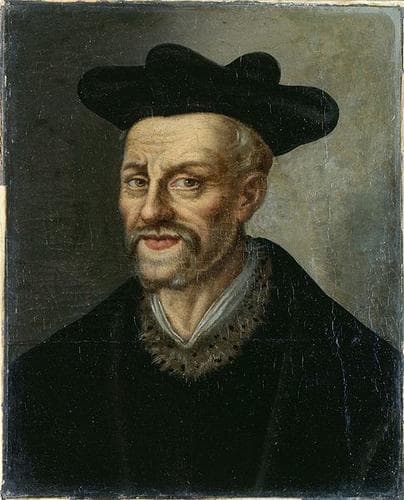
François Rabelais was a French writer and physician of the Renaissance era, known for his satirical and humorous works. His most notable books, "Gargantua" and "Pantagruel," explore themes of humanism and the absurd through the adventures of giant characters. Rabelais's writings have had a lasting influence on literature and are considered significant contributions to the genre of comic fiction.
Similar books
- The Decameron
Giovanni Boccaccio
3.9 (33k) average on GoodreadsHistorical FictionFeatures a collection of moral tales, often with bawdy humor and a critical eye on society.
- Utopia
Thomas More
3.5 (59k) average on GoodreadsPoliticsExplores ideal societies and philosophical concepts through a fictional narrative, though with less humor.
- Harry Potter and the Sorcerer's Stone
J.K. Rowling
4.5 (7M) average on GoodreadsFantasyRescued from a miserable life under the stairs, an orphaned boy discovers he's a wizard destined for a magical school, where he uncovers a dangerous secret tied to the dark wizard who murdered his parents.
- The Hunger Games
Suzanne Collins
4.3 (6.4M) average on GoodreadsFantasyIn a future where children fight to the death on live television, Katniss Everdeen volunteers for the arena, turning a death sentence into a fight for survival and a spark of rebellion.
- 1984
George Orwell
4.2 (3.1M) average on GoodreadsPoliticsIn a future where surveillance and thought control are absolute, a man's search for truth clashes with the Party, showing that hope can be a form of rebellion.
- Divergent
Veronica Roth
4.2 (2.9M) average on GoodreadsFantasyIn a society divided by virtues, a sixteen-year-old's difference from the norm starts a rebellion that threatens her world.




Enjoyed the summary?
A summary gives you the shape of the book. The book itself has the detail, the examples and the voice.
Find Gargantua and Pantagruel on AmazonAs an Amazon Associate, BookBrief earns from qualifying purchases. How we're funded