
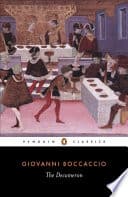
Synopsis
Covers the whole plot, including the ending.
- Difficulty
- Medium
- Pacing
- Variable
- Mood
- Witty, Humorous, Reflective, Bawdy, Romantic, Tragic
- Read it if
- You enjoy classic literature, collections of short stories, or want to explore medieval life and human nature through a diverse set of narrative voices. Perfect if you appreciate wit, satire, and tales that range from the deeply moral to the delightfully irreverent.
- Skip it if
- You prefer a single, continuous plotline, are easily offended by bawdy humor or frank discussions of sexuality, or dislike episodic structures.
The Decameron Plot Summary
Covers the whole plot, including the ending.
The Flight from Florence
In the summer of 1348, as the Black Death devastates Florence, seven young noblewomen—Pampinea, Fiammetta, Filomena, Emilia, Lauretta, Neifile, and Elisa—gather in the deserted church of Santa Maria Novella. Seeing the plague's horrors and the breakdown of society, Pampinea suggests they go to a country estate to escape the sickness and keep their civility. Three young men—Panfilo, Filostrato, and Dioneo—soon join them. The ten decide to form a group and travel to a beautiful villa in the Fiesole hills, seeking comfort and distraction from the city's grim reality.
Establishing the Rules and the First Day
At their first villa, the ten young people agree to a structured routine to maintain order and enjoyment. Pampinea is chosen as the first queen for the day. She decides that after their midday meal and rest, they will gather to tell stories. Each person will tell one story, and the day's ruler will choose the theme. This ritual is meant to provide entertainment, moral thought, and a sense of normalcy during their extraordinary situation. The first day's stories, under Pampinea's rule, have no specific theme, allowing for a varied initial collection.
Day Two: Tales of Fortune and Unforeseen Events
Filomena is elected queen for the second day. She sets the theme for the stories: people who, after suffering various misfortunes, find happiness beyond their hopes. This theme allows for stories with dramatic twists, unexpected changes of fortune, and individuals overcoming difficult problems. Characters in these tales often rely on luck, cleverness, or divine help to navigate dangerous journeys, mistaken identities, and false accusations, eventually finding peace and contentment. Examples include Alatiel's incredible journey and Rinaldo d'Asti's encounter with thieves and a kind widow.
Day Three: Ingenuity and Desire
Neifile becomes queen for the third day, proposing stories about people who, with great effort, get something they wanted or recover something they had lost. Many of these tales involve love and lust, showing characters who use cunning, deception, and elaborate plans to satisfy their desires, often at the expense of unsuspecting husbands or guardians. The stories highlight human resourcefulness and the pursuit of personal satisfaction, sometimes blurring moral lines. Notable tales include Masetto da Lamporecchio pretending to be mute to become a gardener in a convent and a woman's clever tricks to enjoy her lover's company.
Day Four: Tragic Love
Filostrato, whose name means 'vanquished by love,' is chosen as king for the fourth day. He decrees that the stories should be about love affairs that end sadly. This day shifts to more serious and tragic stories, exploring the darker sides of passion, jealousy, and social restrictions. Tales often feature lovers separated by circumstance, betrayed by rivals, or dying early due to their forbidden affections. The most famous story from this day is Ghismonda's, who, after her lover Guiscardo's execution by her father, poisons herself in an act of defiant love.
Day Five: Happy Endings After Trials
Fiammetta, chosen as queen for the fifth day, sets the theme: lovers who, after some terrible or unlucky event, are finally happily reunited. This day counters the previous day's tragedies, focusing on resilience, endurance, and love's eventual triumph. Characters face separation, misunderstanding, or outside opposition but ultimately find their way back to each other, often through luck or their own determined efforts. The stories confirm love's power to overcome trouble and offer a more optimistic view of romantic relationships, such as Federigo degli Alberighi's sacrifice leading to unexpected union.
Day Six: Quick Wit and Clever Replies
Elisa is queen for the sixth day, and her theme is about people who, with a witty saying, have avoided an attack, danger, or ridicule, or otherwise saved themselves. These stories emphasize intellect, quick thinking, and verbal skill. Characters, often in difficult social situations, use their sharp minds and eloquent speech to outsmart opponents, deflect criticism, or get out of embarrassing situations. The tales are often funny and show the value placed on intelligence and social grace in Boccaccio's world, such as Chichibio's quick retort about the crane's single leg.
Days Seven and Eight: Cunning and Deception
Dioneo, known for his honesty, is king for the seventh day and dictates stories about wives who, for love or self-preservation, play tricks on their husbands, whether or not the husbands find out. These tales are often bawdy and disrespectful, showing female action and cleverness in getting around male control. Lauretta, as queen for the eighth day, continues this theme, with stories about men and women who trick each other. These days highlight the complex dance of deception and desire in relationships, often with a comedic and sometimes cynical tone, such as Peronella hiding her lover in a tub.
Day Nine: Free Choice of Subject
Emilia is chosen as queen for the ninth day, and she opts for a day where everyone can tell a story on any subject they wish. This freedom allows for a wide variety of stories, showing the diverse interests and storytelling talents of the group members. The tales range from moral fables to humorous anecdotes, further demonstrating Boccaccio's skill with different narrative styles and themes. It provides a moment of creative freedom before the final day, allowing for a more relaxed and varied collection of stories, reflecting the growing comfort and friendship among the storytellers.
Day Ten: Magnanimity and Generosity
Panfilo, elected king for the tenth and final day, sets the theme for stories: those who have performed a generous or great deed, either in love or otherwise. This day is a grand finale, focusing on acts of nobility, self-sacrifice, and moral excellence. The tales emphasize the highest human virtues, showing characters who demonstrate remarkable generosity, forgiveness, and integrity, often in challenging situations. The most famous story from this day is Griselda's, a peasant woman who endures extreme tests of patience and obedience from her husband, the Marquis Gualtieri, to prove her virtue, a tale that sparks much debate among the company.
The Return to Florence
After ten days in their ideal country retreat, telling a hundred stories and enjoying each other's company, the group decides it is time to return to Florence. They have successfully protected themselves from the plague's immediate dangers and maintained their civility and moral compass through their structured routine and shared stories. The return signals a careful re-engagement with the world, though the plague still looms. Their experience has formed strong bonds and provided a rich collection of human experience through the stories, offering both escape and a deeper understanding of life's complexities.
Principal Figures
Pampinea
Protagonist, Leader
The wise and practical leader who proposes the flight from Florence.
Pampinea is the eldest and most pragmatic of the seven women. She is the one who initially proposes that the group leave plague-stricken Florence for the countryside, demonstrating her leadership qualities and foresight. She is intelligent, responsible, and possesses a strong sense of decorum, often guiding the group towards sensible decisions. Her stories reflect a balanced view of human nature, often with a moral undertone, and she serves as the first queen, setting a precedent for the group's structure.
Relationships: The Brigata (initiator and respected leader of the group of ten storytellers)
Dioneo
Protagonist, Storyteller
The most outspoken and often bawdy member of the group, advocating for pleasure and freedom.
Dioneo is the most irreverent and free-spirited member of the brigata. He frequently challenges the established themes with his often bawdy and explicit stories, which are usually reserved for the end of each day. He represents a more carnal and pleasure-seeking aspect of human nature, often advocating for a less constrained approach to life and love. His stories are typically the most scandalous and humorous, providing comic relief and pushing the boundaries of social propriety within the group's otherwise refined setting.
Relationships: The Brigata (jokester and instigator, often pushing the boundaries of acceptable storytelling)
Filostrato
Protagonist, Storyteller
A melancholic young man, often choosing themes of unhappy love.
Filostrato, whose name means 'vanquished by love,' often expresses a more melancholic and sorrowful disposition, particularly regarding matters of the heart. When it is his turn to rule, he frequently chooses themes of unhappy or tragic love, reflecting his own romantic disappointments or a more pessimistic view of relationships. His stories often explore the pain, jealousy, and despair that can accompany love, providing a stark contrast to the more optimistic or humorous tales shared by others.
Relationships: The Brigata (member whose stories often reflect a more tragic or pessimistic view of love)
Fiammetta
Protagonist, Storyteller
A beautiful and charming young woman, often associated with romantic and elegant tales.
Fiammetta is depicted as beautiful, charming, and gracious, often serving as a symbol of courtly love and refined elegance. Her stories tend to be romantic, often focusing on lovers who overcome obstacles to achieve happiness, or on acts of great devotion and passion. She embodies a more idealized vision of love and beauty, and her narratives often reflect a sophisticated understanding of human emotions and social dynamics. She is beloved by the other members of the brigata.
Relationships: The Brigata (respected and admired member, often associated with romantic and elegant narratives)
Panfilo
Protagonist, Storyteller
A thoughtful and eloquent young man, often telling stories with moral weight.
Panfilo is presented as a thoughtful, eloquent, and morally upright young man. His name means 'lover of all' or 'all-loving,' suggesting a broad and benevolent perspective. He often tells stories that carry significant moral weight or illustrate acts of great generosity and virtue. As the last king, he presides over the day dedicated to magnanimity and noble deeds, reflecting his own character and the ideals he represents within the group. He is often seen as a voice of reason and good judgment.
Relationships: The Brigata (respected member whose stories often carry moral weight and illustrate noble deeds)
Elisa
Protagonist, Storyteller
A refined young woman, often contributing stories of cleverness and wit.
Elisa is one of the seven young women, often depicted as refined and intelligent. Her stories frequently highlight themes of cleverness, wit, and the ability to use one's intellect to navigate difficult situations or escape danger. She values sharp thinking and eloquent speech, and her narratives often celebrate characters who demonstrate these qualities. She is an active participant in the storytelling, contributing to the diverse tapestry of human experience explored by the brigata.
Relationships: The Brigata (member whose stories often feature cleverness and the triumph of wit)
The Black Death
Antagonist, Setting Element
The devastating plague that drives the young Florentines to escape the city.
The Black Death is the overarching catalyst for the entire framework of The Decameron. It is not a character in the traditional sense but an omnipresent, destructive force that reshapes society, breaks down moral order, and compels the ten young people to flee Florence. Its terrifying reality—mass death, social collapse, and the abandonment of traditional customs—serves as the grim backdrop against which the brigata's pursuit of pleasure, order, and storytelling takes place. The plague symbolizes chaos and mortality, contrasting sharply with the ordered, life-affirming world the characters create for themselves in the countryside.
Relationships: The Brigata (the external threat that forces their isolation and storytelling)
Griselda
Mentioned, Exemplar
A peasant woman who endures extreme tests of loyalty and patience.
Griselda is the central figure in the final story of the Decameron, told by Dioneo on the tenth day. She is a peasant girl married by the Marquis Gualtieri, who then subjects her to a series of cruel and seemingly heartless tests of her patience, obedience, and loyalty, including feigning the murder of their children and divorcing her. Despite her suffering, Griselda maintains her virtue and humility, ultimately proving her unwavering devotion. Her story is highly controversial among the brigata, sparking debate about the limits of human endurance and the nature of true nobility.
Relationships: Marquis Gualtieri (wife, subjected to his cruel tests of loyalty)
Themes & Insights
The Power of Storytelling
Storytelling is a vital coping mechanism and a way to bring order and meaning to a chaotic world. Sharing tales allows the group to escape the grim reality of the plague, maintain their civility, and reflect on human experience. Each story offers a different view on life, love, and morality, together forming a rich collection that both entertains and teaches. The stories become a small representation of society, offering lessons, warnings, and celebrations of human cleverness and resilience.
“Let us provide for our own safety, and pass our time in such pleasures and diversions as may be suitable to our present circumstances, without in any wise transgressing the bounds of reason.”
Fortune vs. Human Ingenuity
Many stories explore the connection between unpredictable fortune (fortuna) and human cleverness or effort (industria). Characters often find themselves in bad situations due to fate, but their ability to use their wit, intelligence, and resourcefulness determines their final outcome. While some tales highlight the random nature of luck, others celebrate the human ability to overcome problems through cleverness and determination. This theme reflects a Renaissance view that values individual action even when facing powerful outside forces.
“For many things which appear to us to be evil, are in reality good; and many which appear to us to be good, are in reality evil.”
Love and Desire
Love, in its many forms, is a central and common theme. *The Decameron* explores romantic love, courtly love, forbidden affairs, and the strong power of sexual desire. The stories show both the joys and sorrows of love, its ability to elevate and degrade, and its power to drive individuals to great heroism or profound foolishness. There is an open and often bawdy exploration of human sexuality, contrasting with more idealized ideas of love, and challenging traditional moral views on marital faithfulness and social propriety.
“Love, if it be not accompanied by desire, is merely friendship.”
The Breakdown and Reconstruction of Social Order
The plague causes the collapse of established social norms and moral codes in Florence. The group's retreat to the countryside and their self-imposed rules are an attempt to rebuild a civilized society, though on a smaller scale. Their structured days, democratic leadership, and focus on polite discussion and entertainment are a deliberate effort to counteract the chaos and moral decay they saw in the city. This theme highlights the fragility of social structures and the human need for order and community, even during a crisis.
“Seeing that the laws of God and man were silent, it was permitted to everyone to do as he pleased.”
Plot Devices & Literary Techniques
Frame Narrative
A story within a story, where the main narrative provides a context for a series of smaller tales.
The Decameron employs a classic frame narrative structure. The overarching story is that of the ten young Florentines who flee the Black Death and retreat to a country villa. This 'frame' narrative sets the scene, introduces the characters, and establishes the rules for their daily interactions. Within this frame, the 100 individual stories are told over ten days. This structure allows Boccaccio to present a vast array of human experiences and character types, while also providing a unifying context and a sense of purpose for the storytelling.
Didacticism through Exempla
Stories used as examples to illustrate moral points, behaviors, or consequences.
Many of the tales in The Decameron function as exempla, or examples. While not always strictly moral in the traditional sense, they often illustrate a particular human trait, consequence of an action, or a point about fortune or ingenuity. The brigata members often discuss the 'lessons' or implications of the stories, even if those lessons are sometimes ambiguous or challenge conventional morality. This device allows Boccaccio to explore complex ethical questions and human behaviors through concrete narratives, inviting the reader to reflect on the stories' broader meanings.
Thematic Days
Each day of storytelling is assigned a specific theme by the day's elected ruler.
A key organizational device is the assignment of a specific theme for the stories told on most of the ten days. For example, one day focuses on unhappy love, another on clever retorts, and another on acts of generosity. This thematic structure provides variety and intellectual coherence to the collection of tales. It challenges the storytellers to adapt their narratives to a given subject, showcasing their versatility, and allows Boccaccio to explore different facets of human experience systematically, moving from tragedy to comedy, from misfortune to triumph.
The Decameron Quotes
“And how many times, do you think, did it happen that a woman, either to avoid the shame of being discovered in her sin, or to prevent her husband from finding out about it, would take a lover into her house and keep him there for days without the knowledge of anyone but herself?”
“Let those who wish to live in peace and quiet and to avoid the troubles of the world, withdraw from it and live by themselves, and let them not meddle in the affairs of others.”
“It is better to do well and be silent than to speak well and do ill.”
“Many a man has been ruined by his own folly, and many a woman has been saved by her own wit.”
“For in truth, love is a mighty master, and makes men do things that they would never do otherwise.”
“There is no more certain sign of a base and ignoble mind than to be always finding fault with others.”
“And so, having spent the day in these pleasant discourses, and having supped with much cheer, they returned to their beds, well content with their day's entertainment.”
“For it is not the habit, but the heart, that makes the monk.”
“Nature, which is a most excellent mistress, teaches all creatures to preserve their lives.”
“He who thinks he is wise, and is not, is a fool.”
“No one should ever despair, for there is no evil that may not be overcome by patience and good counsel.”
“Many a time a man thinks he is doing good, when he is doing ill.”
“And thus, with a little wit and much boldness, he brought his purpose to a happy conclusion.”
“For it is often seen that those who are most eager to find fault with others have the most faults themselves.”
Quiz
10 questions on the plot and the characters. Each answer comes with a short explanation.
Question 1
What historical event prompts the ten young Florentines to leave the city and retreat to the countryside?
- The Hundred Years' War
- The Great Schism
- The Black Death
- A famine
Show answer
C. The Black Death The Decameron is set during the summer of 1348, when the Black Death was ravaging Florence, causing the ten young people to seek refuge.
Question 2
How many stories are told in total by the end of the ten days the young Florentines spend in the countryside?
- Ten stories
- Fifty stories
- One hundred stories
- Seventy stories
Show answer
C. One hundred stories The description states that each of the ten young Florentines tells a story a day for ten days, resulting in a hundred stories.
Question 3
Which of the following best describes the general thematic focus of the tales in 'The Decameron'?
- Abstract concepts of morality and religion
- Earthly values, love, adventure, and twists of fate
- Political allegories and critiques of government
- Historical accounts of medieval battles
Show answer
B. Earthly values, love, adventure, and twists of fate The text explicitly states the tales are 'less preoccupied with abstract concepts of morality or religion than with earthly values,' and cover 'love, adventure and surprising twists of fate.'
Question 4
The character Peronella is mentioned for a story involving what specific, bawdy situation?
- Hiding her lover in a closet
- Hiding her lover in a tub
- Disguising her lover as a servant
- Convincing her husband to leave town
Show answer
B. Hiding her lover in a tub The provided text specifically highlights 'the bawdy Peronella hiding her lover in a tub' as an example of the tales.
Question 5
What unexpected fate befalls Ser Cepperello, despite his 'unholy effrontery'?
- He becomes a wealthy merchant
- He is exiled from Florence
- He becomes a Saint
- He marries into nobility
Show answer
C. He becomes a Saint The description mentions Ser Cepperello 'who, despite his unholy effrontery, becomes a Saint,' illustrating a 'surprising twist of fate.'
Question 6
According to The New York Times, how does 'The Decameron' read in some ways?
- As a historical account of the Black Death
- As a guide to social distancing and self-isolation
- As a critique of medieval society
- As an early example of psychological fiction
Show answer
B. As a guide to social distancing and self-isolation The text quotes The New York Times stating, '“The Decameron reads in some ways as a guide to social distancing and self-isolation.”'
Question 7
What is the primary motivation for the ten young Florentines to tell stories to each other?
- To document the events of the plague
- To amuse themselves during their refuge in the countryside
- To pass on moral lessons to future generations
- To compete for a prize awarded by the group
Show answer
B. To amuse themselves during their refuge in the countryside The text states, 'They amuse themselves by each telling a story a day for the ten days they are destined to remain there.'
Question 8
What specific aspect of Boccaccio's writing style does G. H. McWilliam's introduction highlight?
- His philosophical depth
- His mastery of vivid and exciting prose fiction
- His pioneering use of blank verse
- His intricate allegorical structures
Show answer
B. His mastery of vivid and exciting prose fiction The text states, 'His introduction illuminates the worlds of Boccaccio and of his storytellers, showing Boccaccio as a master of vivid and exciting prose fiction.'
Question 9
The book 'The Decameron' is described as an inspiration for which specific modern adaptation?
- A popular television series
- The film 'The Little Hours'
- A stage play adaptation
- A graphic novel series
Show answer
B. The film 'The Little Hours' The description explicitly mentions 'the inspiration for the film The Little Hours,' connecting the medieval work to a modern adaptation.
Question 10
Considering the context of its creation, 'The Decameron' can be seen as a commentary on the resilience of the human spirit in the face of what major societal crisis?
- Religious persecution
- Economic depression
- A devastating pandemic
- Political instability
Show answer
C. A devastating pandemic The entire premise of the book, with characters fleeing the Black Death and finding solace in storytelling, highlights the human spirit's ability to cope with a devastating pandemic.
The Decameron FAQ
What is the central premise of The Decameron?
The Decameron follows ten young Florentines—seven women and three men—who flee to a secluded villa in the countryside to escape the devastating Black Death plaguing Florence in 1348. To pass the time and maintain their spirits, they agree to tell one story each day for ten days, resulting in a collection of one hundred tales.
Who are the ten storytellers, and how were they chosen?
The ten storytellers are Pampinea, Fiammetta, Filomena, Emilia, Lauretta, Neifile, Elissa, Dioneo, Panfilo, and Filostrato. They are all young, aristocratic, and well-educated individuals who meet in the church of Santa Maria Novella and jointly decide to escape the plague-ridden city and entertain themselves with storytelling.
What themes are commonly explored in the hundred tales?
The tales in The Decameron frequently explore themes of love in its various forms (courtly, illicit, tragic, comedic), wit and intelligence, fortune and fate, human ingenuity, and the triumph of earthly values over rigid moral or religious doctrines. Bawdiness, trickery, and clever solutions to predicaments are also prevalent.
How does the frame story of the plague influence the tone and content of the tales?
The grim reality of the Black Death in the frame story creates a stark contrast with the vibrant, often humorous, and life-affirming tales. It suggests a carpe diem attitude, where the characters seek pleasure and meaning in the face of death, and allows for a more relaxed moral framework in the stories themselves, celebrating human resilience and worldly enjoyment.
What is the significance of the daily 'king' or 'queen' elected by the brigata?
Each day, one of the ten storytellers is elected as the 'king' or 'queen' of the company. This individual presides over the day's activities, sets the theme for the stories to be told, and maintains order. This rotating leadership structure emphasizes shared responsibility and democratic leisure, reflecting a miniature, idealized society.
Are there any recurring characters or motifs that connect multiple stories beyond the frame narrative?
While most stories are self-contained, there are subtle connections, such as the frequent appearance of clever women outwitting men or the clergy, and the celebration of quick wit. The character of Dioneo is unique as he is always allowed to tell the last story of the day, usually the most bawdy or unconventional, breaking from the chosen theme.
How does Boccaccio use humor and irony in the story of Ser Cepperello?
In the story of Ser Cepperello, Boccaccio employs profound irony by presenting a notoriously wicked man, Cepperello, who, on his deathbed, concocts a false confession of saintliness. Through his masterful deception, he is canonized as a saint, highlighting the gullibility of the pious and satirizing religious hypocrisy, suggesting that even a scoundrel can achieve sainthood through cleverness.
What is the role of 'fortune' or 'fate' in The Decameron?
Fortune is a powerful, often unpredictable force in The Decameron, frequently dictating the initial circumstances or unexpected twists in many tales. However, Boccaccio often shows that human ingenuity, wit, and resilience can either overcome or cleverly exploit the whims of fortune, suggesting agency even in a world governed by chance.
How do the characters in the frame story cope psychologically with the trauma of the plague?
The characters cope by creating a highly structured, aesthetically pleasing, and intellectually stimulating environment away from the chaos. Their rigorous schedule of storytelling, feasting, singing, and dancing serves as a form of escapism and a psychological defense mechanism, allowing them to maintain sanity and civility in the face of widespread death and societal breakdown.
What psychological insights does Boccaccio offer into human nature through the diverse range of characters in the tales?
Boccaccio offers a nuanced view of human nature, portraying characters driven by lust, greed, jealousy, but also by love, loyalty, and ingenuity. He reveals the psychological complexities of desire, deception, and the lengths people go to satisfy their impulses or navigate difficult situations, often showing that wit and resourcefulness are paramount.
How does the 'brigata's' collective storytelling act as a form of therapy or social cohesion?
The collective storytelling acts as a powerful therapeutic tool, diverting their minds from the plague's horrors and fostering a sense of community and shared purpose. It allows them to process societal anxieties through fictional narratives, reinforce social bonds, and maintain a semblance of normalcy and culture amidst the surrounding devastation.
In what ways do the characters' reactions to love and desire reflect their individual personalities?
The characters' reactions to love and desire vary greatly: some embrace it with gusto (like Dioneo's tales), others approach it with more caution or melancholy (like Filostrato), and some use it as a vehicle for demonstrating wit and cleverness (like Fiammetta's stories). These diverse portrayals highlight the range of human emotional responses to one of life's most powerful forces.
Is The Decameron primarily a moral or an amoral work, given its focus on earthly pleasures and often transgressive acts?
The Decameron is arguably more amoral than strictly moral, as it often prioritizes human ingenuity, wit, and the pursuit of earthly happiness over traditional religious or societal virtues. While some tales do offer moral lessons, many celebrate characters who cleverly circumvent rules or achieve their desires through means that would typically be deemed sinful, emphasizing pragmatism and worldly success.
How does Boccaccio challenge or subvert medieval societal norms regarding class, gender, and religion?
Boccaccio frequently challenges medieval norms by presenting intelligent, resourceful women who outwit men, by depicting clergy members as lecherous or hypocritical, and by showing commoners or merchants achieving success through wit rather than noble birth. He elevates human cunning and natural desire, often satirizing the rigid hierarchies and pieties of his era.
What is the significance of the differing themes chosen by the daily 'kings' and 'queens'?
The differing themes reflect the individual personalities and concerns of the elected 'kings' and 'queens' and add variety to the collection. For example, Filostrato's day is dedicated to tales of unhappy love, reflecting his melancholic nature, while Dioneo's freedom to choose any topic for his story symbolizes a release from conventional constraints and often introduces the most risqué narratives.
How does Boccaccio's portrayal of the Black Death differ from other contemporary accounts?
Unlike more purely historical or theological accounts of the plague, Boccaccio's portrayal in the introduction is deeply personal and descriptive, focusing on its devastating social and psychological impact—the breakdown of laws, family ties, and moral order. He uses it as a dramatic backdrop to justify the brigata's retreat and their subsequent celebration of life through storytelling, rather than solely as a divine judgment.
Given its themes, why is The Decameron considered a precursor to the Renaissance?
The Decameron is considered a precursor to the Renaissance due to its strong humanistic focus, celebrating human intelligence, wit, and individual agency over divine intervention or abstract morality. Its embrace of earthly pleasures, realistic character portrayals, and use of vernacular Italian for sophisticated prose fiction mark a significant departure from medieval scholasticism and foreshadow the human-centered worldview of the Renaissance.
How does the final story, Dioneo's tale of Griselda, offer a complex or debatable conclusion to the collection?
Dioneo's final tale of Griselda, a woman of extreme patience and obedience, is highly debatable. While it can be interpreted as an allegory for enduring faith or wifely virtue, many find it disturbing for its depiction of a husband's cruel tests. Its inclusion at the end challenges the preceding themes of wit and self-assertion, leaving readers to ponder the limits of human endurance and the nature of true nobility, possibly even as a satirical critique of such extreme 'virtue'.
About the author
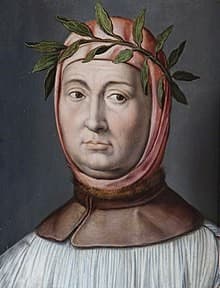
Giovanni Boccaccio was an Italian writer, poet, correspondent of Petrarch, and an important Renaissance humanist. Born in the town of Certaldo, he became so well known as a writer that he was sometimes simply known as "the Certaldese" and one of the most important figures in the European literary panorama of the fourteenth century. Some scholars define him as the greatest European prose writer of his time, a versatile writer who amalgamated different literary trends and genres, making them converge in original works, thanks to a creative activity exercised under the banner of experimentalism.
Similar books
- The Canterbury Tales
Geoffrey Chaucer
3.5 (189k) average on GoodreadsHistorical FictionBoth are collections of diverse stories told by a group of travelers/refugees, showcasing a cross-section of medieval society and human foibles.
- Gargantua and Pantagruel
François Rabelais
3.7 (14k) average on GoodreadsFantasyShares a similar spirit of bawdy humor, satire, and a critical, yet often joyful, look at human nature and societal norms.
- To Kill a Mockingbird
Harper Lee
4.3 (4.5M) average on GoodreadsHistorical FictionIn the 1930s Jim Crow South, Harper Lee writes about racial injustice, moral growth, and the quiet courage of a lawyer father, Atticus Finch, as seen through his young daughter's eyes.
- The Great Gatsby
F. Scott Fitzgerald
3.9 (3.8M) average on GoodreadsHistorical FictionIn the opulent Roaring Twenties, a mysterious millionaire's lavish parties hide his desperate, tragic pursuit of a lost love, exposing the emptiness within the American Dream.
- Pride and Prejudice
Jane Austen
4.3 (3M) average on GoodreadsHistorical FictionIn a society focused on status and money, Elizabeth Bennet navigates love and pride, challenging Mr. Darcy and social expectations to find true affection.
- Angels & Demons
Dan Brown
3.9 (2.7M) average on GoodreadsThrillerA Harvard symbologist races through Rome's ancient sites, deciphering cryptic clues to unmask the Illuminati and stop a vengeful plot to destroy the Vatican with a stolen antimatter weapon.





Enjoyed the summary?
A summary gives you the shape of the book. The book itself has the detail, the examples and the voice.
Find The Decameron on AmazonAs an Amazon Associate, BookBrief earns from qualifying purchases. How we're funded