

Synopsis
Covers the whole plot, including the ending.
- Difficulty
- Hard
- Pacing
- Variable
- Mood
- Disturbing, Surreal, Satirical, Nihilistic, Unsettling
- Read it if
- You enjoy dark satire, psychological thrillers, and a deep dive into the superficiality and horror of celebrity culture, with a highly unreliable narrator.
- Skip it if
- You prefer straightforward narratives, are easily disturbed by graphic violence, or dislike ambiguous endings and a profound sense of nihilism.
Glamorama Plot Summary
Covers the whole plot, including the ending.
The Perfect Life and a Peculiar Offer
Victor Ward, a handsome male model, lives a perfect life in 1990s Manhattan. He dates supermodel Chloe Byrnes, has an affair with another model, Alison Poole, and is about to open his nightclub, 'Nowhere.' His life is a whirlwind of exclusive parties, celebrity encounters, and constant media attention. Beneath the surface, Victor is disoriented by strange occurrences: he sees himself in photographs at events he never attended, and people know things about him that are impossible. One night, a shadowy figure named F. Fred Palakon offers Victor a lucrative but vague job locating a missing person for a film project, hinting at a darker reality beneath his glamorous life.
The Disappearance and the European Assignment
As the opening of 'Nowhere' approaches, Alison Poole, Victor's mistress, mysteriously disappears, leaving a cryptic message. This event, coupled with the increasing surrealism of his daily life, including encounters with doppelgangers and unsettling conversations, pushes Victor further into confusion. Despite his initial reluctance, Victor accepts F. Fred Palakon's job offer, which involves traveling to Europe under the guise of filming a documentary. He is given a new identity and instructed to locate a specific individual; the details remain vague. Victor leaves his glamorous New York life, relationships, and club project, embarking on a journey that feels less like a film shoot and more like an abduction into an unknown world.
The Terrorist Cell and the Cult of Celebrity
Victor arrives in Europe and is immediately plunged into a bizarre and terrifying reality. He is introduced to a group of international models and celebrities who, under the direction of 'Bobby Hughes,' also operate as a terrorist cell. Their acts of violence, from bombings to kidnappings, are meticulously staged and filmed, blurring the lines between reality and performance art. Victor's mission, as explained by Palakon and the group, is to 'find Bobby Hughes,' a task that becomes convoluted as he encounters multiple individuals claiming to be or acting as Bobby Hughes. He is forced to participate in their horrific 'performances,' all while grappling with the realization that his glamorous past might have been a prelude to this violent, theatrical present.
The Quest for Identity and the Shifting Realities
As Victor is dragged from one European capital to another, participating in or witnessing brutal acts of terrorism, his sense of self unravels. The lines between his past in New York and his present in Europe, between his memories and the 'scripts' he's given, blur. He encounters characters from his past, like Chloe Byrnes and Alison Poole, who appear in unexpected and contradictory roles within the terrorist group, further destabilizing his perception of reality. Victor's objective shifts from 'finding Bobby Hughes' to understanding his own identity and the true nature of the 'film' he's supposedly making. He is haunted by fragmented memories and fears he might be losing his mind, or that his entire life has been a crafted illusion.
The Paris Bombing and the Descent into Chaos
The terrorist group orchestrates a bombing in Paris, a planned event designed for media impact and filmed from multiple angles. Victor is present during the aftermath, witnessing the horrific consequences. This event marks an escalation in the group's violence and Victor's complicity. The bombing is presented as another 'scene' in the ongoing 'film,' yet the real-world casualties are undeniable. Victor's internal struggle intensifies as he tries to reconcile the glamour and detachment of the terrorists with the real suffering they cause. He questions whether any of his experiences are genuine or if he is merely an actor in a larger, more terrifying production, a puppet in a world where celebrity and terror are indistinguishable.
The Cult of Bobby Hughes and the Search for Answers
Victor learns more about Bobby Hughes, who is revered by the terrorist group as a visionary leader, an artist, and a prophet. The group's actions are often justified as part of Hughes's artistic vision, a form of radical performance art designed to expose the hollowness of modern society. Victor, while horrified by their methods, is also drawn into the mystique surrounding Hughes, hoping that finding the 'real' Bobby will provide answers to the chaos of his life. He encounters more individuals impersonating Hughes, each offering a different piece of the puzzle, yet none providing a definitive explanation. The constant confusion and the blurring of identities make it impossible for Victor to discern the truth from the deceptions.
The Betrayal and the Escape Attempt
Overwhelmed by the violence and psychological torment, Victor attempts to escape the terrorist group. He tries to contact authorities, but his efforts are thwarted, and he finds himself alone. During his escape attempts, he discovers that many people he thought were innocent bystanders or victims are actually complicit in the 'film.' He is eventually recaptured and subjected to further psychological manipulation. It is suggested that his entire journey, from the moment Palakon approached him in New York, has been a carefully orchestrated trap, a performance designed for him. The realization that he is not just a participant but potentially the unwitting star of this production pushes him to the brink.
The Return to New York and the Illusion's Persistence
Against all odds, Victor finds himself back in New York City, seemingly having escaped the European nightmare. He tries to resume his old life, reopening 'Nowhere' and reconnecting with Chloe Byrnes. However, the events in Europe have scarred him. He experiences unsettling flashbacks, sees familiar faces from the terrorist group in mundane settings, and struggles to differentiate between his memories and fabricated realities. The lines between his past glamorous life and the horrific European ordeal remain fluid. He questions whether his return to New York is real or just another layer of the 'film' he was forced to star in, unable to escape the sense of illusion and paranoia.
The Unraveling of Reality and the Final Act
As Victor attempts to navigate his 'returned' life in New York, the distinction between his experiences in Europe and his current reality collapses. He encounters characters who contradict their past roles, and events from his glamorous New York life intertwine with the violence he witnessed abroad. He suspects that his entire existence, from his childhood to his modeling career, might have been a constructed narrative. The 'film' is not just about Bobby Hughes; it is about him. He confronts F. Fred Palakon and other figures, demanding answers, but is only met with obfuscation and unsettling suggestions that he is merely a character in an ongoing story. The novel ends with Victor's psychological breakdown, leaving the reader to question the authenticity of everything that has transpired.
The Endless Loop
In the concluding moments, Victor is lost, unable to distinguish between his 'real' life, the 'film,' and the various layers of deception. He is caught in an endless loop of celebrity, violence, and illusion. It is implied that there is no escape for him, and that his identity has been subsumed by the narrative created around him. The novel suggests that the 'film' is ongoing, and Victor is forever its star, performing his role in a world where fame, terror, and reality have become indistinguishable. His journey is not one of resolution but of eternal entrapment within the system he once embodied, a commentary on the consuming nature of celebrity culture.
Glamorama Characters
Victor Ward
Protagonist
A handsome male model and aspiring nightclub owner thrust into a world of terror and illusion.
Victor Ward is initially presented as the epitome of 1990s celebrity culture: perfectly sculpted, effortlessly cool, and perpetually surrounded by fame and luxury. He is charming, somewhat naive, and deeply invested in maintaining his image and social standing. Beneath the superficiality, he possesses a fragile sense of self, easily manipulated and prone to self-deception. His journey is one of profound disorientation and psychological unraveling as he struggles to comprehend the surreal and violent events that engulf him.
Relationships: Chloe Byrnes (girlfriend, fellow model, later appears as a terrorist); Alison Poole (mistress, fellow model, later appears as a terrorist); F. Fred Palakon (mysterious recruiter, manipulator, orchestrator of the 'film')
F. Fred Palakon
Antagonist/Manipulator
The enigmatic figure who recruits Victor into the 'film,' orchestrating his descent into terror.
Palakon is a shadowy, elusive figure who acts as Victor's primary contact and guide into the world of celebrity terrorism. He presents himself as a film producer but is clearly a mastermind of deception and psychological manipulation. He speaks in cryptic, philosophical terms, blurring the lines between art, reality, and violence. His motives are never fully clear, but he seems to embody the destructive forces of media and performance that consume Victor. He is the architect of Victor's torment.
Relationships: Victor Ward (recruiter/target, manipulator/victim)
Chloe Byrnes
Supporting/Ambiguous
Victor's supermodel girlfriend, whose identity shifts throughout the narrative.
Chloe Byrnes is initially Victor's glamorous, high-profile girlfriend, a fellow supermodel who epitomizes the superficiality of their New York world. She is beautiful, seemingly devoted, and deeply embedded in the celebrity circuit. However, once Victor is in Europe, Chloe reappears in various guises, sometimes as a member of the terrorist group, sometimes as a fleeting apparition, further destabilizing Victor's perception of reality. Her shifting identity makes her a symbol of the novel's pervasive themes of illusion and the fluidity of character in a performance-driven world.
Relationships: Victor Ward (girlfriend, later a perceived accomplice/terrorist)
Alison Poole
Supporting/Ambiguous
Victor's mistress, whose disappearance triggers his European ordeal, and who later reappears in various roles.
Alison Poole is Victor's beautiful and troubled mistress, another model whose disappearance serves as a catalyst for Victor's entanglement with Palakon. She is portrayed as vulnerable and somewhat erratic. Like Chloe, Alison reappears in Europe in different capacities, sometimes as a victim, sometimes as a willing participant in the terrorist acts. Her presence consistently blurs the lines between victim and perpetrator, love interest and conspirator, adding to Victor's profound confusion and sense of betrayal.
Relationships: Victor Ward (mistress, later a perceived accomplice/terrorist)
Bobby Hughes
Antagonist/Symbolic
The elusive and enigmatic leader of the terrorist group, a figure of cult-like devotion and artistic terrorism.
Bobby Hughes is less a single character and more a shifting, symbolic entity. He is the supposed mastermind behind the celebrity terrorist cell, revered as a visionary artist and prophet by his followers. Various individuals claim to be or act as Bobby Hughes, making his true identity impossible to pin down. He represents the ultimate fusion of celebrity, art, and violence, a figure whose existence justifies the most horrific acts as 'performance art.' His elusiveness embodies the novel's central mystery and the futility of finding a singular truth.
Relationships: Victor Ward (target of Victor's search, perceived leader of the opposing force); Terrorist Group Members (revered leader)
Mimi
Supporting
Victor's loyal assistant in New York, a grounding force in his initial life.
Mimi is Victor's dedicated and seemingly normal assistant in New York. She handles his schedule, deals with public relations, and generally keeps his chaotic life in order. She represents a tether to the mundane, pre-terror reality of Victor's life. Her presence in the early chapters highlights the stark contrast between his initial glamorous existence and the surreal horror he later encounters. Her absence or distorted reappearance later in the novel further emphasizes Victor's complete detachment from his former reality.
Relationships: Victor Ward (boss/assistant)
Ripley
Supporting/Antagonistic
A fellow model and member of the terrorist cell, often interacting with Victor.
Ripley is one of the many models and celebrities Victor encounters within the European terrorist cell. He is handsome, detached, and complicit in the group's violent acts. Ripley often acts as a guide or enforcer for Victor, explaining aspects of the 'film' or ensuring Victor's participation. His character further blurs the lines between fashion model and terrorist, embodying the novel's critique of superficiality and its potential for destructive ends.
Relationships: Victor Ward (fellow participant in the 'film', occasional enforcer)
Damien
Supporting/Antagonistic
Another member of the celebrity terrorist group, often involved in the violence.
Damien is another key member of the European terrorist cell. Like Ripley, he is a charismatic but ruthless individual who participates in the bombings and other acts of violence with a disturbing coolness. He represents the seductive yet horrifying aspect of the group's ideology, where violence is aestheticized and celebrity is weaponized. His interactions with Victor often highlight Victor's increasing entrapment and his own fading moral compass.
Relationships: Victor Ward (fellow participant in the 'film')
Jamie
Supporting/Ambiguous
A young, seemingly innocent model who Victor tries to protect.
Jamie is a young, seemingly more innocent model who Victor encounters within the terrorist group. Victor feels a protective instinct towards her, perhaps seeing a reflection of his own initial naivety. However, like other characters, Jamie's true allegiances and role within the 'film' are ambiguous, leading Victor to question even his most basic assumptions about who is genuinely a victim and who is a perpetrator. Her character serves to highlight Victor's eroding sense of trust and his desperate search for genuine connection.
Relationships: Victor Ward (fellow participant, object of Victor's fleeting protective instinct)
Glamorama Themes
The Illusion of Reality and Identity
The novel blurs the lines between reality, performance, and hallucination, leaving Victor and the reader unable to discern what is true. Victor's identity as a model, a lover, and eventually a terrorist is constantly shifting, manipulated by unseen forces. The 'film' within the story is a metaphor for this illusion, suggesting that all of life, especially in a celebrity-obsessed culture, is a staged performance. Victor sees himself in photos he didn't take, encounters doppelgangers, and experiences conflicting memories, all contributing to the collapse of his subjective reality.
“What is real and what isn't? What is the point of living if you're just a character in someone else's movie?”
The Destructive Nature of Celebrity Culture
Glamorama critiques the superficiality, emptiness, and destructive power of celebrity. Victor's initial life is one of constant exposure, where image is everything and genuine connection is secondary. The terrorist group's actions are extreme forms of performance art, using violence and spectacle to achieve ultimate fame. The novel suggests that the pursuit of celebrity can dehumanize individuals, turning them into commodities or characters, and leading to moral decay and violence. The terrorists are models and actors, using their fame as a weapon and a shield.
“We're all just parts of a larger narrative, aren't we? And some narratives require a little more... spectacle.”
Postmodernism and Hyperreality
Ellis explores Jean Baudrillard's concept of hyperreality, where simulacra (copies without an original) become more real than reality itself. The 'film' is the ultimate simulacrum, with its staged terrorist attacks, celebrity 'actors,' and Victor's manufactured memories. The novel constantly refers to film tropes, scripts, and performances, suggesting that society has become so saturated with media and images that it can no longer distinguish between the authentic and the artificial. The events in Europe are an extension of the media spectacle of Victor's New York life.
“It's all part of the script, Victor. Don't worry about what's real. Just play your part.”
Violence as Spectacle and Art
A central theme is the portrayal of violence not as a genuine act of aggression, but as a choreographed spectacle, a form of extreme performance art designed for media consumption. The terrorist attacks are filmed, edited, and presented as if they were movie scenes. This theme examines the desensitization to violence in modern media and questions the morality of aestheticizing suffering. The group's leader, Bobby Hughes, is revered as an artist whose canvases are cities and whose medium is chaos, forcing Victor to confront the beauty some find in destruction.
“We're not just making a statement, Victor. We're making art. The most profound art of our time.”
The Loss of Innocence and Moral Corruption
Victor begins as a naive, albeit superficial, character. His journey through the world of celebrity terrorism strips him of innocence and forces him to confront his moral compromises. He is compelled to participate in horrific acts, blurring his sense of right and wrong. The novel explores how easily individuals can be corrupted by power, fame, and the allure of a grand, if destructive, narrative. By the end, Victor is morally bankrupt and psychologically shattered, a casualty of the world he once embraced.
“I used to think I knew who I was. Now I'm just a series of reactions to a script I don't understand.”
Plot Devices & Literary Techniques
Unreliable Narrator
Victor Ward's perception of events is constantly questioned, making it impossible to trust his account.
Victor Ward serves as an archetypal unreliable narrator. From the outset, his memories are fragmented, his perceptions are distorted, and he frequently hallucinates or experiences events that contradict reality. This device is crucial to the novel's themes of illusion and hyperreality, as the reader is forced to share Victor's disorientation and question the veracity of every event. The ambiguity of his mental state and the external manipulations make it impossible to determine what is 'real' and what is part of the 'film' or his own psychological breakdown.
Metafiction/Story-within-a-story
The narrative frequently references itself as a 'film' or 'script,' blurring the lines between the story and its telling.
The concept of a 'film' being made is a central metafictional device. Victor is told he is starring in a film, and the terrorist acts are presented as 'scenes.' This blurs the boundaries between the narrative being read and the narrative being enacted within the story. It forces the reader to consider the constructed nature of all narratives, including the one they are consuming. This device reinforces the idea that life itself has become a performance, and characters are merely playing roles in a grand, often horrific, production.
Doppelgangers and Shifting Identities
Characters, including Victor himself, appear in multiple, often contradictory roles and identities.
Throughout the novel, Victor encounters individuals who look exactly like people he knows but are in different contexts, or familiar characters who reappear with entirely new personalities and allegiances. This frequent use of doppelgangers and shifting identities serves to disorient Victor and the reader, emphasizing the theme of fluid identity in a hyperreal world. It suggests that individuality is a construct, and that in a world of performance, anyone can be anyone, further eroding Victor's sense of self and reality.
Non-linear Narrative and Fragmentation
The story jumps in time, repeats events with variations, and presents disjointed scenes.
The narrative structure of Glamorama is highly fragmented and non-linear. Events from Victor's past and present intertwine, often repeating with slight variations, making it difficult to establish a clear timeline or causal chain. This deliberate structural choice mirrors Victor's own fractured mental state and the novel's thematic exploration of a reality that has lost its coherence. It forces the reader to piece together a fragmented reality, much like Victor, contributing to the pervasive sense of confusion and disorientation.
Glamorama Quotes
“The worst thing about a celebrity is that they can't be themselves. They have to be the idea of themselves.”
“Everyone is a brand. We're all selling something.”
“Nothing is real. Everything is a performance.”
“I'm not saying I'm a bad person. I'm just saying I'm a product of my environment. And my environment sucks.”
“The media creates monsters, and then the public devours them.”
“We're all just trying to get by, trying to make sense of a world that doesn't make any sense.”
“You can't escape who you are, no matter how many times you change your name or your clothes.”
“The only thing worse than being talked about is not being talked about.”
“Everyone wants to be famous, but no one wants to do the work.”
“We live in a world where image is everything, and substance is nothing.”
“Sometimes I think I'm just a character in someone else's movie.”
“Love is just a chemical reaction, a way for genes to perpetuate themselves.”
“The past is never dead. It's not even past.”
“We're all just trying to escape, aren't we? From ourselves, from our lives, from everything.”
Quiz
10 questions on the plot and the characters. Each answer comes with a short explanation.
Question 1
What is Victor Ward's primary profession at the beginning of 'Glamorama'?
- Nightclub owner
- Fashion model
- Film director
- Private investigator
Show answer
B. Fashion model Victor Ward is established early in the novel as a successful fashion model, known for his perfect physique and celebrity connections.
Question 2
Which of these is NOT one of the women Victor Ward is involved with at the start of the book?
- Chloe Byrnes
- Alison Poole
- Claudia Geary
- Allegra Coleman
Show answer
C. Claudia Geary Victor is living with Chloe Byrnes and having an affair with Alison Poole. Allegra Coleman is another significant figure later in the plot. Claudia Geary is not one of his direct romantic entanglements.
Question 3
What unusual phenomenon is Victor experiencing at the novel's outset, suggesting a blurring of reality?
- He is hearing voices telling him to commit crimes.
- He sees himself in photographs in places he hasn't been.
- He is frequently mistaken for a famous movie star.
- He keeps waking up in different apartments without memory.
Show answer
B. He sees himself in photographs in places he hasn't been. The synopsis explicitly states, 'Victor Ward... is seen and photographed everywhere, even in places he hasn't been and with people he doesn't know,' highlighting the initial signs of his fractured reality.
Question 4
What is the name of the trendy nightclub Victor Ward is about to open in New York City?
- The Velvet Rope
- The Limelight
- The Tunnel
- The details of the club's name are intentionally vague or never fully confirmed.
Show answer
D. The details of the club's name are intentionally vague or never fully confirmed. While the opening of 'the trendiest nightclub in New York City history' is a significant plot point, the specific name of this club is kept ambiguous or shifts, contributing to the novel's themes of illusion and unreliability.
Question 5
Victor is tasked by a mysterious figure named F. Fred Palakon to find whom?
- A missing supermodel who owes him money.
- A former college acquaintance who disappeared.
- A woman named Alison Poole, whom he is already having an affair with.
- A terrorist cell planning an attack in Paris.
Show answer
C. A woman named Alison Poole, whom he is already having an affair with. Palakon instructs Victor to find Alison Poole, setting in motion the chain of events that leads him to Europe and into the world of terrorism, despite Victor already knowing her.
Question 6
What is the primary setting for the latter half of 'Glamorama'?
- Los Angeles, California
- New York City, New York
- Various European cities, particularly Paris and London
- A secluded private island
Show answer
C. Various European cities, particularly Paris and London After leaving New York, Victor's journey to find Alison Poole and his entanglement with the terrorist group 'The New Terrorists' takes him across Europe, primarily to Paris and London.
Question 7
The novel heavily satirizes and critiques which aspect of modern culture?
- The rise of corporate greed in the 1990s.
- The obsession with celebrity, fame, and superficiality.
- The decline of traditional family values.
- The impact of technology on social interactions.
Show answer
B. The obsession with celebrity, fame, and superficiality. The synopsis directly states that Ellis 'takes our celebrity obsessed culture and increases the volume exponentially,' making this a central theme.
Question 8
What recurring element or motif throughout the book emphasizes the blurring of reality and fiction?
- Frequent references to classical literature and mythology.
- Characters often breaking the fourth wall to address the reader.
- The appearance of Victor Ward's 'film' or 'movie' being shot around him.
- Detailed descriptions of surreal dreams and nightmares.
Show answer
C. The appearance of Victor Ward's 'film' or 'movie' being shot around him. The idea that Victor's life, or parts of it, is a movie being filmed or directed, with 'takes' and 'cuts,' is a consistent meta-narrative device that blurs the line between his lived experience and a constructed reality.
Question 9
Who are 'The New Terrorists' in 'Glamorama'?
- A real-world political extremist group operating in the 1990s.
- A group of models and celebrities orchestrating elaborate, violent performance art.
- A secret society of wealthy individuals manipulating global events.
- A radical environmentalist organization.
Show answer
B. A group of models and celebrities orchestrating elaborate, violent performance art. The 'terrorists' in Glamorama are revealed to be a band of beautiful, glamorous models and celebrities who engage in acts of extreme violence, often staged as performance art or 'movies,' further blurring the lines between reality and spectacle.
Question 10
What is the ultimate fate or revelation regarding Victor Ward's identity by the end of the novel?
- He successfully escapes the terrorist plot and lives a normal life.
- He becomes a major figure in the terrorist organization.
- His identity is revealed to be a fabrication, potentially an actor playing a role, or a series of interchangeable figures.
- He is imprisoned for his involvement in the terrorist attacks.
Show answer
C. His identity is revealed to be a fabrication, potentially an actor playing a role, or a series of interchangeable figures. One of the most disorienting aspects of 'Glamorama' is the constant questioning and eventual dissolution of Victor Ward's singular identity, suggesting he may be a stand-in, an actor, or part of a larger, manufactured reality.
Glamorama FAQ
What is the central premise of 'Glamorama' concerning Victor Ward's life in 90s Manhattan?
Victor Ward is a burgeoning celebrity model in 1990s Manhattan, seemingly living a glamorous life filled with parties, beautiful women like Chloe Byrnes and Alison Poole, and the impending opening of his trendy nightclub, 'Nowhere.' However, his meticulously crafted reality begins to unravel as he encounters bizarre discrepancies, such as being photographed in places he hasn't visited and with people he doesn't know, hinting at a deeper, more sinister orchestration behind his fame.
Who are the key romantic interests in Victor's life at the beginning of the novel, and how do they complicate his situation?
Victor is living with Chloe Byrnes, a fellow model, but is simultaneously engaged in a passionate affair with Alison Poole, another model. This romantic entanglement adds a layer of personal chaos to Victor's life, as both women represent different facets of his desired reality and contribute to the superficiality and moral ambiguity that define his existence before he's drawn into the larger conspiracy.
What mysterious offer does Bobby Hughes present to Victor, and what is its initial appeal?
Bobby Hughes, a shadowy figure, offers Victor a substantial sum of money to locate and retrieve a missing ex-girlfriend of his, promising Victor an escape from his current life and a chance to truly launch his nightclub. This offer initially appeals to Victor's desire for financial stability and a transition to a new phase of his celebrity, masking the true, dangerous nature of the task.
Where does Victor's pursuit of the missing person lead him geographically, and what kind of organization does he encounter?
Victor's pursuit leads him from New York City to Europe, specifically London and Paris, where he infiltrates a clandestine terrorist organization masquerading as a modeling agency or film crew. This organization, comprised of other models and celebrities, is responsible for a series of high-profile bombings and acts of terror, blurring the lines between fashion, fame, and global violence.
How does the novel utilize the motif of filming or movie-making throughout Victor's experiences?
The novel heavily employs the motif of filming, with Victor often feeling like he's on a movie set or being filmed, and characters frequently discussing scripts, takes, and roles. This constant meta-narrative blurs the line between reality and performance, suggesting that Victor's entire life, and indeed the terrorist acts themselves, might be an elaborate, staged production for an unseen audience or director.
What is the significance of the character 'Jamie Fields' and how does she connect to Victor's past?
Jamie Fields is one of Victor's ex-girlfriends, whom Bobby Hughes instructs him to find. She represents a link to Victor's past and a more 'authentic' version of himself, before his immersion in extreme celebrity culture. Her disappearance and the quest to find her serve as a catalyst for Victor's journey into the terrorist underworld, revealing that his personal history is intertwined with the larger conspiracy.
How does the novel subtly hint at the potential unreliability of Victor's narration from early on?
The novel subtly hints at Victor's unreliable narration through his frequent memory lapses, the conflicting accounts of events he provides, and the disorienting feeling that scenes repeat or shift without logical progression. His constant name-dropping and obsession with celebrity also suggest a surface-level engagement with reality, where image overrides truth, foreshadowing the deeper deceptions.
Are there any direct or indirect connections to other Bret Easton Ellis novels, particularly 'American Psycho' or 'The Rules of Attraction'?
Yes, 'Glamorama' has several indirect connections to Ellis's other works. Alison Poole, one of Victor's girlfriends, is a character who also appears in 'American Psycho' and 'The Rules of Attraction,' serving as a recurring figure in the Ellisverse. Additionally, Patrick Bateman from 'American Psycho' is mentioned and even briefly appears, reinforcing the shared, decadent, and often violent universe these characters inhabit.
What is the true nature of the 'terrorist organization' Victor encounters, and what is its ultimate goal?
The 'terrorist organization' Victor encounters is not a conventional political group but rather a collective of celebrity models and actors seemingly enacting scripted acts of violence for unknown patrons. Their ultimate goal appears to be the creation of media spectacle, blurring the lines between reality, entertainment, and terror, suggesting that the violence itself is a form of performance designed to generate attention and control perception.
How does Victor Ward's narcissism and superficiality contribute to his susceptibility to manipulation?
Victor's extreme narcissism and superficiality make him highly susceptible to manipulation because his entire identity is predicated on external validation, fame, and image. He craves attention and approval, making him an easy pawn for those who can offer him a 'role' or a spotlight, even if that role involves participating in terrifying acts, as long as it maintains his perceived relevance.
Discuss the psychological impact of celebrity culture and constant surveillance on Victor's mental state.
The constant surveillance and demands of celebrity culture profoundly erode Victor's sense of self and reality. He becomes disoriented, unable to distinguish between genuine experiences and staged performances, leading to paranoia, memory loss, and a fragmented identity. The pressure to maintain an image for public consumption ultimately strips him of his autonomy and sanity, turning him into a hollow vessel for others' designs.
In what ways does Victor exhibit traits of dissociation or depersonalization throughout his journey?
Victor frequently exhibits traits of dissociation and depersonalization, often feeling detached from his own actions, body, and emotions. He describes experiences as if watching a movie of his own life, struggles to recognize himself, and exhibits emotional numbness, particularly in response to extreme violence. These symptoms reflect his mind's attempt to cope with the overwhelming and unreal nature of his circumstances.
How does the novel explore the theme of identity formation and loss within the context of extreme fame?
'Glamorama' explores identity formation and loss by showing how Victor's original self is gradually obliterated by the demands of his celebrity persona. His identity becomes a malleable construct, shaped by public perception, media narratives, and the roles he's forced to play. Ultimately, he loses any stable sense of who he is, becoming merely an image or a character in someone else's story.
Is Victor Ward a victim of circumstance, a willing participant, or a combination of both?
Victor Ward is arguably a combination of both a victim and a willing participant. Initially, his vanity and desire for fame make him a willing participant in the superficial world of celebrity. However, as the narrative progresses, he becomes an unwitting pawn in a much larger, darker conspiracy, making him a victim of forces beyond his comprehension and control, trapped by his own initial choices.
What is the ultimate message or critique 'Glamorama' offers regarding media, entertainment, and terrorism?
'Glamorama' offers a scathing critique of how media and entertainment can commodify and sanitize violence, blurring the lines with terrorism until they become indistinguishable forms of spectacle. The novel suggests that in a hyper-mediated world, even acts of terror can be manufactured and consumed as entertainment, diminishing their real-world impact and leaving society desensitized and perpetually confused about truth and fiction.
How does the novel's non-linear narrative and repetitive elements contribute to its themes?
The novel's non-linear narrative and repetitive elements, such as recurring scenes, dialogue, and character appearances, significantly contribute to its themes of disorientation, unreality, and the cyclical nature of celebrity and violence. This structure mirrors Victor's fragmented mental state and the manufactured, looping quality of his experiences, reinforcing the idea that his life is a controlled, cinematic production rather than authentic reality.
Does the ending of 'Glamorama' offer any definitive answers, or does it lean towards ambiguity?
The ending of 'Glamorama' leans heavily towards ambiguity, offering few definitive answers. Victor's ultimate fate and the true nature of the conspiracy remain largely unresolved, leaving readers to question what was real, what was staged, and whether Victor ever truly escaped his role. This ambiguity reinforces the novel's central theme that in a world obsessed with image, truth is elusive and perhaps irrelevant.
What is the significance of the repeated phrase 'I am Victor Ward' throughout the book?
The repeated phrase 'I am Victor Ward' is deeply significant, representing Victor's desperate attempt to affirm his own identity in a world that constantly seeks to strip it away or redefine it. It serves as a mantra against the encroaching unreality, a fragile anchor to his sense of self amidst the chaos, and a poignant marker of his struggle to distinguish his true being from the manufactured persona.
About the author

Bret Easton Ellis is a provocative American novelist known for his unflinching explorations of consumerism, celebrity, and violence in contemporary culture. His most famous works include "Less Than Zero" and the controversial bestseller "American Psycho," which was adapted into a film. Ellis's writing is characterized by its sharp social commentary and often transgressive subject matter.
Similar books
- American Psycho
Bret Easton Ellis
3.8 (242k) average on GoodreadsThrillerShares Ellis's signature style, exploration of extreme consumerism, violence, and a detached, unreliable narrator.
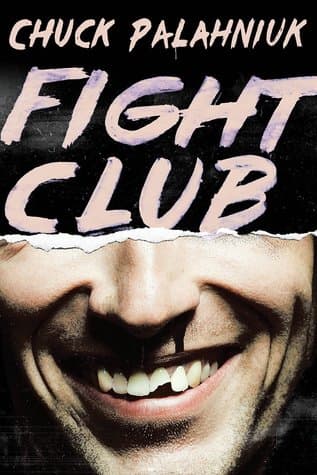
- Fight Club
Chuck Palahniuk
4.2 (499k) average on GoodreadsThrillerExplores themes of consumerism, male identity crisis, underground subcultures, and a blurring of reality.
- The Crying of Lot 49
Thomas Pynchon
3.7 (71k) average on GoodreadsLiterary FictionFeatures a protagonist caught in a sprawling, paranoid conspiracy where reality and illusion are indistinguishable.
- White Noise
Don DeLillo
3.9 (87k) average on GoodreadsLiterary FictionBoth Glamorama and DeLillo's White Noise (1985) satirize consumer culture and media saturation, particularly the impact of 'the air' (media, information, environmental toxins) on modern life. However, DeLillo's approach is more intellectual and philosophical, focusing on fear of death, technology, and the banality of evil in suburban academia. Glamorama is far more visceral, grotesque, and dedicated to the superficiality and manufactured nature of celebrity, employing a more chaotic and disorienting narrative structure to reflect its themes, whereas White Noise maintains a more coherent, albeit darkly comedic, plot.
- The Old Man and the Sea
Ernest Hemingway
3.8 (831k) average on GoodreadsLiterary FictionA Cuban fisherman's long struggle with a giant marlin becomes a story of endurance and dignity, now retold for young adults with illustrations, phonetic guides, and writing prompts in Traditional Chinese.
- One Hundred Years of Solitude
Gabriel García Márquez
4.1 (753k) average on GoodreadsLiterary FictionThrough the multi-generational story of the Buendía family, a mythical town deals with the repeating patterns of time, love, and solitude, as the extraordinary mixes with the ordinary.



Enjoyed the summary?
A summary gives you the shape of the book. The book itself has the detail, the examples and the voice.
Find Glamorama on AmazonAs an Amazon Associate, BookBrief earns from qualifying purchases. How we're funded