
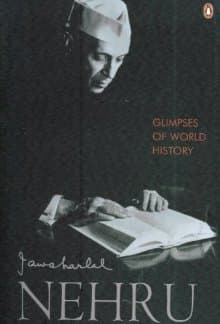
Core Idea
- Difficulty
- Medium
- Read it if
- You want a comprehensive, interconnected, and philosophical overview of world history from a non-Eurocentric perspective, appreciate a narrative rich in personal reflection and political insight, and are willing to invest time in a lengthy but rewarding read.
- Skip it if
- You are looking for a concise, academic, or highly specialized historical analysis, prefer modern historiographical approaches, or are averse to a more narrative and interpretive style with a distinct political viewpoint.
Key Takeaways from Glimpses of World History
History as a Continuous Flow
Rejecting isolated national histories for an interconnected global narrative.
Nehru argues against the common practice of teaching history in separate national stories. He states that human civilization is a single, connected whole, where events in one part of the world affect others. This view, new for its time, highlights humanity's shared journey rather than a series of separate, often competitive, national stories. He combines the stories of ancient civilizations, the rise and fall of empires, and the spread of ideas and religions across continents, showing how the Silk Road, the spread of Buddhism, or the impact of European colonialism were not isolated events but parts of a larger global drama. This complete view encourages empathy and understanding, creating a sense of shared human heritage.
“I do not want you to have a narrow outlook, for the world is a wonderful place and is growing more and more interdependent.”
In the book: Nehru's extensive coverage of the Silk Road's influence on both Eastern and Western cultures, the interconnectedness of the Roman Empire's decline with events in Persia, and the global impact of the Industrial Revolution.
Try this: When studying any historical event, actively seek out its connections to other regions and cultures. Consider how global forces might have shaped local developments and vice versa. Challenge narratives that present history as a series of purely national achievements or failures.
Related ideas: global-history, interconnectedness, anti-nationalism
The Cycles of Empire and Decay
Observing the rise, zenith, and inevitable decline of civilizations.
Nehru details how power operates in cycles, showing how empires, no matter their initial strength or culture, eventually decline and dissolve. From the Roman Empire's overextension and internal problems to the Mughal Empire's eventual breakdown, he points out common patterns: too much central control, economic inequality, loss of moral values, and an inability to adapt to changing times. This is not a cynical view, but a practical observation that even the strongest structures change and decay. He suggests that real progress is not about keeping an empire, but about creating societies that adapt, are fair, and respond to their people's needs.
“Great empires have risen and fallen, and their very ruins proclaim the instability of all human institutions.”
In the book: Detailed accounts of the decline of the Roman Empire due to internal corruption and external pressures, and the eventual weakening of the Chinese imperial system through dynastic cycles and foreign incursions.
Try this: Analyze contemporary power structures and nations for signs of over-centralization, economic disparity, or an inability to adapt. Consider how current policies might contribute to long-term stability or potential decline. Advocate for adaptable governance and inclusive policies.
Related ideas: imperialism, decline-of-empires, historical-cycles
The Enduring Power of Ideas
How philosophical and religious movements shape human destiny.
Beyond battles and kings, Nehru consistently highlights the impact of ideas—philosophical, religious, and political—on human history. He shows how the teachings of Buddha, the philosophies of ancient Greece, the monotheism of Abrahamic religions, or the revolutionary ideals of the Enlightenment have gone beyond borders and time, changing societies and individual lives. He shows how these ideas, often spread by missionaries, traders, or conquerors, act as strong forces of change, sometimes leading to progress, other times to conflict and oppression. This shows that intellectual and spiritual changes are as important as military conquests.
“Ideas have a strange way of spreading and influencing people, sometimes across vast distances and centuries.”
In the book: The spread of Buddhism from India across Asia, the influence of Greek philosophy on Roman and later European thought, and the impact of the printing press in disseminating new ideas during the Renaissance and Reformation.
Try this: Pay attention to the prevailing ideologies and philosophies in your own time. Understand how they influence public discourse, policy, and individual behavior. Engage critically with ideas, recognizing their potential for both creation and destruction.
Related ideas: ideology, cultural-diffusion, philosophy-of-history
The Common Person's Untold Story
Shifting focus from rulers and wars to the lives of ordinary people.
While acknowledging the roles of leaders, Nehru consciously tries to bring the lives and struggles of common people to the forefront. He recognizes that most of humanity's experience is not found in royal records or battle reports, but in the daily work, cultural practices, and social structures that shaped ordinary lives. He discusses the development of agriculture, the evolution of social classes, the impact of technology on daily life, and the silent suffering of the masses under oppressive rule. This focus reminds us that history is ultimately about the human experience in its broadest sense, not just the achievements of a few elite individuals.
“History is not just the story of a few great men, but of millions of common folk who lived and toiled and suffered.”
In the book: Descriptions of the life of a peasant in feudal Europe, the impact of new farming techniques in ancient China, and the social conditions of industrial workers in 19th-century England.
Try this: When learning or discussing history, actively seek out the perspectives and experiences of marginalized groups or the 'silent majority.' Question narratives that solely focus on the actions of powerful individuals. Consider the social and economic conditions that shaped everyday lives.
Related ideas: social-history, subaltern-studies, human-experience
The Double-Edged Sword of Progress
Recognizing both the advancements and the costs of civilization.
Nehru offers a balanced view of 'progress,' acknowledging technological and intellectual advancements while showing their darker side. He highlights how innovations, from the invention of the wheel to the Industrial Revolution, often led to new forms of exploitation, social classes, and environmental damage. The grandeur of empires was often built on the backs of slaves or conquered peoples. This critical view prevents a simple celebration of human achievement and makes readers consider the ethical issues and hidden costs of historical developments. It calls for tempering our admiration for 'progress' with an awareness of justice and fairness.
“Every advance in civilization has had its price, and often that price has been paid by the weak and the exploited.”
In the book: The prosperity of the Roman Empire built on slave labor, the exploitation of colonies during the age of European exploration, and the harsh working conditions during the early Industrial Revolution.
Try this: When evaluating modern technological advancements or economic growth, always ask: 'Who benefits, and who pays the price?' Advocate for ethical innovation and sustainable development that prioritizes equity and minimizes harm.
Related ideas: critique-of-progress, social-justice, colonialism
The Role of Conflict and Revolution
Understanding war as both a destructive force and a catalyst for change.
Nehru details countless wars, conquests, and revolutions throughout history. He also presents conflict as an unavoidable, though often tragic, driver of societal change. He shows how wars have redrawn maps, collapsed empires, and sometimes, unintentionally, led to the spread of new ideas or the dismantling of oppressive systems. Revolutions, born from deep grievances, are shown as violent breaks that, while destructive, can clear the way for new political and social orders. His analysis avoids glorifying war but acknowledges its complex and often contradictory role in human development, making readers confront its dual nature.
“War has been a terrible scourge throughout history, but sometimes it has also been the midwife of change.”
In the book: The impact of the Mongol invasions on Eurasian geography and cultural exchange, the French Revolution's overthrow of feudalism and spread of republican ideals, and the American Revolution's establishment of a new nation.
Try this: Analyze current geopolitical conflicts not just for their immediate impact but for their potential long-term consequences and the underlying grievances that fuel them. Advocate for peaceful conflict resolution while recognizing the historical instances where radical change only came through struggle.
Related ideas: warfare, revolution, social-change
The Enduring Spirit of Inquiry
Celebrating humanity's relentless quest for knowledge and understanding.
Despite cycles of war and decay, Nehru consistently highlights humanity's drive to explore, invent, and understand the world. He celebrates the intellectual achievements of ancient civilizations—the mathematical innovations of India, the scientific observations of the Arabs, the philosophical inquiries of the Greeks, and the artistic brilliance of the Renaissance. This lasting spirit of inquiry, often in the face of dogma or suppression, is presented as a fundamental and uplifting aspect of the human condition. It offers a powerful counter-narrative to the darker parts of history, reminding readers of our collective capacity for creativity, discovery, and the pursuit of truth.
“One of the most wonderful things about man is his insatiable curiosity, his desire to know and to understand.”
In the book: The development of zero and the decimal system in India, the astronomical advancements of Islamic scholars, the scientific revolution in Europe, and the invention of the printing press.
Try this: Cultivate a lifelong curiosity and a thirst for knowledge. Support education and scientific research. Challenge dogma and encourage critical thinking in yourself and others.
Related ideas: epistemology, scientific-revolution, intellectual-history
The Challenge of Unity in Diversity
Navigating the complexities of cultural and religious pluralism.
Nehru, writing from a diverse nation like India and addressing his daughter, who was dealing with imperial divisions, understands the complexities of cultural and religious diversity. He explores how different civilizations developed unique practices and beliefs, sometimes leading to harmony, other times to violent clashes. He emphasizes the importance of understanding and respecting these differences while also searching for the underlying human commonalities that can create unity. This theme is especially relevant given his own political goals for a unified, secular India, reflecting a lifelong struggle to bring together different identities into one whole.
“The world is full of different peoples and different cultures, and often they misunderstand each other, leading to conflict. Yet, there is a common thread that binds us all.”
In the book: The coexistence and occasional conflicts between various religious groups in ancient India, the interaction of different cultures along the Silk Road, and the challenges faced by multi-ethnic empires.
Try this: Actively seek to understand and appreciate cultures different from your own. Challenge prejudices and stereotypes. Promote dialogue and cooperation across cultural and religious divides, focusing on shared humanity.
Related ideas: cultural-pluralism, interfaith-dialogue, identity-politics
History as a Guide for the Future
Learning from the past to shape a better, more just world.
Ultimately, Nehru's work is not just an academic exercise but a deeply personal effort to give his daughter the wisdom to navigate the future. He consistently draws lessons from historical events, highlighting patterns of human behavior, the results of certain political choices, and the ongoing struggle for freedom and justice. He believes that by understanding the successes and failures of past civilizations, humanity can make more informed decisions, avoid repeating mistakes, and work towards a more fair and peaceful global society. This forward-looking view turns history from a dry record into a vital tool for ethical leadership and responsible citizenship.
“History, if properly understood, can be a great teacher and help us to avoid the mistakes of the past.”
In the book: His repeated warnings against narrow nationalism, the dangers of unchecked power, and the importance of economic equality, all drawn from historical examples.
Try this: Engage with history critically and reflectively, always asking what lessons can be drawn for contemporary challenges. Participate in discussions about historical memory and its role in shaping national and global policy. Advocate for educational approaches that emphasize historical understanding for future decision-making.
Related ideas: historical-consciousness, future-studies, political-philosophy
The Personal and the Political
How individual lives are inextricably linked to grand historical forces.
Nehru's letters combine grand historical narrative with personal reflections. He constantly reminds Indira, and by extension the reader, that while large forces shape history, it is ultimately made up of individual lives, choices, and struggles. He makes historical figures relatable and connects global events to their impact on ordinary people. This approach makes history less abstract and more human, showing that personal actions, however small, contribute to the larger historical story. It empowers the reader, suggesting that understanding history is not just about knowing facts, but about recognizing one's own place and potential within the ongoing human story.
“Every individual is a part of the great stream of life, and though seemingly small, plays a part in the making of history.”
In the book: The very format of the book – letters from a father to his daughter – exemplifies this. His discussions of individuals like Ashoka or Caesar are imbued with personal reflections on their character and decisions, connecting them to universal human traits.
Try this: Reflect on how your own life and choices are influenced by historical contexts and how your actions might, in turn, contribute to future historical narratives. Recognize the agency you possess, even in seemingly small acts, to shape your community and the world.
Related ideas: biography, agency, personal-narrative
Glimpses of World History Quotes
“History is largely a record of the doings of kings and emperors and generals, and, to a lesser extent, of the doings of the people.”
“The greatest danger that can befall us is to become a nation of imitators.”
“Civilization is the continuous development of the human race.”
“Facts are facts and will not disappear on account of your likes.”
“Life is like a game of cards. The hand that is dealt you is determinism; the way you play it is free will.”
“The past is gone and cannot be changed, but the future is still in our power.”
“Great men have been those who have done something to advance humanity.”
“Ignorance is always afraid of change.”
“Revolutions are not made; they come.”
“It is not the biggest armies that win, but the best ideas.”
“The only way to do great work is to love what you do.”
“Peace is not a relationship of nations. It is a condition of mind brought about by a serenity of soul.”
“The world is a unity, and its various parts are interdependent.”
“The true civilization is where every man and woman can develop their personality to the full.”
Quiz
10 questions on the main ideas. Each answer comes with a short explanation.
Question 1
To whom did Jawaharlal Nehru primarily address the letters that later became 'Glimpses of World History'?
- Mahatma Gandhi
- His wife, Kamala Nehru
- His daughter, Indira
- His son, Rajiv
Show answer
C. His daughter, Indira The book explicitly states that Nehru began writing these letters on New Year's Day, 1931, to his daughter, Indira, who was then thirteen years old.
Question 2
What was Nehru's primary circumstance when he began writing the letters that formed 'Glimpses of World History'?
- He was on a diplomatic tour of Europe.
- He was leading the Indian National Congress.
- He was imprisoned, without access to a library.
- He was teaching history at a university.
Show answer
C. He was imprisoned, without access to a library. The introduction highlights that the letters were 'all the more remarkable for being written in prison where Nehru had no recourse to reference books or a library.'
Question 3
Which of the following figures is specifically mentioned in the synopsis as being covered in 'Glimpses of World History'?
- Alexander the Great
- Napoleon Bonaparte
- Genghis Khan
- Queen Elizabeth I
Show answer
C. Genghis Khan The description explicitly lists 'great figures such as Ashoka and Genghis Khan, Gandhi and Lenin' among those covered.
Question 4
The book covers the history of humankind through whose perspective?
- A collective of historians
- Indira Gandhi's childhood understanding
- Jawaharlal Nehru's eyes
- The perspective of the British Empire
Show answer
C. Jawaharlal Nehru's eyes The final sentence of the description states: 'Glimpses of World History is a broad coverage of the history of humankind through Nehru's eyes.'
Question 5
Approximately how many letters did Nehru write in this series over the thirty-month period?
- Fifty
- One hundred
- Nearly two hundred
- Three hundred
Show answer
C. Nearly two hundred The text specifies: 'Over the next thirty months, Nehru wrote nearly two hundred letters in this series.'
Question 6
Which regions or civilizations are explicitly mentioned as being covered in the book?
- Pre-Columbian Americas and Sub-Saharan Africa
- Greece and Rome to China and West Asia
- Ancient Egypt and Mesopotamia only
- Modern Europe and the United States exclusively
Show answer
B. Greece and Rome to China and West Asia The description states the book 'covers the rise and fall of empires and civilizations from Greece and Rome to China and West Asia'.
Question 7
What specific time span is mentioned for the duration of Nehru's letter writing for this series?
- Twelve months
- Eighteen months
- Thirty months
- Forty-eight months
Show answer
C. Thirty months The text states: 'Over the next thirty months, Nehru wrote nearly two hundred letters in this series'.
Question 8
Given Nehru's context (imprisonment and lack of reference books), what does the book's 'panoramic sweep and gripping narrative flow' primarily suggest about Nehru's historical knowledge?
- He had an eidetic memory for historical facts and dates.
- He possessed a deeply internalized and comprehensive understanding of world history.
- He was secretly provided with research materials by the prison guards.
- The narrative flow was primarily due to extensive editing after his release.
Show answer
B. He possessed a deeply internalized and comprehensive understanding of world history. The fact that he wrote with such breadth and narrative quality 'without recourse to reference books or a library' strongly implies a profound and internalized understanding of history, rather than reliance on immediate recall of specific facts or external aid.
Question 9
Beyond empires and civilizations, what other broad categories of historical phenomena does the book cover, as indicated in the synopsis?
- Ancient philosophical texts and artistic movements exclusively.
- Geological formations and climatic shifts.
- Wars and revolutions, democracies and dictatorships.
- Scientific discoveries and technological advancements only.
Show answer
C. Wars and revolutions, democracies and dictatorships. The description explicitly mentions: 'wars and revolutions, democracies and dictatorships' alongside empires and civilizations.
Question 10
What does the phrase 'Glimpses of World History' being 'all the more remarkable for being written in prison' suggest about the nature of the work?
- Its primary purpose was to document prison life.
- It highlights the extraordinary intellectual resilience and dedication of its author despite challenging circumstances.
- It implies that the content is less accurate due to the lack of research tools.
- The letters were a form of coded communication for political purposes.
Show answer
B. It highlights the extraordinary intellectual resilience and dedication of its author despite challenging circumstances. The phrase emphasizes the impressive achievement of creating such a comprehensive and engaging work under the severe limitations of imprisonment and lack of resources, pointing to Nehru's intellectual capacity and dedication.
Glimpses of World History FAQ
What is 'Glimpses of World History' about?
'Glimpses of World History' is a panoramic survey of human history, penned by Jawaharlal Nehru in a series of letters to his young daughter, Indira. It covers the rise and fall of empires, civilizations, and significant historical figures from ancient times to the early 20th century.
Who is the intended audience for 'Glimpses of World History'?
While originally written for his thirteen-year-old daughter, Indira, the book is accessible and engaging for a broad audience, including young adults and adults interested in a comprehensive yet personal overview of world history. Its narrative style makes complex historical events understandable.
Does 'Glimpses of World History' provide an unbiased account of history?
Nehru's 'Glimpses of World History' offers a unique perspective, shaped by his political views and experiences as an Indian nationalist. While he strives for objectivity, readers should be aware that the narrative inherently reflects his interpretations and emphasis on certain historical developments.
What historical periods and regions does the book cover?
The book spans a vast timeline, from ancient civilizations like Greece and Rome to the early 20th century, encompassing major developments in Europe, Asia, Africa, and the Americas. It explores the histories of diverse empires and cultures.
How does 'Glimpses of World History' differ from traditional history textbooks?
'Glimpses of World History' stands apart from textbooks due to its epistolary format, personal tone, and narrative flow, written without access to a library. It prioritizes a broad, interconnected understanding of history over granular detail, offering Nehru's unique insights and interpretations.
What is the significance of the book being written in prison?
The fact that Nehru wrote 'Glimpses of World History' from prison, without reference books, highlights his profound knowledge and remarkable memory. This constraint also contributes to the book's distinctive, reflective, and often philosophical tone.
Does 'Glimpses of World History' include Indian history?
Yes, as an Indian nationalist leader, Nehru naturally integrates a significant amount of Indian history into his world narrative. He discusses ancient Indian civilizations, great Indian emperors, and India's interactions with other global powers and cultures.
Is 'Glimpses of World History' still relevant today?
Absolutely. The book remains relevant for its broad historical perspective, Nehru's insights into political and social dynamics, and its emphasis on interconnectedness. It encourages readers to think critically about historical events and their ongoing impact.
About the author
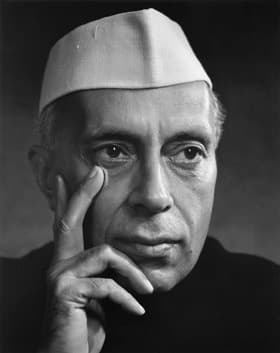
Jawaharlal Nehru was an Indian statesman and the first Prime Minister of India, known for his role in the country's independence movement. He authored several works, including "Letters from a Father to his Daughter," which offers insights into his thoughts on education and values, and "Glimpses of World History," a narrative that explores global events and ideas. Nehru's writings reflect his vision for India and its place in the world.
Similar books
- Sapiens: A Brief History of Humankind
Yuval Noah Harari
4.4 (502k) average on GoodreadsPsychologyOffers a broad, conceptual sweep of human history, connecting diverse themes from a global perspective, though with a different focus and modern lens.
- The Story of Civilization
Will Durant
4.4 (2k) average on GoodreadsPoliticsA multi-volume comprehensive history of the world, written in an accessible, narrative style for a general audience.
- 1984
George Orwell
4.2 (3.1M) average on GoodreadsPoliticsIn a future where surveillance and thought control are absolute, a man's search for truth clashes with the Party, showing that hope can be a form of rebellion.
- Animal Farm
George Orwell
4.0 (2.7M) average on GoodreadsPoliticsA farm animals' rebellion against humans turns into a pig-led dictatorship, showing how power corrupts and revolutionary ideals are betrayed.
- Freakonomics: A Rogue Economist Explores the Hidden Side of Everything
Steven D. Levitt
4.0 (709k) average on GoodreadsBusinessThis book uses economic principles to reveal the surprising incentives behind everything from drug dealing and real estate to cheating teachers and the decline of crime.
- I Am Malala: The Story of the Girl Who Stood Up for Education and Was Shot by the Taliban
Malala Yousafzai
4.1 (419k) average on GoodreadsPoliticsA teenage girl from a Taliban-controlled valley refuses to give up her books, becoming a global voice for education even after an assassination attempt.





Enjoyed the summary?
A summary gives you the shape of the book. The book itself has the detail, the examples and the voice.
Find Glimpses of World History on AmazonAs an Amazon Associate, BookBrief earns from qualifying purchases. How we're funded