
Core Idea
- Difficulty
- Medium
Key Takeaways from Gorgias
Rhetoric as Flattery, Not Art
Socrates argues that rhetoric, when practiced for persuasion without knowledge, is a mere knack akin to cookery, appealing to base desires rather than seeking truth.
This is the book's main idea, establishing the moral difference between true arts and mere flattery. Socrates compares rhetoric to cooking, which aims to please taste buds regardless of health, unlike medicine, which aims for the body's true good. Similarly, rhetoric, without justice and knowledge, tries to please and persuade uninformed people rather than enlighten them or improve them morally. This argument directly challenges Gorgias's claim that rhetoric is a powerful, neutral tool. Instead, Socrates argues that its usual use in Athenian public life corrupts because it focuses on immediate pleasure and popularity over truth and virtue. This difference is key to understanding Socrates's larger criticism of Athenian democracy, where skilled speakers could influence public opinion without real wisdom or concern for the city's moral health.
“Rhetoric, then, as would appear, is the artificer of a persuasion which creates belief about the just and unjust, but gives no instruction about them.”
In the book: Socrates's analogy of rhetoric to cookery/cosmetics and medicine/gymnastics (Gorgias 462b-465d).
Try this: When evaluating political discourse or media, discern whether the speaker aims to genuinely inform and uplift, or merely to persuade through emotional appeal and superficial arguments.
The Superiority of Suffering Injustice
Socrates controversially asserts that it is better to suffer injustice than to commit it, and that punishment is a form of healing for the soul.
This is one of Socrates's most radical and unexpected claims, directly opposing Polus's and later Callicles's views. Socrates argues that doing wrong harms the perpetrator's soul, making them more 'wretched' than the victim, whose soul stays pure. He also says that punishment for wrongdoing is not just revenge but a necessary 'medicine' for the soul, cleansing it of injustice and making it healthy again. To avoid punishment, then, is to stay sick. This view redefines justice not as a social rule to prevent harm but as an inner good for a person's spiritual well-being. It highlights Socrates's firm commitment to moral purity over material gain or personal power, a principle that would eventually lead to his death.
“For I am of opinion, Polus, that he who does an injustice is more wretched than he who suffers one.”
In the book: Socrates's debate with Polus regarding the nature of injustice and the benefit of punishment (Gorgias 474c-479e).
Try this: Reflect on personal actions: prioritize ethical conduct even when it incurs personal cost, recognizing that integrity is a greater good than perceived advantage gained through unethical means.
Might Does Not Make Right
Callicles's 'natural justice' argument, equating power with right, is systematically dismantled by Socrates, revealing its self-defeating implications.
Callicles introduces 'natural justice,' arguing that it is right for the strong to dominate the weak and pursue their desires without limits. He contrasts this with conventional justice, which he sees as a trick by the weak to control the strong. This argument clearly states ethical egoism and hints at nihilistic power politics. Socrates challenges Callicles by first questioning what 'the stronger' really means (are the combined masses stronger than one tyrant?), and then by showing the logical problems of unlimited desire. If all desires must be satisfied, then a person who constantly scratches an itch is living the best life, reducing human flourishing to constant need and satisfaction, like a leaky jar that can never be filled. This criticism shows the emptiness of a life solely devoted to pleasure and power, proving that true happiness needs self-control and order.
“For by nature, the better is the more powerful, and has the advantage; and the inferior is the weaker.”
In the book: Callicles's 'natural justice' argument (Gorgias 482c-484c) and Socrates's subsequent refutation, including the 'leaky jar' analogy (Gorgias 493a-494a).
Try this: Critically examine arguments that prioritize power or self-interest above all else; recognize that true strength often lies in self-mastery and ethical leadership, not mere dominance.
The True Statesman as Soul-Healer
Socrates contrasts the 'flattering' politicians who merely gratify citizens with the ideal statesman who aims to improve their souls, even if unpopular.
This is the book's strongest insight into political leadership. Socrates argues that just as a doctor aims for the body's health, a true statesman's goal should be the moral health and improvement of citizens' souls. This means not just giving people what they want (like public works or military victories), but what they need for their ethical growth, even if it is initially unpleasant or unpopular. He criticizes past Athenian leaders like Pericles and Cimon, not for their material achievements, but for failing to make citizens better. He argues that their policies ultimately made Athenians more unruly and less virtuous. This ideal of the statesman as a moral educator and 'soul-healer' directly opposes the pragmatic, power-seeking politician, emphasizing character and virtue as the main goals of governance.
“And the good man, and the true orator, will have his eyes fixed on these, in all that he says and does, in order to impart justice and temperance and virtue to the souls of his citizens.”
In the book: Socrates's critique of past Athenian leaders (Gorgias 515c-519a) and his vision of the true statesman (Gorgias 504d-505c).
Try this: When electing leaders, prioritize those who demonstrate a commitment to ethical principles and the long-term moral betterment of society, rather than just short-term gains or popular appeal.
Order and Self-Control as Virtue
Socrates asserts that a well-ordered soul, characterized by temperance (sophrosyne), is the foundation of happiness and true power.
Unlike Callicles's support for unlimited desire, Socrates champions temperance (sophrosyne) as vital for a virtuous and happy life. He argues that just as a craftsman brings order to materials to create something beautiful and useful, a person must bring order and discipline to their own desires and passions. A soul without order is like a ship without a rudder, tossed by every impulse, unable to achieve any true good. This inner harmony, not external power or pleasure, is the source of real well-being. This argument supports the idea that true freedom comes not from endless indulgence, but from self-mastery and living by reason and virtue. It is a strong argument against hedonism and a core part of Socratic ethics.
“And the name which is given to the good order of the soul is temperance and justice.”
In the book: Socrates's discussion of order (kosmos) in the soul and its relation to temperance and justice (Gorgias 503e-504e).
Try this: Cultivate self-discipline and moderation in personal habits and desires, understanding that internal order is more conducive to lasting happiness than external gratification.
The Danger of Unchecked Power
The dialogue implicitly warns that political power, when unguided by wisdom and justice, inevitably leads to tyranny and moral decay.
While not a direct quote on unchecked power, the entire dialogue, especially the talks with Polus and Callicles, warns against power that is separate from virtue. Polus admires tyrants for doing whatever they please, and Callicles argues that power justifies itself. Socrates, however, shows that such power, far from making one happy, leads to a morally sick soul and ultimately to a miserable life. Historical examples of Athenian leaders who, despite their power, failed to improve their citizens, further illustrate this. The book suggests that a society valuing practical effectiveness and personal gain over moral integrity in its leaders is destined for moral decline and internal conflict, a relevant point in any political climate.
“For they are the very men who, in their ignorance and intemperance, are the most likely to do injustice.”
In the book: Polus's admiration for tyrants (Gorgias 468e-471d); Callicles's 'might makes right' argument (Gorgias 482c-484c); Socrates's critiques of Athenian statesmen (Gorgias 515c-519a).
Try this: Advocate for checks and balances on political power, and demand accountability and ethical standards from leaders to prevent corruption and abuse.
Knowledge vs. Belief in Persuasion
Socrates distinguishes between persuading based on true knowledge (episteme) and persuading based on mere belief (doxa), highlighting rhetoric's reliance on the latter.
This difference is important for understanding rhetoric's limits and dangers. Socrates argues that true knowledge comes from rational inquiry and understanding, while belief can form without any real grasp of the truth. Rhetoric, especially when used by the ignorant, works mainly on belief, using persuasion to sway opinions without giving true understanding. This means a skilled speaker can convince an audience of lies as easily as truths, especially when talking to those without expertise. This intellectual criticism underlies the moral criticism of rhetoric, showing how easily it can mislead and manipulate, rather than educate and enlighten. It is a timeless warning about how superficial much public discussion is.
“And rhetoric, Gorgias, is the artificer of a persuasion which creates belief about the just and unjust, but gives no instruction about them.”
In the book: Socrates's initial discussion with Gorgias about the scope and nature of rhetoric, specifically concerning its creation of belief without knowledge (Gorgias 454a-455a).
Try this: When consuming information, always question the source and the basis of the arguments presented; seek out evidence and reasoned explanations rather than accepting claims based solely on persuasive delivery.
The Philosopher's Isolation and Moral Courage
Socrates's unwavering commitment to truth and justice, even when facing popular disapproval, illustrates the philosopher's necessary isolation and moral courage.
Throughout the dialogue, Socrates stands alone against Gorgias, Polus, and Callicles. He represents reason and moral principle against convenience and common wisdom. His willingness to follow the argument wherever it leads, even if it makes him unpopular or risks his life (as implied by his discussion of the 'true art of politics' as medicine), highlights the moral courage a philosopher needs. He does not care about what most people think, caring only for truth and the health of the soul. This isolation is not weakness but strength, showing that true leadership and moral guidance often come from those willing to challenge the status quo and face rejection for their beliefs. This foreshadows his trial and death, making the dialogue a powerful example of the philosopher's role in society.
“For I am not one of those who says what he likes, but I must follow the argument wherever it leads.”
In the book: Socrates's consistent refusal to yield to popular opinion or the arguments of his interlocutors (e.g., Gorgias 461c, 482b, 521d-e).
Try this: Cultivate intellectual independence and moral courage; be willing to stand for what is right and true, even when it is unpopular or challenging.
The Myth of the Afterlife as Moral Imperative
Socrates concludes with a myth of judgment after death, reinforcing the ultimate accountability for one's actions and the supremacy of justice.
The dialogue ends with a powerful myth about the judgment of souls in the afterlife. Judges (Minos, Rhadamanthus, Aeacus) decide individuals' fates based on the state of their souls, stripped of all earthly things. This myth serves a key purpose: it provides a cosmic basis for Socrates's arguments about justice, virtue, and how it is better to suffer injustice. If there is ultimate accountability, then living a just life becomes not just a philosophical preference but a divine command with eternal consequences. It offers a strong contrast to Callicles's hedonism and Polus's admiration for tyrants, suggesting that earthly power and pleasure are temporary, while the condition of one's soul is eternally important. This argument, though mythological, strongly supports the moral seriousness of the Socratic position.
“He who has lived justly and piously will go to the Islands of the Blessed, and he who has lived unjustly and impiously, to Tartarus.”
In the book: Socrates's concluding myth of the judgment of souls (Gorgias 523a-527e).
Try this: Consider the long-term ethical implications of actions beyond immediate gratification or societal approval; strive to cultivate a virtuous character that can withstand ultimate scrutiny.
The Incompleteness of Persuasion Without Truth
The dialogue demonstrates that winning an argument through rhetorical skill does not equate to arriving at truth or achieving moral victory.
While Gorgias initially boasts of rhetoric's power to persuade on any subject, later talks with Polus and Callicles show the limits and potential emptiness of such persuasion when it is not connected to a real search for truth. Socrates consistently prioritizes the argument's logical consistency and the soul's moral health over 'winning' the debate. He is willing to be proven wrong if it leads to greater understanding, a sharp contrast to his interlocutors who become increasingly frustrated when their positions are logically taken apart. This shows that a mere rhetorical victory, without a basis in truth and justice, is a hollow win. The dialogue itself exemplifies philosophical inquiry that values true understanding over a debater's superficial success, demonstrating the Socratic method's commitment to careful examination.
“For my object in conversing with you is only to be set right myself, or to set you right, if I am wrong.”
In the book: Socrates's method of elenchus throughout the dialogue, particularly his relentless questioning of Gorgias, Polus, and Callicles (e.g., Gorgias 453b, 471e, 497a).
Try this: In discussions and debates, focus on understanding and clarifying positions rather than simply trying to 'win'; value logical consistency and truth over mere rhetorical flourish.
Quiz
10 questions on the main ideas. Each answer comes with a short explanation.
Question 1
Who is the primary interlocutor for Socrates in the dialogue 'Gorgias'?
- Plato
- Callicles
- Gorgias
- Polus
Show answer
C. Gorgias While Polus and Callicles also engage in the discussion, Gorgias himself is the first and primary figure Socrates debates with regarding rhetoric.
Question 2
What is the central theme debated in Plato's 'Gorgias'?
- The nature of love and beauty
- The theory of Forms
- Justice and the ideal state
- Rhetoric, power, and morality
Show answer
D. Rhetoric, power, and morality The dialogue primarily explores the nature of rhetoric, its relationship to power, and whether it is morally justifiable or inherently corrupting.
Question 3
According to the summary, which of the following is a key question raised in 'Gorgias' concerning political leaders?
- Should leaders prioritize artistic expression?
- Are high moral standards essential for effective leadership?
- Should leaders focus on military conquest?
- Is it better for leaders to be philosophers?
Show answer
B. Are high moral standards essential for effective leadership? The text explicitly asks whether high moral standards are essential or if pragmatism should be preferred in leadership.
Question 4
What does Socrates often associate with rhetoric in 'Gorgias'?
- Truth and wisdom
- Flattery and manipulation
- Democracy and equality
- Justice and fairness
Show answer
B. Flattery and manipulation Socrates critiques rhetoric, often portraying it as a form of flattery or cookery that aims to please rather than genuinely benefit the soul, unlike philosophy which seeks truth.
Question 5
The dialogue contrasts the pursuit of personal power and prestige with what other motivation for leaders?
- Economic prosperity for the state
- Military glory
- Genuine concern for the moral betterment of citizens
- Maintaining social order at all costs
Show answer
C. Genuine concern for the moral betterment of citizens The summary highlights the tension between leaders driven by personal ambition versus those motivated by a desire for the moral improvement of the populace.
Question 6
Callicles represents a viewpoint in 'Gorgias' that argues for:
- The rule of the wise and virtuous
- The natural right of the stronger to rule
- The importance of democratic consensus
- The necessity of philosopher-kings
Show answer
B. The natural right of the stronger to rule Callicles is known for arguing that conventional morality is a construct of the weak to restrain the naturally stronger, who should pursue their desires and power without restraint.
Question 7
What fundamental aspect of Athenian democracy is questioned through the debates in 'Gorgias'?
- The role of the Assembly
- The selection of generals
- The value and practice of rhetoric in public life
- The structure of the law courts
Show answer
C. The value and practice of rhetoric in public life Rhetoric was a central tool in Athenian democracy, used in assemblies and courts. The dialogue questions its ethical implications and its role in achieving justice or merely persuasion.
Question 8
Socrates' critique of rhetoric suggests that it is akin to which practical art, in that it aims at pleasure rather than true good?
- Medicine
- Sculpture
- Philosophy
- Cookery
Show answer
D. Cookery Socrates famously compares rhetoric to cookery, arguing that both aim to provide immediate gratification or pleasure without regard for the true health or well-being (of the body for cookery, of the soul for rhetoric).
Question 9
What is the ultimate aim of the virtuous life, according to Socrates' arguments in 'Gorgias'?
- Achieving political power and influence
- Accumulating wealth and possessions
- Maintaining a good reputation and public honor
- Cultivating the soul and achieving justice
Show answer
D. Cultivating the soul and achieving justice Socrates consistently argues that the greatest good is the care of the soul, meaning to be just and virtuous, even if it leads to suffering or a poor reputation, as opposed to being unjust but appearing just.
Question 10
The relevance of 'Gorgias' to contemporary political discourse stems from its exploration of:
- The historical development of Athenian institutions
- The philosophical underpinnings of Pythagoreanism
- The enduring tension between ethical leadership and political expediency
- The origins of Socratic irony
Show answer
C. The enduring tension between ethical leadership and political expediency The summary explicitly states that the questions about morality versus pragmatism in leadership, and personal gain versus public good, are 'more relevant than ever in today's political climate,' highlighting the enduring tension.
Gorgias FAQ
What is Plato's Gorgias about?
Gorgias is a Socratic dialogue that explores the nature of rhetoric, justice, and the ideal political life. It features Socrates debating with the famous orator Gorgias, his student Polus, and the Athenian citizen Callicles about whether power and success are more important than moral virtue.
Who are the main characters in Gorgias?
The main characters are Socrates, who drives the philosophical inquiry, Gorgias, a renowned teacher of rhetoric, Polus, a younger rhetorician eager to defend his teacher, and Callicles, an Athenian citizen who champions a more pragmatic and power-oriented view of politics.
What is rhetoric according to Gorgias?
In the dialogue, Gorgias initially defines rhetoric as the art of persuasion, specifically the persuasion of large crowds in public assemblies and courts. Socrates, however, challenges this definition, suggesting it is more of a knack or flattery than a true art concerned with justice.
Does Gorgias argue that morality is important in politics?
Yes, Socrates strongly argues throughout Gorgias that justice and moral virtue are essential for a good life and a well-functioning state. He contends that true power comes from acting justly, not from merely accumulating power or achieving success through unethical means.
What is the difference between a pragmatist and a moralist in politics, as discussed in Gorgias?
Gorgias contrasts the pragmatist, who prioritizes getting things done and achieving success (even if through questionable means), with the moralist (represented by Socrates), who insists on acting justly and pursuing the genuine betterment of citizens, regardless of immediate political gains.
Is Gorgias relevant to modern politics?
Absolutely. The dialogue's exploration of the tension between power and morality, the nature of political leadership, and the ethics of persuasion remains highly relevant to contemporary political discourse and the challenges faced by democracies today.
What does Socrates mean by 'the greatest good is to never be unjust'?
Socrates argues that suffering injustice is better than committing injustice, as committing injustice corrupts the soul and leads to a worse state of being. Therefore, maintaining one's moral integrity is paramount, even if it means facing negative consequences.
What is Callicles' view on justice and power?
Callicles presents a controversial view, arguing that justice is merely a convention created by the weak to restrain the strong. He believes that by nature, the stronger and more intelligent individual has a right to greater power and pleasure, advocating for a life driven by ambition and self-interest.
What is the main takeaway from Plato's Gorgias?
The central takeaway is Socrates' persistent argument that justice, virtue, and the care of one's soul are the most important pursuits, far outweighing the pursuit of power, wealth, or external success. It challenges the common understanding of what constitutes a good and powerful life.
How does Gorgias relate to Athenian democracy?
The dialogue engages directly with the principles and practices of Athenian democracy, questioning the effectiveness and morality of its political system, particularly the role of rhetoric in influencing public opinion and the motivations of those seeking office.
About the author
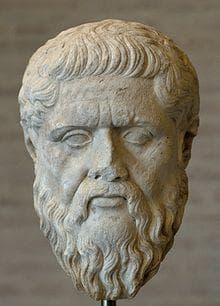
Plato was an ancient Greek philosopher who lived during the Classical period. He is best known for his works exploring ethics, politics, and metaphysics, including The Republic, The Symposium, Apology, Phaedo, Gorgias, and Timaeus and Critias. His writings have had a profound influence on Western philosophy and continue to be studied for their insights into human thought and society.
Similar books
- The Republic
Plato
3.9 (171k) average on GoodreadsPolitics"Gorgias" serves as a crucial precursor to "The Republic." While "Gorgias" primarily deconstructs the sophists' views on rhetoric and the pursuit of power, setting the stage for the importance of justice, "The Republic" builds upon these foundations by constructing an ideal state ('Kallipolis') where justice is fully realized through the rule of philosopher-kings. "Gorgias" identifies the problems of unjust power and unchecked rhetoric, while "The Republic" offers a comprehensive, albeit utopian, solution. The myth of the judgment of souls in "Gorgias" foreshadows the more elaborate myth of Er in "The Republic," both emphasizing the afterlife consequences of moral choices. "Gorgias" focuses on individual and societal ethical principles, whereas "The Republic" expands this to a grand political and metaphysical theory.
- 1984
George Orwell
4.2 (3.1M) average on GoodreadsPoliticsIn a future where surveillance and thought control are absolute, a man's search for truth clashes with the Party, showing that hope can be a form of rebellion.
- Animal Farm
George Orwell
4.0 (2.7M) average on GoodreadsPoliticsA farm animals' rebellion against humans turns into a pig-led dictatorship, showing how power corrupts and revolutionary ideals are betrayed.
- Freakonomics: A Rogue Economist Explores the Hidden Side of Everything
Steven D. Levitt
4.0 (709k) average on GoodreadsBusinessThis book uses economic principles to reveal the surprising incentives behind everything from drug dealing and real estate to cheating teachers and the decline of crime.
- I Am Malala: The Story of the Girl Who Stood Up for Education and Was Shot by the Taliban
Malala Yousafzai
4.1 (419k) average on GoodreadsPoliticsA teenage girl from a Taliban-controlled valley refuses to give up her books, becoming a global voice for education even after an assassination attempt.
- Atlas Shrugged
Ayn Rand
3.7 (354k) average on GoodreadsPoliticsIn a dystopian America where innovators vanish, a brilliant heiress races to uncover the truth behind the disappearing industrialists and the enigmatic John Galt, who vows to stop the world's progress.





Enjoyed the summary?
A summary gives you the shape of the book. The book itself has the detail, the examples and the voice.
Find Gorgias on AmazonAs an Amazon Associate, BookBrief earns from qualifying purchases. How we're funded