
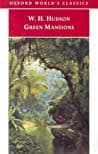
Synopsis
Covers the whole plot, including the ending.
- Difficulty
- Medium
- Pacing
- Slow
- Mood
- Atmospheric, Melancholy, Poetic, Romantic, Tragic
- Read it if
- You enjoy classic literature, poetic prose, and allegorical tales about nature, lost civilizations, and tragic romance.
- Skip it if
- You prefer fast-paced plots, clear-cut fantasy worlds, or are sensitive to depictions of colonial-era attitudes towards indigenous cultures.
Green Mansions Plot Summary
Covers the whole plot, including the ending.
Escape to the Wilderness
Abel, a young Venezuelan, tells of his past as a political exile who fled Caracas after a failed revolution. Haunted by his past and wanting solitude, he goes deep into the Guayana forests, far from civilization. He finds temporary lodging with an old Indian named Cla-cla and his family, but soon feels drawn to the mysterious, unexplored forest. Wanting peace and a philosophical life in harmony with nature, Abel sets out alone to build a hermitage, a hut near a remote stream. He spends his days watching the wildlife and thinking about his isolated life, finding contentment in the silence and beauty of the wilderness.
The Mysterious Voice
Living in his hut, Abel starts hearing a beautiful, complex bird-like melody that seems to follow him. The sounds are unlike any bird he knows, with a human quality and an almost conversational rhythm. He spends weeks trying to find the source, convinced it must be a rare, unknown species, or a forest spirit. His attempts fail, and the elusive voice only increases his fascination and wonder. The mysterious music fills his isolated life with an almost spiritual anticipation, drawing him deeper into the 'green mansions' and preparing him for an encounter beyond his imagination.
First Encounter with Rima
One day, chasing a wounded bird, Abel goes into a dense, beautiful part of the forest, a place he calls the 'sacred wood.' There, he finally finds the source of the mysterious voice: a young girl named Rima. She is unlike anyone he has seen—small, delicate, with long dark hair, and eyes that seem to hold the forest's wisdom. Her clothes are simple, made of leaves and natural fibers, and she moves with unmatched grace and speed. Startled by his presence, Rima flees, but Abel catches glimpses of her, confirming the ethereal voice belonged to this wild, almost mythical creature. This encounter leaves Abel shaken and captivated.
Learning about Rima
Abel tries to learn more about Rima from the local Indian tribes, especially from his host, Cla-cla, and the chief, Kua-kó. The Indians speak of her with fear and respect, calling her 'the Daughter of the Didi' or a forest spirit, believing she has supernatural powers and can talk to animals. They avoid her territory, considering it sacred and dangerous. They tell Abel that Rima lives with an old man, her grandfather, who is also an enigma. This information only deepens Abel's interest and strengthens Rima's otherworldly image, yet he feels a growing desire to understand and connect with her despite the warnings.
Building a Connection
Abel patiently seeks Rima, slowly overcoming her shyness and fear. He discovers she speaks a unique, melodic, bird-like language, but also understands some Spanish. He learns to communicate with her through simple words, gestures, and intuition. He also meets her grandfather, Nuflo, an old, grizzled man who claims to be her protector. Nuflo is secretive about their past, only saying that Rima is an orphan he found and raised. Abel spends more and more time with Rima, observing her deep connection to nature and falling in love with her innocence and unique spirit.
Rima's Quest for Her People
As their bond grows, Rima tells Abel her deepest wish: to find her own people. She believes she is the last of her kind, but hopes others might exist, perhaps in the distant Parahuari mountains, where Nuflo claims she was born. Nuflo, however, strongly opposes this journey, filling Rima with fear by making up stories of dangerous tribes and impassable land. Rima, with her deep connection to nature, senses Nuflo's deception and asks Abel for help. Moved by her plea and his love for her, Abel agrees to go with her on this quest, despite Nuflo's warnings and his own growing worry about leaving their peaceful sanctuary.
The Journey to Parahuari
Abel and Rima, with a reluctant Nuflo, start their difficult journey to the Parahuari mountains. The terrain is treacherous, and they face many challenges, including dense jungle, dangerous animals, and the constant threat of hostile tribes. During their travels, Nuflo's true nature and his deep fear of Rima's origins become clearer. He tries to discourage Rima at every turn, revealing his selfish desire to keep her isolated. Abel grows increasingly protective of Rima, navigating the jungle's dangers while also trying to shield her from Nuflo's manipulation. The journey tests their resolve and shows how fragile Rima's life is in a world not her own.
Nuflo's Confession and Rima's Despair
Upon reaching the supposed location of Rima's people, they find only empty, overgrown ruins. Confronted by Rima's heartbreak and Abel's questions, Nuflo finally confesses his long-held lie. He reveals that a brutal Indian tribe massacred Rima's people years ago, and he, a former bandit, rescued the infant Rima from the slaughter. He had made up the story of her people's continued existence to keep her from ever leaving him. The revelation shatters Rima's hope and leaves her heartbroken. Her dream of belonging is crushed, and she falls into deep despair, feeling more alone than ever. Abel struggles to comfort her, seeing the deep impact of this cruel deception.
The Tragic Return and Rima's Fate
Devastated, Rima insists on returning to their peaceful 'sacred wood.' Abel and Nuflo reluctantly agree. However, during their return journey, they meet a group of local Indians, led by Kua-kó, who are wary and afraid of Rima. While Abel is away hunting, the superstitious Indians, fueled by ancient fears and the belief that Rima is an evil spirit, ambush Rima. They trap her in a tree and set it on fire, brutally murdering her. Abel returns to find the horrific aftermath—the charred remains of the tree and the devastating reality of Rima's death. This senseless violence shatters Abel's world and marks a turning point of deep grief and vengeance.
Abel's Vengeance
Consumed by grief and a burning desire for revenge, Abel tracks down the Indians responsible for Rima's death. He confronts Kua-kó and his tribe, using cunning and violence to get his retribution. He sets fire to their village, mirroring Rima's horrifying death, and kills several of the men involved. His actions are driven by primal rage, changing him from a contemplative nature-lover into a ruthless avenger. This period marks a deep psychological shift in Abel; his former ideals of peaceful coexistence are replaced by a dark, destructive obsession with vengeance, forever changing his view of humanity and nature.
The Haunting Memory
After his acts of vengeance, Abel is left with a deep emptiness and the memory of Rima. He can no longer find solace in the wilderness that once brought him peace; the 'green mansions' are now stained by tragedy. He eventually returns to civilization, a changed and broken man. The vibrant, ethereal Rima, and the brutal circumstances of her death, become a lasting part of him. He carries her memory, her voice, and the haunting image of her demise always, forever marked by the beauty he found and the horror he witnessed in the heart of the Venezuelan jungle.
Green Mansions Characters
Abel
Protagonist
A Venezuelan political exile seeking solace and meaning in the wilderness.
Abel is a young, educated Venezuelan man, initially driven by political ideals which lead to his exile. He is introspective, philosophical, and possesses a deep appreciation for nature's beauty. He seeks solitude and peace in the untouched forests of Guayana, hoping to escape the corruption and violence of human society. He is sensitive and observant, drawn to the mysterious and the beautiful, but also capable of profound love and, later, intense, destructive rage. His initial idealism is shattered by the tragedy he experiences.
Relationships: Rima (Deep romantic love and spiritual connection); Nuflo (Initial respect and curiosity, later suspicion and animosity); Cla-cla (Temporary host and source of local knowledge)
Rima
Love Interest / Mystical Figure
An ethereal, wild girl of the forest, the last of a mysterious aboriginal race.
Rima is a unique and enchanting figure, often described as a 'bird-girl' due to her delicate build, swift movements, and melodic, bird-like language. She possesses an extraordinary connection to nature, able to communicate with animals and navigate the deepest parts of the forest with ease. Innocent, pure, and deeply sensitive, she embodies the untamed spirit of the wilderness. She harbors a profound longing to find her lost people, which becomes her driving motivation. Her beauty and unique nature make her both revered and feared by the local Indians.
Relationships: Abel (Deep romantic love and spiritual connection); Nuflo (Her adoptive grandfather and protector, later revealed as her deceiver)
Nuflo
Supporting / Antagonist
Rima's secretive, old adoptive grandfather, a former bandit.
Nuflo is an old, grizzled man with a gruff exterior and a mysterious past, later revealed to be a former bandit. He is Rima's adoptive grandfather and her sole companion for most of her life. He is deeply protective of Rima, but his protection stems from a selfish desire to keep her to himself and a fear of her leaving. He is a master of deception, fabricating stories about Rima's people to prevent her from seeking them out. While he cares for Rima in his own way, his actions ultimately lead to her despair and contribute to her tragic end.
Relationships: Rima (Adoptive grandfather and protector, but also her deceiver); Abel (Reluctant companion and rival for Rima's trust)
Cla-cla
Supporting
An old Indian man who provides Abel with initial shelter and local knowledge.
Cla-cla is an old Indian who offers Abel temporary refuge when he first arrives in the wilderness. He is a representative of the local indigenous community, providing Abel with practical advice and insights into the customs and superstitions of the forest dwellers. He is simple, kind, and respects the traditions of his people, including their fear and reverence for Rima and her territory. His role is primarily to introduce Abel to the local culture and the mysterious legends surrounding Rima before Abel ventures deeper into the 'green mansions.'
Relationships: Abel (Host and informant)
Kua-kó
Antagonist
The chief of the local Indian tribe responsible for Rima's murder.
Kua-kó is the chief of the Indian tribe that inhabits the region near Abel's hermitage. He embodies the superstitious fears and prejudices of his people. He sees Rima not as a human being, but as a dangerous forest spirit or demon, a threat to his community. His fear and ignorance lead him to orchestrate Rima's brutal murder, believing he is protecting his tribe from an evil force. He represents the destructive clash between primitive fear and the innocent, unique beauty of Rima.
Relationships: Rima (Her murderer, driven by fear and superstition); Abel (His avenger)
The Didi
Mentioned
A mythical forest spirit or demon in local Indian folklore.
The Didi is a legendary forest spirit or demon mentioned by the local Indian tribes. Rima is often referred to as 'the Daughter of the Didi,' indicating the Indians' belief in her supernatural origins and powers. The Didi represents the untamed, mysterious, and potentially dangerous aspects of the wilderness in their folklore. The fear of the Didi contributes to the Indians' perception of Rima as something other than human, ultimately fueling their aggression towards her.
Green Mansions Themes
The Loss of Innocence and Wilderness
The novel explores the theme of lost innocence, both personal and environmental. Rima, a pure, untamed child of nature, embodies the pristine wilderness. Her tragic death by superstitious, fearful humans symbolizes the destruction of nature's beauty and innocence by encroaching, often cruel, human civilization and ignorance. Abel's own loss of innocence, from a thoughtful idealist to a vengeful killer, mirrors this broader theme, showing how even those who seek refuge in nature can be corrupted by human darkness. The 'green mansions' themselves are ultimately defiled by violence and grief.
“For this is the truth about the world: that beauty and terror are inseparable, and that the wild heart of nature, when touched by man, often bleeds.”
Man vs. Nature
This theme is central, examining the complex and often destructive relationship between humans and the natural world. Abel initially seeks harmony with nature, finding peace and spiritual awakening in the forest. Rima, on the other hand, is nature personified, living in perfect balance with her environment. However, the story ultimately shows the destructive impact of 'civilized' man's fear, ignorance, and violence on the wilderness. The local Indians, though living closer to nature, also show a destructive side through their superstitious fear leading to Rima's murder. The story suggests that humanity, even with good intentions, often fails to truly understand or coexist peacefully with the wild.
“The wilderness, like a great heart, pulsed with a life that man could never wholly fathom, nor ever wholly tame.”
Love and Tragedy
The passionate and tragic love story between Abel and Rima forms the emotional core of the novel. Their love grows in the pristine 'green mansions,' representing a pure, almost mythical connection between two souls. However, their bond is constantly threatened by outside forces—Nuflo's deception, the Indians' fear, and the inherent dangers of the wild. The novel uses their love to heighten the tragedy when Rima is brutally murdered, changing Abel's love into consuming grief and vengeful rage. Their story shows love's capacity for both deep joy and devastating sorrow.
“To love her was to love the forest itself, its deep mystery and its fleeting, exquisite beauty.”
The Illusion of Paradise
Abel goes into the Venezuelan rainforest seeking a utopian escape from the corrupt world of man, seeing the 'green mansions' as a pristine paradise. He finds initial peace and meets Rima, who seems to embody this ideal. However, the novel slowly reveals this illusion. Nuflo's deception, the wild's dangers, and the brutal violence by the local Indians show that even in the most remote and beautiful places, human flaws—fear, ignorance, and cruelty—can intrude and destroy. The 'paradise' is ultimately tainted by suffering, proving that true escape from human nature is impossible.
“I had sought a paradise, and found instead a grave, and the ashes of a dream.”
Plot Devices & Literary Techniques
The Mysterious Voice
An ethereal, bird-like melody that lures Abel deeper into the forest.
The mysterious voice is a crucial plot device, serving as the initial catalyst for Abel's deeper exploration of the forest and his eventual encounter with Rima. It creates an atmosphere of wonder and enchantment, drawing both Abel and the reader into the heart of the 'green mansions.' This elusive sound builds suspense and foreshadows the extraordinary nature of Rima. It symbolizes the allure of the unknown and the spiritual connection to nature that Abel seeks, acting as a siren call that leads him to his destiny.
Rima's Language
A unique, melodic, bird-like language spoken by Rima.
Rima's unique language is a significant plot device that emphasizes her otherworldly and deeply integrated connection to nature. It highlights her isolation from human society and reinforces her image as a 'bird-girl' or forest spirit. The challenge of communication between Abel and Rima underscores their fundamental differences while also making their eventual connection more profound. It symbolizes the barrier between humanity and the wild, and the difficulty of truly understanding something so pure and untamed.
Nuflo's Deception
Nuflo's fabricated stories about Rima's people.
Nuflo's elaborate deception regarding the existence of Rima's people and the dangers of the journey to find them is a pivotal plot device. It drives Rima's quest, creating the central conflict of their journey. This lie ultimately leads to Rima's heartbreak and vulnerability, setting the stage for her tragic demise. It exposes Nuflo's complex character – a mixture of genuine care and selfish manipulation – and serves as a cruel catalyst for the story's tragic climax, destroying Rima's last hope and plunging Abel into despair.
The Sacred Wood
A secluded, exceptionally beautiful part of the forest where Rima lives.
The 'sacred wood' is a symbolic and literal plot device. It is the hallowed ground where Abel first encounters Rima and where she feels most at home. This specific location represents the untouched, pristine heart of the wilderness, a sanctuary of pure nature. Its destruction, marked by Rima's murder and the burning of the tree, signifies the desecration of this natural paradise and the ultimate triumph of human fear and violence over the sacred. It serves as a stark visual representation of the novel's central theme of the loss of wilderness.
Green Mansions Quotes
“Do you think that I am a man, that I can be satisfied with the life of a bird?”
“The wind, as if it had found me out, now blew in my face, and seemed to whisper things, and to draw me onward.”
“Her voice was like the sound of a wind-harp, and as wild and sweet.”
“To be alone with her in that vast, green solitude was to be in paradise.”
“She was a daughter of the forest, and her spirit was as wild and free as the wind that swept through the trees.”
“The forest was her home, her mother, her lover, her god.”
“But a spirit of the woods, a daughter of the trees, a human bird—how could I capture her?”
“The memory of her voice, like the murmur of innumerable bees, or the whisper of leaves, haunted me day and night.”
“The earth was a tomb, and all life was but a brief, painful flicker upon its surface.”
“To destroy what is beautiful, what is innocent, is the greatest crime.”
“My love for her was not a thing of the flesh, but of the spirit.”
“The forest, which had been a friend, now seemed a vast, indifferent wilderness.”
“But in that green sanctuary, where the trees were like living pillars, and the light fell like liquid gold, she still lived for me.”
“She was the spirit of the woods, the voice of the wind, the soul of the green mansions.”
Quiz
10 questions on the plot and the characters. Each answer comes with a short explanation.
Question 1
Where does Abel seek refuge after his failed revolutionary attempt?
- The Amazon rainforest in Brazil
- The Andes mountains in Peru
- The primeval forests of south-western Venezuela
- The pampas of Argentina
Show answer
C. The primeval forests of south-western Venezuela The book explicitly states that Abel finds refuge in the primeval forests of south-western Venezuela after his revolutionary attempt.
Question 2
What is the name of the 'wood-nymph' Abel encounters in the forest?
- Lyra
- Rima
- Elara
- Sylvie
Show answer
B. Rima Abel encounters Rima, described as a wood-nymph and the last survivor of a mysterious aboriginal race.
Question 3
What does the title 'Green Mansions' refer to in the context of the novel?
- A specific house built by Abel
- The lush, primeval forests where Abel finds Rima
- A hidden city discovered by the characters
- The name of Rima's ancestral home
Show answer
B. The lush, primeval forests where Abel finds Rima The 'green mansions' of the title refer to the primeval forests of south-western Venezuela where Abel encounters Rima.
Question 4
Which of the following themes is NOT explicitly mentioned in the description of 'Green Mansions'?
- The loss of wilderness
- The dream of a return to nature
- The inherent goodness of civilized man
- The bitter reality of the encounter between savage and civilized man
Show answer
C. The inherent goodness of civilized man The description highlights 'the bitter reality of the encounter between savage and civilized man,' implying a critique rather than an affirmation of the inherent goodness of civilized man.
Question 5
What kind of race is Rima described as being the last survivor of?
- A lost Amazonian tribe
- A mysterious aboriginal race
- A forgotten ancient civilization
- A mythical forest spirit lineage
Show answer
B. A mysterious aboriginal race Rima is specifically described as 'the last survivor of a mysterious aboriginal race,' indicating her unique heritage.
Question 6
What is the ultimate fate of the love that flowers between Abel and Rima?
- It leads to a peaceful life together in the forest
- It is overshadowed by cruelty and sorrow
- It inspires a new revolutionary movement
- It results in their integration into a local village
Show answer
B. It is overshadowed by cruelty and sorrow The summary states that their love 'is soon overshadowed by cruelty and sorrow,' indicating a tragic outcome.
Question 7
W. H. Hudson is described as forming an important link between which two movements?
- Victorian Realism and Modernism
- Nineteenth-century Romanticism and the twentieth-century ecological movement
- Transcendentalism and the Conservation Movement
- Colonial Literature and Post-colonial Studies
Show answer
B. Nineteenth-century Romanticism and the twentieth-century ecological movement The text positions Hudson as a link between 'nineteenth-century Romanticism and the twentieth-century ecological movement,' highlighting his unique contribution.
Question 8
What specific event drives Abel to seek refuge in the forest?
- A failed business venture
- A family dispute
- A failed revolutionary attempt
- A broken heart from a previous romance
Show answer
C. A failed revolutionary attempt Abel's flight is directly attributed to 'A failed revolutionary attempt,' which forces him to seek refuge.
Question 9
How did 'Green Mansions' initially perform upon its first publication in 1904, and what changed later?
- It was an immediate bestseller and continued its success.
- It was largely ignored but gained critical acclaim much later in the century.
- It was first published in 1904 and became a bestseller after its reissue a dozen years later.
- It was a moderate success but only became a classic posthumously.
Show answer
C. It was first published in 1904 and became a bestseller after its reissue a dozen years later. The text states it was 'First published in 1904 and a bestseller after its reissue a dozen years later,' indicating a delayed popularity.
Question 10
Considering Hudson's role as a 'master of natural history writing' and the novel's themes, what is the most likely portrayal of the 'wilderness' in 'Green Mansions'?
- As a hostile and unforgiving environment to be conquered.
- As a source of spiritual renewal and a fragile, precious entity.
- As a mere backdrop for human drama, devoid of intrinsic value.
- As a temporary escape that ultimately offers no solace.
Show answer
B. As a source of spiritual renewal and a fragile, precious entity. Given Hudson's background in natural history and the novel's themes of 'loss of wilderness' and 'return to nature,' the wilderness is likely portrayed as precious and a source of renewal, rather than merely hostile or a backdrop.
Green Mansions FAQ
What prompts Abel to flee into the Venezuelan wilderness at the beginning of the story?
Abel, a young Venezuelan of European descent, is forced to flee Caracas after participating in a failed revolutionary attempt against the government. He seeks refuge from political persecution and the consequences of his actions by venturing deep into the uncharted forests of Guayana, hoping to escape detection and start anew.
Who is Rima, and what makes her unique in the narrative?
Rima is a mysterious young woman, described as a 'wood-nymph' or 'bird-woman,' who lives in harmony with nature within the 'green mansions' of the forest. She is the last known survivor of an ancient, aboriginal race, possessing an extraordinary ability to communicate with animals and speaking a unique, bird-like language that only Abel gradually begins to understand.
What is the nature of the relationship that develops between Abel and Rima?
Abel is initially captivated by Rima's ethereal beauty and unique connection to the natural world, feeling a profound spiritual and romantic attraction to her. Their relationship blossoms into a deep, albeit tragic, love, characterized by Abel's protective instincts and Rima's innocent devotion, despite the language barrier and cultural differences separating them.
What major conflict drives the tragic events towards the end of the book?
The central conflict arises from the intrusion of 'civilized' man into Rima's pristine wilderness. Local indigenous tribes, fearful and superstitious of Rima's unusual nature and her perceived supernatural powers, mistakenly believe she brings misfortune. This fear culminates in their violent pursuit and eventual murder of Rima, burning her alive in a tree.
How does Abel react to Rima's fate, and what becomes of him?
Abel is consumed by grief, rage, and a burning desire for revenge after Rima's death. He tracks down the indigenous villagers responsible for her murder and exacts a brutal retribution, setting fire to their village and killing many. Afterward, he carries Rima's ashes with him, haunted by her memory, and eventually returns to civilization, forever changed and isolated by his experiences.
What is the significance of the 'green mansions' in the title beyond their literal description?
The 'green mansions' symbolize the untouched, primeval wilderness—a sanctuary of purity and natural beauty that is ultimately vulnerable to human interference. They represent a lost paradise, a romantic ideal of nature untainted by civilization, and Rima's home, which is tragically desecrated by the end of the novel.
How does Hudson use the character of Nuflo to provide contrast or commentary?
Nuflo, the old man who cared for Rima, represents a more grounded, superstitious, and somewhat fearful perspective of the wilderness, contrasting with Abel's romanticized view. His stories and warnings, rooted in local folklore and fear, foreshadow the dangers Rima faces from the indigenous tribes and highlight the cultural clash between different ways of perceiving nature.
What role do animals and the natural world play beyond being a setting?
Animals are integral to Rima's character, acting as her companions, communicators, and extensions of her being. They are not merely background but active elements that demonstrate Rima's unique connection to nature and highlight the profound difference between her existence and that of 'civilized' humans. The natural world itself is a living entity, reflecting moods and foreshadowing events.
How does Abel's initial political idealism contrast with his later actions in the wilderness?
Abel begins as a political idealist, fighting for revolutionary change, but his experiences in the wilderness strip away this veneer. His later actions—seeking revenge for Rima's death with brutal violence—reveal a primal, untamed side, suggesting that 'civilized' man, when pushed, can be just as savage, if not more so, than those he deems 'primitive.'
Analyze Rima's 'otherness' and its psychological impact on those around her.
Rima's 'otherness'—her unique language, ethereal appearance, and deep connection to nature—evokes a complex mix of emotions in others. For Abel, it's fascination and love; for the indigenous tribes, it's fear, superstition, and ultimately, murderous aggression. Her difference prevents true integration and ultimately leads to her destruction, highlighting humanity's fear of the unknown and the uncanny.
How does Abel's grief and revenge transform his psychological state?
Abel's grief over Rima's death completely shatters his previous identity, transforming him into a vengeful, almost animalistic figure. His pursuit of retribution is all-consuming, leading him to commit acts of violence that mirror the savagery he condemns. Psychologically, he becomes isolated and haunted, unable to fully return to or find peace in the world of men, forever marked by his loss and actions.
What psychological elements contribute to the indigenous tribes' fear and eventual violence towards Rima?
The indigenous tribes' fear of Rima stems from a combination of superstition, misunderstanding, and a primal fear of the unknown. Her unusual appearance, bird-like language, and ability to seemingly control animals are perceived as witchcraft or evil omens, rather than natural phenomena. This psychological projection of fear and 'othering' ultimately leads to their brutal act of violence.
Is the novel primarily a critique of 'civilization' or a lament for lost innocence?
The novel functions as both. It critiques the destructive impact of 'civilization' on pristine wilderness and its inhabitants, showing how fear, greed, and misunderstanding lead to tragedy. Simultaneously, it is a poignant lament for the loss of Rima's innocence and the passing of a natural, harmonious way of life, symbolizing a deeper regret for humanity's estrangement from nature.
How does the ending, with Abel's return to civilization, contribute to the novel's overall message?
Abel's return to civilization, carrying Rima's ashes, signifies a profound and permanent loss. It suggests that the wilderness, once desecrated, cannot be fully restored, and the ideal of a return to nature is ultimately unattainable or comes at a terrible cost. His isolation underscores the idea that once humanity has encountered and destroyed purity, it is forever changed and perhaps condemned to a state of perpetual longing and remorse.
What is the significance of Rima's inability to speak a human language for most of the story?
Rima's unique language emphasizes her profound connection to the natural world and her separation from human society. It highlights the communication barrier between humanity and nature, and between different cultures. Her struggle to learn Abel's language symbolizes the difficulty, and ultimate failure, of bridging the gap between her pristine world and the encroaching 'civilized' one, contributing to her tragic isolation.
Can Rima be seen as a purely allegorical figure, or does she possess independent character traits?
While Rima functions as an allegory for nature, innocence, and the threatened wilderness, she also possesses distinct character traits: curiosity, shyness, a fierce protectiveness of her home, and a capacity for love and sorrow. Her emotional responses and interactions with Abel give her a human dimension, preventing her from being a mere symbol and making her fate more deeply poignant.
How does Hudson's background as a naturalist influence the novel's themes and descriptions?
Hudson's extensive background as a naturalist profoundly influences the novel through its incredibly detailed and evocative descriptions of the Venezuelan flora and fauna. His intimate knowledge lends authenticity to Rima's connection with nature and underscores the ecological themes of wilderness preservation and the delicate balance of ecosystems, making the loss of the 'green mansions' all the more impactful.
Is there a definitive 'villain' in 'Green Mansions', or is the tragedy more complex?
While the indigenous tribes directly cause Rima's death, attributing a singular 'villain' is overly simplistic. The tragedy is more complex, arising from a confluence of fear, misunderstanding, cultural clashes, and humanity's inherent destructiveness towards what it doesn't comprehend. Abel's own violent revenge further complicates the moral landscape, suggesting a cyclical nature of violence rather than a clear good vs. evil narrative.
About the author

W.H. Hudson was an English writer known for his works of fiction, particularly his novel "Green Mansions," which explores themes of nature and humanity. His writing often reflects his deep appreciation for the natural world and his experiences in South America. Hudson's literary contributions have earned him a place in the canon of early 20th-century literature.
Similar books
- A High Wind in Jamaica
Richard Hughes
3.8 (9k) average on GoodreadsChildren'sExplores innocence, savagery, and the clash of cultures in a wild setting.
- Heart of Darkness
Joseph Conrad
3.4 (415k) average on GoodreadsHistorical FictionDelves into themes of wilderness, civilization, and the darker aspects of human nature, though 'Green Mansions' is less bleak.
- Harry Potter and the Sorcerer's Stone
J.K. Rowling
4.5 (7M) average on GoodreadsFantasyRescued from a miserable life under the stairs, an orphaned boy discovers he's a wizard destined for a magical school, where he uncovers a dangerous secret tied to the dark wizard who murdered his parents.
- The Hunger Games
Suzanne Collins
4.3 (6.4M) average on GoodreadsFantasyIn a future where children fight to the death on live television, Katniss Everdeen volunteers for the arena, turning a death sentence into a fight for survival and a spark of rebellion.
- 1984
George Orwell
4.2 (3.1M) average on GoodreadsPoliticsIn a future where surveillance and thought control are absolute, a man's search for truth clashes with the Party, showing that hope can be a form of rebellion.
- Divergent
Veronica Roth
4.2 (2.9M) average on GoodreadsFantasyIn a society divided by virtues, a sixteen-year-old's difference from the norm starts a rebellion that threatens her world.




Enjoyed the summary?
A summary gives you the shape of the book. The book itself has the detail, the examples and the voice.
Find Green Mansions on AmazonAs an Amazon Associate, BookBrief earns from qualifying purchases. How we're funded