

Synopsis
Covers the whole plot, including the ending.
- Difficulty
- Hard
- Pacing
- Moderate
- Mood
- Epic, Thought-provoking, Grand, Political, Scientific
- Read it if
- You enjoy epic, detailed science fiction sagas with a strong focus on sociopolitical themes, environmental engineering, and the long-term implications of colonization.
- Skip it if
- You prefer fast-paced action, character-driven narratives over world-building, or less emphasis on scientific and political theory.
Green Mars Plot Summary
Covers the whole plot, including the ending.
The Dorsa Brevia Conference and the 'Underground'
Forty years after the First Hundred's arrival, the Dorsa Brevia conference takes place, bringing together the remnants of the 'Underground' resistance against the powerful transnational corporations (TNCs) dominating Mars. Maya Toitovna, still haunted by her past, leads the political faction, while Sax Russell, having survived his attempted murder, focuses on scientific resistance. Nadia Cherneshevsky is also a key figure, advocating for a more practical approach. They discuss the future of Mars, divided between those who want to terraform it rapidly (the 'accelerated greening' faction) and those who wish for a slower, more controlled approach, preserving parts of its natural state (the 'slow greening' faction). The conference shows the ideological differences within the Martian population, particularly between the First Hundred and the new generation of Martians, known as the 'Areophants', who feel a deep connection to the planet's nascent biosphere.
The Global Warming and the Rise of Martian Culture
The terraforming process, driven by TNCs and Earth-based interests, accelerates with increased atmospheric pressure and temperature. This leads to the melting of polar ice caps and the formation of significant bodies of water, drastically changing the Martian environment. Alongside these environmental shifts, a distinct Martian culture begins to grow, characterized by a deep connection to the changing planet and a sense of independence from Earth. The 'Areophants', particularly those born underground or in the new settlements, develop unique customs, languages, and philosophies. This period sees the rise of 'nomads' who traverse the newly forming Martian wilderness, and the increasing friction between the Earth-centric colonial powers and the growing Martian identity.
Sax Russell's Scientific Breakthroughs and Political Entanglements
Sax Russell, having recovered from his injuries, dedicates himself to advanced scientific research, focusing on nanotechnology and climate modeling. He develops solutions for atmospheric manipulation and water management, which are critical for the terraforming process and potentially dangerous if misused. His work is often taken or limited by the TNCs, forcing him to operate in a morally ambiguous space. Despite his scientific skill, Sax struggles with social interaction and emotional connection, often alienating those around him. He remains a central figure in the 'Underground's' scientific resistance, providing technical expertise while grappling with the ethical consequences of his creations and their potential impact on Mars.
Maya's Political Machinations and the Martian Constitution
Maya Toitovna, a shrewd political strategist, dedicates herself to the creation of a Martian constitution and the establishment of a sovereign Martian government. She frequently travels between various settlements and even to Earth to negotiate with TNC representatives and international bodies. Her efforts are met with significant resistance from Earth, which views Mars as a resource colony. Maya understands the necessity of unity among the diverse Martian factions, from the 'Areophants' to the 'First Hundred' survivors, but struggles to bridge their ideological divides. She uses her charm, intellect, and manipulative tendencies to advance her vision of an independent Mars, often making difficult compromises and facing accusations of self-interest.
Nadia's Engineering Feats and the Red-Green Divide
Nadia Cherneshevsky, the engineer, is important in many of the large-scale construction and terraforming projects on Mars. She oversees the building of subterranean cities, the deployment of orbital mirrors, and the development of new transportation networks. Nadia, always practical, tries to balance the needs of the growing Martian population with the often conflicting demands of environmental preservation and rapid development. She finds herself caught between the 'Red' faction, who wish to preserve Mars in its original, arid state, and the 'Green' faction, who advocate for aggressive terraforming. Her work often puts her in direct conflict with both sides, as she strives for sustainable solutions that benefit all Martians.
The Rise of the 'Areophants' and the Younger Generation
The 'Areophants' – the first generation born on Mars – come of age, showing distinct physical and cultural adaptations to their home planet. They often possess a deeper, almost spiritual, connection to the changing Martian environment than the First Hundred. Led by figures like Peter Clayborne and Hiroko Ai's children, they advocate strongly for Martian independence and for a more cautious, respectful approach to terraforming. They view Earth-based TNCs and even some of the First Hundred's ambitions with suspicion, seeing them as colonial exploiters. Their growing numbers and unified voice represent a powerful new force in Martian politics, challenging the established order and demanding a future shaped by Martians, for Martians.
The Martian Revolution and the War for Independence
The long-simmering tensions between Mars and Earth finally erupt into open conflict. Earth-based TNCs, fearing the loss of their investments and control, attempt to suppress Martian independence movements with military force. The 'Underground', now a more organized resistance, launches a full-scale revolution. This involves acts of sabotage against Earth infrastructure, coordinated uprisings in various settlements, and guerrilla warfare tactics. Many of the 'First Hundred' and the 'Areophants' unite, though often uneasily, to fight for their planet's freedom. The conflict is brutal, with significant casualties on both sides, and it tests the resolve and unity of the Martian population as they face the might of Earth's military and economic power.
The Floods and the Environmental Catastrophe
The rapid terraforming efforts, combined with the chaotic conditions of the war, lead to environmental catastrophes. Massive floods, caused by the accelerated melting of the polar ice caps and the uncontrolled release of subterranean water, inundate vast regions of Mars, drowning cities and disrupting ecosystems. This disaster forces both sides to confront the immediate and devastating impact of their actions on the planet. It shows the fragility of the nascent Martian biosphere and the unforeseen dangers of rapid environmental manipulation. The floods become a turning point, forcing a re-evaluation of terraforming strategies and emphasizing the need for a more harmonious relationship with the planet.
The Treaty of Lowpoint and the Martian Sovereignty
Following the devastating floods and the prolonged war, both Earth and Mars are exhausted. Negotiations for peace commence, culminating in the Treaty of Lowpoint. This treaty, a hard-won victory for the Martians, grants Mars a significant degree of sovereignty and establishes a framework for its future governance. While not complete independence, it marks a step towards self-determination and recognizes the unique identity of the Martian people. The treaty also includes provisions for managing the terraforming process and addressing the environmental damage caused by the conflict. It represents a fragile truce, with the underlying tensions between Earth and Mars still present, but a new era of Martian self-governance begins.
The Aftermath and the New Martian Society
In the aftermath of the war and the floods, Mars begins the rebuilding process. The new Martian government, formed under the provisions of the Treaty of Lowpoint, focuses on sustainable development, ecological restoration, and the integration of the diverse Martian factions. New cities are designed with resilience in mind, and the emphasis shifts from rapid terraforming to a more deliberate and respectful approach. The 'Areophants' play an increasingly important role in shaping this new society, advocating for a deeper connection to the planet. The survivors of the First Hundred, though diminished, continue to guide and influence the development of Mars, ensuring that the dream of a living world endures, albeit one shaped by the struggles and sacrifices of its inhabitants.
Principal Figures
Maya Toitovna
Protagonist
A calculating political leader and survivor of the First Hundred, striving for Martian independence.
Maya Toitovna is one of the original First Hundred settlers, a brilliant and often manipulative politician. Haunted by her past and the deaths of her loved ones, particularly Frank Chalmers, she dedicates her life to securing Martian independence. She is a master strategist, capable of charming, negotiating, and even deceiving to achieve her goals. Maya struggles with balancing her personal desires with the needs of the collective, often appearing cold or distant. Her journey involves navigating the treacherous political landscape between Earth and Mars, trying to unite disparate Martian factions, and ultimately shaping the framework for a sovereign Martian government. She frequently travels to Earth to engage in high-stakes diplomacy.
Relationships: Frank Chalmers (Deceased lover, whose memory profoundly impacts her actions); John Boone (Former colleague and political rival); Sax Russell (Complex friendship and professional alliance); Nadia Cherneshevsky (Professional colleague and sometimes rival)
Sax Russell
Protagonist
A brilliant but socially awkward physicist, driven by the scientific challenge of terraforming Mars.
Sax Russell is a member of the First Hundred, a world-renowned physicist and a key figure in the scientific terraforming of Mars. He is intellectually brilliant but socially inept, often struggling with empathy and understanding human emotions. After surviving an assassination attempt, he dedicates himself to understanding and manipulating the Martian environment, developing crucial technologies for climate control and water management. Sax is a 'Green' at heart, deeply invested in seeing Mars flourish, but his scientific curiosity sometimes blinds him to the political and ethical implications of his work. His journey involves recovering from trauma, navigating complex scientific and political challenges, and slowly learning to connect with others.
Relationships: Nadia Cherneshevsky (Professional colleague and close friend); Ann Clayborne (Deep and complex friendship, intellectual companion); Maya Toitovna (Complex friendship and professional alliance)
Nadia Cherneshevsky
Protagonist
A pragmatic and highly skilled engineer, focused on the practicalities of building a new world.
Nadia Cherneshevsky is one of the First Hundred, a gifted engineer and a pragmatic leader. She is instrumental in the construction of subterranean cities, infrastructure, and large-scale terraforming projects. Nadia is a 'Red' in her initial desire to preserve Mars, but her practical nature often pushes her towards finding solutions that balance human needs with environmental concerns. She is a strong, resilient woman who commands respect through her competence and calm demeanor. Her journey involves overseeing massive engineering feats, mediating between conflicting factions, and enduring the hardships of war and environmental catastrophe while maintaining her focus on building a sustainable future for Mars.
Relationships: Sax Russell (Professional colleague and close friend); Arkady Bogdanov (Former lover and ideological influence); Maya Toitovna (Professional colleague and sometimes rival)
Ann Clayborne
Supporting
A biologist and 'Red' advocate, fiercely dedicated to preserving Mars's original state.
Ann Clayborne is a member of the First Hundred and a leading biologist. She is the most vocal and uncompromising advocate for the 'Red' faction, believing that Mars should be preserved in its pristine, natural state, resisting all terraforming efforts. Ann possesses a deep, almost spiritual, connection to the Martian landscape and its nascent ecosystems. She is often seen as dogmatic and unyielding, alienating many with her fervent opposition to change. Her journey involves witnessing the rapid transformation of Mars, struggling to protect what she loves, and eventually finding a way to contribute to the planet's future while still honoring its past.
Relationships: Sax Russell (Deep and complex friendship, intellectual companion); Peter Clayborne (Son, who often embodies a different vision for Mars); Hiroko Ai (Ideological ally in environmental preservation)
Peter Clayborne
Supporting
Son of Ann Clayborne, a leader among the 'Areophants' who seeks a unique Martian identity.
Peter Clayborne is Ann Clayborne's son and a prominent figure among the 'Areophants' – the first generation born on Mars. He inherits some of his mother's passion for the planet but embraces a different vision, one that acknowledges the ongoing terraforming while striving for a distinct Martian culture and independence. Peter is charismatic and articulate, becoming a voice for the younger generation who feel a deep connection to their changing home. He navigates the complexities of Martian politics, often bridging the gap between the First Hundred and the 'Areophants'. His journey involves leading resistance efforts, fighting for Martian sovereignty, and helping to define what it means to be a Martian.
Relationships: Ann Clayborne (Mother, with whom he shares ideological differences but a deep bond); Hiroko Ai's children (Allies and friends among the younger generation)
Hiroko Ai
Supporting
A visionary ecologist and 'Red' advocate, who establishes a unique community and philosophy.
Hiroko Ai is one of the First Hundred, a brilliant ecologist and philosopher. She is a key figure in the 'Red' movement, advocating for a slow, gentle terraforming process that respects Mars's natural state. Hiroko establishes a unique, self-sufficient community in the hidden canyons, fostering a new generation of Martians ('Areophants') who develop a deep, almost spiritual, connection to the planet. She is a mentor to many, including Peter Clayborne, and her philosophy emphasizes harmony with nature and sustainable living. Her journey involves cultivating a new way of life on Mars, protecting her community during times of conflict, and influencing the future direction of Martian society through her ideas and her children.
Relationships: John Boone (Former lover and father of her children); Ann Clayborne (Ideological ally); Her children (Family, who carry on her legacy)
Michel Duval
Supporting
A gerontologist and historian, documenting the lives and struggles of the First Hundred and Mars.
Michel Duval is one of the First Hundred, a French gerontologist and the unofficial historian of the Martian colonization. He is an observer and chronicler, often providing an outsider's perspective on the events unfolding around him. Michel is deeply empathetic and concerned with the well-being of the long-lived First Hundred, particularly their psychological states. He maintains a distance from the intense political and scientific rivalries, preferring to document and understand rather than actively participate in the power struggles. His journey involves witnessing decades of Martian history, providing a narrative thread, and grappling with his own aging and the meaning of immortality on a new world.
Relationships: All of the First Hundred (Colleague and friend to many, therapist to some)
Phyllis Boyle
Antagonist
A ruthless and ambitious geologist, often aligned with Earth's corporate interests.
Phyllis Boyle is one of the First Hundred, a geologist who consistently aligns herself with Earth-based transnational corporations (TNCs). She is ambitious, self-serving, and often ruthless in her pursuit of power and influence. Phyllis represents the exploitative side of human nature, prioritizing resource extraction and corporate profit over environmental concerns or Martian independence. She frequently clashes with the 'Red' faction and those advocating for Martian sovereignty. Her journey involves navigating the corporate world, making morally questionable decisions, and acting as an antagonist to the ideals of a free and green Mars.
Relationships: Maya Toitovna (Political rival); Sax Russell (Scientific and ideological opponent)
Desmond 'Deimos' Boone
Supporting
Son of John Boone and Hiroko Ai, embodying a new, integrated Martian identity.
Desmond Boone, often called 'Deimos', is one of Hiroko Ai's children and a significant figure among the 'Areophants'. He is the son of John Boone, inheriting some of his father's charisma and leadership qualities. Deimos grows up in Hiroko's hidden community, deeply connected to the land and its emerging ecosystems. He represents the synthesis of Martian and human identity, embodying a new way of living on the planet. Deimos plays a role in the revolution, often acting as a bridge between different factions and advocating for a unified Martian future. His journey involves coming of age during a time of great upheaval and helping to define the cultural and political landscape of the new Mars.
Relationships: Hiroko Ai (Mother and mentor); John Boone (Father (deceased)); Peter Clayborne (Ally and friend)
Themes & Insights
Terraforming and Environmental Ethics
The central theme is humanity's attempt to transform Mars into an Earth-like planet and the ethical questions it raises. The conflict between the 'Reds' (who want to preserve Mars's original state) and the 'Greens' (who advocate for rapid terraforming) drives much of the story. The book explores the unforeseen consequences of environmental manipulation, such as the devastating floods, and forces characters like Sax Russell and Nadia Cherneshevsky to grapple with the responsibility of their scientific and engineering work. It questions the extent of human intervention in nature and the long-term sustainability of such endeavors, suggesting a need for balance and respect for the planet.
“They were changing a planet, and the planet was changing them back. It was a dance, a slow, titanic waltz.”
Identity and Self-Determination
This theme explores the evolving identity of the Martian people, particularly the 'Areophants' (those born on Mars), who develop a distinct culture and a deep connection to their home planet. The struggle for Martian independence from Earth-based transnational corporations (TNCs) is a primary driver of the plot, with characters like Maya Toitovna and Peter Clayborne championing self-determination. The book examines what it means to be 'Martian' versus 'Earth-born,' and how a new society forges its own values, language, and political structures in defiance of colonial powers. It explores the psychological and cultural shifts that occur when humanity branches out to other worlds.
“We are Martians now. We are not Earthlings, we are not colonists. We are Mars.”
Colonialism and Resistance
The narrative portrays the dynamics of colonialism, with Earth (represented by powerful TNCs) attempting to exploit Mars for resources and maintain control over its development. The 'Underground' resistance, comprised of both First Hundred survivors and 'Areophants,' actively fights against this subjugation. The book explores various forms of resistance, from political maneuvering (Maya) and scientific sabotage (Sax) to direct armed conflict and cultural assertion (Hiroko's community). It highlights the ethical dilemmas faced by the colonizers and the colonized, and the sacrifices made in the pursuit of freedom. The struggle leads to a revolution and the eventual negotiation of Martian sovereignty.
“To be free, Mars would have to fight. There was no other way.”
Science, Technology, and Ethics
The novel explores the power and responsibility of science and technology in shaping a new world. Characters like Sax Russell and Nadia Cherneshevsky are at the forefront of scientific and engineering feats, from atmospheric manipulation to subterranean city building. The book examines the ethical consequences of these advancements, questioning when scientific progress becomes hubris, and the potential for technology to be used for both creation and destruction. It also highlights the tension between pure scientific pursuit and the political and economic forces that often control its application, forcing scientists to confront the real-world consequences of their inventions.
“Science was the tool, but the hand that wielded it was always human, and therefore fallible, and therefore dangerous.”
Long-Term Living and Human Adaptation
With the First Hundred experiencing extended lifespans due to gerontological treatments, the novel explores the psychological and social effects of living for centuries. It explores how individuals adapt to environmental changes over generations, and how personal relationships and political ideologies evolve over such vast stretches of time. Michel Duval, the gerontologist, often observes the long-term impact on his peers. The theme also touches on the physical and cultural adaptations of the 'Areophants' to lower gravity and a different atmosphere, showing the plasticity of human nature and the emergence of new forms of humanity tailored to a new planet.
“Time stretched out before them, a vast, empty canvas, and they were the first brushstrokes.”
Plot Devices & Literary Techniques
Multiple Perspectives (Omniscient and Character-Focused)
Provides a comprehensive view of the complex Martian society and its challenges.
The novel frequently shifts its point of view, often employing a close third-person perspective that rotates among several key characters, including Maya, Sax, Nadia, and Michel. This allows the reader to gain deep insight into their individual motivations, struggles, and contributions to the terraforming and political movements. Occasionally, an omniscient narrator provides broader historical context or scientific explanations. This device is crucial for presenting the multifaceted ideological conflicts, personal dramas, and scientific endeavors that define Mars, preventing any single viewpoint from dominating the narrative and allowing for a nuanced exploration of complex issues.
Flashbacks and Historical Context
Connects present events to the foundational struggles and decisions of the First Hundred.
While primarily focused on the 'Green Mars' era, the novel frequently incorporates flashbacks or references to events from 'Red Mars,' particularly the early days of the First Hundred's arrival and the initial conflicts. These provide essential historical context for the ongoing political and environmental debates, explaining the origins of factions like the 'Underground' and the deep-seated rivalries among the original settlers. This device deepens the reader's understanding of the characters' motivations and the historical forces shaping the Martian present, emphasizing the long-term consequences of past actions and decisions on the evolving planet.
The 'Underground' Network
A covert resistance movement uniting disparate factions against Earth's corporate control.
The 'Underground' is a central plot device representing the organized resistance against the transnational corporations (TNCs) and Earth's attempts to control Mars. It functions as a clandestine network connecting various settlements, scientific projects, and political cells across the planet. This device allows characters with different ideologies (e.g., 'Reds' and 'Greens', First Hundred and 'Areophants') to collaborate towards the common goal of Martian independence. It facilitates communication, resource sharing, and coordinated actions, such as the Dorsa Brevia conference and later the armed revolution, providing a framework for the complex political intrigue and acts of defiance that drive the narrative.
Environmental Catastrophes (e.g., The Floods)
Serves as a major turning point, forcing characters to re-evaluate their terraforming strategies.
The massive floods that inundate Mars during the war are a significant plot device. This environmental catastrophe is a direct consequence of accelerated terraforming and the chaotic conditions of conflict, serving as a harsh reality check for all factions. It underscores the unpredictable and potentially devastating impact of human intervention on a planetary scale. The floods not only reshape the Martian landscape but also force characters to confront the immediate consequences of their actions, leading to a shift in focus from rapid transformation to more sustainable and respectful approaches to terraforming. It acts as a catalyst for peace negotiations and a re-evaluation of Martian society's relationship with its planet.
The Martian Constitution
A symbolic and practical goal for Martian sovereignty and self-governance.
The Martian Constitution, championed by Maya Toitovna, serves as both a tangible goal and a powerful symbol of Martian independence and self-determination. Its creation and the debates surrounding its articles provide a framework for exploring the ideological differences and aspirations of the various Martian factions. The struggle to draft and ratify this document, often in the face of Earth's opposition, highlights the political maneuvering, compromises, and shared vision required to forge a new nation. It represents the Martians' collective desire to define their own laws and future, solidifying their identity as a distinct political entity.
Green Mars Quotes
“It was a planet that had been terraformed, and now it was being terraformed again, this time by human hands, and it was a good thing.”
“The greatest danger to the future of Mars was not the cold, or the dust, or the radiation, but the humans themselves.”
“Mars was a place where you could reinvent yourself, and your society, if you were brave enough to try.”
“The past was not a foreign country; it was a ghost that haunted the present, whispering warnings and temptations.”
“There was no such thing as a perfect society, only a society that was constantly striving to be better.”
“Water was life, and on Mars, water was also power, and wealth, and the future.”
“The sky was a canvas, and the humans were the artists, painting it green.”
“Freedom was not a gift; it was a struggle, fought for every day, against complacency and tyranny.”
“The Martian landscape was a mirror, reflecting the hopes and fears of those who lived upon it.”
“To change a planet was to change oneself, profoundly and irrevocably.”
“The only constant on Mars was change, a relentless, exhilarating, and sometimes terrifying process.”
“Science was the tool, but imagination was the engine that drove the transformation of Mars.”
“The future was not something that happened to you; it was something you made, with your own hands and your own will.”
“Every breath on Mars was a victory, a testament to the resilience of life in an alien world.”
Quiz
10 questions on the plot and the characters. Each answer comes with a short explanation.
Question 1
What major political event marks the beginning of 'Green Mars' and the subsequent underground movement?
- The establishment of the First Martian Parliament.
- The UNTA's declaration of direct rule and the subsequent crackdown.
- The successful completion of the first atmospheric dome.
- The arrival of a new wave of Earth immigrants.
Show answer
B. The UNTA's declaration of direct rule and the subsequent crackdown. The book opens with the UNTA (United Nations Transitional Authority) tightening its grip on Mars, leading to the suppression of Martian autonomy and the beginning of the underground resistance.
Question 2
Which of the following original hundred settlers is NOT explicitly mentioned as being part of the underground or a key figure in the resistance in 'Green Mars'?
- Maya Toitovna
- Simon Frasier
- Sax Russell
- Frank Chalmers
Show answer
D. Frank Chalmers Frank Chalmers was assassinated in 'Red Mars' and is therefore not a living participant in the events of 'Green Mars'. Maya, Simon, and Sax are all central figures in the resistance or the political landscape.
Question 3
What is the primary goal of the 'Red' faction on Mars, which opposes terraforming?
- To exploit Martian resources for Earth's benefit.
- To preserve Mars in its natural, barren state.
- To accelerate terraforming to make Mars habitable for all.
- To establish a purely agrarian society on Mars.
Show answer
B. To preserve Mars in its natural, barren state. The 'Red' faction, often led by figures like Ann Clayborne, advocates for preserving Mars as it is, resisting the extensive terraforming efforts favored by the 'Greens'.
Question 4
Peter Clayborne, one of the 'first generation of children born on Mars,' becomes a leader of what kind of movement?
- A scientific expedition to the outer planets.
- An artistic and cultural renaissance.
- An underground rebel movement against UNTA control.
- A corporate venture to mine Martian ice.
Show answer
C. An underground rebel movement against UNTA control. Peter Clayborne is explicitly mentioned as leading young rebels who are the first generation of children born on Mars, fighting against the established authority.
Question 5
What significant geological event occurs on Mars, leading to major changes in the political and physical landscape?
- A massive volcanic eruption in Tharsis.
- A series of powerful Martian quakes ('marsquakes').
- The complete melting of the northern polar ice cap.
- The sudden collapse of the global atmospheric dome.
Show answer
B. A series of powerful Martian quakes ('marsquakes'). A series of devastating marsquakes, triggered by the terraforming process and tectonic shifts, causes widespread destruction and fundamentally alters the geography and political situation on Mars.
Question 6
What is the primary scientific focus of Sax Russell in 'Green Mars'?
- Developing new forms of Martian agriculture.
- The study of Martian geology and the effects of terraforming.
- Designing advanced space habitats.
- Researching the psychological impact of long-duration space travel.
Show answer
B. The study of Martian geology and the effects of terraforming. Sax Russell is a physicist and a key figure in the terraforming efforts, and his work often involves understanding the physical processes of Mars, including its geology and atmosphere, and how they react to human intervention.
Question 7
The concept of 'Areoforming' (Martian terraforming) is central to the conflict. What is one major ethical dilemma explored through this concept?
- The right of Earth corporations to profit from Martian resources.
- Whether humanity has the right to fundamentally alter another planet.
- The fair distribution of terraformed land among settlers.
- The long-term effects of Martian gravity on human physiology.
Show answer
B. Whether humanity has the right to fundamentally alter another planet. A core theme of the Mars trilogy, heavily present in 'Green Mars', is the philosophical debate over whether humanity has the moral right to change a pristine, albeit barren, planet into something more Earth-like. This is the essence of the 'Red' vs. 'Green' conflict.
Question 8
What is the 'Underground' in 'Green Mars' primarily focused on achieving?
- Establishing trade routes with Earth.
- Developing new technologies for faster terraforming.
- Martian independence from Earth and the UNTA.
- Discovering indigenous Martian life forms.
Show answer
C. Martian independence from Earth and the UNTA. The 'Underground' refers to the resistance movement, composed of both first-generation Martians and original settlers, whose primary aim is to liberate Mars from Earth's control and achieve self-governance.
Question 9
How does the increasing Martian population and the influx of new immigrants from Earth complicate the political situation?
- It leads to a united front against the UNTA due to shared hardship.
- It creates new divisions and conflicts between 'Martians' and 'Earthers'.
- It shifts the focus entirely from terraforming to resource management.
- It results in a peaceful integration of cultures and ideas.
Show answer
B. It creates new divisions and conflicts between 'Martians' and 'Earthers'. The growing population, especially with continued migration from an overpopulated Earth, exacerbates tensions. 'Earthers' often have different priorities and loyalties than those born or long-settled on Mars, leading to further political fragmentation and conflict.
Question 10
What is the significance of the 'First Hundred' in 'Green Mars'?
- They represent the first successful terraforming specialists.
- They are the original pioneers who landed on Mars and are now revered figures, often divided in their loyalties.
- They are the first generation of children born on Mars.
- They are the leaders of the UNTA occupation force.
Show answer
B. They are the original pioneers who landed on Mars and are now revered figures, often divided in their loyalties. The 'First Hundred' refers to the original group of scientists and settlers who first landed on Mars. In 'Green Mars', they are revered, legendary figures, whose differing visions for Mars continue to shape the political landscape and factional struggles.
Green Mars FAQ
What is Green Mars about?
"Green Mars" continues the saga of humanity's terraforming efforts on Mars, focusing on the second generation of Martians and the escalating conflict between those who want to transform the planet into an Earth-like world (the 'Greens') and those who wish to preserve its natural, harsh beauty (the 'Reds'). It delves into the political and social ramifications of these ideological divides following the 'First Martian Revolution' and the establishment of a new, more integrated society.
Why should I read Green Mars?
You should read "Green Mars" for its intricate world-building, deep exploration of socio-political themes, and compelling character development. It offers a unique blend of hard science fiction, political intrigue, and philosophical debate about humanity's relationship with nature and the concept of home, set against the breathtaking backdrop of a changing Mars.
What is the background/setting of Green Mars?
The book is set on Mars, several decades after the initial colonization and the 'First Martian Revolution' depicted in "Red Mars." The planet is undergoing active terraforming, with oceans forming and an atmosphere thickening, leading to the emergence of early plant life – hence 'Green Mars.' The setting is characterized by underground cities, nascent Martian ecosystems, and vast, partially-terraformed landscapes, all under the watchful eye of Earth's transnational corporations.
What are the most memorable quotes?
While specific memorable quotes often depend on the reader, the book is rich with philosophical musings on what it means to be Martian, the ethics of terraforming, and the nature of revolution. For instance, discussions around 'the Martian way' versus Earth's influence, or Peter Clayborne's passionate arguments for Martian independence, are central to its lasting impact.
What writing style does the author use?
Kim Stanley Robinson employs a detailed, often contemplative, and scientifically rigorous writing style. He integrates complex scientific concepts seamlessly into the narrative, uses multiple character perspectives to explore different facets of Martian society, and builds a sense of epic scope through his descriptive prose and long-term narrative arcs.
What minor details add significant meaning?
The subtle descriptions of the changing Martian flora and fauna, such as the initial growth of lichens and the slow development of new ecosystems, highlight the immense scale and slowness of terraforming, underscoring the dedication and patience required. Also, the continued references to the 'First Hundred' and their legacies emphasize the foundational struggles and sacrifices that shaped Martian society.
What are some subtle foreshadowing moments?
The ongoing political maneuvering by Earth's transnational corporations, hinted at through seemingly innocuous economic policies and diplomatic exchanges, subtly foreshadows the eventual reassertion of Earth's control and the challenges the Martian independence movement will face. Similarly, the growing ideological rift within the Martian population itself, between those who embrace terraforming and those who resist it, portends future internal conflicts.
What unexpected character connections exist?
The deep, often unspoken, connections between the 'First Hundred' survivors, like Maya Toitovna, Simon Frasier, and Sax Russell, reveal layers of shared history, trauma, and enduring loyalty despite their ideological differences. For example, the complex relationship between Maya and Sax, evolving from scientific collaboration to a profound personal bond, offers surprising emotional depth amidst the political turmoil.
What are unspoken character motivations?
Many characters, particularly the 'First Hundred,' are driven by unspoken grief and survivor's guilt from the First Martian Revolution, which subtly influences their decisions and allegiances. For instance, Maya Toitovna's relentless pursuit of social stability and political compromise can be seen as an attempt to prevent further bloodshed and honor the sacrifices made.
What psychological complexities do characters exhibit?
Characters like Sax Russell grapple with the psychological toll of their scientific pursuits and the ethical implications of radically altering a planet, showing moments of profound doubt and regret despite his brilliant intellect. Peter Clayborne, a second-generation Martian, embodies the complex identity crisis of being born on a world still being shaped, torn between revolutionary idealism and the harsh realities of survival.
What are the major emotional turning points?
A major emotional turning point is the growing realization among the Martian population, especially the second generation, that Earth's control is tightening, leading to renewed revolutionary fervor. The death or disappearance of key figures, such as Peter Clayborne, also serves as a potent emotional catalyst, galvanizing the remaining rebels and deepening their commitment to Martian independence.
How do relationship dynamics evolve?
Relationship dynamics evolve significantly, moving from the initial revolutionary camaraderie of the 'First Hundred' to more strained and complex alliances as ideological differences deepen. New relationships form between the first and second generations, often marked by a mixture of mentorship, generational conflict, and shared purpose, as seen in the bond between Sax Russell and younger scientists.
Which parts remain ambiguous or open-ended?
The ultimate success or failure of the terraforming project and the long-term viability of an independent Martian society remain open-ended. The book often presents conflicting perspectives on what constitutes a 'good' Mars, leaving the reader to ponder the ethical dilemmas without a definitive answer. The exact nature of Earth's future intentions also remains somewhat veiled.
What are controversial scenes or decisions?
The decisions made by the Martian underground to engage in acts of sabotage against terraforming infrastructure, such as the attacks on the space elevators, are highly controversial. These actions spark debate among characters and readers about the justification of violence in the pursuit of independence and environmental preservation, especially given the potential for catastrophic loss of life.
Green Mars ending explained: how it ends & what it means
"Green Mars" concludes with a major political upheaval: Earth's transnationals, leveraging their economic and military power, assert greater control over Mars, leading to a period of occupation. However, it also sees the Martian independence movement, though fractured and facing immense challenges, regrouping and solidifying its resolve. The ending signifies that the struggle for Martian autonomy is far from over, setting the stage for continued resistance and the deepening of the 'Martian identity' against overwhelming odds.
About the author
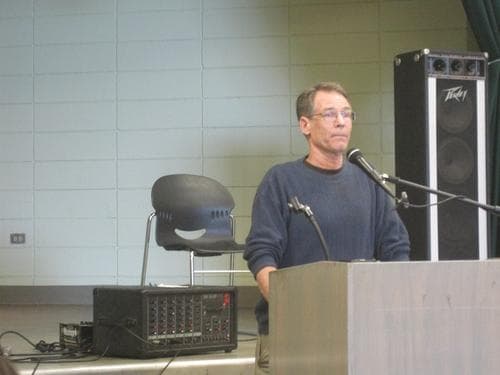
Kim Stanley Robinson is an American science fiction author known for his exploration of ecological and social themes. His notable works include the Mars Trilogy, comprising "Red Mars" and "Green Mars," as well as "Aurora" and "The Years of Rice and Salt." Robinson's writing often delves into the complexities of human interaction with the environment and the future of civilization.
Similar books
- Red Mars
Kim Stanley Robinson
3.9 (67k) average on GoodreadsFantasyThe preceding book in the same series, continuing the story and characters.
- Dune
Frank Herbert
4.2 (766k) average on GoodreadsFantasyFeatures complex political systems, ecological themes, and a unique planetary culture.
- 1984
George Orwell
4.2 (3.1M) average on GoodreadsPoliticsIn a future where surveillance and thought control are absolute, a man's search for truth clashes with the Party, showing that hope can be a form of rebellion.
- Animal Farm
George Orwell
4.0 (2.7M) average on GoodreadsPoliticsA farm animals' rebellion against humans turns into a pig-led dictatorship, showing how power corrupts and revolutionary ideals are betrayed.
- Freakonomics: A Rogue Economist Explores the Hidden Side of Everything
Steven D. Levitt
4.0 (709k) average on GoodreadsBusinessThis book uses economic principles to reveal the surprising incentives behind everything from drug dealing and real estate to cheating teachers and the decline of crime.
- I Am Malala: The Story of the Girl Who Stood Up for Education and Was Shot by the Taliban
Malala Yousafzai
4.1 (419k) average on GoodreadsPoliticsA teenage girl from a Taliban-controlled valley refuses to give up her books, becoming a global voice for education even after an assassination attempt.






Enjoyed the summary?
A summary gives you the shape of the book. The book itself has the detail, the examples and the voice.
Find Green Mars on AmazonAs an Amazon Associate, BookBrief earns from qualifying purchases. How we're funded